Independent fishermen in Funter Bay needed a place to sell their catch and buy supplies (fuel, fresh water, and ice). The local cannery would sometimes buy troll-caught fish, but probably paid a low low price since their own traps produced fish nearly free. Trollers were better off selling salmon which would go iced and fresh to Juneau grocery stores and markets. However, the range of the small fishing boats, and the distance from town where the fish were most often found, usually prevented the fishermen from running directly to Juneau to sell.
To support these markets, various fish sellers and middlemen operated buying stations in locations near the fishing grounds. The station at Funter Bay was probably associated with the Juneau Cold Storage, where they brought fish for storage and sale, and procured ice for sale to fishermen. Packers would run the fish in to the cold storage on a regular basis to keep them fresh.
Unloading fish at the Juneau Cold Storage, 1930s:

Courtesy of Alaska State Library, Elite Studio collections, P294-020
Another reason for third-party buyers was fish piracy; fishermen would sometimes steal fish from the cannery traps. Canneries banded together to boycott fish from certain “known pirates”, but independent buyers with their own scows and packers quickly sprang up who would take fish from anyone.
Salmon buyers also operated from floating scows (barges). Today, salmon buying stations usually operate (probably with fewer pirates) from scows, packer boats, and occasionally from docks at small communities like Elfin Cove.
Scow (barge with structure on it) and cannery tender at the Thlinket Packing Co dock, 1942:
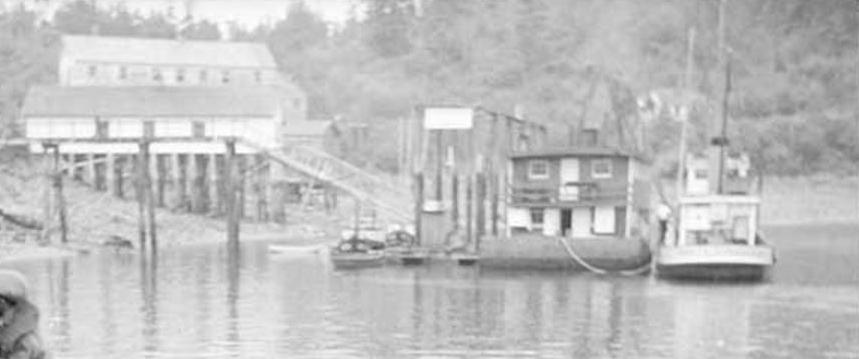
Courtesy of Alaska State Library, Butler/Dale collection, P306-1093.
Funter Bay residents Gunner and Lazette Ohman operated a fish buying scow in the area during the 1950s and 60s, buying fish for Art Berthold of the Fern II.
The land-based fish buying station at Funter Bay was located on Highwater Island, which is only an island when high tide covers the sandbar to it (apparently it is called Crab Island in some govt. docs, although I’ve never heard it called that locally). The station had several buildings on the shore, and a long dock with two ramps, circled in the 1948 aerial photo below:

This location would not have been completely ideal, as it had no streams or running water, but it was in a very sheltered location that protected the dock from most winds. Trollers would fill up on fresh water from a hose running to a stream elsewhere in the bay.
Another aerial from 1948 (on a different date), showing a boat approaching the fish buying dock (the V-shaped wake in the lower right quarter of the image):

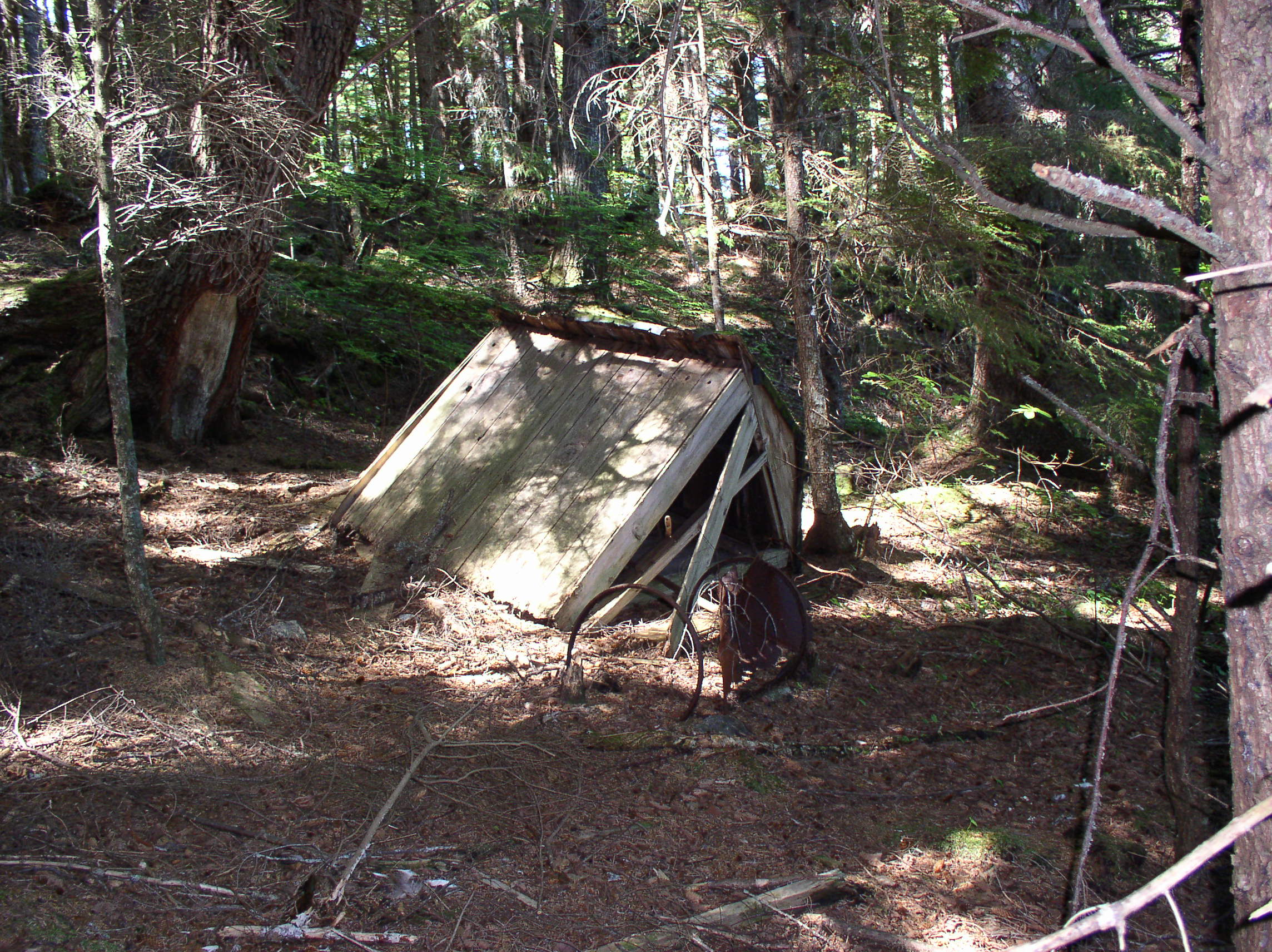
More recently, here is a collapsing shed at the station:
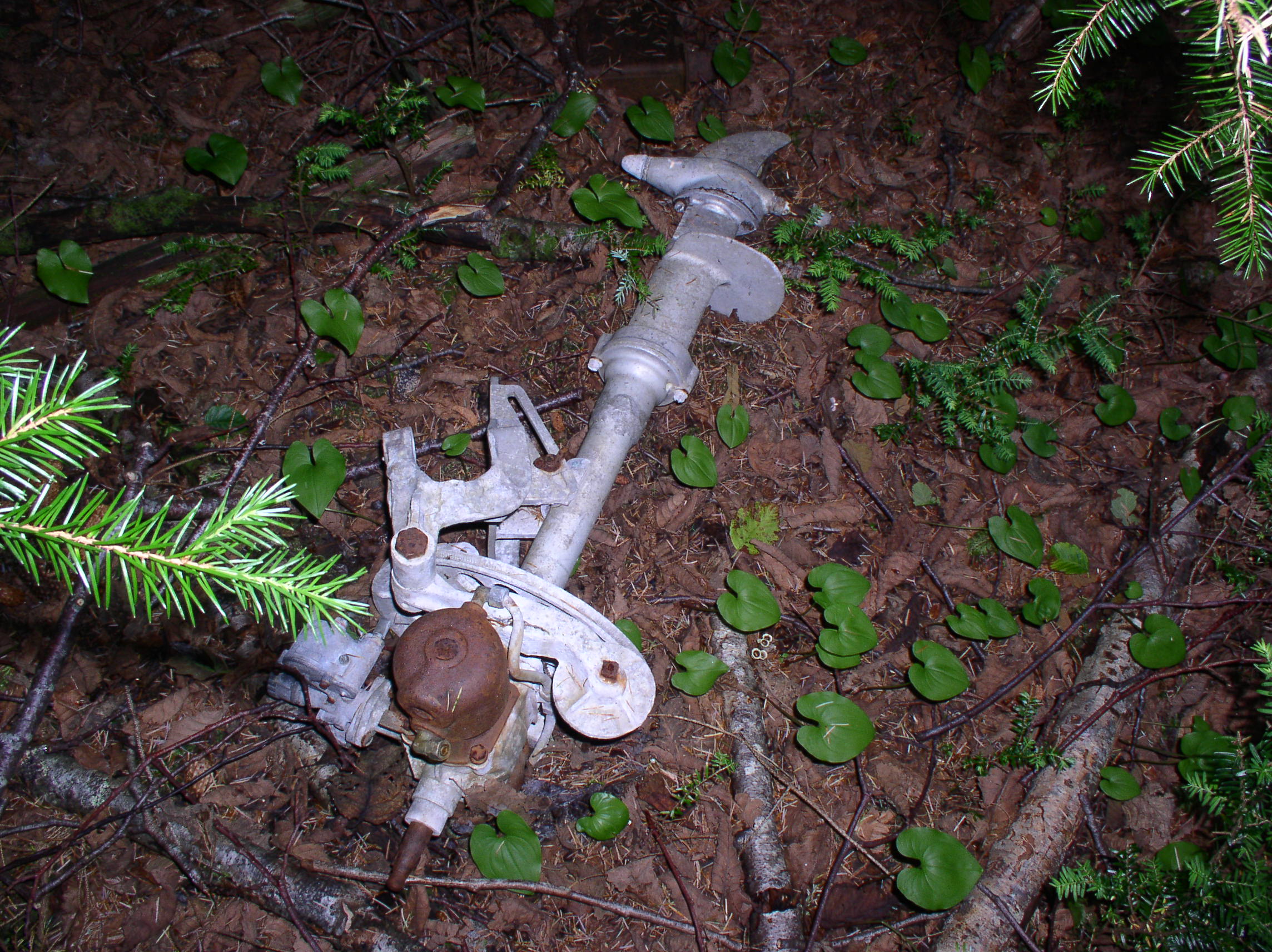
A small outboard motor abandoned in the woods (I always laugh when I go to some yuppie antique store in the Midwest and they’re selling rusty stuff like this for $300, but now I’m a little worried that someone will go nab the thing and stick it on their yuppie wall):
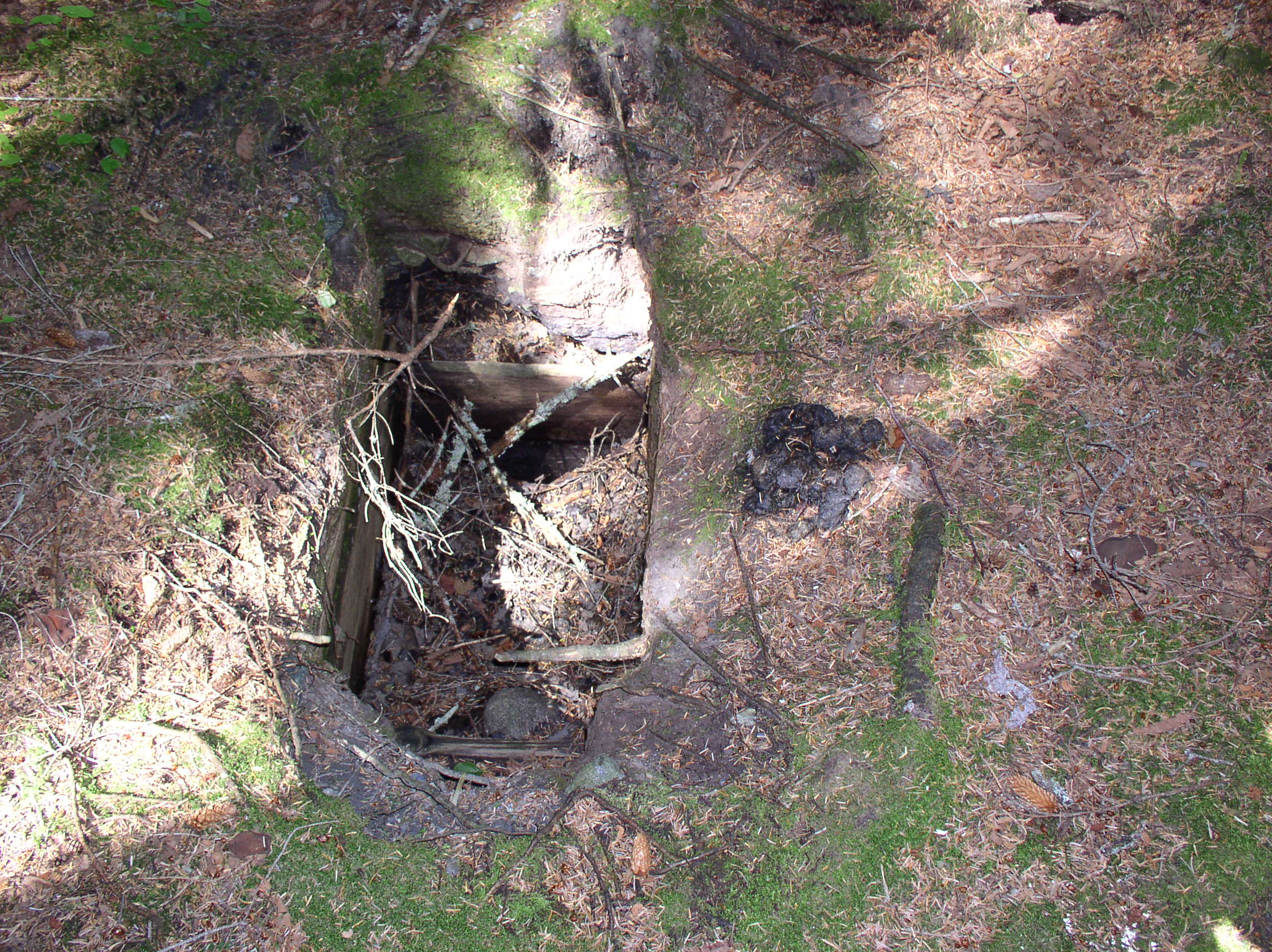
The outhouse pit, apparently bears think the spot is a great bathroom as well, as seen by the dark pile to the right:
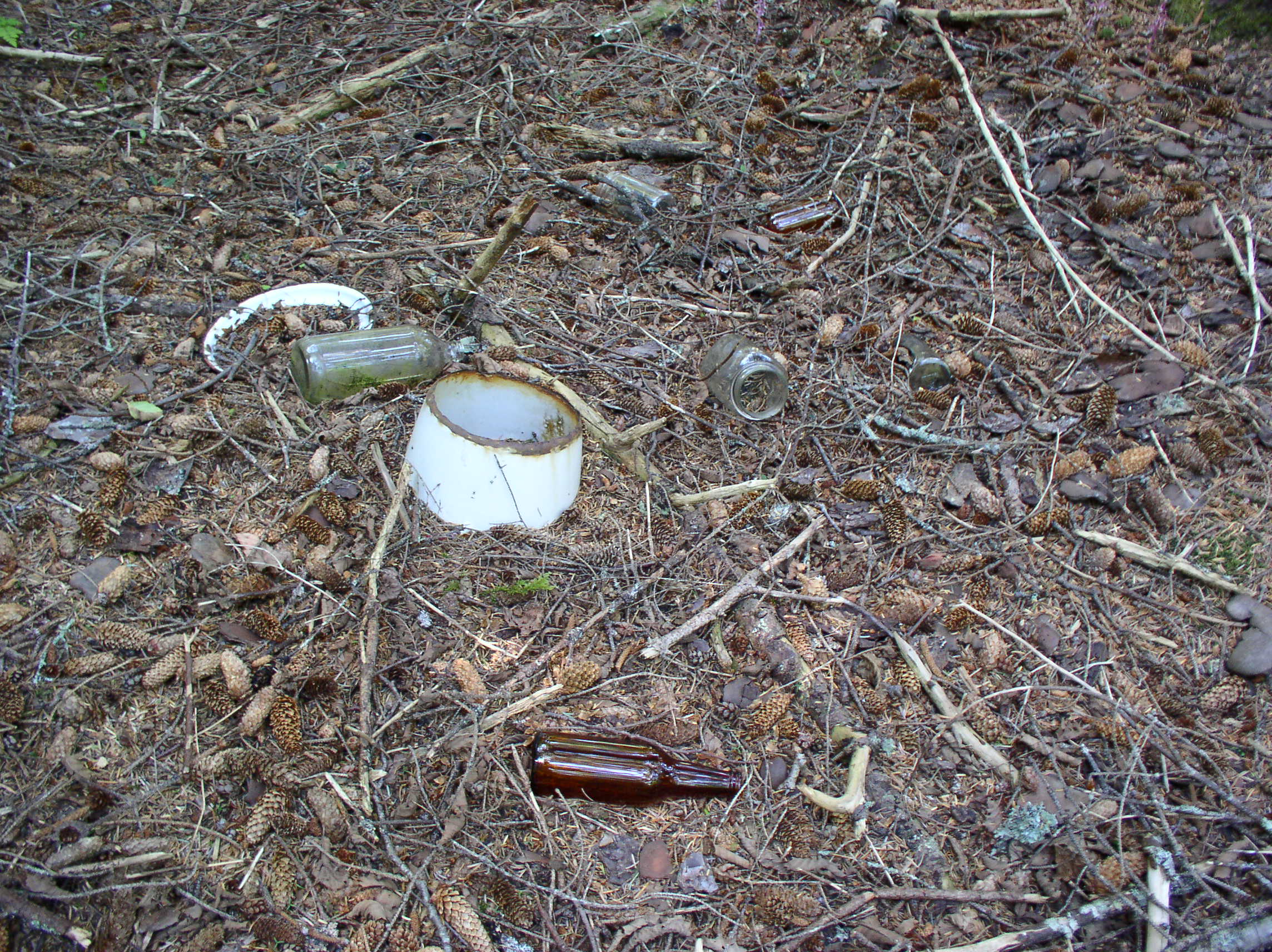
More “junk” in the woods, bottles and trash from the 40s and 50s:
As mentioned before, there is a wrecked boat on the island adjacent to where the dock was sited. It’s locally known as a steam tug, assumed to be a cannery tender, although I’ve not yet been able to find any details on it.
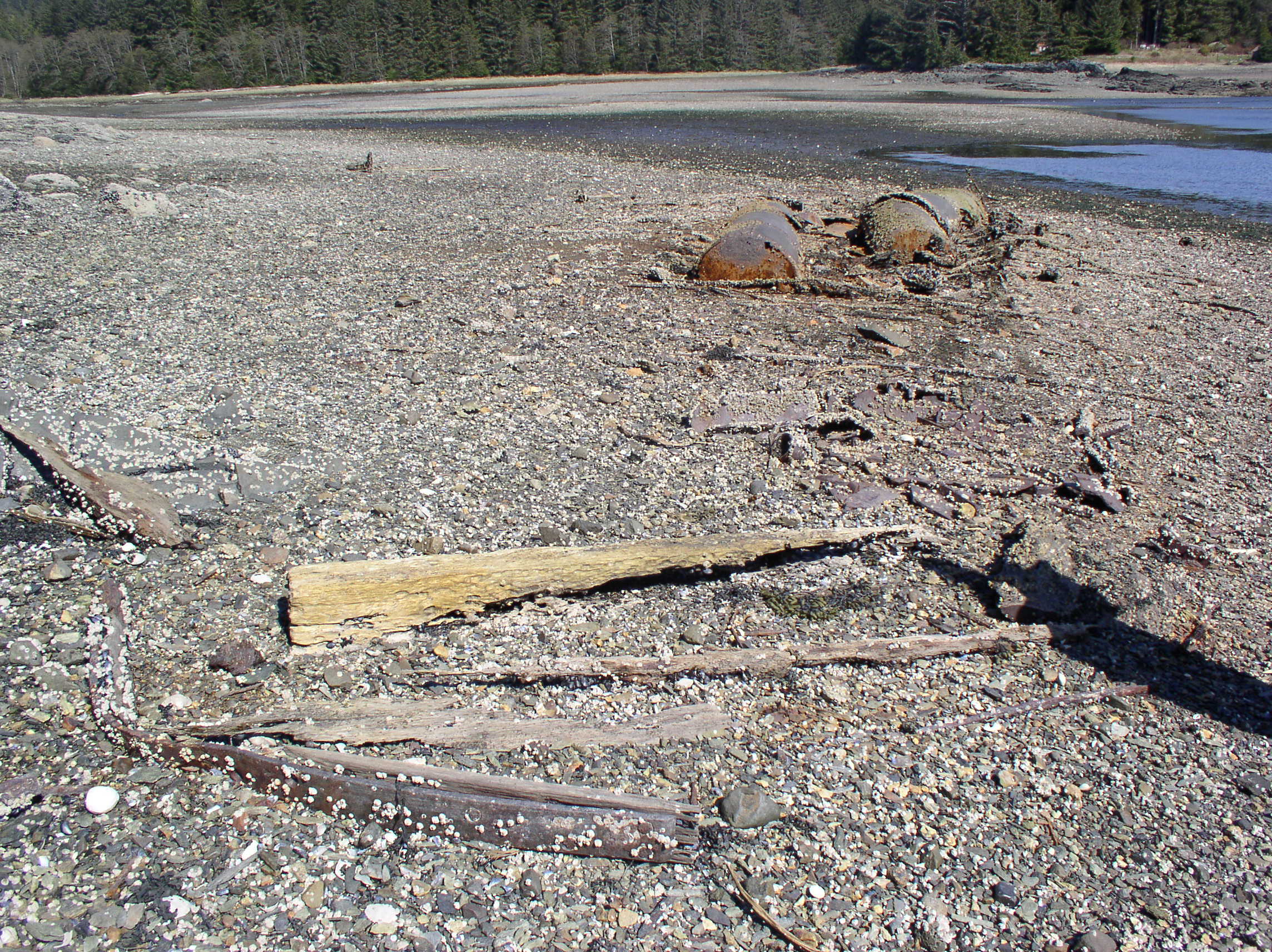
Coil of cable on the beach, either from the wrecked tug or the fish buying dock:
 Saveitforparts
[…] report mentioned that there were two canneries at Funter Bay. They may have been referring to the fish buying station as a cannery, or they could have meant the […]