Monorail Extras

October 19, 2015

Work is gradually progressing on the monorail train, which has proven to be a wonderful place to camp out! As we work on remodeling and fixing up the train I will have more posts with photos and progress reports, but for now here are a few monorail-related odds and ends. First is a 1979 T-shirt design I came across:

Skytrail3

And a 1984 postcard of the monorail in operation:

postcard_web

And some original monorail fare tokens from the zoo:

Monorail token web

I’ve made a few custom bumper stickers:

0625151912

And here are a few more photos of the train’s origin, in case anyone is curious what the zoo side of things looks like. Some of these facilities might not be around much longer.

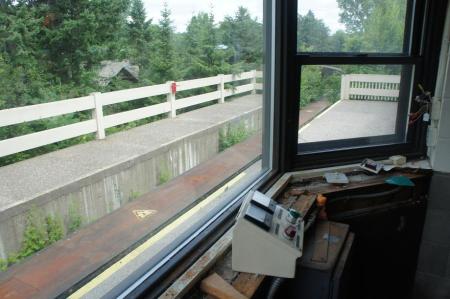
The abandoned MN Zoo monorail station (soon to become a new animal attraction):

SONY DSC

SONY DSC

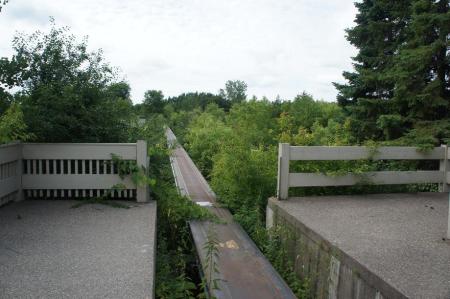
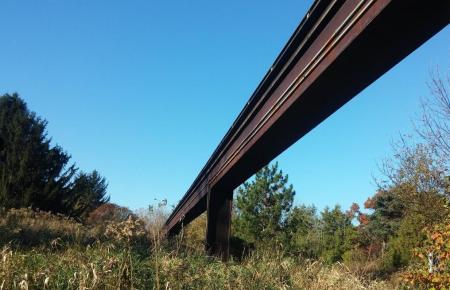
Some pictures of the abandoned monorail track:

track4SONY DSC

track5

In the maintenance barn with two trains parked inside:

SONY DSC

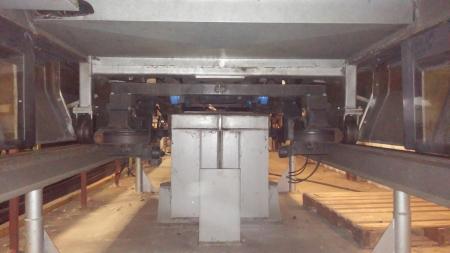
Some close-ups of how a monorail bogie mounts to a car (normally this would be hidden between two cars, but one car has been de-coupled):

bogie3   bogie1

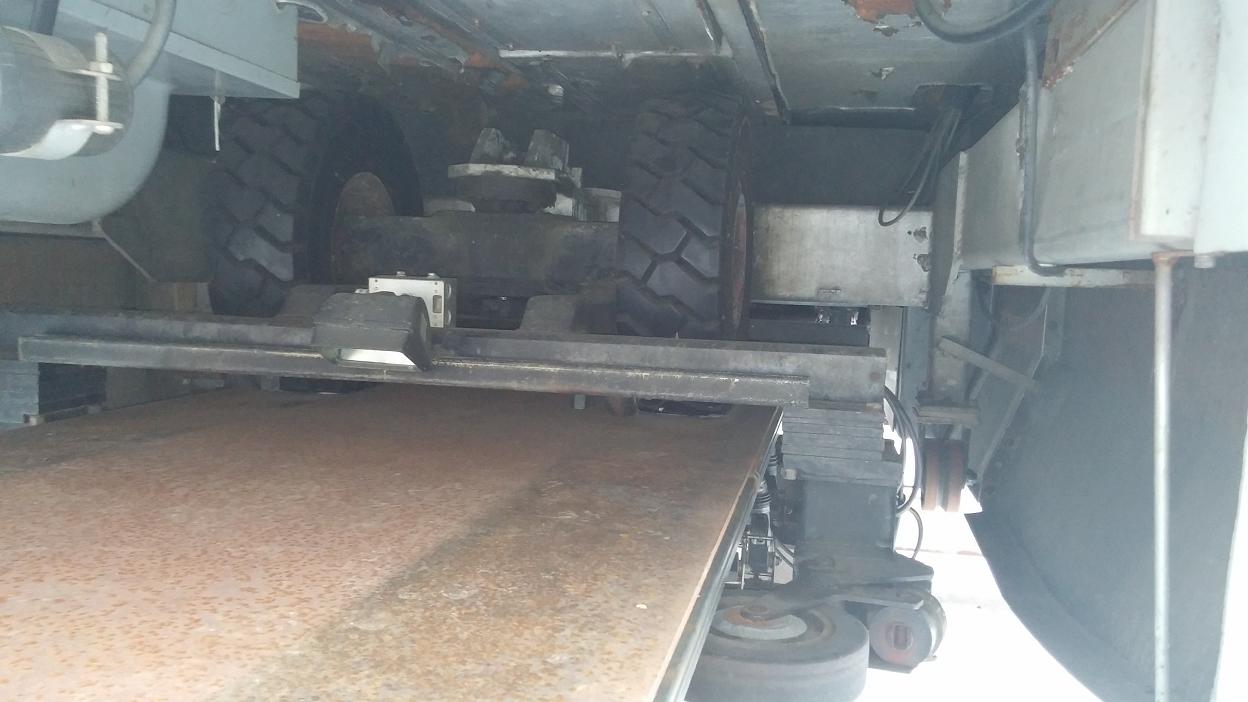
And a close-up of the transition from maintenance track (two rails for caster wheels) to monorail track (center beam for tires):

bogie2

The remaining monorail cars from the zoo are destined for an East Coast museum.


Skytrail3


Monorail Part II

July 27, 2015

As previously mentioned, I’ve purchased a retired monorail train from the Minnesota zoo. This follow-up documents some of the steps involved in moving a 100-ft long, 6-car monorail train from one place to another. All 6 cars are now in their new home in the countryside, the train makes a terrific weekend cabin and a very unique conversation piece!

0726151042a

The original weight was in the neighborhood of 27 tons (numbers vary depending on the source consulted, and few documents agree). We were able to lose quite a bit of weight by removing the wheel bogies and drive motors, which was also required for uncoupling and removal from the track.

config

For those interested, here are some of the bogies removed from the train. One is powered (with the large motor on top), and one is an unpowered idler:

w2

The zoo was able to uncouple each car and move it on a maintenance track – actually two rails that support small casters under the cars. These originally allowed access to the underside of the train in an inspection pit.

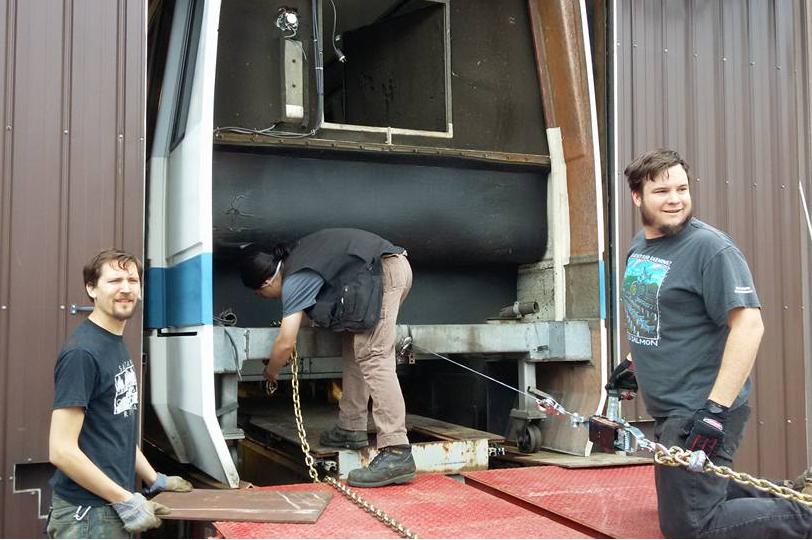
For loading, we backed a trailer up to extensions of these maintenance rails, and winched each car onto the trailer using a cable puller or “come-along”.

car2_move_2

Photo by Megan Emerson


9

Loading each car was about a 3-hour process, requiring occasional adjustments and stops to bridge various gaps in the rolling surface. After getting each car secured to the trailer, we drove them to their new home.

car1_move_10

Quite a few unfortunate drivers can now say they’ve been stuck in traffic behind a monorail. The open ends of middle cars act like huge fiberglass air scoops and make for slow progress. I was able to take back roads for the journey, but you know you’re slow when a loaded cement truck passes you going uphill.

I had originally hoped to unload these by hand, using some redneck technology (a platform to roll them onto, and a series of jacks and blocks to lower them to the ground). Some friends pulled an all-nighter doing materials strength calculations and modeling possible methods, and convinced me this was even less safe than it sounded.

moving-diagram

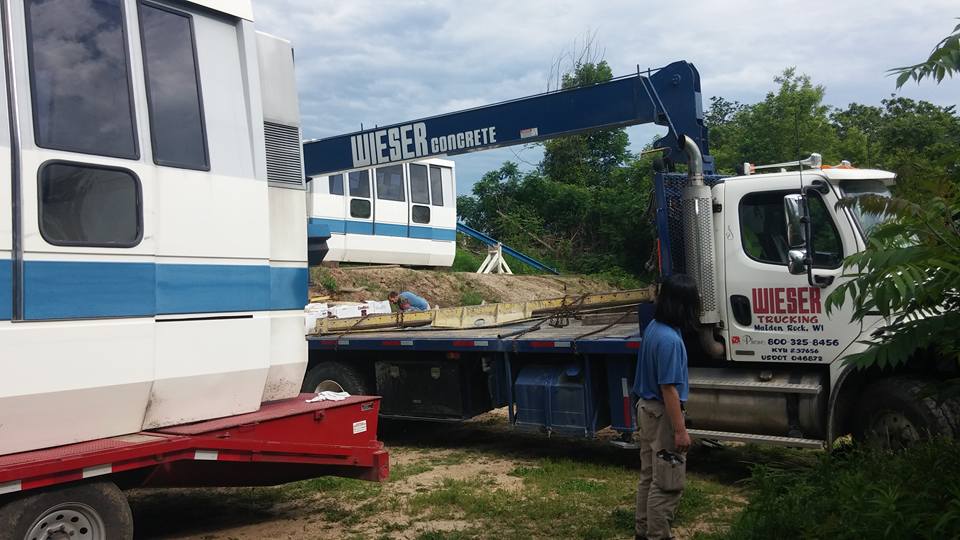
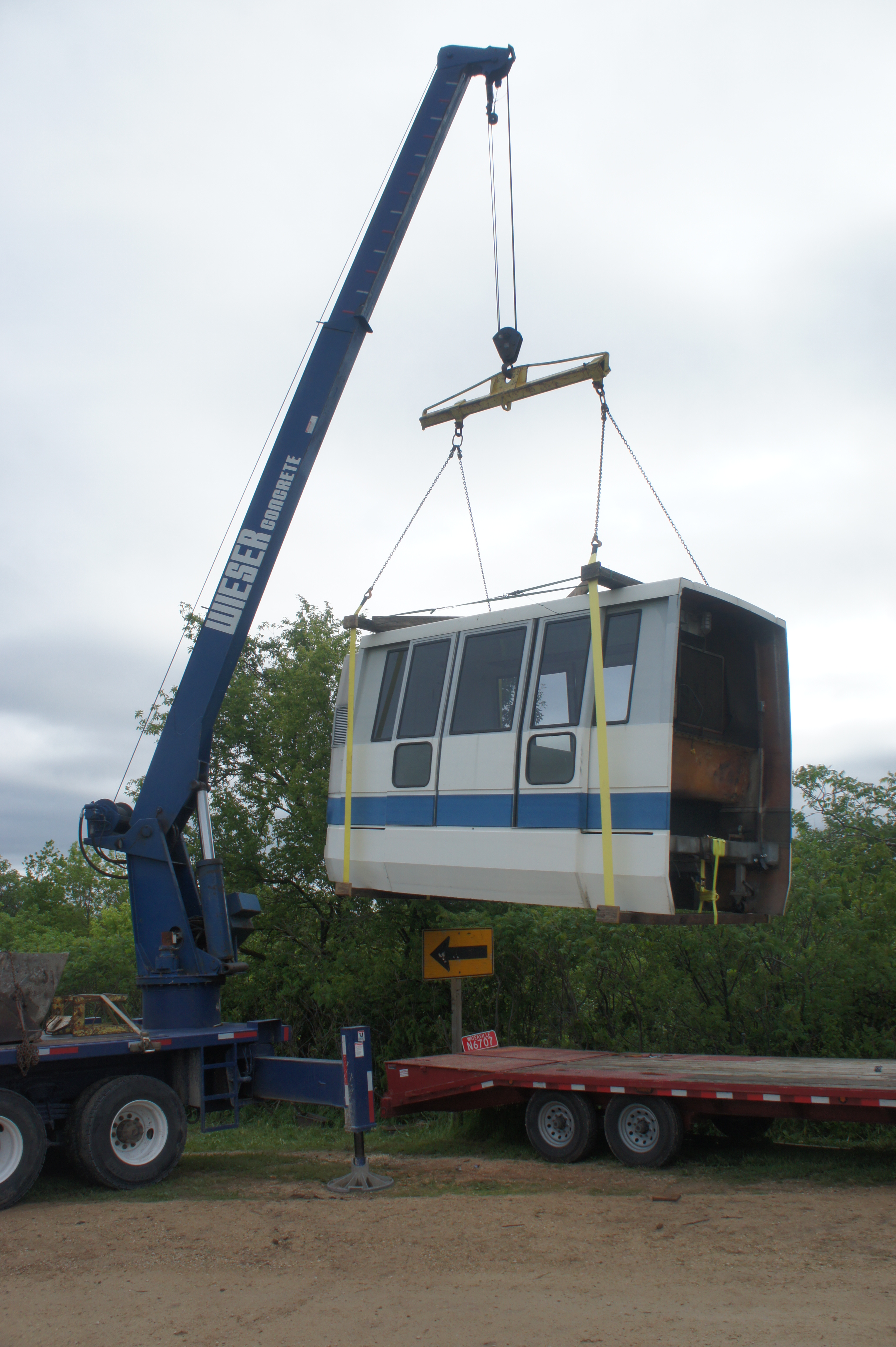
Instead, I hired a crane to do the hard part. Wieser Concrete has been amazingly helpful with this project, going above and beyond what we had hoped. I would highly recommend Wieser for anyone needing crane service in Wisconsin!

2

We tried various rigs for lifting these. The arrangement shown below was the first setup, strapping around the car with wood spreaders at the top to prevent crushing:

For the rest of the cars we used a much simpler and more stable lifting rig, with chains run down the ends to the steel frame. Most of the weight is in the bottom of the cars, the rest is mainly fiberglass.

SONY DSC

SONY DSC

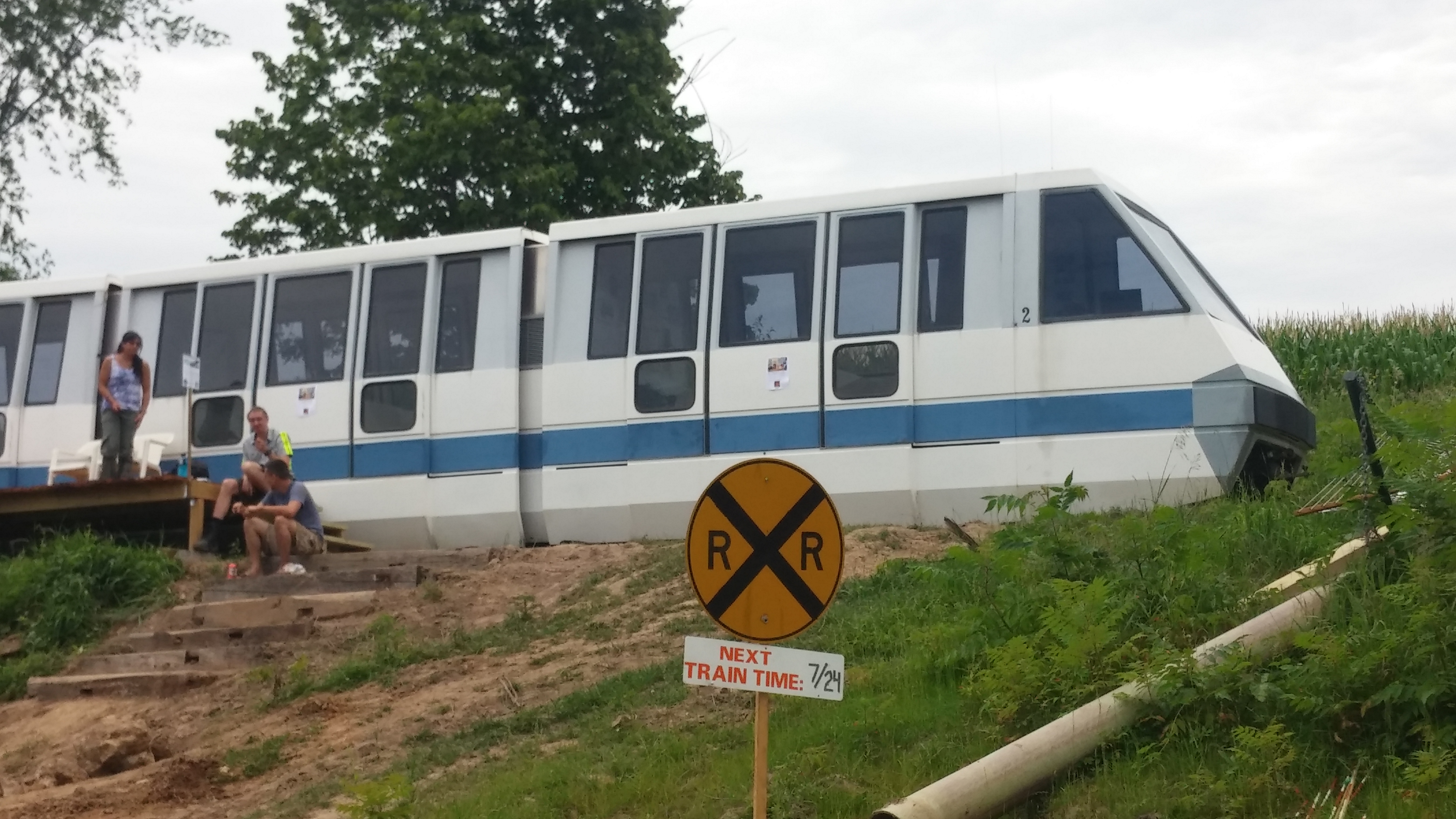
After unloading from the trailer, we parked the monorail cars in a line so they formed a full 6-car train again. Below is an aerial view of one of the cars being moved into position:

Photo courtesy of Tim Walgrave

Photo by Tim Walgrave

The crane was able to place these very precisely, so we could nest them together as designed. We had assumed that fine adjustments would need more jacks and rollers, but an expert crane operator who can save hours of manual labor is well worth it!

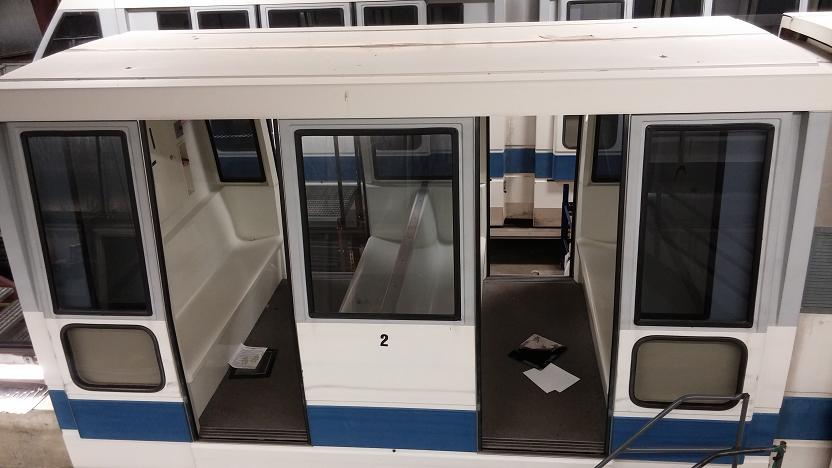
Each car is fairly self contained, much like a small camper or RV. They have small hatches allowing access to the interstitial space and crawling passage between cars if desired. We may add bunks or other changes down the road, although I’m still planning to make as few major modifications as possible to preserve the original vehicles.

0726151045

I’ve even started a very small museum of sorts in the driver’s cab, with a few historic photos and artifacts related to the monorail. And of course, no monorail would be complete without a Simpsons reference!


The Saveitforparts Monorail

June 1, 2015

Saveitforparts.com is finally putting itself on the map, with the purchase of a genuine, bona fide, electrified, six-car monorail!

1218141509

That’s right, I’ve bought an entire six-car monorail train from the Minnesota Zoo. The zoo’s elevated monorail system was retired in 2013 after 34 years of service, with the state-owned agency seeking to dispose of the equipment. As a lifelong train enthusiast with ongoing railroad history and model railroading projects, I couldn’t resist the chance to preserve a piece of local history!

1218141543c

While it would be awesome to construct a track and actually run the monorail, my resources are more suited to a static use of the cars. My initial plan is to park them on a rural property and use them as weekend cabins, as each car is similar to a small camper or RV in size. Interestingly, some of the Twin Cities’ TCRT trolley cars were used the same way after their retirement (sadly, most were scrapped or burned).

Below is one potential layout I came up with for a single middle car, leaving as much of the original body intact as possible (the seats are molded into the fiberglass inner shell). As the cars already have lights, heating vents, and multiple doors, it should be relatively simple to retrofit them for such a use without much alteration. I have some ideas for using multiple cars as well, the final layout will be exciting to develop!
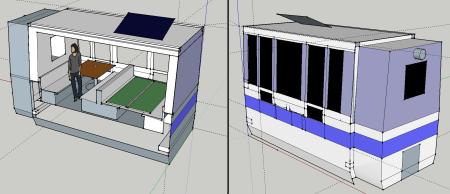
Potential Middle Car Renders

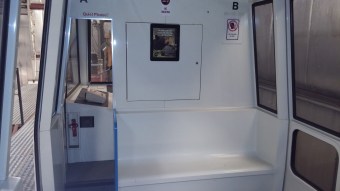
Below are some close-ups of what the cars look like inside and out:

m4  1108141448

I’ve also been doing quite a bit of research into the history of these monorail trains. While it’s certainly a very niche field of study, I’ve collected a few details that might be of interest to other monorail enthusiasts.

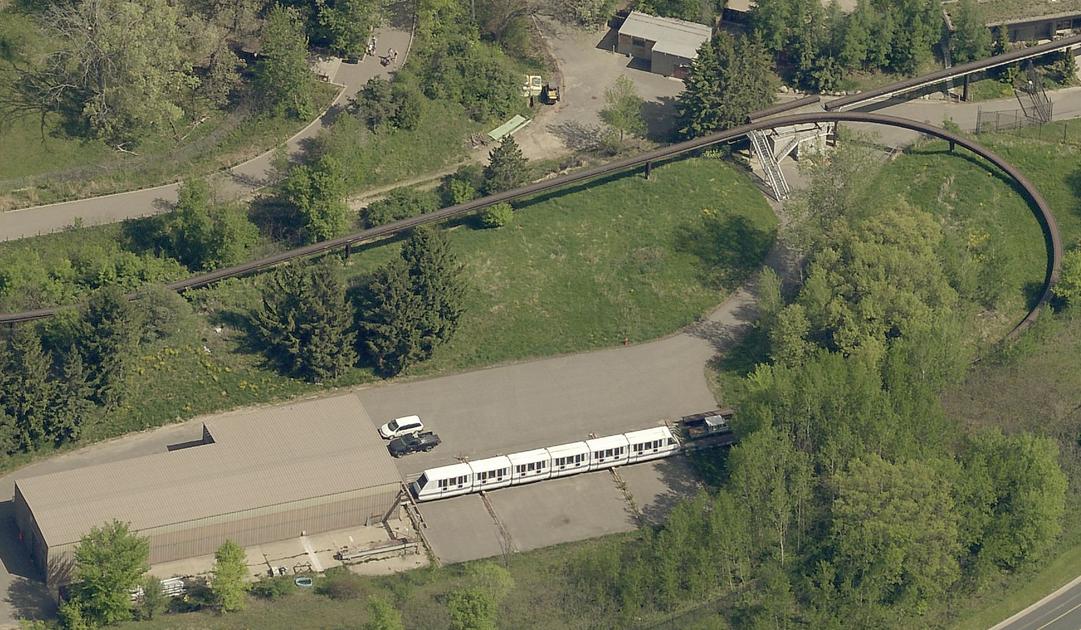
Aerial

Monorail switch and maintenance building, courtesy of Dakota County GIS.

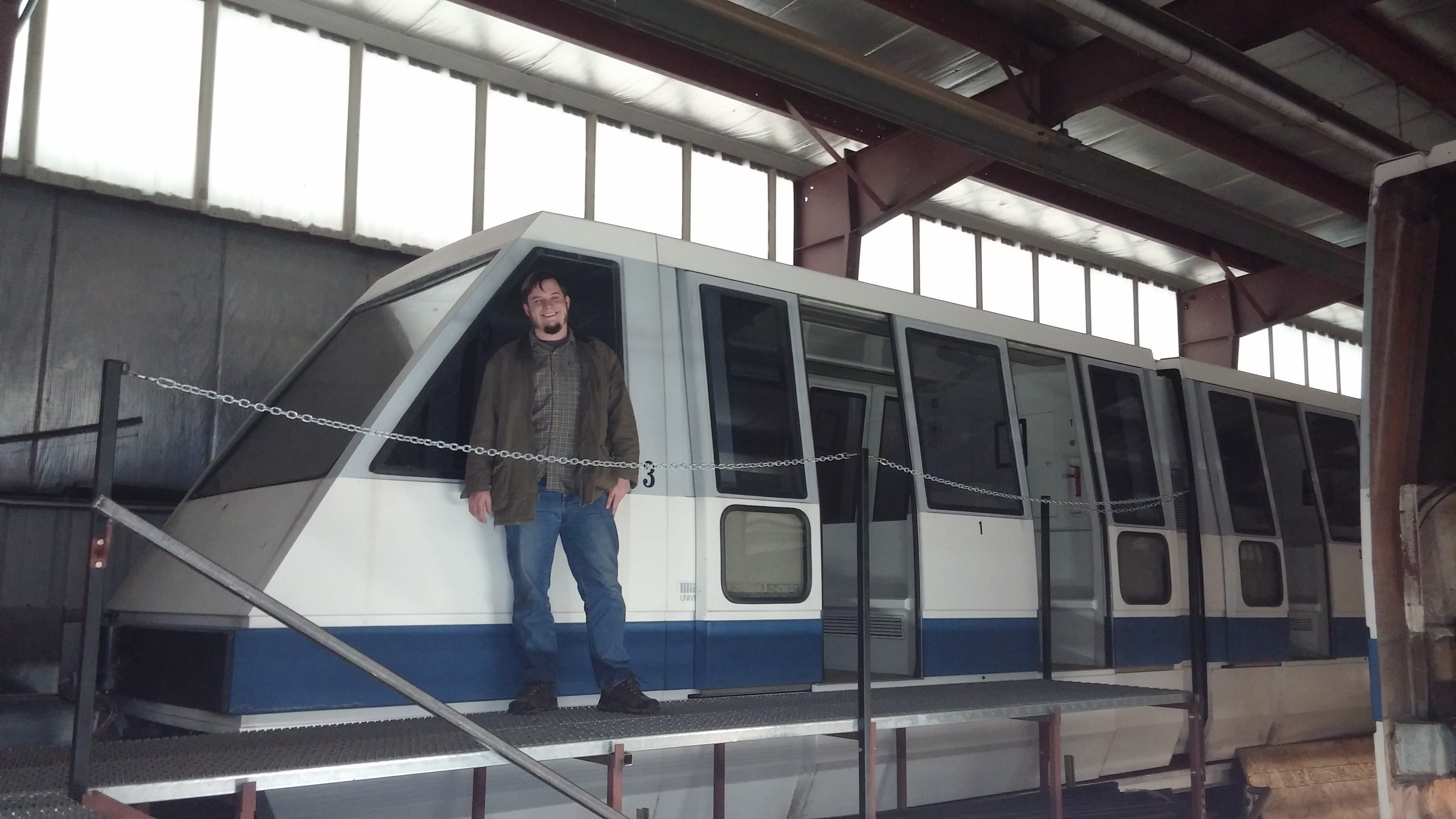
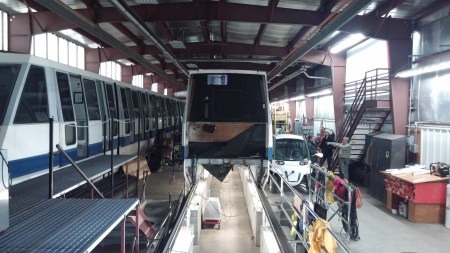
The Minnesota Zoo’s Monorail was built in the late 1970s by Universal Mobility Inc (UMI), and is a “Unimobil Tourister” model. It began running in September of 1979 at the new Minnesota Zoological Garden (opened May 1978). The Minnesota legislature authorized the monorail with the provision that it be self-financing, separate from the zoo. A nonprofit corporation, Minnesota Zoo Ride Inc, was incorporated in 1976 to finance the accepted construction bid from UMI. The system included 3 trains, an oblong loop of track, an enclosed maintenance shop, single switch, and indoor & outdoor sidings for storage and maintenance.
1218141517

Minnesota Zoo monorail car barn. Photo by Gabe Emerson


Based in Salt Lake City, Universal Mobility designed and installed several similar monorail systems in the United States. One other Tourister of nearly identical design was installed at the 1984 World’s Fair, then moved to the Miami zoo where it still operates. Updated Tourister II models operated at King’s Dominion, King’s Island, and Carowinds amusement parks, while older, open-car versions operated at various amusement parks and are still used at Hersheypark in Pennsylvania. Another Unimobil system reportedly operated at Fuji Highlands in Japan. Several proposals were floated to install UMI monorails in metropolitan areas for public transit, but none were funded.

Califorina UMI study

The fiberglass car bodies were produced by Intermountain Design, who still manufactures monorail, people mover, and aerial tramway cars for various users. The mechanical drives and control systems were supplied by Maschinenfabrik Habegger of Switzerland. This company was tied to Von Roll Holding Co (designer of the Sydney Monorail among others). Both companies also designed ski lifts and aerial cable tramways (The Skyride at the Minnesota State Fair is a Von Roll system). Bombardier / TGI later acquired many of the UMI and Von Roll patents and produced another very similar monorail, known as the UM series. Von Roll / Habegger also marketed a very small monorail for use on farms and vineyards.
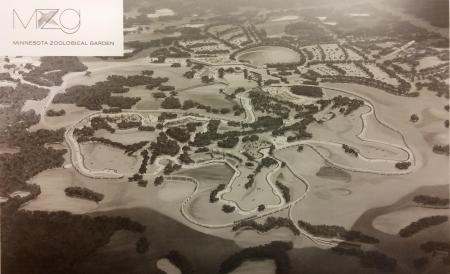
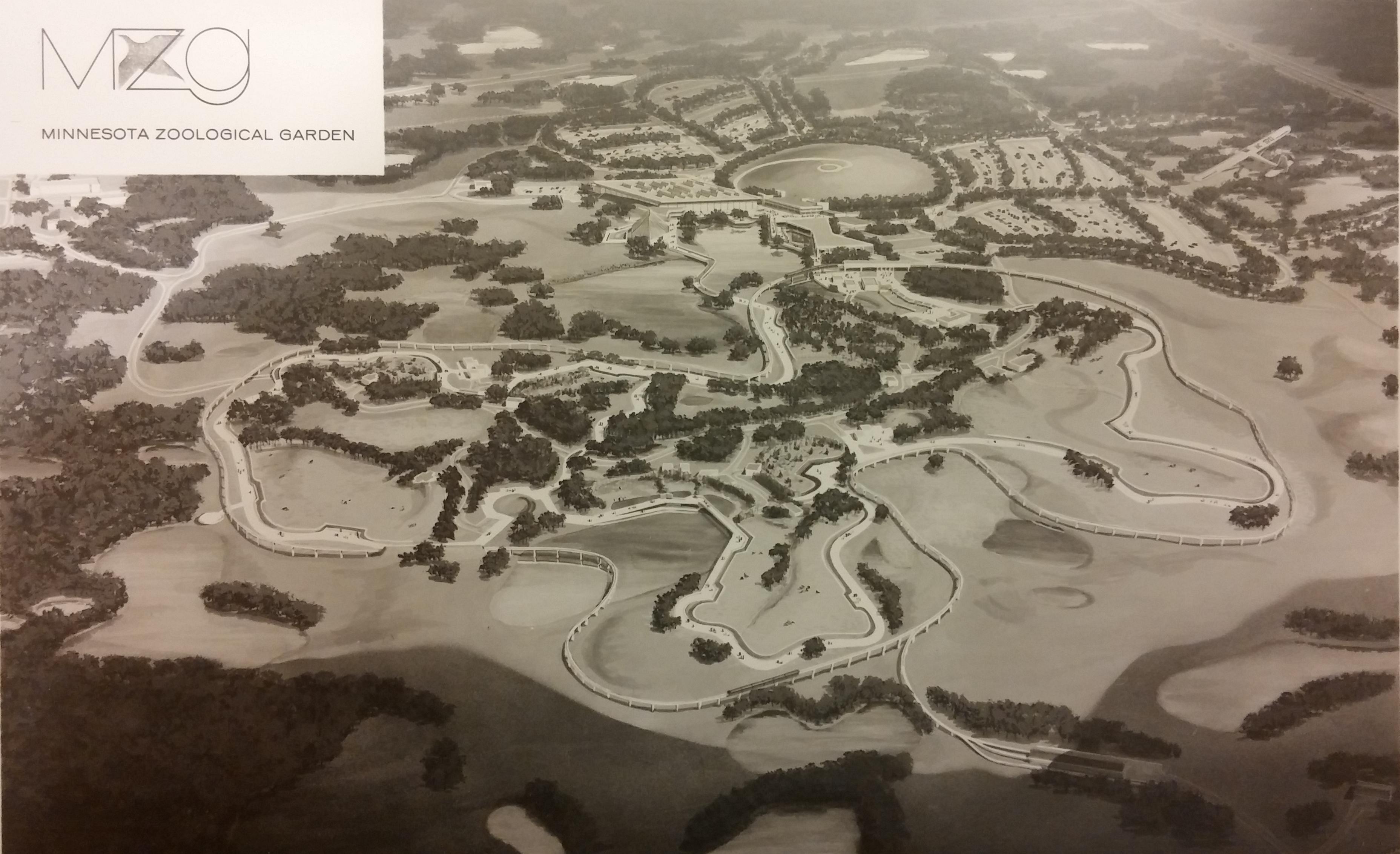
map

1970s concept drawing of zoo and monorail (note maintenance spur and car barn at lower right)

The Minnesota Zoo monorail ran into trouble almost immediately after installation, as ridership was not as high as predicted. The legislature refused to pay the full installments to investors, covering only what the ride actually made in fares. Shareholders (including various local and national banks) sued to demand the full loan amount in 1980. The state supreme court sided with the legislature and attorney general, saying that the state had no obligation to pay if the legislature chose not to.

The state was again sued, this time accused of securities fraud. Court cases dragged on through the early 1980s, involving investors, insurance companies, and various state agencies. The monorail remained operating, with profits covering only a fraction of the installments. Fares in 1980 were $1 for adults and 50 cents for seniors and children.

In September of 1985 the monorail system was repossessed, then sold back to the Minnesota Zoological Foundation with help from private donors and new loans. The monorail continued to report little or no profit, despite fares climbing to around $5 per person in recent years.
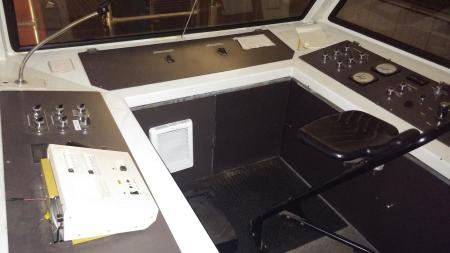
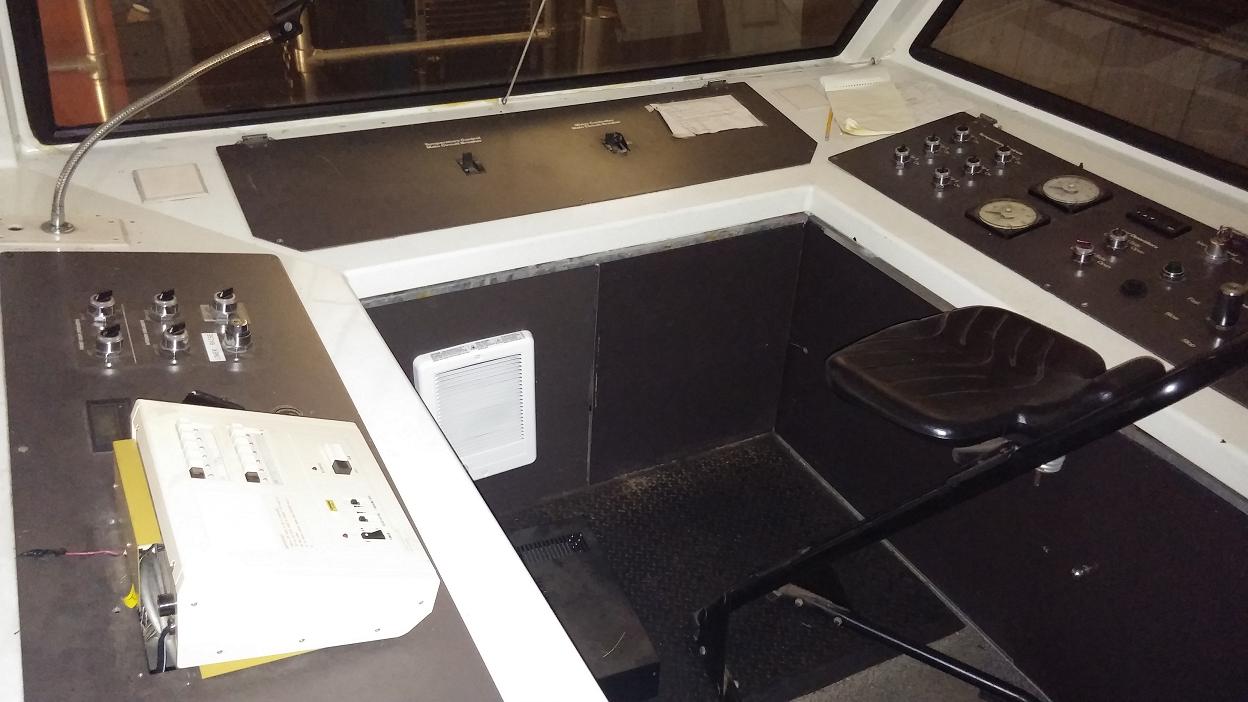
cab

Monorail control cab, photo by Gabe Emerson


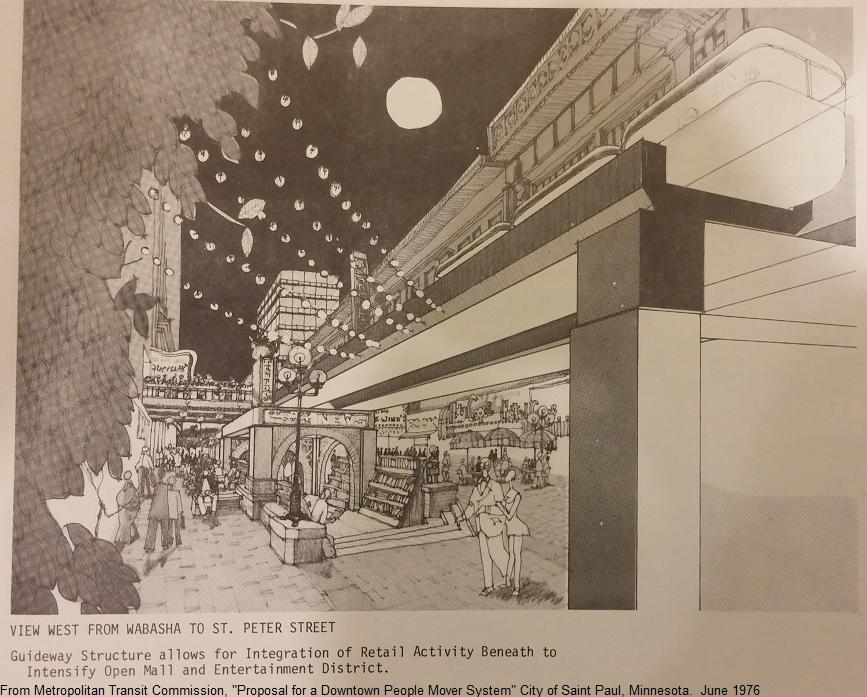
These ongoing money problems may show why monorails never gained much of a foothold in the US, despite the optimistic press of the 1970s. The energy crisis briefly brought a renewed flirtation with public transit (as well as other energy-efficient projects and proposals in Minnesota and elsewhere). Proposals for installing UMI monorails (or related people-movers) included downtown Saint Paul, Los Angeles, and other cities. Concept drawings for some of these installations can be found in several 1970s government studies.

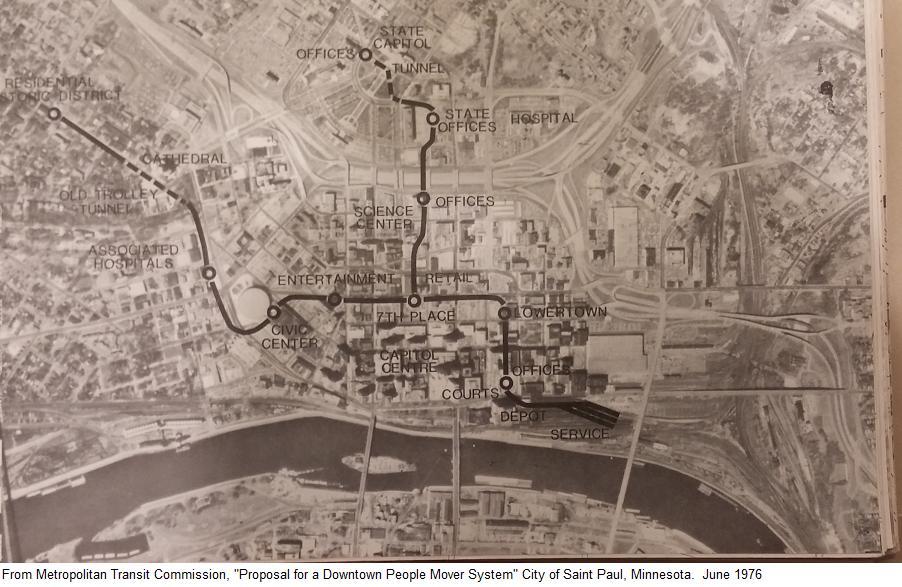
proposal1

Concept art for proposed St. Paul People Mover, courtesy Metro Transit via MNHS


A proposal for downtown Saint Paul imagined a monorail or people mover running through the former Selby streetcar tunnel, as well as a section of subway with station at the State Capitol.
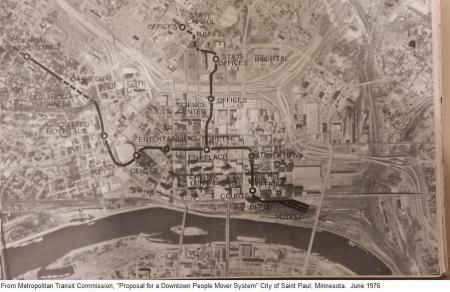
DPM

Other cities considering monorails looked closely at the Minnesota Zoo as a test case. The zoo’s system was one of the first all-weather monorails installed in the US, and underwent extensive winter testing to prove it could function in northern cities. This monorail was one of the few with onboard cabin heaters, others had only A/C. A custom snowplow was fabricated for the train, mounted to one of the lead cars. Later a small street-sweeper device was built, and made to look like a miniature version of the monorail.
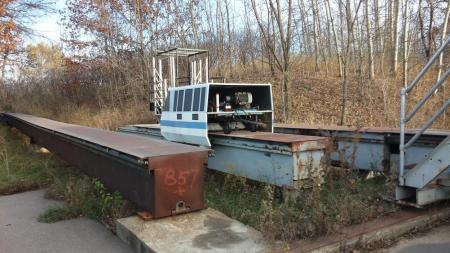
sweeper

Winter operation studies found that the elevated track did well at preventing snow buildup, but sometimes iced over and impeded traction. The power rails were located under a lip at the track edge, which helped keep them dry, but there were occasional issues with ice and thermal expansion.
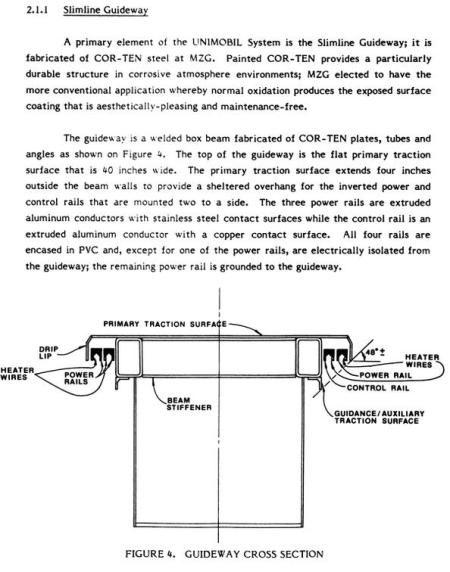
guideway

Hard specifications for this monorail are difficult to nail down, each document I’ve found lists a slightly different weight, speed, and capacity for this system. As best I can determine, each of the three trains could carry 96 passengers seated, or 120 with some standees.  Trains were 100ft long and consisting of 6 cars. Wheel bogies were shared between cars, with a total of 7 per train (normally 4 powered and 3 idler bogies). The motors developed about 300hp at peak output, for a theoretical top speed of about 35mph. Normal cruising speed was around 3-4 mph and operations at the MN zoo were limited to a 7.5mph top speed. The main track included a 6,628ft loop and a 358f long maintenance spur. A moving switch connected the spur and loop, and a lateral transfer beam allowed switching between tracks at the maintenance building.  Approximately 1,000ft of guideway made up the lateral beam and service rails at the maintenance shop (some of the outside sidings were removed). About 730ft of guideway was at-grade, the rest elevated on steel columns.
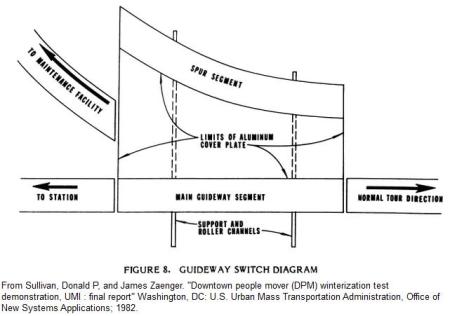
switch

The drive system consists of rubber tires driven by 480v DC motors, with side-facing guide wheels riding the outsides of the track. Power and control signals were picked up from electrified rails under the lips of the track. Braking was dynamic, with emergency and holding brakes. The system was supposedly very quiet (“…as softly as a cloud”), although the AC compressors for summer use could be noisy.

wheels

The system was designed to be fully automated, controlled by an analog computer. Cars could be timed and spaced automatically, with multiple trains slowed or stopped as needed to avoid collisions. Human drivers could override the system, and also manned a microphone to narrate the ride and identify animals along the route.
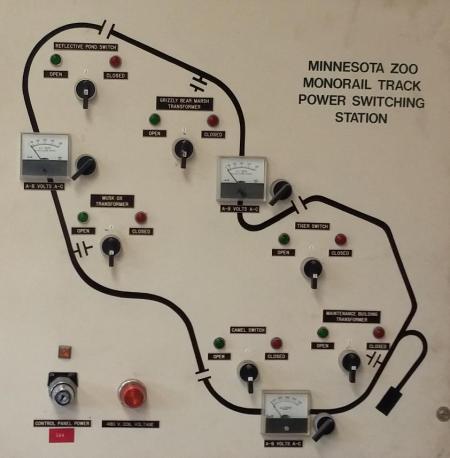
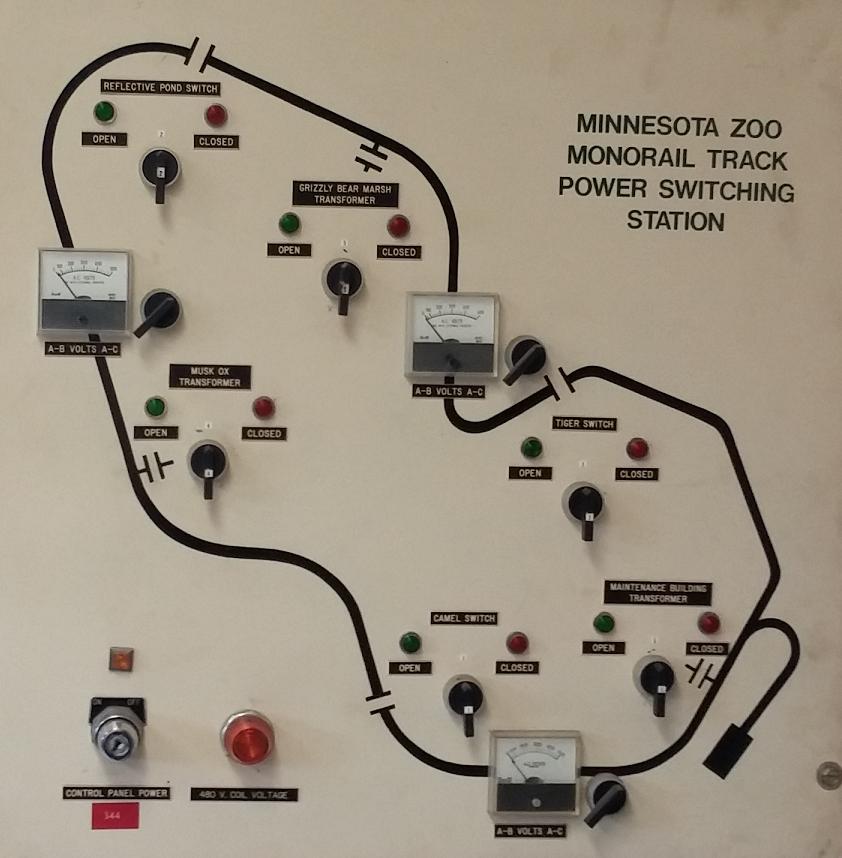
power

I am looking forward to preserving one of these very interesting trains, and creating a unique and historic vacation cabin! And who knows, maybe someday, or somehow, I can get some track laid down!

For additional information on this and other monorail systems, check out the links below:

UMI Downtown People Mover Winterization Test (1982 report including details specific to the MN monorail).

The Monorail Society (general information, technical data, and monorail history)

Minnesota Zoo history & timeline

1888 South Saint Paul monorail (overhead track)

Star Tribune article on this monorail

Wired article on this monorail


More Airboat Updates

January 3, 2015

The mini airboat recently suffered a temporary setback, resulting from a high-speed collision on the safety cage.

ab4

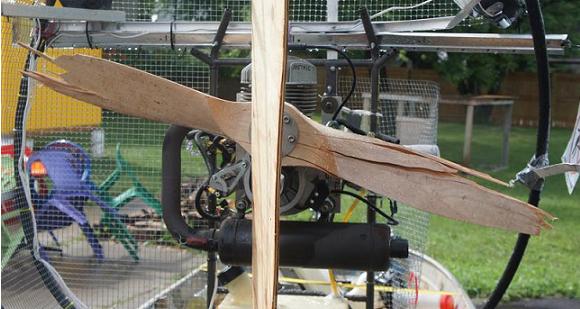
The plastic safety cage I had built around the engine was pushed into the spinning propeller, which ripped through the hardware cloth and aluminum braces. The propeller itself shattered from the impact.

SONY DSC

A word of advice, DONT BREAK YOUR PROP! These things are stupidly expensive. I ended up paying more than twice what the hull cost for a new propeller!

ab5

I decided (with some coaxing) that the plastic hoops weren’t strong enough, and that I should go with metal. After acquiring some aluminum tubing of sufficient length to make a suitable-diameter hoop, I was then faced with the problem of bending it. I considered multiple options including hand-bending with sand, heating it, buying a conduit bender, and renting a roller bender, but couldn’t come up with a reasonable-cost way of doing it without kinking. Then I finally stumbled across this wonderful website, which explained how to make bending jigs.

Below is my basic jig, made by tracing out a line of slightly smaller diameter than my desired hoop (because the bent metal wants to spring out larger). I then screwed down blocks aligned with the curve, and bent a piece of flat stock to conform to the arc. The last steps were a stop to hold the tube against the curve, and a cross brace over the blocks to help resist the force on the tube.

SONY DSC

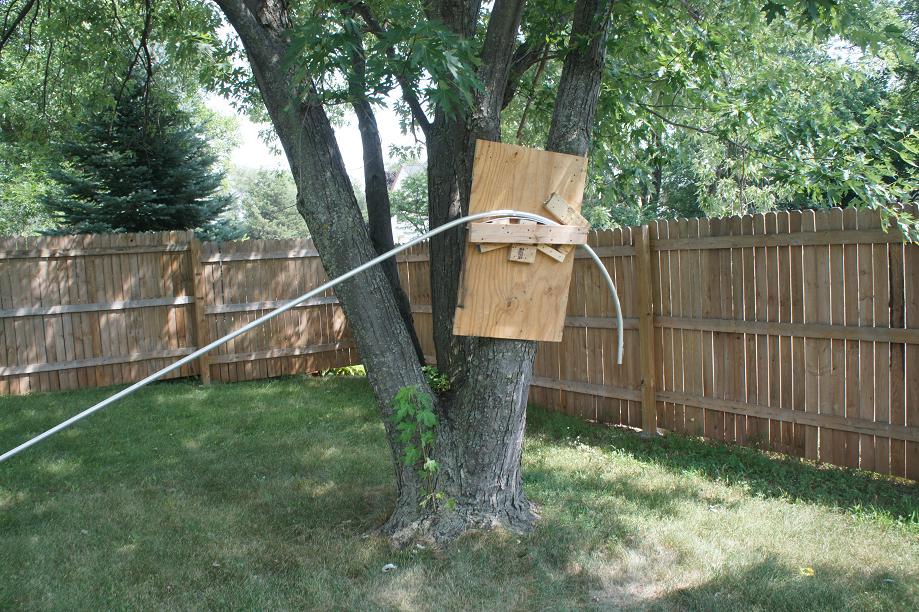
My pipe sections were so long that I could not find space inside the garage to secure the jig AND move around it during the bending process. I solved this by securing the jig vertically to a tree, and pulling the tubing down around the curve a little at a time.

SONY DSC

Eventually, I had my aluminum hoops! I made two of the same diameter, for the front and back of the safety cage.

SONY DSC

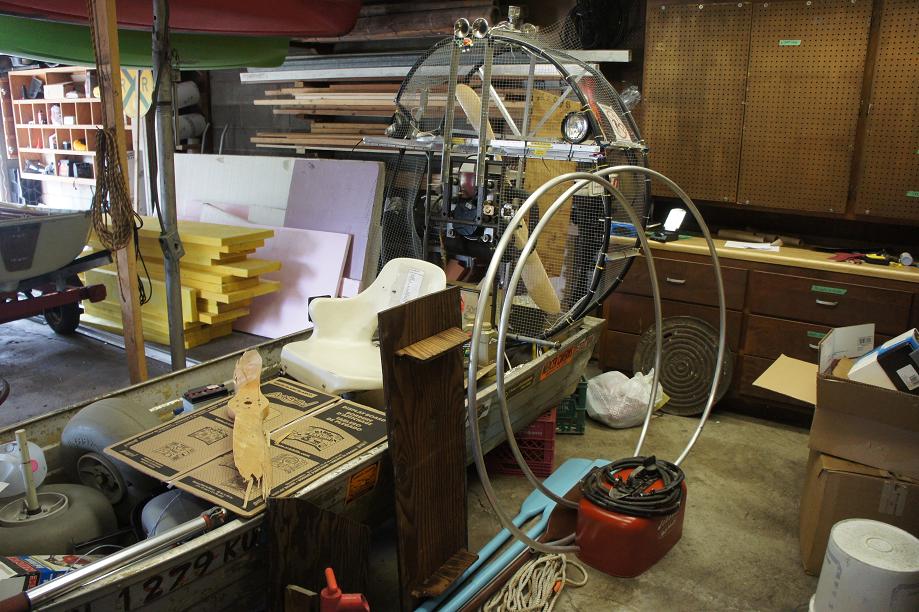
Below are the new hoops sitting next to the airboat, prior to removing the old plastic hoops. As a side note there are 3 other boats visible in this photo, with oars and gas tank for a 4th, two more are off-camera, and I’ve since acquired an 8th small boat (not counting barrel rafts or inflatables). I may have a problem.

SONY DSC


Narrow Gauge Model Trains

September 24, 2014

Recent work on my list of Alaska short line railroads has gotten me interested in toy trains again (or, excuse me, “model” trains). I discovered that there is a whole subset of HO-scale model railroading for narrow gauge, in HOn3 (scale 3′ or 36″) and HOn30 (scale 30″, aka HOe). While 36″ was more common and has more “prototypes” (the real railroads on which models are based), scale track for it is somewhat less available. HOn30 happens to match N-scale track, which makes it more attractive to modelers on a budget.

Alaska had a few 30″ rail lines (as well as 24″, 36″, 42″, and others). As I’ve discussed on my railroad page, most of the locomotives used on these lines were small 0-4-0 saddle tankers re-purposed from lower-48 industry and construction. A few companies happen to make HOn30 industrial locomotives and cars for modeling, and I couldn’t resist buying some more toys!

10616457_10105107578728220_3552160241891166410_n

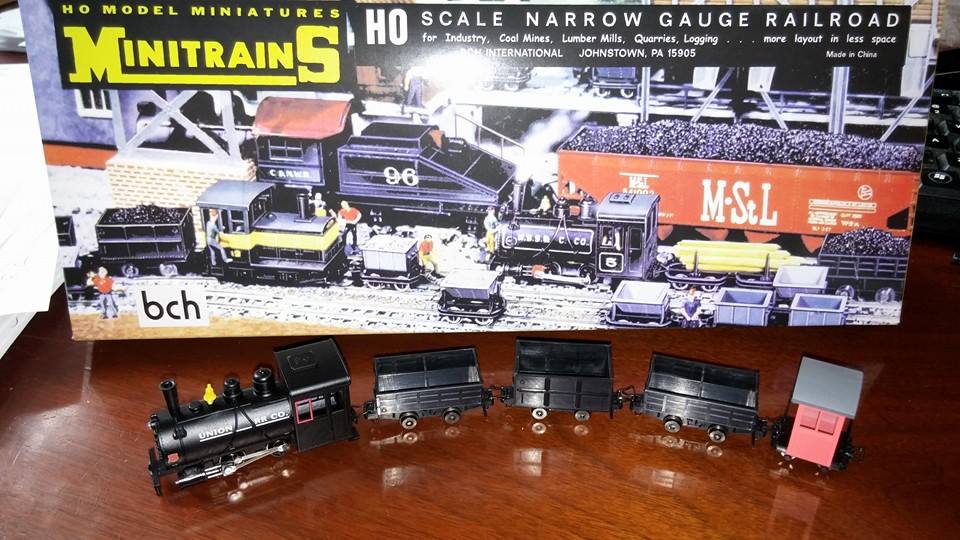
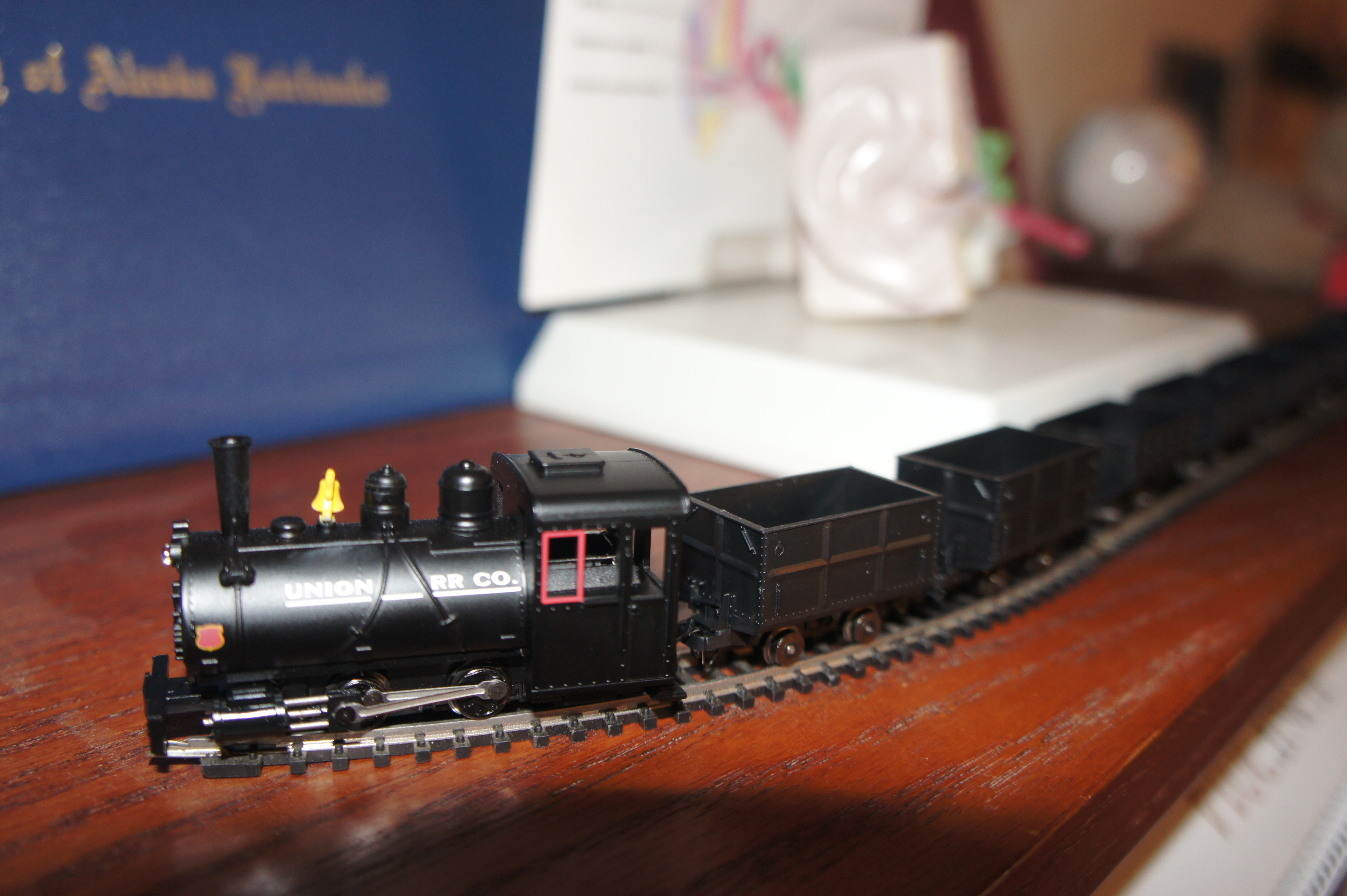
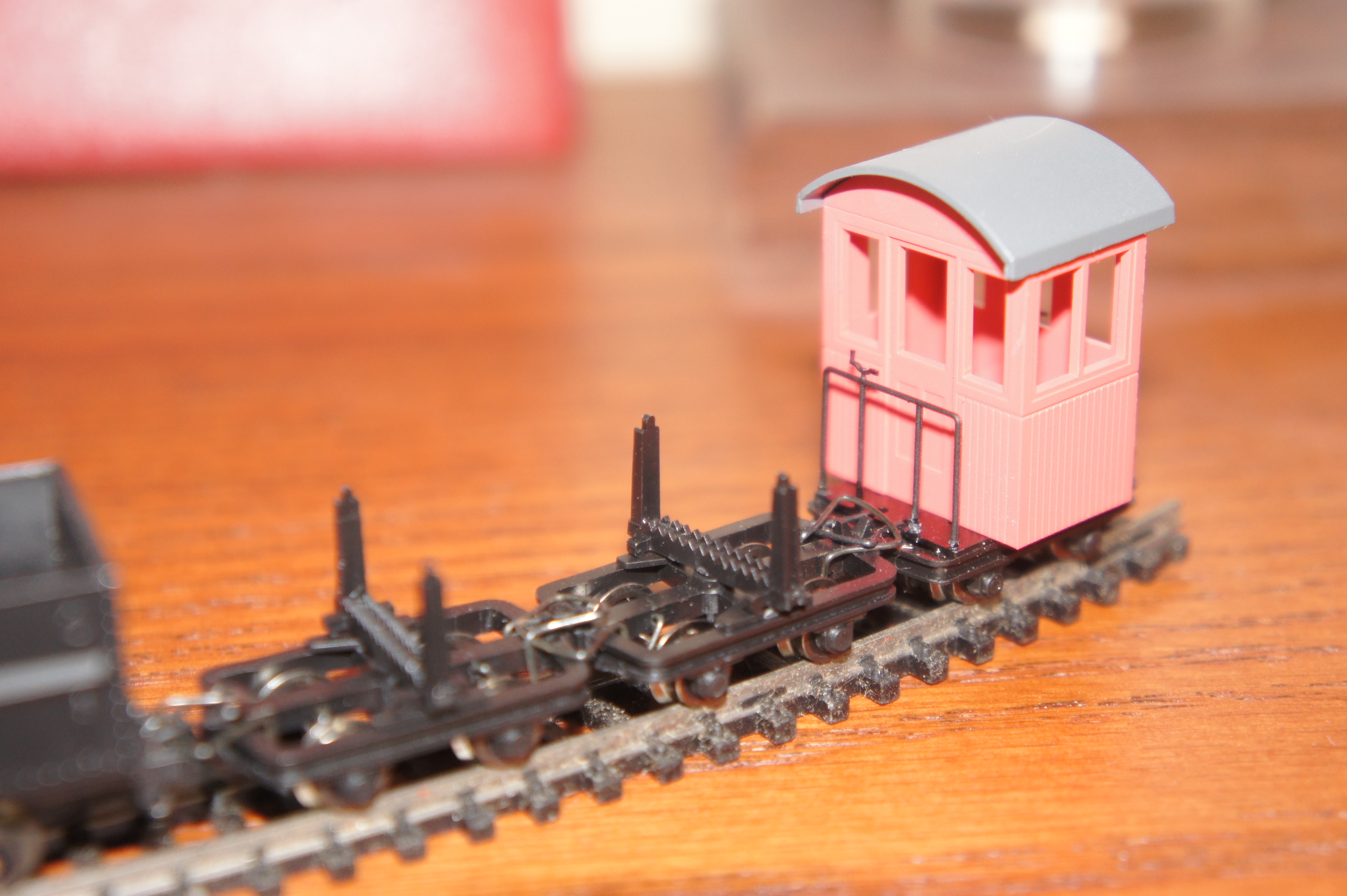
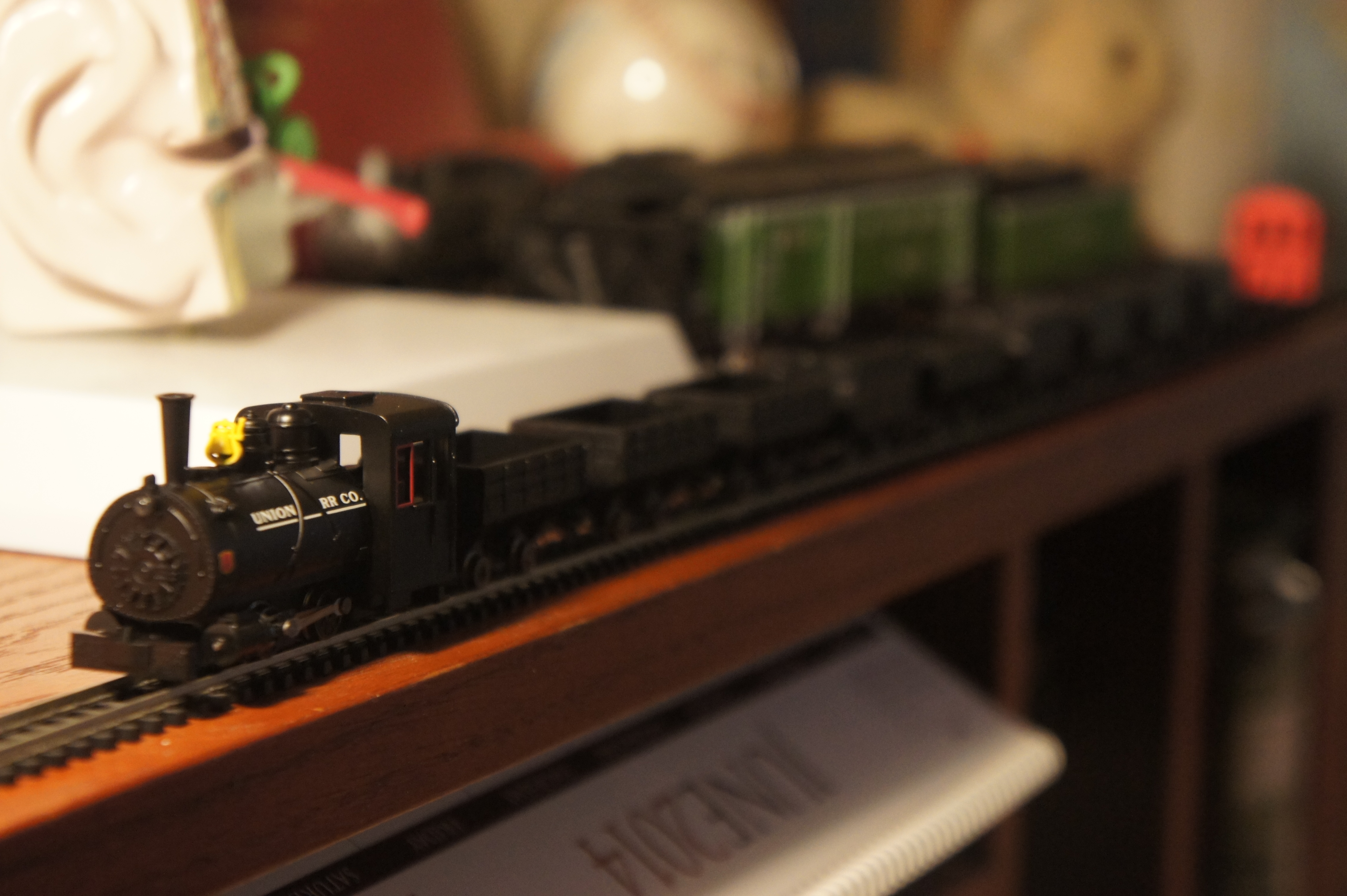
My first experiment in HOn30 includes some 2nd-hand track, a BCH Minitrains 0-4-0 steam locomotive, and a string of cars including coal, ore, log cars, and a caboose. There is a very good review of the locomotive set here. The company also makes a Plymouth gas locomotive and a variety of rolling stock.

SONY DSCSONY DSC

Right now these are just a static display. I have some HO scale stuff packed away from my childhood, and have been hoarding more as I find it at garage sales, but don’t have time to set any of it up and run it. In the mythical “some day” when all my projects are done, I’d like to model a small Alaska mine railroad (current estimates hover around age 60). Until then, these are really fun conversation pieces!

SONY DSC SONY DSC

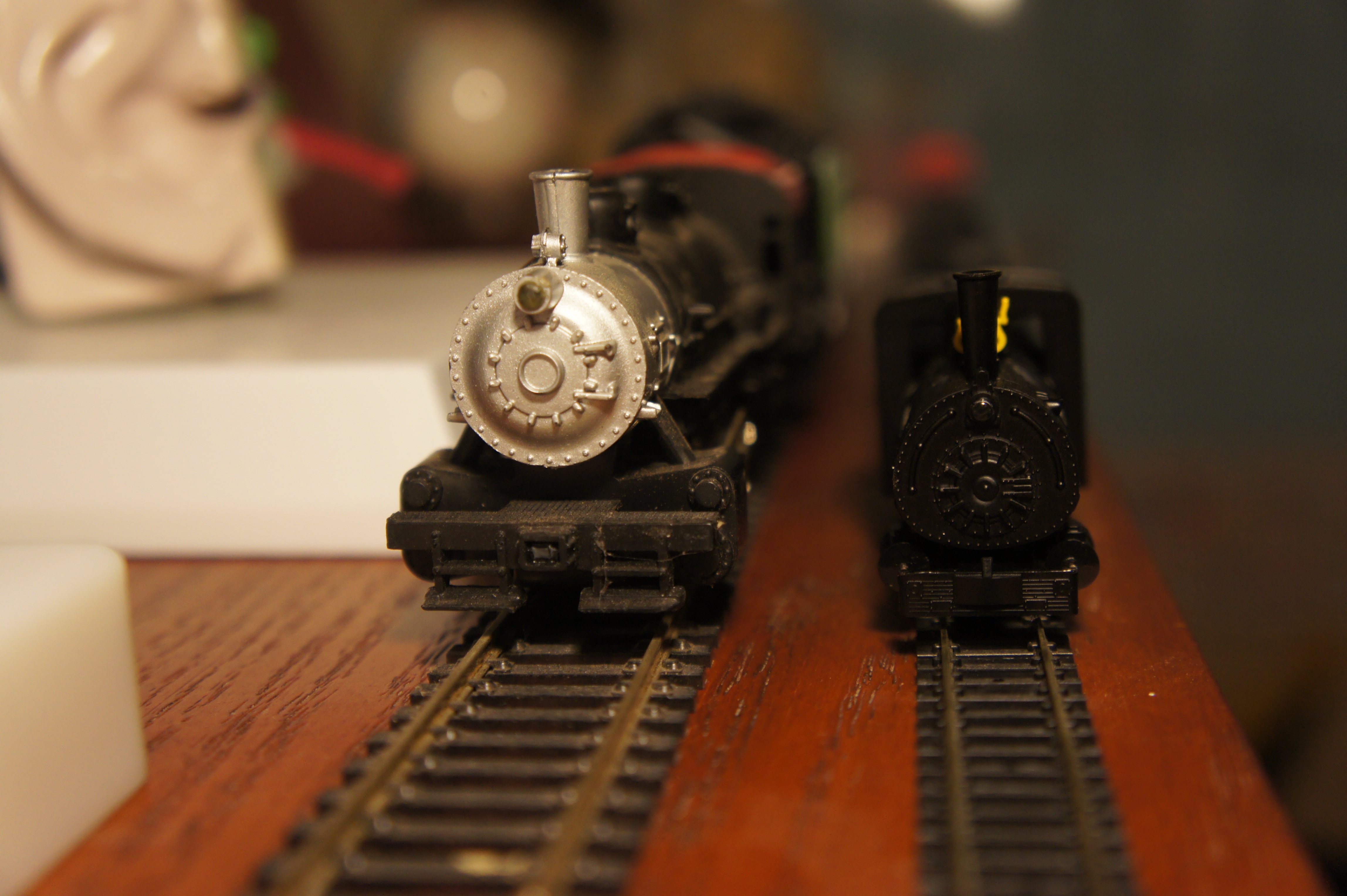
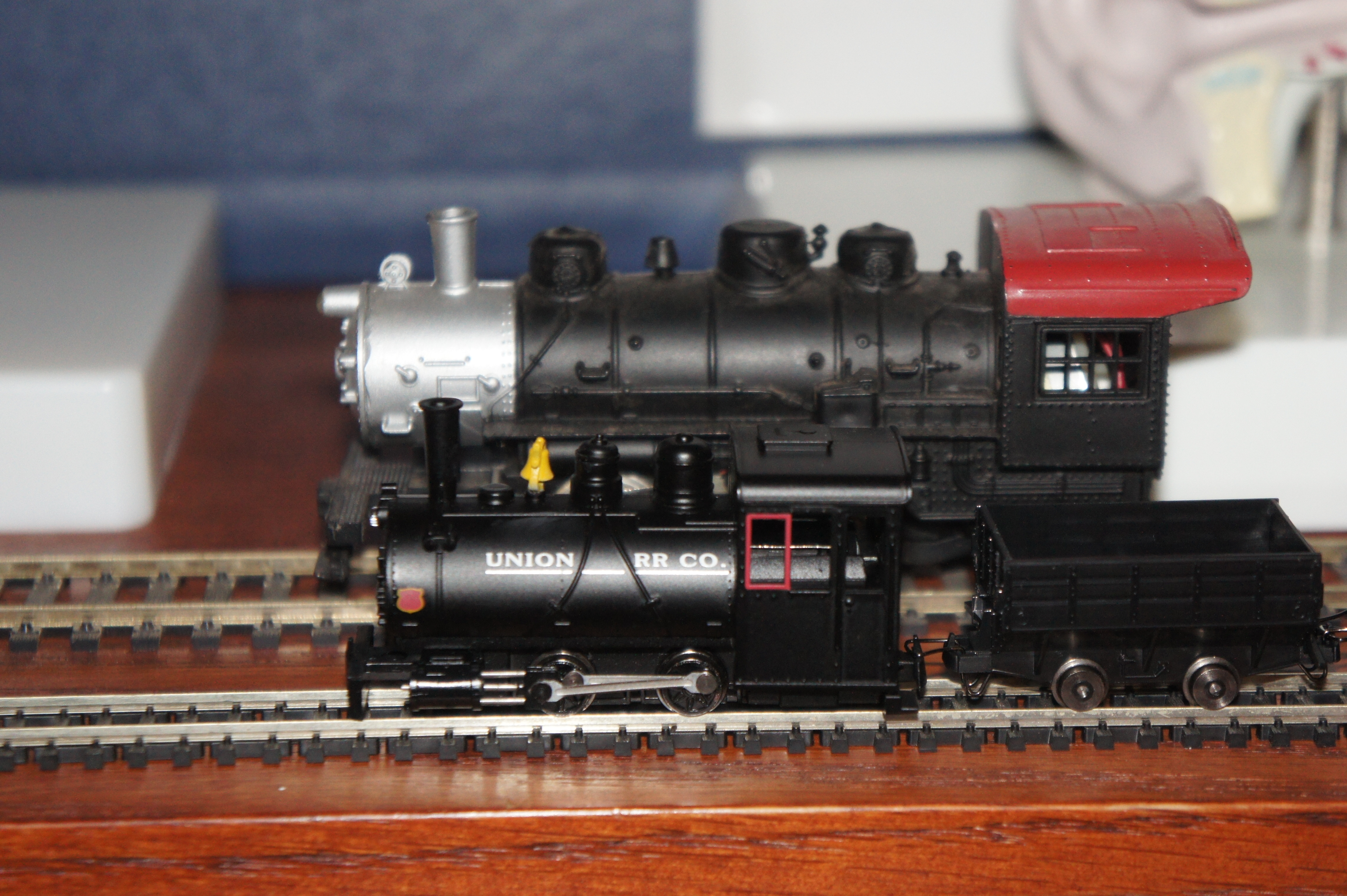
Above is an example of how small these are, the narrow gauge locomotive is shown next to a standard-gauge 0-4-0 switcher that I picked up at a garage sale. A real-world photo of standard and small narrow gauge locomotives can be seen here.

For anyone interested in modeling Alaska short lines, there are a wide variety of locomotives available new and used (eBay has quite a few). European models are quite popular and most manufacturers seem to be in Europe, using the “HOe” designation for 30″ scale gauge. Side-tank locomotives are more common in the model world, but were very rare in Alaska (so far I know of only one, an 0-6-0 Baldwin at the Apollo mine). Small flatcars were the most common rolling stock in real life (but less common in model form). Ore cars, log cars, and other specialty cars were also used.

SONY DSC

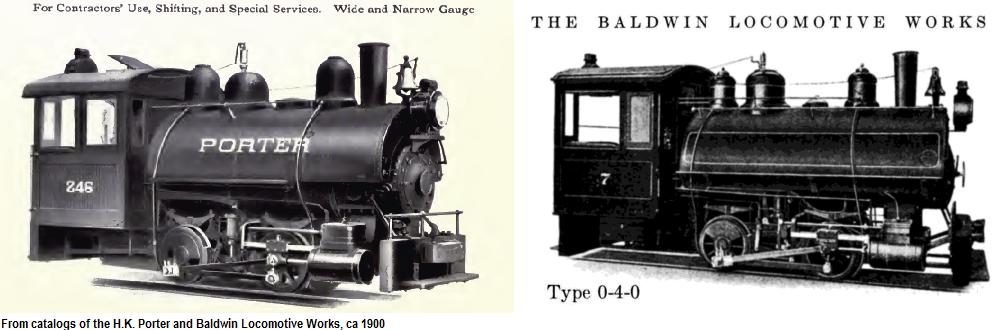
I would love to get my hands on an H.K. Porter with the shorter saddle tank, as it was the most typical of small Alaskan lines. However, they seem to be rare in HOn30 form, and seem to be mostly home brewed / scratch built / kit-bashed by people with more time and patience than I. The little engine I bought is labeled as a Porter and has Porter’s logo on the front, but some reviewers believe it is more closely based on a Baldwin prototype. Both builders offered nearly identical models of this size and design in the early 1900s.

Porter and Baldwin


More Railroad Updates

August 1, 2013

I’ve been poking at my Obscure Railroads of Alaska page a bit more. It’s fairly unorganized at this point, being mostly a running list of trams and small railways that I’ve found. My hope is that it will help other rail and history enthusiasts like myself. Hopefully it can serves as a landing page and jumping-off point for further research on small town Alaska rails, I’ve tried to provide links to source documents when possible. When I started this (a bit by accident), I had never heard of many of these lines, despite having a long-running interest in railroads and Alaska history. The information is out there, it’s just buried a little beyond the scope of easy viewing and mainstream histories (As a kid I was always frustrated at how vague and incomplete things like Alaska Geographic’s railroad issue were).

Randy Hees of PacificNG.com is one of the people who’s been quite helpful on this topic. He recently mentioned my website in a blog post. He also discusses the challenges of tracing the overlapping and twisting history of Alaska and Yukon railroads.

Eventually I might try to break the railroad page up into sub-sections or sort it by region, length of line, or other useful statistics. I also hope to refine the details on some of these, often the source documents are a little “fuzzy” about dates, names, or routes.

While I’m at it, I would also like to thank the Alaska State Library’s Digital Archives collection for letting me use some of their material. I’m sure they are getting tired of me sending in permission forms!


You can see my potato cannon from space.

January 25, 2013

One of my larger potato cannons is visible in the latest Google Maps imagery!

space

There it is!

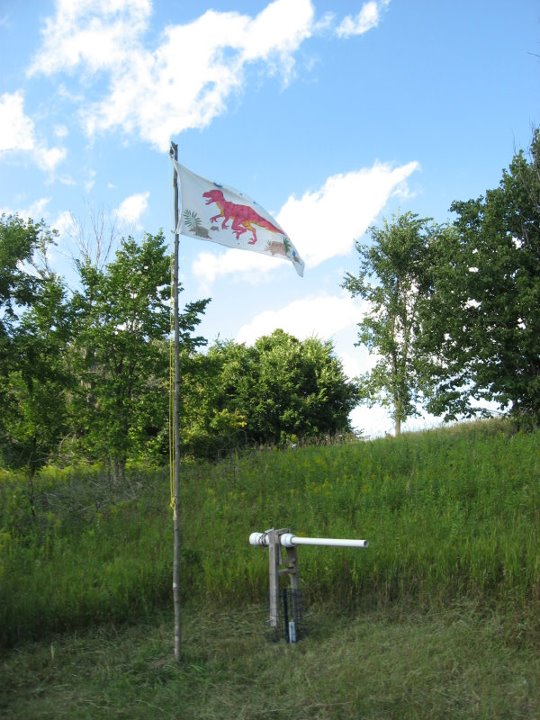
As some back-story, this is out at a friend’s property in rural Wisconsin. We started clearing some camping and bonfire spots last year, and made a “town square” with a flagpole (Rachael made the awesome flag!). The cannon got placed in the town square as a ceremonial reminder of something-or-other (or just to keep it from cluttering up the yard at home).

square

As far as the imagery source goes, it seems to be from late fall of 2012. Based on the info below, I’m about 99% sure it’s satellite imagery, but the resolution is pretty high for the stated capabilities of Google’s imagery suppliers, so it *could* be from aircraft aerial photos. As you zoom in, Google maps displays info about the imagery source on the lower right. At the closest zoom, it just says “Map Data © 2013 Google”. The next level up mentions Geoeye, and as you zoom out it starts mentioning the USDA Farm Service Agency and Digitalglobe. I would tend to assume that the attribution text tells you where all or some of the imagery at a certain zoom level came from, but again, I’m not sure.

Looking into the listed imagery sources, I’ve come up with the following possibilities:
GeoEye contracts with Google to provide imagery from their GeoEye-1 satellite, with 16-inch resolution.
Digitalglobe has several satellites, the newest of which offers an 18-inch resolution.
The USDA Farm Service Agency provides approximately 36-inch resolution, and does not seem to have data from 2012 yet.

I’m guessing the Google Earth image above came from the GeoEye-1 sat. If so, it can obviously discern features slightly smaller than 16 inches, since the potato cannon is only about 3″ wide. You can even faintly make out the wider chamber (6″ IIRC) on the left side.

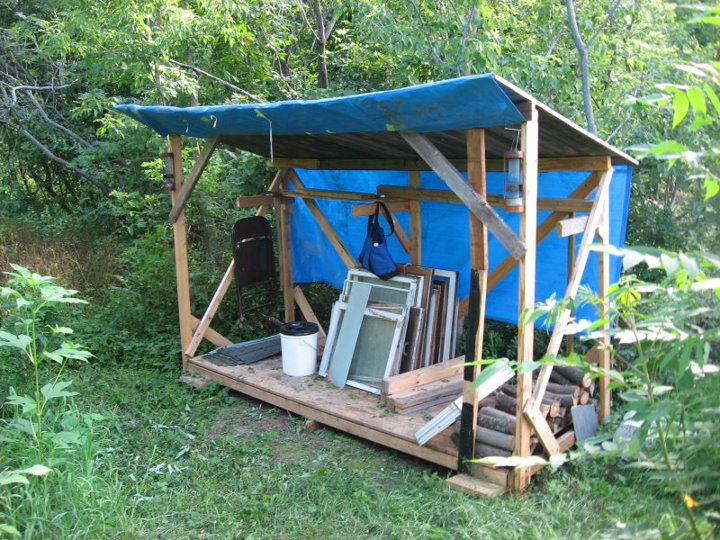
The smaller blue blob is also my doing, it’s a woodshed with a blue tarp roof (I meant to roof it with tarpaper shingles but got lazy, and another friend was already roofing his nearby shed with tarps, so we went the redneck option all around).

woodshed

So, I now have the questionable distinction of creating things that are visible from orbit! I suppose it’s only fitting that those things are total hillbilly creations 😛 Once Google updates the data over my new house and shows my roof repairs, I’m sure I’ll have more to look on with (actual) pride, but for now this will have to do!


Fencing

October 30, 2012

I’ve taken up fencing!
No, not this kind:

This kind!


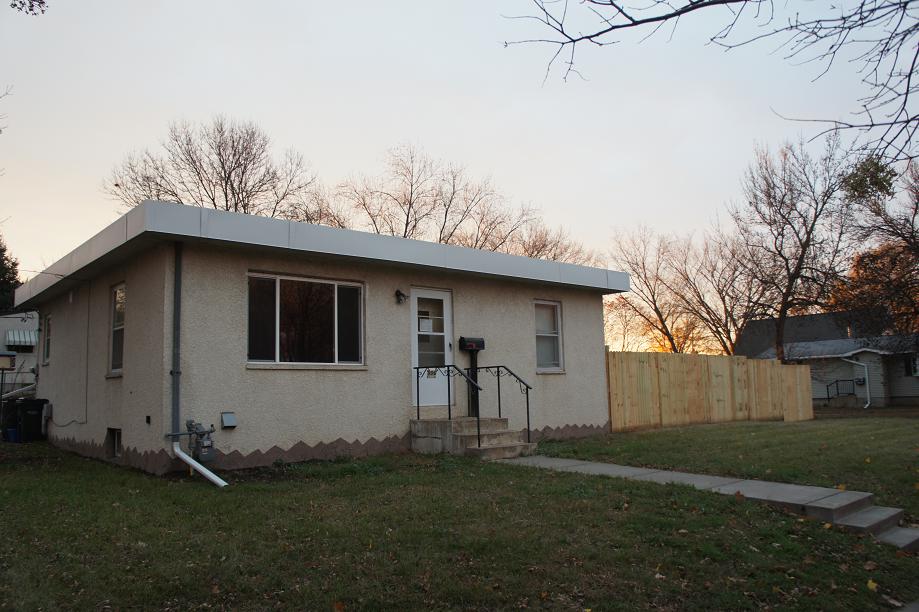
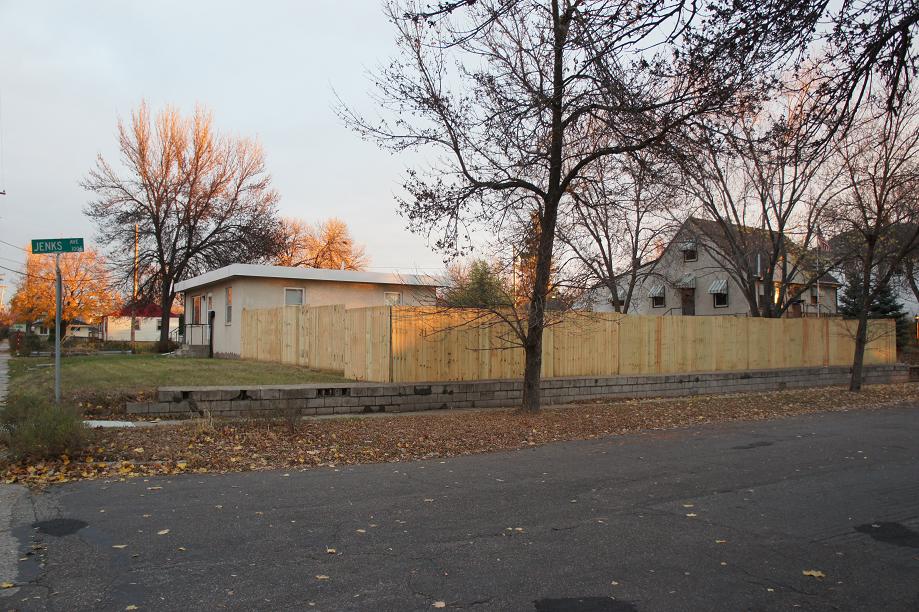
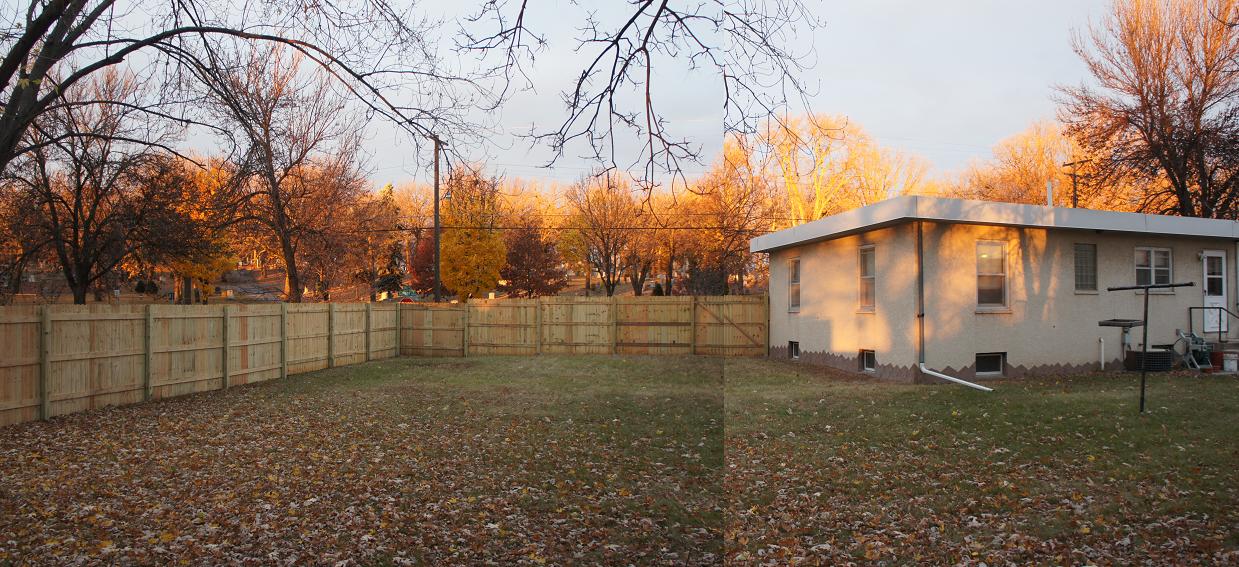
Oddly enough, the yard looks bigger somehow with the fence around it. Maybe the solid border defining the edge of the yard is somehow more “real” than when looking out over the street was? Now I just need nerf autoturrets on each corner to track passersby menacingly…

The cemetery across the street looks very seasonal as well:


Ceiling Boats

July 9, 2012

Got the kayaks up out of the way!

The garage now has as more cleats and pulleys than some sailboats, especially when the stupid green kayak is heavy enough to require double blocks on both ends.


More house updates

May 7, 2012

A few new photos from the house:


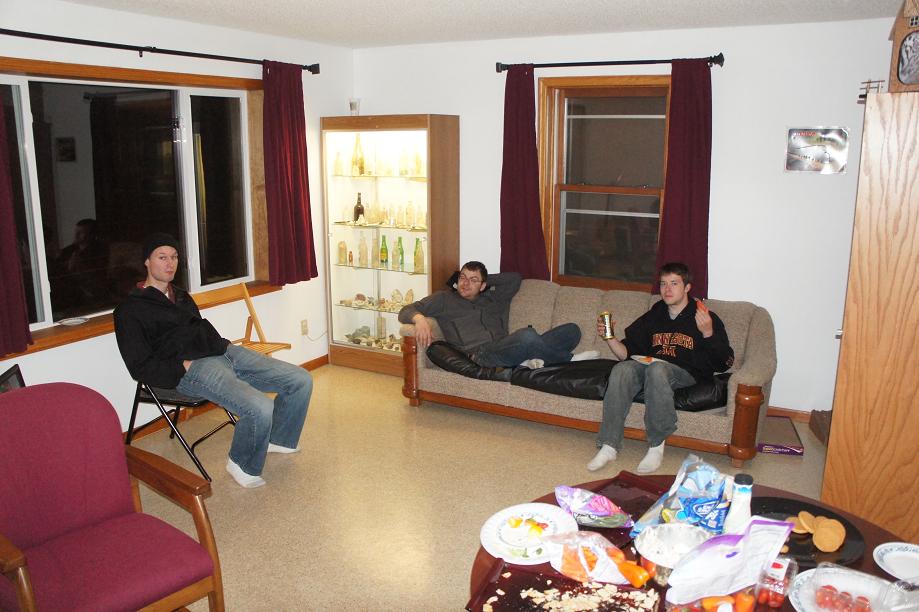
Living room


Closeups of the living room display cases, with some of the junk I’ve collected over the years (beachcombed, dug up, garage sales, etc).


Custom cat architecture. For finicky darn cat who’s scared of the basement.


Less messy basement!


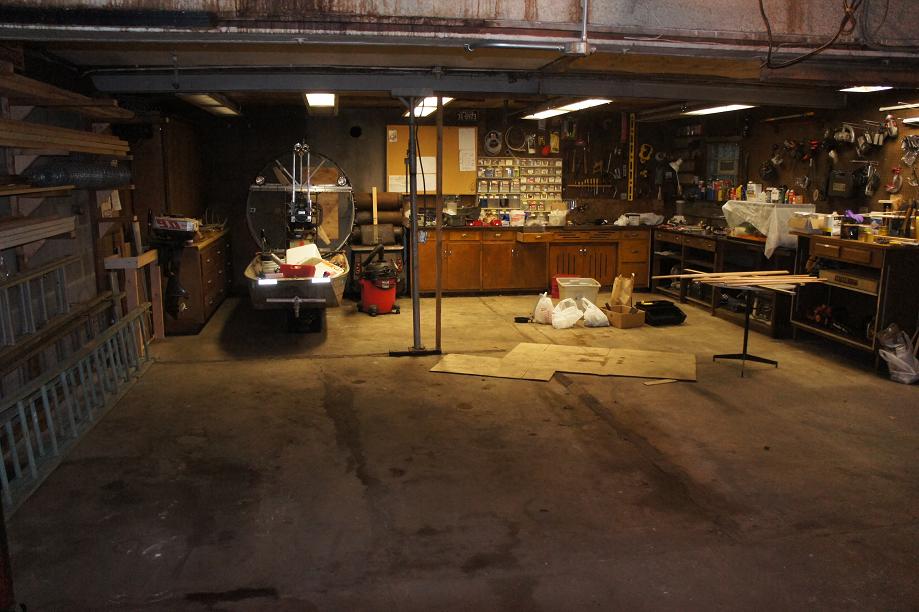
Way less messy garage with room to park, work on boat(s), etc!


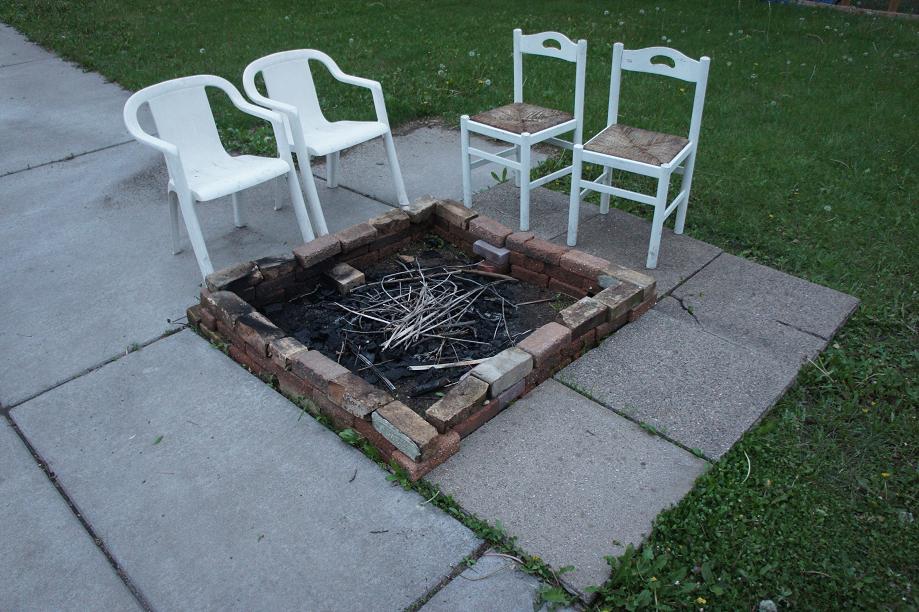
My fire “ring” is more of a fire square.


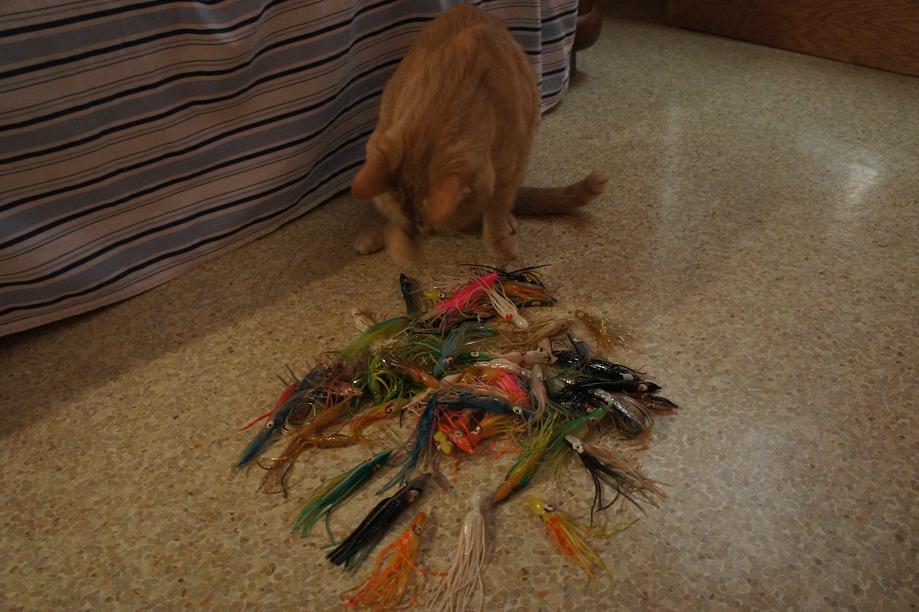
Wobbler plays with Alaskan action figures… Hootchies (fishing lures).