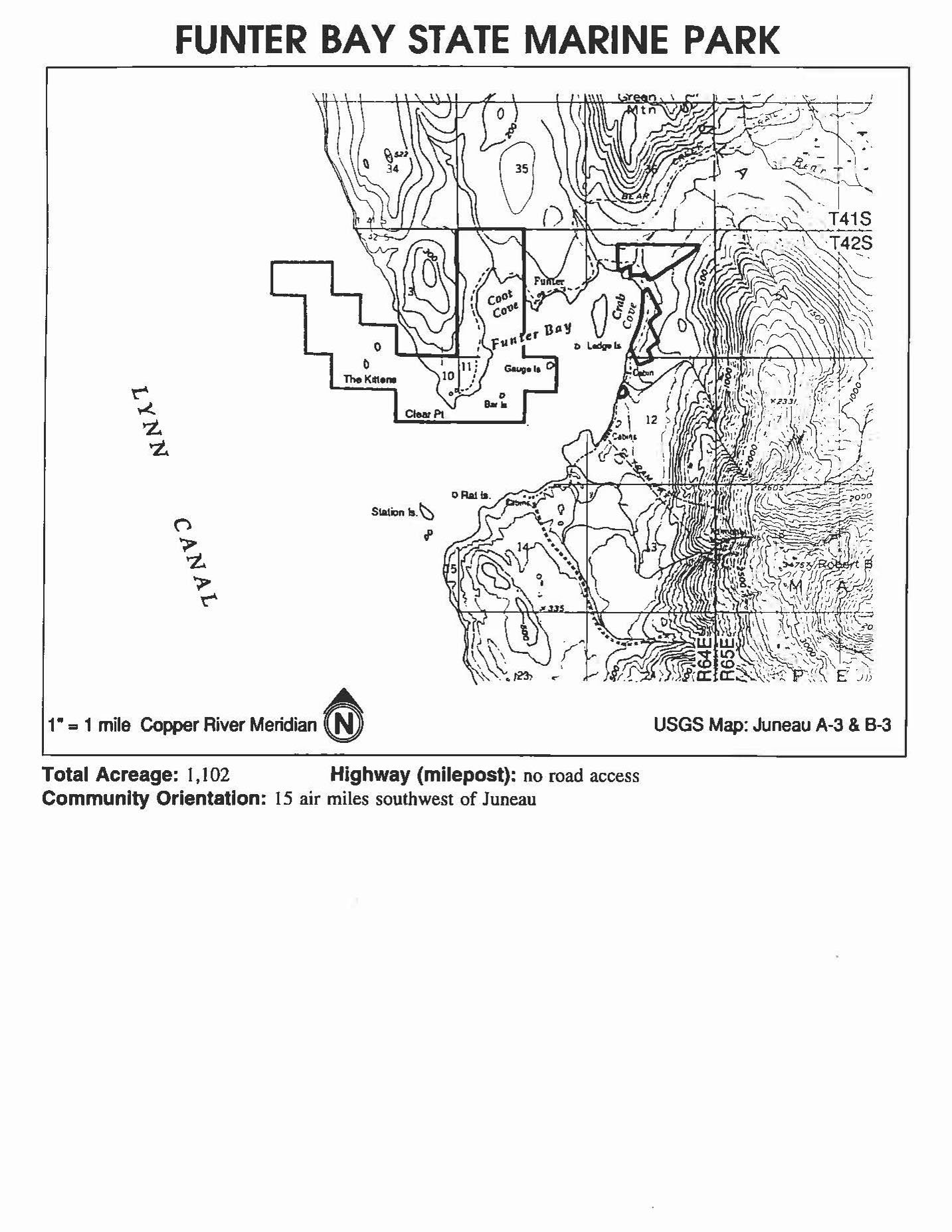
I realized that I have a large number of photos from Scow Bay, so I’ve decided to follow up on one of my earliest Funter Bay History posts with more information on that location.
Scow Bay is one of the few parts of Funter Bay history that are publicly accessible. This side of the bay lies within the Funter Bay State Marine Park. Again, please note that the adjacent former cannery site is mostly private property. Also note that the Scow Bay area features extensive tide flats, keep an eye on the tides if you plan to land a boat here, or you may find it high and dry!
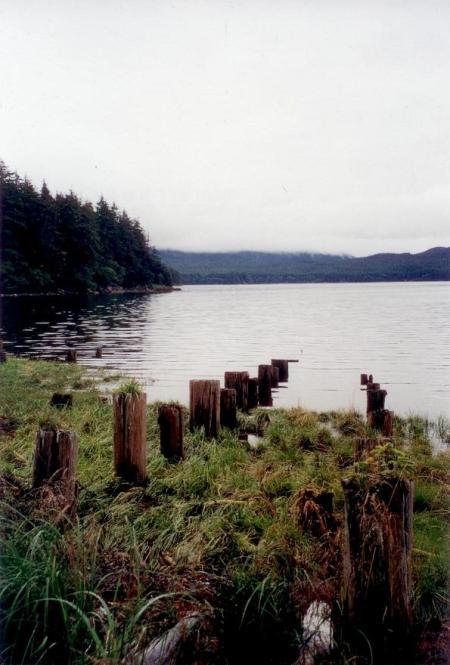
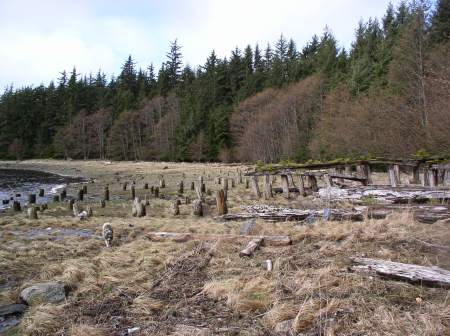
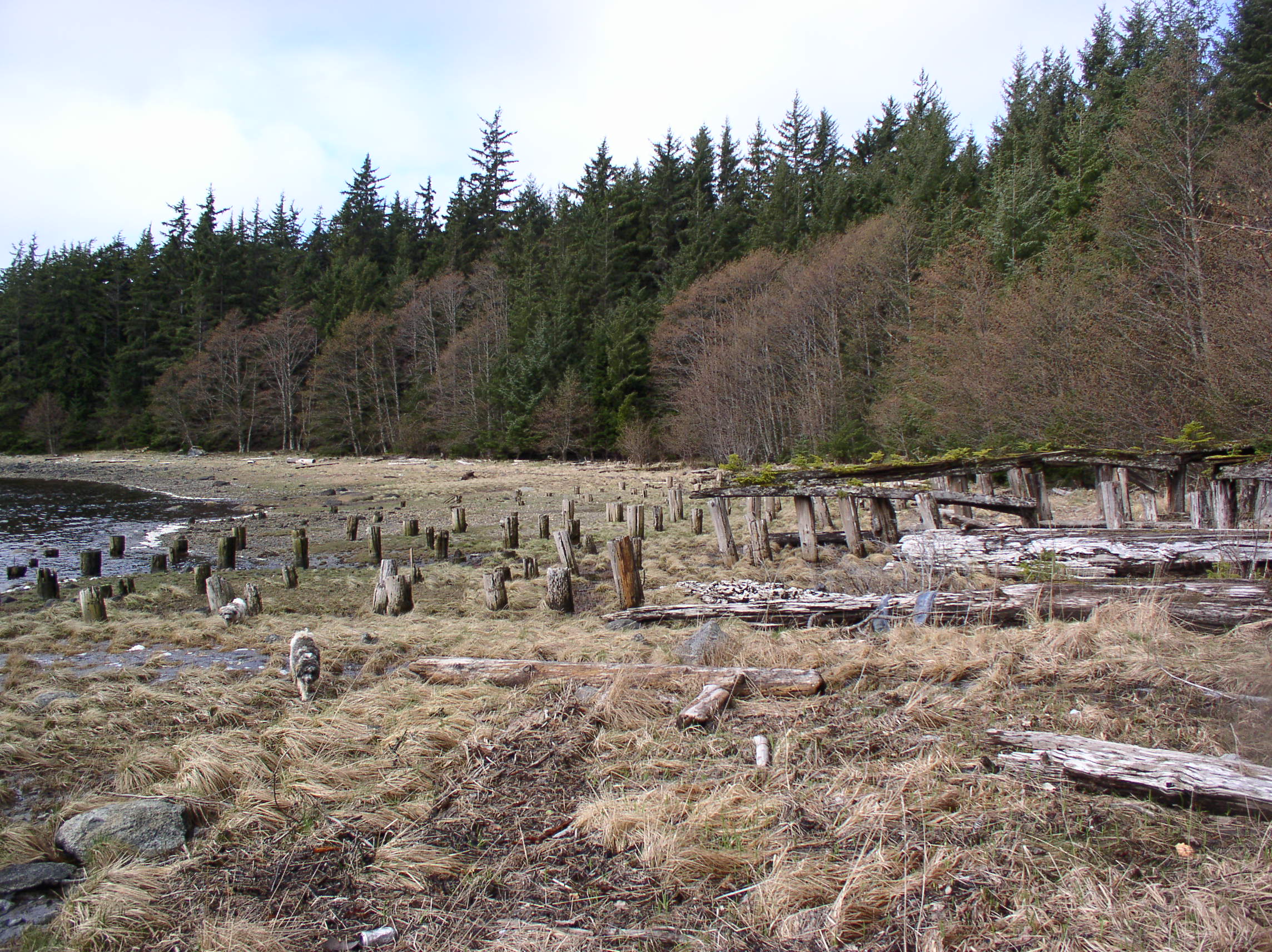
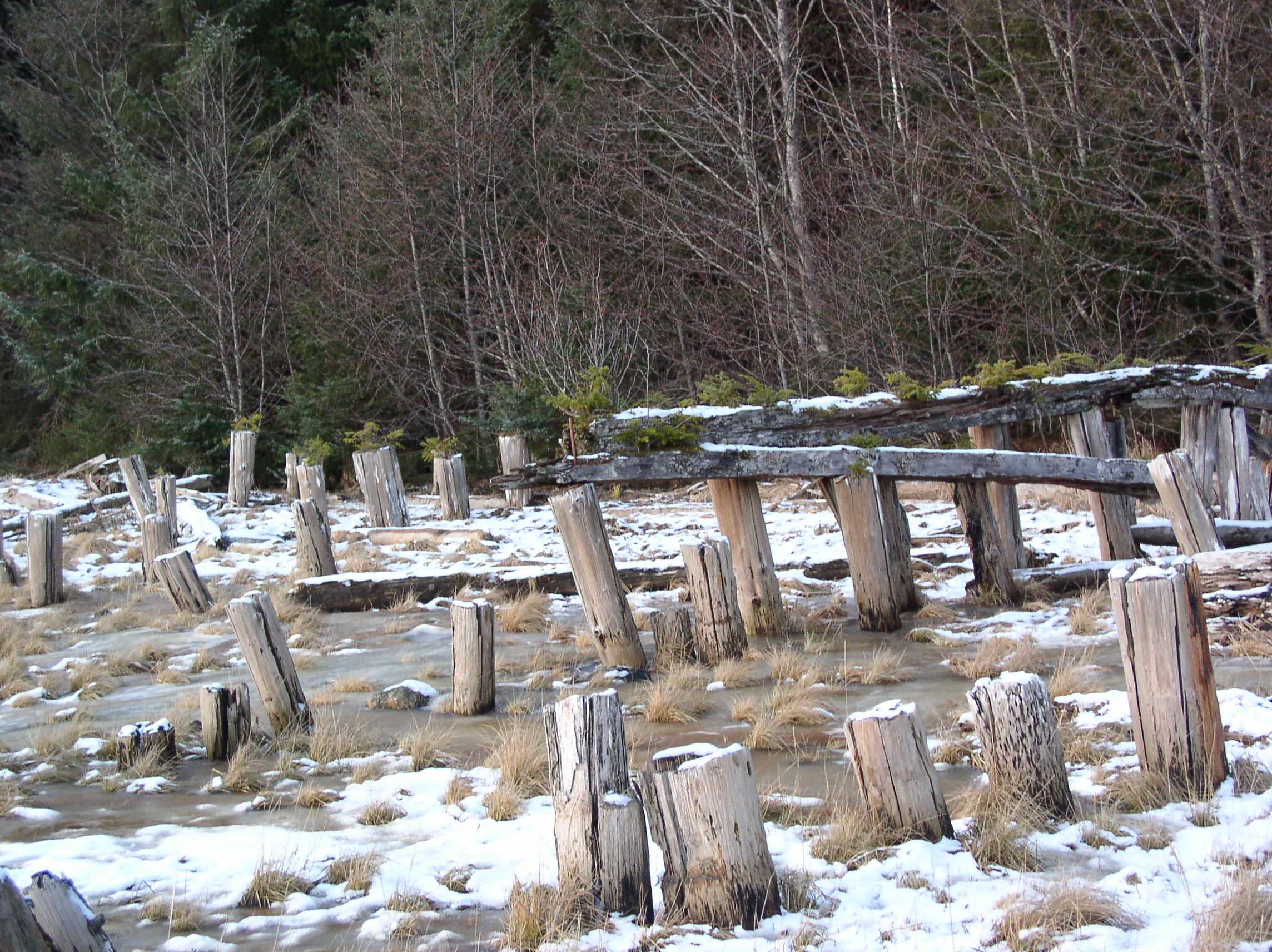
Slipway pilings at Scow Bay:
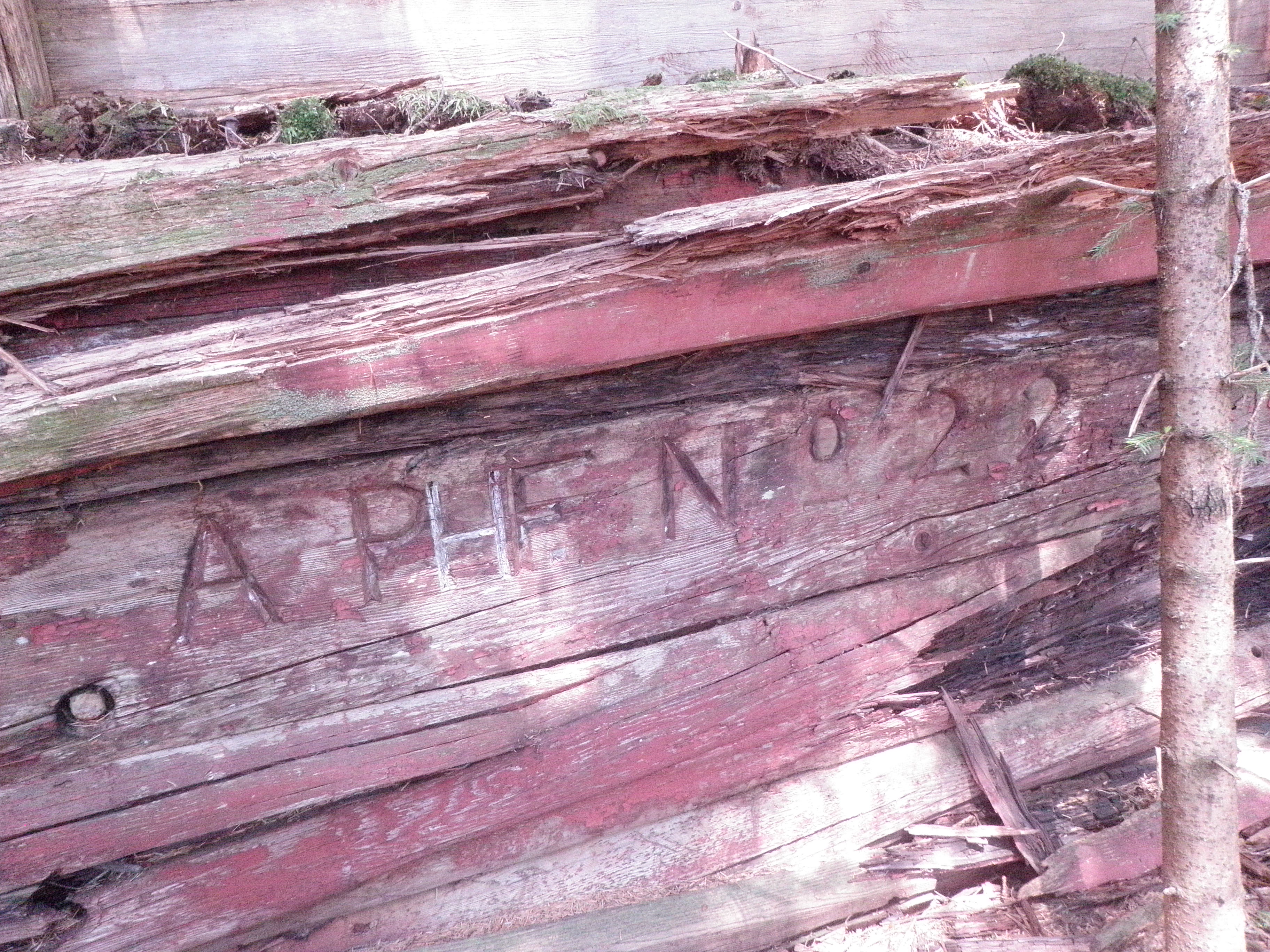
The name of one of the scows, which were large enough to require official documentation as Merchant Vessels:
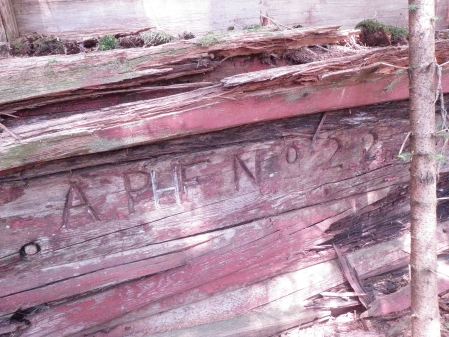
From the 1965 Merchant Vessel Registry on the above scow:
A.P.F. No 22 (wood) Barge, No 168899. 41tons gross/net. 61.1ft long, 18ft breadth, 4.4ft depth. Built 1924 in Houghton, WA for freight service. Owned by P.E. Harris Inc of Washington, home port Juneau.
The carved “H” seems to have slipped in between the P and F sometime after the official numbering, I’m not sure what it means. The other scows had equally imaginative names, like the No 19, No 20, etc.
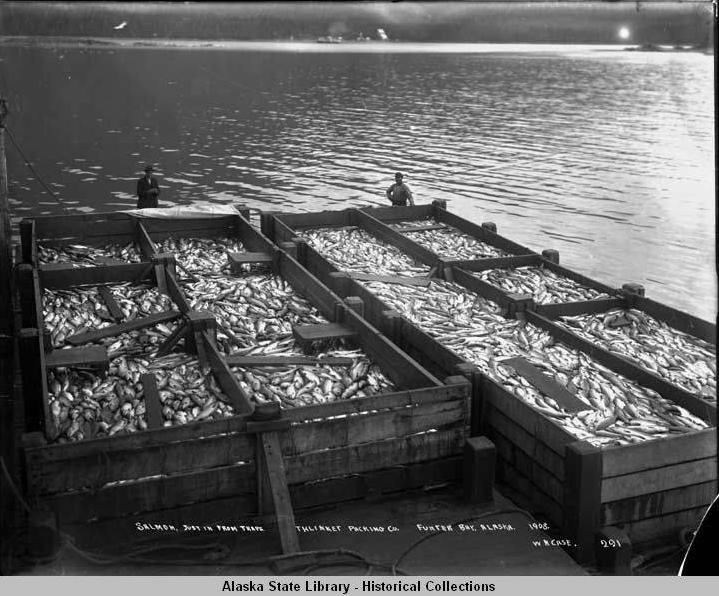
Here are some more views of these scows in operation in 1908. The wooden boards surrounding the top would have increased their load capacity:

Courtesy of the Alaska State Library, William R Norton collection, P226-446
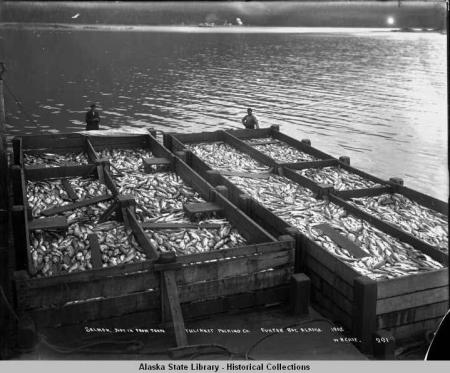
Courtesy of the Alaska State Library, William R Norton collection, P226-445
Two more views of the slipways, you can see some of the remaining top rails on the right, now home to small gardens of saplings:

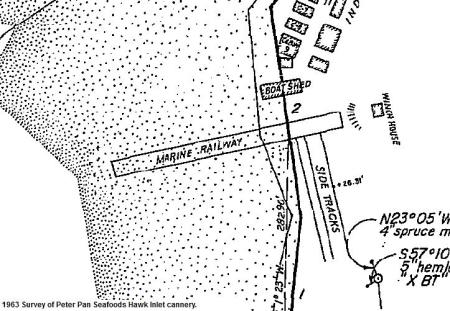
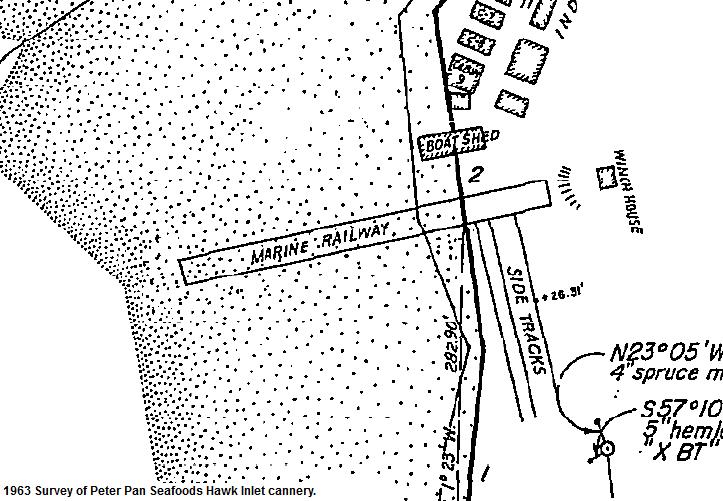
Here is a diagram of the scow slipways from a cannery of similar vintage. Typically there would be one main ramp leading from the water up to the woods above high-tide, and then scows would be pulled sideways onto parallel tracks for storage. At Funter they seem to have had multiple parallel tracks to the water, rather than side-tracks.
Some of the collapsed top-rails that made up the storage tracks of the slipways, and one of the braided steel cables running back to the winch engine:

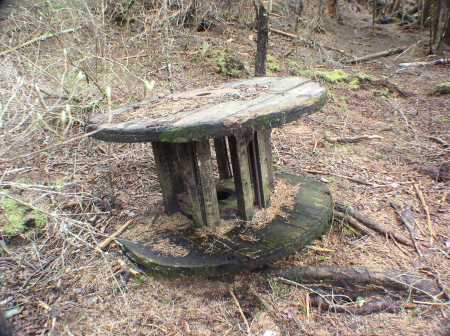
A spool that would have held steel cable (also known as an Alaskan patio table!):
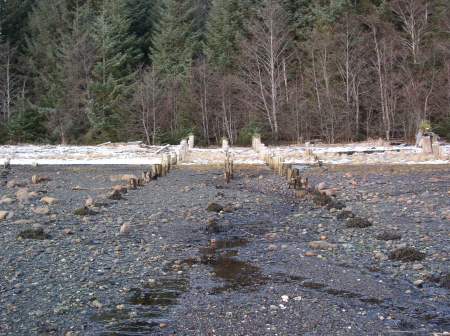
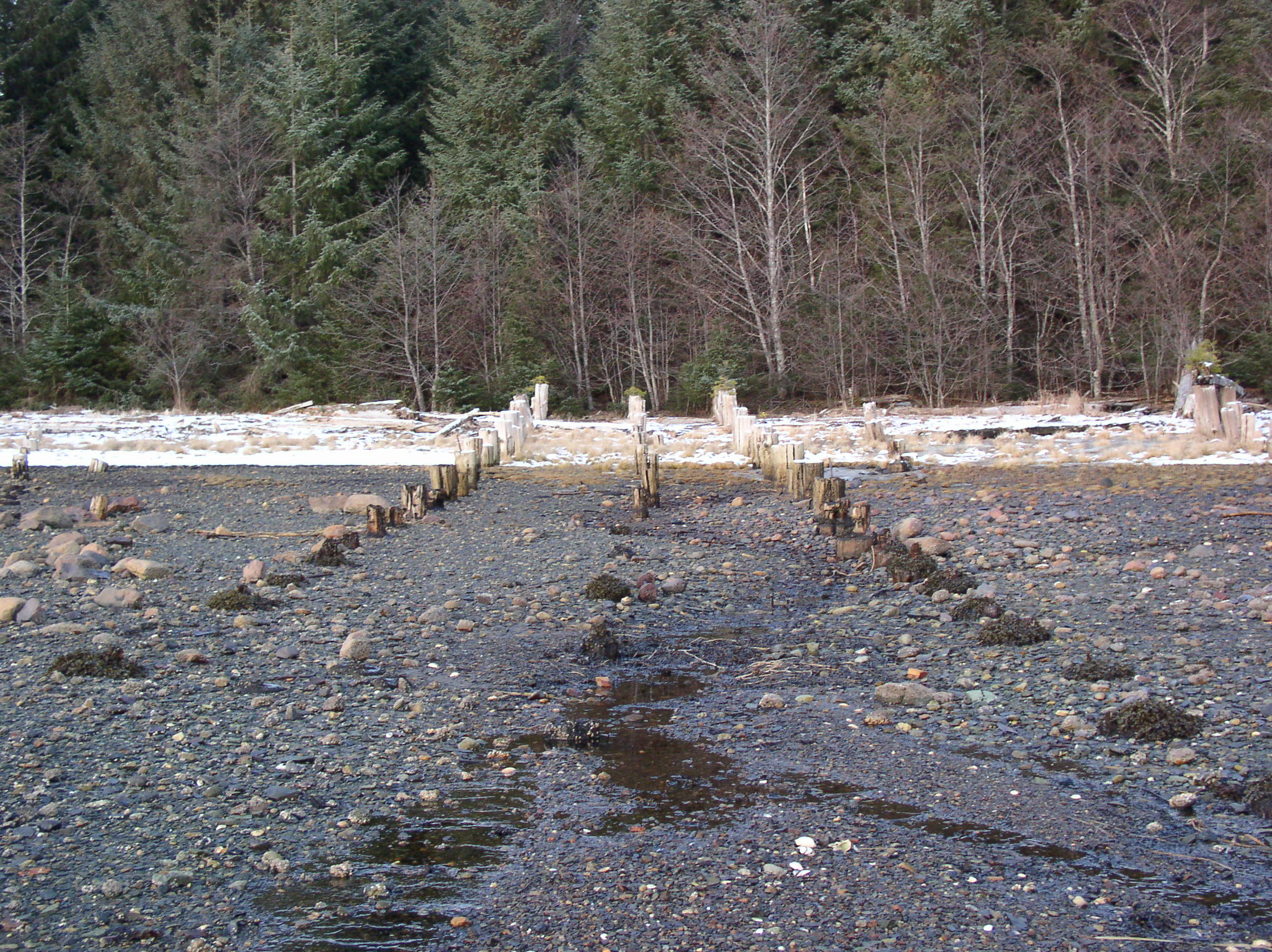
Parallel rows of pilings leading from tideflats to the woods:
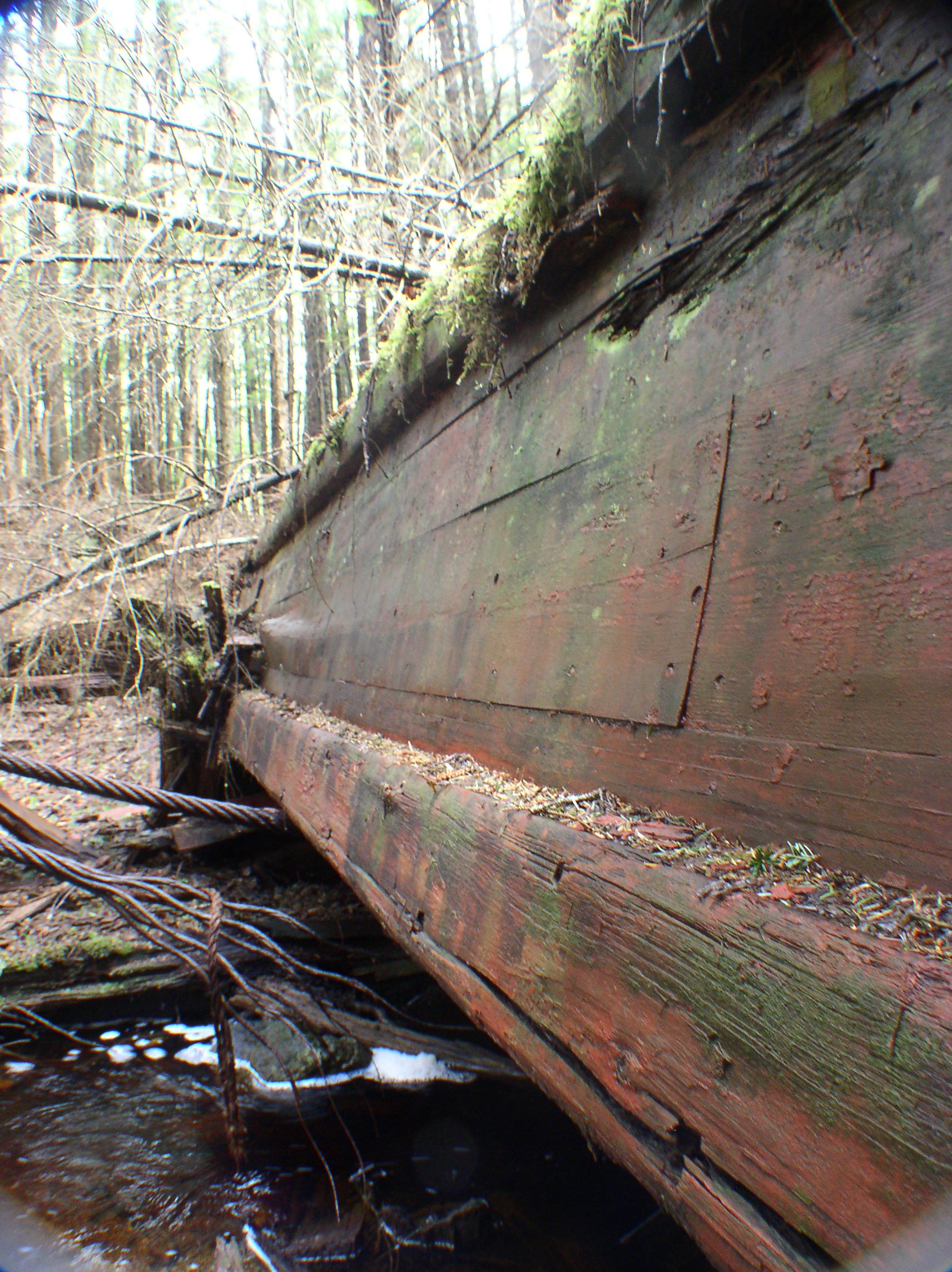
Closeup of a scow hull. The red paint was probably a copper-based anti-fouling bottom paint (to prevent barnacles and other marine life from growing on the wood):

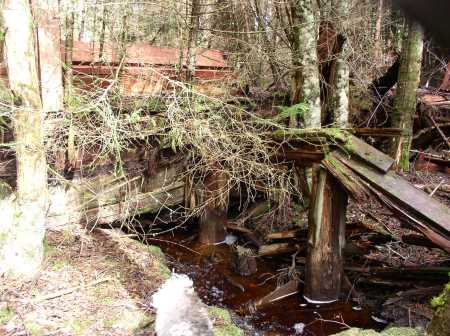
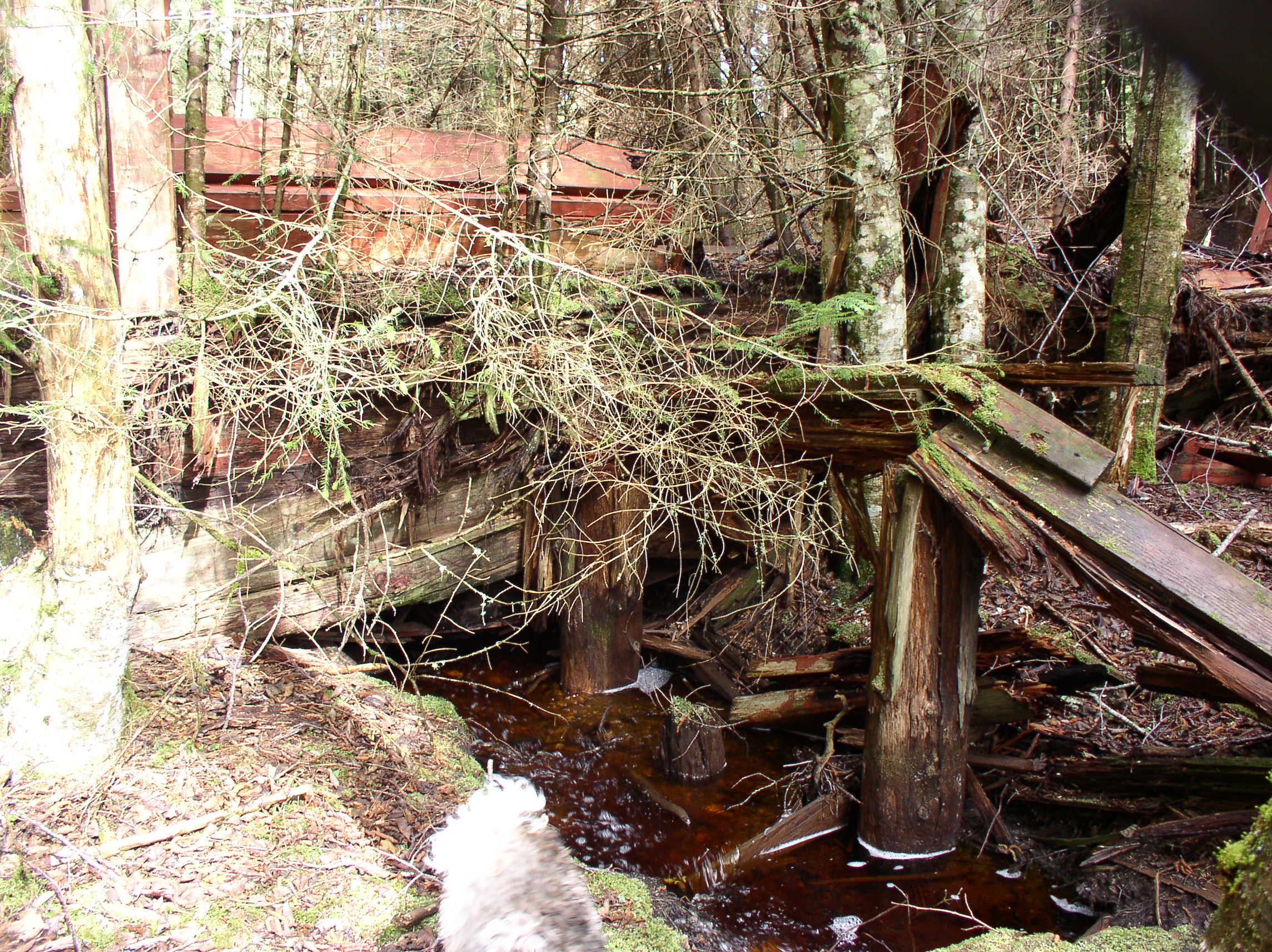
This picture shows how the scows have rotted into and through the rails they once sat on. In some cases, the pilings that held up the rails are now poking up through the rotten wooden hulls. A scow (on the left) has settled to ground level, while a rail is seen falling off its posts on the right:
That’s it for now!


 Posted by saveitforparts



 Saveitforparts