Funter Bay History: Fishermen Part III

March 18, 2014

In this edition of Funter Bay History we return to the topic of commercial salmon fishing. A local fisherman very generously provided some photos and information about Funter Bay in the 1960s, which make up the bulk of this post (Previous posts on this topic are in Part 1 and Part 2).

1

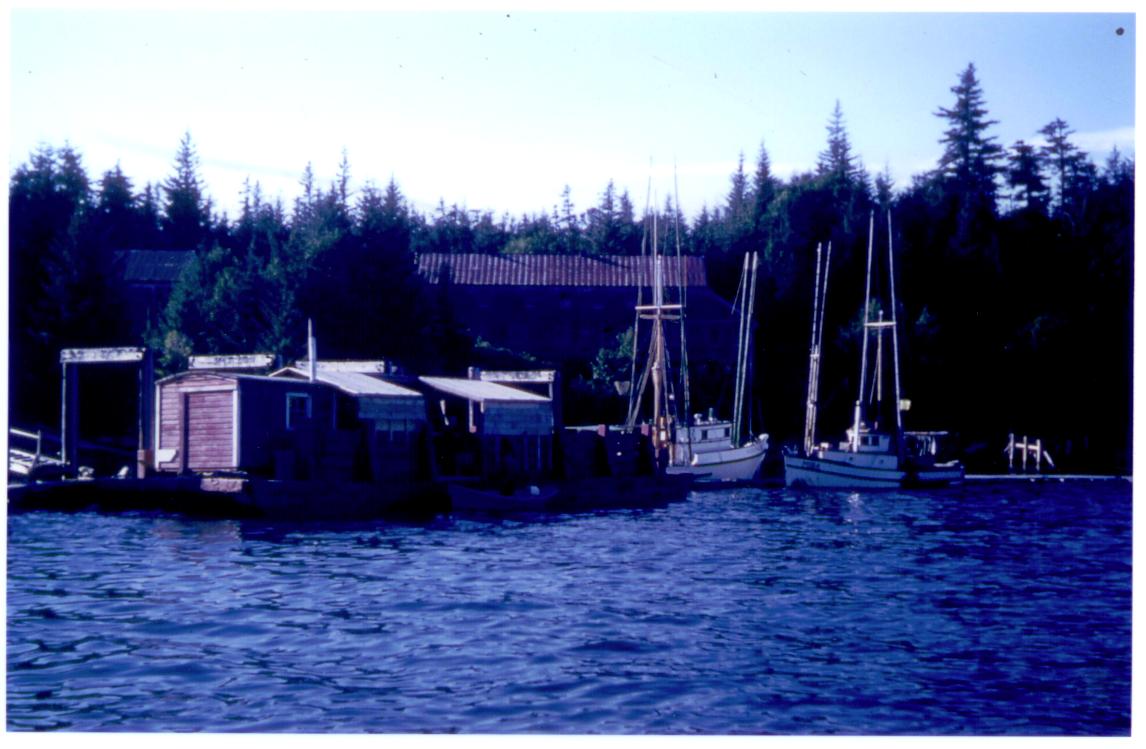
Seen above is the Funter Bay cannery and public dock circa 1958-1960. The trollers Merry Fortune and Mira are tied up, along with the fish scow. The scow was owned by Art Berthold, of the packer Fern II. Art would visit the bay regularly to pick up fish, with local residents Gunner and Lassie Ohman operating the scow. Harold Hargrave owned the Merry Fortune and lived in a house just to the right of this photo. There were three fishing boats named the Mira in Southeast Alaska around this time, this may be the one from Juneau owned by Arnold Henrickson (per the Merchant Vessel Registry)
2
A closer view of the cannery dock and scow, with one of the cannery bunkhouses in the background. The red structure with curved roof on the near end of the scow appears to be a former fish trap watchman’s shack, these were frequently repurposed and some can still be found in use around Funter Bay.
3

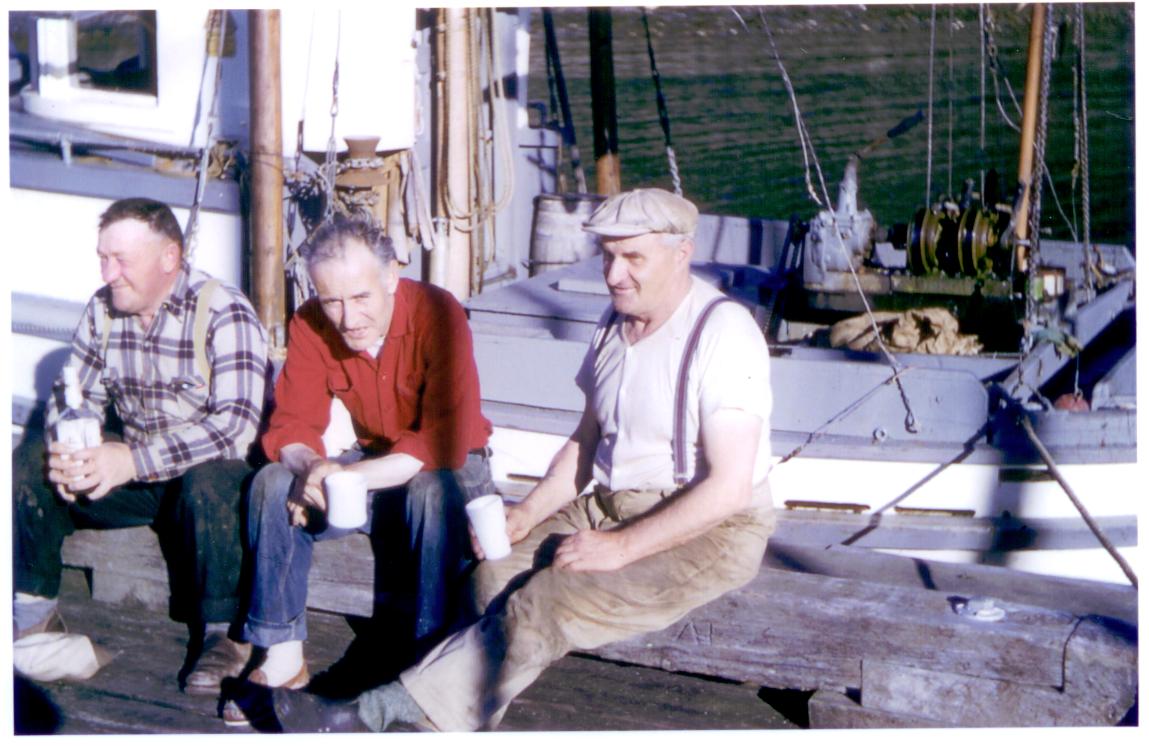
Fishermen (L-R) Walt Mackey, Ken Lameroux, and Jack Kolby, having an afternoon drink at the dock (of “milk, no doubt” according to the source!). Walt’s boat the Elliott is behind them. Ken fished the Lillian L, and Jack fished the Ruby.
4

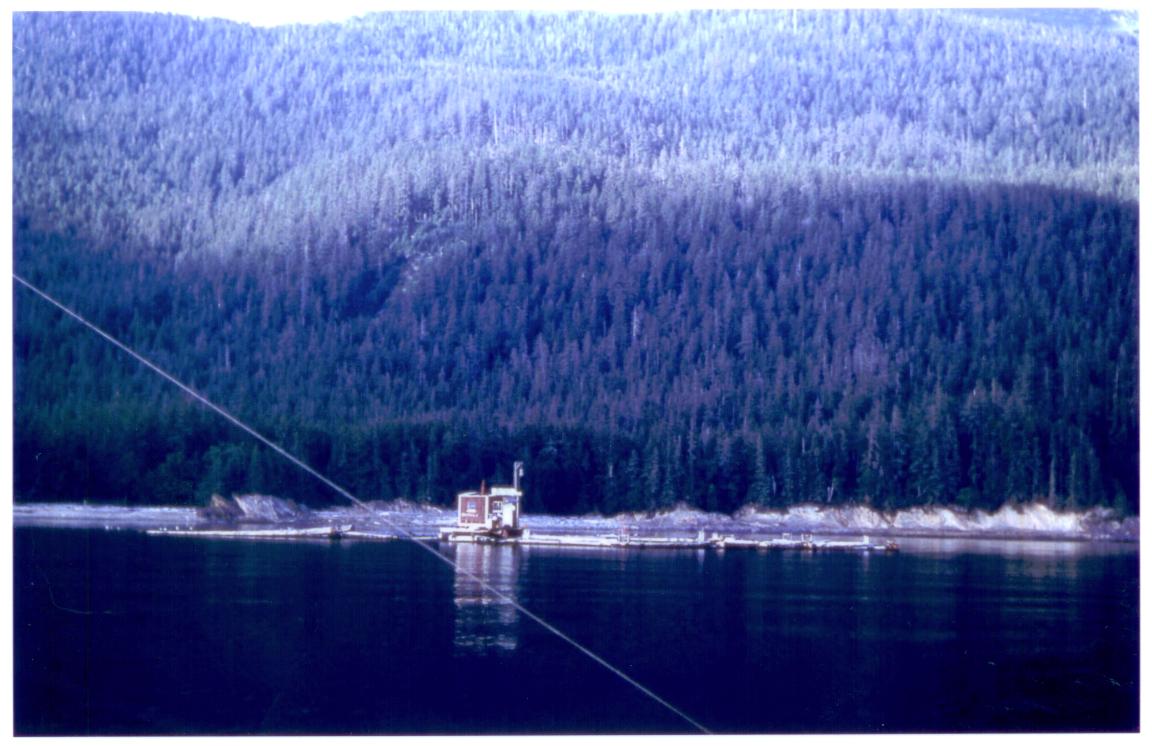
The fish trap at Lizard Head (the contentious Claire Alexander fish trap mentioned in this post). This photo is from around 1958, the trap was removed when Alaska became a state in 1959. The structure on top is the watchman’s shack, the trap itself is made up of the low floating logs.
5

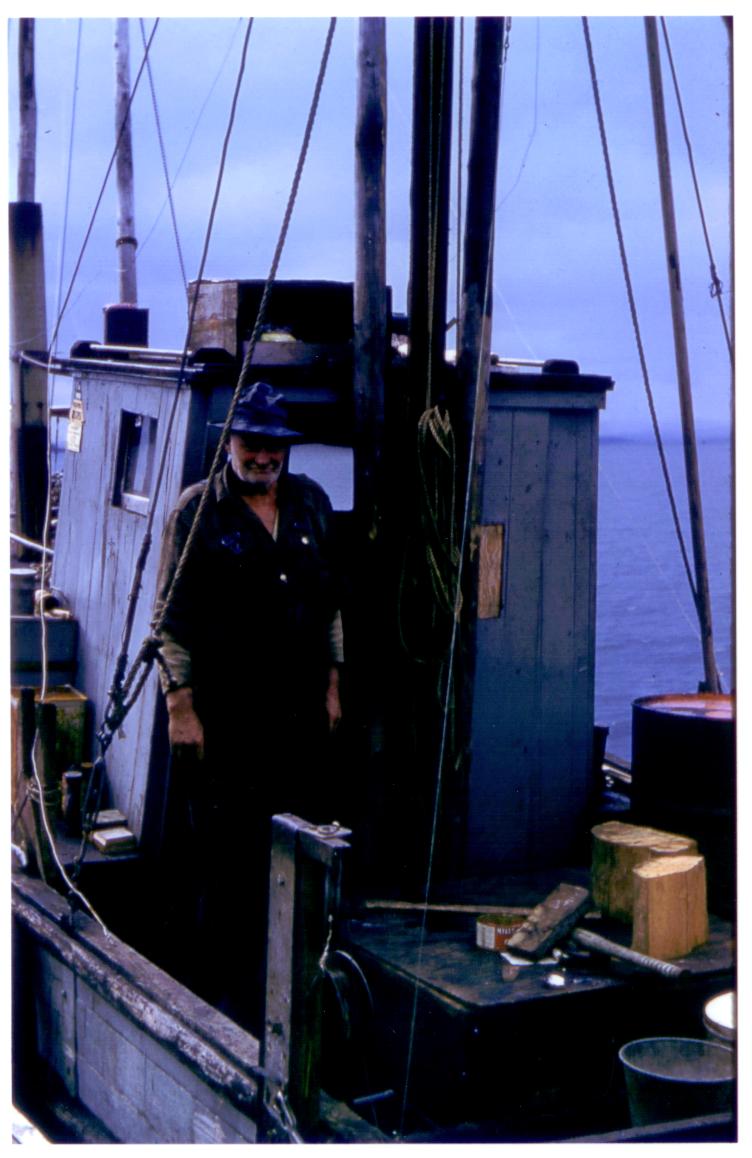
Above is “Dirty Foot Al”, so called because he didn’t wear shoes. Al built his own boat on the beach and heated with wood, you can see blocks of firewood and his axe on deck (oil heat using the same diesel as the engine was more common).
6

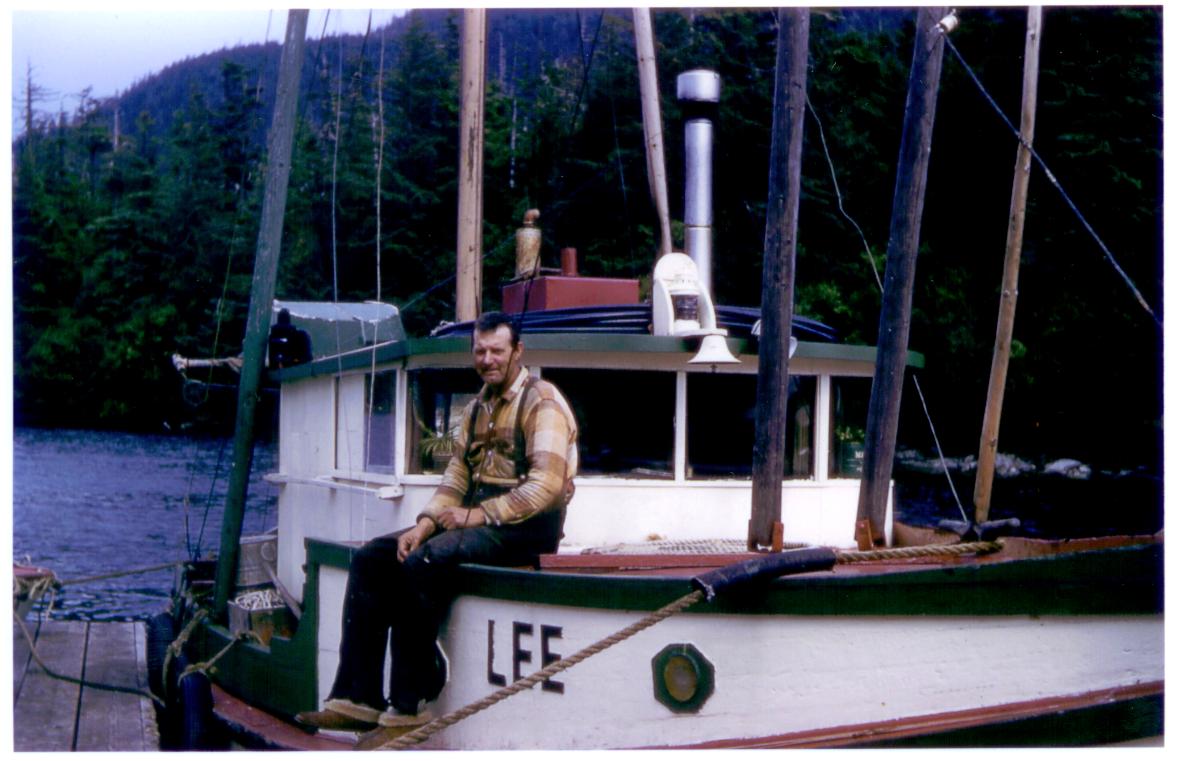
The troller Lee was fished by Ted Childress, seen above, and his wife (who owned the boat). It was reportedly a “Columbia River model”

A 1955 newspaper article (mentioned in the Bayers notes) described the ferry Teddy abandoned at Funter Bay after experiencing engine trouble. The owner reportedly went on to fish the “Lee”, but their name is not given.

7

Jack Kolby (or Koby?) fished the Ruby, seen above at Elfin Cove. Jack was reportedly of Swiss background, and loved to tell stories.

8

the Rosalind was owned by a man named Ben, seen above.

9

Here we see Walt Mackey delivering a loaf of bread to “Crackerbox” Mac. Mac got his nickname from a previous boat, which apparently was not very pretty. Mac’s boat seen above was equipped with a Model A Ford engine.

10

Above is Walt Mackey again, having “a bit of some unknown substance”.

Funter Bay had two state floats, both of which were used by local fishermen. The season generally ran from May 1 to late fall. Many of the boats would start early, and quit early, coming back in by 2 or 3pm. Then the crews would sit around with their “milk” telling stories or comparing  how much money they’d made for the day. They would also visit with local residents in the bay. Sometimes they would set herring nets overnight to catch bait.

In addition to the people shown above, other fishermen at Funter during this time period included Charlie Tubbs, Norton Sorrell of the Grey Mist (later bought by Charlie), Ned Albright of the Ommney, and Ted Samples of the Diver. Ted and his wife trolled, and the Diver had a compressor and “hard hat” rig for underwater work. Ted installed and repaired fish traps when he wasn’t fishing. A man named John had a small double-ender with a noisy 2-cylinder motor. Others who frequented the float, but didn’t always fish at Funter were Al “Scram” Schraman of the Aurora, Santiago Cesar, Mac of the Helen M, and Ike Puustinin of the Julia D.

One story of float hijinks involves a fishermen who somehow became a little drunk one night. The fellow kept a pee can just outside his wheelhouse door for late night calls of nature (these are fairly common on boats, both for convenience and safety, as you don’t want to stand at the rail drunk with only one hand free) Someone filled the can almost full of alkaseltzer tablets, and when the still-drunk fellow used it, there was a lot of unexpected foaming! The poor victim must have thought he had some terrible problem “down there”!


Funter Bay History: 1926 Aerial Photo

March 13, 2014

As a follow up to previous aerial photos and maps of Funter Bay, here is some imagery from 1926 taken during a US Navy coastal survey. The US Forest Service and The National Archives office in Anchorage were very helpful in finding these for me!

1929 Aerial Composite

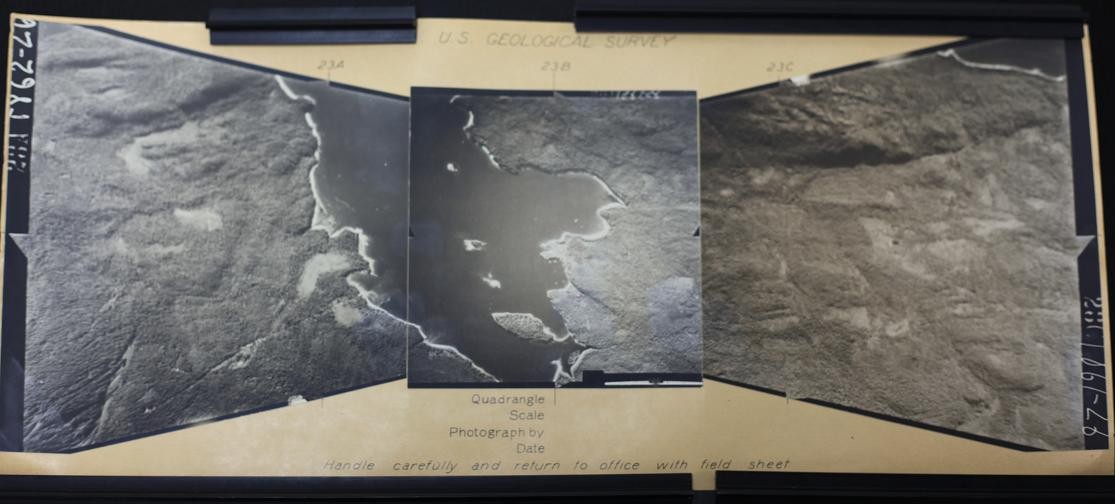
The above is my attempt at creating a photomosaic from multiple frames. The resolution is a bit lower than later aerials, and I have not taken the time to match levels across each frame, but they give a good overview of the bay in the year they were taken. The original format of these images is a little different, as seen below:

example

As with the 1929 photo mentioned before, these were part of a systematic effort to obtain aerial imagery of the Alaskan coast and islands. The Navy used a number of Loening OL aircraft to obtain the photos, while support ships housed the developing lab and carried extra fuel. More information on the project can be found here.

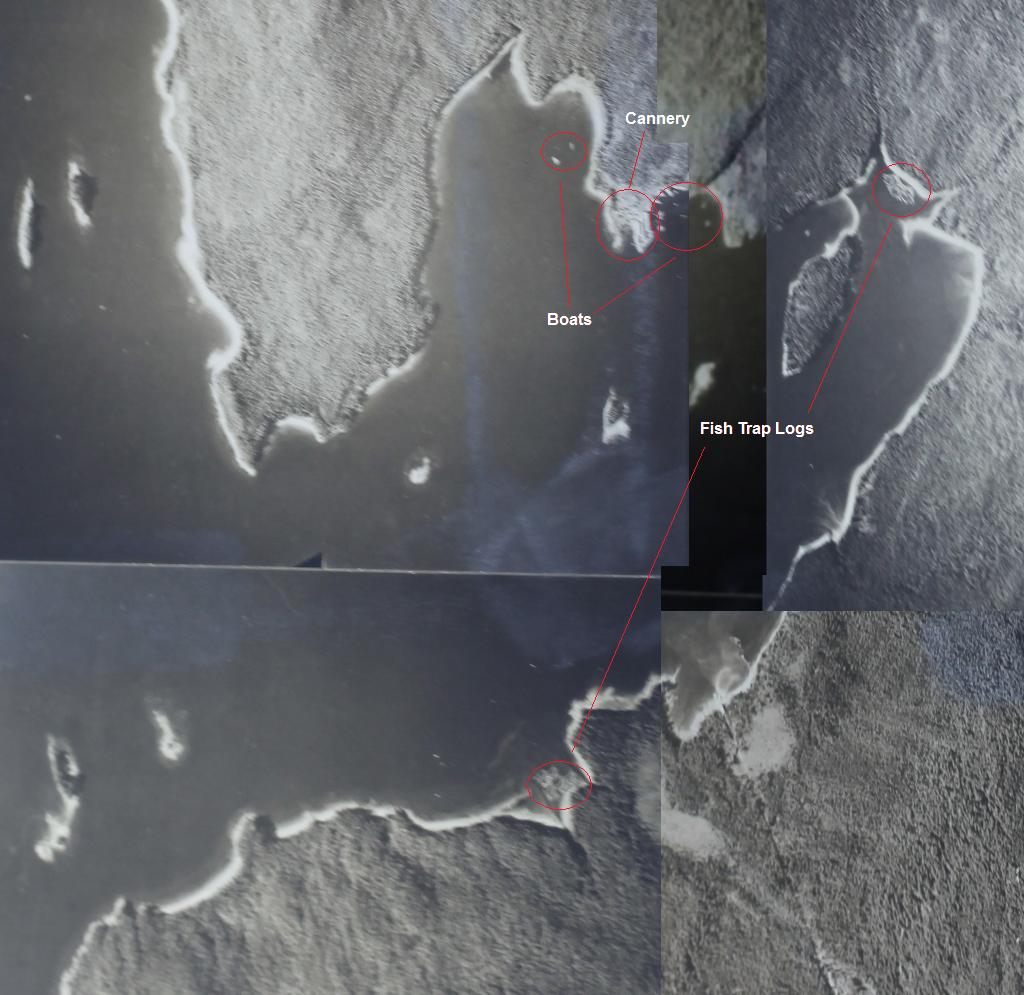
A few notable features have been labeled in the image below. The exact date of this flight is not given, but based on the location of the fish traps I would assume it to be Fall. The traps have been pulled in to shallow estuaries for winter storage. The boats clustered around the cannery could be independent fishermen rather than cannery vessels.

labeled

Other images from this project can be obtained from the National Archives at Anchorage,  a finding aid can be requested that gives flightlines and serial numbers. The citation/location information for the images used here is as follows:

Record Group 57 / USGS Alaska Aerial Survey
Box 135
Flightline T-26
Photographs #853-863
Location: Admiralty Island
Shelf Location: 02/10/14(2)


Update on the cannery tender Barron F

August 6, 2013

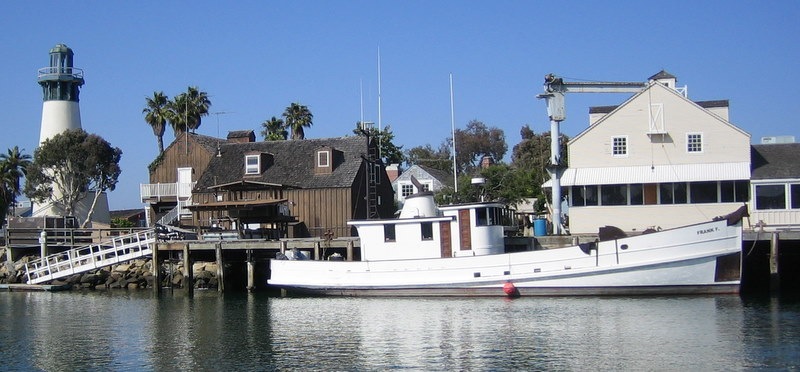
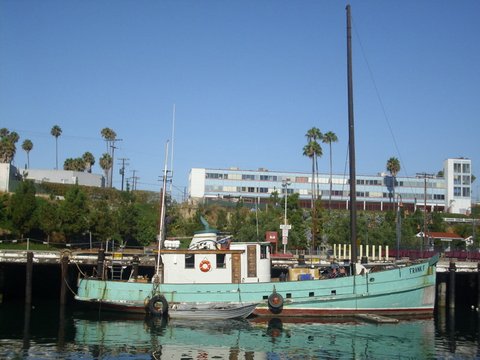
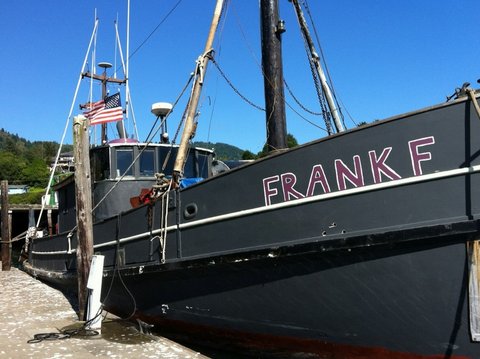
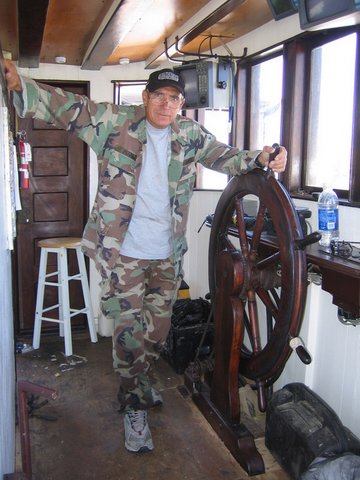
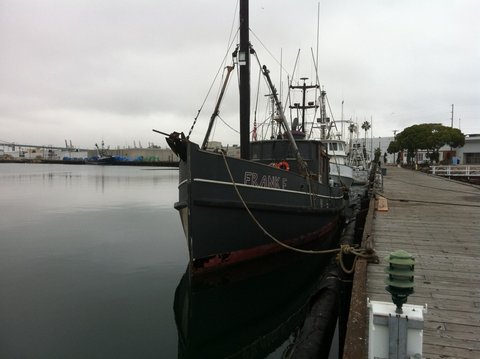
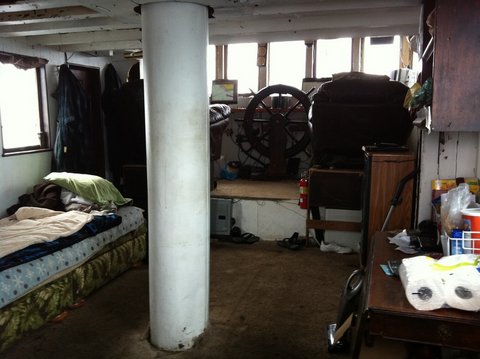
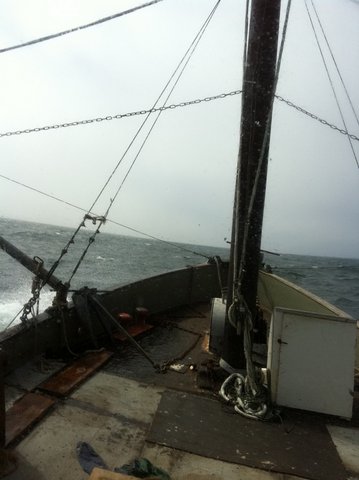
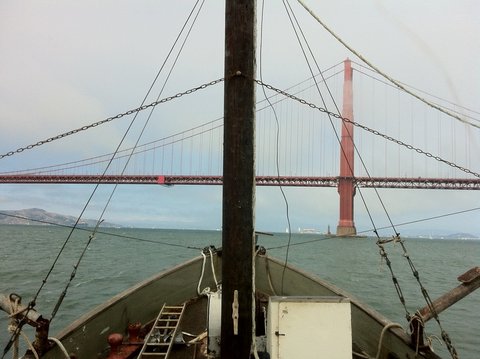
I recently heard from the current owner of the Barron F, who very generously sent some photos of the boat. Steven Starnes is planning to drop the current name “Frank F“, and return the boat’s original name. He is hoping to bring her back to Southeast Alaska for her 100th birthday, and would like to see her in a museum.

june2013 266

I also found a few more details on the boat’s history, which I will post below. As I mentioned in some earlier posts, the Barron F was one of the Funter Bay cannery tenders owned by James T. Barron.

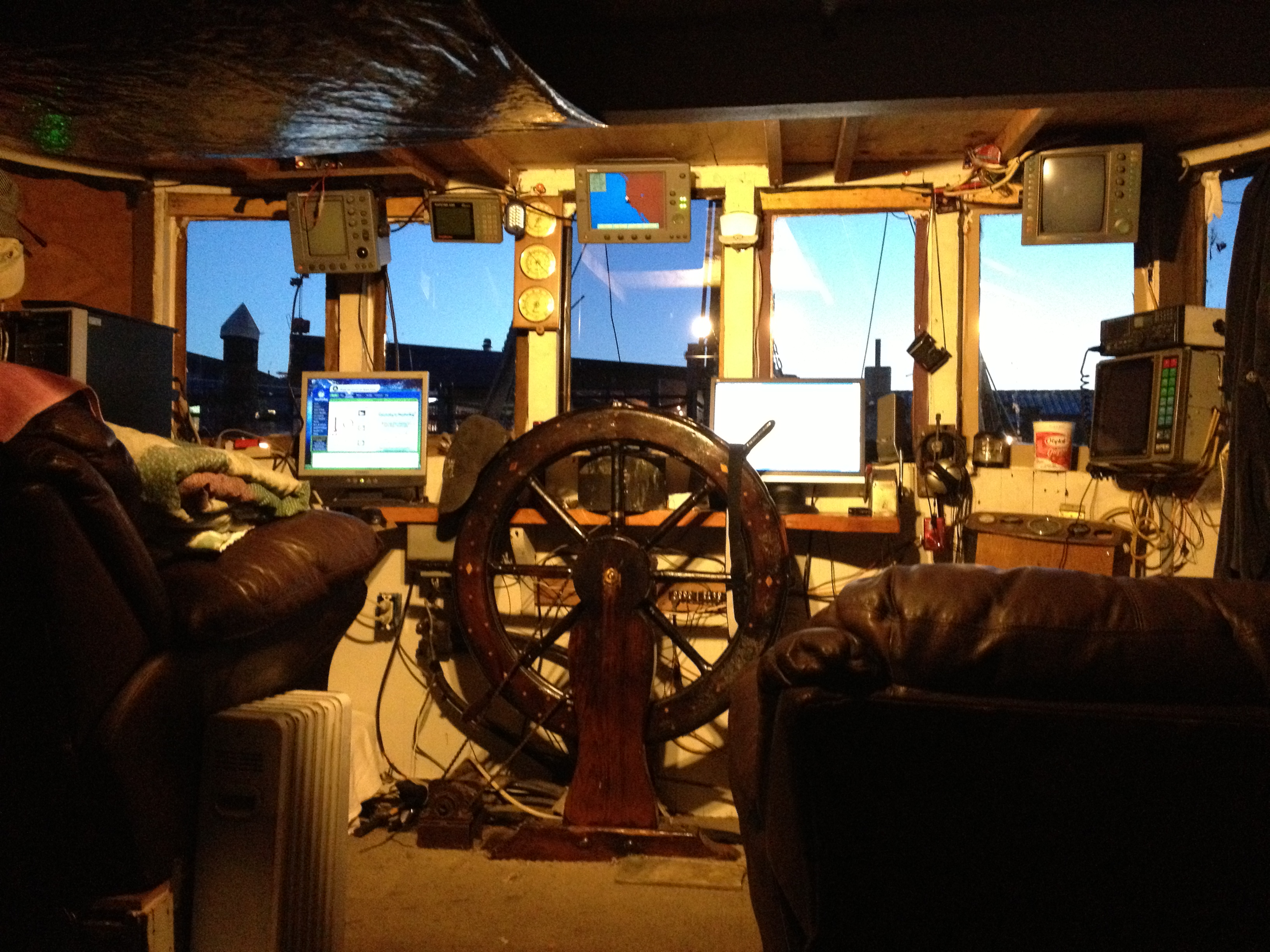
iphone 2 371 home apple 5 497 DSCI0883 DSCI0970 IMG_3773   Picture 117-001 Picture 248 Picture 340 Picture 480 Picture 553

Swat_-_COASTAL_CONSULTANT_-_CARD_1.05 (1)

The US Merchant Vessel Registry from 1918 says the Barron F was built in 1917 in Seattle and home port was Portland, OR. 65.2ft long, 17ft beam, 7.3ft draft. Fishing service, crew of 7. 85hp gas engine. 50 Gross tons, 42 Net tons. In 1919 the home port is listed as Juneau.

The H. W. McCurdy Marine History says that the Barron F was built by the National Shipbuilding Co of Seattle. That company was founded on Jan 1 1917. Their 4-acre yard was located at 655 Gordon St in Seattle, and executive offices at 1023 Alaska Bldg. Officers were J.F. Lane, J.L. McLean, and Loren Grimstead. They had about 200 employees in the yard. (from Pacific Ports Annual, 1919).

In 1918 the owners pulled out the Barron F‘s 3-cylinder Atlas “distillate engine” and sold it, it was said to be installed in the spring of 1917 and only used for 3 or 4 months. It was listed for sale for $4,900. (from Pacific Motorboat, Vol 10)

In 1959 the Frank F was mentioned as the “old Barron F, a Nakat tender”. It was owned by Rollin Crump of Astoria and had been converted to a dragger working out of the Columbia River. It had an A-C 21000 (probably Aliss Chalmers 6-cylinder) with a Capitol 3.88 to 1 reduction gear, which got it up to 10 knots, noted as “a good two knots over any previous known speed for the boat”. During a 14-day trip the vessel used 1000 gallons of diesel. (From Pacific Fisherman Yearbook Vol 57).

Thanks again to Steven for letting me use his photos!


Funter Bay History – Cannery Employees

August 6, 2013

The Thlinket Packing Co at Funter Bay employed a number of different people over the years in a variety of positions. Below is a partial list, gleaned from early 20th century newspapers. Keep in mind that consistent spelling of names in the early 1900s was somewhat optional!

_____________________________________________________________

James T. Barron – Owner and Manager, 1902 – ~1926. More on the Barron family here.

_____________________________________________________________

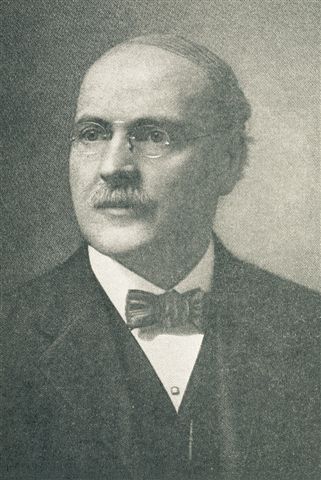
Judge Michael George “MG” Munly (1854-1923)

Munly

The family name was originally spelled “Munley”, but Michael later dropped the E. He was company Secretary and brother-in-law to James Barron. He married Mary Nixon, sister of James Barron’s wife Elizabeth. Munly was admitted to the Pennsylvania bar in 1882. He was deputy city attorney in Portland, and was appointed a judge of the Oregon circuit court from 1892-1894. Munly ran unsuccesfuly for mayor of Portland in 1909. Along with the Barron family, Munley and family were frequent visitors to the Funter Bay cannery.
Judge Munly’s grave and additional information.
1922 Biography of M. G. Munly
1928 Biography

_____________________________________________________________

C. F. Whitney was Sales Manager at the company, based in the Portland office. He seems to have rarely visited the Funter Bay operation. Prior to taking this position, Whitney had been sales manager of the New York Life Insurance Co.

_____________________________________________________________
Mr. and Mrs. Norton – Listed as winter caretakers at the cannery in 1903. Left in February to develop some timber claims in Oregon.

_____________________________________________________________

James Lawlor – (Sometimes spelled Lawler) was caretaker and winter foreman(?) from at least 1903-1909. He took over from the Norton’s in Feb 1903 and began preparations for the upcoming coming packing season.

_____________________________________________________________

Chris Houger (Sometimes spelled Hooger, Hugher, Hager, etc) was “Outside Foreman” at the Funter Bay cannery from at least 1903-1919. ?He was in charge of piling crews, trap installations, nets, etc. His wife was noted as being the cannery’s bookkeeper in 1914. In 1917 Western Canner and Packer referred to him as Manager of the Thlinket Packing Co.

_____________________________________________________________

Captain Haly of the Rainier – hired to bring up the “fishing steamer Barron” from the South for the 1903 season.

_____________________________________________________________
Mr. and Mrs. A. C. Bogarth – Operated fish traps near the Funter Bay cannery for several years around 1903.

_____________________________________________________________

Captain Crockett – skippered the Anna Baron during at least the 1904-1907 seasons.

_____________________________________________________________

Captain Mason was listed as skippering the Anna Barron in 1911.

_____________________________________________________________

Captain Martin Holdst (Also listed as Martin Olson) of the Belle was employed in the winter of 1909-1910 repairing the water and power systems at the cannery.

_____________________________________________________________

Pat. F. Mulvaney was the storekeeper at the Funter Bay cannery from at least 1909-1917 and listed as watchman in 1918 -1919.

_____________________________________________________________

Fred Barker (Or T. H. Barker) was listed as cannery superintendent in 1911. His brother “Billy” Barker was the assayer at the Perseverance mine.

_____________________________________________________________

Cannery employees listed as arriving in spring of 1911 were: H. H. Harvey, C. W. Young, G. W. Scott, E. A. Harriman, Thos. Redwood, F. Phelps, W. F. Brillian and H. Wills.

_____________________________________________________________

A. M. “Bob” Bell was listed as a canneryman at Funter Bay in 1912. There is also an A. E. L. Bell mentioned, and possibly another Bell who ran the Glacier cannery.

_____________________________________________________________

F. Hilder was an employee at the cannery in 1914.

_____________________________________________________________

George W. (or L.) Bowman was listed as cannery superintendent in 1914. He formerly worked for the Northwestern Fisheries company.

_____________________________________________________________

J. F. Bennett was listed as a cannery employee in 1915, his arm was caught in a rotating shaft in June and he required skin grafts at the Juneau hospital.

_____________________________________________________________

Harold W. Chutter (Or Chuttes or Chutte or Shutter or Chutler) is listed as the “popular superintendent of the Funter Bay Canning Co” in 1916 and 1917. In Feb. 1917 it was reported that “Mrs. Chutter, formerly of Funter Bay” had left to marry the former accountant for the Juneau Electric Light company. In December of 1917 it was reported that Chutter was closing up his affairs at the cannery and leaving for Bremerton to join the Navy. Sales Manager Whitney planned to come North from Portland to temporarily fill in as manager.

_____________________________________________________________

C.L. Cook is listed as bookkeeper in 1917.

_____________________________________________________________

G.C. Coffin, an employee of the cannery, was at the Juneau hospital in 1917 for eye treatment.

_____________________________________________________________

E. W. Hopper is described as the superintendent and/or manager of the cannery in 1918. His wife and daughter also resided at Funter in the summers.

_____________________________________________________________

Capt. John Maurstad skippered the Barron F. in 1918. According to the Kinky Bayers notes, he came to Alaska in 1909 and was a resident of Angoon. He did some logging and built a sawmill and Kasnaku Bay (Hidden Falls) in 1927. In 1940 he was in charge of a CCC crew building roads near Angoon. He may have died around 1942 at age 53.

_____________________________________________________________

D. J. Wynkoop, formerly of the Treadwell mine, was employed at the cannery in 1918.

_____________________________________________________________

Captain A. Woods is listed as running the Anna Barron in 1918. He fell from a 20ft ladder in February and was in St. Ann’s hospital expected to fully recover.

_____________________________________________________________

Chinese, Filipino, and Native Alaskan employees were usually only mentioned in passing, with no names given. A 1914 article lists the following “strange names” of Chinese workers bound for Funter Bay, but states that the purser of the steamship City of Seattle may have been kidding around: “Ten Pin, Hinge Lock, Wong Toon, Mop Dip, Wong Chuck, and Sam Lea“.

I’ve tried briefly looking into each of these people, but have not found any detail on most of them. I may try to come back to this post if more information becomes available. If you know anything about any of them, please feel free to contact me!


Funter Bay History: Wreck of the Mariechen

July 26, 2013

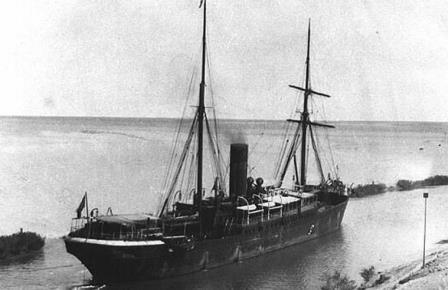
In late 1905, a German-registered tramp steamer named the Mariechen set out from Puget Sound to Vladivostok, Russia. The steamer was owned at the time by Diederichsen, Jebson & Co of Hamburg, and was known for running contraband to Russia and Hong Kong. In 1905 she was reported as planning to run a blockade on the Vladivostok Harbor.

wp718d5a94_05_06
Photo courtesy of the British & Commonwealth Shipping Company record website.

The ship was originally built in 1883 as the Clan Matheson of 3,917 tons. The ship had a history of problems, including fires on board and a prior grounding in the Suez Canal.

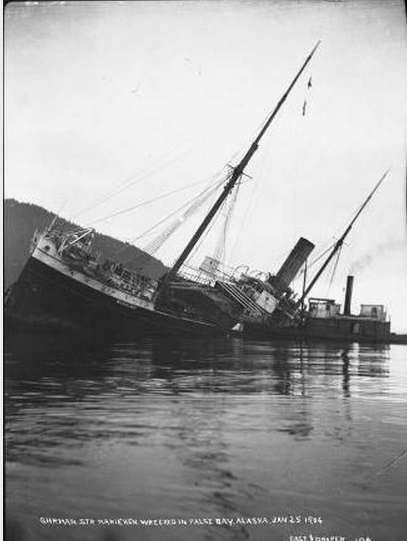
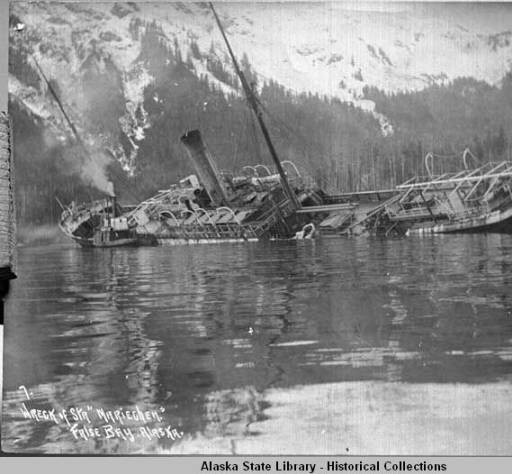
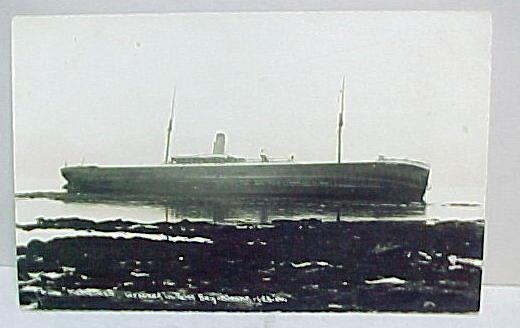
Traversing the outside coast of Alaska in December is a risky proposition even today. The ship ran into typical winter storms, then suffered an engine breakdown. Conflicting reports then state that the ship was either adrift for a month, or “beating around near Point Retreat” looking for an anchorage. The ship likely had customs issues which would have dissuaded the crew from seeking a port like Juneau or Skagway. Marine radio technology was fairly new and temperamental, and the ship may not have had a working wireless set. It’s possible the vessel was trying to use sails after the engine died, the first photo shows very tall masts and spars indicating square rigged sails, but some of the spars are missing in the post-wreck photos.

In late January of 1906, the ship finally went aground at False Bay, south of Funter on Chichagof Island. Excerpts from the wreck report note that the compass froze up, the steamer had no charts of the area, and visibility was low due to a snowstorm.

mariechen
Courtesy of Alaska State Library, William R. Norton collection, P226-743

The master of the ship was listed as Captain Rudolph Heldt, with Chief Officer Charles Pruet. The crew was mostly Chinese, who were “rounded up and deported” after the wreck. There were apparently no fatalities, but the cargo was lost. One document blames “local Indians” for the loss of the cargo, but period articles mention many local vessels salvaging “Food, flour, and beer” from the hulk, and selling some of it in nearby towns. An article from December 1906 described a feud over “several loads” of beer looted from the wreck by Robert Reid of Tenakee. Local tough Norman E Smith demanded a cut of the loot, and threatened Reid’s family. Reid then killed Smith with a shotgun at Snyder’s store in Tenakee.

mariechen2
Courtesy of Alaska State Library, William R. Norton collection, P226-612.

After the wreck, the British Columbia Salvage Co had the contract to refloat the vessel and tow it South for scrapping. The salvage tug Salvor was sent to the area, and the crew used Funter Bay as their base of operations. The tug would periodically stop at the cannery for fresh water and safe anchorage during storms. A March article notes that the water pipes at the Funter Bay cannery were frozen, so the Salvor had to come to Juneau for water. In April of 1906 the Salvor finally got the Mariechen floating, and towed the hulk into Funter Bay. It was further patched at Funter before being towed to Juneau in May, then on to Victoria, BC.

“The German steamer Mariechen is again afloat on the high seas. The steamer Rustler brings word that she was floated and is now at Funter Bay where she will remain until patched up for her tow to Victoria, where a British firm has the contract to repair her.” (from Daily Alaska Dispatch [Juneau] 28 Apr. 1906)

Postcard of hull from beach.

A detailed report of the salvage operation, including a photo of the damaged hull in drydock, is available here.

Sources:

“Steamer For Sale.” Daily Alaska Dispatch [Juneau] 15 Oct. 1906

Daily Alaska Dispatch [Juneau] 19 Mar. 1906

Good, Warren. “South East Alaska Shipwrecks (M) ” Alaska Shipwrecks. Web. 16 July 2013. <http://alaskashipwreck.com/&gt;.

“SS CLAN MATHESON Built by Napier Shanks & Bell Yoker.” Clydebuilt Ships Database. Web. <http://www.clydesite.co.uk/clydebuilt/viewship.asp?id=8212&gt;.

“Clan Matheson.” The British & Commonwealth Shipping Company; A Record of The Ships And The People That Served Them. Web. <http://www.bandcstaffregister.co.uk/page542.html&gt;.

“Salving the Mariechen.” Marine Review 34 (1906): 16-17.


Funter Bay History: Moonshine

July 8, 2013

Moonshine is another tradition of Alaska life which had an impact on Funter Bay. In fact, moonshining in the area had an impact on the English language! The word “Hooch”, a popular term for homemade alcohol, originated on Admiralty Island:

hoochinoo   hoo·chi·noo, noun, plural hoo·chi·noos.
A type of distilled liquor made by Alaskan Indians.
1875–80,  Americanism; orig. the name of a Tlingit village on Admiralty Island, Alaska, reputed to be a source of illicit liquor; alteration of Tlingit xucnu·wú  literally, brown bear’s fort ( xú·c  brown bear + nu·w  fortified place)

From http://dictionary.reference.com/browse/hoochinoo

The word is commonly spelled “Kootsnoowoo” today, meaning “fortress of the bears”, the Tlingit name for Admiralty Island. The village is now called Angoon.

More information here, from the Merriam-Webster New Book of Word Histories.  Also here, and in this articleThis site also has some good information on Alaskan alcohol history. I found it interesting that kelp was sometimes distilled into moonshine, and that native distillers often supplied booze to white settlers, not necessarily vise-versa!

During prohibition (which started early in 1917 in Alaska), fox farms were a popular front for moonshining operations. The premise of a fox farm gave operators a reason to live on a remote homestead and have a large amount of grain on hand (fox diets were supplemented with corn or other grains). Bootleggers would drop off a crew on an island along with a still and supplies, and come back occasionally to pick up the product. Alcohol was also brought in on vessels from Canada, and was sometimes dropped off in secluded coves where bootleggers could collect it without fear of discovery. Here is a tale of a bootlegger’s attempt to scam a cannery over the loss of their smuggling boat. In another case, some bootleggers apparently decided to lower their up-front costs and switch to piracy; an article from January 1922 mentions that the vessel Clara (a 46′ fishing boat from Juneau) robbed the Canadian boat Vesta of her cargo of whiskey in Whale Passage.

Below is a diagram of a still (appearing to be made from surplus plumbing parts), from the Investigative Case Files of Prohibition Violations, 1924-1933, NARA Alaska-Pacific Region:
Portrait

Here’s a photo of a moonshine still in he woods from Alaska’s state library collections. Lazzette Ohman reports finding several stills in the woods around her family’s home in Juneau in the 1920s.

Bootlegging was apparently as hard to prosecute as fish piracy, the bootleggers were often seen as local heroes and Alaska residents delighted in confounding “the law”.  One story relates a speakeasy in Wrangell whose owner was let off by a hung jury despite apparently damning evidence. Another great story from the biography of area geologist John Mertie (who has a geologic deposit named after him at Funter Bay) showed what happened when unwilling citizens were roped into Jury Duty:

“I was waylaid by the town marshall and asked to serve on the jury…I had no interest in sitting on the jury but the marshall prevailed upon me… This was during the days of prohibition and involved a young man who had been arrested for making home brew beer… As the jurors left the court room to deliberate, a couple of them managed to appropriate the beer. We twelve sat around the jury room drinking the evidence. When it was gone we rendered a verdict of “not guilty”. The young man was elated and thanked the jurors individually. We in turn complimented him on his fine beer.”
Excerpt from “Thirty Summers and a Winter” by Evelyn Mertie.

To catch the smugglers, “Dry Units” and customs officials relied on fast patrol boats, some of them captured from bootleggers. A 1929 article notes that the 30-knot speedboat Three Deuces (AKA the 222), formerly belonging to notorious Puget Sound smuggler Roy Olmstead, had been brought to Alaska “to chase rum-runners”.

US Marshals destroy liquor in Alaska during WWI:
prohibition

As mentioned in an earlier post, a boat named Sandy from Funter Bay had a cargo of moonshine when it caught fire in Auke Bay on August 9th, 1928. The Sandy‘s crew were apprehended by customs and prohibition officers. They were not named, but owner L.F. Morris (a Juneau building contractor) was sentenced to jail on August 30th for bootlegging. Previously, in 1926, Morris’ nephew L.H. Cays was reported missing in a small open boat after leaving Horse Island (across the Bear Creek Trail from Funter Bay). This information is listed in Kinky Bayers’ bootlegging file, so it is likely that Cays was coming from a still on Horse Island.

The Bayers notes also mention that Neil Gallagher (of the Point Couverden fox farm, which got its mail in Funter Bay) was arrested in 1925 for bootlegging conspiracy, and again in 1928 for “rum running”. The later case got him 6 months in jail. The end of prohibition apparently did not end the family side business; Don Gallagher and Phil Cummings were “arrested and evicted” from Excursion Inlet for bootlegging liquor in June of 1943. This was well after Prohibition, but could have been due to military regulations (Excursion Inlet was a US army base and POW camp during WWII). Don Gallagher is also mentioned in an interview in T.B. Bott’s book The Greybeards; Gallagher operated the mail boat Forrester and supposedly ran into trouble for supplying alcohol to dry towns like Hoonah after WWII.

The troller Ada May with Scotty Boyce and his wife, and Ed Hibler, was apprehended after a long chase off Point Retreat in June 1930, with a quantity of bootleg whiskey on board. The Ada May was listed as visiting Funter Bay in another publication.

One moonshining operation was just south of Funter Bay. After prohibition ended, Funter resident Gunner Ohman appropriated the abandoned cabin for use as a summer fish camp. Local information says that during the moonshining days, some brown bears got into the product and went on a drunken rampage. Eventually the forest service had to come out and shoot them (They must have kept returning or started visiting other cabins looking for booze). This was not the only time drunk bears have been a problem at Funter, in the mid 90s some juvenile bears learned to associate cabins with food, and were known for opening coolers and biting beer cans. Supposedly they preferred Miller over Budweiser.

One still at Funter Bay was reportedly run by Ed “Frozen Foot” Johnson, formerly of the Arctic Saloon in Nome. He operated a still at Funter from 1917 to 1922 when he was caught. He managed to bribe the arresting agents and escape. Other agents then burned down his cabin. Kinky Bayers reported that Johnson also operated a still at Point Howard, across Lynn Canal from Funter Bay.

The end of Prohibition in 1933 is noted by Sarah Isto as a blow to fox farm profits, which were already suffering from the effects of the depression. Personal-use brewing, distilling, and smuggling continued on a smaller scale in some places, and is still around today. You can even buy a how-to book on Alaskan moonshining.

My Dad relates this about a former resident of Funter Bay who returned to visit in the 1970s:

“… he was looking for his mother’s still. … This guy reached under the porch step and pulled out a mason jar of moonshine, said it was where his mother hid it, we all had a sip. “

Bootlegging is still an issue in Alaska today, as many rural communities are “dry” or have banned alcohol. The profits from smuggling can be huge, but so can the penalties. While I was attending UAF in Fairbanks, one of our economics professors helpfully provided a case study in the economy of smuggling! Dr. Robert Logan was arrested in 2003 for flying drugs and alcohol to rural villages, and had his plane confiscated. Curious as to Prof. Logan’s current whereabouts, I came across this page. If that’s the same Bob Logan, he may have dipped into the products a little too heavily!


Funter Bay Mystery Engine Part II

June 27, 2013

Funter Bay resident Gordon Harrison sent me some additional photos of the mystery engine at the cannery. He has marked it with a steel pipe and buoy so it’s more visible to boaters, being located close to the dock it’s something of a hazard to navigation.

Gordon - Engine 1

Gordon - Engine 2

Looking closely, it seems there are two cylinders and maybe two valve chests (one on each end). There also seems to be a round flywheel and rectangular tank at the base of the engine, with a pipe leading to the tank, although it’s hard to tell what’s metal and what’s rock under all the kelp and barnacles!

If anyone happens to recognize the specific type, model, or even just approximate age of this engine, I would love to hear about it! John Taubeneck reports that it looks like a “Fore & Aft” compound design.

As mentioned, I’m not sure if the engine reached its current home via a sunken boat at the cannery wharf, or if it was used or stored on the wharf and fell through as the structure rotted. Aside from potential salvage, there was another reason that engines and other equipment were sometimes moved around: Even if obsolete for propulsion, a big chunk of cast iron makes a nice anchor for a mooring buoy! Someone could tie a raft of logs to part of a wreck, float if off at high tide, and then drop it where they wanted to moor their boat. Various things around the bay probably are or were tied to rusty engines on the bottom. Maybe this one was in transit and got left where it now sits?

Here’s a diagram of a steamboat boiler and engine layout from around 1905:

(From Rankin Kennedy, Modern Engines, Vol V via Wikimedia commons).

On a side note, in the background of the 2nd picture above, you can see the small yellow sailboat that my sister used to have (now owned by Del Carnes), I had previously put some photos of it on my project page.

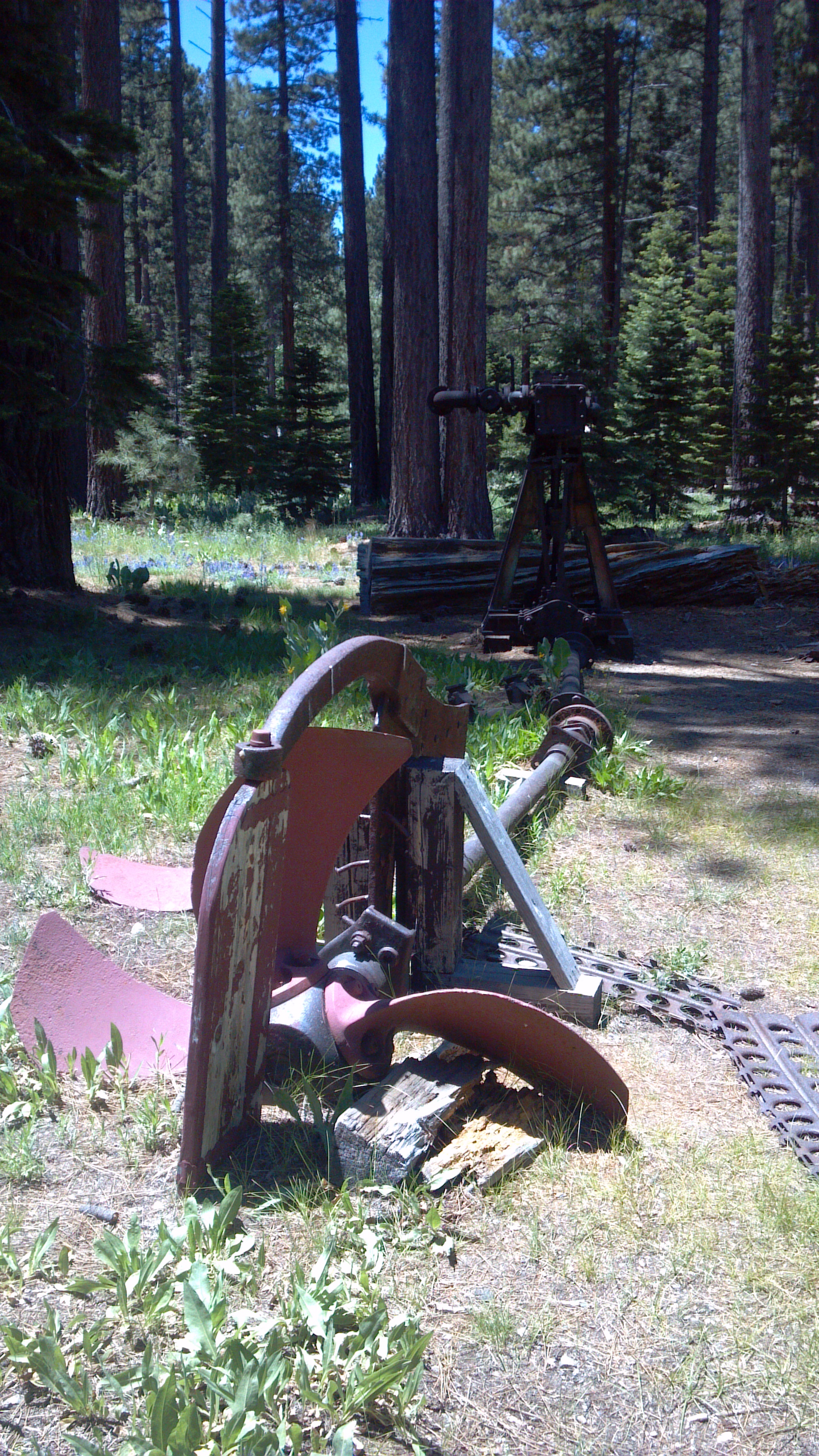
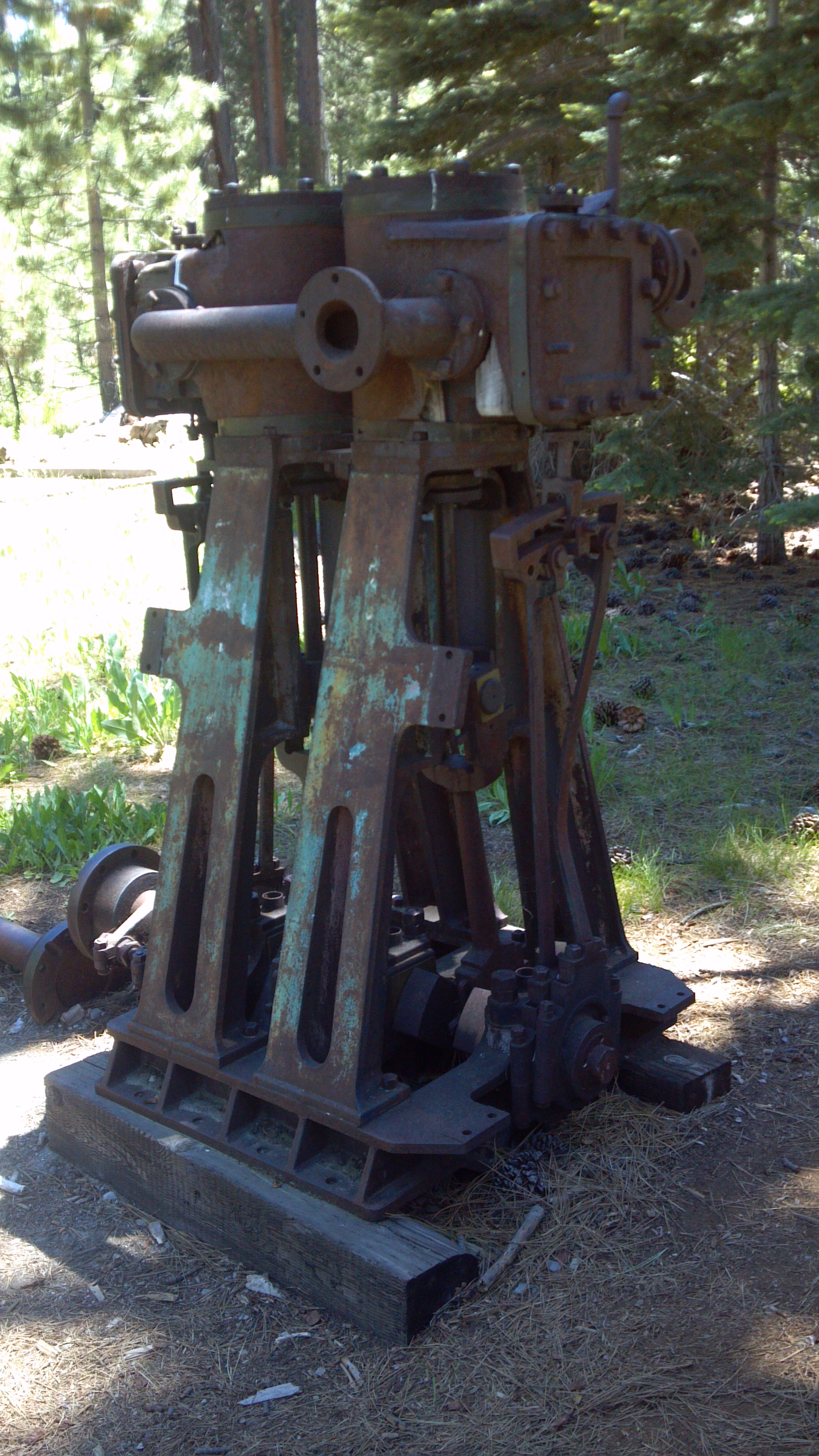
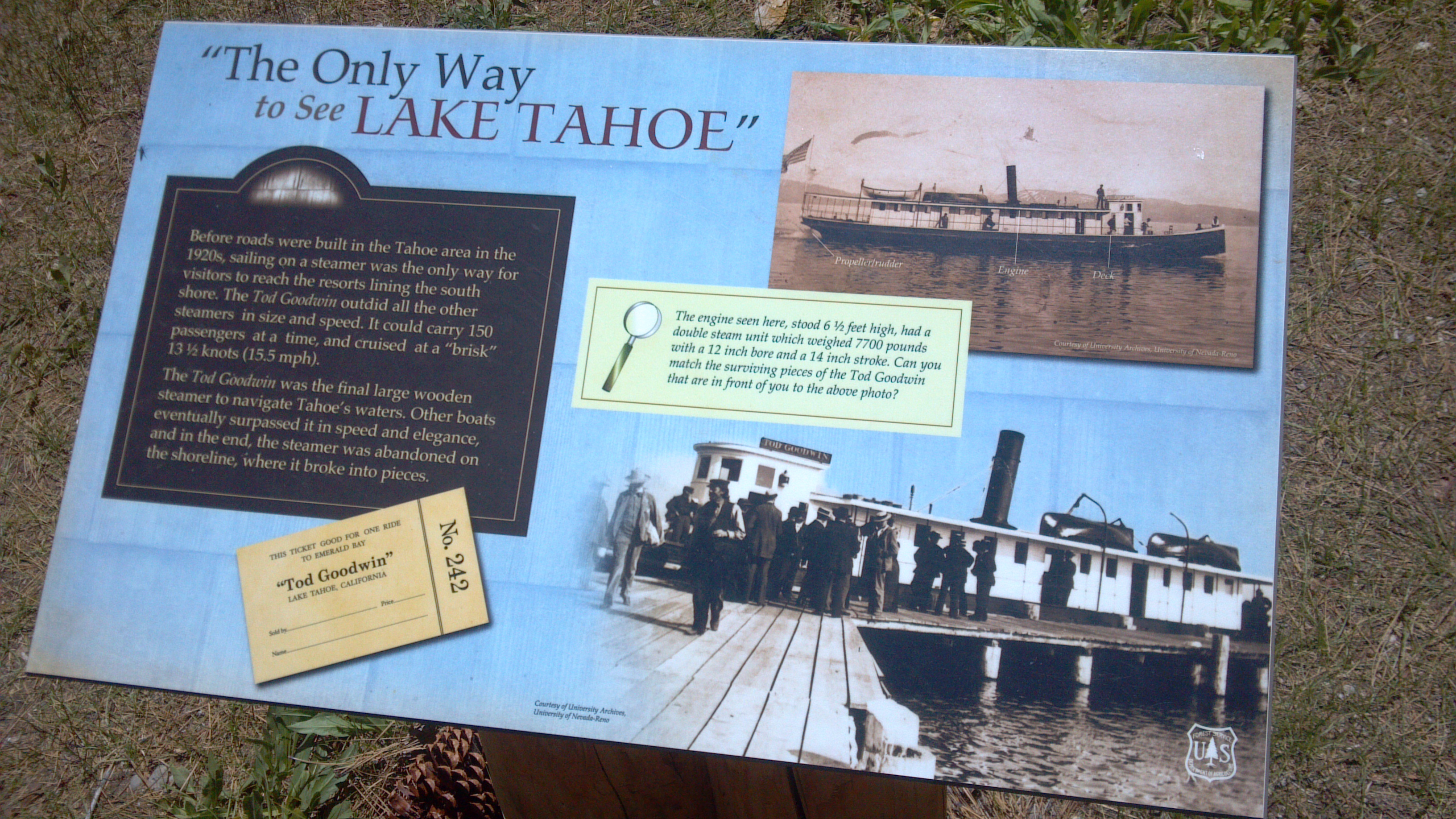
Coincidentally, I happened to be in the Lake Tahoe area last week, and stopped at the Tallac Historic Site. They happened to have a compound engine from a local steam boat, laid out on display with drive shaft and propeller. The valve chests and support frame look a little different, but this shows how such an engine would have been set up.

2013-06-21_12-54-45_511 2013-06-21_12-55-00_191  2013-06-21_12-54-11_469

This engine and drive train came from the steamer Tod Goodwin, which operated on Lake Tahoe from 1884 to 1898. More information is available in this book.

2013-06-21_12-53-35_228


Funter Bay History: Mystery Engine

June 13, 2013

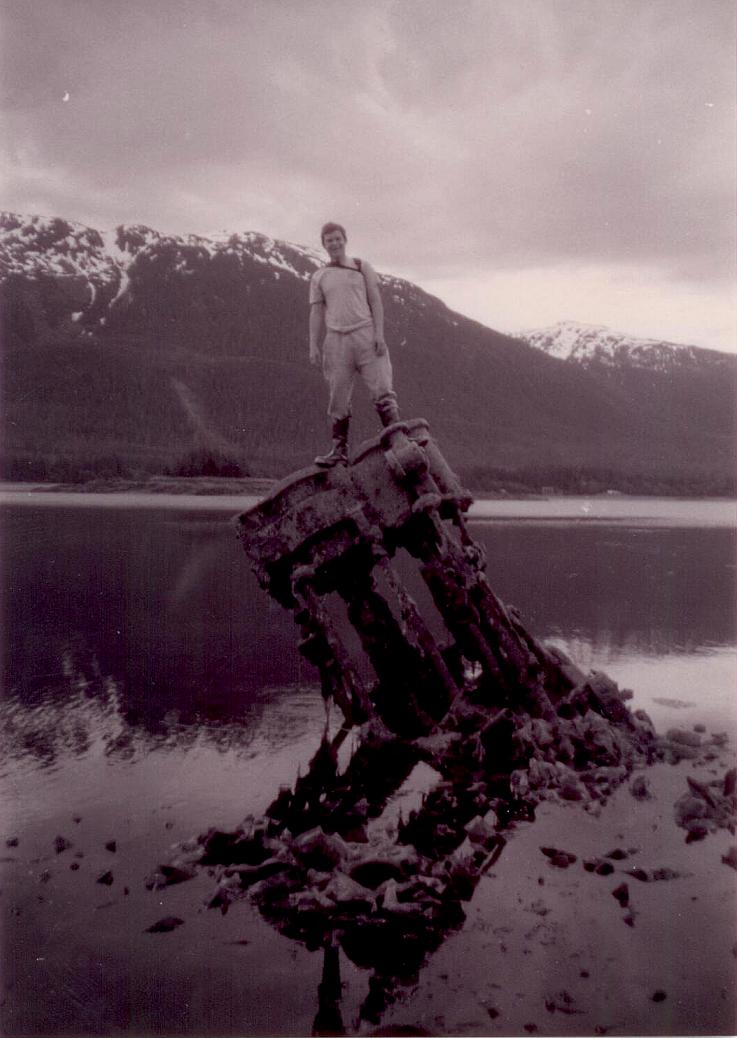
While digging through my photos I came across one showing a mysterious piece of machinery in Funter Bay. That’s me standing on top of it, I’m going to guess it’s around the year 2000.

0a-submerged

After visiting the Lake Superior Marine Museum in Duluth (actually for the 3rd or 4th time, it’s great!) I realized that this thing looks a lot like a compound marine steam engine. Some examples are here. Unfortunately I don’t seem to have any other photos of this one.

This thing is only visible at extreme low-water (a minus tide), at other times it is mostly submerged. It lies off the former end of the pier at the Funter Bay cannery, leading me to believe that it’s either from a sunken fish trap tender, or equipment which was mounted on the pier at the cannery.I do not recall seeing obvious boat wreckage around the engine, but things decay so fast underwater that any wood is likely long gone, and any metal is mixed in with general trash and debris from the cannery, making it harder to identify. Large ships are shown docking at the cannery pier in the 1940s, so it’s unlikely that anything sank and was left there prior to that time. The engine and any remaining hull structure would have been a hazard at low tide.

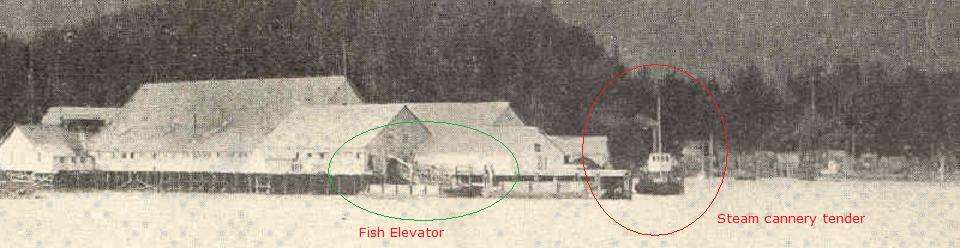
The pier-mounted origin seems a little far fetched, the cannery mostly used mechanical power take-offs from large low-horsepower gas engines, so why would they have a steam engine mounted on their dock? The main dock-end equipment would have been a “Fish Elevator” (basically a conveyor belt) to unload salmon from scows. This image is labeled “Funter Bay… Indians Pitching Fish in Elevator”. This image shows another view of such an elevator, as does this one. This photo shows the upper end of a fish elevator, obviously powered by overhead pulleys and belt drives (as was most of the cannery equipment at Funter). I would not expect a steam engine to be used just for the elevator (and in fact, the elevator seems to have been in a different building from the spot where the steam engine lies).

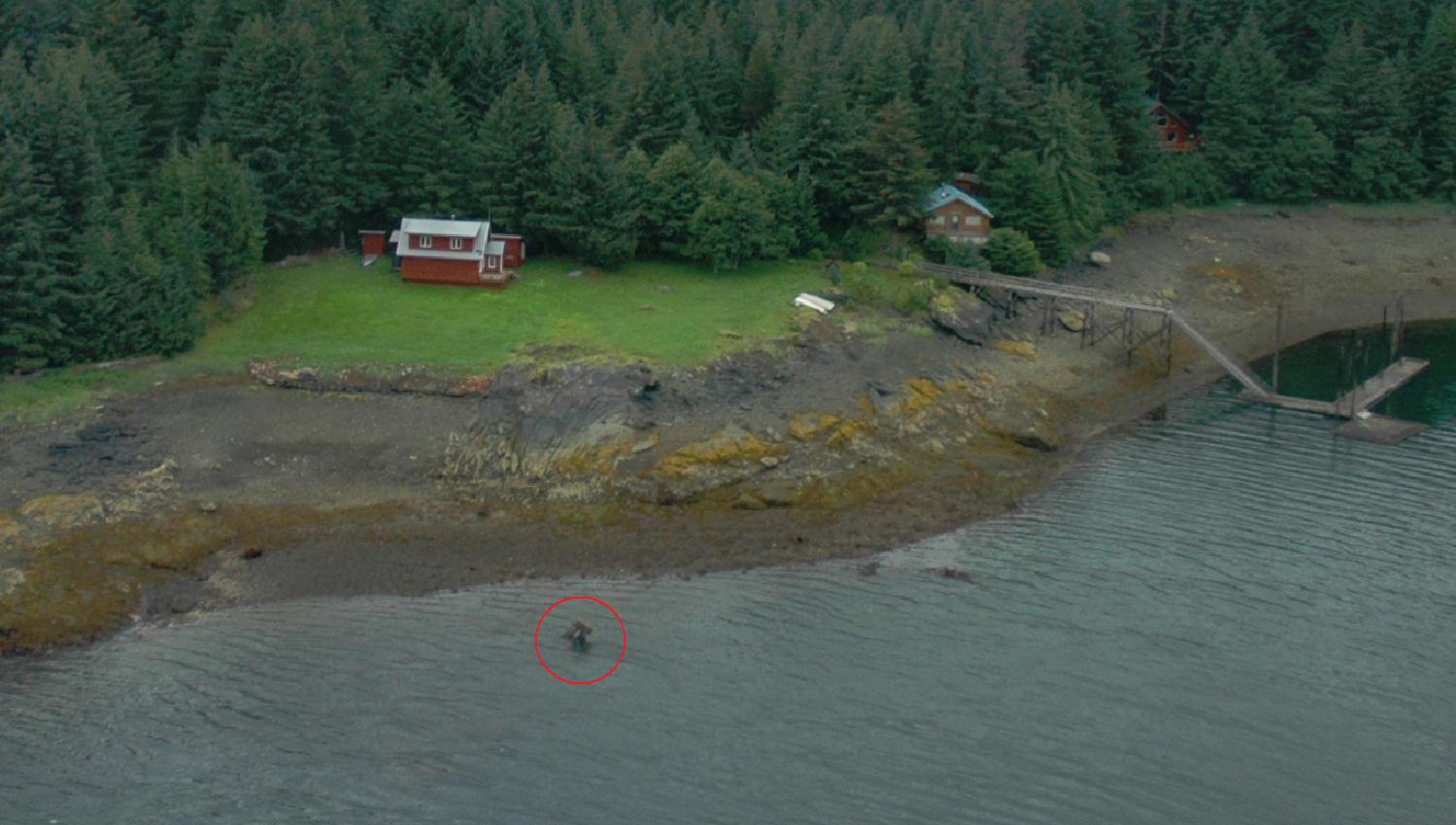
Cannery site ca 2008, with steam engine circled in red:
engine
From the Alaska Shorezone Mapping project.

The same location in 1948, approximately at the end of the cannery pier:
1948

Cannery pier in 1907 showing tender tied up about where the engine is now, and the fish elevator with scows docked next to it.
1907

The cannery area in 1979, showing how the buildings had begun collapsing (there’s not as much structure overhanging the bay as there was in ’48). Approximate steam engine location is circled: 1979

Another explanation could be that this was salvaged from a wrecked cannery tender elsewhere, left on the pier when the cannery was abandoned, and fell into the water when the structure started collapsing around the late 1950s/early 1960s. If so, it’s surprising that it landed basically upright. A candidate for this possible origin could be the mystery wreck on Highwater Island, which seems to have had a boiler but has no sign of an engine. It could also have been removed from a tender during a refit to gas or diesel, and left lying around on the pier, but this seems like a stretch as well (it would be more likely they would have refitted in a marine yard in Seattle or Astoria, the Anna Barron is sometimes mentioned in publications like Pacific Motorboat as undergoing maintenance in Astoria.

None of the cannery tenders that I’ve previously discussed seem to match. Of the original T.P. Co. boats I know of, only the Anna Barron and the Buster had steam engines, Buster‘s was replaced with a gas engine prior to 1926. The captain of the Anna Barron was reported as saying the vessel could be raised, but I am not sure if they salvaged the engine or anything else from it. (Oddly, this document gives a different story of the Anna Barron‘s sinking than this page, which I previously quoted, although both seem to be using similar source documents. The BOEM page seems to be saying Albert Michaelsen was the captain (vs George Black), that they were coming from Hoonah (vs Funter), that the engine head burst, and that the vessel drifted towards Point Howard before grounding at Pt. Ainsley, and the crew swam 20ft to shore).

Later cannery owner P.E. Harris Co had quite a few boats, in 1956 these included the Amelie, Cape Douglas, Health, Jim B, Kathy B, Marina G, Morzhovoi, Norse Maid, Orcas, Thrasher, Trojan, Glasenap, Izembek, Fairweather, Moha, Pat B, and Seakist.  However, none of these seem to be steam-powered (steam was largely obsolete by the mid 20th century). By 1962 the company had become Peter Pan Seafoods, and vessels included the Carmen B, Denis N, Dream Girl, Mariner, Reliance, Alf, and Western Sea. Again, none of these appear to be steam powered.

At this point I’m still stumped on both those mysteries (what boat sank at Highwater Island, and what boat (if any) was the source of the compound steam engine at the cannery?

If anyone reading this knows steam engines or has any ideas for tracking down these mysteries, please let me know! You can leave a comment below, or email me at gabe<at>saveitforparts<dot>com.


Funter Bay History: Scow Bay Part II

June 10, 2013

I realized that I have a large number of photos from Scow Bay, so I’ve decided to follow up on one of my earliest Funter Bay History posts with more information on that location.

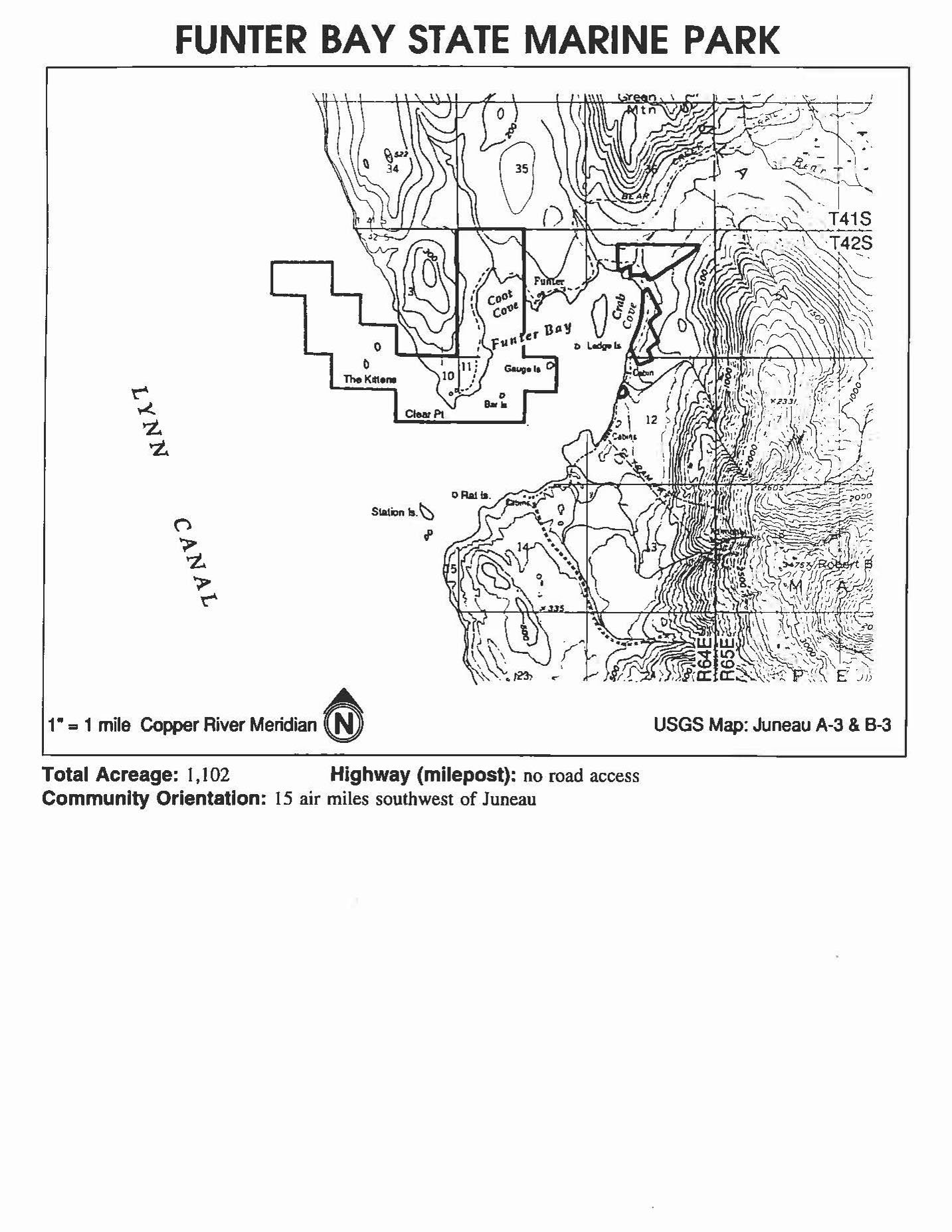
Scow Bay is one of the few parts of Funter Bay history that are publicly accessible. This side of the bay lies within the Funter Bay State Marine Park. Again, please note that the adjacent former cannery site is mostly private property. Also note that the Scow Bay area features extensive tide flats, keep an eye on the tides if you plan to land a boat here, or you may find it high and dry!

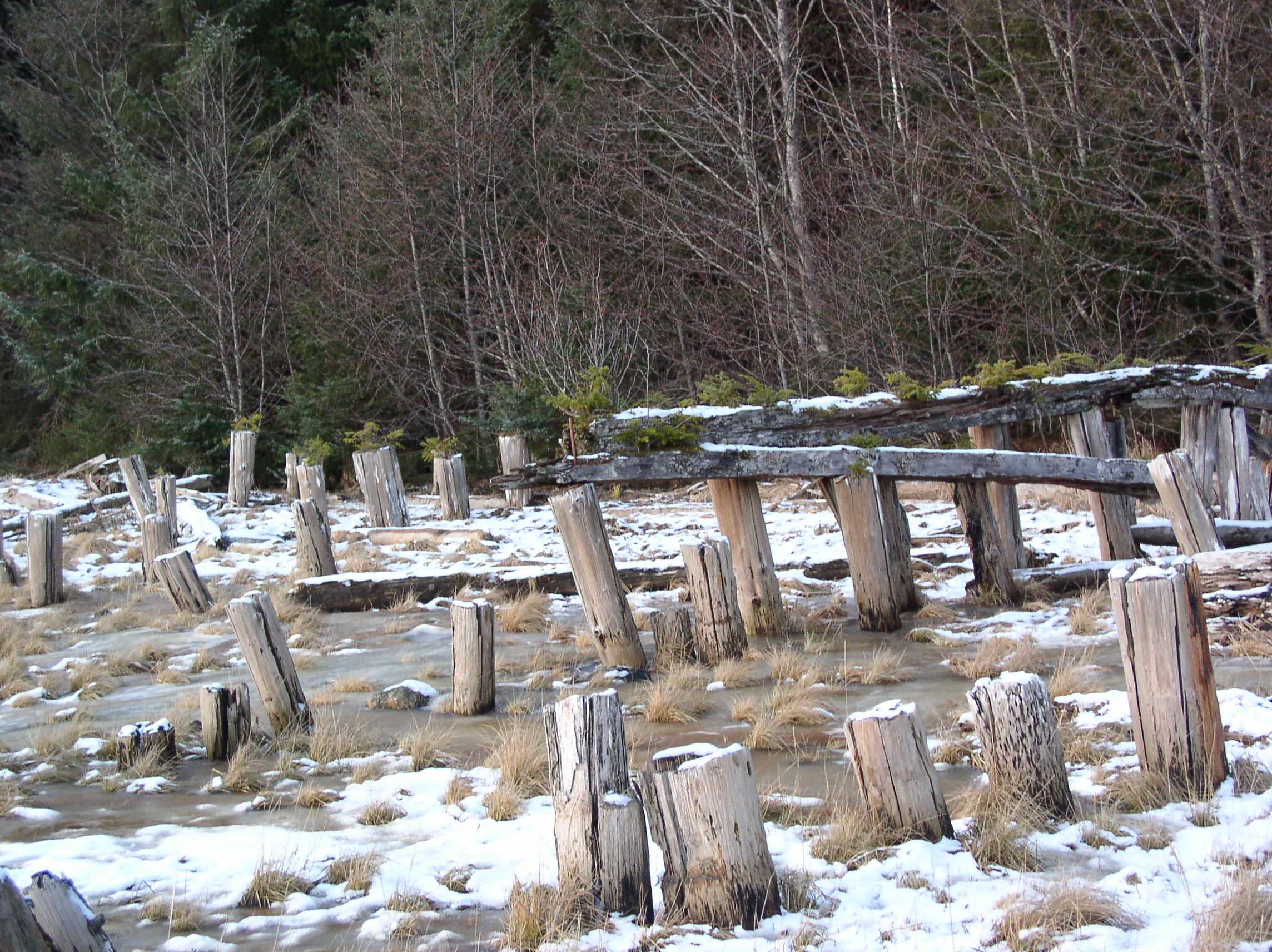
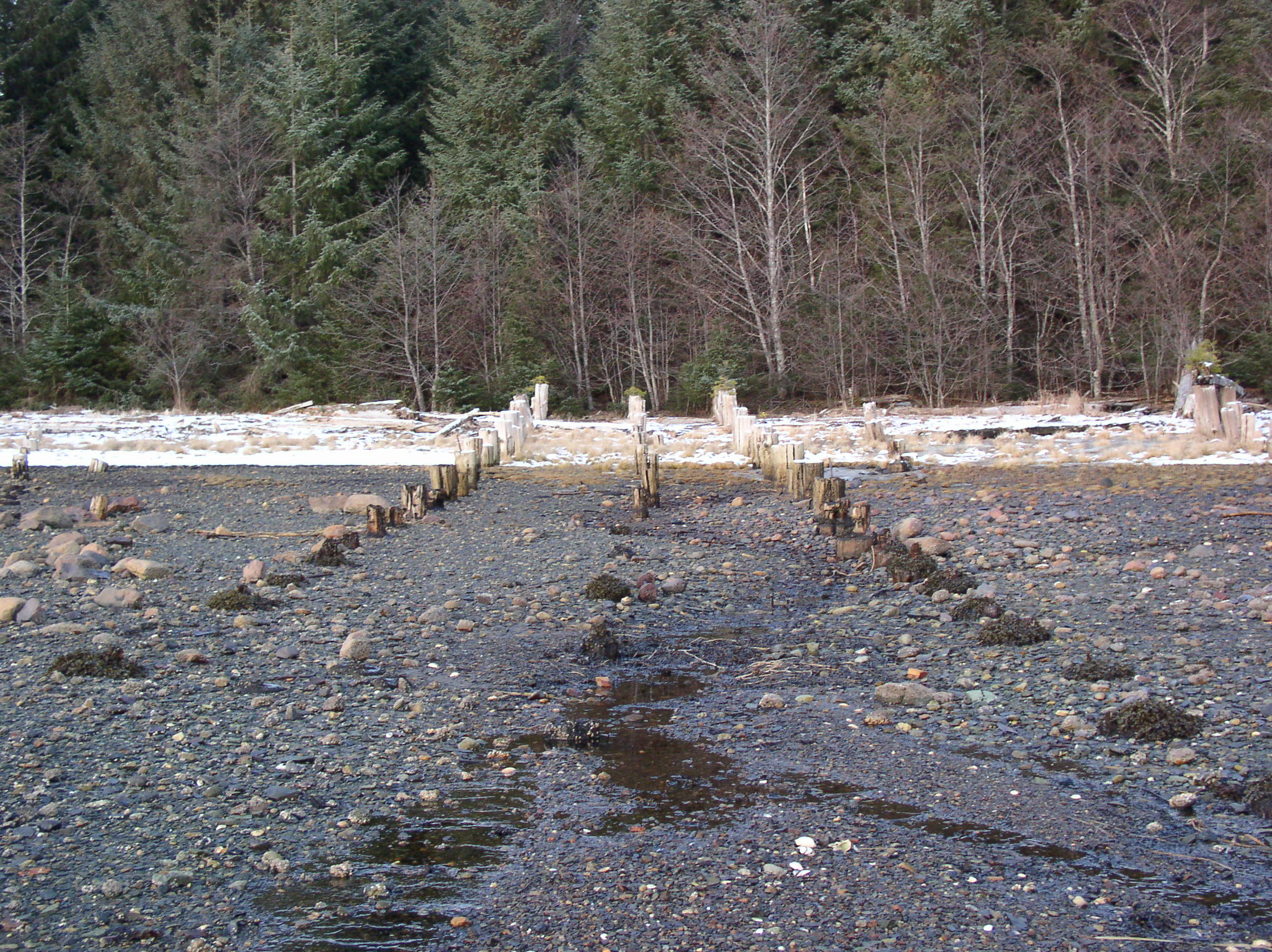
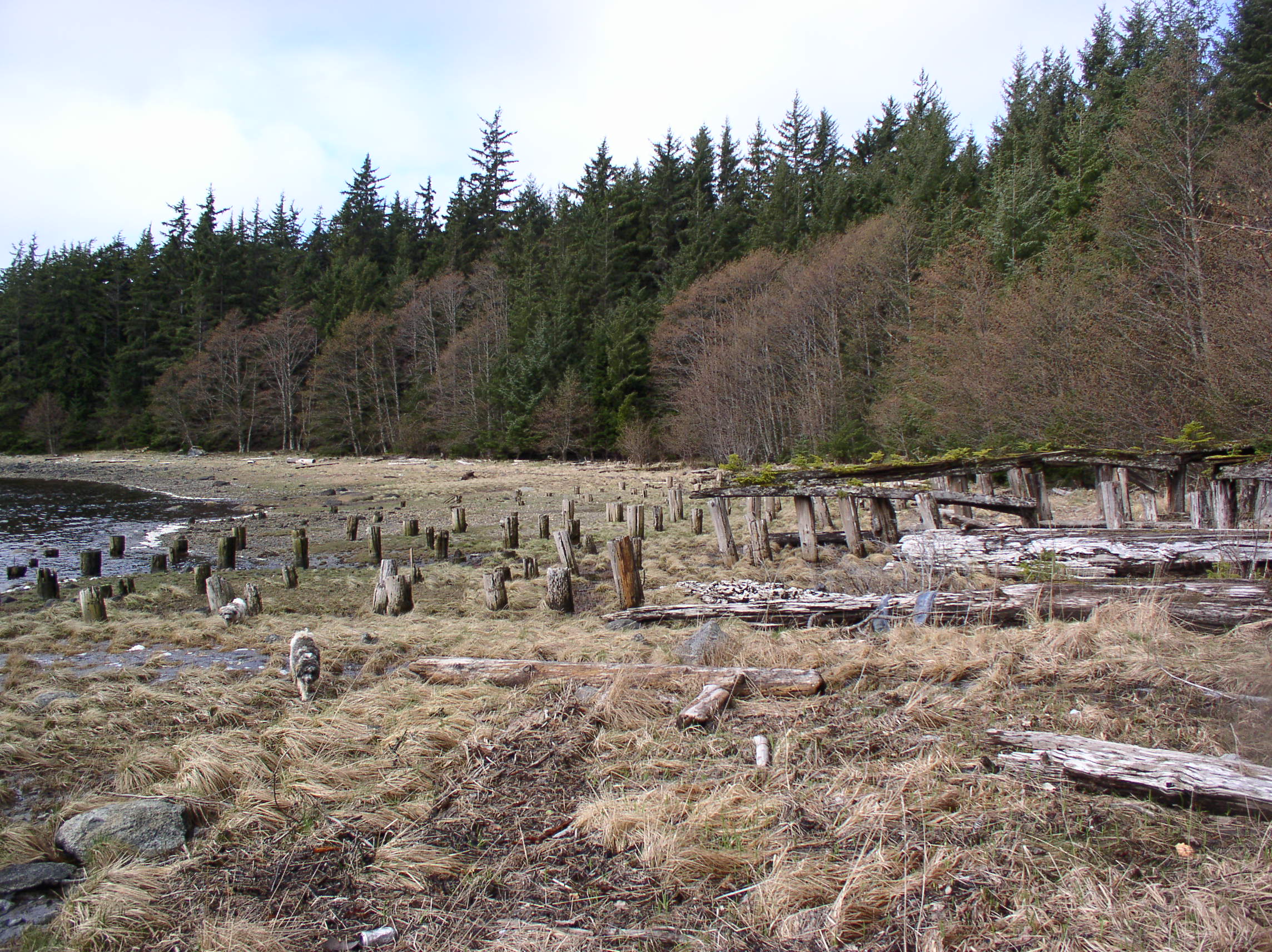
Slipway pilings at Scow Bay:
0a-scowbay

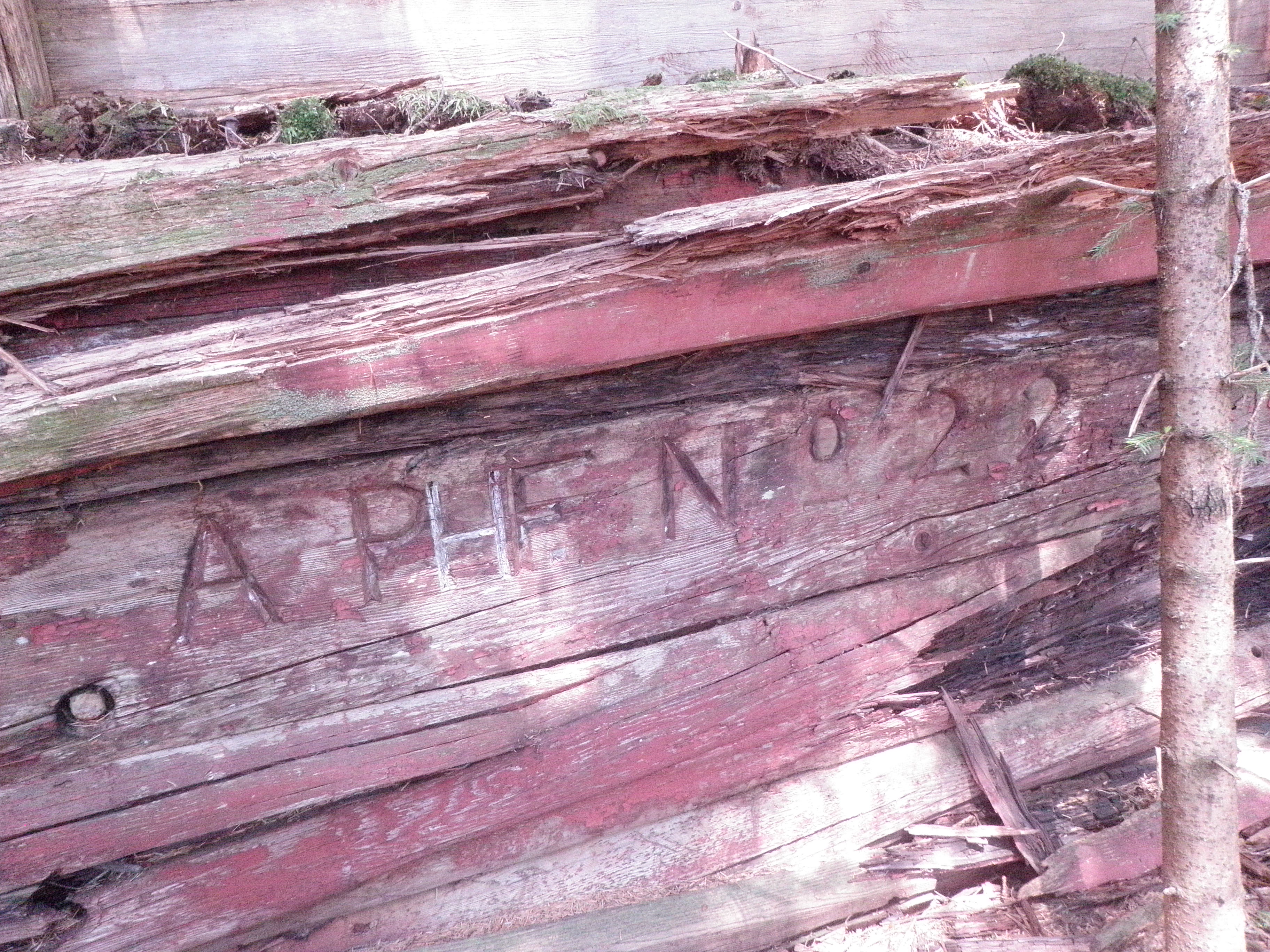
The name of one of the scows, which were large enough to require official documentation as Merchant Vessels:
OLYMPUS DIGITAL CAMERA

From the 1965 Merchant Vessel Registry on the above scow:

A.P.F. No 22 (wood) Barge, No 168899. 41tons gross/net. 61.1ft long, 18ft breadth, 4.4ft depth. Built 1924 in Houghton, WA for freight service. Owned by P.E. Harris Inc of Washington, home port Juneau.

The carved “H” seems to have slipped in between the P and F sometime after the official numbering, I’m not sure what it means. The other scows had equally imaginative names, like the No 19, No 20, etc.

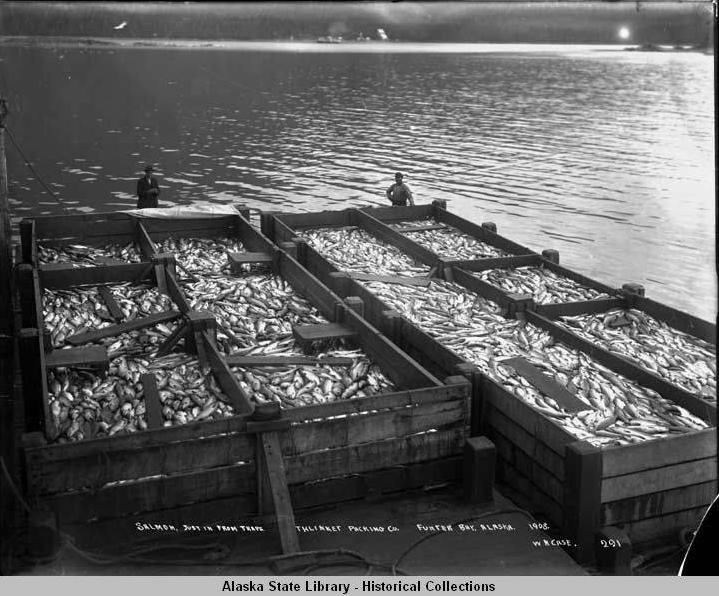
Here are some more views of these scows in operation in 1908. The wooden boards surrounding the top would have increased their load capacity:
Funter Bay Cannery2 1908
Courtesy of the Alaska State Library, William R Norton collection, P226-446

scows2
Courtesy of the Alaska State Library, William R Norton collection, P226-445

Two more views of the slipways, you can see some of the remaining top rails on the right, now home to small gardens of saplings:
OLYMPUS DIGITAL CAMERA

OLYMPUS DIGITAL CAMERA

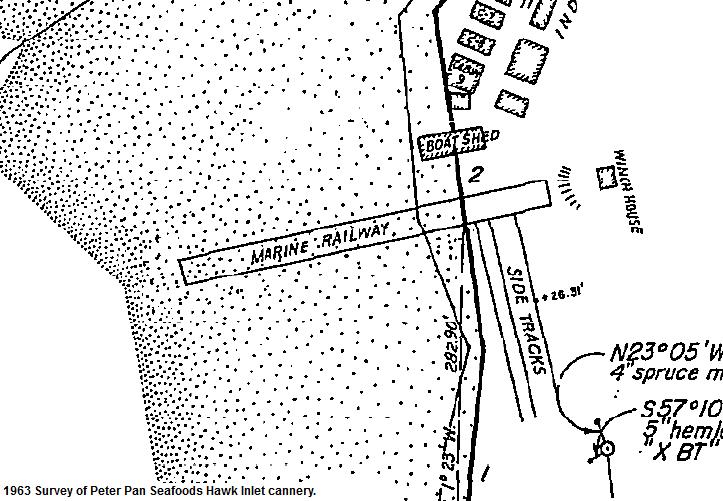
Here is a diagram of the scow slipways from a cannery of similar vintage. Typically there would be one main ramp leading from the water up to the woods above high-tide, and then scows would be pulled sideways onto parallel tracks for storage. At Funter they seem to have had multiple parallel tracks to the water, rather than side-tracks.

scow survey

Some of the collapsed top-rails that made up the storage tracks of the slipways, and one of the braided steel cables running back to the winch engine:
OLYMPUS DIGITAL CAMERA

A spool that would have held steel cable (also known as an Alaskan patio table!):
OLYMPUS DIGITAL CAMERA

Parallel rows of pilings leading from tideflats to the woods:
OLYMPUS DIGITAL CAMERA

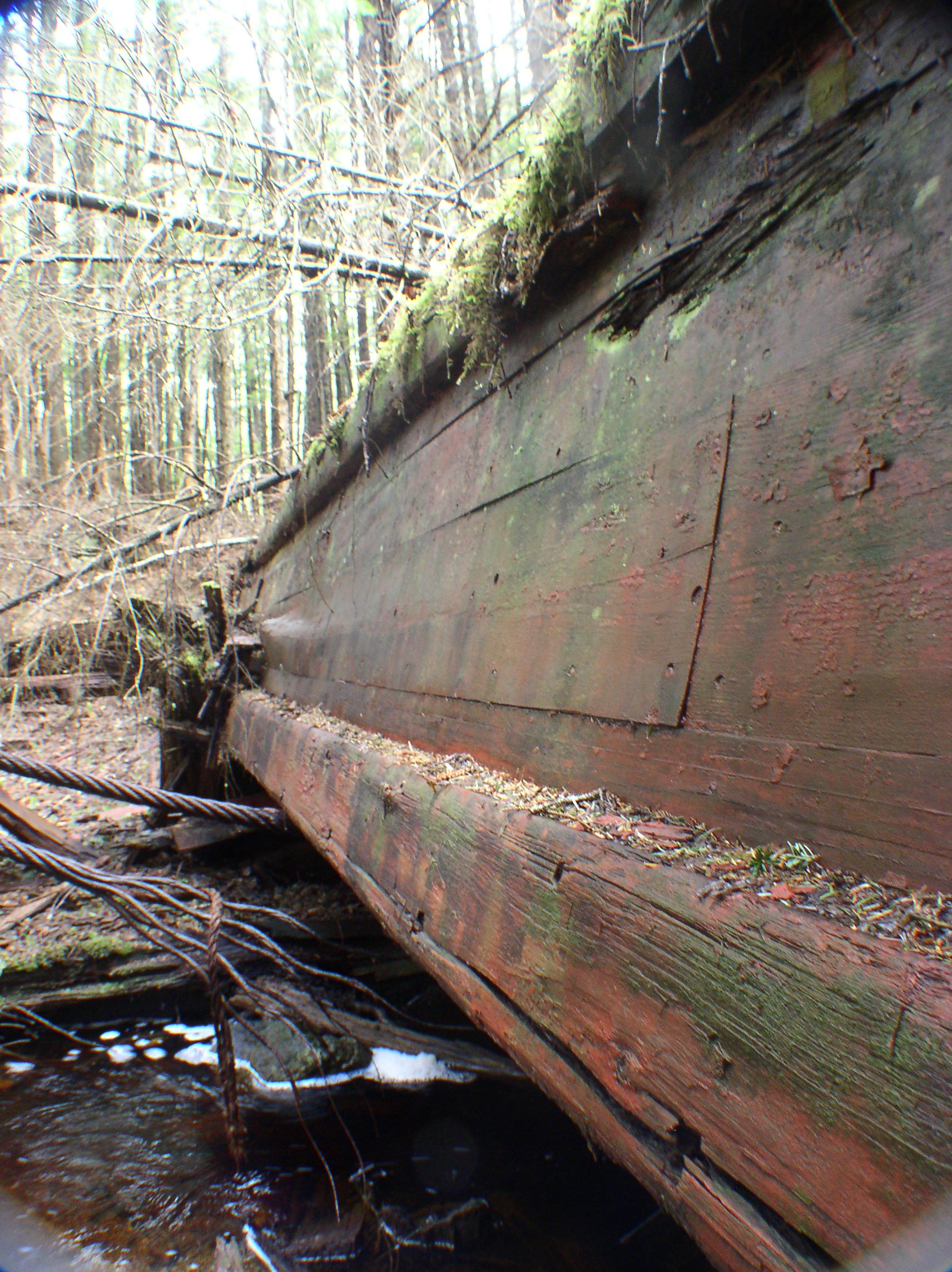
Closeup of a scow hull. The red paint was probably a copper-based anti-fouling bottom paint (to prevent barnacles and other marine life from growing on the wood):
OLYMPUS DIGITAL CAMERA

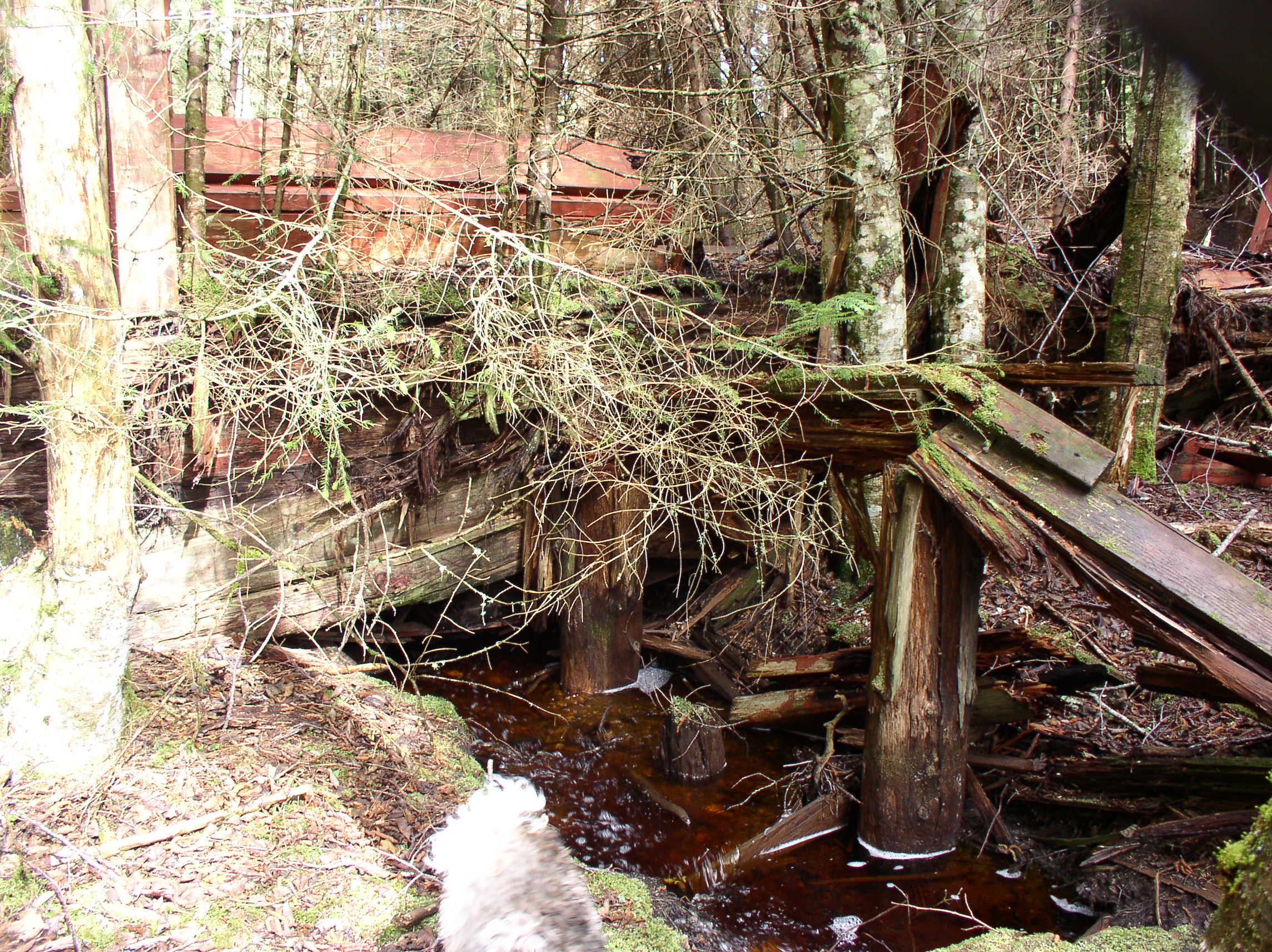
This picture shows how the scows have rotted into and through the rails they once sat on. In some cases, the pilings that held up the rails are now poking up through the rotten wooden hulls. A scow (on the left) has settled to ground level, while a rail is seen falling off its posts on the right:
OLYMPUS DIGITAL CAMERA

That’s it for now!


More Funter Bay Fishermen

June 5, 2013

Here are a few more commercial fishermen (and women) who I’ve come across while researching Funter Bay. This is to follow up on my previous post.

Funter Bay has been used as a landmark or boundary point for various fishing regulations through the years.

Pete Hobson, a Tlingit man from Angoon, reportedly died at Funter Bay in 1930 while on the seiner Myrtle. He was mentioned in my previous Funter Bay Fishermen post, it was implied that he owned the Myrtle, and in 1924 he pulled two trollers off the rocks at Funter.

The troller Ada-May was listed as visiting Funter Bay in 1942. She was a 31ft gas fishing boat built in Ketchikan in 1924, belonging to James Paddock of Juneau. (The Ada May was also busted for bootlegging in 1930 off Point Retreat, with Ed Hibler and Scotty & Mrs. Boyce on board).

Max & Ann Dorman lived at Funter around 1943. They had moved to Sitka in the 1970s and were described as retired trollers who lived at Funter and at Elfin Cove. They had the vessel Pal in 1937.

“Bell” and “Al” Schramen fished the boat Aurora, and Bess and Chet Kimmerly had the boat Bess Chet, fishing around Funter Bay. (Per Lazzette Ohman). Aurora is listed as a 38′ fishing boat built in Bellingham in 1948. Bess-Chet was a 37′ fishing boat built in 1957 in Tacoma.

In 1954 the troller Helen was found beached at Funter Bay by the crew of the Mabel CGeorge J. Harju, 48, of Juneau was found dead at the Helen‘s wheel of an apparent heart attack. (per Pacific Fisherman Handbook, Vol 52).

Cora and Curly Warnock were Funter Bay residents (Per Lazzette Ohman). I’m not sure if they fished, they may have been hunting guides.

An “officious and profane resident” fishermen in Funter Bay was reported in 1973. There are probably several people this could have been! (This is sometimes the attitude towards “yachty” boats, fishermen usually don’t want “tourists” tying up next to them due to conflicting schedules, or just general cussedness).
profane

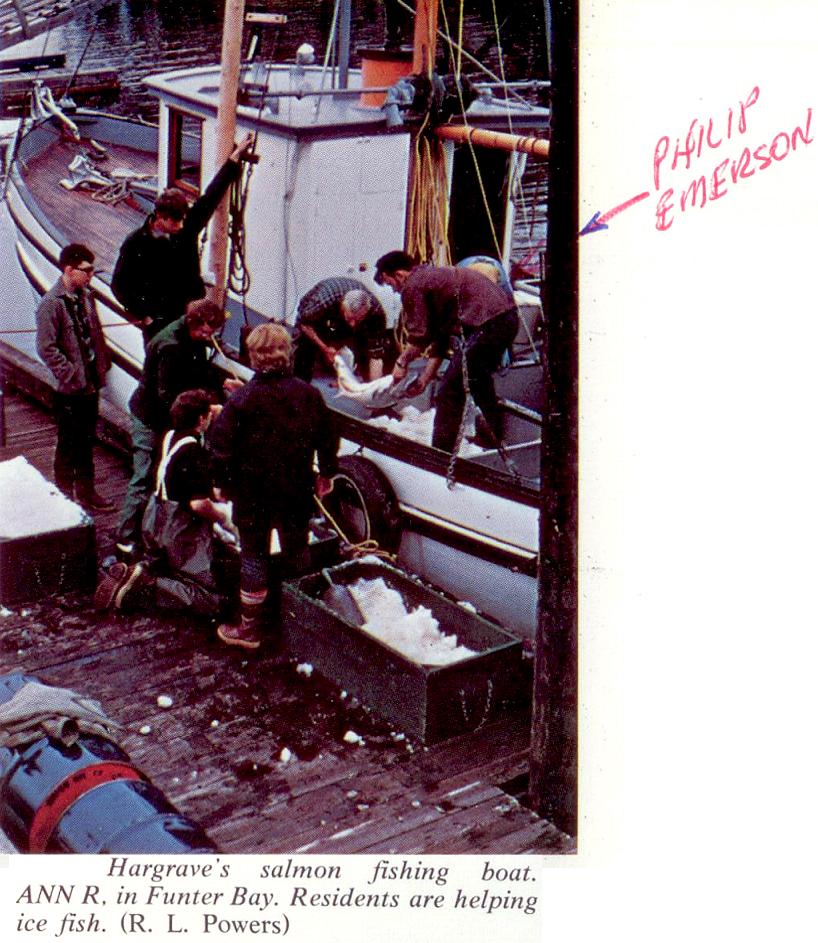
I’ll probably have another fishing update in the future, but to wrap this one up, here’s a picture from Alaska Geographic magazine with my Dad on Harold Hargrave’s boat. Thanks to Richard Powers of the Whaler’s Cove Lodge for giving me permission to use his photo! This was from the Summer 1973 issue  (Vol 1, No 3, “Admiralty…Island in Contention”).
Dad 1973