Funter Bay History: Piledrivers

July 19, 2014

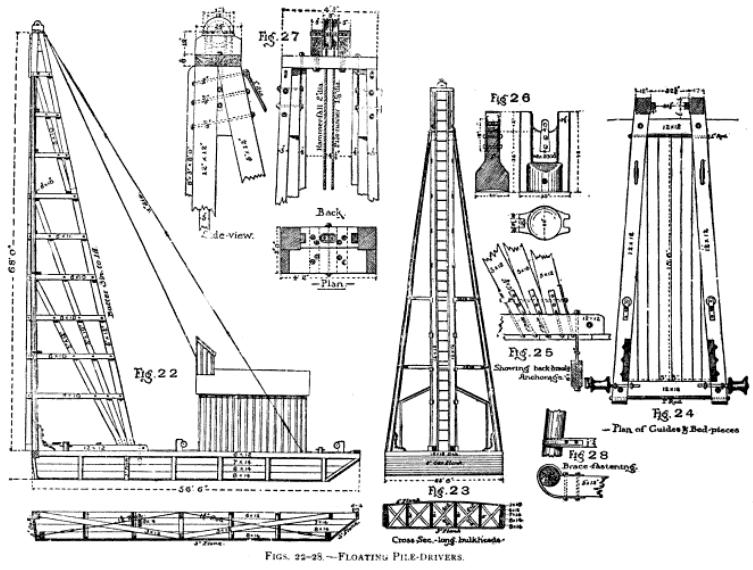
Construction in intertidal zones relies heavily on pilings. These posts are driven into the sand and mud of the tide flats and ocean bottom. This common construction method was (and still is) used to install docks, fish traps, wharves, and buildings extending out into the water. Pilings are similar to telephone poles in length and diameter. Installing pilings is much like hammering a nail, a large heavy object is used to repeatedly hit the top of the pole, driving it into the ground.

piledriver3


Diagram of a piledriver, from Foster, Wolcott C, “A Treatise on Wooden Trestle Bridges and Their Concrete Substitutes: According to the Present Practice on American Railroads”. 4th Edition, New York, John Wiley & Sons, 1913.

In the above design, the hammer (usually a cast metal weight) slides up and down on the vertical section of the tower, pulled by cable from a winch at the rear. Piledrivers could be mounted on skids, barges, rail cars, or other platforms as needed. This design is essentially unchanged from Roman times, when drivers were powered by animals or humans. They later evolved to use steam and then internal combustion power, but the appearance largely stayed the same until the advent of diesel impact, pneumatic, and vibratory hammers.

Tractor-powered pile driver in Alaska in 1942, courtesy Library of Congress:
piledriver1

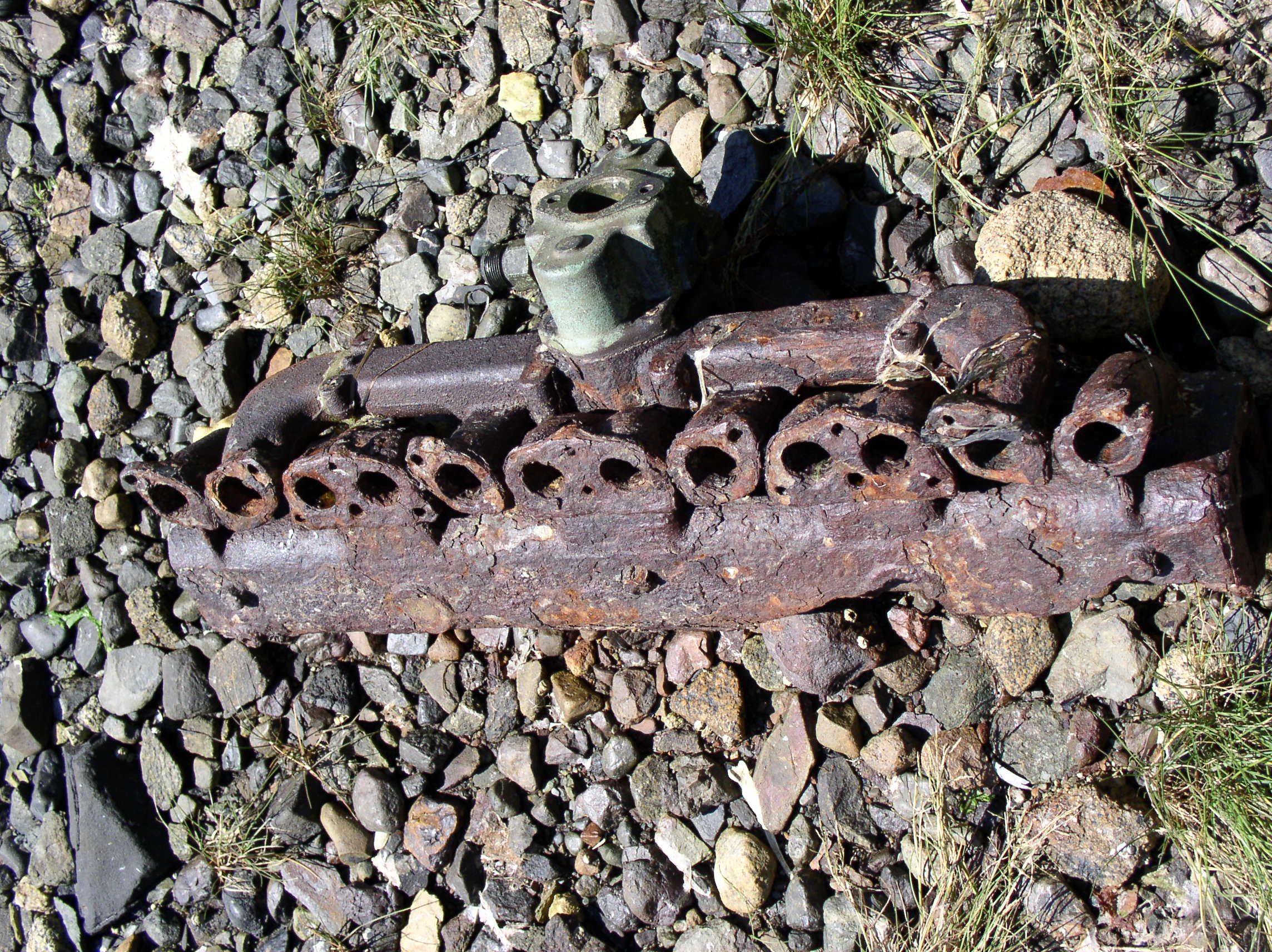
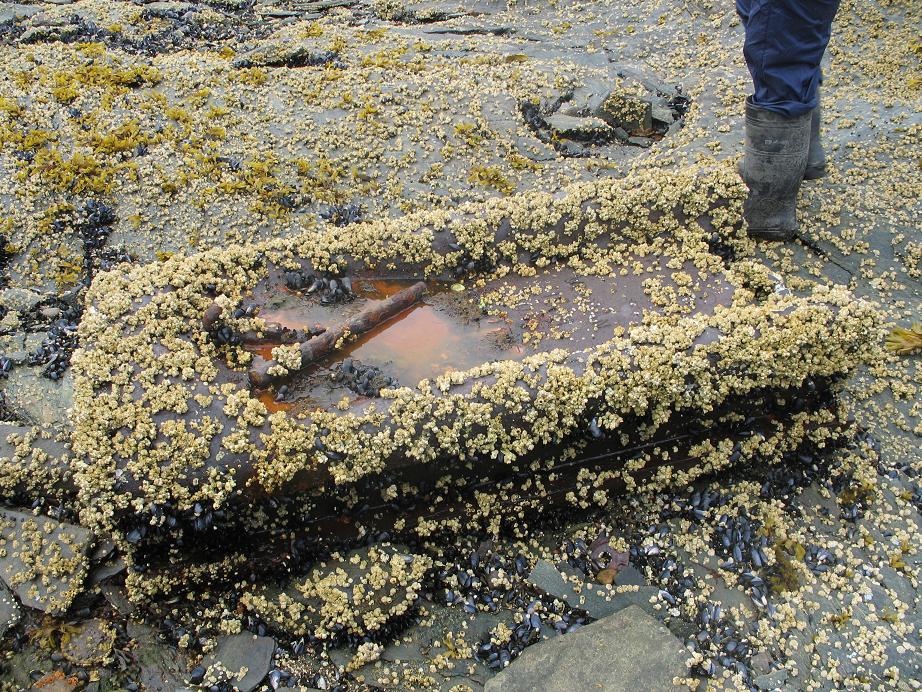
Piledriver hammer found underwater at Funter Bay and pulled out on shore. Note the slots on the side where the hammer would ride the vertical support rails:
hammer1

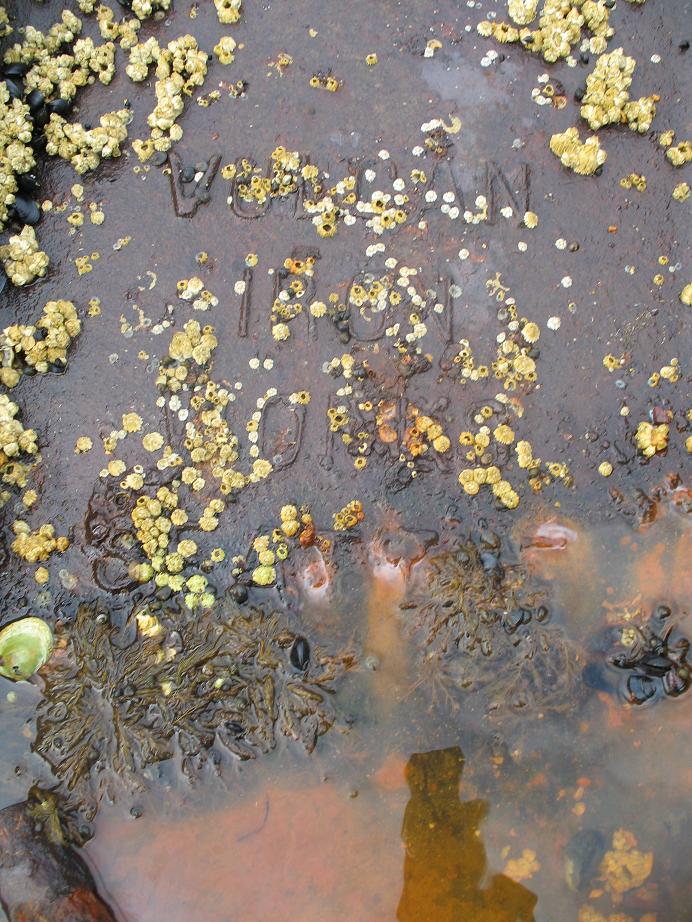
Closeup showing the maker of the hammer: Vulcan Iron Works of Seattle:
hammer2

Some information on Vulcan pile driver history can be found here.

A 1926 photo of a pile driver in Funter Bay can be seen below:
piledriver

While modern docks generally use creosote-coated (or metal) pilings for rot resistance, early installations used untreated pilings. These have largely decayed and disappeared above the water line, although the buried sections and pilings that are above mean water level are more preserved.

Pilings at Scow Bay, as seen previously on this site:
OLYMPUS DIGITAL CAMERA

Stubs of pilings which seem to have been cut off at ground level:
OLYMPUS DIGITAL CAMERA

Complex piling structure supporting the approach ramp to the cannery dock:
pilings

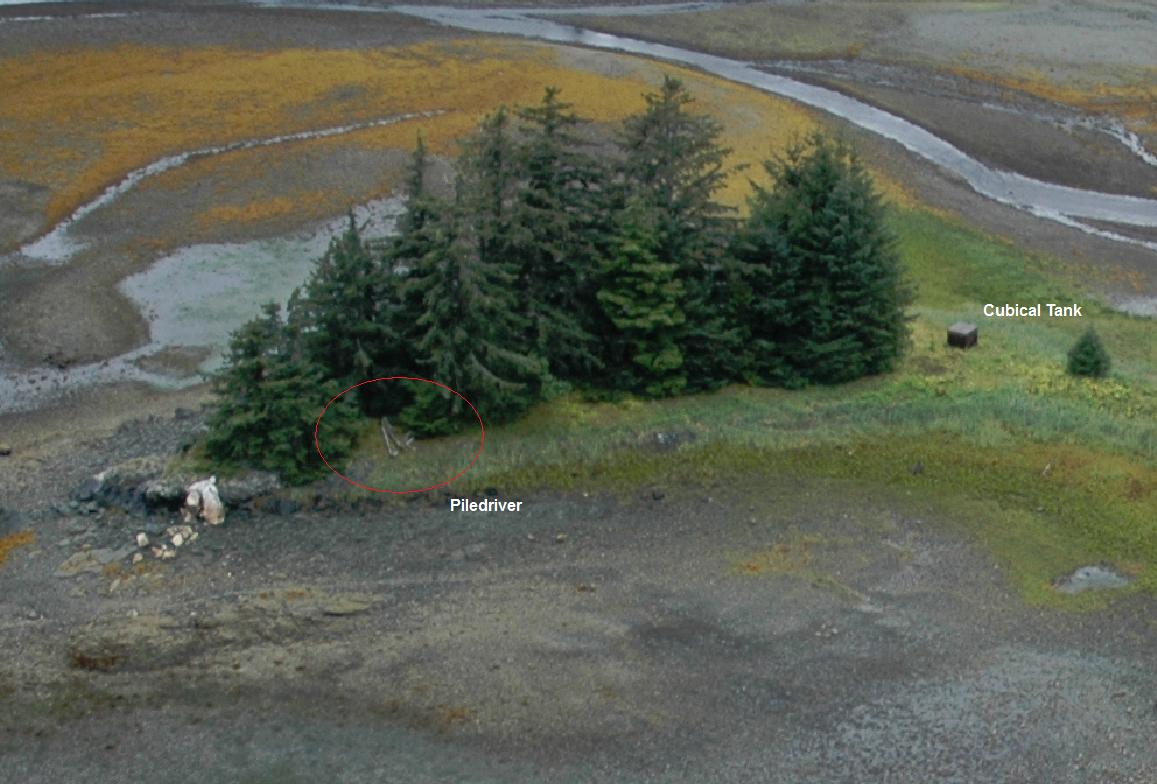
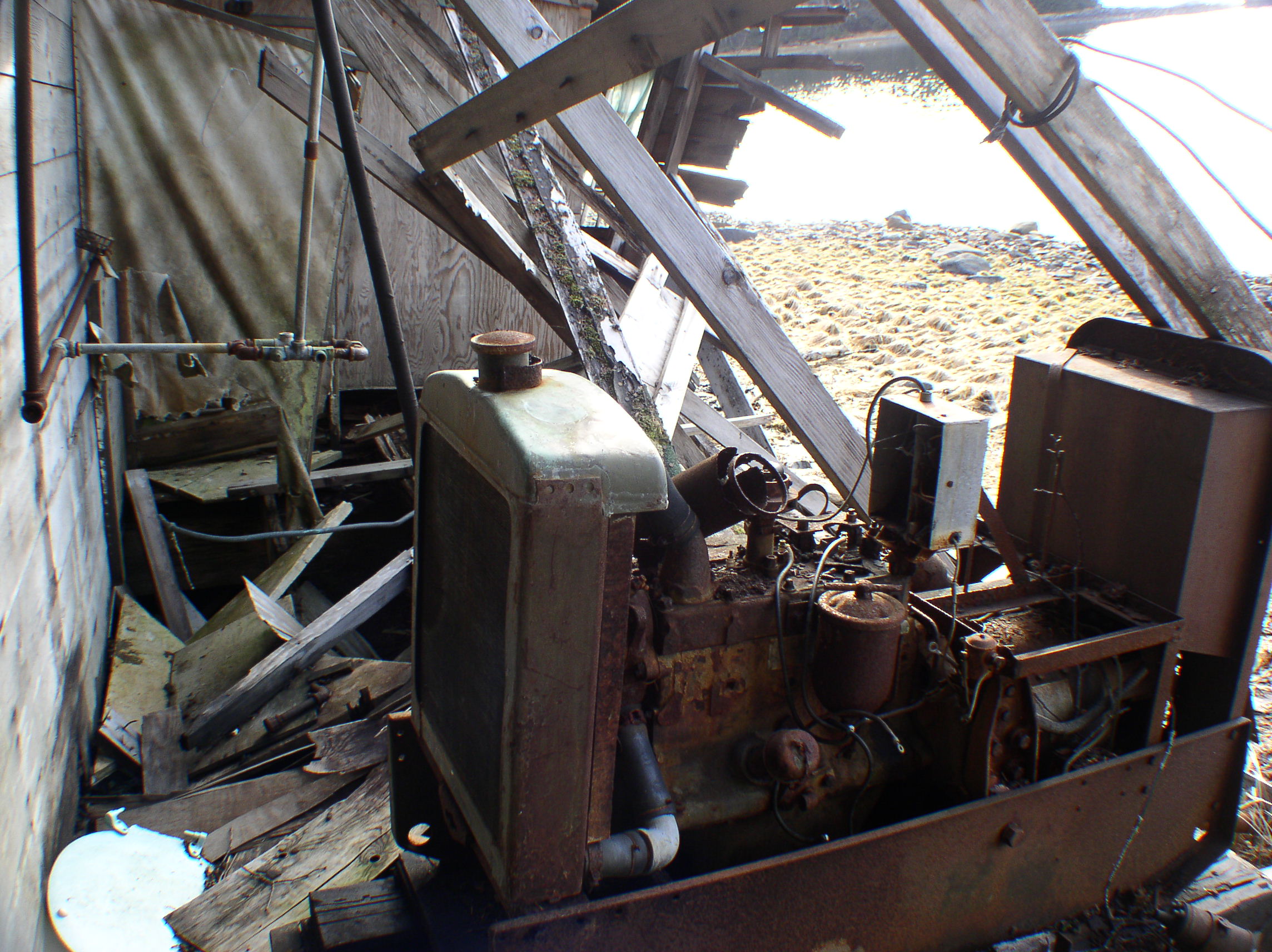
An old pile driver is abandoned on “The Point” in Crab Cove. This was a smaller unit mounted on a skid base, it may have been part of Ray Martin’s scheme to build a logging railroad dock there, or could be leftover from some other project in the bay. The A-frame support collapsed sometime in the last 20 years, I remember when it was still standing. Power was provided by a small stationary gas engine. The large cubical tank or boiler nearby is of unknown origin.

piledriver2


Funter Bay History – Health & Medicine

April 23, 2014

Medical care in rural Alaska has always been problematic. The distance from doctors and hospitals can be inconvenient at the best of times, and life-threatening at other times. Throughout the years there have been a number of traveling doctors, dentists, and other medical professionals who visited rural areas of Alaska. Some of these have been mentioned before (such as the floating dental clinic Anna Helen which sank near Funter in 1928).

While immediate first aid frequently involved a jug of whiskey, more serious injuries usually required a trip to Juneau. The following are some accidents and medical incidents noted in historic newspapers (mainly the Daily Alaska Dispatch of Juneau):

-Undated: Two prospectors near Point Retreat were reportedly thawing frozen dynamite in their cabin, when it exploded. The cabin was destroyed and one man was seriously injured. The other set out for help, but the weather was too bad for his boat, so he walked six hours to Funter Bay along the beach. The miners at Funter dressed the injured man’s wounds and kept him warm until a steamer could bring him to the hospital four days later. (source).

-May 5, 1902: A fisherman named Brookler from the Funter Bay cannery had a pistol ball wound in his hand dressed, the shot was reported to be accidental.

-April 16, 1906: Miner J.W. Fox was in the hospital suffering from inflammatory rheumatism.

-April 11, 1908: “A Chinaman” from Funter Bay “had been fooling with a gun” and shot himself through the hand.

(Some other accidental gunshot wounds are mentioned in another post).

-June 24, 1908: An “Indian lad” broke his arm at the elbow and severe complications set in. James T. Barron brought him to Juneau on the vessel Phillip P Kelly for medical care.

-Sept 26, 1908. Funter Bay prospector Oliver Farnum died at the Sister’s hospital in Juneau, about sixty years of age. He had been “ailing for about six months”.

-June 28, 1909: “While working on one of the dams at Funter Bay”, Joseph Rose slipped and fell, fracturing two ribs. He was brought to the Simpson hospital in Juneau on the Georgia.

-December 21, 1909: Soldier J. T. Karr from Fort Seward (Haines) was injured while hunting at Funter Bay and was brought to St. Ann’s Hospital. His name is also given as John Carr in another article. The unfortunate fellow tripped on a rock and managed to fall neck-first onto an axe, which had frozen into the ground edge-upwards. The accident would have been fatal if not for a trained nurse who happened to be at Funter Bay and was able to dress and stitch the wound.

-October 31, 1910: Mr J. Caper from Hawk Inlet had walked to Funter over the mountain to pick up the mail. While returning to Hawk Inlet in the dark, he fell over a steep embankment and broke his ankle. Caper dragged himself the rest of the way over the ground, arriving four hours late, and was taken to St. Ann’s hospital on the mailboat Rustler.

-January 26, 1912: J. Olson was taken to the hospital from Funter Bay with an acute case of rheumatism.

-July 20, 1915. Funter bay prospector W. C. Miller, age 65, came down with pneumonia and took the mail boat Georgia to Juneau. He was placed in the hospital at once, but died the next day.

-Feb 27, 1917. Sam Larson had a severe attack of pneumonia and was brought to the General Hospital in Juneau. The same day, Dan Barlow of Funter Bay was released from the hospital after undergoing eye treatment.

-June 23, 1917: Sam Olson was injured in a fall at Funter Bay and taken to St. Ann hospital.

-June 26, 1917: Harry Cratty suffered a ruptured appendix at Funter Bay and was operated upon by Dr. Dawes at the General hospital.

-June 30, 1917: Olaf Johnson from Funter Bay was also operated on by Dr. Dawes

-August 1, 1917: G.C. Coffin, an employee of the Funter Bay cannery, received eye treatment at the General Hospital

-Feb 26, 1918. Captain Woods of the cannery tender Anna Barron fell 20ft down a ladder and then into the water, he was taken to St. Ann’s hospital and reported in good condition with no broken bones.

-August 17, 1919: Miss B. Blaire, a trained nurse, was taken to the hospital from Funter Bay where she had become dangerously ill with “brain fever”.

Medical care fell to a disappointing low during the WWII internment of Aleut evacuees at Funter. Government logs report that the accepted treatment for a fatal strain of flu was to “sweat it out”.

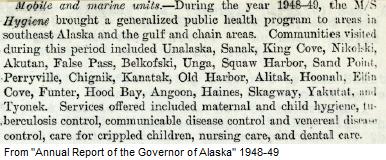
After WWII, the Teritorial Department of Health operated several floating clinics, including the MS Hygiene. This boat, sometimes known as the “shot ship”, provided vaccinations, checkups, x-rays, and other services to rural families all along the Alaskan coast (detailed article here).

hygiene

-October 1, 1956: Rod Darnell of Sitka was bear hunting near Funter Bay and failed to kill his prey with the first shot. The wounded bear charged him and gave him severe lacerations to the head and neck. Darnell was treated on-site by a doctor flown out from Juneau, then brought to St. Ann’s hospital for further treatment. A story in Alaska Bear Tales relates another mauled hunter being flown out of Funter Bay in 1957.

-July 5, 1957: Ione Puustinen of Funter Bay was admitted to the Sitka Community Hospital

-June 30th 1987: An article titled “State Repeats PSP Warnings” told of an out-of-state visitor who became ill after eating mussels at Funter Bay. Officials talked of the danger of paralytic shellfish poisoning, or PSP. Filter feeders such as mussels accumulate toxins from algae (the so called “Red Tide“) in their bodies. The victim was flown to Juneau for treatment and recovered. For many years there was a large skull and crossbones painted on one of the Funter Bay floats, with the warning “Don’t eat Mussels”.

The Alaskan bush can be a dangerous place. While most of these incidents had happy endings, they serve as a reminder to watch your step, watch the critters, and be careful what you eat (and don’t thaw your dynamite on the stove!)


Funter Bay History: Ships Part IV

April 16, 2014

A 1907 article noted that the steamship Humboldt traveled from Funter Bay to Seattle in September, bringing 85 passengers and 7,875 cases of salmon (this included some cases from Petersburg as well as Funter).

humboldt

An article in the San Francisco Call of November 18th, 1911, described the Bark J.D. Peters arriving from Funter Bay, where it served as a cannery tender. Unlike the Thlinket Packing Co’s General Fairchild and other old ships converted to barges, the Peters seems to have remained a sailing vessel. It is shown in a 1911 photo with furled sails. Another photo (which also appeared in the Seattle Daily Times dated 1911) shows the ships with sails raised.

Peters
The merchant vessel registry describes the Peters as a 182ft sailing bark built in 1875 in Bath, Maine, and operating out of Port Townsend, Washington. It had a crew of 15 and a gross tonnage of 1,085. Registry number was 75809, and call numbers were J.R.L.F. It was owned by the Northwestern Fisheries Co during that time, and probably transported fish from multiple canneries in Alaska.

Peters2

In 1912 it was listed as a schooner, vs a bark. A bark has 3+ masts, all with square sails except the aft-most, and were a common type of slow cargo ships with smaller crews. A schooner has 2+ masts with fore-and-aft sails, even simpler to operate and requiring fewer crew than a bark, but does not necessarily perform as well. The Peters remained on the registry until at least 1928, when it had a crew of 5 and was hauling freight for the Booth Fisheries Co.

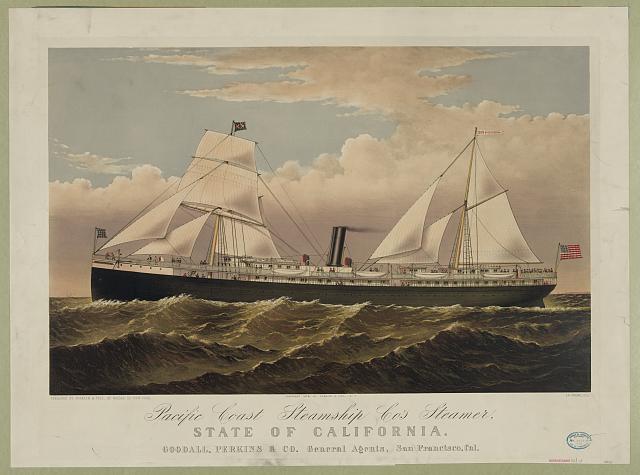
Also in 1911, the sailing steamship State of California went aground for four hours at Funter Bay, probably due to a misreading of the tide tables.

state of california
Image courtesy of the Library of Congress.

Daily Colonialist - City of California Aground at Funters Bay

The State of California sank in August 1913 in Gambier Bay, on Southern Admiralty Island, after striking an uncharted rock. More information on the ship is here.

Two photos show a hull on the beach at Funter in 1929 and 1935. The vessel is unidentified, but may be the fishing vessel Pilot. A 1950’s article mentions a “rotting hulk in Funter Bay” in this area, with the registry number 150650. This number was assigned to the Pilot, listed as abandoned in 1925. It was a 50ft long fishing boat from Juneau with a 20hp gas engine and crew of 5, built in Seattle in 1893. It had possibly been a steam tugboat previously.

1935 wreck

1935 image of abandoned vessel at Funter Bay

1929 Wreck

1929 aerial of abandoned vessel at Funter Bay

More shipping and vessel information will probably show up in a future post as I dig up more on the subject!


Funter Bay History: Electricity

March 25, 2014

Electric power began replacing direct mechanical drives in Alaskan industry in the early 1900s. The first adopters were larger companies who could afford the investment in new equipment, but smaller operations soon learned the efficiency and flexibility of electric motors.

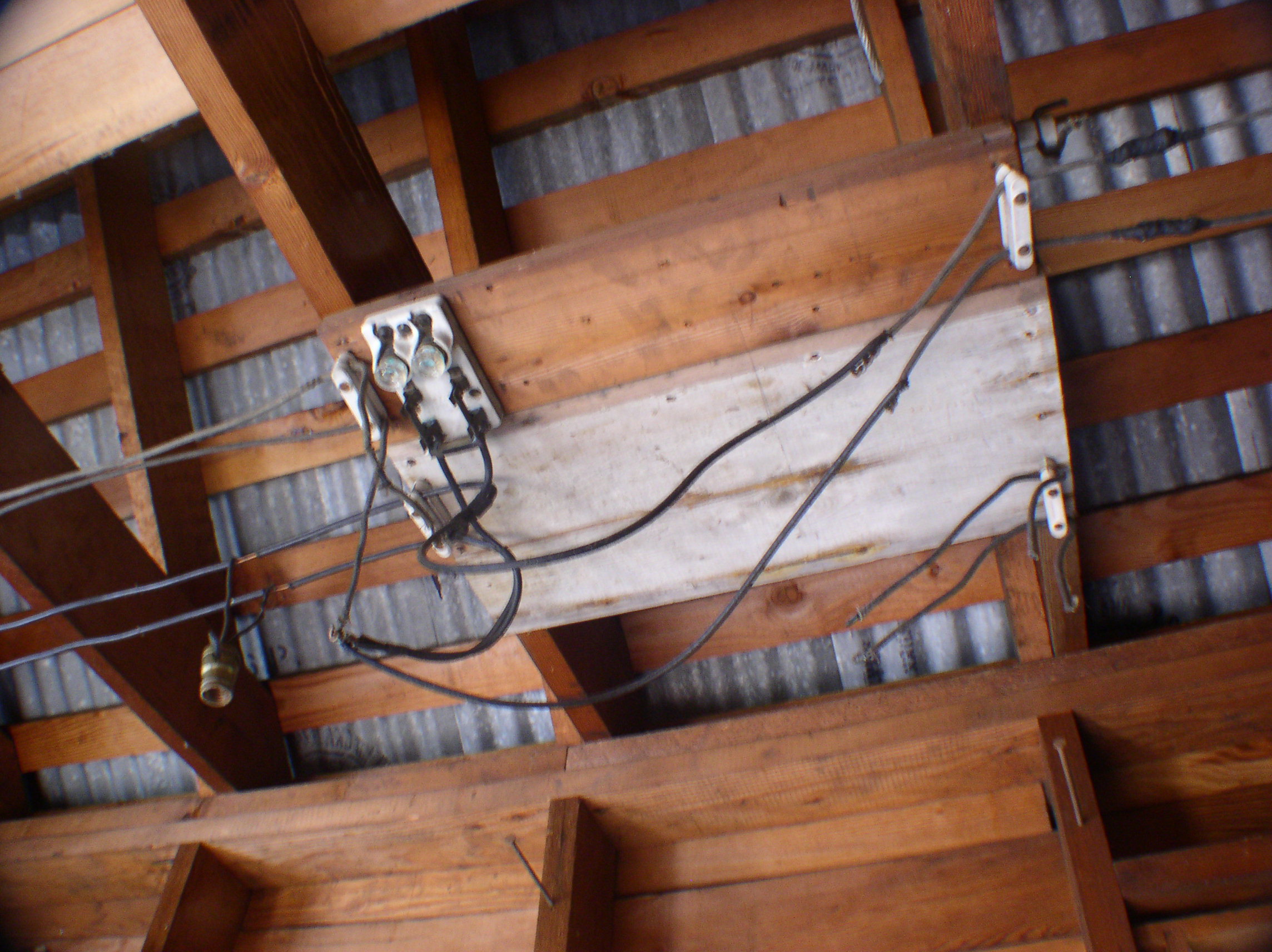
Some 1920s-era knob and tube wiring for lights at the cannery:
OLYMPUS DIGITAL CAMERA

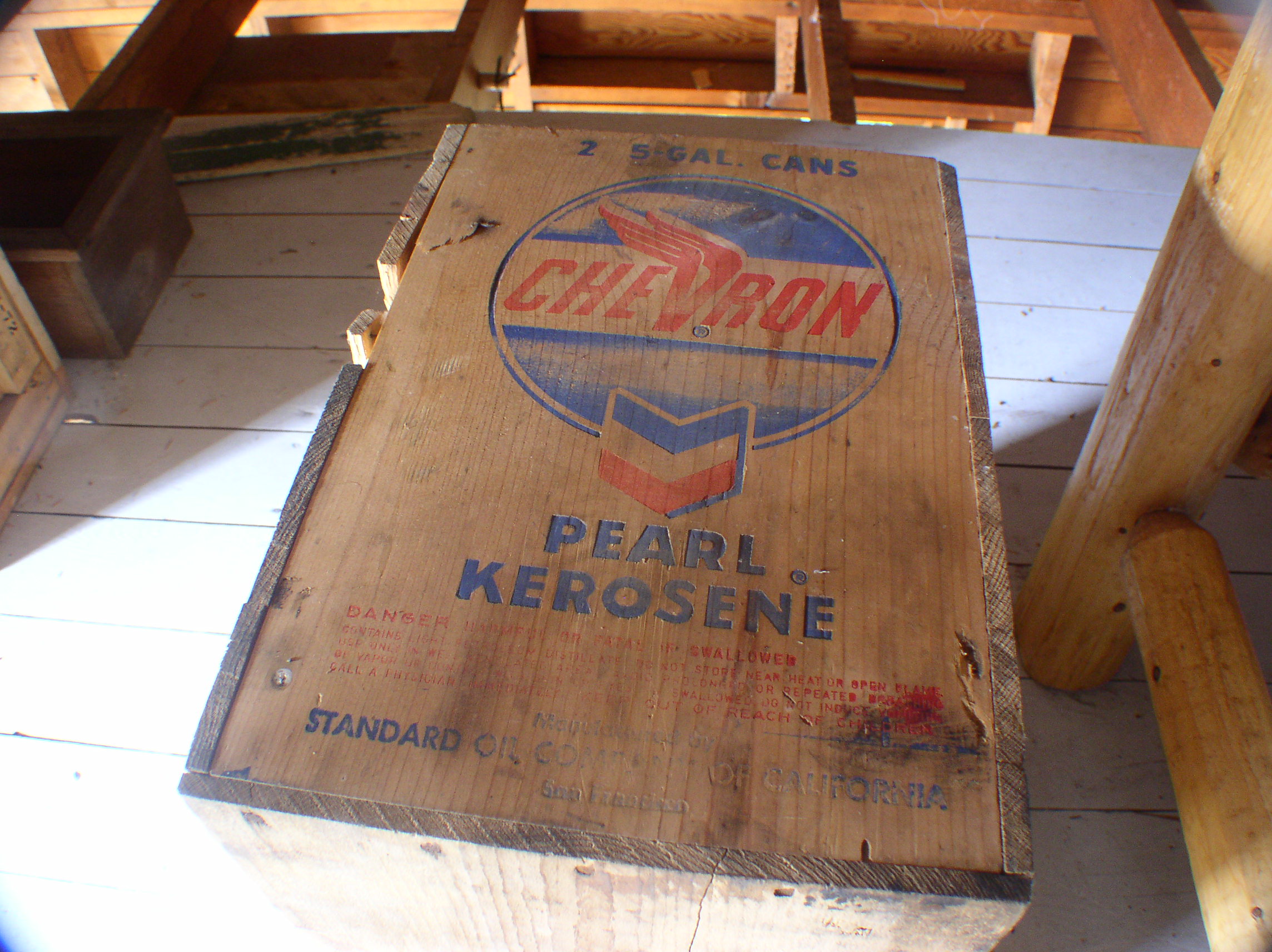
Despite the growing popularity of electricity, electric lights were slow to gain a foothold. Kerosene lamps continued to be popular in many houses and cabins well into the 1980s. Despite being a fire hazard, kerosene was relatively cheap and convenient to use.

OLYMPUS DIGITAL CAMERA

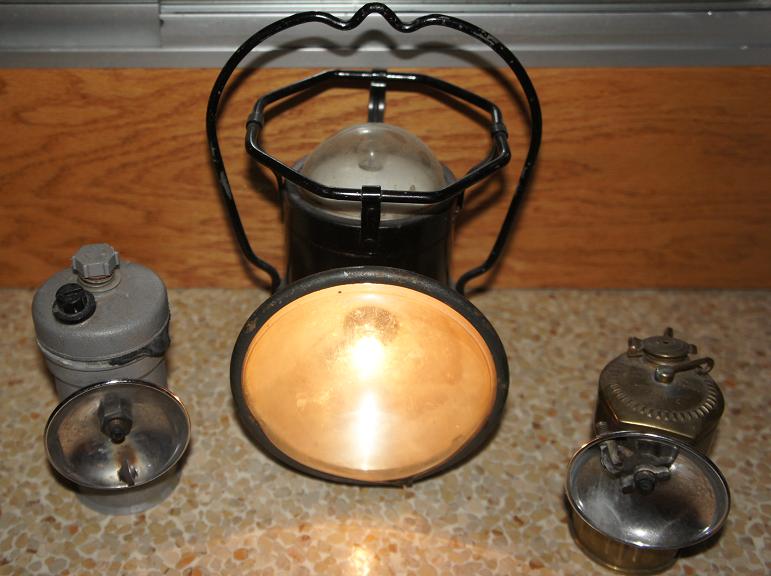
Portable lighting moved slowly from lanterns to battery flashlights. In local mines, carbide lamps remained popular into the 1970s. A mixture of portable lights are seen below, including an older brass carbide lamp, 1930s electric (battery) railway lantern found at Funter, and a 1970s carbide lamp:
SONY DSC

Part of a larger “Radio Battery” ca 1950s:
SONY DSC
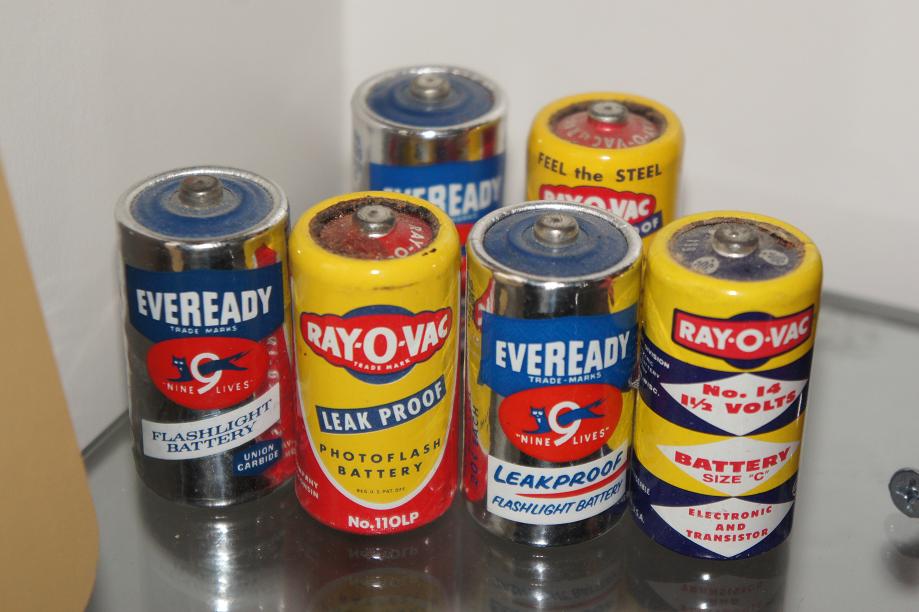
C-cell batteries, probably from the 1960s:
SONY DSC

Early electric generators were usually small and ran only part of the day for equipment use. Pelton wheels were popular for locations with reliable streams, as mentioned in my post on water & hydropower. Generators or dynamos could be added to existing water wheels, or to existing steam or internal combustion power systems, or tacked onto small portable engines from tractors or other machinery. Several large-scale hydroelectric projects were envisioned at different times in the past, but never built.

There are a number of old “Oil” engines (usually diesel or semi-diesel) around Funter Bay, and a few gasoline engines. Some of these started out supplying mechanical power, and were later converted to generators.  The smaller units had a tendency to disappear from their original locations, as they could be shoehorned into a fishing boat with some effort. As such, there are not as many left in-context, and while you can find them in use as lawn decor, or lying on the beach, or half-buried in the woods, it’s less clear where they originally came from.

Part of an engine that wandered around the beach in front of our house, occasionally being used as a convenient “big heavy thing” to anchor boats or logs to:
OLYMPUS DIGITAL CAMERA

Going in the other direction, diesel boat engines with alternators attached were popular as land-based generators when I was younger, and could be had cheaply from vessels upgrading their equipment. These required well-insulated sheds set away from the house to keep the noise down, but not so far as to incur line loss.

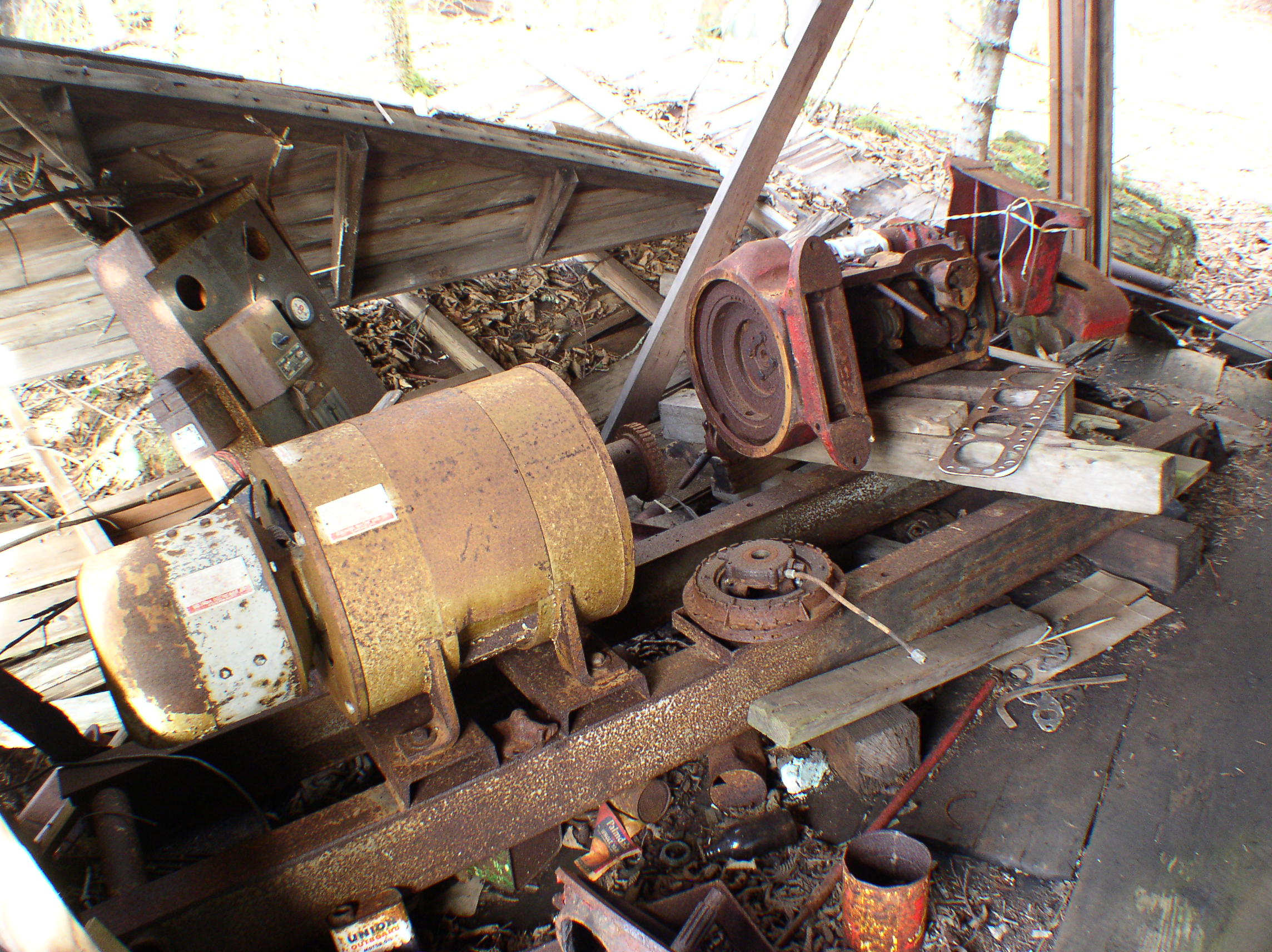
A generator from approximately the 1950s:
OLYMPUS DIGITAL CAMERA

I believe this is part of an International Harvester tractor, retrofitted onto a skid base with a rather massive alternator tacked onto it:

OLYMPUS DIGITAL CAMERA

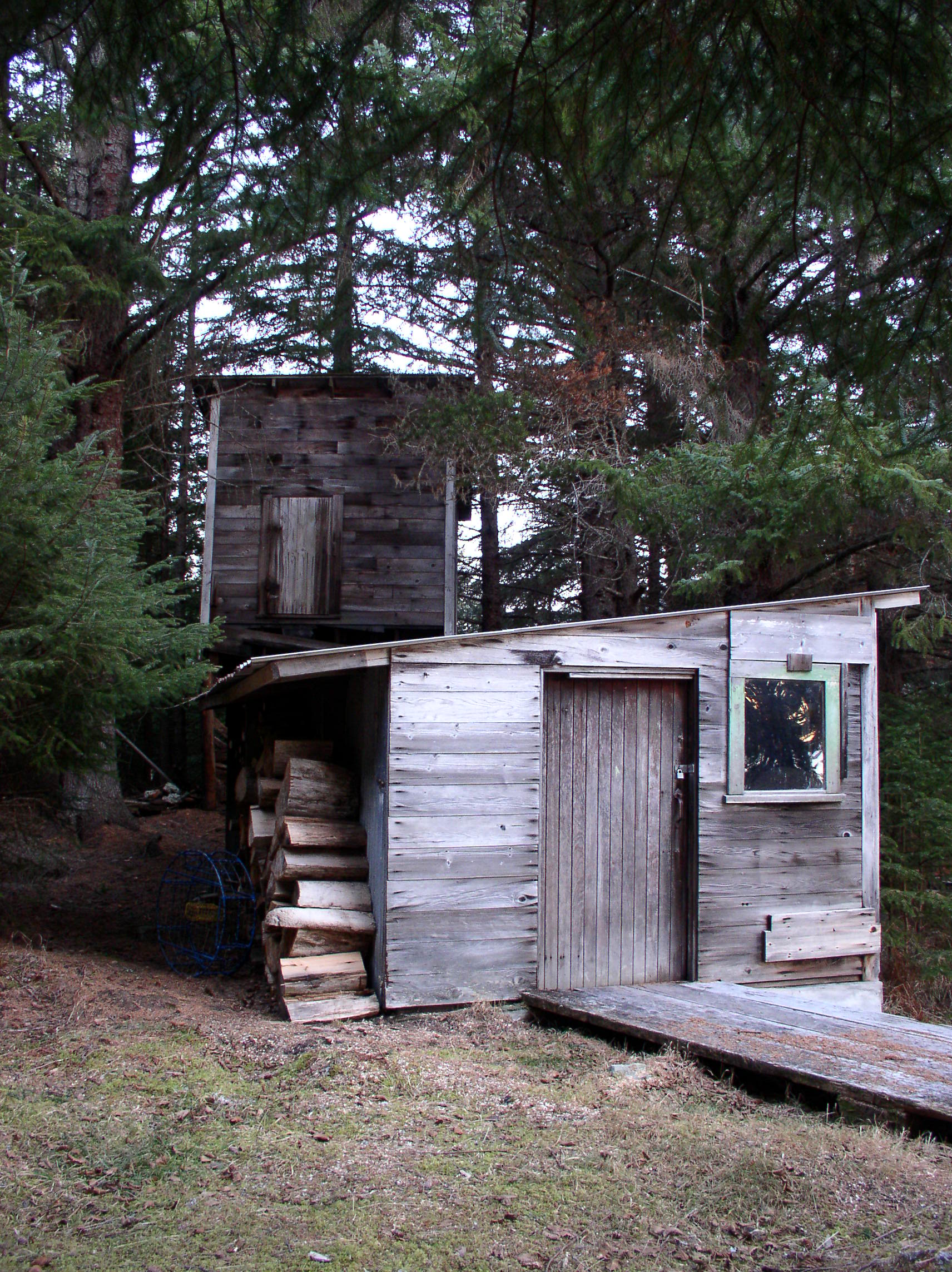
The 1940s-era generator shed at the cannery (with water tower in the background). This was previously the “oil house”. The generator supplied the superintendent’s and caretakers’ houses at the West end of the property, and later supplied some of the boardwalk lighting and lights in other buildings:
OLYMPUS DIGITAL CAMERA

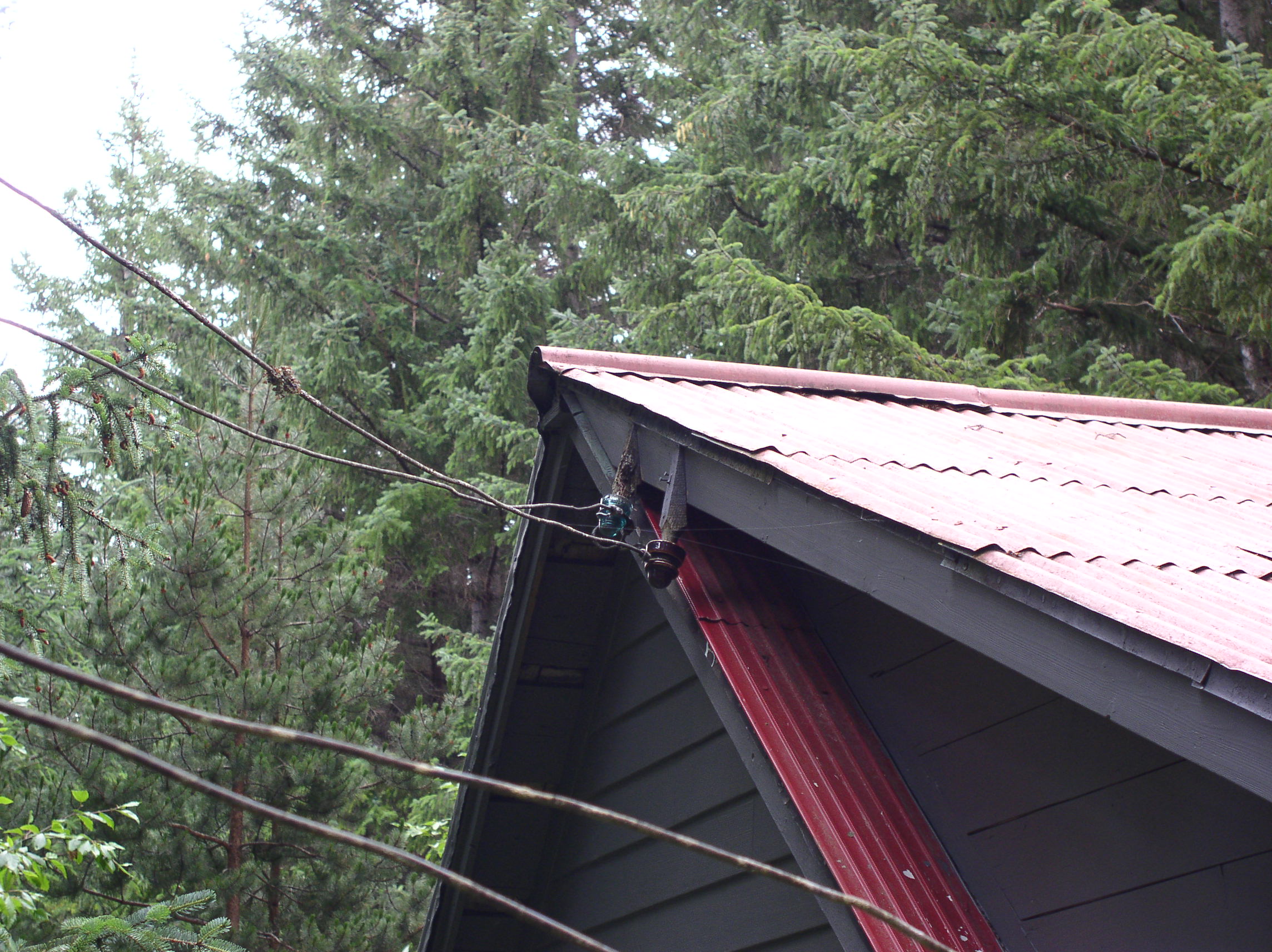
Exterior insulators for electrical wires at the cannery. These were a mixture of ceramic and glass.
OLYMPUS DIGITAL CAMERA

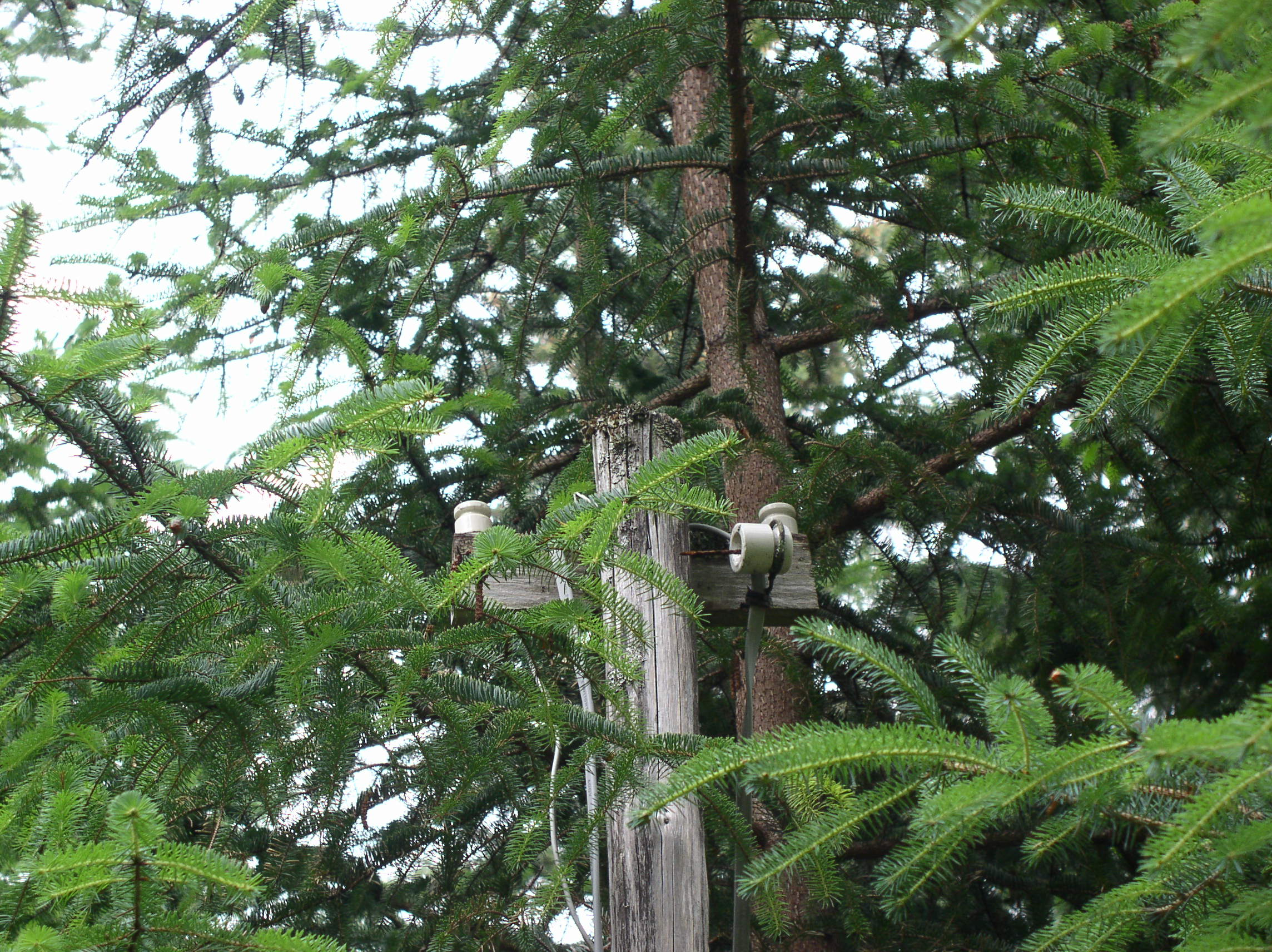
A utility pole at the cannery, with some smaller ceramic insulators. Most of these poles were simply untreated logs stuck in the ground, and many are now getting crowded out by trees.

OLYMPUS DIGITAL CAMERA

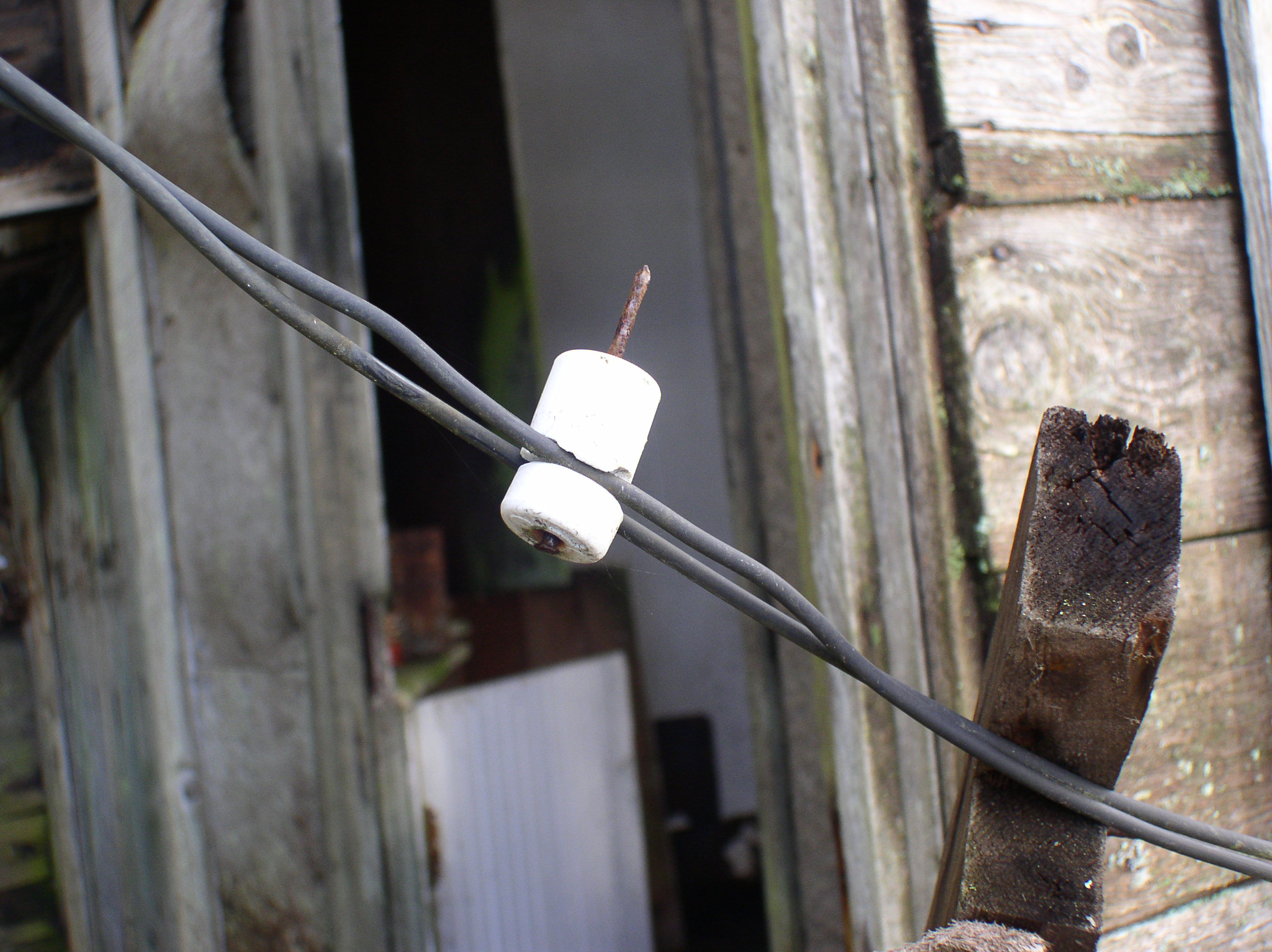
A close-up of a ceramic insulator with rubber-coated wires:

OLYMPUS DIGITAL CAMERA

Power generation is still a complicated process at Funter Bay, often with high fuel costs.  Many properties have begun moving towards alternative energy solutions and new technologies like LED lighting, solar, and wind power.


Funter Bay History: 1926 Aerial Photo

March 13, 2014

As a follow up to previous aerial photos and maps of Funter Bay, here is some imagery from 1926 taken during a US Navy coastal survey. The US Forest Service and The National Archives office in Anchorage were very helpful in finding these for me!

1929 Aerial Composite

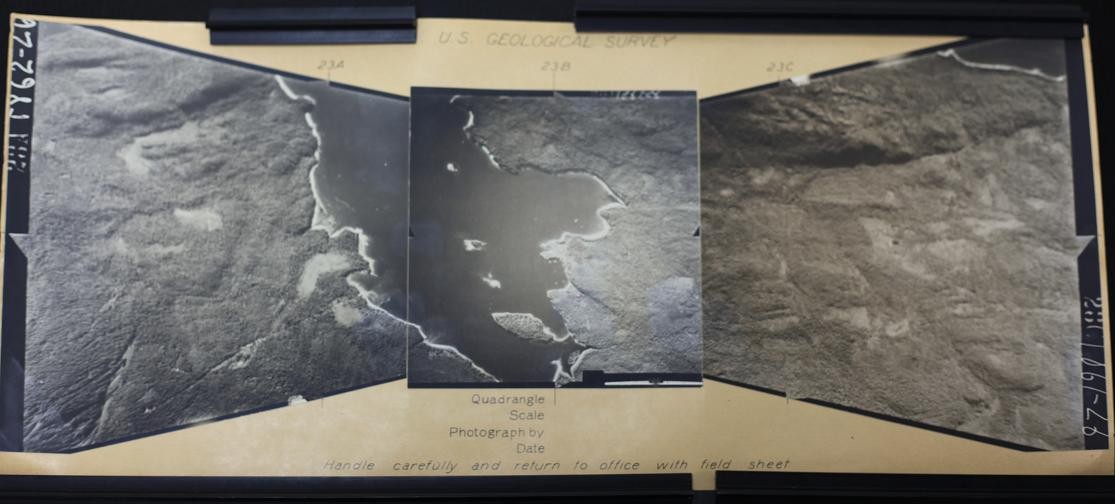
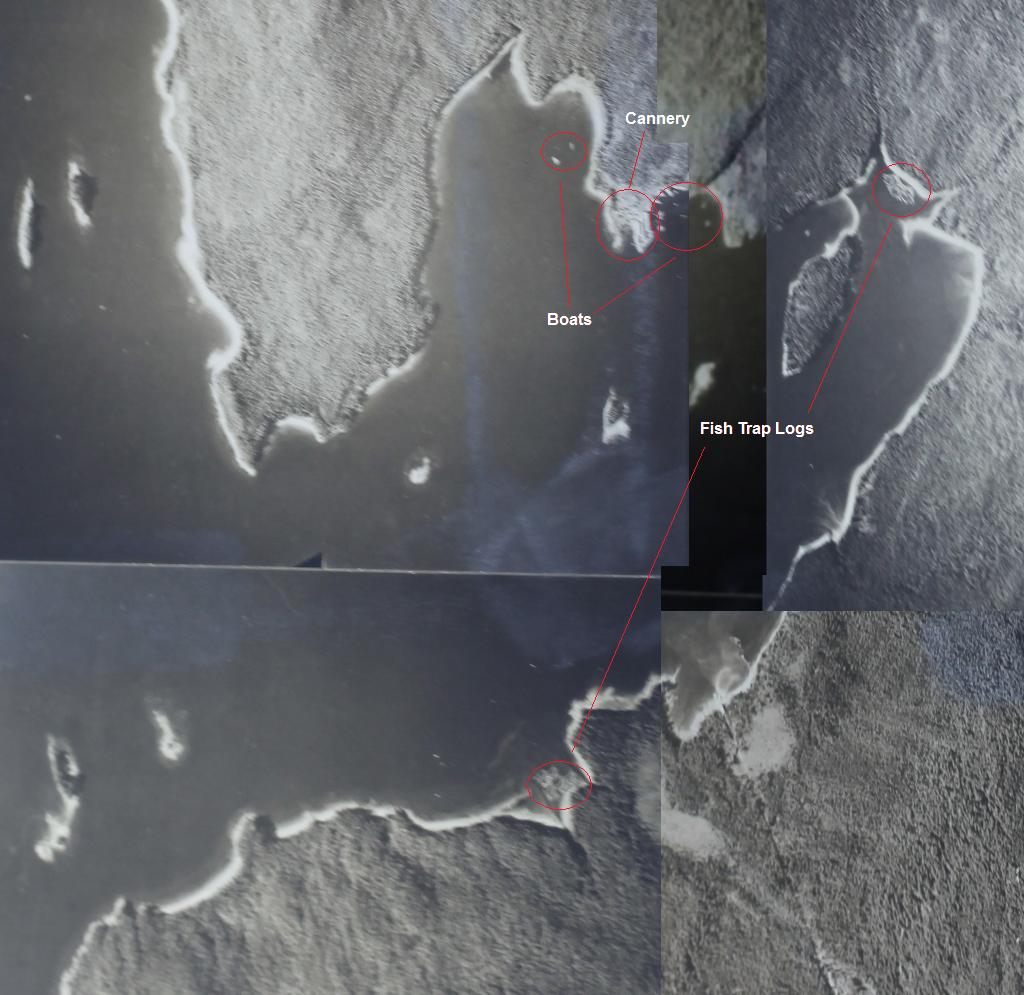
The above is my attempt at creating a photomosaic from multiple frames. The resolution is a bit lower than later aerials, and I have not taken the time to match levels across each frame, but they give a good overview of the bay in the year they were taken. The original format of these images is a little different, as seen below:

example

As with the 1929 photo mentioned before, these were part of a systematic effort to obtain aerial imagery of the Alaskan coast and islands. The Navy used a number of Loening OL aircraft to obtain the photos, while support ships housed the developing lab and carried extra fuel. More information on the project can be found here.

A few notable features have been labeled in the image below. The exact date of this flight is not given, but based on the location of the fish traps I would assume it to be Fall. The traps have been pulled in to shallow estuaries for winter storage. The boats clustered around the cannery could be independent fishermen rather than cannery vessels.

labeled

Other images from this project can be obtained from the National Archives at Anchorage,  a finding aid can be requested that gives flightlines and serial numbers. The citation/location information for the images used here is as follows:

Record Group 57 / USGS Alaska Aerial Survey
Box 135
Flightline T-26
Photographs #853-863
Location: Admiralty Island
Shelf Location: 02/10/14(2)


Funter Bay History: Communication

March 10, 2014

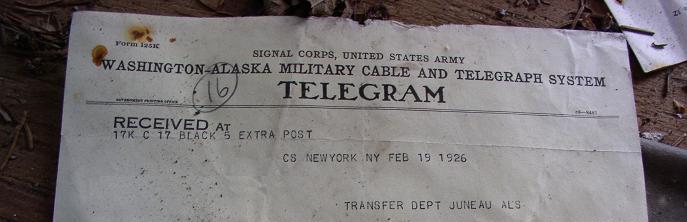
Prior to the 1920s, the quickest way to get a message across Funter Bay was to hop in a boat and row. If it wasn’t as important, you could walk the long way around. For outside communication, mail came several times a week by boat. Telegrams could be sent from Juneau to “Down South” after undersea cables were laid between 1900 and 1904.

OLYMPUS DIGITAL CAMERA

Delayed communication sometimes caused headaches for those trying to do business at Funter Bay. On at least one occasion, people attempting to meet passed each other as one traveled to Juneau and the other to Funter.

“J. J. Foltz, president of the Funter Bay Gold Mining Company left on the last Bonita to visit the property. At the same time Supt. Fox left Funter Bay on a gasoline launch to meet Mr. Foltz in Juneau. “Ships that pass in the night” are responsible for Foltz being at Funter’s Bay and Fox now in Juneau.” Daily Alaska Dispatch (Juneau)  21 May 1903

Juneau newspapers attempted to keep track of the comings and goings of important persons, including their hotel accommodations. This practice seems a bit intrusive in today’s world, but was vitally important for coordinating meetings at the time.

barron

Radios began appearing at Alaskan canneries around 1915, in the form of large base stations. In an earlier post I noted the large twin masts supporting a dipole antenna at the cannery in 1929.

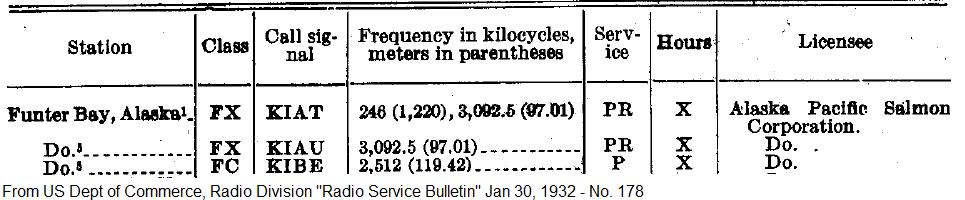
The FCC has some historic radio service bulletins online, listing new stations each year. Others can be found on Google Books. A 1919 list of commercial radio stations includes the “Thinket Pack. Co.” at Funter, Alaska, with call sign of KXK. (Those call letters had been assigned to the steamship Puritan until 1915). Frequencies were 300, 550, and 600kHz. In 1922 it was noted that the radio station at Funter opened for the year on May 11 and closed September 20th. By 1932 the cannery had several call signs listed.

radio
The “PR” service indicates limited public use, while “P” indicates private use only. FX is Fixed Base, and FC is Coast Station.

Smaller shortwave and single sideband equipment gradually made its way into more locations, as seen by the proliferation of call signs licensed to fishing boats between the 1920s and 1940s. Antennas became smaller as frequencies got higher and transmitters more efficient. Eventually many houses and cabins had radios of some sort installed, sometimes bending the FCC’s rules on CB and mobile radio use (as often happened, rules designed for the lower 48 made little sense in Alaska). More modern radio systems associated with Funter Bay are mentioned here.

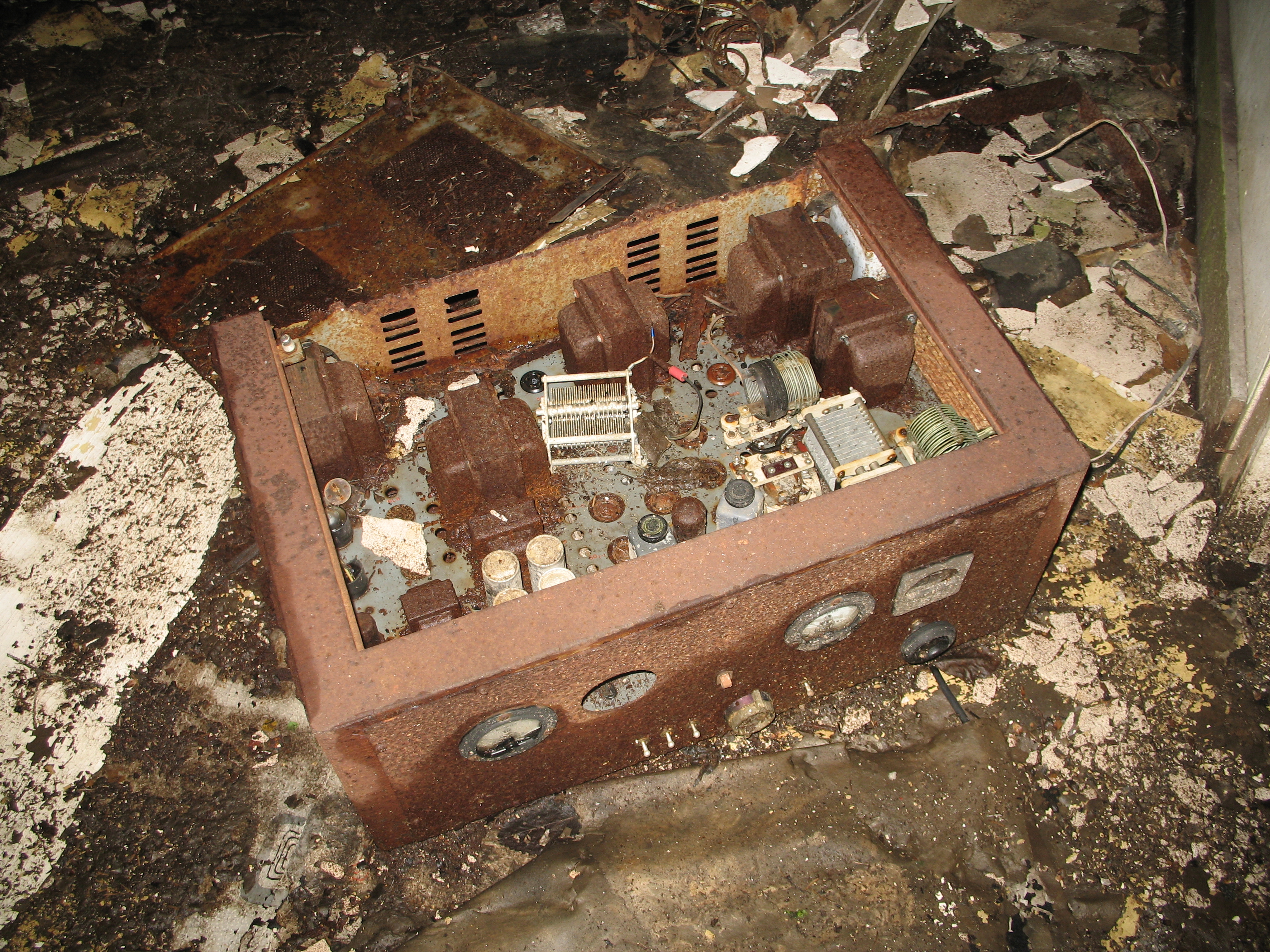
Old vacuum tube radio set:
IMG_1479

The 1930s and 40s brought hand-crank telephones, although these were never a complete network, and only connected a few buildings at each industry (and later, between a few houses with salvaged equipment). The Funter Bay cannery had a number of EE-8 army field telephones, which were likely installed during the Aleut internment. A few older crank phones can also be found in houses around the bay (When I was growing up we had phone lines to 5 houses and a few out-buildings, our “phone number” was three rings).

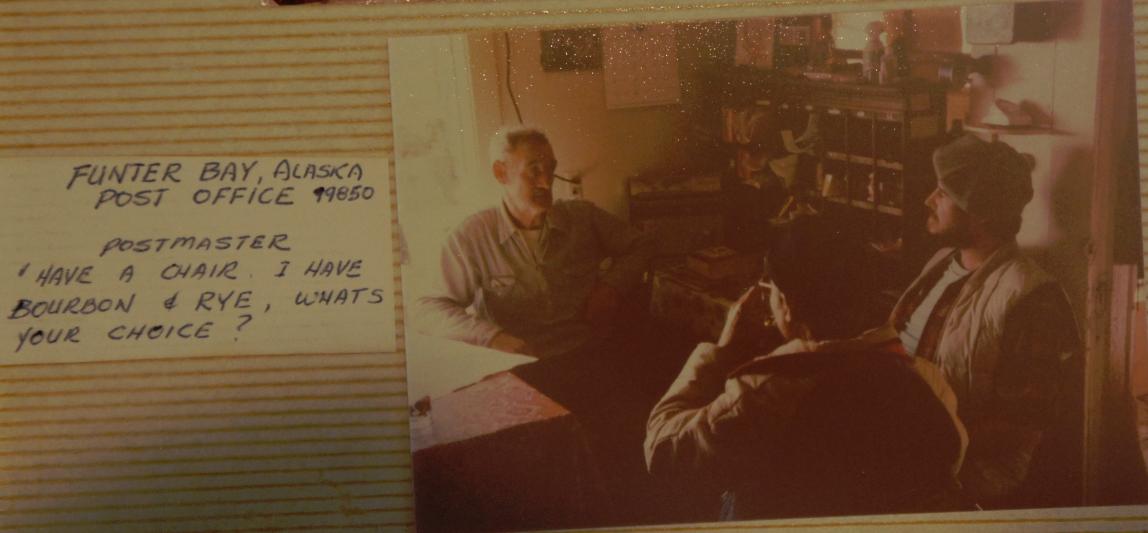
From 1902 until the late 1970s, Funter Bay had a mostly year-round post office. Cannery employees and winter watchmen usually served as postmaster (and public radio operator) and the post office was the social center of the community in the winter.

postmaster

Photo courtesy of Phil Emerson

Mail boats are discussed more in this ridiculously long post.

postmark

I may write more on the postal history of Funter Bay at a later time, I am still collecting information on that subject.

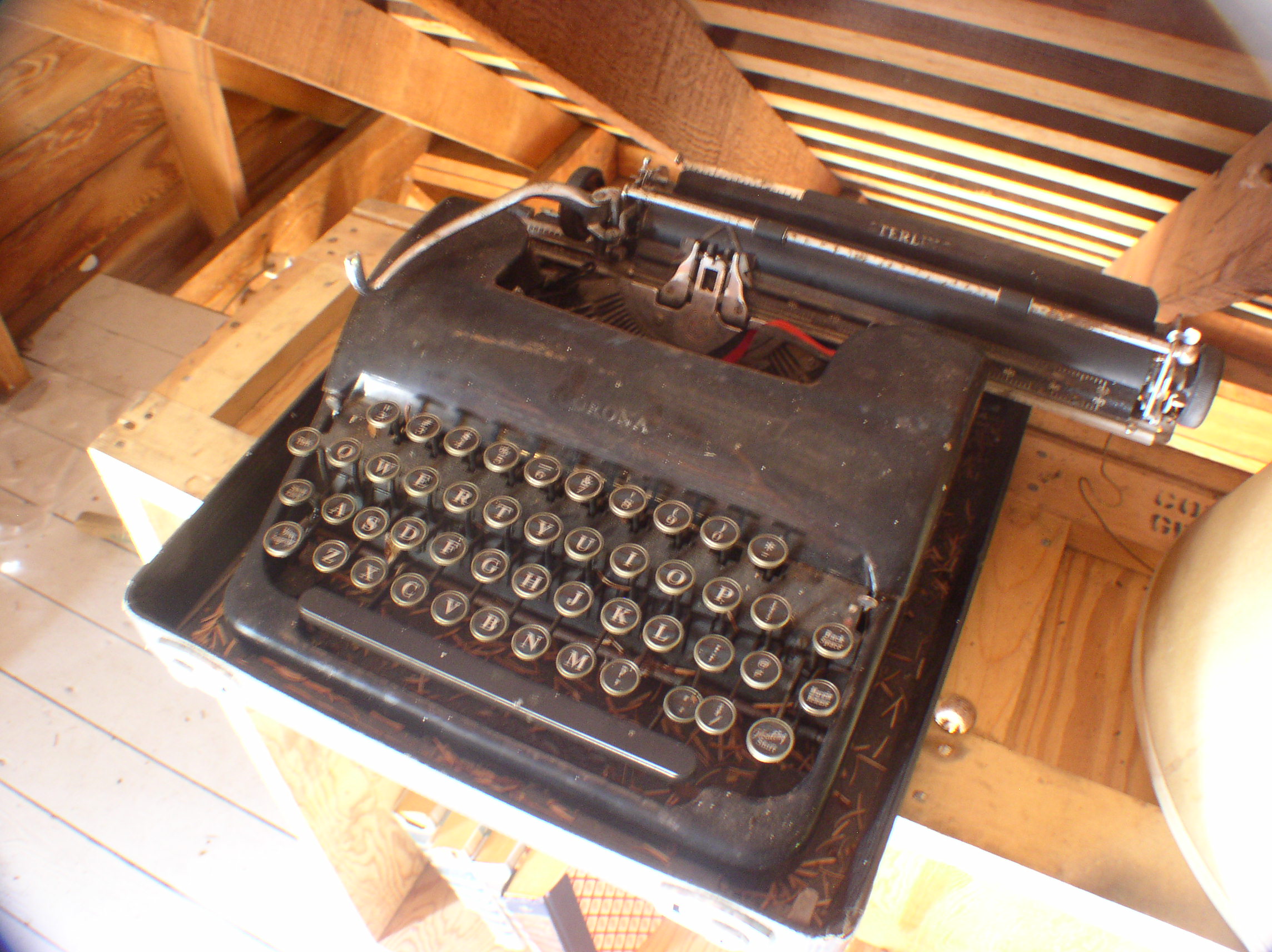
An old typewriter found in an attic at Funter:OLYMPUS DIGITAL CAMERA

Newspapers were also popular, even if they were outdated by the time you got them.  They were entertainment, you could insulate your house with them (shown below), and they’d probably be useful in the outhouse!

OLYMPUS DIGITAL CAMERA


Funter Bay History – 80 Years of Mountain Views

March 9, 2014

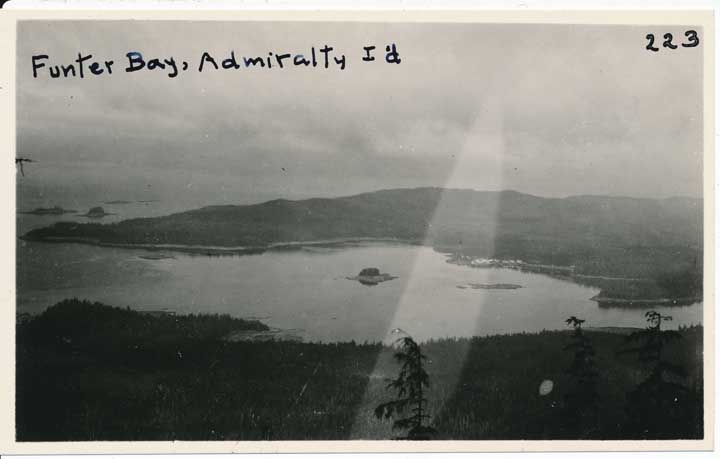
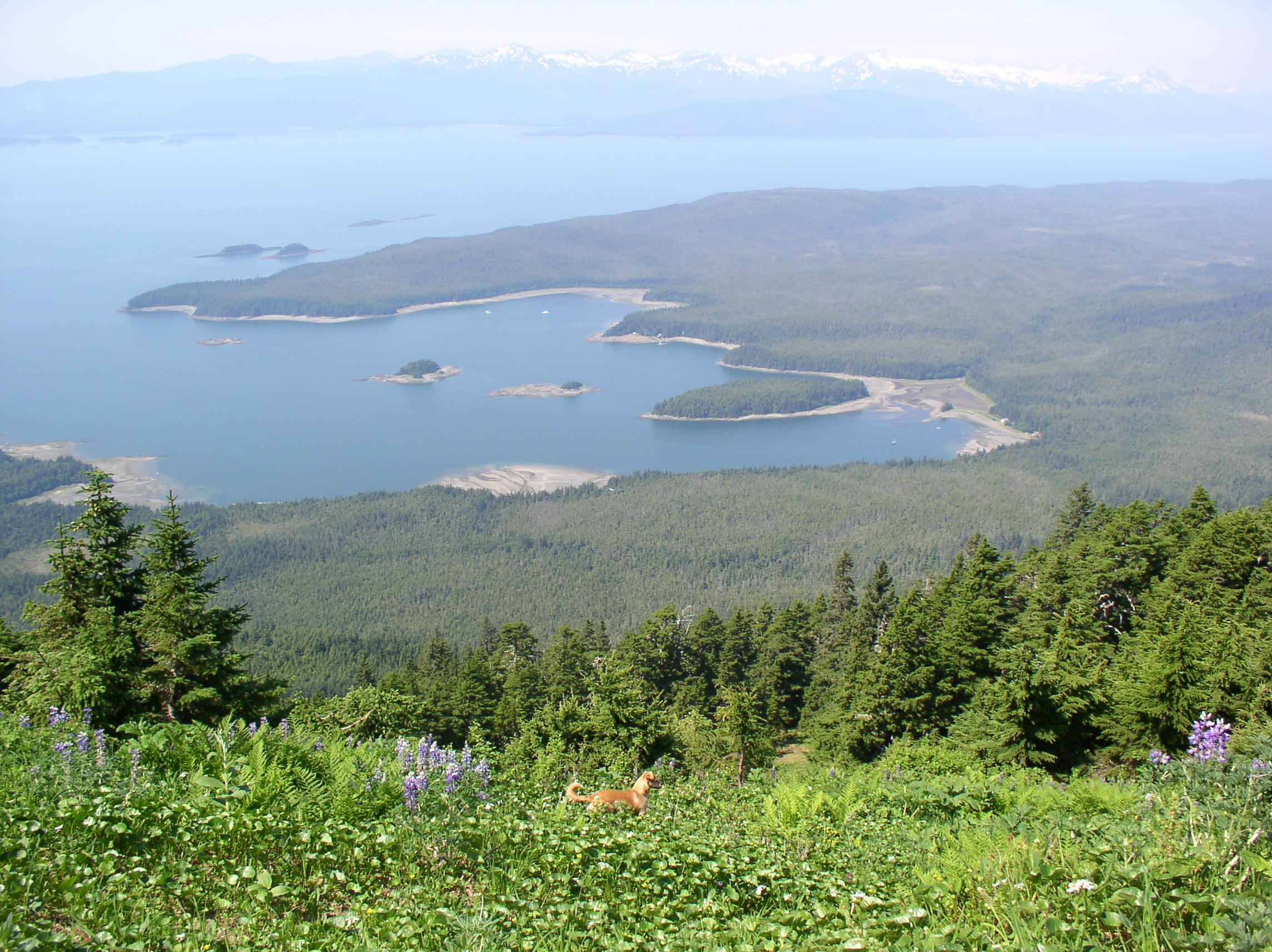
I recently came across a photo of Funter Bay from 1924 taken from Mt. Robert Barron. It fits nicely with the photos taken by my Dad in the 1970s, and the ones I took in the mid 2000s (I have a large panorama of the bay at the bottom of a previous post).

uaa-hmc-0779-APU-223

Funter Bay in 1924. Arthur F. Buddington photographs, Archives and Special Collections, Consortium Library, University of Alaska Anchorage.

Untitled-20

Funter Bay in the 1970s, photo courtesy of Phil Emerson

OLYMPUS DIGITAL CAMERA

Funter Bay in 2004, photo by Gabe Emerson

I’ve zoomed in a bit towards the cannery in all three photos. In all three, that area stands out as the major element of cultural geography. Unfortunately the 1924 photo is not so clear (this post has a nice 1929 aerial). Notable in 1924 is the complete lack of trees on Ledge Island (the small island in front of the cannery). As noted in another post, islands around the bay were a quick and easy place to cut trees and float the logs to where they were wanted.

uaa-crop

Arthur F. Buddington photographs, Archives and Special Collections, Consortium Library, University of Alaska Anchorage.

I’ve shown the 1970s close-up before, alongside more of Dad’s photos, in this post. The missing sections of cannery buildings which overhung the water are fairly evident here.

web-cannery

By the 2000s, the only evidence of the cannery is the State-maintained public dock and ramp. The buildings seen below are all modern private structures.

OLYMPUS DIGITAL CAMERA


Funter Bay History: Population

February 14, 2014

In this edition of Funter Bay History, I’ve compiled some statistics and information regarding the population and economy of the area. Funter Bay has variously been described as a town, a village, a ghost town, or simply a location with a cannery and mines. Knowing some numbers and comparative sizes might help place things in context.

__________________________________

Firstly, some background information. Alaska’s modern community designations differ from many other states. There are several types of municipalities defined for legal and tax purposes, including “Home Rule Cities” and “General Law Cities”, of which there are either first or second class cities. There are also Home Rule and General Law Boroughs (a borough is equivalent to a lower-48 county). Alaska is also unique in having an “Unorganized Borough“, more than half of the state is simply not part of any municipal entity, and thus has no property tax, sales tax, or any services below the state level. Funter Bay has long been a part of the Unorganized Borough. Juneau occasionally attempts to annex Funter Bay, annexation has been fought off by local residents on the grounds that they would pay property tax but would not receive any city services.

Another tricky detail is that some households in Alaska are migratory or seasonal (both in and outside the state). Residency reporting is sometimes based on economic reasons (such as inclusion in a school district or eligibility for Permanent Fund Dividends), and not on a person or family’s most common physical location. A seasonal fishing community may wish to count summer fishermen as part of their population, while those fishermen may report a different place of residence on their taxes. Funter Bay has always had a larger population in the summer, be it Tlingit fish camp residents, cannery workers, seasonal fishermen, or vacationing cabin owners.

Keeping in mind that these numbers may be “fuzzy”, here is some comparison data from the 2010 census. Partly from this document.

Bettles, the smallest “Second Class City”, has a reported population of 12.

Pelican, the smallest “First Class City” has a reported population of 88.

Nenana, the smallest “Home Rule City” has a reported population of 378.

The total population of Alaska in 2010 was 710,231. The three largest cities are Anchorage (291,826), Fairbanks (31,535), and Juneau (31,275). They quickly get a lot smaller.

There are also “Census-Designated Places”, along the lines of an unincorporated town in the Lower 48. These communities may have some public facilities, and communities with more than 25 residents receive some state money for utilities and infrastructure. The population may live in a discrete area or be spread out around some center such as a post office or store. Some examples close to Funter Bay are:

Elfin Cove – reported population of  20 in 2010. (This is generally considered a “town” by most locals and population swells to 100+ in the summer). In 1939 Elfin Cove had about 65 residents and was referred to as a “village”.

Excursion Inlet – reported population of 12 in 2010.

Whitestone Logging Camp – reported population of 17 in 2010

__________________________________

Now, on to the numbers for Funter Bay:

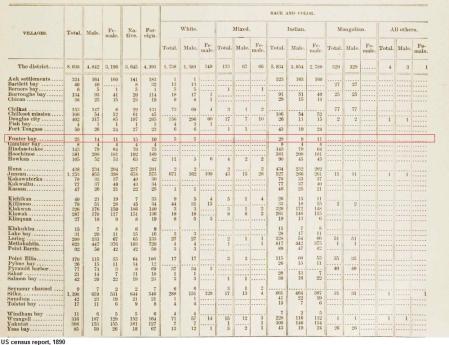
The 1890 census listed 25 residents at Funter:1890 Census
A 1903 congressional convention in Juneau solicited delegates from around the state based on population. Funter Bay sent one delegate, the same number as Hoonah, Angoon, and Petersburg. Sitka sent 3, Fairbanks had 4, Juneau itself had 10.

Summer population varied based on the number of workers brought in by the cannery. A 1904 article mentions “30 odd” Chinese employees traveling to Funter Bay to work at the cannery that season (“Chinese for Funter Bay”, Daily Alaska Dispatch (Juneau) 2 May 1904) A 1906 brief in the Dispatch mentions a can-making crew of 73 Chinese workers enroute to Funter Bay. In 1910 the Dispatch reported 84 Chinese workers.

A 1905 article reported an “Indian Village of 400” at Funter Bay, with around 60 native employees working at the cannery. This “village” (also described here) was likely a summer fish camp for Tlingit natives. Some documents refer to it as housing for cannery employees. Various histories report that Funter was used for seasonal subsistence, but was not a permanent village site. Other reports indicate that the “village” or camp site moved around the bay as various white settlers or industries  interacted or interfered with it.  An interview with Elder Dave Wallace stated that there was no village at Funter Bay, but it was a good place for king salmon and berries. It was claimed by the Wooshkeetaan clan, part of the Auk Kwáan, and was called Shakananaxwk’.

Some Tlingit employees at the cannery in 1908 (more here):

TP Co Workers 1908 2

The 1910 US Census shows 70 people at Funter Bay. It was conducted in May when the cannery’s seasonal labor force was on hand. A few people are listed as independent fishermen. The microfilm quality is unfortunately quite poor, so not much else can be determined from it.

In 1912, merchandise valued at $78,933 was shipped to Funter Bay. (Per Alaska 1912 Commerce report, Daily Alaska Dispatch, 1 Feb 1913)

In 1916, the value of merchandise shipped to Funter Bay was $128,471 (Per “Report of Collector of Customs” Daily Alaska Dispatch (Juneau) 18 Feb 1917).

In 1918, the merchandise shipped to Funter totaled $267,697 (DA Dispatch 4 Feb 1919)

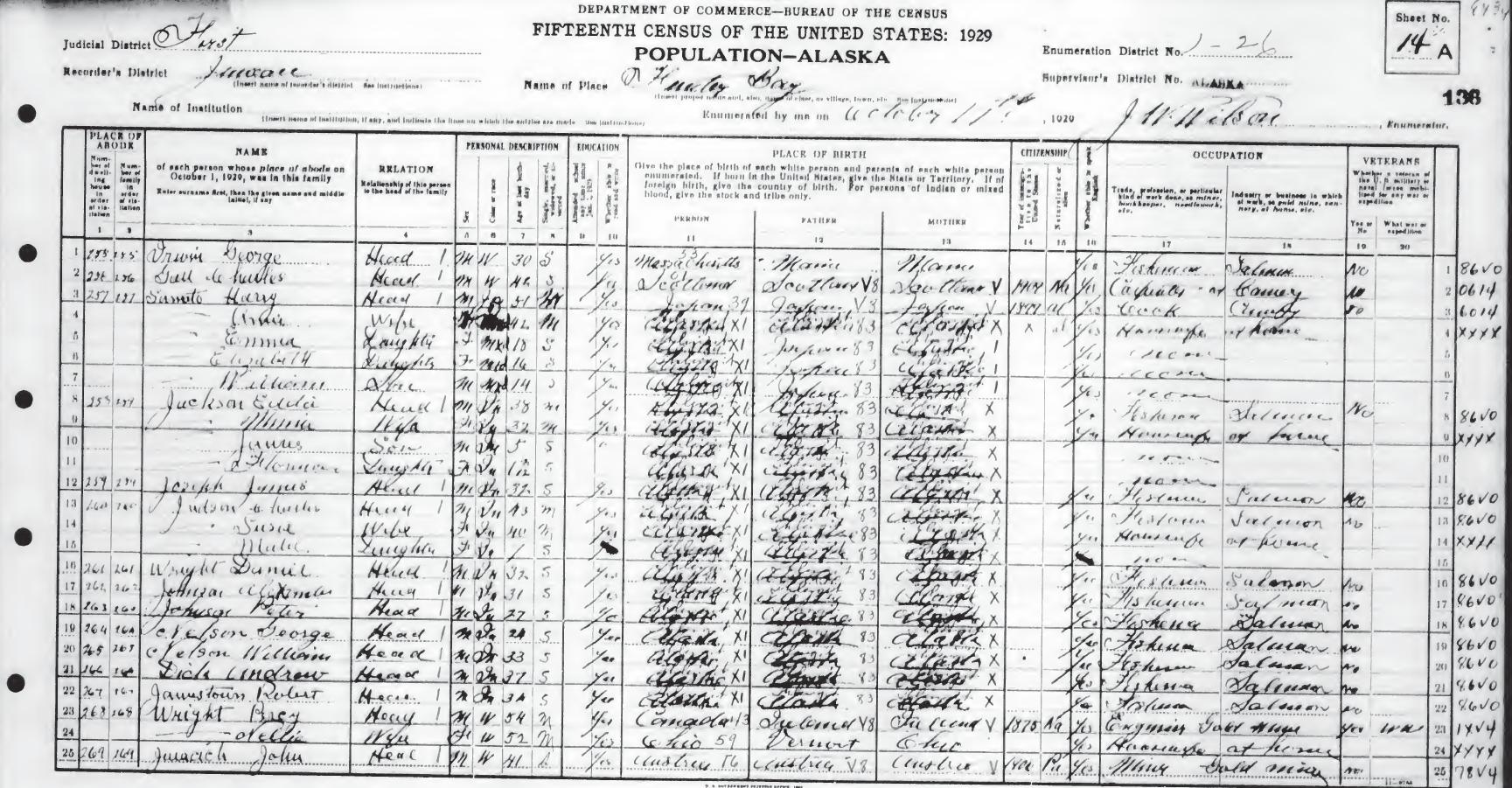
The Census of Oct 11, 1929 found 50 people at Funter Bay. The handwritten notes are somewhat hard to read, but show that approximately 12 residents were fishermen, 11 were miners, one was a logger, one was a mining engineer, and one was a bookkeeper at a mine. The cannery’s seasonal workforce had left for the winter, leaving a cashier at the store, as well as the cook and his family. About 9 women are listed with the occupation “Housewife”, and about 7 children are listed.

1929 Census records for Funter Bay ( 2 pages):
1929 Census Pg 1           1929 Census Pg 2

By 1939, Funter Bay was not being counted as a separate location, but was lumped into the Juneau census area (and later, the rather oddly-drawn Skagway-Angoon-Tenakee census area). The 1940 census reported 98 residents on “Admiralty Islands”, excluding Angoon and Killisnoo, but possibly including Tyee, Gambier Bay, Hawk Inlet, and other canneries.

The following 1939 Census records seem to be noted “Funter Bay” on the extreme left, and includes 14 people:
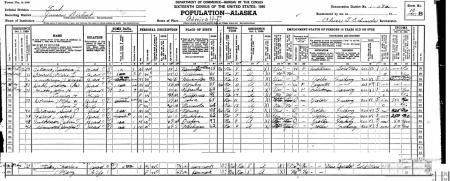
1940

In 1979, Funter Bay reportedly had a year-round population of 14, and a seasonal population of 25.

By the late 1990s the population hovered around 10 year-round residents. (I recall a census taker in 1990 being dropped off by plane and planning to walk around the entire bay, unaware that 90% of the visible cabins were vacant and that the trails shown on maps were no longer passable).

So, depending on the accuracy and reliability of the reporting agencies, Funter Bay has historically had a summer high of between 100-500 residents, and a high winter population of around 50. It has never been a bustling metropolis, but was certainly on a par and occasionally rivaled other established Alaskan communities.

Funter Bay History: Cannery in 1929

January 14, 2014

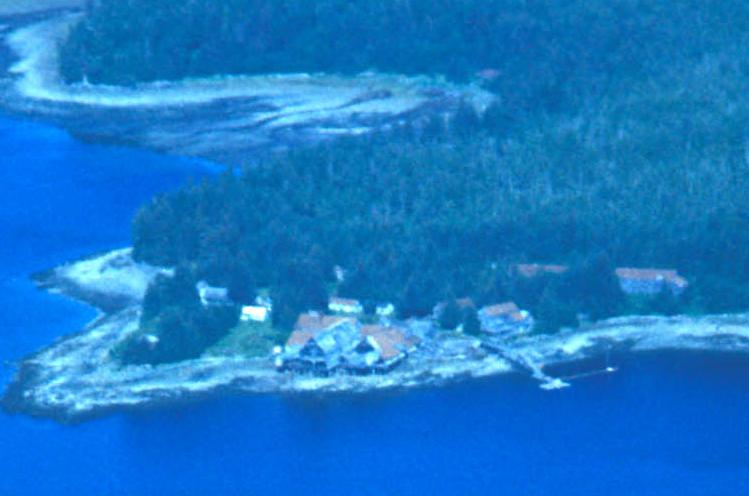
I recently received an oblique aerial photo from August of 1929, showing the Funter Bay cannery. This is part of a set of Navy survey photos of Alaska. A few other photos from this survey are online, and I hope to find more in archival collections.

(Very large original, click to view full size)1929 Aerial FS T12a

At the time this was taken, the cannery was owned by Sunny Point Packing, and would operate for several more years before ending the main canning operation.

A few things are notable in the photo. The China Bunkhouse is only a foundation to the right of the Filipino Bunkhouse. Both “Oriental Bunkhouses” reportedly burned in 1929, so the Filipino Bunkhouse seen above is probably newly-rebuilt, with the China Bunkhouse in the process of rebuilding. Another notable feature is the long wharf and dolphins extending from the left side of the point. I had not been aware of this wharf’s existence before seeing the  photo. My best guess is it was a fuel delivery wharf serving the bulk oil tank on the point. It would make sense to keep the oil handling facility separate from the fish handling dock. Yet another interesting feature are the two radio masts to the left and behind the Superintendent’s house. These would have supported a dipole wire antenna similar to the type shown here. I am not sure what kind of radio was in use at the time, the 1920s saw the beginning of “High Frequency) (3-30mhz) and voice technology, supplementing low frequency and morse code stations. Some photos and information on a cannery radio operator from Yakutat from around the same time period can be found here. The antenna masts were likely multi-step poles made by lashing logs together, in the same manner as a wooden ship’s mast. This allowed them to reach higher than the surrounding trees.

I’ve zoomed in on the main cannery property and labeled some of the structures below. (The 1960s survey map was helpful with this).

1929 Aerial labeled

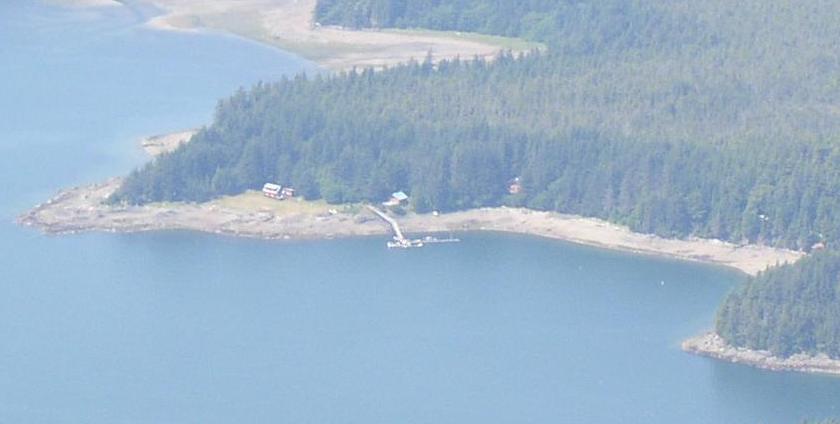
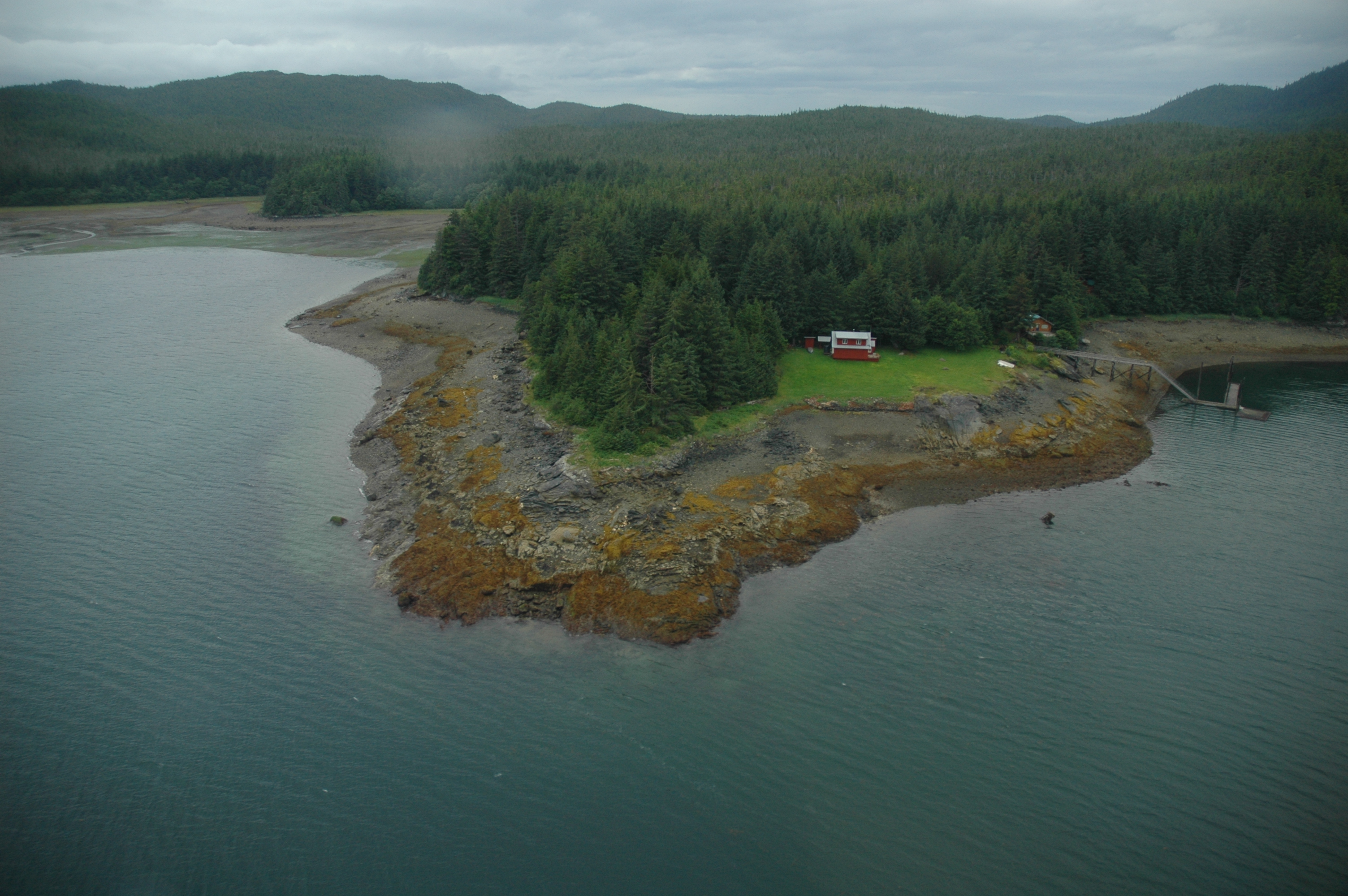
And for comparison, I’ve also included an aerial photo from a similar angle, taken in 2008. This is from a modern Alaska-wide aerial surveying project called Alaska Shorezone, a GIS mapping and aerial imagery project covering most of the coast (most photos in that set were taken at low tide, the 1929 image shows a higher tide).

2008 Aerial
The red house is a modern private residence, located approximately where the power plant stood. The green-roofed house is approximately where the mess hall stood. The only visible remains of the cannery in this photo are the floating dock and approach ramp (which have been updated and had sections replaced since 1929). The regrowth of spruce trees has obscured most of the formerly cleared land at the site.

I am very grateful to Mark Riley, Remote Sensing Coordinator for the Forest Service’s Alaska region, for tracking this down for me! I also received assistance from Shawn Younger, president of the WWII Archives Foundation, with another such photo. I may write about that one later.


Funter Bay History – Fish Trap Locations

August 10, 2013

I’ve talked about fish traps in several previous posts. Recently I came across a set of maps showing the locations of  traps around Southeast Alaska in 1918. This is a fascinating series, part of a government report from that year on the Southeast Alaska fishing industry.  An excerpt from the Lynn Canal and Stevens Passage map is below, highlighting the region around Funter Bay (click to view a larger version). I will link to the originals at the end of this post.

1918 Fish Traps

I have yet to find the original report which goes with these maps, so unfortunately there’s no key corresponding to the trap numbers. However, a quick glance at this map tells you a lot about where the salmon were to be found! The area of densely packed traps between Excursion Inlet and Point Couverden is known as Homeshore, and is still a popular fishing area today. Across all three maps in this set, covering most of Southeast Alaska, that one stretch of shoreline has the most fish traps per area.

Note that most of the traps shown on the map are the “permanent” pile-driven type. A 1919 report stated that the Thlinket Packing Co at Funter Bay had 21 traps that year, only 4 of which were floating traps. Pile-driven pound nets seem to have fallen out of favor towards the middle of the century, probably due to the expense of maintaining them and repairing winter ice and storm damage. By the time fish traps were banned at Alaska statehood, floating traps predominated.

I have previously noted some traps on the beach at Funter Bay in old aerial photos, floating traps were often taken ashore or anchored in shallow water for winter storage. The traps at Funter have all been beaten into individual logs by decades of storms, but I recently noticed a few semi-intact traps in Excursion Inlet. These are visible on the Alaska Shorezone project’s imagery.

beached traps

The full versions of the 1918 trap location maps are available through the Office of Coast Survey Historic Map and Chart Collection. They are as follows:

Lynn Canal and Stephen’s Passage

Clarence Strait Revillagigedo Channel and Portland Canal

Dixon Entrance to Chatham Strait Alaska