Funter Bay History: More 1929 Photos

August 20, 2014

I recently came across some additional photos from the 1929 Alaskan Aerial Survey, conducted by the US Navy. Thanks to Richard Carstensen for sharing these! Richard had an excellent website at juneaunature.org. Also thanks to Kim Homan with the Southeast Alaska GIS Library for providing some reference information. They have put together An ArcGIS interface for locating and viewing additional aerial photos from this set.

These are very large photos, click to open them full size (may take a while to load on a slow connection).

Funter Bay viewed from the North, looking almost directly South down Chatham Strait towards Chichagof Island:

ob07016_funter75

1929 US Navy Alaska Aerial Survey Expedition (Sargent, R. and Moffit, F. 1929. Aerial photographic surveys in Southeast Alaska. USGS Bull 797-E.)

Green Mountain is in the foreground on the left. Mt Robert Barron is further ahead on the left. The large island at the head of the bay is Highwater Island, with a medium tide filling the estuary behind it, but not covering the sandbar connecting it to shore.

The next photo is not at Funter, but across Lynn Canal at Swanson Harbor (behind Point Couverden). This location was used by the Thlinket Packing Co to store fish traps in the winter, and as a convenient harbor for packers during rough weather. I found it interesting because several complete and partial fish traps are seen stored in the shallows at the head of the harbor.

ob05023_swanson

1929 US Navy Alaska Aerial Survey Expedition (Sargent, R. and Moffit, F. 1929. Aerial photographic surveys in Southeast Alaska. USGS Bull 797-E.)

This area goes dry at low tide, as seen in the modern photo below:

se05_ml_6682

Photo from NOAA Alaska Shorezone (https://alaskafisheries.noaa.gov/shorezone/) used as public domain.

The traps have long since disintegrated from weather and tides, ending up as mossy logs on the beaches. The pilings driven into the mudflats in the 1929 photo have also disappeared.

In addition to use as a fish trap staging area, Swanson Harbor was tied to Funter by mail service. A few homesteads and fox farms at Point Couverden received their mail at the Funter Bay post office. A cannery was reportedly begun at Swanson Harbor around 1902 by Buschmann, Thorpe & Co, but the company failed before construction was completed. There may have been a cannery or saltery prior to this, 1897 nautical charts indicate a cannery in the same location.  An 1880 map of Swanson Harbor shows an “Abandoned Indian Village” in the location of the structure seen in 1929. This is drifting further off topic, but I found it interesting enough to include here:

Swanson 1880


Funter Bay History: Piledrivers

July 19, 2014

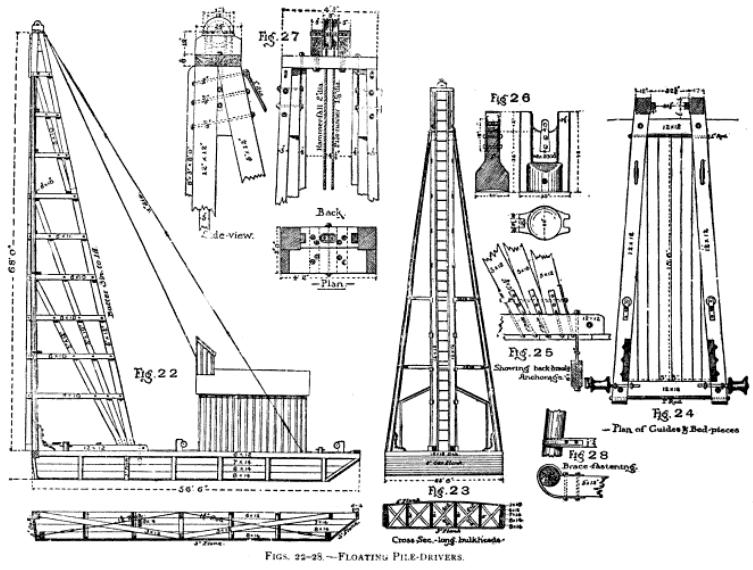
Construction in intertidal zones relies heavily on pilings. These posts are driven into the sand and mud of the tide flats and ocean bottom. This common construction method was (and still is) used to install docks, fish traps, wharves, and buildings extending out into the water. Pilings are similar to telephone poles in length and diameter. Installing pilings is much like hammering a nail, a large heavy object is used to repeatedly hit the top of the pole, driving it into the ground.

piledriver3


Diagram of a piledriver, from Foster, Wolcott C, “A Treatise on Wooden Trestle Bridges and Their Concrete Substitutes: According to the Present Practice on American Railroads”. 4th Edition, New York, John Wiley & Sons, 1913.

In the above design, the hammer (usually a cast metal weight) slides up and down on the vertical section of the tower, pulled by cable from a winch at the rear. Piledrivers could be mounted on skids, barges, rail cars, or other platforms as needed. This design is essentially unchanged from Roman times, when drivers were powered by animals or humans. They later evolved to use steam and then internal combustion power, but the appearance largely stayed the same until the advent of diesel impact, pneumatic, and vibratory hammers.

Tractor-powered pile driver in Alaska in 1942, courtesy Library of Congress:
piledriver1

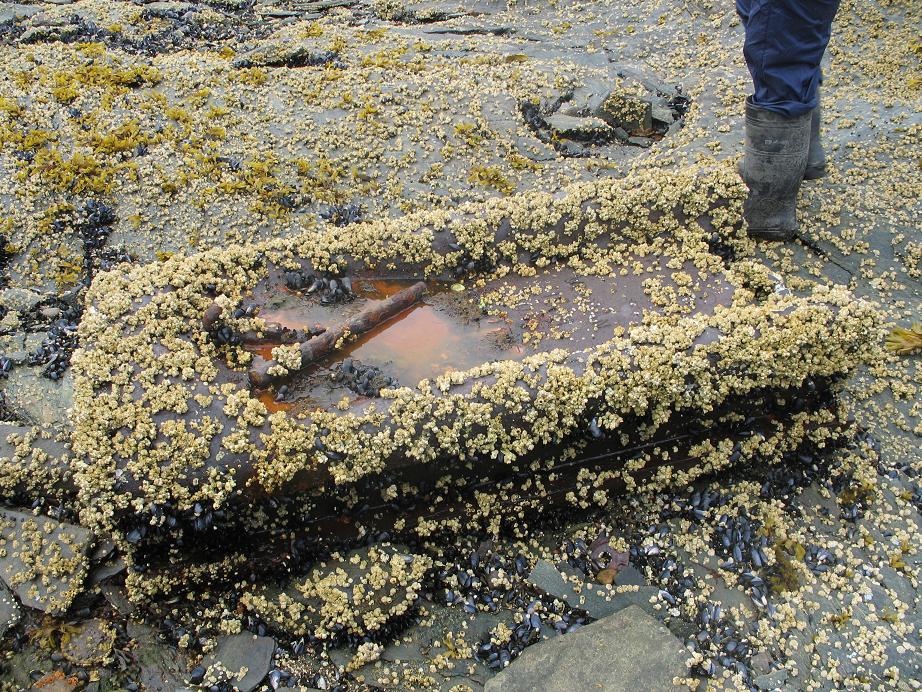
Piledriver hammer found underwater at Funter Bay and pulled out on shore. Note the slots on the side where the hammer would ride the vertical support rails:
hammer1

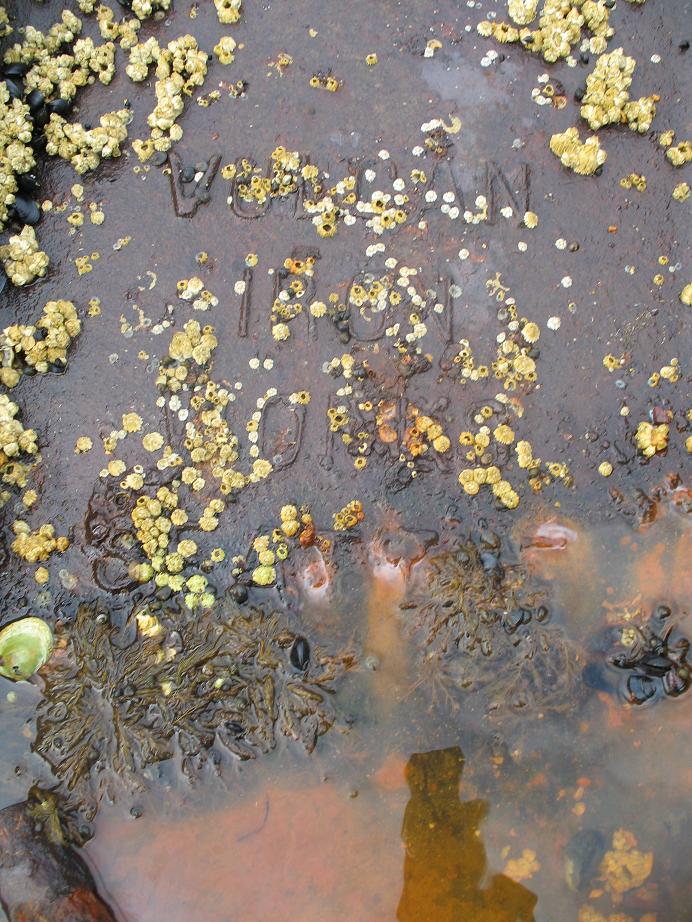
Closeup showing the maker of the hammer: Vulcan Iron Works of Seattle:
hammer2

Some information on Vulcan pile driver history can be found here.

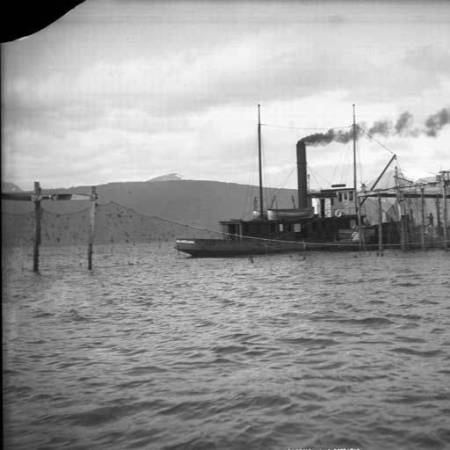
A 1926 photo of a pile driver in Funter Bay can be seen below:
piledriver

While modern docks generally use creosote-coated (or metal) pilings for rot resistance, early installations used untreated pilings. These have largely decayed and disappeared above the water line, although the buried sections and pilings that are above mean water level are more preserved.

Pilings at Scow Bay, as seen previously on this site:
OLYMPUS DIGITAL CAMERA

Stubs of pilings which seem to have been cut off at ground level:
OLYMPUS DIGITAL CAMERA

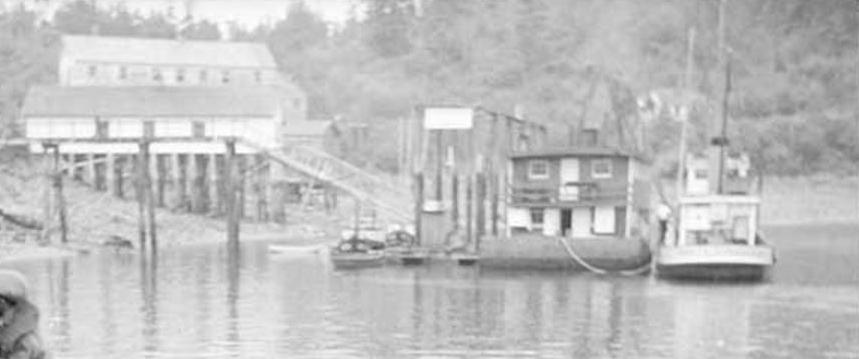
Complex piling structure supporting the approach ramp to the cannery dock:
pilings

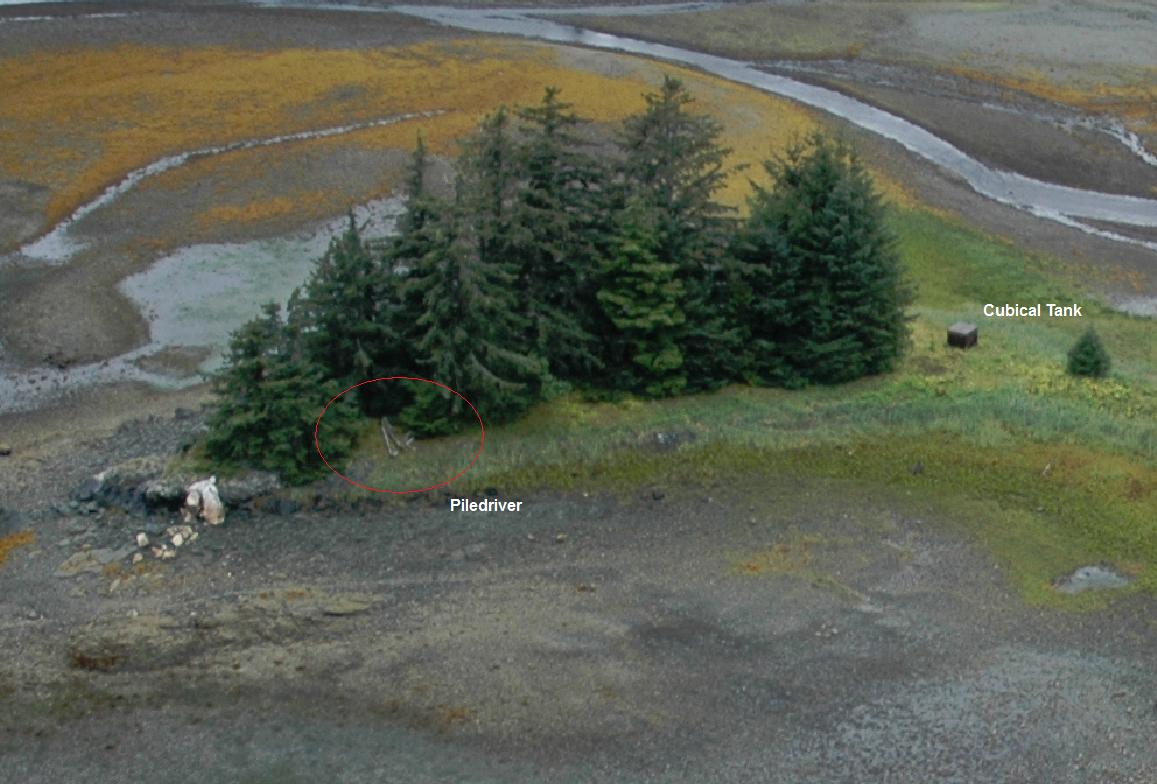
An old pile driver is abandoned on “The Point” in Crab Cove. This was a smaller unit mounted on a skid base, it may have been part of Ray Martin’s scheme to build a logging railroad dock there, or could be leftover from some other project in the bay. The A-frame support collapsed sometime in the last 20 years, I remember when it was still standing. Power was provided by a small stationary gas engine. The large cubical tank or boiler nearby is of unknown origin.

piledriver2


Funter Bay History: 1926 Aerial Photo

March 13, 2014

As a follow up to previous aerial photos and maps of Funter Bay, here is some imagery from 1926 taken during a US Navy coastal survey. The US Forest Service and The National Archives office in Anchorage were very helpful in finding these for me!

1929 Aerial Composite

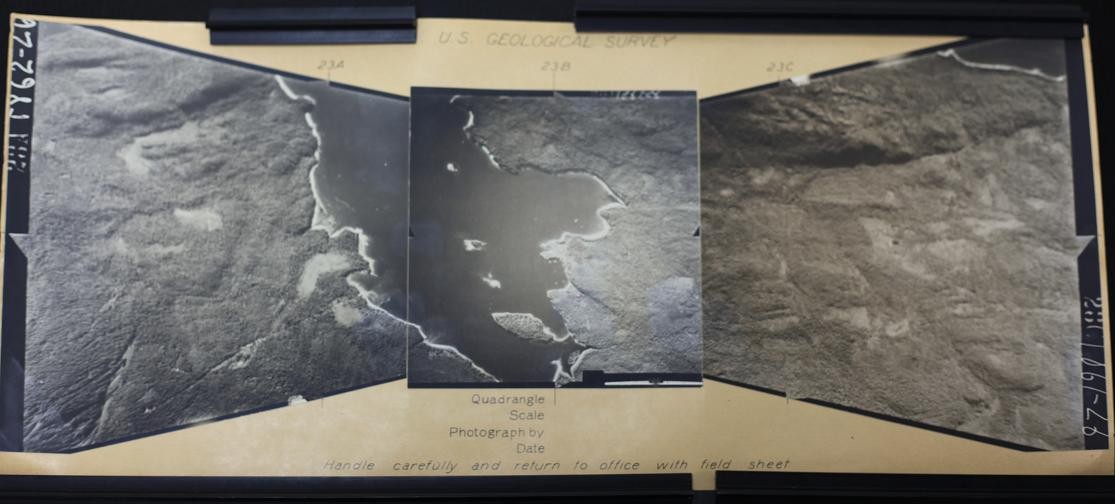
The above is my attempt at creating a photomosaic from multiple frames. The resolution is a bit lower than later aerials, and I have not taken the time to match levels across each frame, but they give a good overview of the bay in the year they were taken. The original format of these images is a little different, as seen below:

example

As with the 1929 photo mentioned before, these were part of a systematic effort to obtain aerial imagery of the Alaskan coast and islands. The Navy used a number of Loening OL aircraft to obtain the photos, while support ships housed the developing lab and carried extra fuel. More information on the project can be found here.

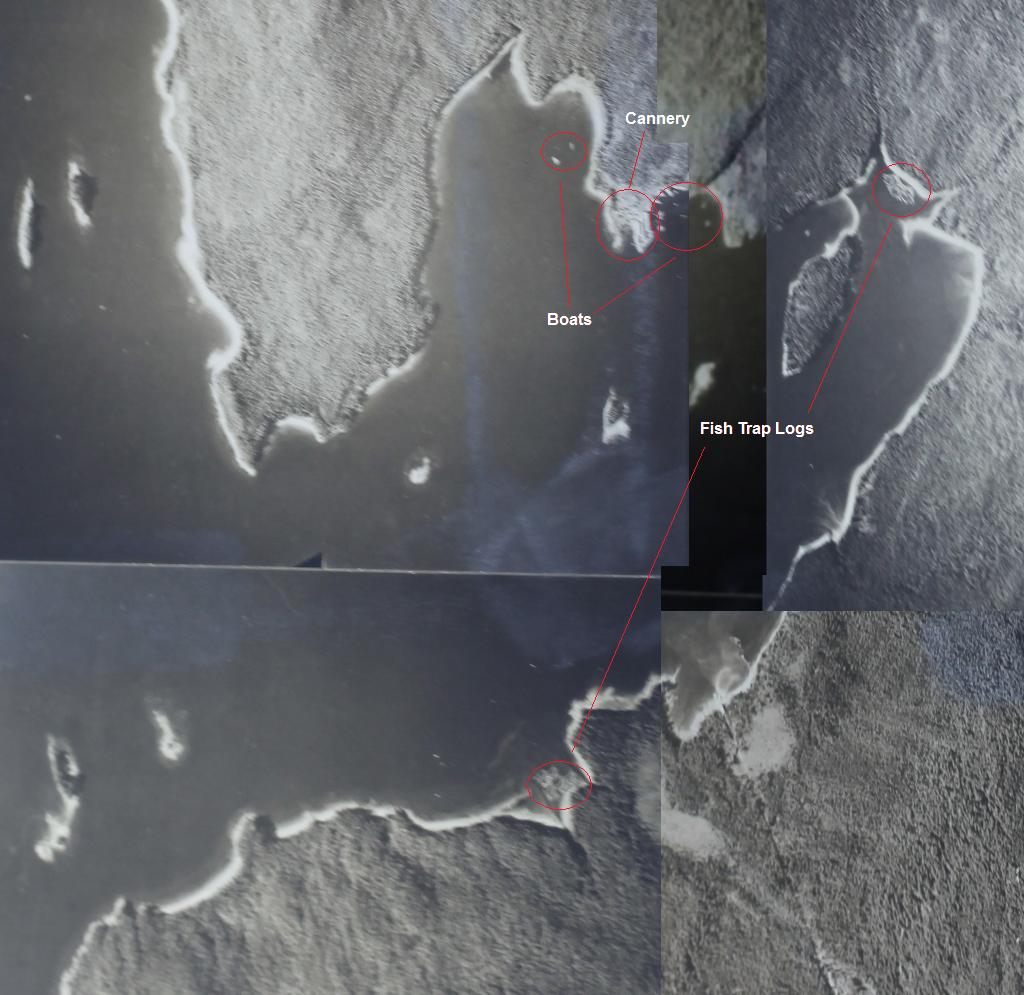
A few notable features have been labeled in the image below. The exact date of this flight is not given, but based on the location of the fish traps I would assume it to be Fall. The traps have been pulled in to shallow estuaries for winter storage. The boats clustered around the cannery could be independent fishermen rather than cannery vessels.

labeled

Other images from this project can be obtained from the National Archives at Anchorage,  a finding aid can be requested that gives flightlines and serial numbers. The citation/location information for the images used here is as follows:

Record Group 57 / USGS Alaska Aerial Survey
Box 135
Flightline T-26
Photographs #853-863
Location: Admiralty Island
Shelf Location: 02/10/14(2)


Funter Bay History – Fish Trap Locations

August 10, 2013

I’ve talked about fish traps in several previous posts. Recently I came across a set of maps showing the locations of  traps around Southeast Alaska in 1918. This is a fascinating series, part of a government report from that year on the Southeast Alaska fishing industry.  An excerpt from the Lynn Canal and Stevens Passage map is below, highlighting the region around Funter Bay (click to view a larger version). I will link to the originals at the end of this post.

1918 Fish Traps

I have yet to find the original report which goes with these maps, so unfortunately there’s no key corresponding to the trap numbers. However, a quick glance at this map tells you a lot about where the salmon were to be found! The area of densely packed traps between Excursion Inlet and Point Couverden is known as Homeshore, and is still a popular fishing area today. Across all three maps in this set, covering most of Southeast Alaska, that one stretch of shoreline has the most fish traps per area.

Note that most of the traps shown on the map are the “permanent” pile-driven type. A 1919 report stated that the Thlinket Packing Co at Funter Bay had 21 traps that year, only 4 of which were floating traps. Pile-driven pound nets seem to have fallen out of favor towards the middle of the century, probably due to the expense of maintaining them and repairing winter ice and storm damage. By the time fish traps were banned at Alaska statehood, floating traps predominated.

I have previously noted some traps on the beach at Funter Bay in old aerial photos, floating traps were often taken ashore or anchored in shallow water for winter storage. The traps at Funter have all been beaten into individual logs by decades of storms, but I recently noticed a few semi-intact traps in Excursion Inlet. These are visible on the Alaska Shorezone project’s imagery.

beached traps

The full versions of the 1918 trap location maps are available through the Office of Coast Survey Historic Map and Chart Collection. They are as follows:

Lynn Canal and Stephen’s Passage

Clarence Strait Revillagigedo Channel and Portland Canal

Dixon Entrance to Chatham Strait Alaska


Funter Bay History – Cannery Employees

August 6, 2013

The Thlinket Packing Co at Funter Bay employed a number of different people over the years in a variety of positions. Below is a partial list, gleaned from early 20th century newspapers. Keep in mind that consistent spelling of names in the early 1900s was somewhat optional!

_____________________________________________________________

James T. Barron – Owner and Manager, 1902 – ~1926. More on the Barron family here.

_____________________________________________________________

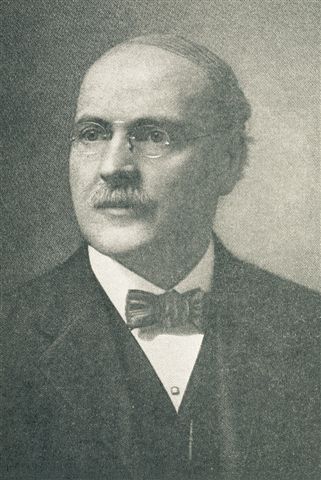
Judge Michael George “MG” Munly (1854-1923)

Munly

The family name was originally spelled “Munley”, but Michael later dropped the E. He was company Secretary and brother-in-law to James Barron. He married Mary Nixon, sister of James Barron’s wife Elizabeth. Munly was admitted to the Pennsylvania bar in 1882. He was deputy city attorney in Portland, and was appointed a judge of the Oregon circuit court from 1892-1894. Munly ran unsuccesfuly for mayor of Portland in 1909. Along with the Barron family, Munley and family were frequent visitors to the Funter Bay cannery.
Judge Munly’s grave and additional information.
1922 Biography of M. G. Munly
1928 Biography

_____________________________________________________________

C. F. Whitney was Sales Manager at the company, based in the Portland office. He seems to have rarely visited the Funter Bay operation. Prior to taking this position, Whitney had been sales manager of the New York Life Insurance Co.

_____________________________________________________________
Mr. and Mrs. Norton – Listed as winter caretakers at the cannery in 1903. Left in February to develop some timber claims in Oregon.

_____________________________________________________________

James Lawlor – (Sometimes spelled Lawler) was caretaker and winter foreman(?) from at least 1903-1909. He took over from the Norton’s in Feb 1903 and began preparations for the upcoming coming packing season.

_____________________________________________________________

Chris Houger (Sometimes spelled Hooger, Hugher, Hager, etc) was “Outside Foreman” at the Funter Bay cannery from at least 1903-1919. ?He was in charge of piling crews, trap installations, nets, etc. His wife was noted as being the cannery’s bookkeeper in 1914. In 1917 Western Canner and Packer referred to him as Manager of the Thlinket Packing Co.

_____________________________________________________________

Captain Haly of the Rainier – hired to bring up the “fishing steamer Barron” from the South for the 1903 season.

_____________________________________________________________
Mr. and Mrs. A. C. Bogarth – Operated fish traps near the Funter Bay cannery for several years around 1903.

_____________________________________________________________

Captain Crockett – skippered the Anna Baron during at least the 1904-1907 seasons.

_____________________________________________________________

Captain Mason was listed as skippering the Anna Barron in 1911.

_____________________________________________________________

Captain Martin Holdst (Also listed as Martin Olson) of the Belle was employed in the winter of 1909-1910 repairing the water and power systems at the cannery.

_____________________________________________________________

Pat. F. Mulvaney was the storekeeper at the Funter Bay cannery from at least 1909-1917 and listed as watchman in 1918 -1919.

_____________________________________________________________

Fred Barker (Or T. H. Barker) was listed as cannery superintendent in 1911. His brother “Billy” Barker was the assayer at the Perseverance mine.

_____________________________________________________________

Cannery employees listed as arriving in spring of 1911 were: H. H. Harvey, C. W. Young, G. W. Scott, E. A. Harriman, Thos. Redwood, F. Phelps, W. F. Brillian and H. Wills.

_____________________________________________________________

A. M. “Bob” Bell was listed as a canneryman at Funter Bay in 1912. There is also an A. E. L. Bell mentioned, and possibly another Bell who ran the Glacier cannery.

_____________________________________________________________

F. Hilder was an employee at the cannery in 1914.

_____________________________________________________________

George W. (or L.) Bowman was listed as cannery superintendent in 1914. He formerly worked for the Northwestern Fisheries company.

_____________________________________________________________

J. F. Bennett was listed as a cannery employee in 1915, his arm was caught in a rotating shaft in June and he required skin grafts at the Juneau hospital.

_____________________________________________________________

Harold W. Chutter (Or Chuttes or Chutte or Shutter or Chutler) is listed as the “popular superintendent of the Funter Bay Canning Co” in 1916 and 1917. In Feb. 1917 it was reported that “Mrs. Chutter, formerly of Funter Bay” had left to marry the former accountant for the Juneau Electric Light company. In December of 1917 it was reported that Chutter was closing up his affairs at the cannery and leaving for Bremerton to join the Navy. Sales Manager Whitney planned to come North from Portland to temporarily fill in as manager.

_____________________________________________________________

C.L. Cook is listed as bookkeeper in 1917.

_____________________________________________________________

G.C. Coffin, an employee of the cannery, was at the Juneau hospital in 1917 for eye treatment.

_____________________________________________________________

E. W. Hopper is described as the superintendent and/or manager of the cannery in 1918. His wife and daughter also resided at Funter in the summers.

_____________________________________________________________

Capt. John Maurstad skippered the Barron F. in 1918. According to the Kinky Bayers notes, he came to Alaska in 1909 and was a resident of Angoon. He did some logging and built a sawmill and Kasnaku Bay (Hidden Falls) in 1927. In 1940 he was in charge of a CCC crew building roads near Angoon. He may have died around 1942 at age 53.

_____________________________________________________________

D. J. Wynkoop, formerly of the Treadwell mine, was employed at the cannery in 1918.

_____________________________________________________________

Captain A. Woods is listed as running the Anna Barron in 1918. He fell from a 20ft ladder in February and was in St. Ann’s hospital expected to fully recover.

_____________________________________________________________

Chinese, Filipino, and Native Alaskan employees were usually only mentioned in passing, with no names given. A 1914 article lists the following “strange names” of Chinese workers bound for Funter Bay, but states that the purser of the steamship City of Seattle may have been kidding around: “Ten Pin, Hinge Lock, Wong Toon, Mop Dip, Wong Chuck, and Sam Lea“.

I’ve tried briefly looking into each of these people, but have not found any detail on most of them. I may try to come back to this post if more information becomes available. If you know anything about any of them, please feel free to contact me!


Alaska’s Historic Canneries Blog

August 2, 2013

I was recently invited to write an article on the Funter Bay cannery for the Alaska Historical Society. The article is on their excellent blog of Alaska’s Historic Canneries, and can be viewed here:

http://alaskancanneries.blogspot.com/2013/07/the-funter-bay-cannery.html

I’d like to thank Anjuli Grantham of the AHS for getting this set up for me, and my sister Megan for proofreading.


Funter Bay History: Mystery Engine

June 13, 2013

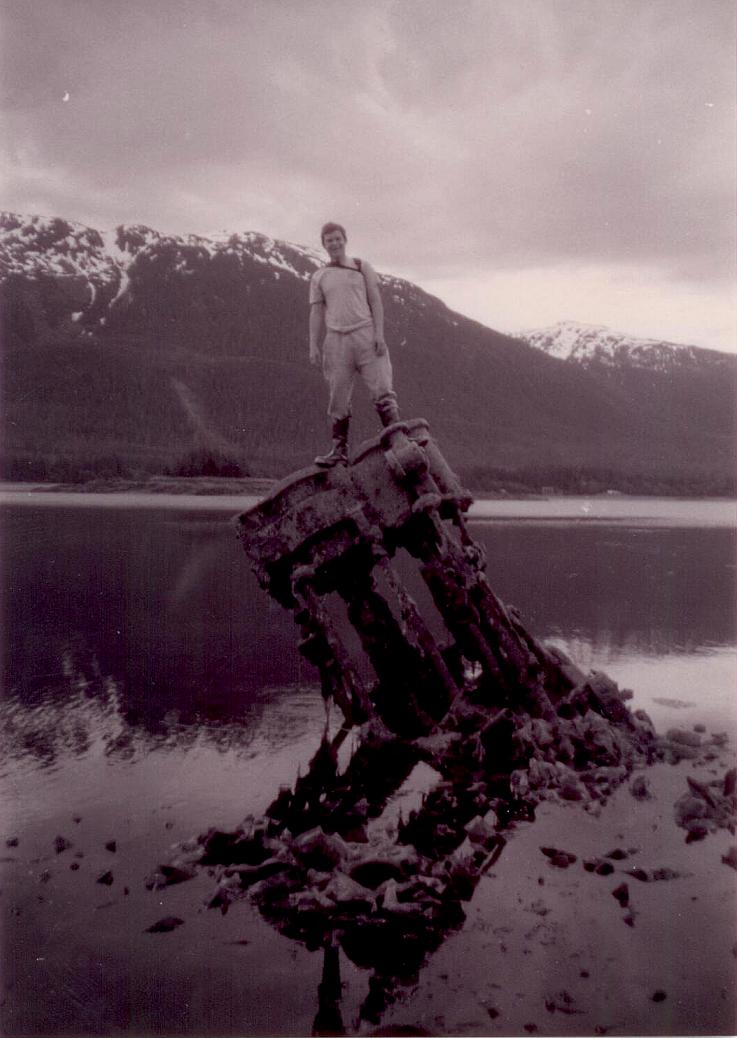
While digging through my photos I came across one showing a mysterious piece of machinery in Funter Bay. That’s me standing on top of it, I’m going to guess it’s around the year 2000.

0a-submerged

After visiting the Lake Superior Marine Museum in Duluth (actually for the 3rd or 4th time, it’s great!) I realized that this thing looks a lot like a compound marine steam engine. Some examples are here. Unfortunately I don’t seem to have any other photos of this one.

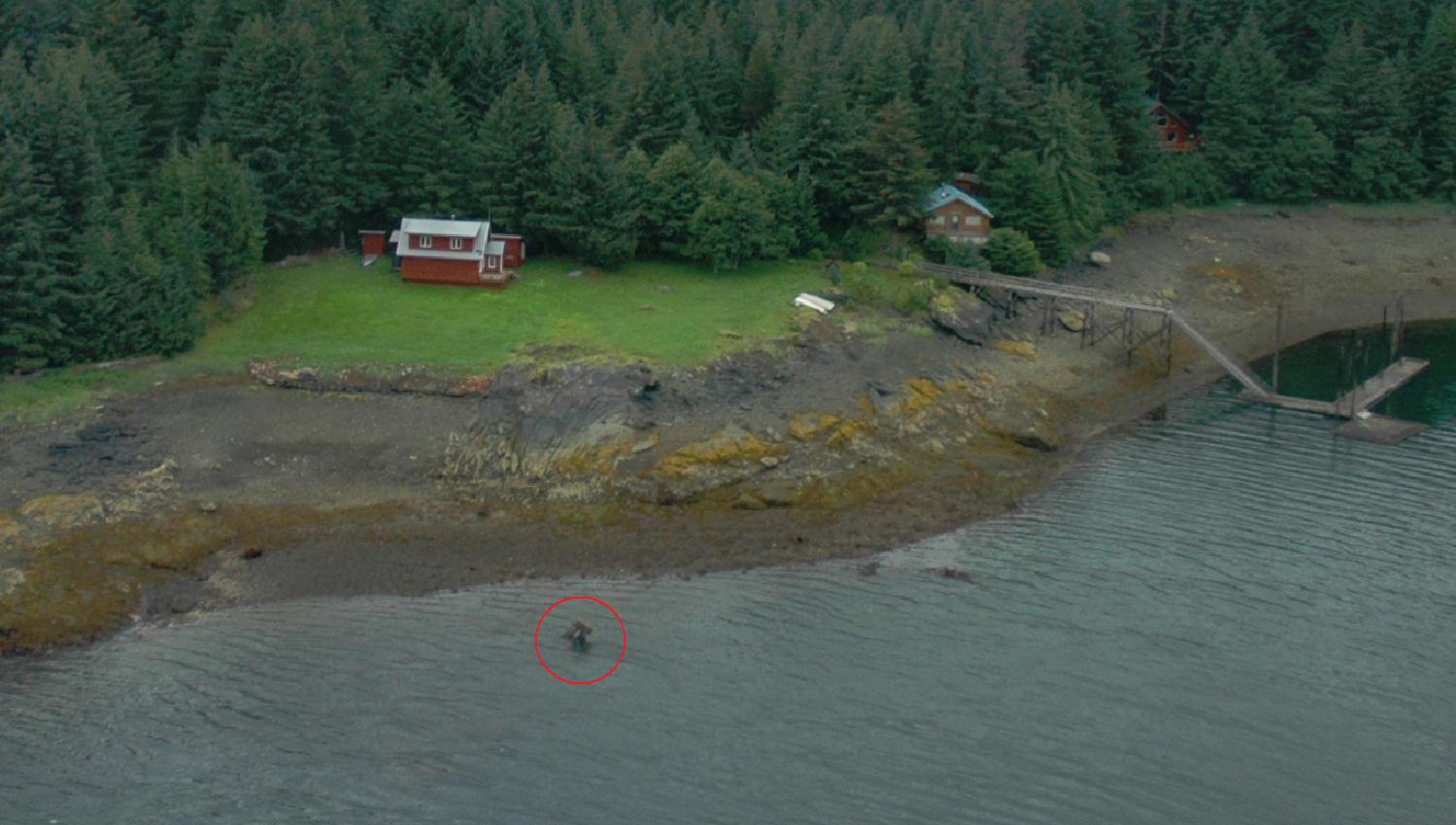
This thing is only visible at extreme low-water (a minus tide), at other times it is mostly submerged. It lies off the former end of the pier at the Funter Bay cannery, leading me to believe that it’s either from a sunken fish trap tender, or equipment which was mounted on the pier at the cannery.I do not recall seeing obvious boat wreckage around the engine, but things decay so fast underwater that any wood is likely long gone, and any metal is mixed in with general trash and debris from the cannery, making it harder to identify. Large ships are shown docking at the cannery pier in the 1940s, so it’s unlikely that anything sank and was left there prior to that time. The engine and any remaining hull structure would have been a hazard at low tide.

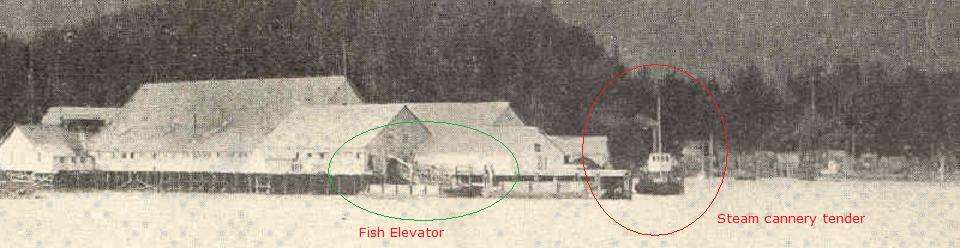
The pier-mounted origin seems a little far fetched, the cannery mostly used mechanical power take-offs from large low-horsepower gas engines, so why would they have a steam engine mounted on their dock? The main dock-end equipment would have been a “Fish Elevator” (basically a conveyor belt) to unload salmon from scows. This image is labeled “Funter Bay… Indians Pitching Fish in Elevator”. This image shows another view of such an elevator, as does this one. This photo shows the upper end of a fish elevator, obviously powered by overhead pulleys and belt drives (as was most of the cannery equipment at Funter). I would not expect a steam engine to be used just for the elevator (and in fact, the elevator seems to have been in a different building from the spot where the steam engine lies).

Cannery site ca 2008, with steam engine circled in red:
engine
From the Alaska Shorezone Mapping project.

The same location in 1948, approximately at the end of the cannery pier:
1948

Cannery pier in 1907 showing tender tied up about where the engine is now, and the fish elevator with scows docked next to it.
1907

The cannery area in 1979, showing how the buildings had begun collapsing (there’s not as much structure overhanging the bay as there was in ’48). Approximate steam engine location is circled: 1979

Another explanation could be that this was salvaged from a wrecked cannery tender elsewhere, left on the pier when the cannery was abandoned, and fell into the water when the structure started collapsing around the late 1950s/early 1960s. If so, it’s surprising that it landed basically upright. A candidate for this possible origin could be the mystery wreck on Highwater Island, which seems to have had a boiler but has no sign of an engine. It could also have been removed from a tender during a refit to gas or diesel, and left lying around on the pier, but this seems like a stretch as well (it would be more likely they would have refitted in a marine yard in Seattle or Astoria, the Anna Barron is sometimes mentioned in publications like Pacific Motorboat as undergoing maintenance in Astoria.

None of the cannery tenders that I’ve previously discussed seem to match. Of the original T.P. Co. boats I know of, only the Anna Barron and the Buster had steam engines, Buster‘s was replaced with a gas engine prior to 1926. The captain of the Anna Barron was reported as saying the vessel could be raised, but I am not sure if they salvaged the engine or anything else from it. (Oddly, this document gives a different story of the Anna Barron‘s sinking than this page, which I previously quoted, although both seem to be using similar source documents. The BOEM page seems to be saying Albert Michaelsen was the captain (vs George Black), that they were coming from Hoonah (vs Funter), that the engine head burst, and that the vessel drifted towards Point Howard before grounding at Pt. Ainsley, and the crew swam 20ft to shore).

Later cannery owner P.E. Harris Co had quite a few boats, in 1956 these included the Amelie, Cape Douglas, Health, Jim B, Kathy B, Marina G, Morzhovoi, Norse Maid, Orcas, Thrasher, Trojan, Glasenap, Izembek, Fairweather, Moha, Pat B, and Seakist.  However, none of these seem to be steam-powered (steam was largely obsolete by the mid 20th century). By 1962 the company had become Peter Pan Seafoods, and vessels included the Carmen B, Denis N, Dream Girl, Mariner, Reliance, Alf, and Western Sea. Again, none of these appear to be steam powered.

At this point I’m still stumped on both those mysteries (what boat sank at Highwater Island, and what boat (if any) was the source of the compound steam engine at the cannery?

If anyone reading this knows steam engines or has any ideas for tracking down these mysteries, please let me know! You can leave a comment below, or email me at gabe<at>saveitforparts<dot>com.


Funter Bay History: Scow Bay Part II

June 10, 2013

I realized that I have a large number of photos from Scow Bay, so I’ve decided to follow up on one of my earliest Funter Bay History posts with more information on that location.

Scow Bay is one of the few parts of Funter Bay history that are publicly accessible. This side of the bay lies within the Funter Bay State Marine Park. Again, please note that the adjacent former cannery site is mostly private property. Also note that the Scow Bay area features extensive tide flats, keep an eye on the tides if you plan to land a boat here, or you may find it high and dry!

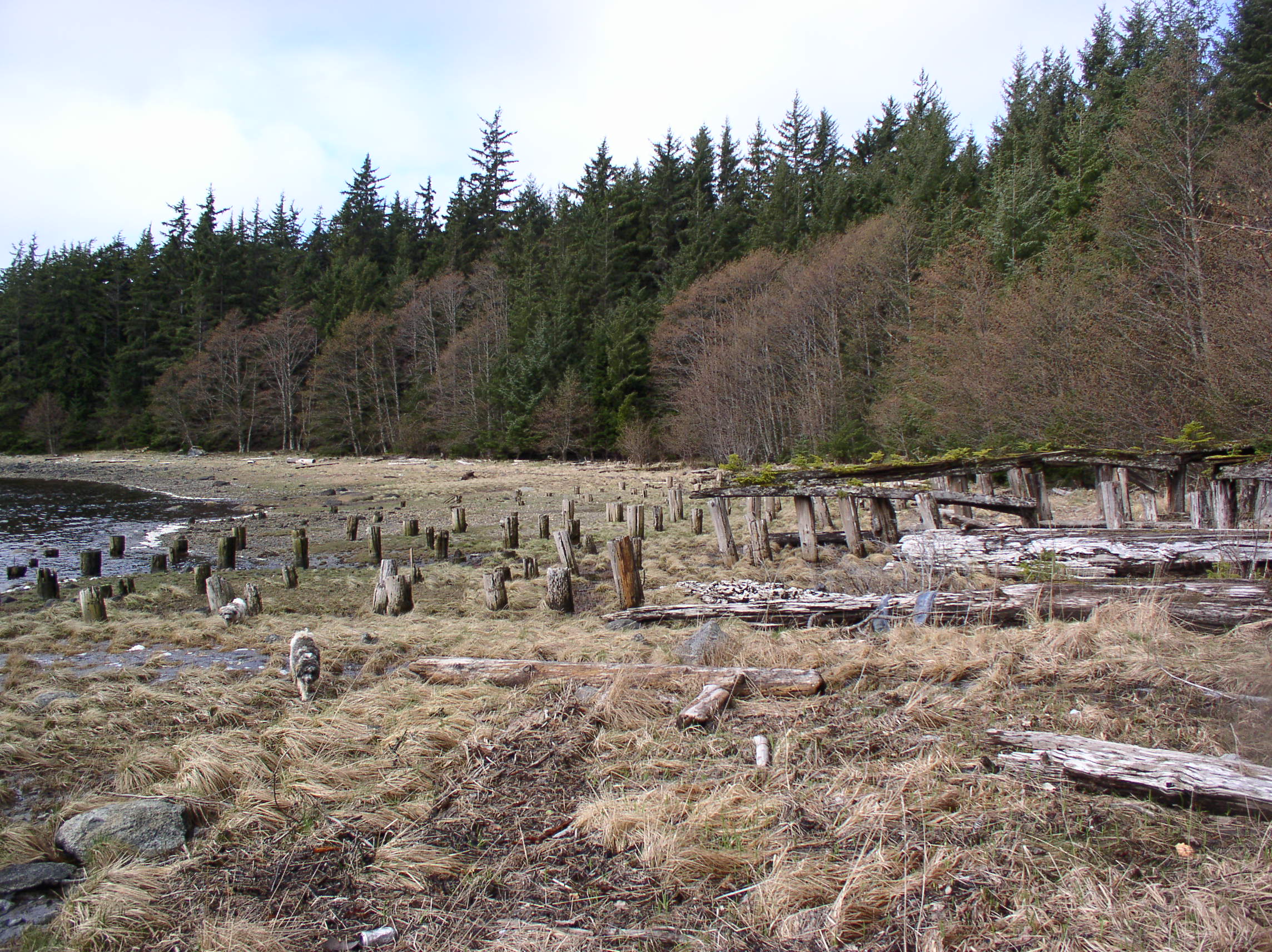
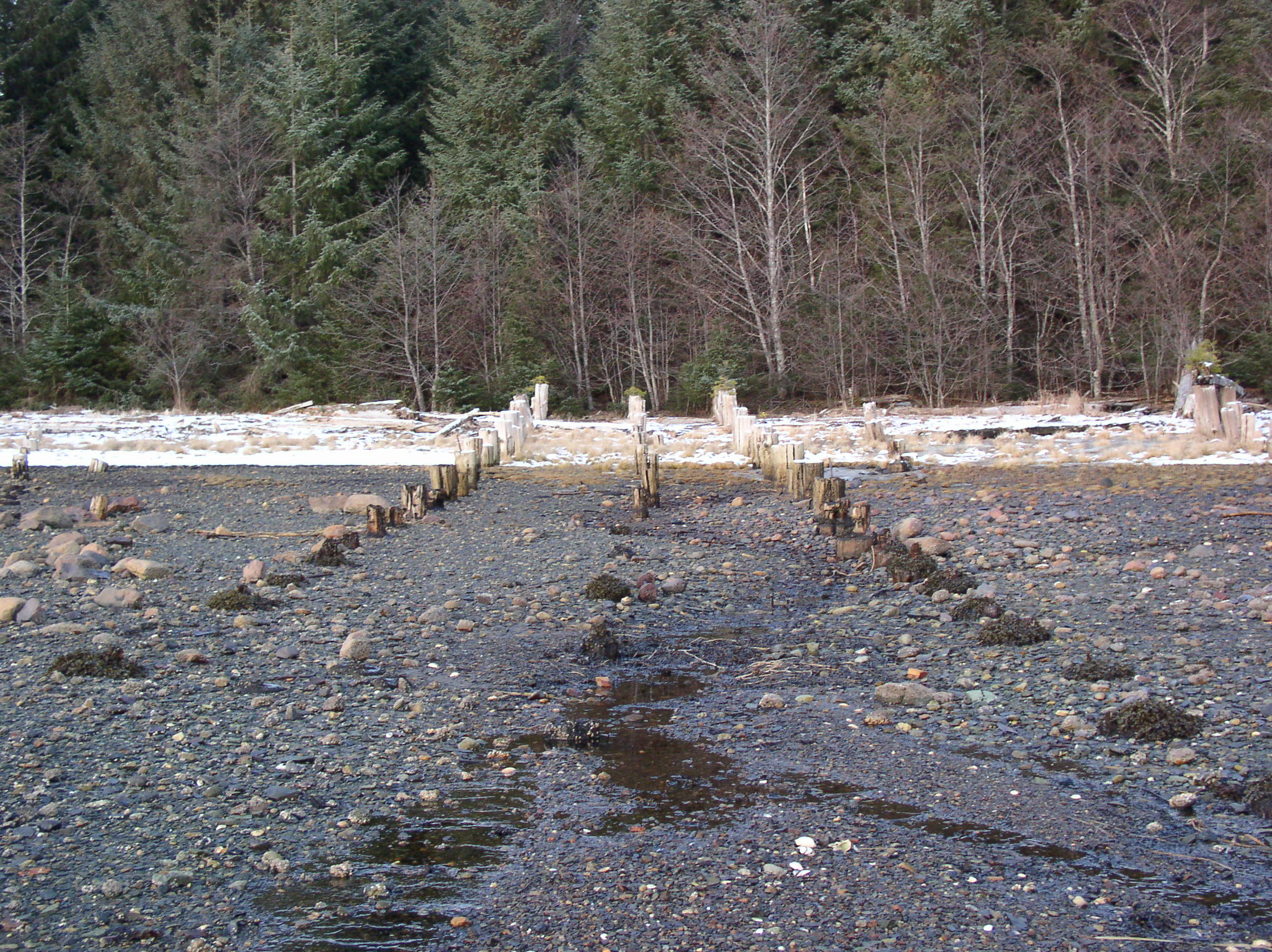
Slipway pilings at Scow Bay:
0a-scowbay

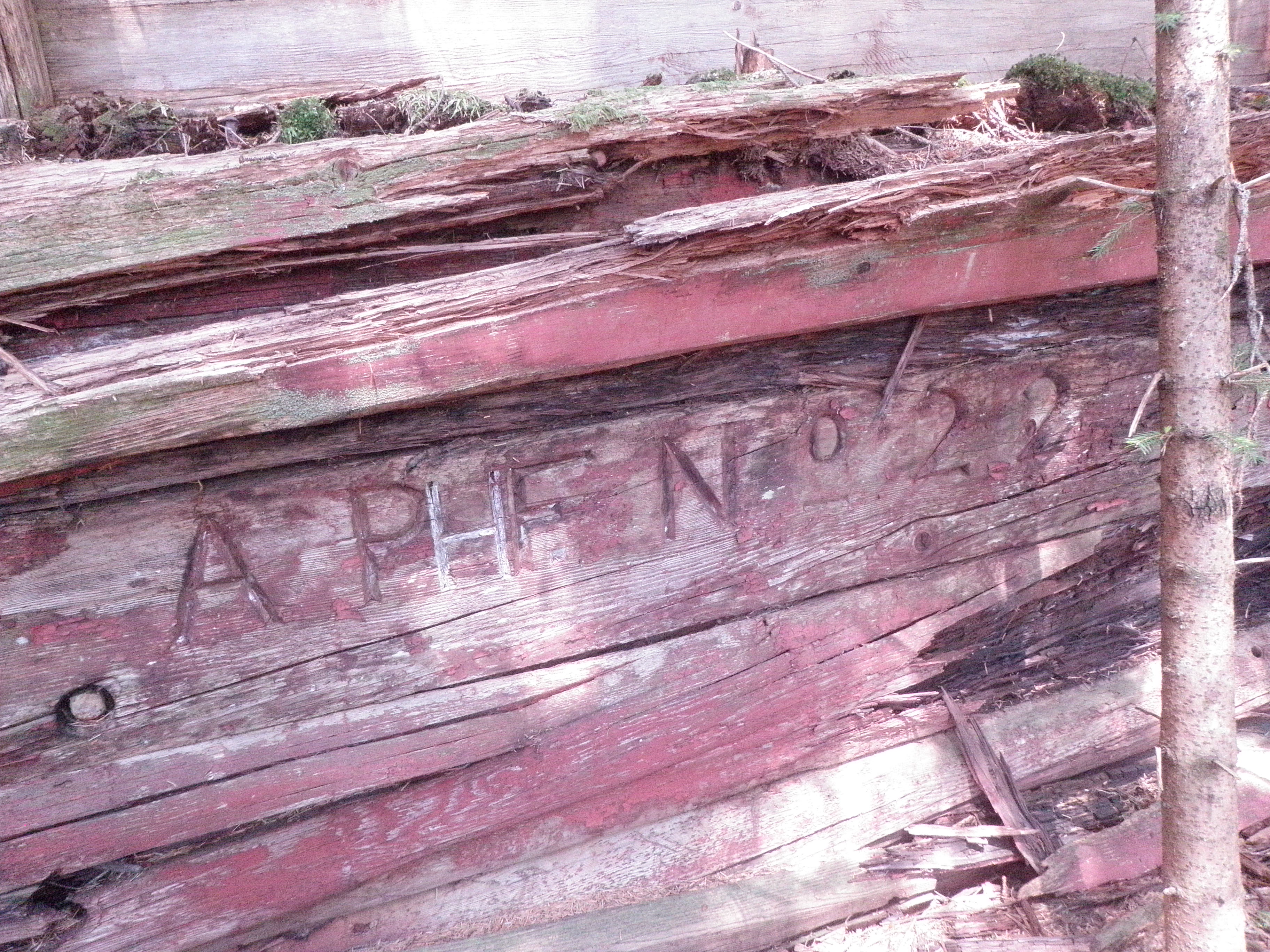
The name of one of the scows, which were large enough to require official documentation as Merchant Vessels:
OLYMPUS DIGITAL CAMERA

From the 1965 Merchant Vessel Registry on the above scow:

A.P.F. No 22 (wood) Barge, No 168899. 41tons gross/net. 61.1ft long, 18ft breadth, 4.4ft depth. Built 1924 in Houghton, WA for freight service. Owned by P.E. Harris Inc of Washington, home port Juneau.

The carved “H” seems to have slipped in between the P and F sometime after the official numbering, I’m not sure what it means. The other scows had equally imaginative names, like the No 19, No 20, etc.

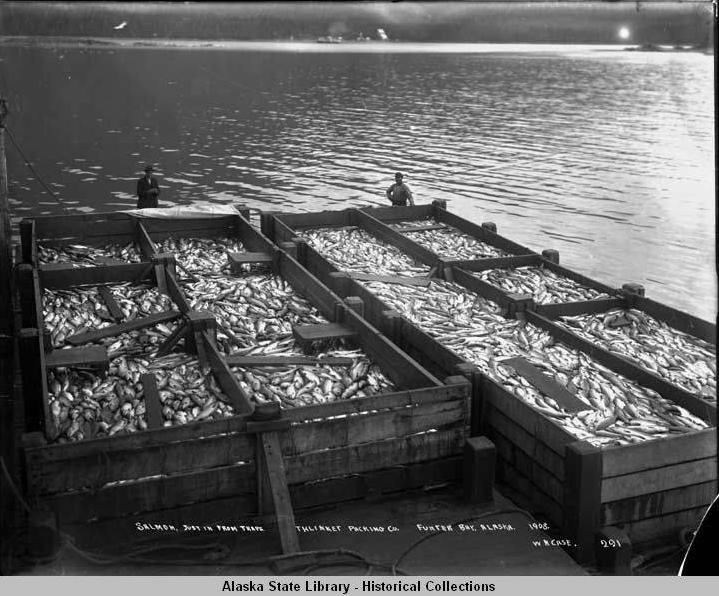
Here are some more views of these scows in operation in 1908. The wooden boards surrounding the top would have increased their load capacity:
Funter Bay Cannery2 1908
Courtesy of the Alaska State Library, William R Norton collection, P226-446

scows2
Courtesy of the Alaska State Library, William R Norton collection, P226-445

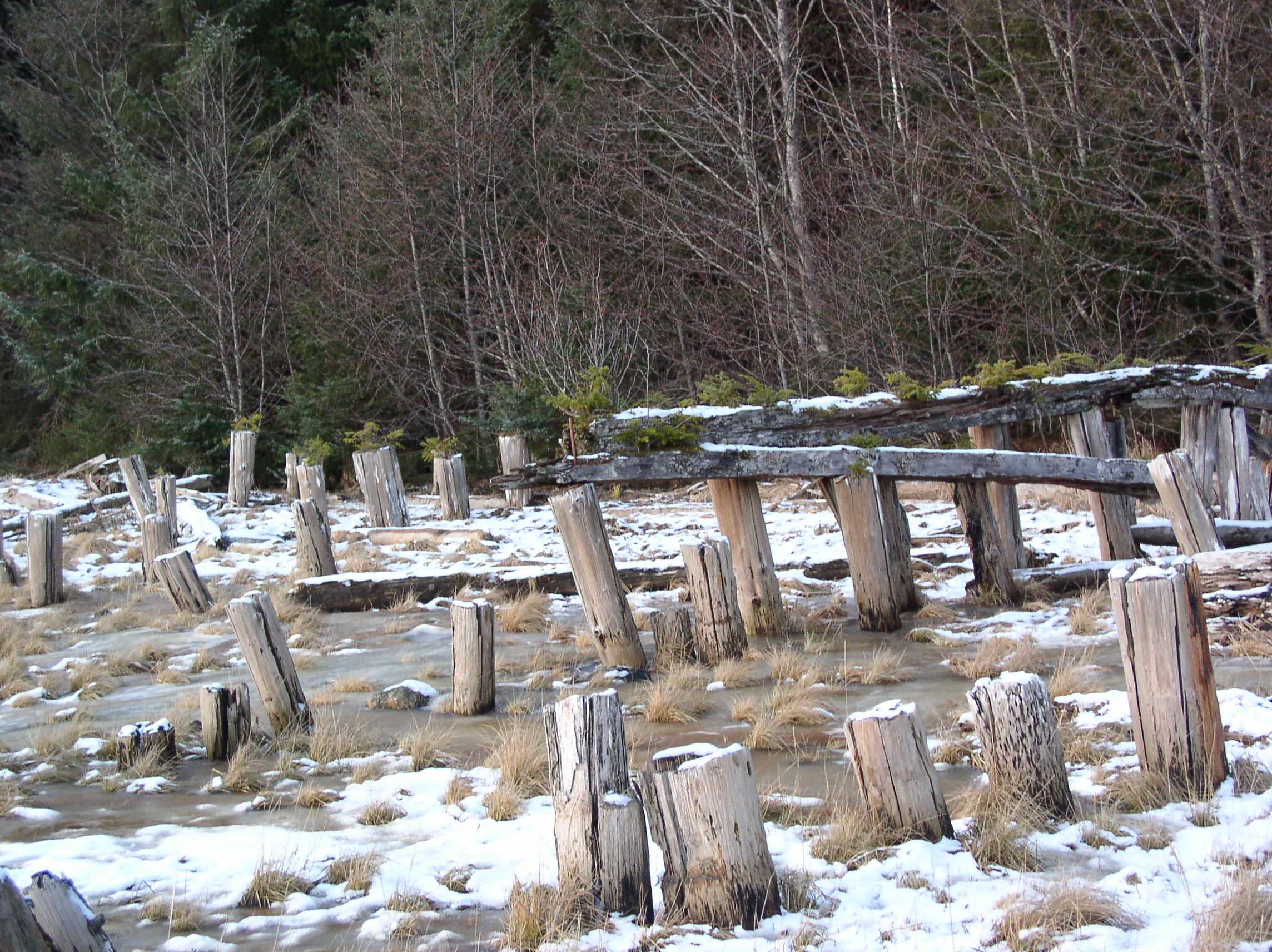
Two more views of the slipways, you can see some of the remaining top rails on the right, now home to small gardens of saplings:
OLYMPUS DIGITAL CAMERA

OLYMPUS DIGITAL CAMERA

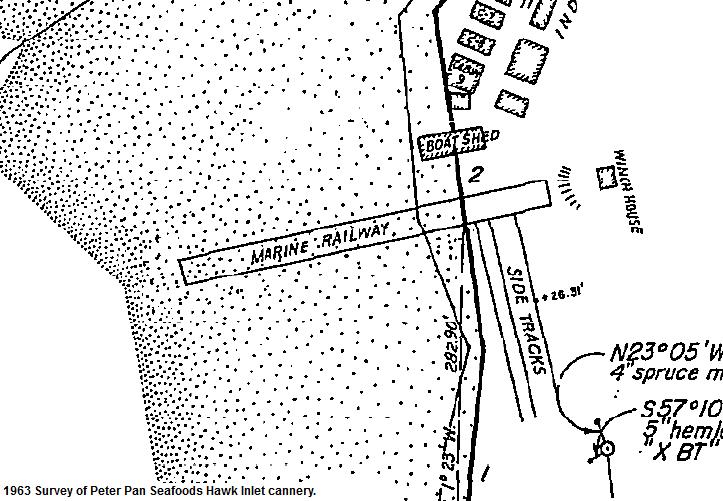
Here is a diagram of the scow slipways from a cannery of similar vintage. Typically there would be one main ramp leading from the water up to the woods above high-tide, and then scows would be pulled sideways onto parallel tracks for storage. At Funter they seem to have had multiple parallel tracks to the water, rather than side-tracks.

scow survey

Some of the collapsed top-rails that made up the storage tracks of the slipways, and one of the braided steel cables running back to the winch engine:
OLYMPUS DIGITAL CAMERA

A spool that would have held steel cable (also known as an Alaskan patio table!):
OLYMPUS DIGITAL CAMERA

Parallel rows of pilings leading from tideflats to the woods:
OLYMPUS DIGITAL CAMERA

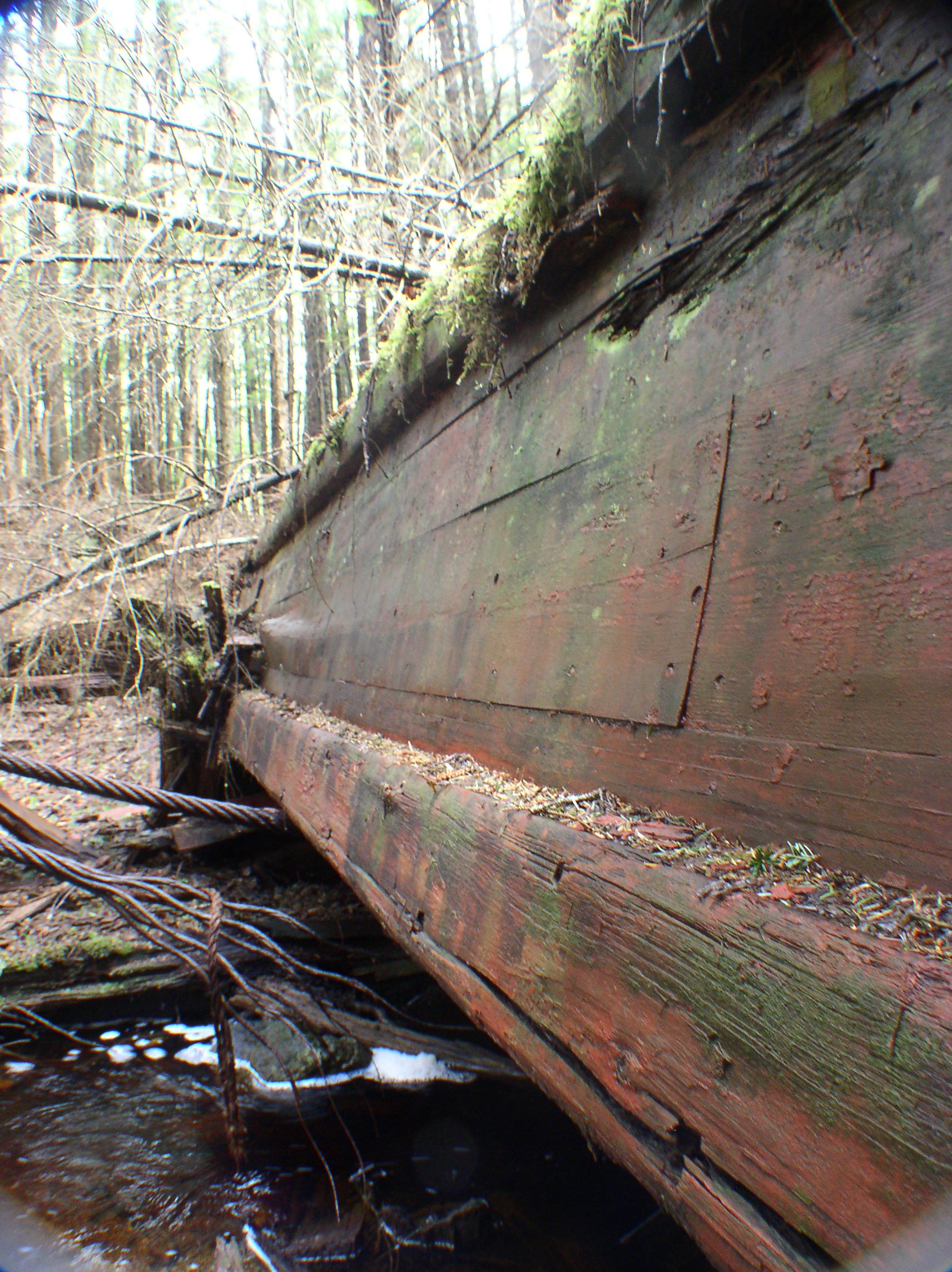
Closeup of a scow hull. The red paint was probably a copper-based anti-fouling bottom paint (to prevent barnacles and other marine life from growing on the wood):
OLYMPUS DIGITAL CAMERA

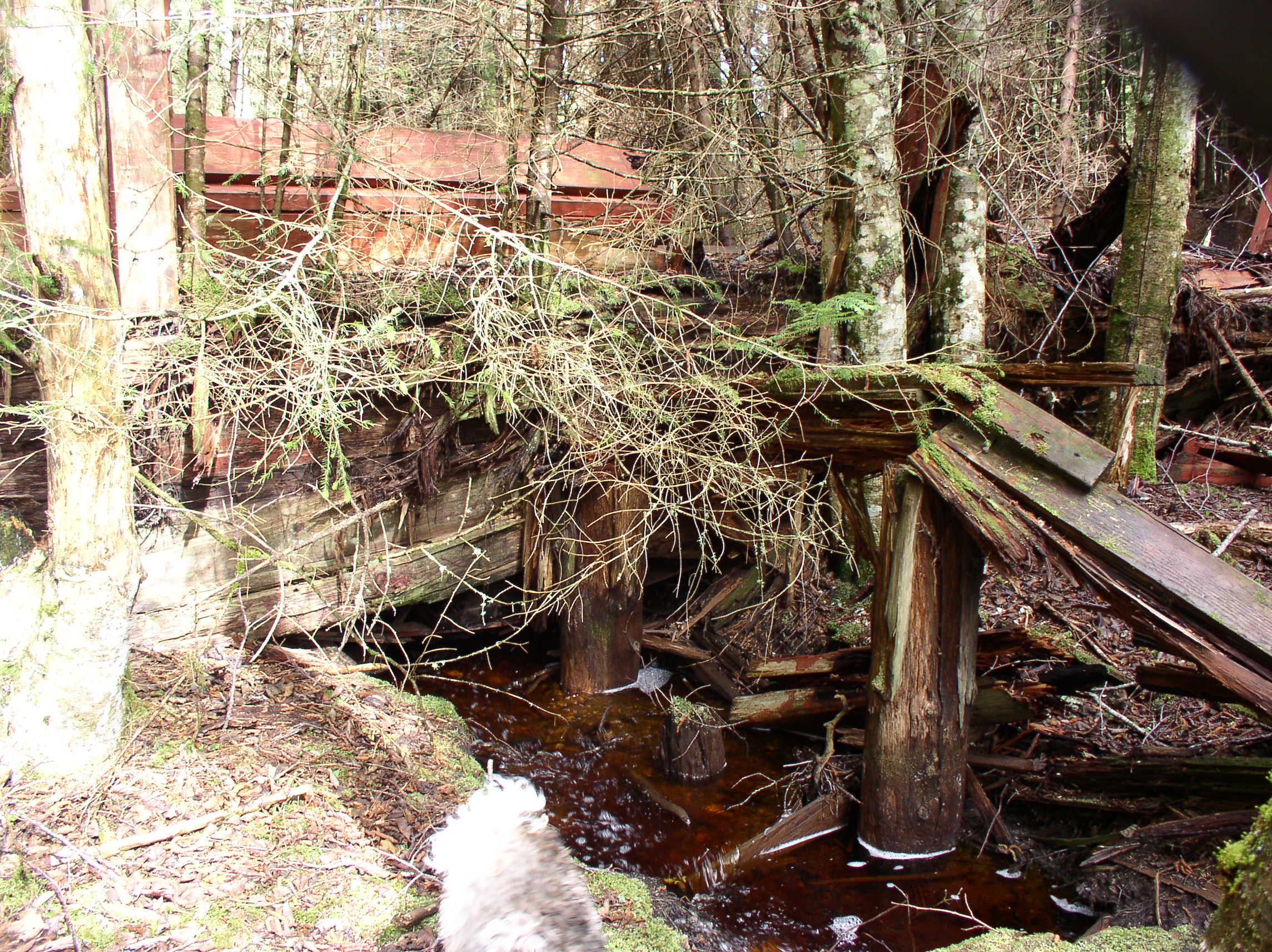
This picture shows how the scows have rotted into and through the rails they once sat on. In some cases, the pilings that held up the rails are now poking up through the rotten wooden hulls. A scow (on the left) has settled to ground level, while a rail is seen falling off its posts on the right:
OLYMPUS DIGITAL CAMERA

That’s it for now!


Funter Bay History: Fish Buying Station

May 17, 2013

Independent fishermen in Funter Bay needed a place to sell their catch and buy supplies (fuel, fresh water, and ice). The local cannery would sometimes buy troll-caught fish, but probably paid a low low price since their own traps produced fish nearly free. Trollers were better off selling salmon which would go iced and fresh to Juneau grocery stores and markets. However, the range of the small fishing boats, and the distance from town where the fish were most often found, usually prevented the fishermen from running directly to Juneau to sell.

To support these markets, various fish sellers and middlemen operated buying stations in locations near the fishing grounds. The station at Funter Bay was probably associated with the Juneau Cold Storage, where they brought fish for storage and sale, and procured ice for sale to fishermen. Packers would run the fish in to the cold storage on a regular basis to keep them fresh.

Unloading fish at the Juneau Cold Storage, 1930s:
Juneau Cold Storage
Courtesy of Alaska State Library, Elite Studio collections, P294-020

Another reason for third-party buyers was fish piracy; fishermen would sometimes steal fish from the cannery traps. Canneries banded together to boycott fish from certain “known pirates”, but independent buyers with their own scows and packers quickly sprang up who would take fish from anyone.

Salmon buyers also operated from floating scows (barges). Today, salmon buying stations usually operate (probably with fewer pirates) from scows, packer boats, and occasionally from docks at small communities like Elfin Cove.

Scow (barge with structure on it) and cannery tender at the Thlinket Packing Co dock, 1942:
scow2
Courtesy of Alaska State Library, Butler/Dale collection, P306-1093.

Funter Bay residents Gunner and Lazette Ohman operated a fish buying scow in the area during the 1950s and 60s, buying fish for Art Berthold of the Fern II.

The land-based fish buying station at Funter Bay was located on Highwater Island, which is only an island when high tide covers the sandbar to it (apparently it is called Crab Island in some govt. docs, although I’ve never heard it called that locally). The station had several buildings on the shore, and a long dock with two ramps, circled in the 1948 aerial photo below:
buying station

This location would not have been completely ideal, as it had no streams or running water, but it was in a very sheltered location that protected the dock from most winds. Trollers would fill up on fresh water from a hose running to a stream elsewhere in the bay.

Another aerial from 1948 (on a different date), showing a boat approaching the fish buying dock (the V-shaped wake in the lower right quarter of the image):
wake

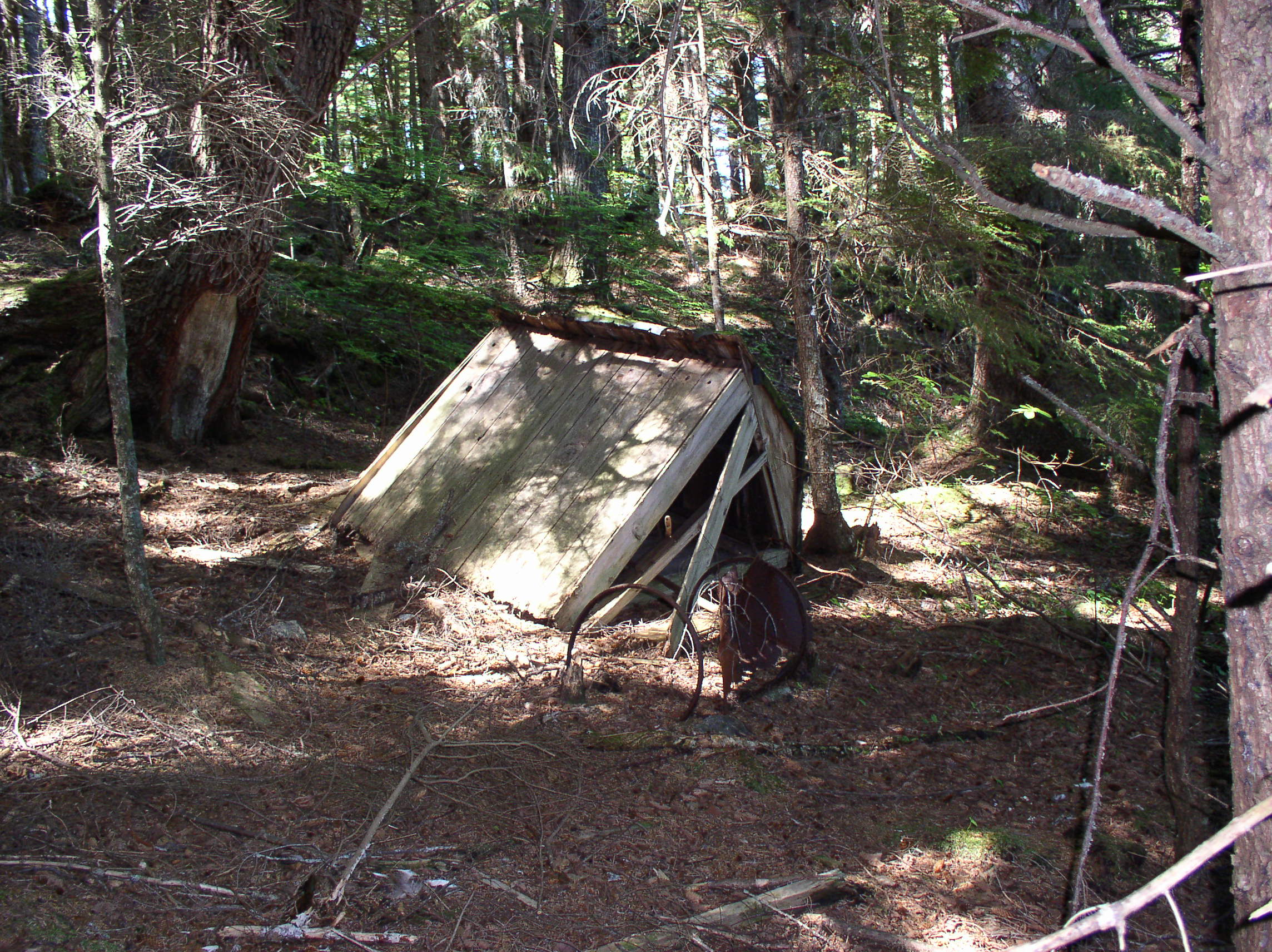
More recently, here is a collapsing shed at the station:
OLYMPUS DIGITAL CAMERA

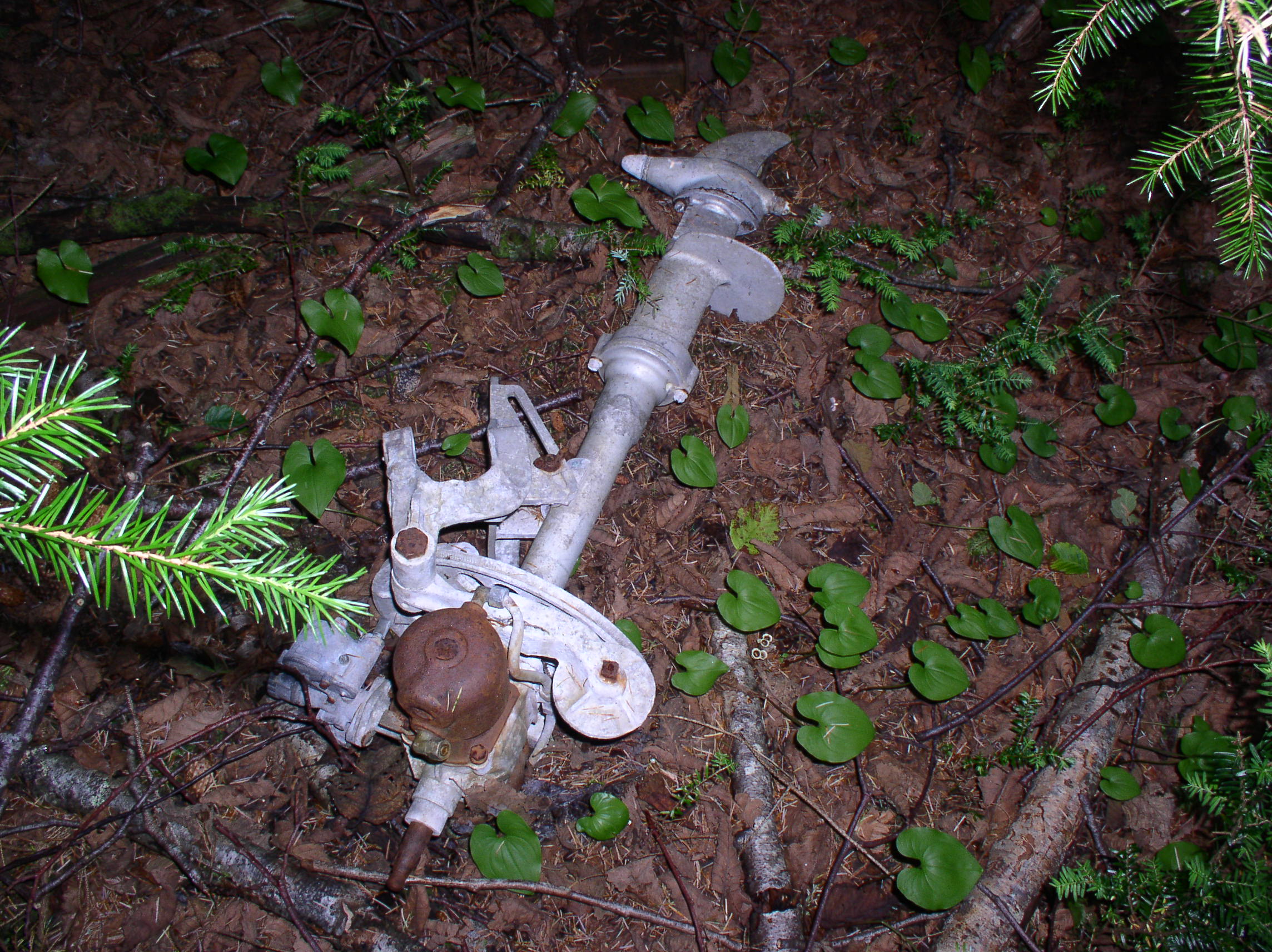
A small outboard motor abandoned in the woods (I always laugh when I go to some yuppie antique store in the Midwest and they’re selling rusty stuff like this for $300, but now I’m a little worried that someone will go nab the thing and stick it on their yuppie wall):
OLYMPUS DIGITAL CAMERA

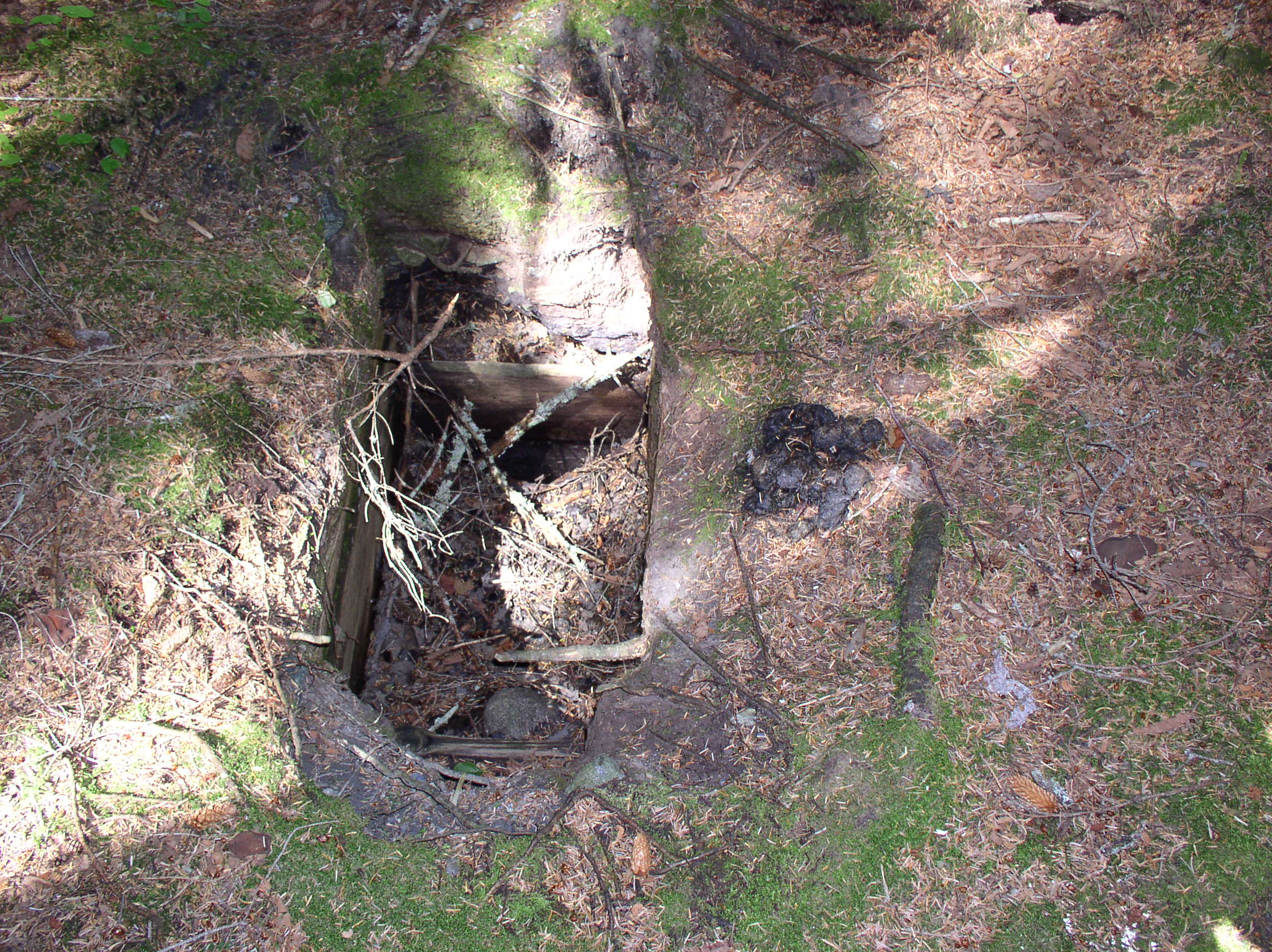
The outhouse pit, apparently bears think the spot is a great bathroom as well, as seen by the dark pile to the right:
OLYMPUS DIGITAL CAMERA

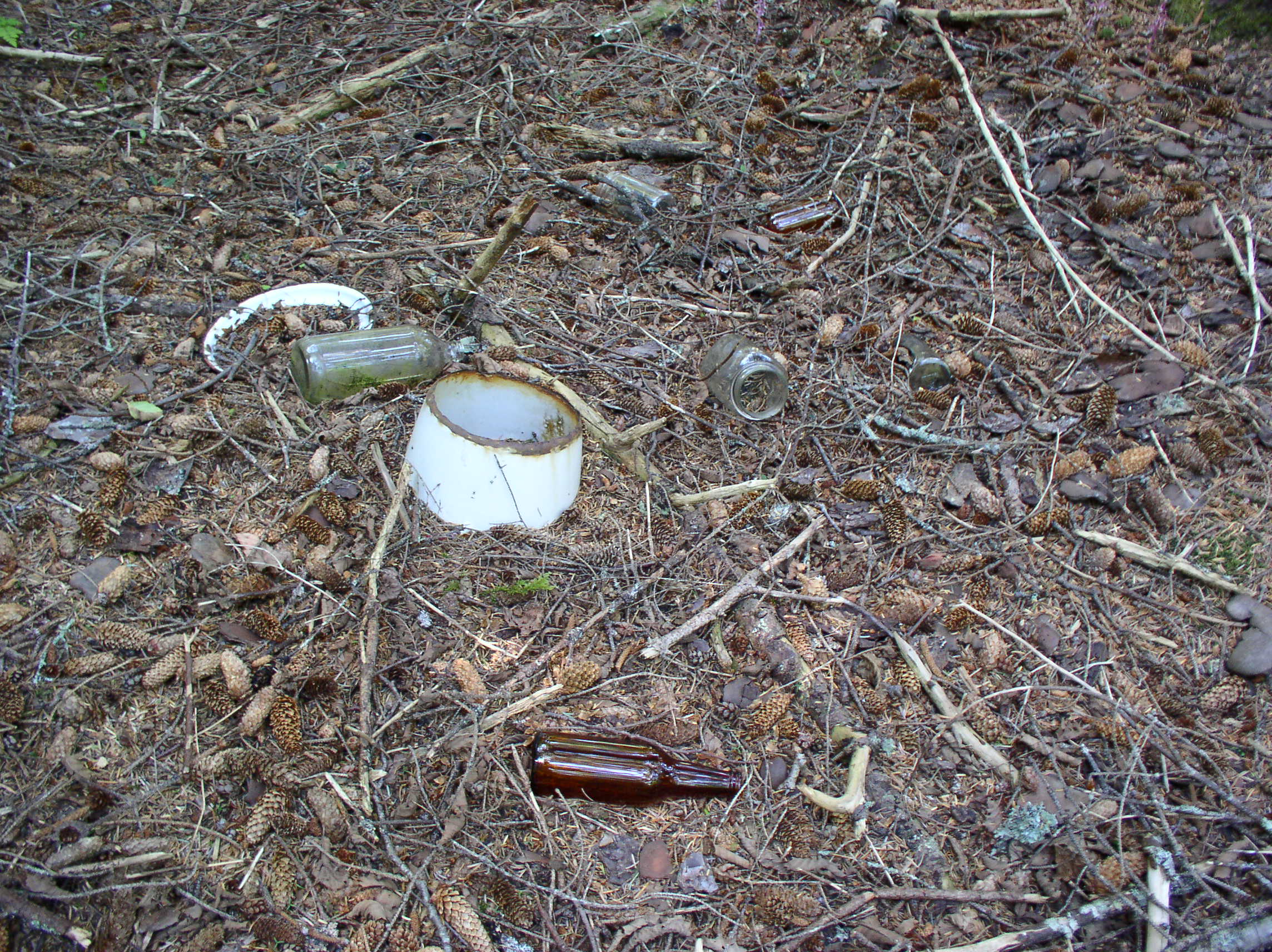
More “junk” in the woods, bottles and trash from the 40s and 50s:
OLYMPUS DIGITAL CAMERA

As mentioned before, there is a wrecked boat on the island adjacent to where the dock was sited. It’s locally known as a steam tug, assumed to be a cannery tender, although I’ve not yet been able to find any details on it.
OLYMPUS DIGITAL CAMERA

Coil of cable on the beach, either from the wrecked tug or the fish buying dock:OLYMPUS DIGITAL CAMERA


Funter Bay History – More Fish Traps & Fish Pirates

May 8, 2013

This began as a dry discussion of trap types, and ended up with gun fights, legal battles, piracy, and everything else that goes with Alaskan fishing!

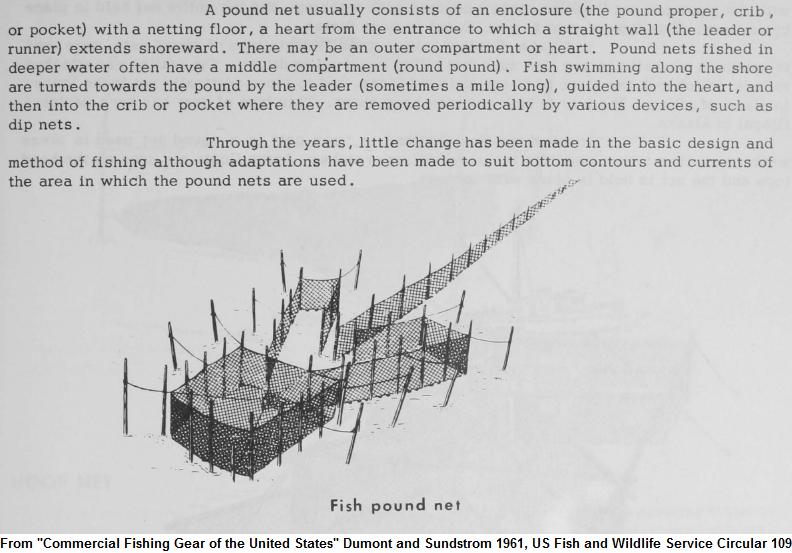
As mentioned before, the Funter Bay cannery operated mainly with fish traps (vs fishing boats). These traps were designed to intercept salmon as they returned to spawning streams, penning them in large fixed nets until they could be scooped out.

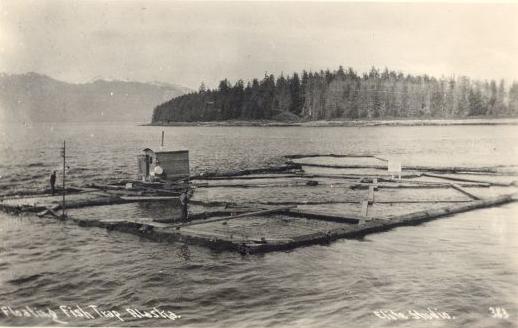
There were two types of fish trap used in the Funter Bay area. “Pound Nets” hung from fixed pilings driven into the sea bottom. Many of these pilings had to be replaced each season, as the winter storms would knock them loose. “Floating Traps” had nets hung from a latticework of floating logs, and were used in deeper water or locations with rocky bottoms. These traps were towed into protected coves for winter storage. Both types of trap would be located a few hundred feet offshore, with a “leader” strung towards the beach (and sometimes a “Jigger” extending seaward) to intercept passing salmon. This page has some more explanation and diagrams.

Pound Net:
pound trap

Floating Trap:
floating trap

These images show one of the Thlinket Packing Co’s pound-type traps near Funter Bay (Trap #7):
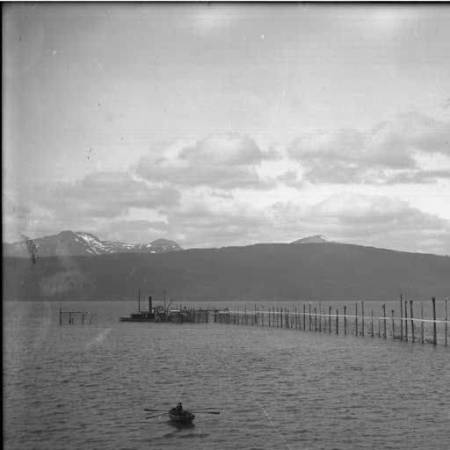
Trap 7 trap 7-2

My first post on Funter Bay History shows Trap #6 at the Kittens (islands), also of the pound type.

Here is an example of a floating trap. The structure on top is the watchman’s shack:floating trap 2
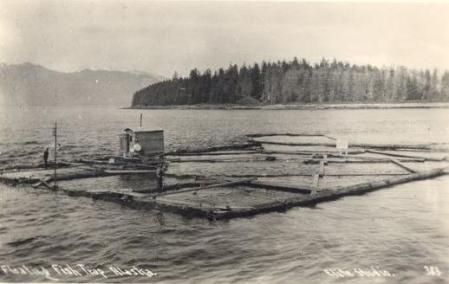
As mentioned, watchmen on the traps were an attempt to prevent trap robbing or “Fish Piracy” at remote traps, which was quite common. Independent fishermen hated traps, which they (correctly) felt were taking too many salmon. Many fishermen felt that fish in a trap were fair game, and that trap robbing did not “cost” anything to the trap owner. In fact, the pirates would often sell the stolen fish to the same company that owned the traps! The problem became so bad that the governor of Alaska dispatched surplus navy boats to combat pirates, and the Thlinket Packing Co hired WWI veterans to serve as armed guards.

pirates2

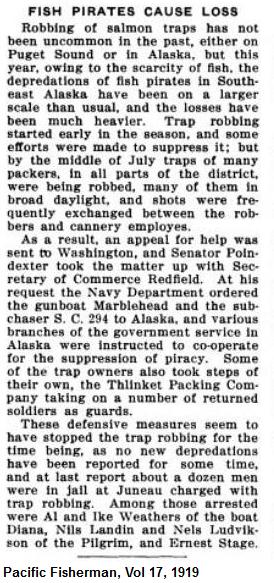
In July of 1919, the Weathers brothers, Al and Ike, along with Ernest Stage, were charged with assault and attempted robbery in a fish piracy case. The trio were accused of using the gas boat Diana to attack Hoonah Packing co’s tender Forrester near Funter Bay. Captain Alfred Knutson testified that his boat came under fire by the trio. Thlinket Packing Co trap watchman Ted Likeness was a witness. Earnest Stage was initially arrested for stealing $10 worth of fish from Funter Bay. Al Weathers was found guilty and given 4 years in jail, with the jury recommending clemency due to his young age.
pirates3

Info on the USS Marblehead.

Photo of a WWI sub chaser in Alaska.

Fish piracy was reduced by 1925 after several canning companies joined together to patrol the area.

“Fish piracy, or the robbery of fish traps, which in previous seasons was bitterly complained of by salmon canners in southeastern Alaska, was reduced to a minimum during the season of 1925. This was accomplished chiefly through the maintenance of a patrol organized by the larger canners and operated under the supervision of deputy United States marshals. A number of cruising boats were engaged in this patrol and covered waters in the vicinity of Icy Strait, Niblack, Street Island, Behm Canal, Kanagunut, Rose Inlet, Dall Head, Hidden Inlet, Union Bay, and the west coast of Prince of Wales Island.” From Bureau of Fisheries report, 1926.

Some more information on fish piracy can be found here (restoring a patrol boat), here (the story of a miner turned pirate), and here (mentioning the piratical family history of Ketchikan’s mayor).

In addition to battling pirates, salmon packing companies were also fiercely competitive with eachother, vying for the same salmon runs, the most desirable trap locations, and the best land for canneries. An extreme example of this was “trap jumping”, similar to the phenomenon of mine claim jumping where one prospector would steal the land or resources of another. More details shortly…

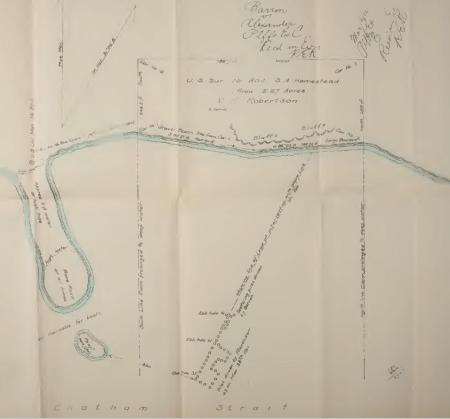
Pound net traps often had a watchman on shore, vs floating traps with their onboard housing. As I previously noted, the Thlinket Packing Co acquired land via the homestead act from which to base their traps (although the person filing for the homestead would usually not be the one living there!). I showed a survey of cannery owner J.T. Barron’s “homestead” in this post. Below is a survey of the “homestead” at a trap site south of Funter:
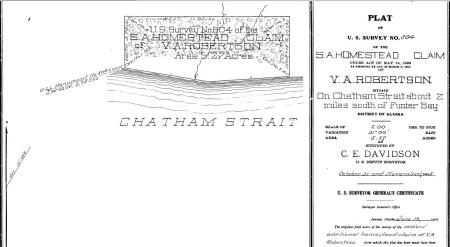
Robertson Homestead

This homestead (located at Lizard Head point just South of Funter) was fairly openly a front for cannery development, being transferred very quickly to T.P.Co owner James Barron. Barron had previously held a lease from the Alaska Packers Association for a trap they installed in 1908 at Lizard Head, and was moving to acquire the shore and upland to support this site.

“…On or about the first day of March, A. D. 1911, for value received, the said V. A. Robertson conveyed by good and sufficient deed in writing the above-described tract, lot or parcel of land embraced within said U. S. Nonmineral Survey No. 804 aforesaid to James T. Barron.”

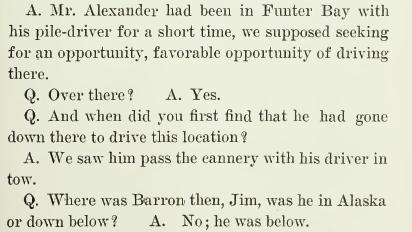
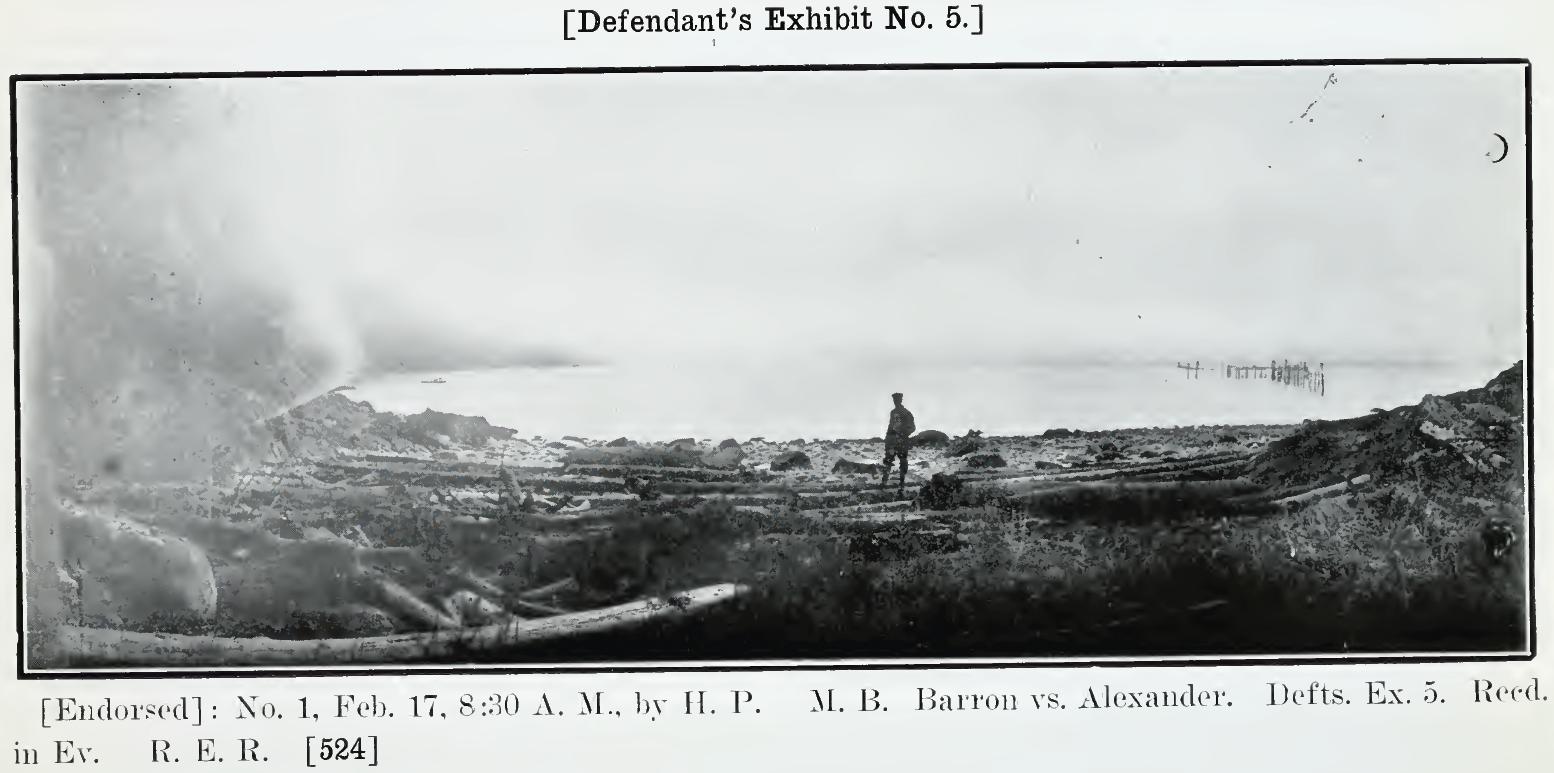
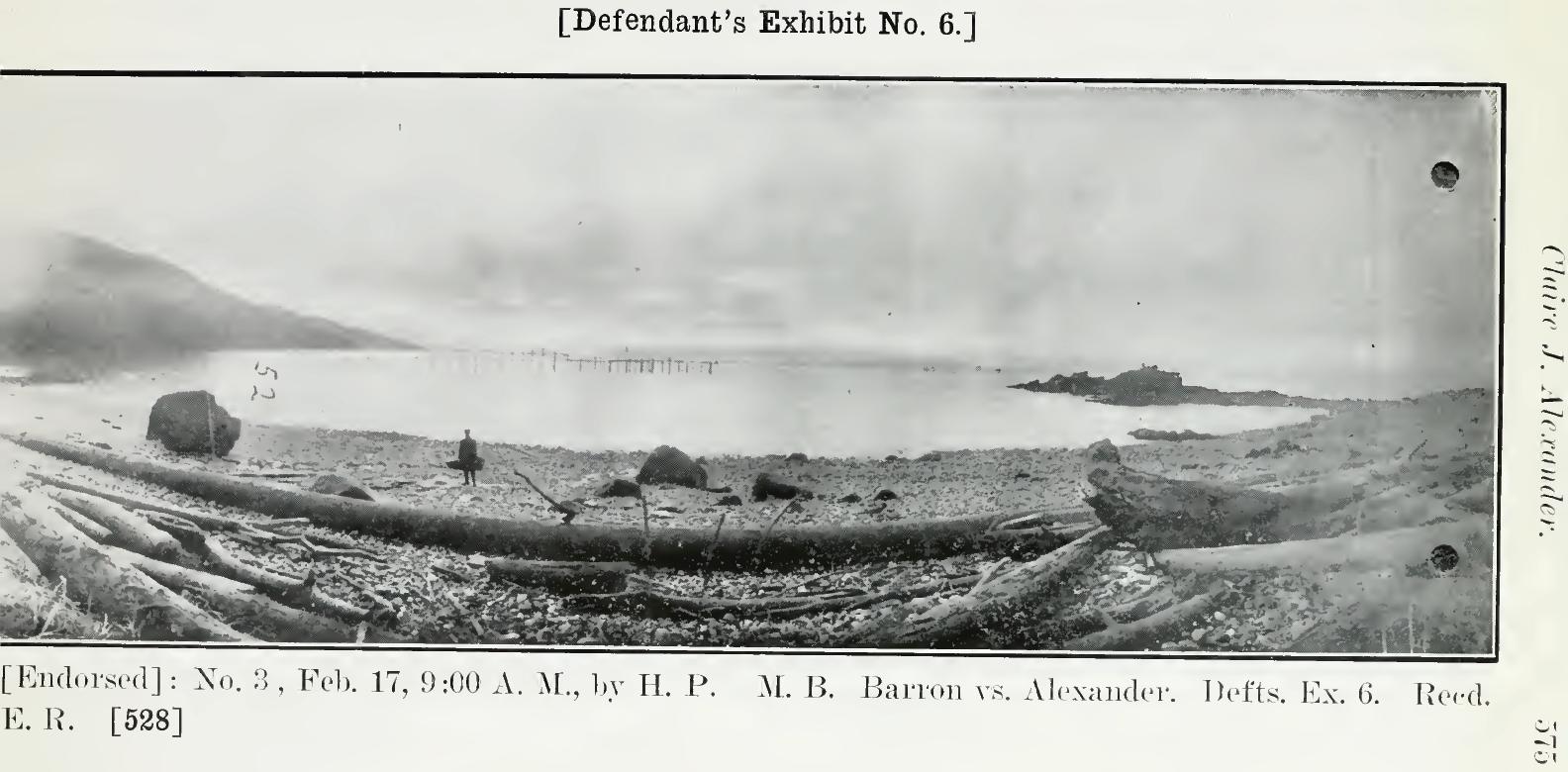
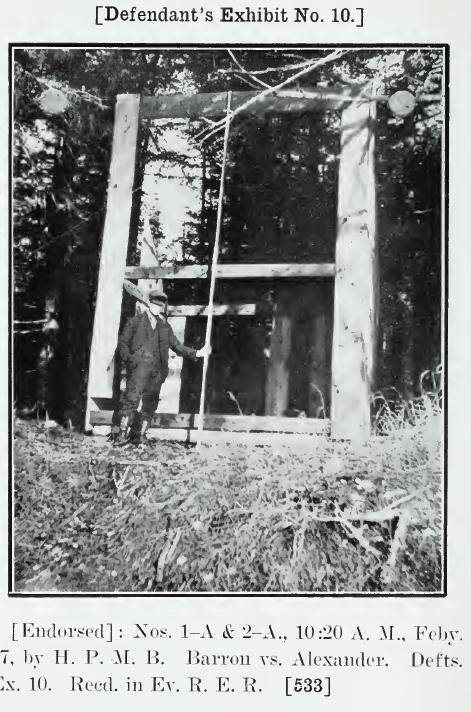
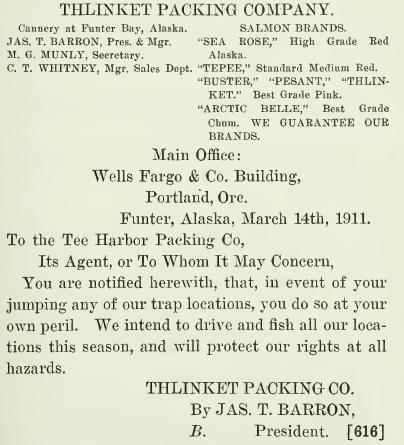
However, before the Thlinket Packing Co could finish building their trap, Clarence J. Alexander, AKA “Claire Alexander” of the Tee Harbor Packing Co swooped in and installed his own, thus “corking off” Barron. He had previously worked on the pile-driving crew for the Alaska Packers Association, and knew exactly where the trap should go. Alexander even used some of the pilings that Barron had already driven! Barron sued, and some of the court documents are online (part 1 and part 2).

Perhaps Mr. Alexander’s “opportunity” was when Barron left the state?:
pile driver

Claire Alexander’s fish trap shown in front of Barron’s Lizard Head property, from court documents:
Alexander's trap

Barron’s initial letter to Alexander:
Trap Jumping

In the court case, Barron testified not that he planned a trap (as indicated by his letter and other testimony), but that he wanted to use the site as a temporary mooring for boats. He mentioned that it was too hard to tow loaded scows to Funter Bay against a North wind. He complains that Alexander’s trap blocks his water access. Alexander claimed he had no knowledge of Barron’s so-called homestead and didn’t notice any development at the site (despite incorporating Barron’s pilings into his trap). The court found against Barron and ruled that Alexander’s trap did not block Barron’s access to his property.

Some 1911 photos from the Lizard Head trap site, including the beginnings of the T.P. Co. watchman’s cabin:
Lizard Head 1911 1 Lizard Head 1911 2

Barron's cabin at Lizard Head 1911

Claire Alexander would go on to found the Hoonah Packing Co a few years later, and his trap at Lizard Head was still in place, in the same configuration, in 1948.

Laws regarding fish traps tended to fluctuate. Traps were originally fairly unregulated, and canneries would often place them directly in stream mouths, intercepting the entire spawning population until the “run” of salmon was destroyed. Later regulations placed limits on where traps could be located, when they could operate, how long the jiggers could be, etc. By the 1940s, the salmon population had declined so much that trap catches were fairly low, but the price of salmon had risen enough to keep traps cost-effective. When Alaska became a state in 1959, traps were outlawed entirely, leading to the closure of many canneries (other methods of fishing were not efficient enough for the size and type of these operations).

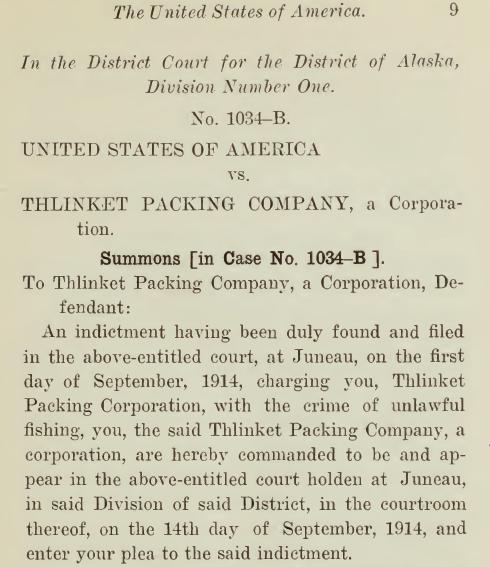
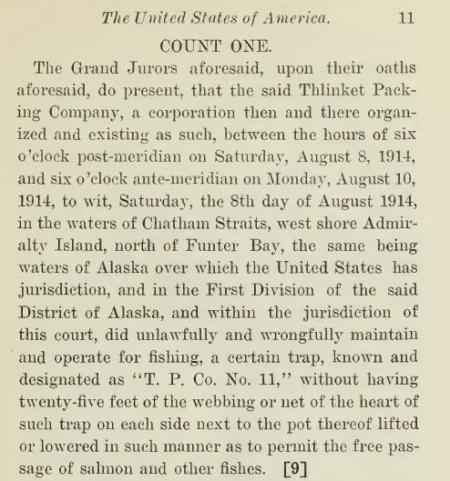
The Thlinket Packing Co (and later owners of the cannery) occasionally ran afoul of fish and game regulations.
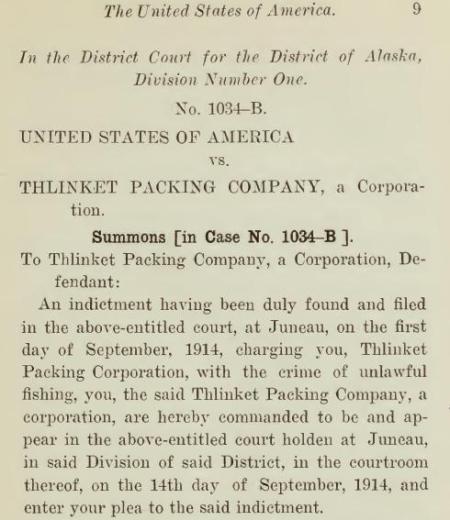
TP Co Unlawful Fishing Summons

TP Co Unlawful Fishing Count 1

“During the season of 1926, four salmon traps were seized in south-eastern Alaska for illegal fishing during the weekly closed period. … A trap of P. E. Harris & Co., near Hawk Inlet, and one of the Alaska Pacific Fisheries, near Funter Bay. were seized on July 11. On trial the watchmen were found not guilty, but the traps were still in the custody of the United States marshal at the end of the season.” Bureau of Fisheries report, 1927.

I came across a set of 1948 aerial photos of Funter Bay while looking for another map (from http://earthexplorer.usgs.gov/). The original is linked in my post on Funter Bay maps, below are a few excerpts showing fish traps around the bay in 1948.

A trap outside the south shore of Funter Bay (possibly pound net trap #7) Note the wake of the boat, possibly a cannery tender, leaving the trap:
trap aerial 1

C.J Alexander’s pound net style trap at Lizard Head in 1948, looking a little worse for wear. The trap has the same approximate layout as shown in the 1911 diagram (inset), but the line of pilings for the lead going to shore has vanished.
alexander 1948

A number of traps seem to have been abandoned by the Thlinket Packing Co at this point. There is no sign of Trap #6 at the Kittens in the 1948 aerials. Several of the floating-style traps are also sitting on the beach or drawn up in shallow coves where they would go dry at low tide. More traps are visible operating and in place along the shore between Funter and Hawk Inlet, but I’m not sure which companies were operating these.

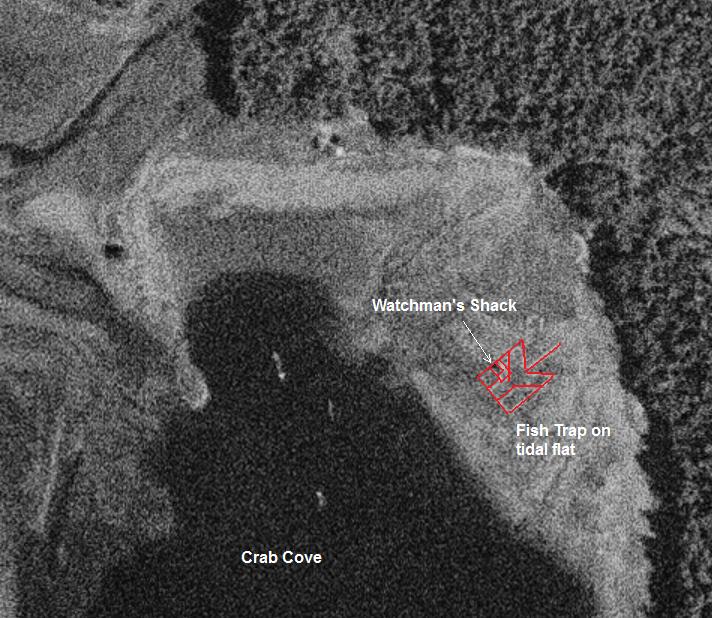
Fish trap on the beach in Crab Cove:
trap1

Crab Cove trap logs outlined to be more visible:
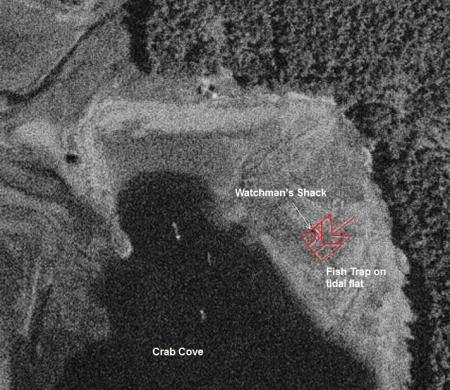
trap2

You can see the shadow of the watchman’s shack, this might have been the shack that became the entry of our house, as mentioned in an earlier post. Our neighbor Harvey Smith also had a few sheds that were the right size to be trap watchman’s shacks, I might detail those later on.

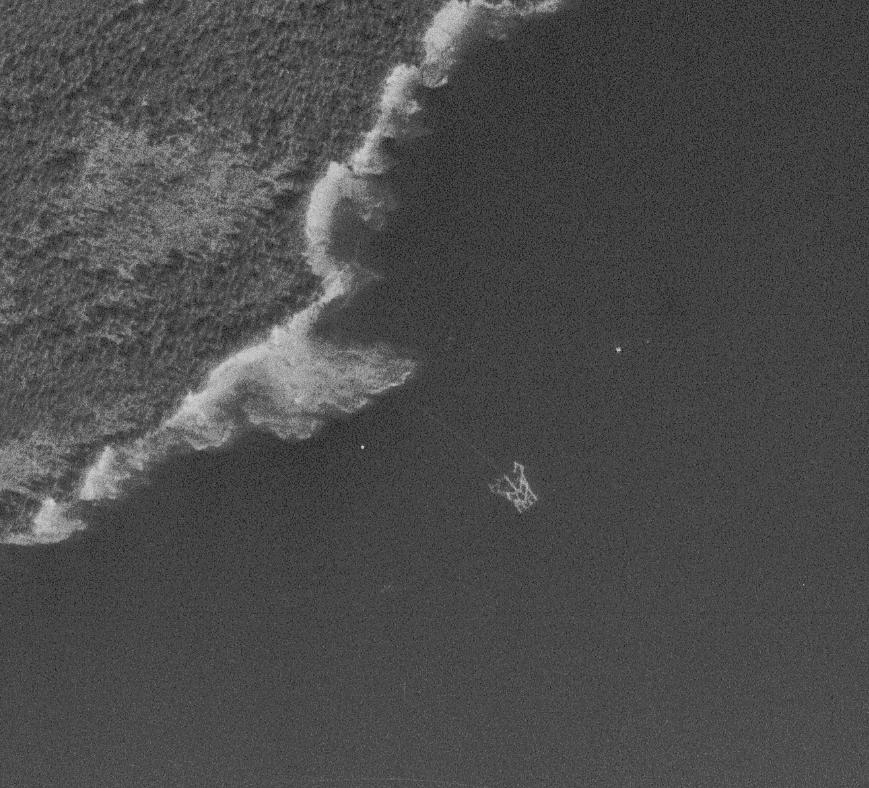
Floating trap in place along the Admiralty Island shore south of Funter Bay, with buoyed lead net going to shore:
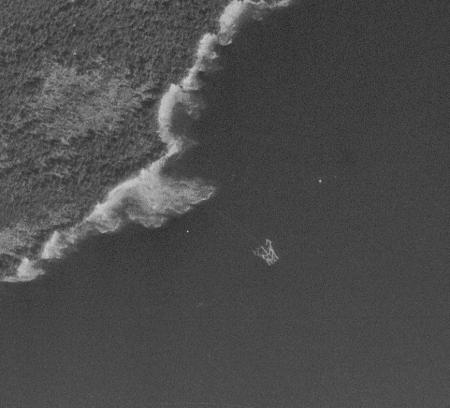
floating trap 3

Down at the other end of the bay, we can see a jumble of pickup sticks on the estuary between Ottesen and Dano creeks, near the sandy beach. A few hints of the outline of a trap are visible, this might be one or more damaged or disintegrating traps:
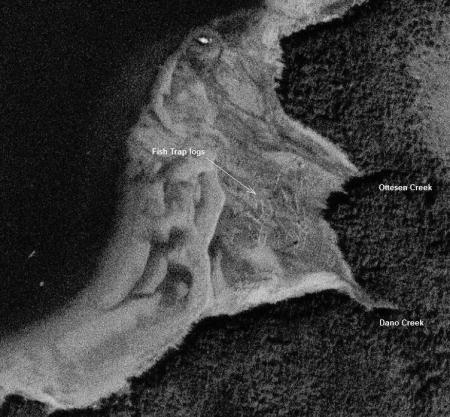
trap aerial 2

Here is the cannery site and Scow Bay with the scows visible on slipways:
cannery aerial 1948

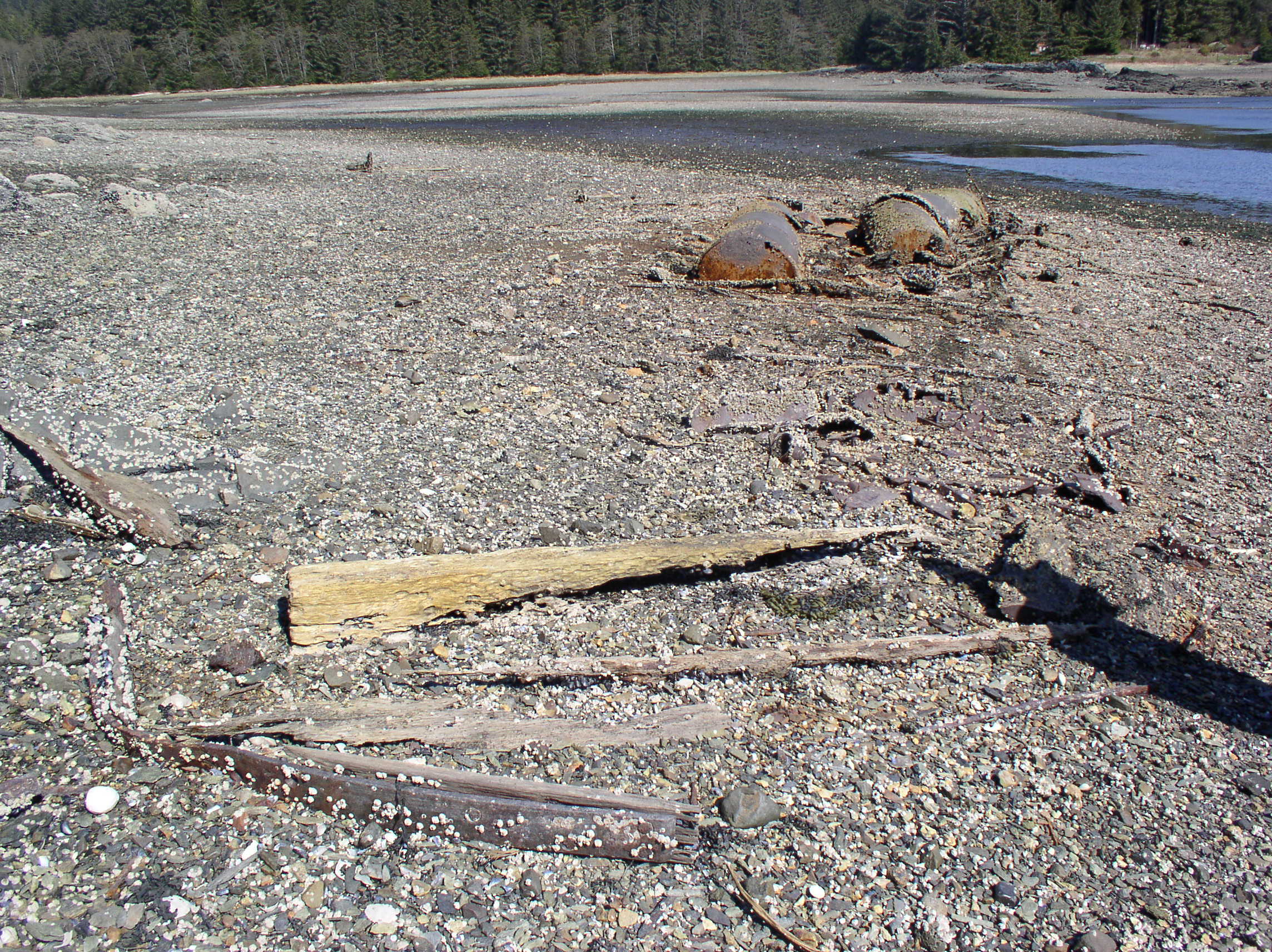
And finally, back to the present day: here’s a trap log washed up at the sandy beach, probably from one of the traps seen above. You can see various bolts and hardware that connected the trap logs together:
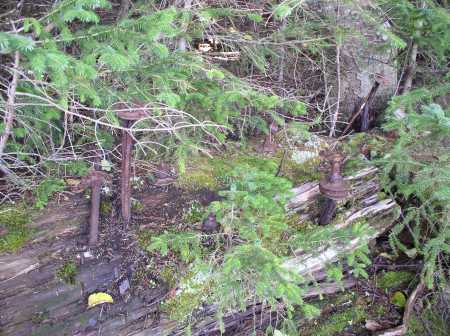
OLYMPUS DIGITAL CAMERA