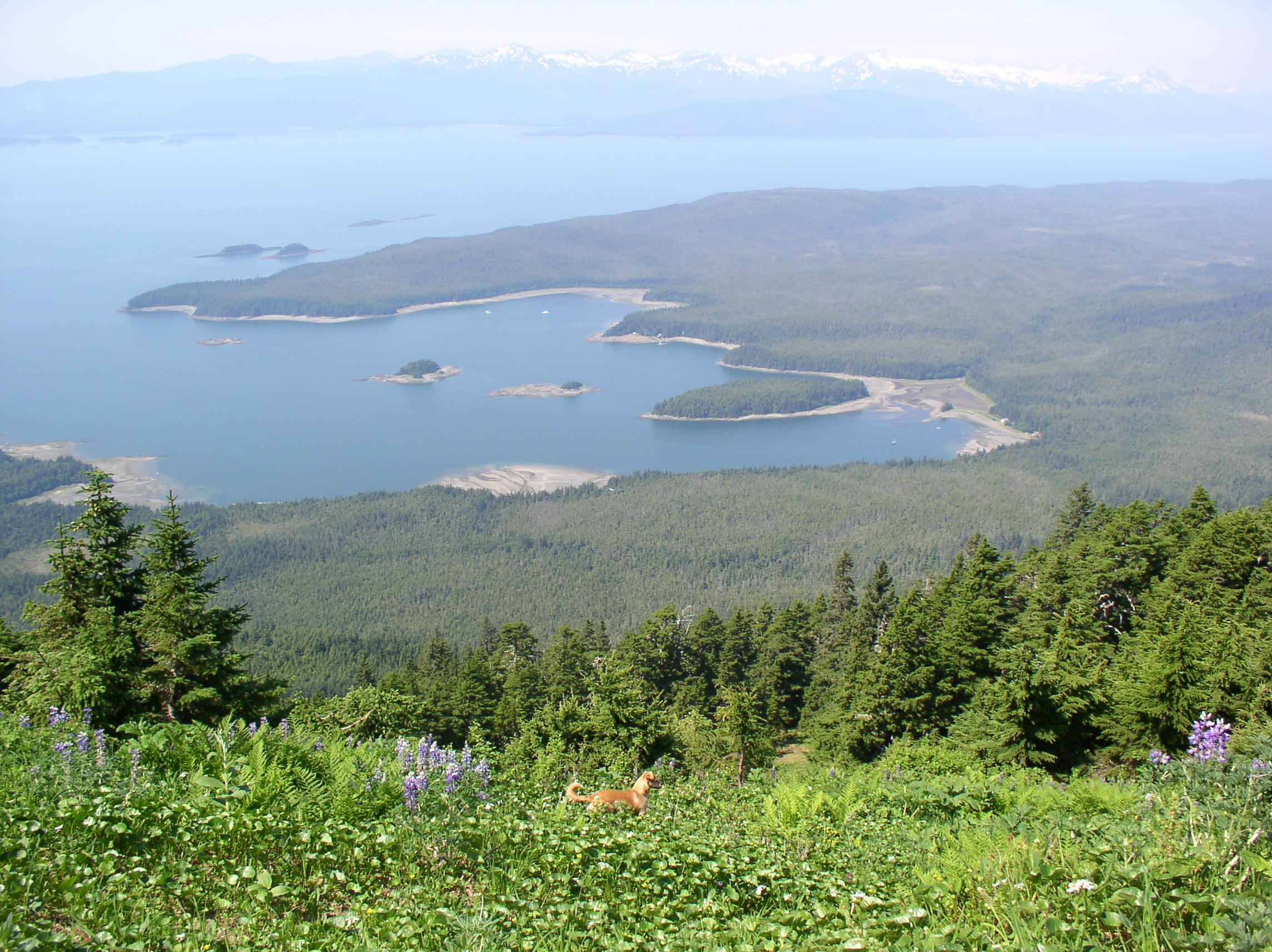
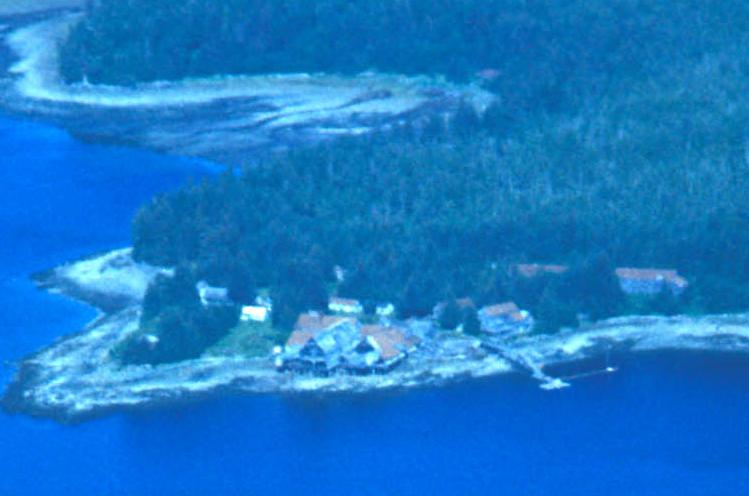
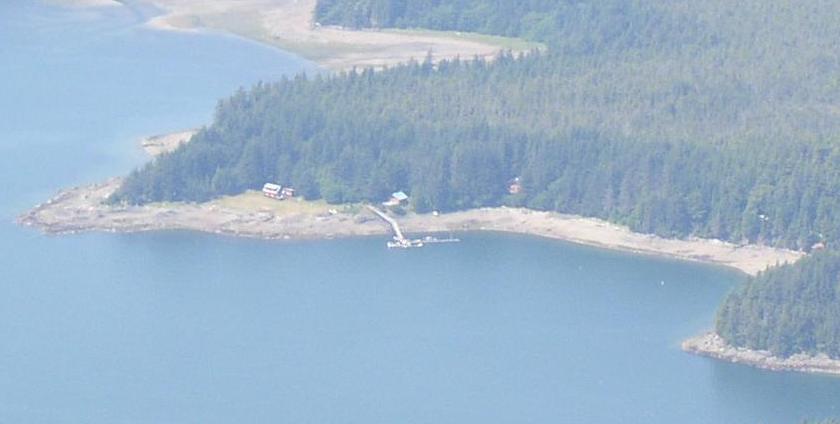
Funter Bay History: Weather

May 8, 2014

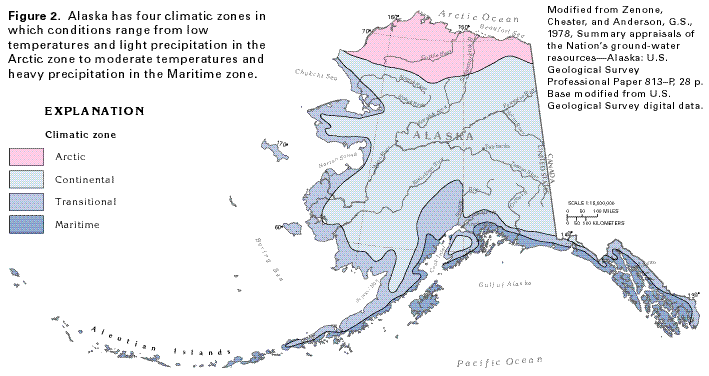
Many people from outside Alaska inquire about the cold and snow, which usually leads into a discussion of Southeast Alaska’s climate (the rainy season, and the lots-of-rain season). The temperature rarely falls below 0°F in the winter, due to warm ocean currents which reach Southeast Alaska from the Pacific Ocean. In general the climate is similar to Seattle (although wetter and about 10° cooler on average). Between 1980 and 1996 there were on average 214 days a year with precipitation. Rainfall averages about 60″ per year (compared to 37″ for Seattle and 45″ for Vancouver BC). However, it’s not as wet as other parts of Alaska like Whittier (156″), Yakutat (155″) or Ketchikan (141″).

OLYMPUS DIGITAL CAMERA

N002Graphic from http://pubs.usgs.gov/ha/ha730/ch_n/N-AKtext1.html

Average air temperatures are in the 60s in summer and 30s in the winter, with extreme highs in the 80s and extreme lows in the negative single digits.

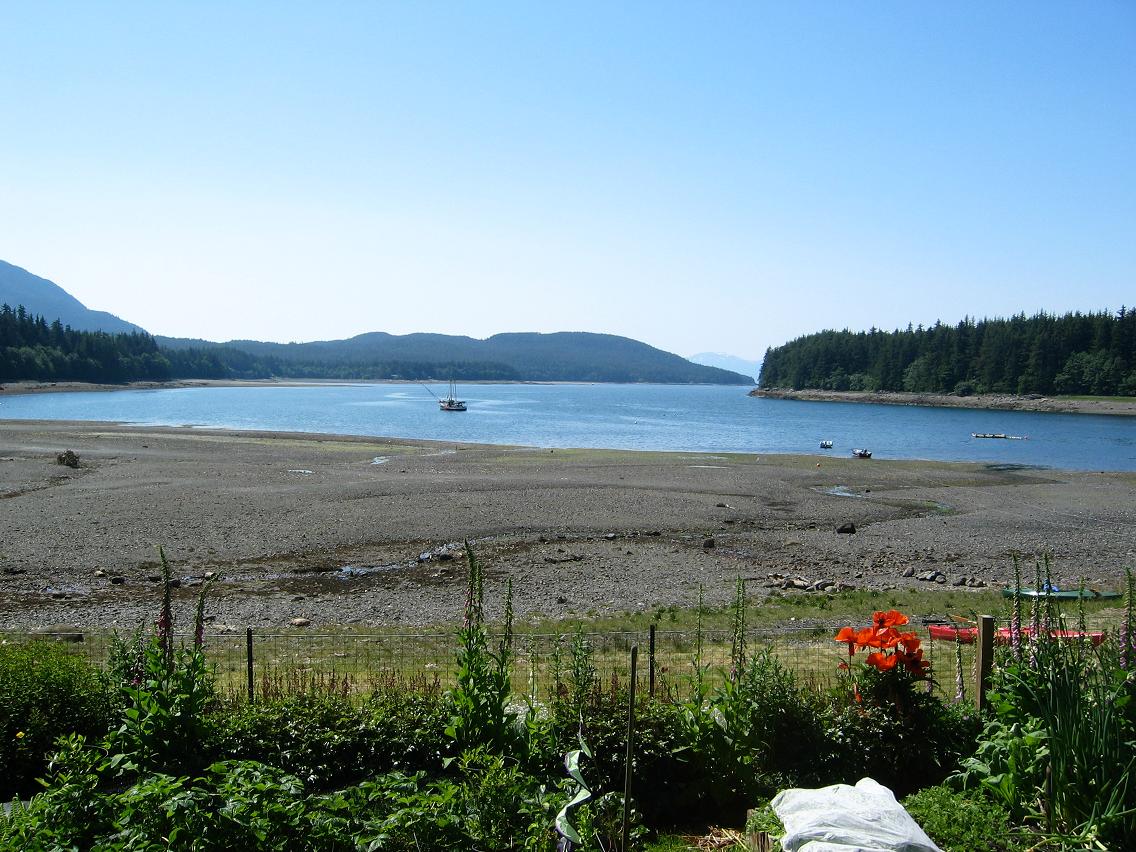
The water temperature at Funter varies between about 37°F in the winter and 50°F in the summer. Warm enough for summer swimming, especially near the shore. Dark rocks and gravel warm up in the sun at low tide, then help to warm the shallows as the tide comes in.

weather5

When it does snow, the accumulation can initially be deep (15″ in a 24hr period and 34″ total depth are some of the records). The snow does not tend to last long, instead melting into slush or getting rained on, so total buildup does not get as impressive as other parts of Alaska such as Prince William Sound and Southcentral Alaska.

weather1OLYMPUS DIGITAL CAMERA

Wind is the major hazard of winter weather. While many sites on the shore are protected from the worst wind by their location and nearby trees, the center of the bay can experience powerful gusts coming in from Lynn Canal and Icy Strait, as well as North wind out of the pass behind the bay. Weather Data from Point Retreat lighthouse shows several storms with 50-60mph winds in Lynn Canal in recent years.

Winds coming in from the channel can sometimes whip up large williwaws or small waterspouts in the bay:
OLYMPUS DIGITAL CAMERA

Unsuspecting boats have been driven ashore on occasion after anchoring in the middle of the bay (a location shown as a good anchorage on some charts). The public docks are usually better options for secure moorage if a storm is forecast.

Weather data from 1961-1996 for Funter Bay, with various summary tables and calculations, can be found here.

Another collection of weather data for Funter Bay (from 1980 to 1996) is available here.

Weather reporting from Funter Bay was part of the National Weather Service’s Cooperative Observers program. This provided vital information for pilots, fishermen, and other travelers, as well as supporting weather forecasting on a wider regional scale. Funter residents Jim and Blanche Doyle operated the Funter station and called in regular weather observations or “obs” to the local NWS office. An index from 1980 showing some of these stations (including Funter Bay) is below:

weather 1980

In 1985 the Doyles moved across the bay, the weather station was placed on the inactive list in June, then relocated and reactivated in August (per NOAA / National Cooperative Observer Newsletter).

A newspaper column on Alaska weather noted that Funter Bay had the statewide high of 60°F on November 25, 1987 (vs 45° at Juneau and a statewide low of -39° at Umiat that same day).

OLYMPUS DIGITAL CAMERA

Also of importance to residents and travelers are the tides, which can change the water level 20 vertical feet in a 6-hour period. Tides are a predictable phenomenon based on the gravitation pull of the sun and moon, so tide tables are calculated and published well in advance. However, currents and geography can cause some local variations. For this reason, the government has established tide gauges at various places around Alaska in different years, including at Funter Bay. These would show the offset in minimum and maximum tidal fluctuations. Government documents refer to self-registering tide gauges installed at Funter Bay in 1894, in 1903, 1923, and 1960. NOAA’s tide data and upcoming tide tables for Funter Bay can be found here.

tide


Funter Bay History – Health & Medicine

April 23, 2014

Medical care in rural Alaska has always been problematic. The distance from doctors and hospitals can be inconvenient at the best of times, and life-threatening at other times. Throughout the years there have been a number of traveling doctors, dentists, and other medical professionals who visited rural areas of Alaska. Some of these have been mentioned before (such as the floating dental clinic Anna Helen which sank near Funter in 1928).

While immediate first aid frequently involved a jug of whiskey, more serious injuries usually required a trip to Juneau. The following are some accidents and medical incidents noted in historic newspapers (mainly the Daily Alaska Dispatch of Juneau):

-Undated: Two prospectors near Point Retreat were reportedly thawing frozen dynamite in their cabin, when it exploded. The cabin was destroyed and one man was seriously injured. The other set out for help, but the weather was too bad for his boat, so he walked six hours to Funter Bay along the beach. The miners at Funter dressed the injured man’s wounds and kept him warm until a steamer could bring him to the hospital four days later. (source).

-May 5, 1902: A fisherman named Brookler from the Funter Bay cannery had a pistol ball wound in his hand dressed, the shot was reported to be accidental.

-April 16, 1906: Miner J.W. Fox was in the hospital suffering from inflammatory rheumatism.

-April 11, 1908: “A Chinaman” from Funter Bay “had been fooling with a gun” and shot himself through the hand.

(Some other accidental gunshot wounds are mentioned in another post).

-June 24, 1908: An “Indian lad” broke his arm at the elbow and severe complications set in. James T. Barron brought him to Juneau on the vessel Phillip P Kelly for medical care.

-Sept 26, 1908. Funter Bay prospector Oliver Farnum died at the Sister’s hospital in Juneau, about sixty years of age. He had been “ailing for about six months”.

-June 28, 1909: “While working on one of the dams at Funter Bay”, Joseph Rose slipped and fell, fracturing two ribs. He was brought to the Simpson hospital in Juneau on the Georgia.

-December 21, 1909: Soldier J. T. Karr from Fort Seward (Haines) was injured while hunting at Funter Bay and was brought to St. Ann’s Hospital. His name is also given as John Carr in another article. The unfortunate fellow tripped on a rock and managed to fall neck-first onto an axe, which had frozen into the ground edge-upwards. The accident would have been fatal if not for a trained nurse who happened to be at Funter Bay and was able to dress and stitch the wound.

-October 31, 1910: Mr J. Caper from Hawk Inlet had walked to Funter over the mountain to pick up the mail. While returning to Hawk Inlet in the dark, he fell over a steep embankment and broke his ankle. Caper dragged himself the rest of the way over the ground, arriving four hours late, and was taken to St. Ann’s hospital on the mailboat Rustler.

-January 26, 1912: J. Olson was taken to the hospital from Funter Bay with an acute case of rheumatism.

-July 20, 1915. Funter bay prospector W. C. Miller, age 65, came down with pneumonia and took the mail boat Georgia to Juneau. He was placed in the hospital at once, but died the next day.

-Feb 27, 1917. Sam Larson had a severe attack of pneumonia and was brought to the General Hospital in Juneau. The same day, Dan Barlow of Funter Bay was released from the hospital after undergoing eye treatment.

-June 23, 1917: Sam Olson was injured in a fall at Funter Bay and taken to St. Ann hospital.

-June 26, 1917: Harry Cratty suffered a ruptured appendix at Funter Bay and was operated upon by Dr. Dawes at the General hospital.

-June 30, 1917: Olaf Johnson from Funter Bay was also operated on by Dr. Dawes

-August 1, 1917: G.C. Coffin, an employee of the Funter Bay cannery, received eye treatment at the General Hospital

-Feb 26, 1918. Captain Woods of the cannery tender Anna Barron fell 20ft down a ladder and then into the water, he was taken to St. Ann’s hospital and reported in good condition with no broken bones.

-August 17, 1919: Miss B. Blaire, a trained nurse, was taken to the hospital from Funter Bay where she had become dangerously ill with “brain fever”.

Medical care fell to a disappointing low during the WWII internment of Aleut evacuees at Funter. Government logs report that the accepted treatment for a fatal strain of flu was to “sweat it out”.

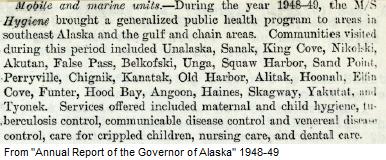
After WWII, the Teritorial Department of Health operated several floating clinics, including the MS Hygiene. This boat, sometimes known as the “shot ship”, provided vaccinations, checkups, x-rays, and other services to rural families all along the Alaskan coast (detailed article here).

hygiene

-October 1, 1956: Rod Darnell of Sitka was bear hunting near Funter Bay and failed to kill his prey with the first shot. The wounded bear charged him and gave him severe lacerations to the head and neck. Darnell was treated on-site by a doctor flown out from Juneau, then brought to St. Ann’s hospital for further treatment. A story in Alaska Bear Tales relates another mauled hunter being flown out of Funter Bay in 1957.

-July 5, 1957: Ione Puustinen of Funter Bay was admitted to the Sitka Community Hospital

-June 30th 1987: An article titled “State Repeats PSP Warnings” told of an out-of-state visitor who became ill after eating mussels at Funter Bay. Officials talked of the danger of paralytic shellfish poisoning, or PSP. Filter feeders such as mussels accumulate toxins from algae (the so called “Red Tide“) in their bodies. The victim was flown to Juneau for treatment and recovered. For many years there was a large skull and crossbones painted on one of the Funter Bay floats, with the warning “Don’t eat Mussels”.

The Alaskan bush can be a dangerous place. While most of these incidents had happy endings, they serve as a reminder to watch your step, watch the critters, and be careful what you eat (and don’t thaw your dynamite on the stove!)


Funter Bay History: Ships Part IV

April 16, 2014

A 1907 article noted that the steamship Humboldt traveled from Funter Bay to Seattle in September, bringing 85 passengers and 7,875 cases of salmon (this included some cases from Petersburg as well as Funter).

humboldt

An article in the San Francisco Call of November 18th, 1911, described the Bark J.D. Peters arriving from Funter Bay, where it served as a cannery tender. Unlike the Thlinket Packing Co’s General Fairchild and other old ships converted to barges, the Peters seems to have remained a sailing vessel. It is shown in a 1911 photo with furled sails. Another photo (which also appeared in the Seattle Daily Times dated 1911) shows the ships with sails raised.

Peters
The merchant vessel registry describes the Peters as a 182ft sailing bark built in 1875 in Bath, Maine, and operating out of Port Townsend, Washington. It had a crew of 15 and a gross tonnage of 1,085. Registry number was 75809, and call numbers were J.R.L.F. It was owned by the Northwestern Fisheries Co during that time, and probably transported fish from multiple canneries in Alaska.

Peters2

In 1912 it was listed as a schooner, vs a bark. A bark has 3+ masts, all with square sails except the aft-most, and were a common type of slow cargo ships with smaller crews. A schooner has 2+ masts with fore-and-aft sails, even simpler to operate and requiring fewer crew than a bark, but does not necessarily perform as well. The Peters remained on the registry until at least 1928, when it had a crew of 5 and was hauling freight for the Booth Fisheries Co.

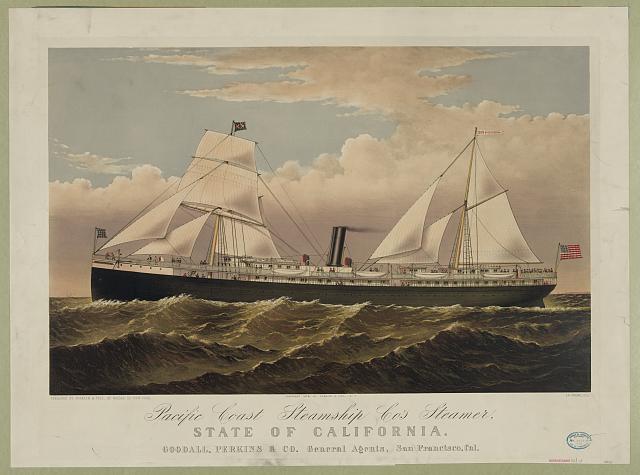
Also in 1911, the sailing steamship State of California went aground for four hours at Funter Bay, probably due to a misreading of the tide tables.

state of california
Image courtesy of the Library of Congress.

Daily Colonialist - City of California Aground at Funters Bay

The State of California sank in August 1913 in Gambier Bay, on Southern Admiralty Island, after striking an uncharted rock. More information on the ship is here.

Two photos show a hull on the beach at Funter in 1929 and 1935. The vessel is unidentified, but may be the fishing vessel Pilot. A 1950’s article mentions a “rotting hulk in Funter Bay” in this area, with the registry number 150650. This number was assigned to the Pilot, listed as abandoned in 1925. It was a 50ft long fishing boat from Juneau with a 20hp gas engine and crew of 5, built in Seattle in 1893. It had possibly been a steam tugboat previously.

1935 wreck

1935 image of abandoned vessel at Funter Bay

1929 Wreck

1929 aerial of abandoned vessel at Funter Bay

More shipping and vessel information will probably show up in a future post as I dig up more on the subject!


Funter Bay History: Electricity

March 25, 2014

Electric power began replacing direct mechanical drives in Alaskan industry in the early 1900s. The first adopters were larger companies who could afford the investment in new equipment, but smaller operations soon learned the efficiency and flexibility of electric motors.

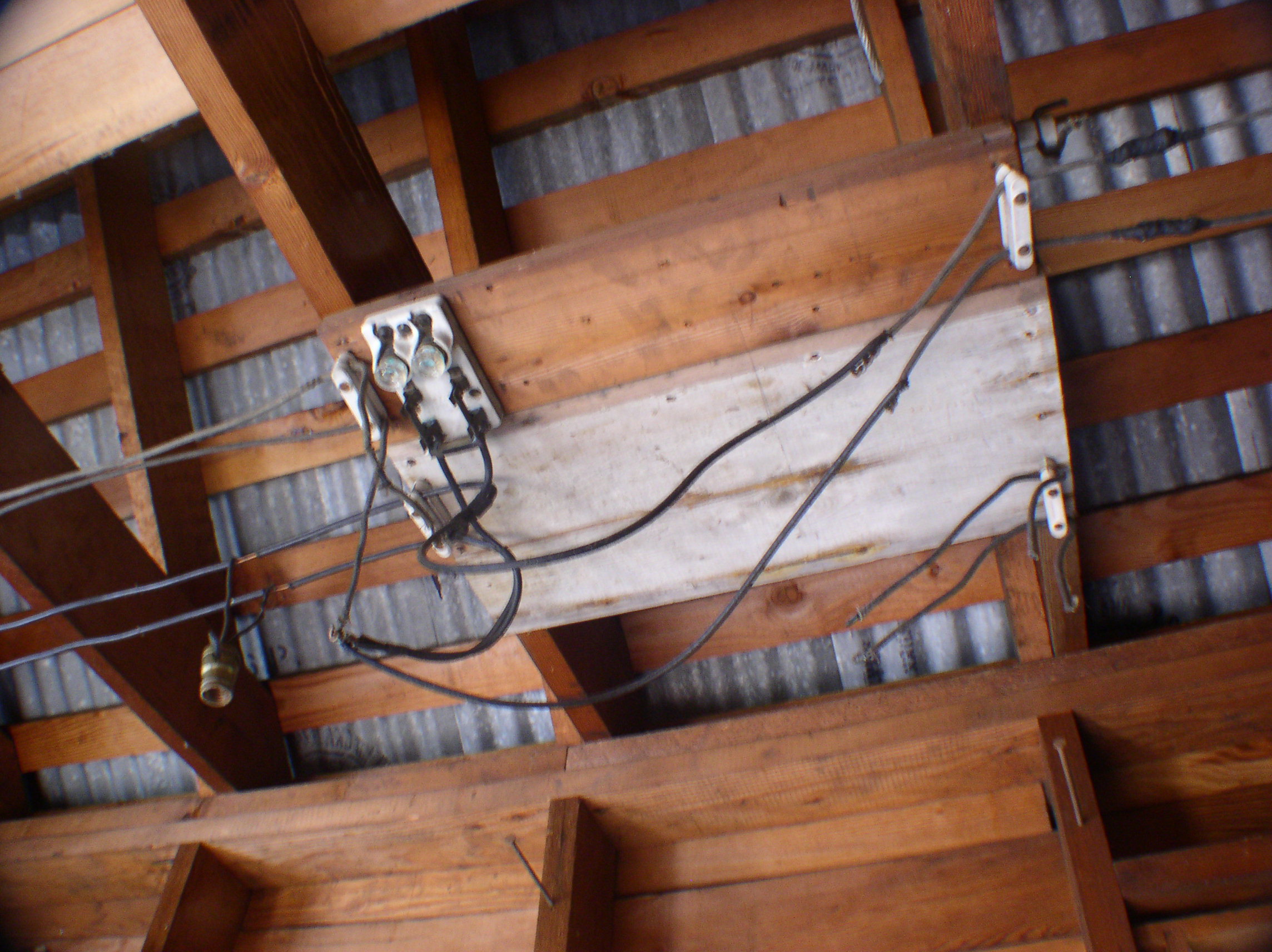
Some 1920s-era knob and tube wiring for lights at the cannery:
OLYMPUS DIGITAL CAMERA

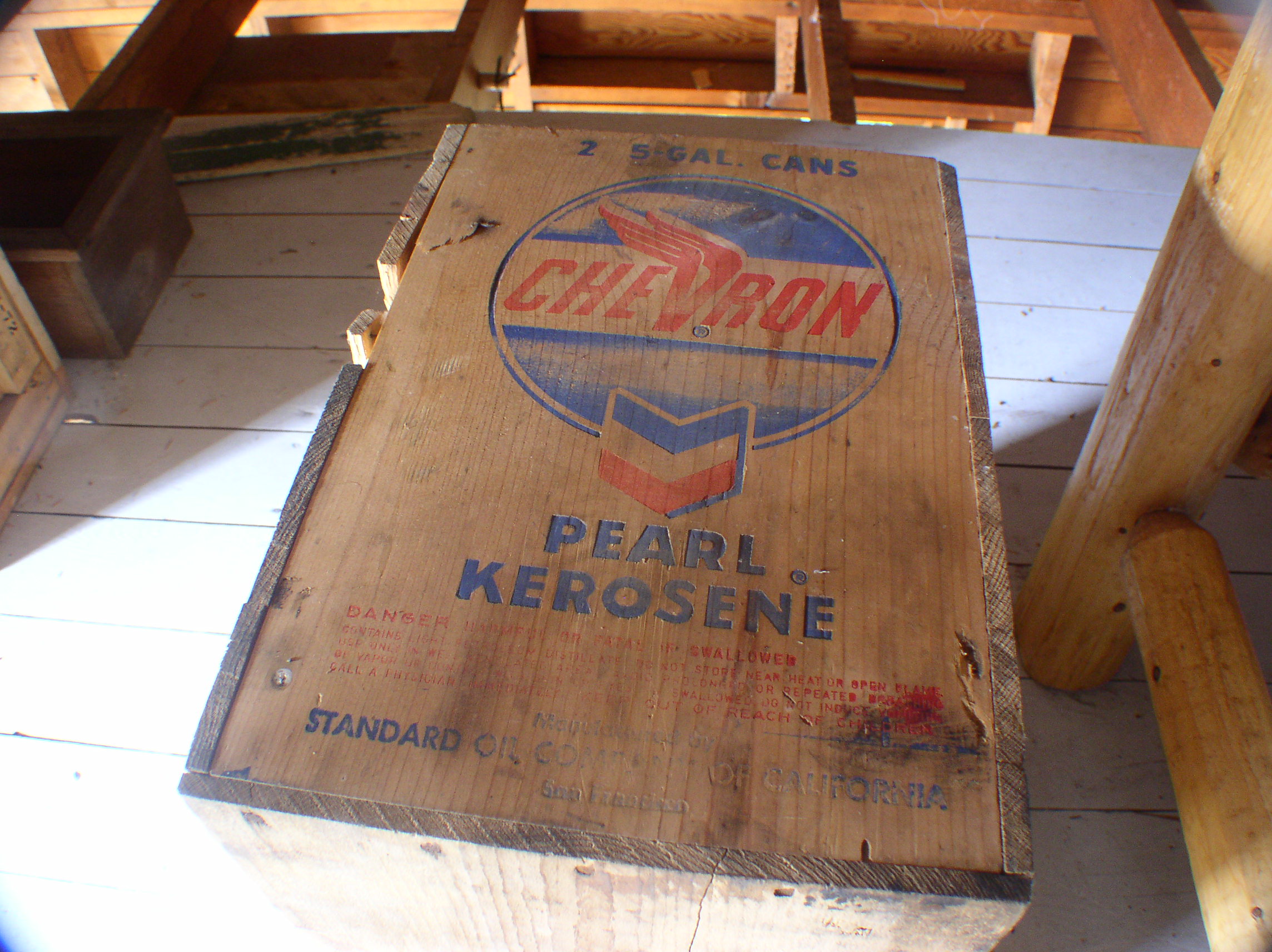
Despite the growing popularity of electricity, electric lights were slow to gain a foothold. Kerosene lamps continued to be popular in many houses and cabins well into the 1980s. Despite being a fire hazard, kerosene was relatively cheap and convenient to use.

OLYMPUS DIGITAL CAMERA

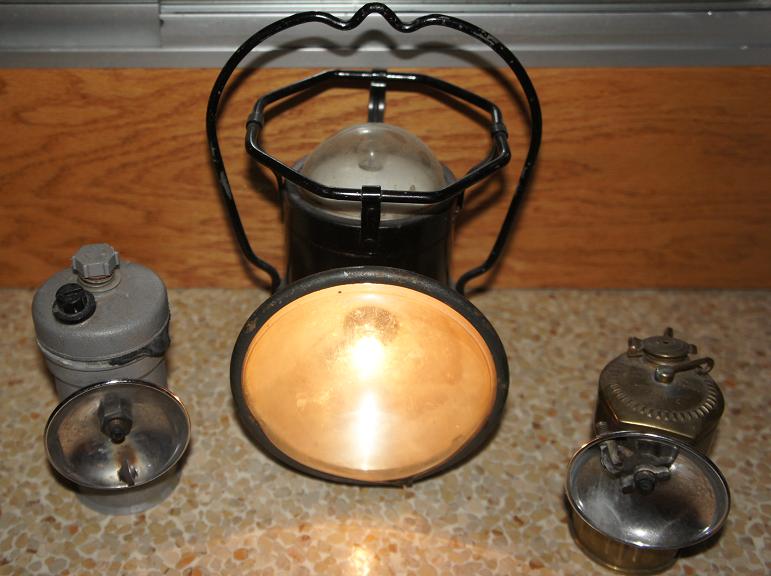
Portable lighting moved slowly from lanterns to battery flashlights. In local mines, carbide lamps remained popular into the 1970s. A mixture of portable lights are seen below, including an older brass carbide lamp, 1930s electric (battery) railway lantern found at Funter, and a 1970s carbide lamp:
SONY DSC

Part of a larger “Radio Battery” ca 1950s:
SONY DSC
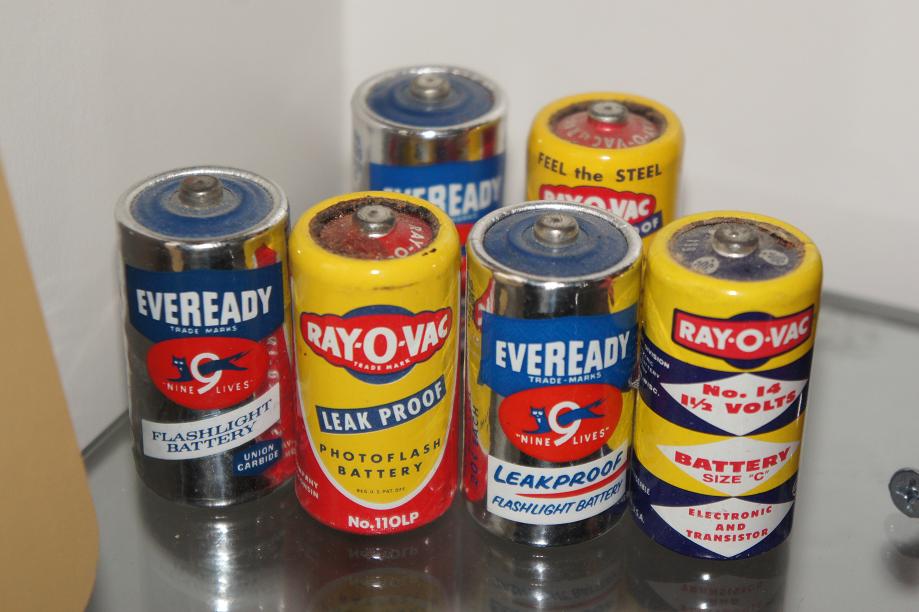
C-cell batteries, probably from the 1960s:
SONY DSC

Early electric generators were usually small and ran only part of the day for equipment use. Pelton wheels were popular for locations with reliable streams, as mentioned in my post on water & hydropower. Generators or dynamos could be added to existing water wheels, or to existing steam or internal combustion power systems, or tacked onto small portable engines from tractors or other machinery. Several large-scale hydroelectric projects were envisioned at different times in the past, but never built.

There are a number of old “Oil” engines (usually diesel or semi-diesel) around Funter Bay, and a few gasoline engines. Some of these started out supplying mechanical power, and were later converted to generators.  The smaller units had a tendency to disappear from their original locations, as they could be shoehorned into a fishing boat with some effort. As such, there are not as many left in-context, and while you can find them in use as lawn decor, or lying on the beach, or half-buried in the woods, it’s less clear where they originally came from.

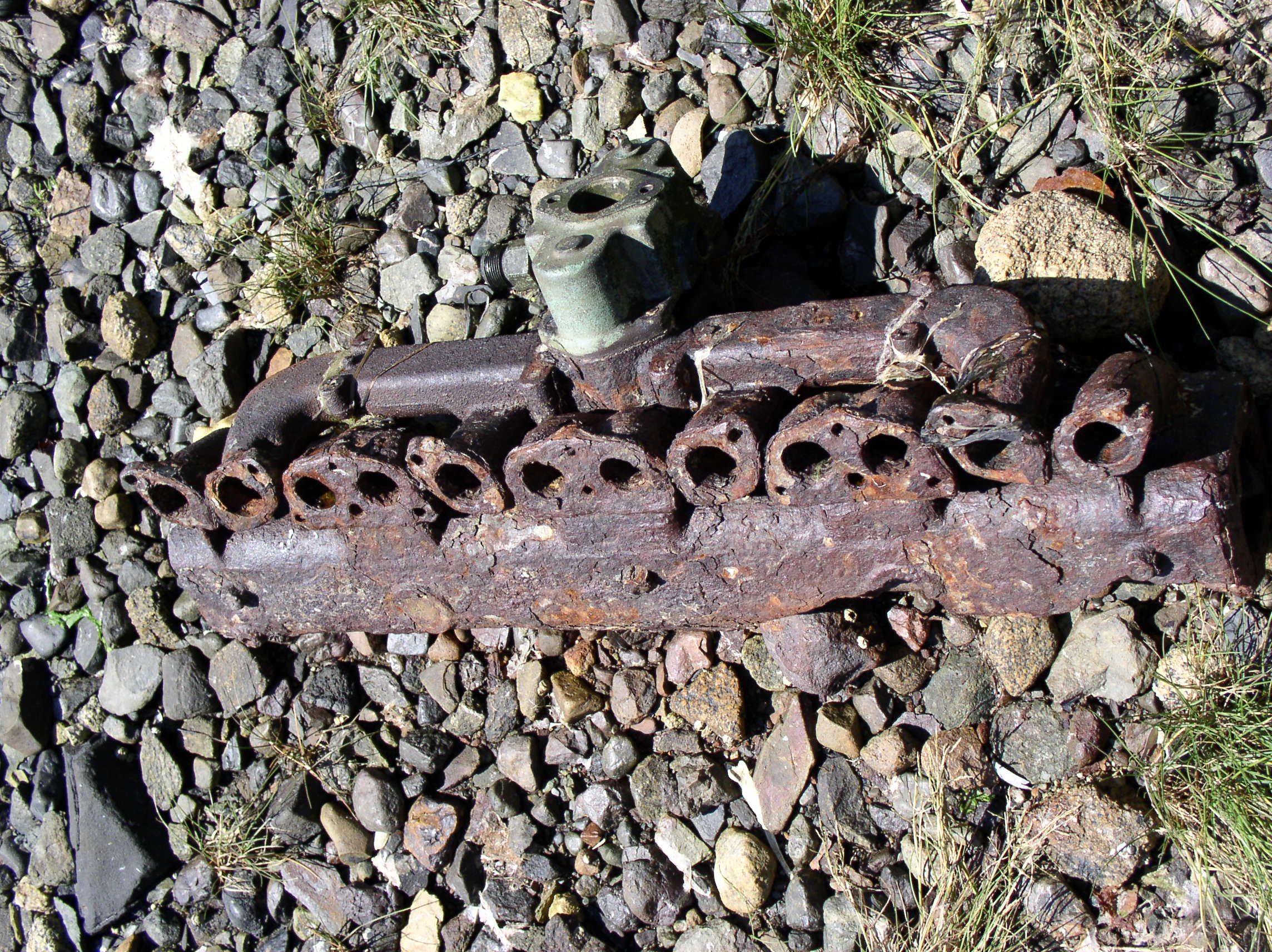
Part of an engine that wandered around the beach in front of our house, occasionally being used as a convenient “big heavy thing” to anchor boats or logs to:
OLYMPUS DIGITAL CAMERA

Going in the other direction, diesel boat engines with alternators attached were popular as land-based generators when I was younger, and could be had cheaply from vessels upgrading their equipment. These required well-insulated sheds set away from the house to keep the noise down, but not so far as to incur line loss.

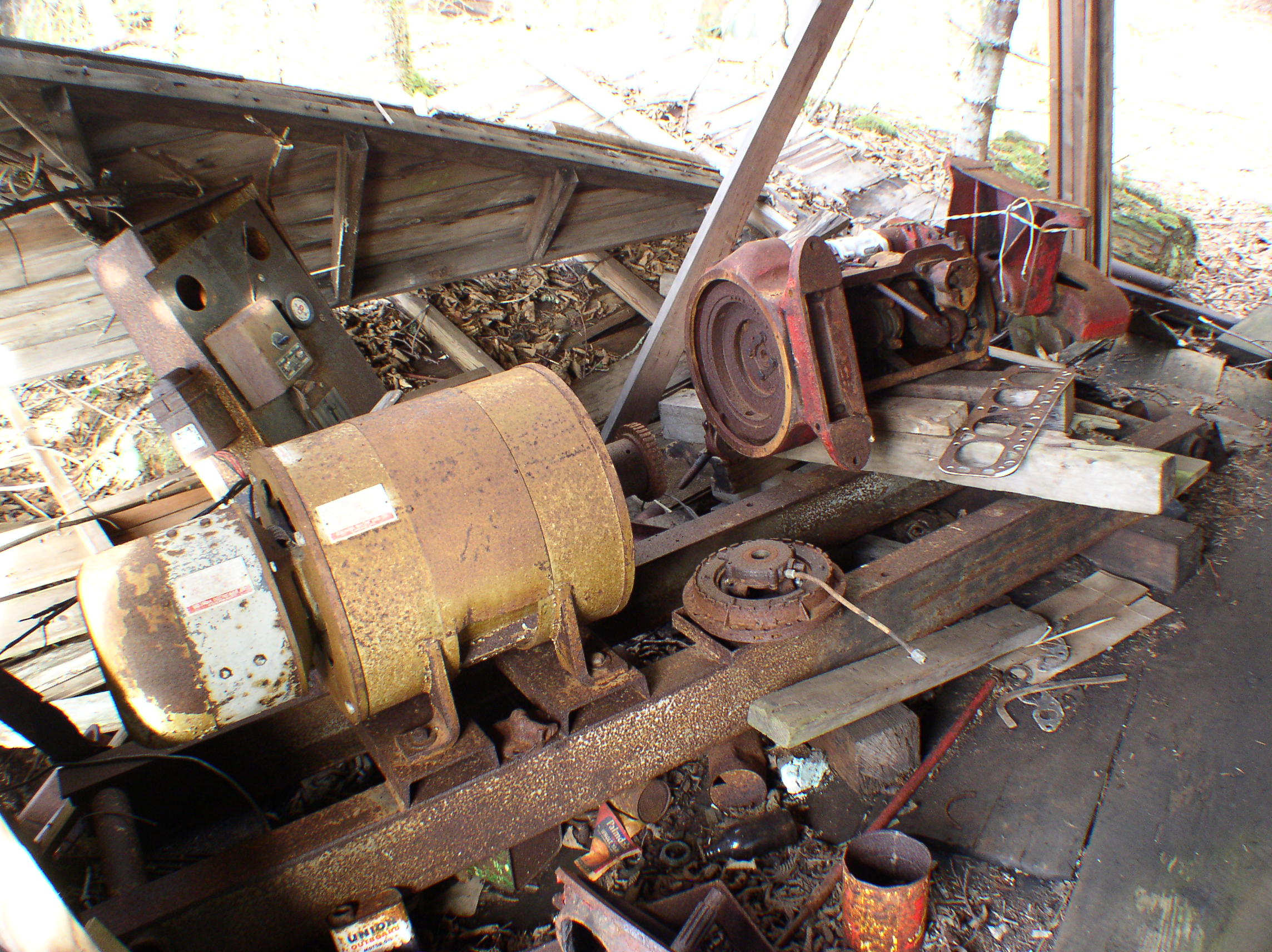
A generator from approximately the 1950s:
OLYMPUS DIGITAL CAMERA

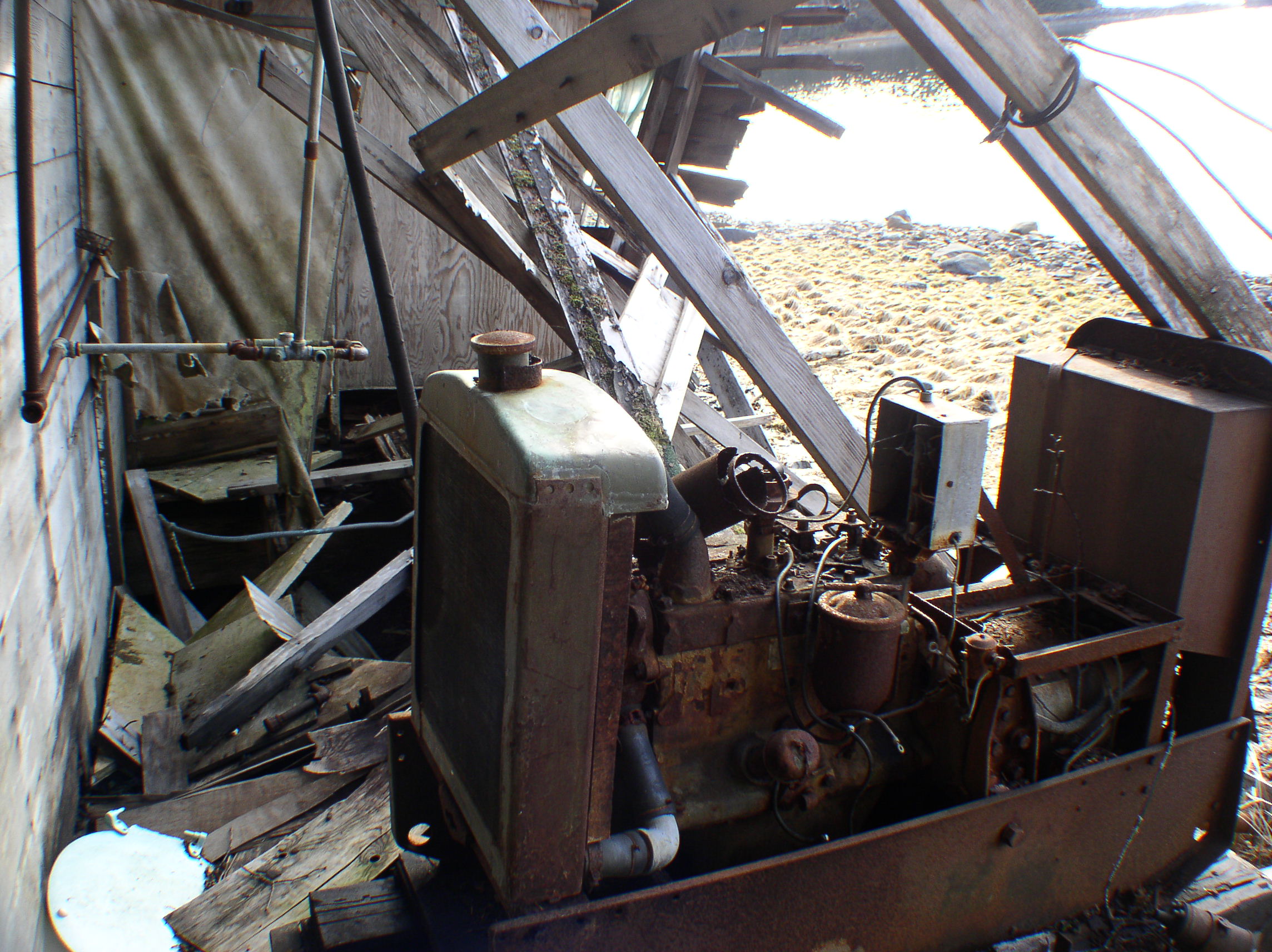
I believe this is part of an International Harvester tractor, retrofitted onto a skid base with a rather massive alternator tacked onto it:

OLYMPUS DIGITAL CAMERA

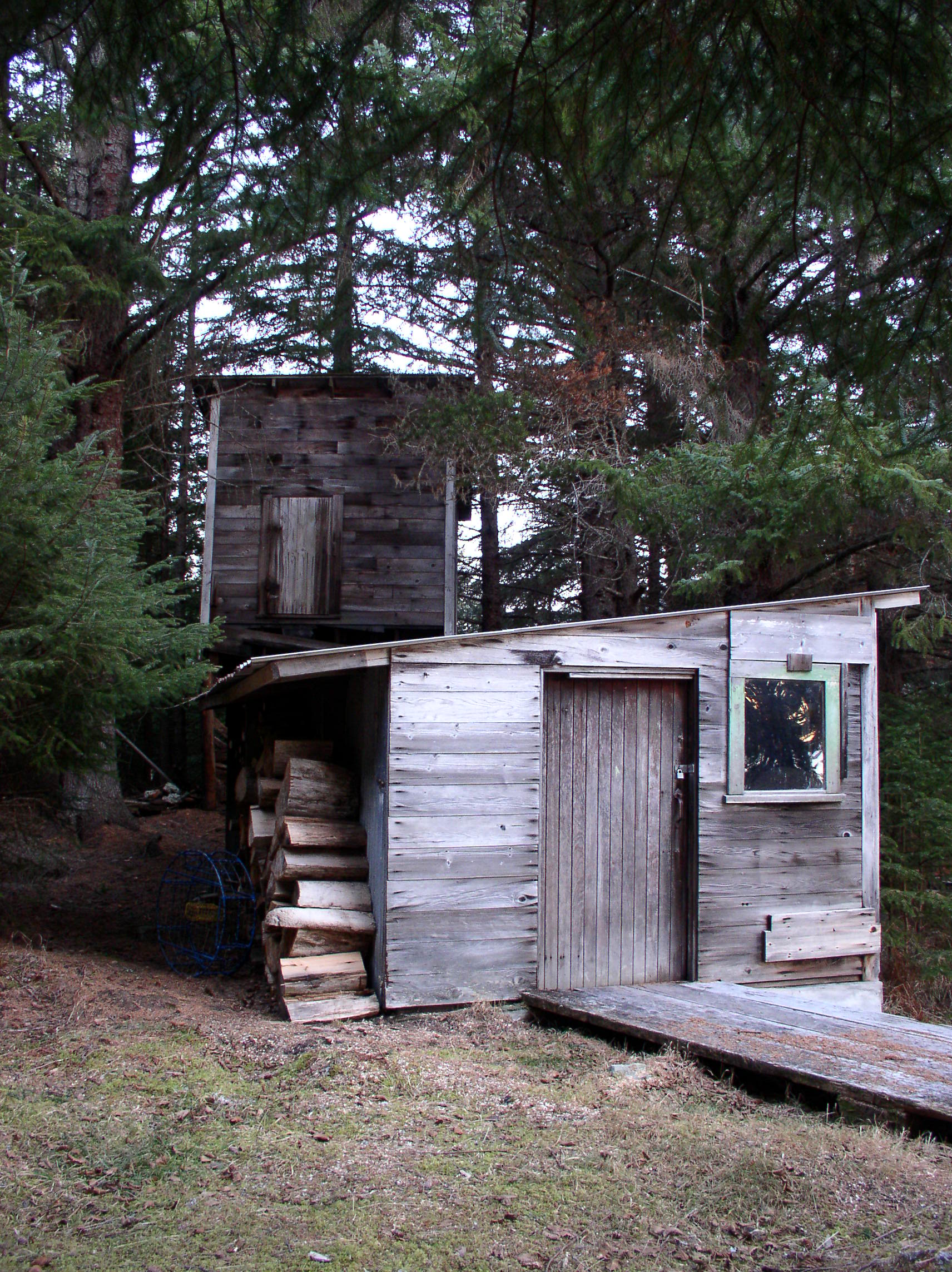
The 1940s-era generator shed at the cannery (with water tower in the background). This was previously the “oil house”. The generator supplied the superintendent’s and caretakers’ houses at the West end of the property, and later supplied some of the boardwalk lighting and lights in other buildings:
OLYMPUS DIGITAL CAMERA

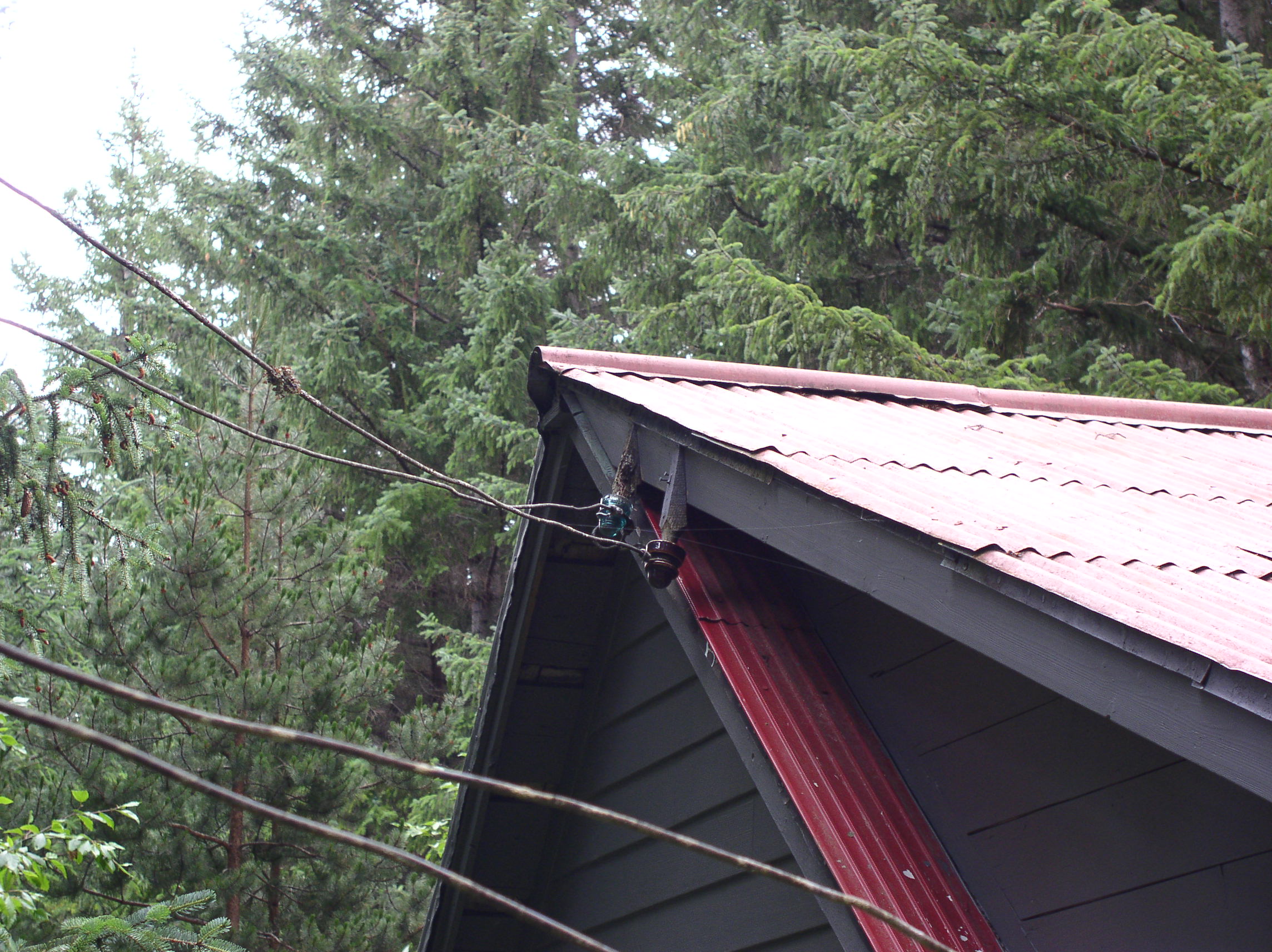
Exterior insulators for electrical wires at the cannery. These were a mixture of ceramic and glass.
OLYMPUS DIGITAL CAMERA

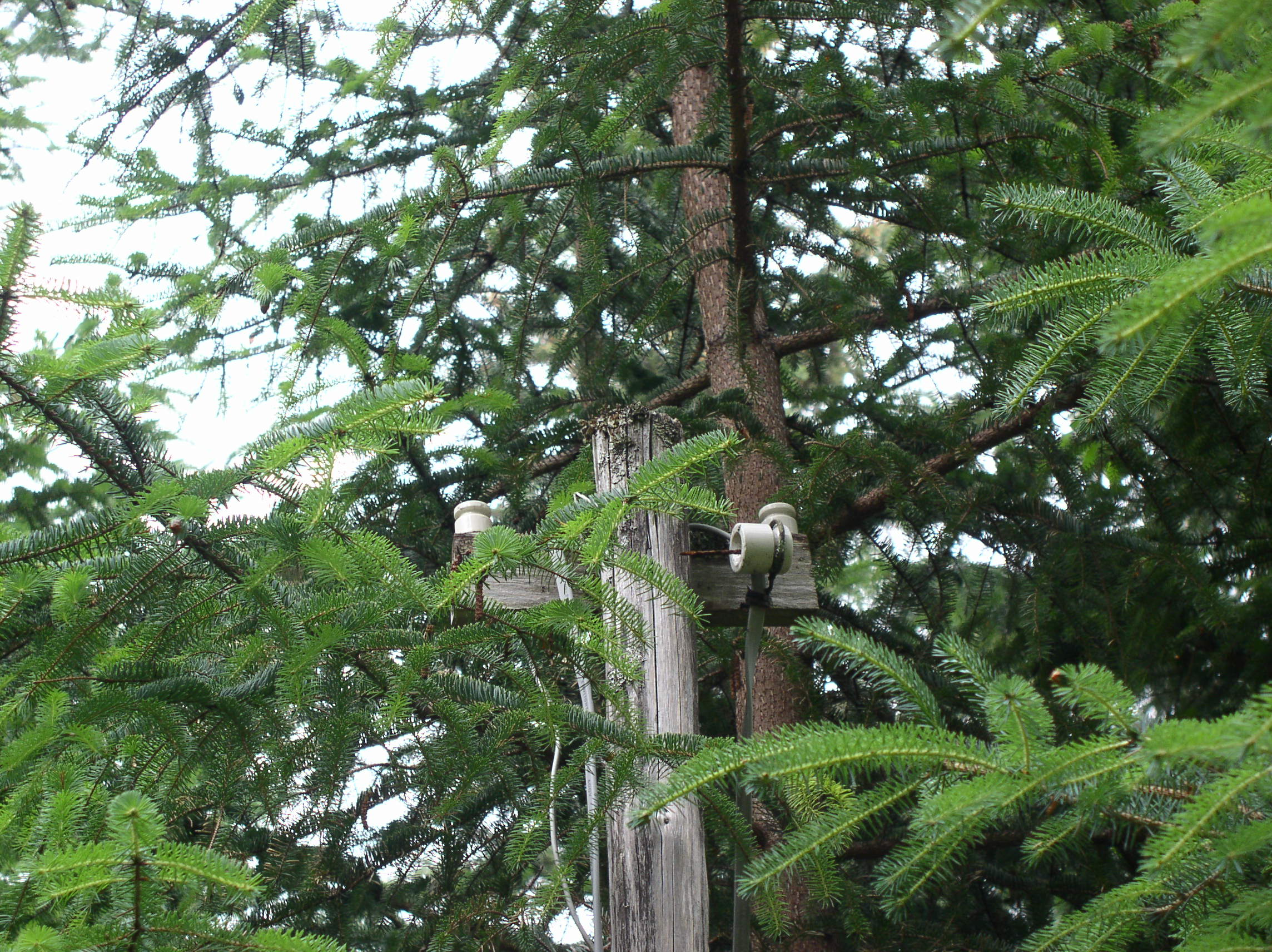
A utility pole at the cannery, with some smaller ceramic insulators. Most of these poles were simply untreated logs stuck in the ground, and many are now getting crowded out by trees.

OLYMPUS DIGITAL CAMERA

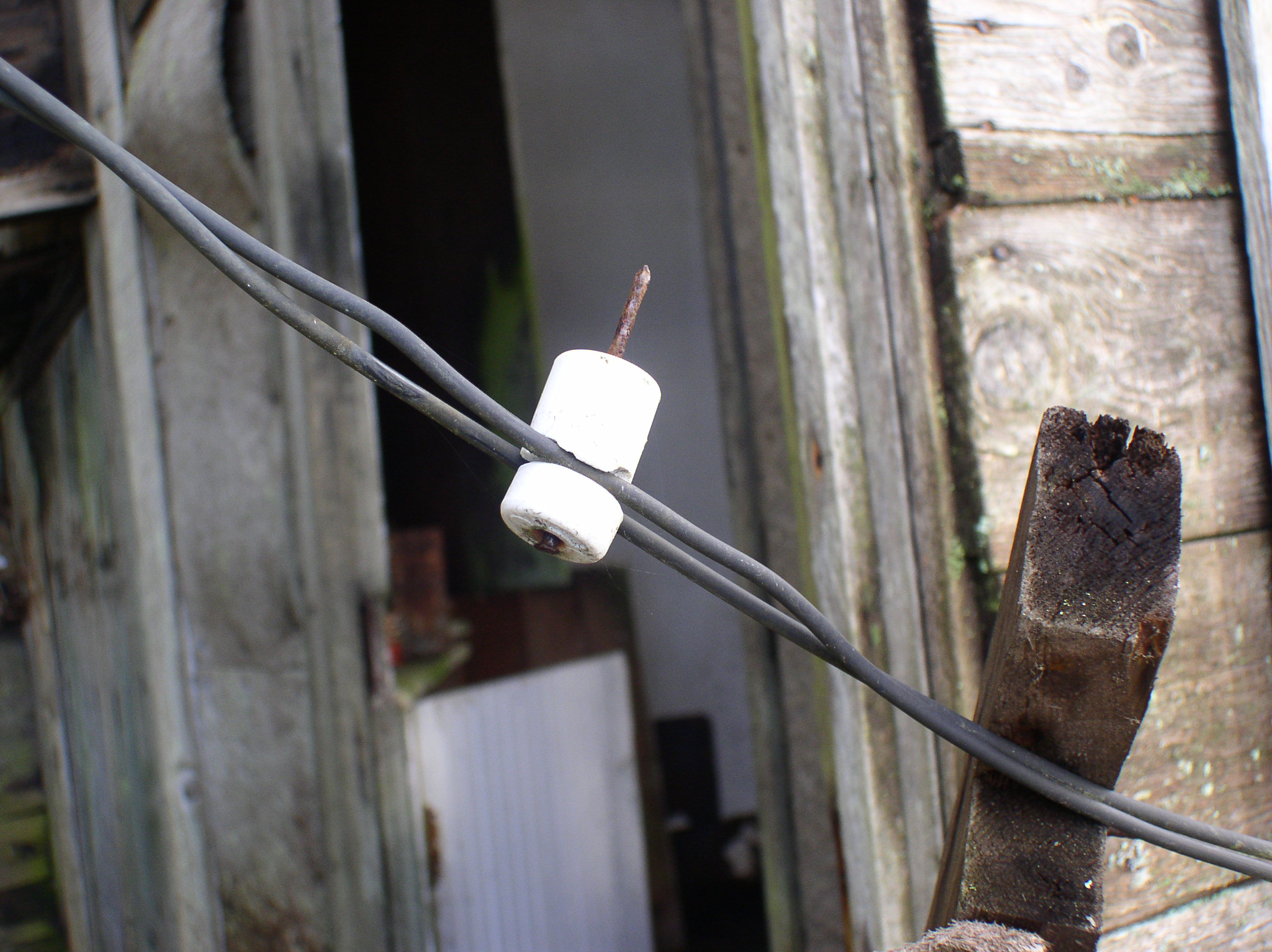
A close-up of a ceramic insulator with rubber-coated wires:

OLYMPUS DIGITAL CAMERA

Power generation is still a complicated process at Funter Bay, often with high fuel costs.  Many properties have begun moving towards alternative energy solutions and new technologies like LED lighting, solar, and wind power.


Funter Bay History: Murder & Mayhem

March 25, 2014

Alaska’s history is filled with shady characters, dastardly deeds, and unsolved mysteries. Almost every town, mining camp, or cannery has its tales of murder, larceny, or swindles of one sort or another. In past installments of Funter Bay History, I’ve mentioned some of the criminal activities which went on in the area, including bootlegging, fish piracy, and other shenanigans. This post covers some more serious crimes, as well as various lesser incidents and shady dealings. Some of these are snippets from newspaper articles which are long on sensationalism and short on fact, multiple sources have been consulted when possible. Unfortunately there is not always follow-up information or detail readily available, so the outcome of some of these cases is not clear.

——————————————————

A murder on August 18th of 1894 reportedly involved two local prospectors. Archie Shelp and George Cleveland were accused of illegally selling whiskey to Natives, resulting in a drunken killing (or perhaps two killings, sources differ). The defendants claimed they were in or near Funter Bay during the supposed events, not at Chilkoot (Haines) where the murder took place. An 1895 article described how “two Indians bit the dust” during a drinking bout with two Swedes, which may or may not refer to the same case. Gus Lundgren, who had been camping at Funter,  testified that the two had been there on August 16th-17th of 1894. The defense claimed that they could not have sailed to Chilkoot in less than three days (from my own sailing experience, I would say it could be done in one long day with favorable winds). The prosecutor pointed out that there was no evidence Shelp and Cleveland were prospecting “with pan and shovel” as they claimed, and instead were “prospecting for the aboriginal native” with keg and tin cup. The two were convicted of illicit alcohol sales, and appealed.

——————————————————

An underground fight between miners at Funter Bay was reported in the Alaska Mining Record on June 10, 1896. William Williamson (Brother of Sandy Williamson) was supposedly attacked by Billy George, aka “Indian Charley”, and had a piece bitten out of his lip. The young Williamson had no experience in drilling and refused to strike double-handed. George, who had a “record as a biter” was upset with this and attacked him. After a 20-minute fight which left hair plastered on the walls of the shaft, the attacker fled. Billy George then gathered up his family and possessions and left in a canoe. (Excerpt in Barry Roderick’s A Preliminary History of Admiralty Island).

——————————————————

A “bloody battle”, and the first killing of an on-duty law enforcement officer in Alaska occurred near Funter Bay in 1897. That January, a “notorious young desperado” named William Thomas “Slim” Birch had been locked in the city jail, convicted of “mayhem”. The charge stemmed from a bar brawl in which Birch had bitten off part of Henry Osborne’s nose and ear. Birch was said to possess a “temper that runs wild” when under the influence of alcohol, frequently landing him in trouble. Despite his temper, “Slim” was a popular fellow in Juneau. He and his brothers had made some money early in the gold rush, partly through mining and perhaps partly through smuggling. They owned the Douglas City Hotel and Cafe, which featured a lively saloon, and had the support of many local miners. The night before Slim was to be shipped South to prison, a group of masked men staged a jailbreak, locking the jailer in his own cell. The group then fled in a sloop to Admiralty Island.

Released a Prisoner

Within weeks an informant reported Birch and co hiding out in a cabin on Bear Creek, 3 miles from the Juneau side of Admiralty Island (About 1-1.5 miles from Funter Bay). A posse consisting of two deputy US Marshals, the jailer, a jail guard, and an “Indian Policeman” set out in pursuit. After a tugboat trip from Juneau, followed by a long and grueling hike through snow and ice, the party reached the cabin. Accounts vary as to what happened next. One story was that Slim snuck out of the cabin and ambushed the deputies from high ground. Others say the fugitives fired through the door as the lawmen knocked on it. Other accounts say the officers found Birch and his accomplices sleeping and fired first.

“He is a desperate man and the deputies knew it, so they began shooting into the cabin, taking great chances on getting their man alive. Birch opened his cabin door and began to shoot with two revolvers” (from San Francisco Call)

While the truth of who fired first was not clear, all accounts show that the posse had the worst of the ensuing shootout. Jail Guard Bayes was hit and ran back towards the beach despite bleeding profusely from both legs. Deputy Marshal William C. Watts attempted to take cover behind a fallen tree but found the rotten wood a poor shield.  Deputy Hale exchanged shots with Slim Birch, then came under fire from the cabin. Struck in the chest as he tried to reach Watts, Hale staggered and fell into a small stream. He managed to pull himself out and make it out of range.  Jailer Lindquist hid behind a tree as it was riddled with bullets, and was hit in the eye by flying bark. The Native policeman, Sam Johnson, was the only one of the posse to remain uninjured. Johnson reportedly saw Birch and three or four other men inside the cabin, firing from “loopholes” between the logs. Watts was reportedly hit several more times during the gunfight. The other lawmen retreated, leaving the injured Watts behind. Hale’s wounds were said to be serious, but he eventually recovered.

After fleeing back to Juneau, the officers gathered a new posse of 20 men, along with a detachment of US Marines. A search party from “the neighboring cannery settlement” also hiked in to the cabin (The Funter cannery did not yet exist, but several others were in the area). Watt’s body was found “frozen stiff in the snow, where his cowardly companions had left him”. Several days searching resulted in nothing but frostbite for the posse members, and additional men came in from Sitka to join the manhunt. An investigation of the cabin found the floor “liberally scattered” with 38-90 and 45-70 rifle shells, and several firing loopholes cut into the logs to fortify the position. Also revealed were 50lbs of hidden gunpowder, thought to be part of a bank robbery scheme. Hiram Schell, one of Birch’s accomplices, had previously been in jail for gold robbery, the tale of which is a ridiculous adventure of its own and also involves a stop at Funter Bay.

The search ended when two cannery employees named Cheney and Olson discovered the heavily-armed Birch and Schell sleeping in dense underbrush. They reportedly had pistols in hand, requiring a stealthy approach to avoid waking them. The two cannery men crept up to a ledge above the fugitives, then leapt down and were able to manacle them after a brief struggle. The captors received a $500 reward for their efforts. The slain Deputy Watts had been a popular and well-known officer in Alaska, and tempers were high on all sides. The prisoners were taken to the Sitka jail for their own safety, as there was fear of encountering a lynch mob in Juneau.

At their trial for murder, Birch and Schell claimed self defense, and the contradictory statements from the lawmen confused jurors. Birch’s brothers and local miners  raised enough money to bring in “prominent” defense attorneys from Seattle. The defendants claimed that the deputies had not announced themselves before shooting, and they were thus responding to an unprovoked attack from unknown assailants. There was debate over the cause of Watt’s death, be it from his wounds, freezing, or both. Birch even claimed that he had been kidnapped from the jail and had not meant to escape in the first place! Eventually the pair were found not guilty of murdering Deputy Marshal Watts, an “outrageous” verdict which horrified the governor of Alaska. None of the other offenders were ever found, although a belt marked “W.H. Phillips” was recovered from the cabin.

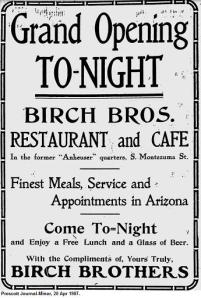
Slim did end up serving 3 years at San Quentin for the original mayhem charge. He moved to Prescott, Arizona in 1902 and opened a saloon with his brothers Sidney “Kid” and Robert “Bob” Birch. Slim continued to get into bar brawls, including a 1908 affair in which all three brothers broke up a card shark scheme with flying fists. They also ran afoul of the law with gambling fines and prohibition violations. “Slim” died in 1952.
birch2Selected Sources:

-“Bloody Battle in Alaska; Between Desperadoes and a Marshal’s Posse” The Record-Union (Sacramento), 4 Feb 1897.

-“Capture of Slim Birch” San Francisco Call, 4 February 1897

-Fletcher, Amy. “Whitman shines light on a dark chapter of Alaska history”. Juneau Empire, 27 Oct 2013. (link)

-Hunt, William. “Distant Justice: Policing the Alaskan Frontier”. OK: U of OK Press, 1987.

-Roderick, Barry. “A Preliminary History of Admiralty Island” Douglas, AK, 1982.

-“To Plead for an Alaska Outlaw” San Francisco Call, 28 Feb 1897

-Wilbanks, William. “Forgotten Heroes: Police Officers Killed in Alaska, 1850-1997”. Turner Publishing Co, 1999. (link)

——————————————————

An article in the Juneau Record-Miner from July 11, 1907 had the headline “LOOKS LIKE MURDER”. A man named Herman Smith had disappeared under suspicious circumstances, with “strong indications that foul murder has been done somewhere between Douglas and Funter Bay”. Smith’s boat the “O.K.” ran out of gas at Cordwood Creek on the way to pick up fish, so he borrowed a small boat from Harry Scott at a Funter Bay fishing station. After getting fuel he left Douglas to return to the O.K., but then vanished. The article stated that “An Indian woman claims to have seen him murdered in the vicinity of Cordwood creek”. Reportedly missing were $130 cash and a month’s worth of provisions.

——————————————————

A fugitive from Sitka by the name of Ah-kee was pursued and overtaken at Funter Bay in July of 1909, and brought to court by Deputy Marshal Shoup (Shoup is also mentioned in a previous post).

——————————————————

In November of 1912, a miner named Martin Damourette was arrested and charged with larceny, accused by his mining partner L.C. Wilson. The two had stored equipment at their Funter Bay claim, and Damourette supposedly stole it while Wilson was absent. The court dismissed the criminal case almost immediately. Wilson filed a civil suit, but Damourette “ducked out of town” for Seattle the same night.

——————————————————

Another disappearance occurred at or near Funter Bay in 1915. Robert McGregor was reported missing by crew of the Santa Rita the morning after arriving at Funter Bay. He was a carpenter from Gypsum who had worked at various mines and camps around Alaska. Cannery officials supposed that he wandered off in the dark and became lost, but a search of the area found nothing.

——————————————————

Illicit booze continued to be an issue in the area, especially since it could sometimes be mail-ordered!
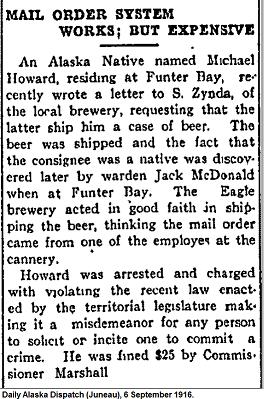
mail order beer

——————————————————

In October of 1917, two men named Thorensen and Okerberg were indited for furnishing liquor to Natives at Funter Bay.

——————————————————

In 1922 the body of Oscar “Terrible Swede” Lindberg was found burned to death on the beach at Bear Creek, across the island from Funter Bay. The case is filed under “Murders” in the Bayers notes.

——————————————————

Funter Bay History: Fishermen Part III

March 18, 2014

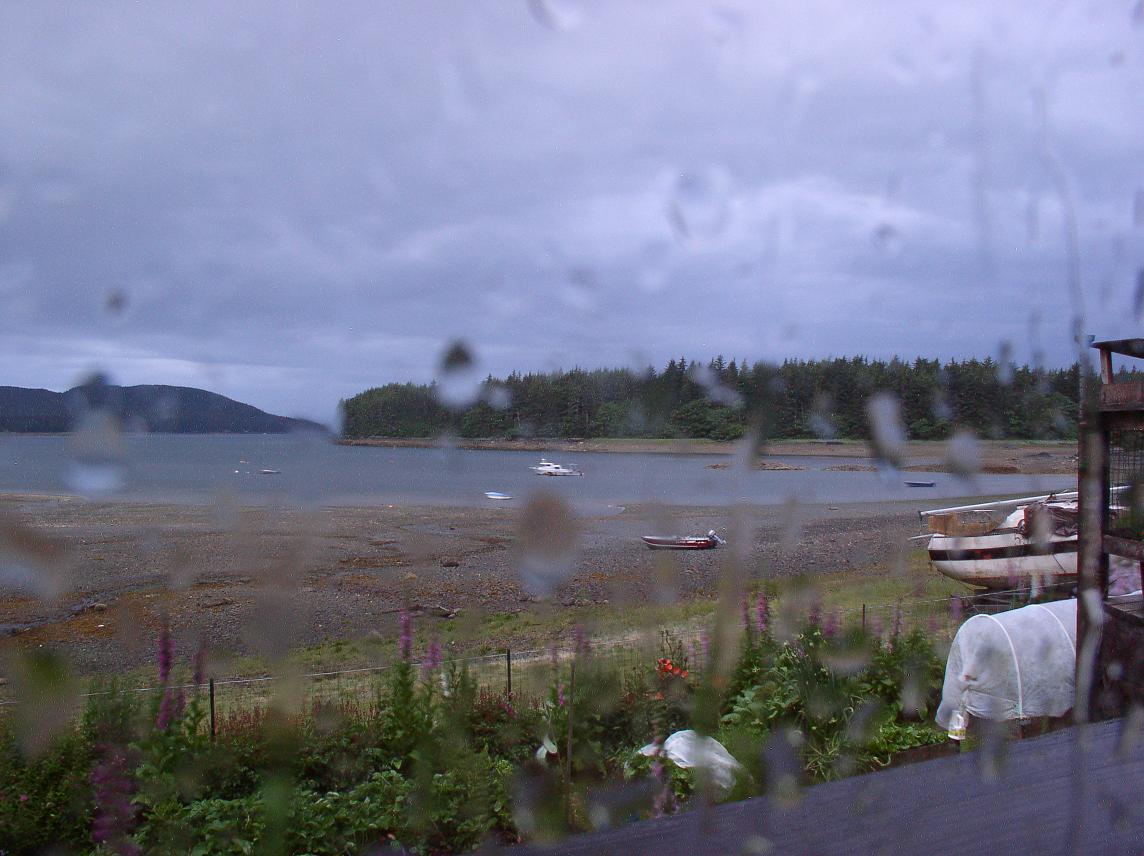
In this edition of Funter Bay History we return to the topic of commercial salmon fishing. A local fisherman very generously provided some photos and information about Funter Bay in the 1960s, which make up the bulk of this post (Previous posts on this topic are in Part 1 and Part 2).
1

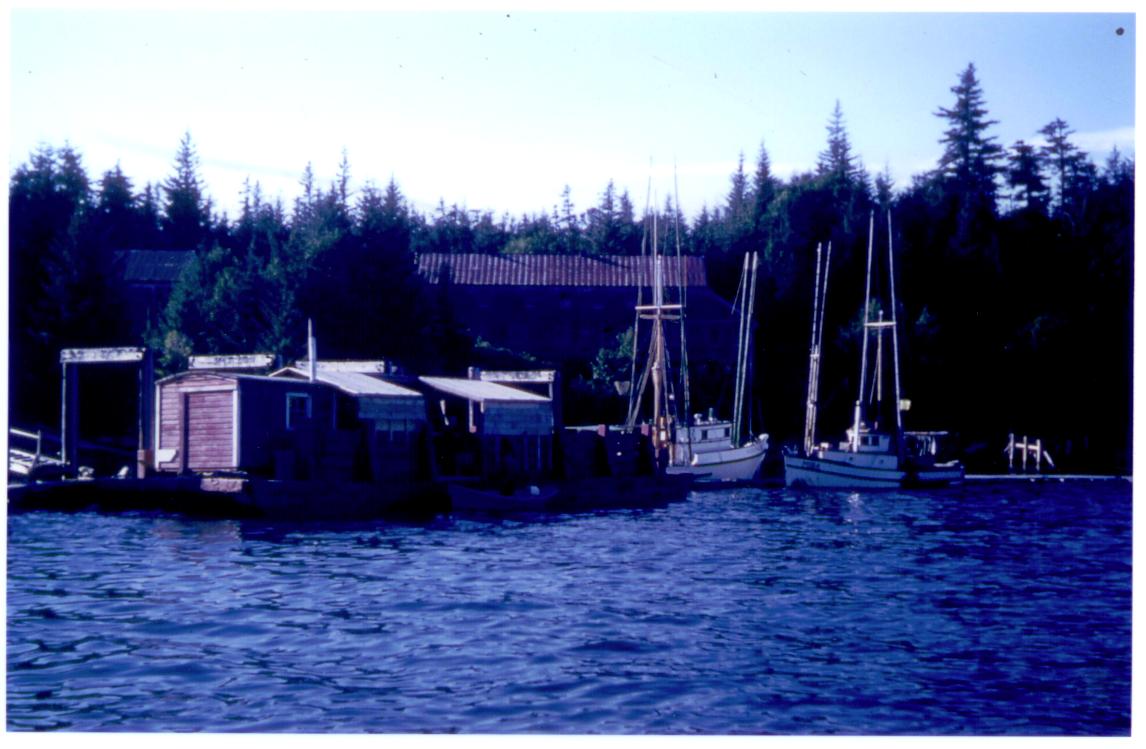
Seen above is the Funter Bay cannery and public dock circa 1958-1960. The trollers Merry Fortune and Mira are tied up, along with the fish scow. The scow was owned by Art Berthold, of the packer Fern II. Art would visit the bay regularly to pick up fish, with local residents Gunner and Lassie Ohman operating the scow. Harold Hargrave owned the Merry Fortune and lived in a house just to the right of this photo. There were three fishing boats named the Mira in Southeast Alaska around this time, this may be the one from Juneau owned by Arnold Henrickson (per the Merchant Vessel Registry)

2
A closer view of the cannery dock and scow, with one of the cannery bunkhouses in the background. The red structure with curved roof on the near end of the scow appears to be a former fish trap watchman’s shack, these were frequently repurposed and some can still be found in use around Funter Bay.

3

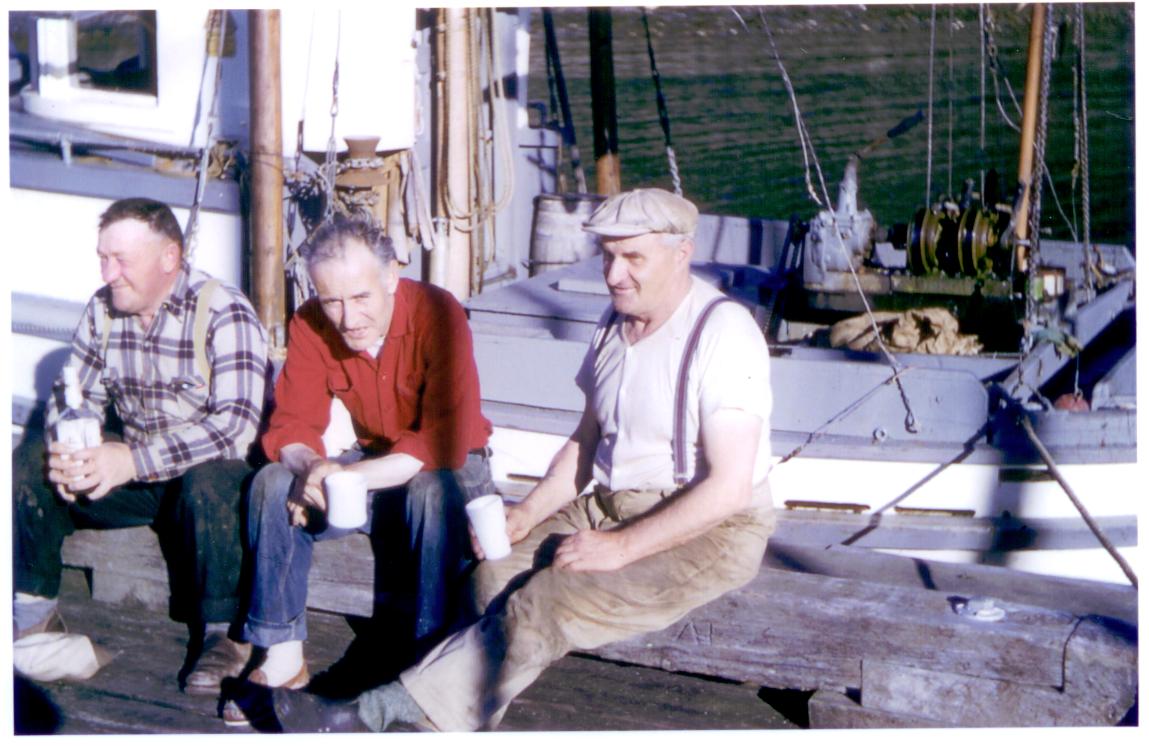
Fishermen (L-R) Walt Mackey, Ken Lameroux, and Jack Kolby, having an afternoon drink at the dock (of “milk, no doubt” according to the source!). Walt’s boat the Elliott is behind them. Ken fished the Lillian L, and Jack fished the Ruby.

4

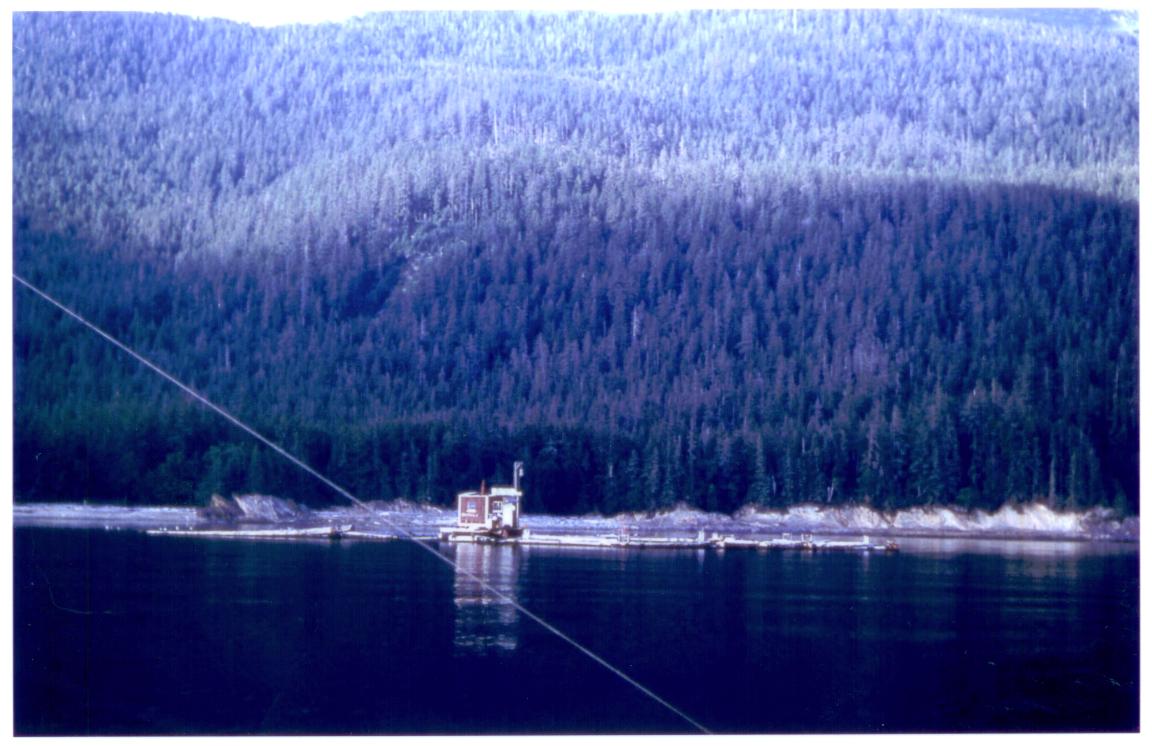
The fish trap at Lizard Head (the contentious Claire Alexander fish trap mentioned in this post). This photo is from around 1958, the trap was removed when Alaska became a state in 1959. The structure on top is the watchman’s shack, the trap itself is made up of the low floating logs.

5

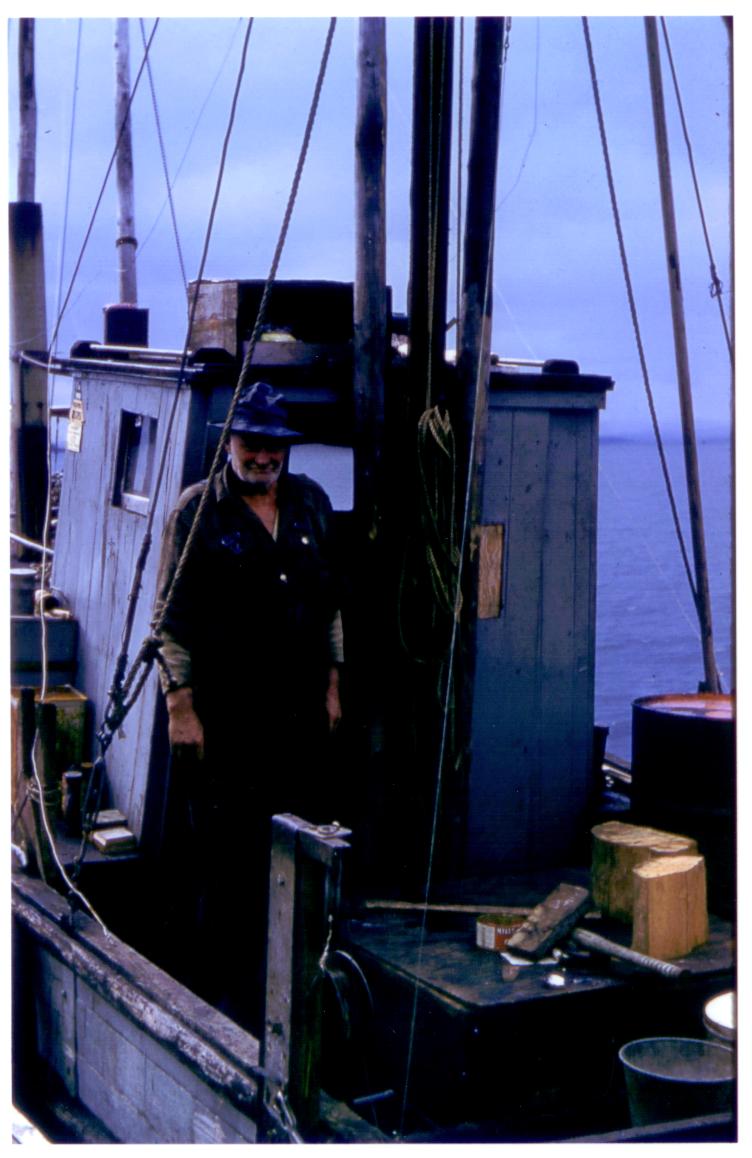
Above is “Dirty Foot Al”, so called because he didn’t wear shoes. Al built his own boat on the beach and heated with wood, you can see blocks of firewood and his axe on deck (oil heat using the same diesel as the engine was more common).

6

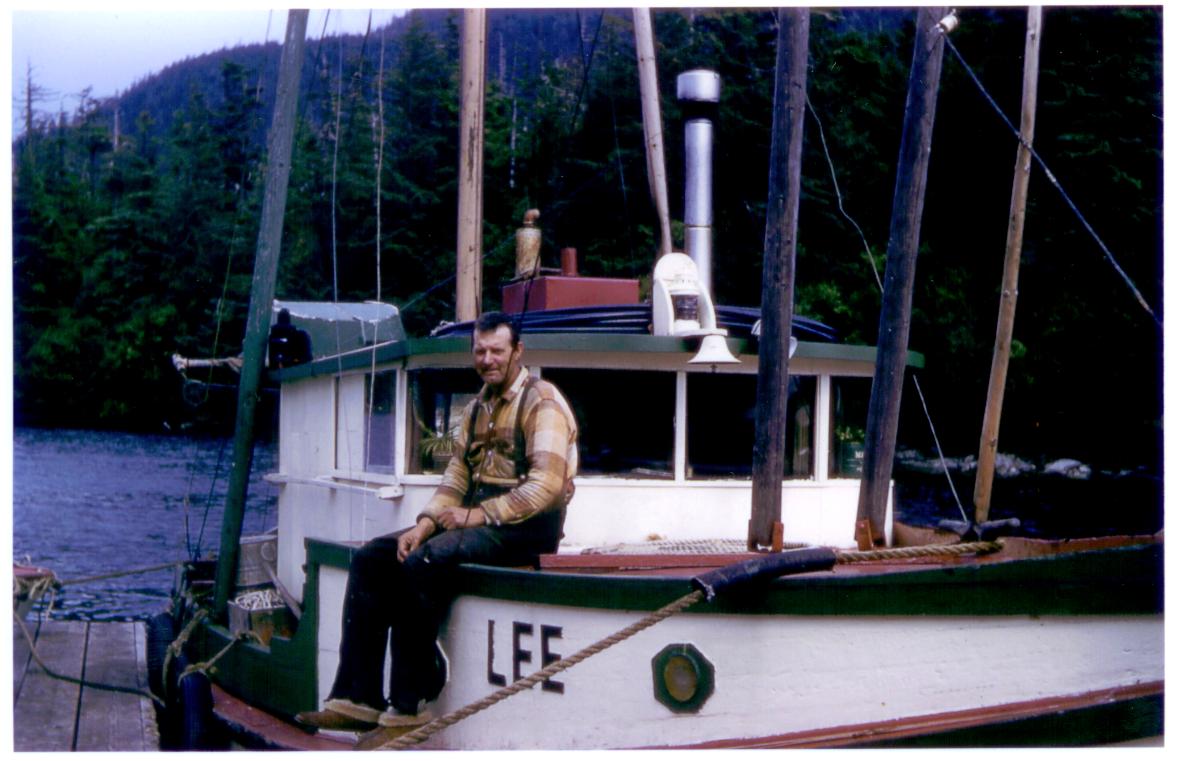
The troller Lee was fished by Ted Childress, seen above, and his wife (who owned the boat). It was reportedly a “Columbia River model”

A 1955 newspaper article (mentioned in the Bayers notes) described the ferry Teddy abandoned at Funter Bay after experiencing engine trouble. The owner reportedly went on to fish the “Lee”, but their name is not given.

7

Jack Kolby (or Koby?) fished the Ruby, seen above at Elfin Cove. Jack was reportedly of Swiss background, and loved to tell stories.

8

the Rosalind was owned by a man named Ben, seen above.

9

Here we see Walt Mackey delivering a loaf of bread to “Crackerbox” Mac. Mac got his nickname from a previous boat, which apparently was not very pretty. Mac’s boat seen above was equipped with a Model A Ford engine.

10

Above is Walt Mackey again, having “a bit of some unknown substance”.

Funter Bay had two state floats, both of which were used by local fishermen. The season generally ran from May 1 to late fall. Many of the boats would start early, and quit early, coming back in by 2 or 3pm. Then the crews would sit around with their “milk” telling stories or comparing  how much money they’d made for the day. They would also visit with local residents in the bay. Sometimes they would set herring nets overnight to catch bait.

In addition to the people shown above, other fishermen at Funter during this time period included Charlie Tubbs, Norton Sorrell of the Grey Mist (later bought by Charlie), Ned Albright of the Ommney, and Ted Samples of the Diver. Ted and his wife trolled, and the Diver had a compressor and “hard hat” rig for underwater work. Ted installed and repaired fish traps when he wasn’t fishing. A man named John had a small double-ender with a noisy 2-cylinder motor. Others who frequented the float, but didn’t always fish at Funter were Al “Scram” Schraman of the Aurora, Santiago Cesar, Mac of the Helen M, and Ike Puustinin of the Julia D.

One story of float hijinks involves a fishermen who somehow became a little drunk one night. The fellow kept a pee can just outside his wheelhouse door for late night calls of nature (these are fairly common on boats, both for convenience and safety, as you don’t want to stand at the rail drunk with only one hand free) Someone filled the can almost full of alkaseltzer tablets, and when the still-drunk fellow used it, there was a lot of unexpected foaming! The poor victim must have thought he had some terrible problem “down there”!


Funter Bay History: 1926 Aerial Photo

March 13, 2014

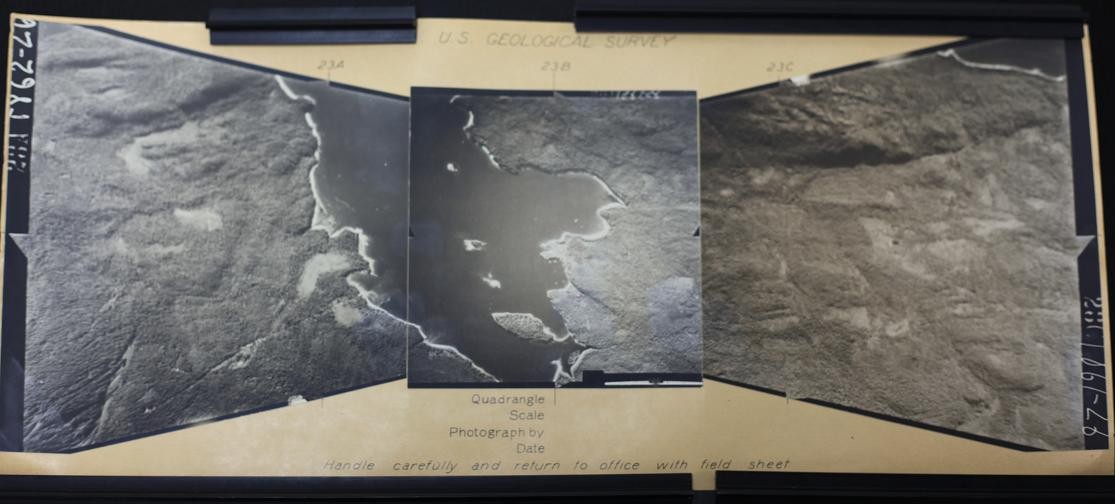
As a follow up to previous aerial photos and maps of Funter Bay, here is some imagery from 1926 taken during a US Navy coastal survey. The US Forest Service and The National Archives office in Anchorage were very helpful in finding these for me!

1929 Aerial Composite

The above is my attempt at creating a photomosaic from multiple frames. The resolution is a bit lower than later aerials, and I have not taken the time to match levels across each frame, but they give a good overview of the bay in the year they were taken. The original format of these images is a little different, as seen below:

example

As with the 1929 photo mentioned before, these were part of a systematic effort to obtain aerial imagery of the Alaskan coast and islands. The Navy used a number of Loening OL aircraft to obtain the photos, while support ships housed the developing lab and carried extra fuel. More information on the project can be found here.

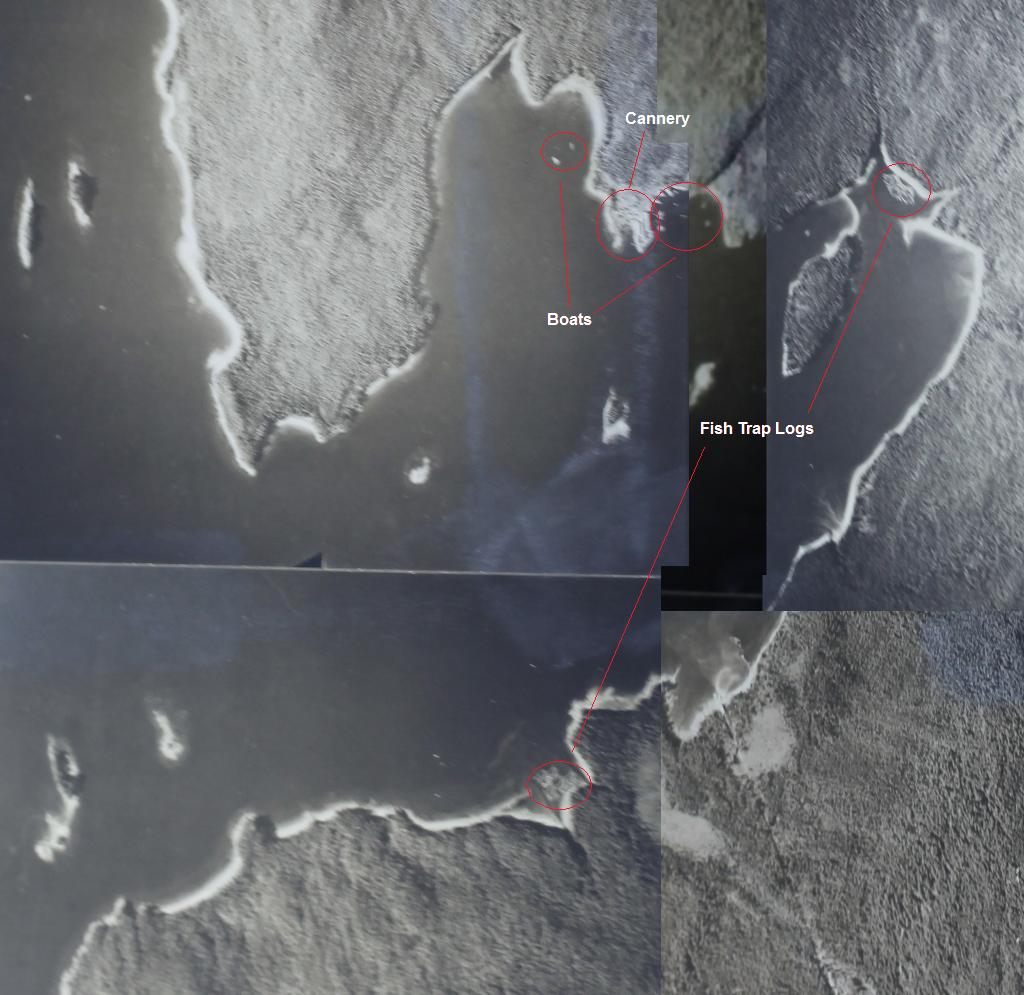
A few notable features have been labeled in the image below. The exact date of this flight is not given, but based on the location of the fish traps I would assume it to be Fall. The traps have been pulled in to shallow estuaries for winter storage. The boats clustered around the cannery could be independent fishermen rather than cannery vessels.

labeled

Other images from this project can be obtained from the National Archives at Anchorage,  a finding aid can be requested that gives flightlines and serial numbers. The citation/location information for the images used here is as follows:

Record Group 57 / USGS Alaska Aerial Survey
Box 135
Flightline T-26
Photographs #853-863
Location: Admiralty Island
Shelf Location: 02/10/14(2)


Funter Bay History: Frozen Foot Johnson

March 13, 2014

One of Funter Bay’s colorful residents was an Alaskan entrepreneur named Edward “Frozen Foot” Johnson, who operated a moonshine still at his cabin from 1917-1922. The nickname originated from a bad case of frostbite in 1911.

johnson

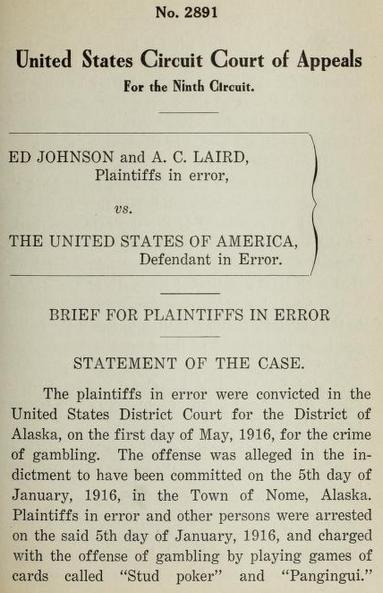
Johnson is mentioned in the book Distant Justice; Policing the Alaskan Frontier, which introduces him as the proprietor of Nome’s Arctic Saloon around 1915. Court records from the time refer to it as the Arctic Billiard Parlor (or Parlors, Hall, or Room), and note that it was essentially a large back room off the Arctic Cigar Store in the Winsor or Windsor Building at 96 Front St. The building was owned by Johnson and the business licenses held by his partner A. C. Laird.  Frank J. Mielke sold the property to Mr. Johnson in June 1915 on an installment plan. Previously it had been known as the “Winsor Bath House” (operated by Fred Berg), and included a pool hall & cigar store known as “Daves Place” (per Kinky Bayers notes and court records). Johnson was also apparently known as “Rube” to some Nome residents, this could have been another nickname or a middle name, perhaps short for Reuben.

While alcohol was legal in Alaska before 1917, gambling was not, and Johnson was frequently in trouble with the authorities for what he called “fun and profit” at the Arctic Saloon. Johnson claimed the gambling law did not apply to him “on account of his being crippled so he could not get out and work”. His gambling activities were well known around Nome, at least one deputy threatened that he “would get him”, and complained about Johnson “ringing buzzers on him” (to warn gamblers that the cops were coming). Eventually a paid informant was used to spy on the card games and set up a bust at the Arctic. After several indictments, fines, failed appeals, and “harrasment” from law enforcement, Johnson declared that it was “Too bad for Nome”, sold the saloon, and moved to Juneau in 1917.

Johnson appeal

With Alaska’s liquor prohibition just beginning, Johnson found a new source of income in moonshine. Distant Justice author William R. Hunt states that Johnson operated a still at Funter Bay from 1917 to 1922, apparently without much trouble from the authorities. He would transport the moonshine by boat to Juneau’s “thirsty residents”. Other sources indicate that Johnson had a number of stills going, including one at Point Howard across Lynn Canal from Funter, and one at his house in Juneau. As mentioned before, remote sites like Funter were prized by bootleggers as a way to avoid notice and “launder” their supplies of grain and sugar through fox farming or other legitimate enterprises.

Johnson may have been under suspicion for some time, as one article notes that he “led prohibition officers on a merry chase around Juneau in the dry years”. A more serious brush with the law came in December of 1920, when his Gastineau Avenue house in Juneau caught fire. In the aftermath, a large still was revealed, and Johnson was arrested (per Kinky Bayers’ notes). The above article states that the still blew up and started the fire.  Another article mentioned that Gastineau Ave (aka “Swede Hill”) was becoming known as “Moonshine Mountain” after another still was found the following week. There seems to be no record of a conviction at this time, but the authorities kept a closer eye on Johnson over the next year.

In January of 1922, John B. Marshall, the Prohibition Director for Alaska, sent two agents to Funter Bay to investigate Johnson’s activities there. Agents J.W. Kirkland and W.C. Mayburn (Or McMayburn) found a two-story cabin at Funter Bay, equipped with a still and stocks of mash, sugar, and other moonshine ingredients.  Upon returning to Juneau with their report, the two agents were issued a warrant and sent back to Funter to bring in Frozen Foot. An article on January 23rd said that Johnson’s trial was set for the 25th.

The story takes another twist here. In fact there were apparently several stories told by the two federal agents to their superiors, none of which exactly matched. As the authorities put the pieces together, it emerged that Johnson was apprehended at Funter Bay, but bribed his way out of custody on the way to Juneau and vanished (Bribes of poorly-trained and underpaid prohibition agents were fairly common). A second expedition to Funter with different agents took revenge upon Johnson by seizing his still and burning his cabin to the ground. A grand jury later censured Director Marshall for “the unnecessary burning of the cabin”.

Unable to get his hands on Frozen Foot Johnson, Marshall turned on his agents with charges of perjury. James Wickersham, well known former judge and friend of John Marshall, was retained as special prosecutor for the government in July of 1922 (noted in his diary). The legal process dragged on through the summer. In September, Wickersham writes that “W.C. McMayburn… charged with perjury in connection with J.W. Kirkland & other crookedness with ‘Frozenfoot’ Johnson volunteered to tell the whole truth”. Mayburn/McMayburn struck a deal for immunity in return for testifying against Kirkland. Despite this, at Kirkland’s trial in October the jury failed to reach a verdict (Wickersham complained that there were “two or three bootlegging scamps on the jury”, and noted that the case looked “useless till ‘Frozenfoot’ Johnson is arrested and convicted” ). A second trial in November reached a “not guilty” verdict for Kirkland, as the jury decided that Mayburn’s testimony was unreliable. Prosecutor Wickersham wrote to US Attorney Shoup asking him to re-arrest Kirkland for perjury during the trials, but Shoup declined. As Mayburn had immunity, this left both former agents off the hook.

In the meantime Frozen Foot Johnson, the source of the scandal, managed to flee the state as law enforcement bickered over what to do with him. Albert Shoup claimed that Director John Marshall held up the warrant for Johnson to protect Mayburn’s testimony, but Marshall denied it and claimed it was Shoup who refused to arrest Johnson. Wickersham noted that even before Mayburn’s immunity deal, there was “trouble” between US Attorney Shoup & Prohibition Director Marshall, and that Wickersham had the role of middleman or peacemaker. After the case, the governor and other politicians questioned Shoup’s actions.

“Throughout hearings granted to Judge Thomas M. Reed and District Attorney Albert G Shoup, whose re-nominations in the first Alaskan judicial district were under fire, there were spread on the record frequent references to bootlegging, narcotic traffic, and other forms of vice; purported miscarriages of justice and ‘sour-dough’ nicknames such as frozen foot. … Delegate Sutherland charged Shoup had failed diligently to prosecute several liquor cases which had resulted in the failure to convict ‘Frozen Foot’ Johnson, whom he described as ‘the biggest bootlegger in Alaska.'”
From The Associated Press, “Conditions in Alaska”, The Anaconda Standard (Montana), 18 March 1926

Johnson seems to have escaped justice and eventually returned to the state, he was mentioned living in Sitka and having some “business” of undisclosed legitimacy in Petersburg with Ernie Carter (who later opened Ernie’s Bar in Sitka).

I’ve not been able to find much more detail on Frozen Foot Johnson, such as his origin or final fate. One newspaper claims that “Frozen Foot Johnson” died at the Sitka Pioneer’s Home in 1938 (meaning this could be his grave site), but other articles mention Frozen-Foot Johnson in Sitka in the 1940s. Several Ed Johnsons were at the Sitka Pioneer’s home around that time, so there could have been some confusion among reporters. Another Edward Johnson from Sitka was born in 1880, an Ed Johnson born about 1880 in Sweden was in Juneau in 1920, and an Ed Johnson born about 1881 in Sweden was in Nome in 1910 (per US census records).


Funter Bay History: Communication

March 10, 2014

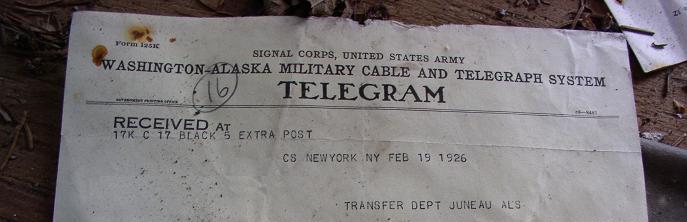
Prior to the 1920s, the quickest way to get a message across Funter Bay was to hop in a boat and row. If it wasn’t as important, you could walk the long way around. For outside communication, mail came several times a week by boat. Telegrams could be sent from Juneau to “Down South” after undersea cables were laid between 1900 and 1904.

OLYMPUS DIGITAL CAMERA

Delayed communication sometimes caused headaches for those trying to do business at Funter Bay. On at least one occasion, people attempting to meet passed each other as one traveled to Juneau and the other to Funter.

“J. J. Foltz, president of the Funter Bay Gold Mining Company left on the last Bonita to visit the property. At the same time Supt. Fox left Funter Bay on a gasoline launch to meet Mr. Foltz in Juneau. “Ships that pass in the night” are responsible for Foltz being at Funter’s Bay and Fox now in Juneau.” Daily Alaska Dispatch (Juneau)  21 May 1903

Juneau newspapers attempted to keep track of the comings and goings of important persons, including their hotel accommodations. This practice seems a bit intrusive in today’s world, but was vitally important for coordinating meetings at the time.

barron

Radios began appearing at Alaskan canneries around 1915, in the form of large base stations. In an earlier post I noted the large twin masts supporting a dipole antenna at the cannery in 1929.

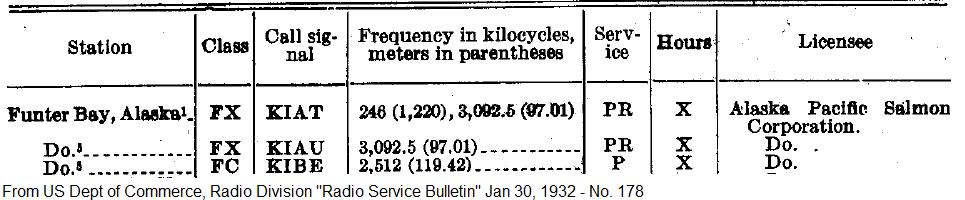
The FCC has some historic radio service bulletins online, listing new stations each year. Others can be found on Google Books. A 1919 list of commercial radio stations includes the “Thinket Pack. Co.” at Funter, Alaska, with call sign of KXK. (Those call letters had been assigned to the steamship Puritan until 1915). Frequencies were 300, 550, and 600kHz. In 1922 it was noted that the radio station at Funter opened for the year on May 11 and closed September 20th. By 1932 the cannery had several call signs listed.

radio
The “PR” service indicates limited public use, while “P” indicates private use only. FX is Fixed Base, and FC is Coast Station.

Smaller shortwave and single sideband equipment gradually made its way into more locations, as seen by the proliferation of call signs licensed to fishing boats between the 1920s and 1940s. Antennas became smaller as frequencies got higher and transmitters more efficient. Eventually many houses and cabins had radios of some sort installed, sometimes bending the FCC’s rules on CB and mobile radio use (as often happened, rules designed for the lower 48 made little sense in Alaska). More modern radio systems associated with Funter Bay are mentioned here.

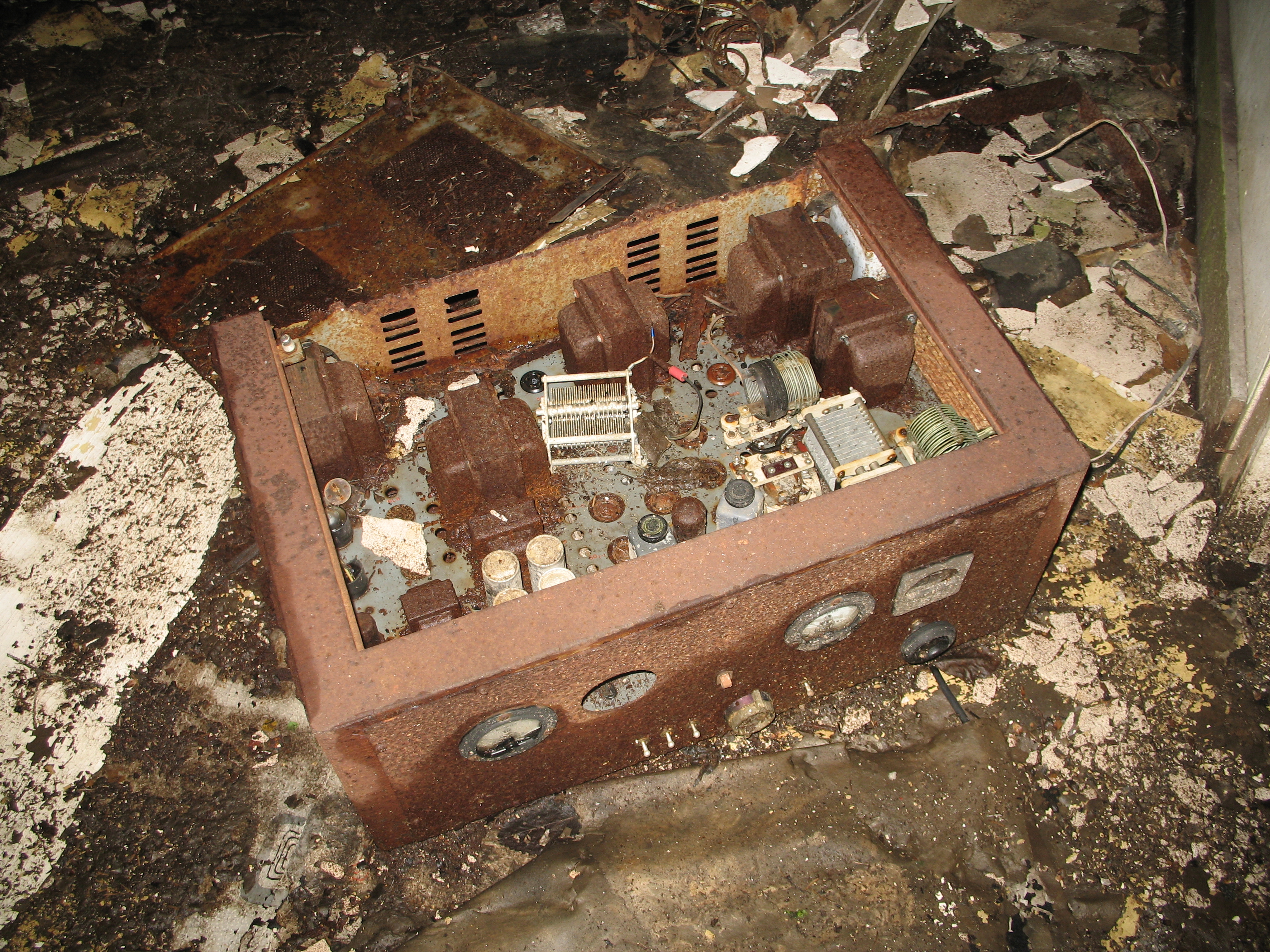
Old vacuum tube radio set:
IMG_1479

The 1930s and 40s brought hand-crank telephones, although these were never a complete network, and only connected a few buildings at each industry (and later, between a few houses with salvaged equipment). The Funter Bay cannery had a number of EE-8 army field telephones, which were likely installed during the Aleut internment. A few older crank phones can also be found in houses around the bay (When I was growing up we had phone lines to 5 houses and a few out-buildings, our “phone number” was three rings).

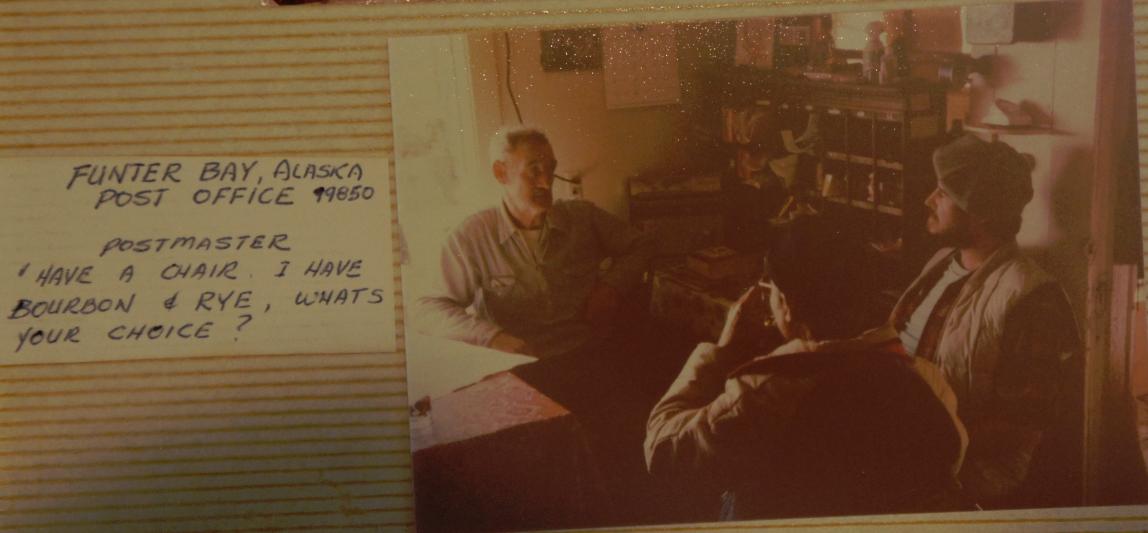
From 1902 until the late 1970s, Funter Bay had a mostly year-round post office. Cannery employees and winter watchmen usually served as postmaster (and public radio operator) and the post office was the social center of the community in the winter.

postmaster

Photo courtesy of Phil Emerson

Mail boats are discussed more in this ridiculously long post.

postmark

I may write more on the postal history of Funter Bay at a later time, I am still collecting information on that subject.

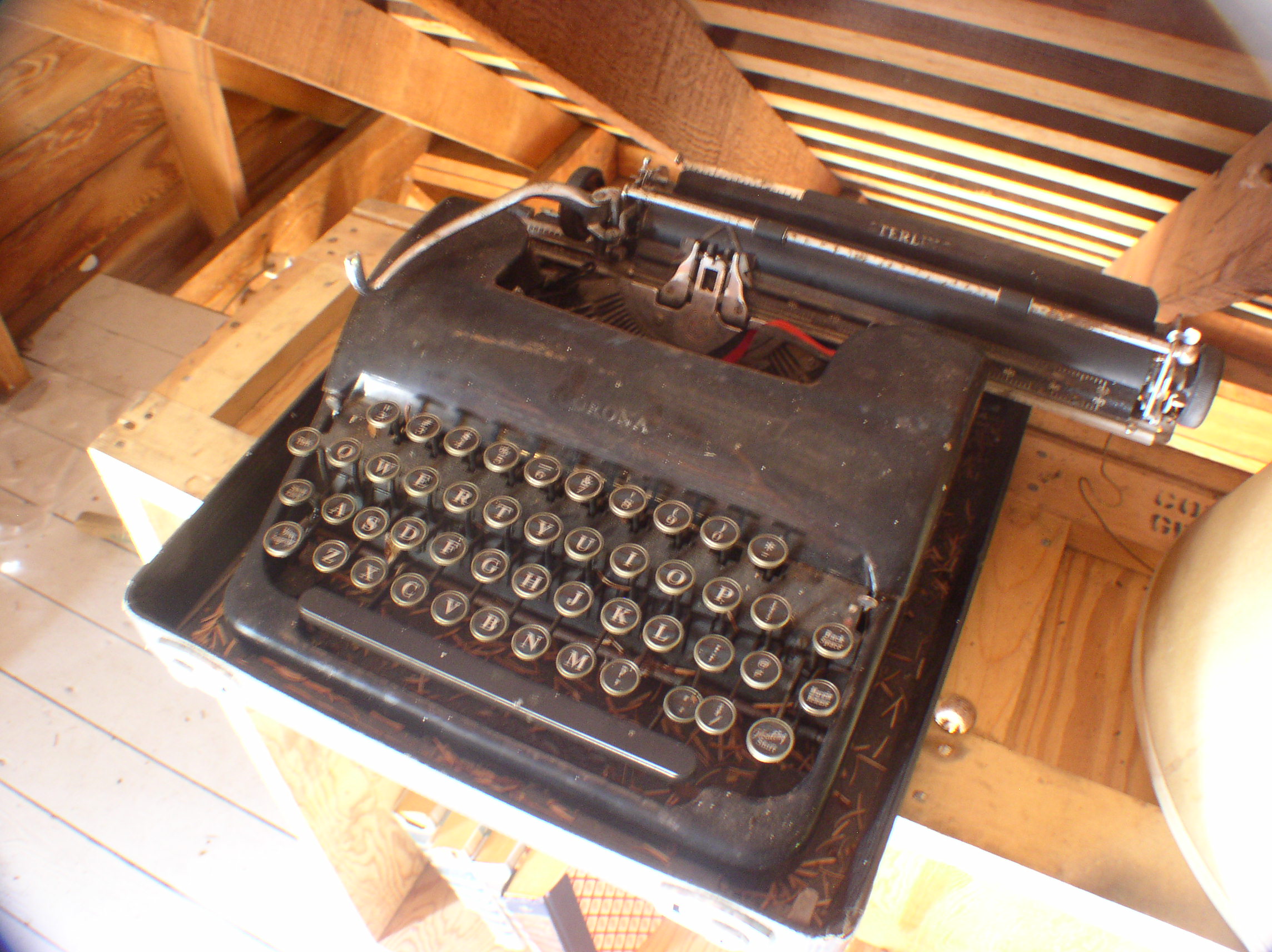
An old typewriter found in an attic at Funter:OLYMPUS DIGITAL CAMERA

Newspapers were also popular, even if they were outdated by the time you got them.  They were entertainment, you could insulate your house with them (shown below), and they’d probably be useful in the outhouse!

OLYMPUS DIGITAL CAMERA


Funter Bay History – 80 Years of Mountain Views

March 9, 2014

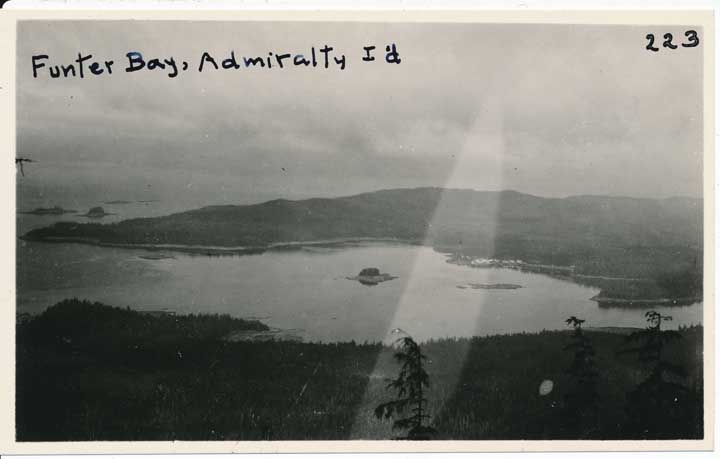
I recently came across a photo of Funter Bay from 1924 taken from Mt. Robert Barron. It fits nicely with the photos taken by my Dad in the 1970s, and the ones I took in the mid 2000s (I have a large panorama of the bay at the bottom of a previous post).

uaa-hmc-0779-APU-223

Funter Bay in 1924. Arthur F. Buddington photographs, Archives and Special Collections, Consortium Library, University of Alaska Anchorage.

Untitled-20

Funter Bay in the 1970s, photo courtesy of Phil Emerson

OLYMPUS DIGITAL CAMERA

Funter Bay in 2004, photo by Gabe Emerson

I’ve zoomed in a bit towards the cannery in all three photos. In all three, that area stands out as the major element of cultural geography. Unfortunately the 1924 photo is not so clear (this post has a nice 1929 aerial). Notable in 1924 is the complete lack of trees on Ledge Island (the small island in front of the cannery). As noted in another post, islands around the bay were a quick and easy place to cut trees and float the logs to where they were wanted.

uaa-crop

Arthur F. Buddington photographs, Archives and Special Collections, Consortium Library, University of Alaska Anchorage.

I’ve shown the 1970s close-up before, alongside more of Dad’s photos, in this post. The missing sections of cannery buildings which overhung the water are fairly evident here.

web-cannery

By the 2000s, the only evidence of the cannery is the State-maintained public dock and ramp. The buildings seen below are all modern private structures.

OLYMPUS DIGITAL CAMERA