Funter Bay History: Ships Part IV

April 16, 2014

A 1907 article noted that the steamship Humboldt traveled from Funter Bay to Seattle in September, bringing 85 passengers and 7,875 cases of salmon (this included some cases from Petersburg as well as Funter).

humboldt

An article in the San Francisco Call of November 18th, 1911, described the Bark J.D. Peters arriving from Funter Bay, where it served as a cannery tender. Unlike the Thlinket Packing Co’s General Fairchild and other old ships converted to barges, the Peters seems to have remained a sailing vessel. It is shown in a 1911 photo with furled sails. Another photo (which also appeared in the Seattle Daily Times dated 1911) shows the ships with sails raised.

Peters
The merchant vessel registry describes the Peters as a 182ft sailing bark built in 1875 in Bath, Maine, and operating out of Port Townsend, Washington. It had a crew of 15 and a gross tonnage of 1,085. Registry number was 75809, and call numbers were J.R.L.F. It was owned by the Northwestern Fisheries Co during that time, and probably transported fish from multiple canneries in Alaska.

Peters2

In 1912 it was listed as a schooner, vs a bark. A bark has 3+ masts, all with square sails except the aft-most, and were a common type of slow cargo ships with smaller crews. A schooner has 2+ masts with fore-and-aft sails, even simpler to operate and requiring fewer crew than a bark, but does not necessarily perform as well. The Peters remained on the registry until at least 1928, when it had a crew of 5 and was hauling freight for the Booth Fisheries Co.

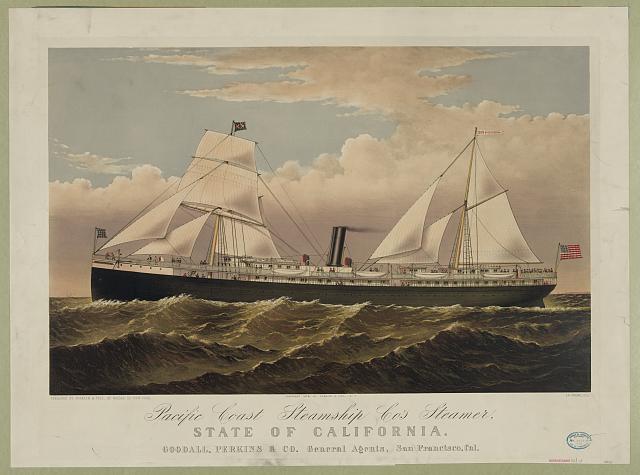
Also in 1911, the sailing steamship State of California went aground for four hours at Funter Bay, probably due to a misreading of the tide tables.

state of california
Image courtesy of the Library of Congress.

Daily Colonialist - City of California Aground at Funters Bay

The State of California sank in August 1913 in Gambier Bay, on Southern Admiralty Island, after striking an uncharted rock. More information on the ship is here.

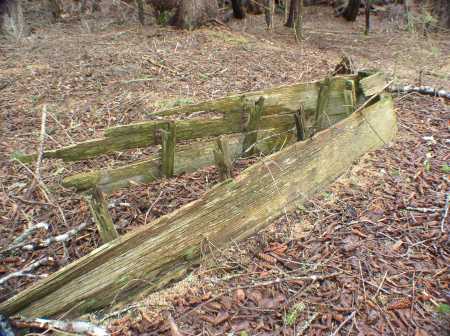
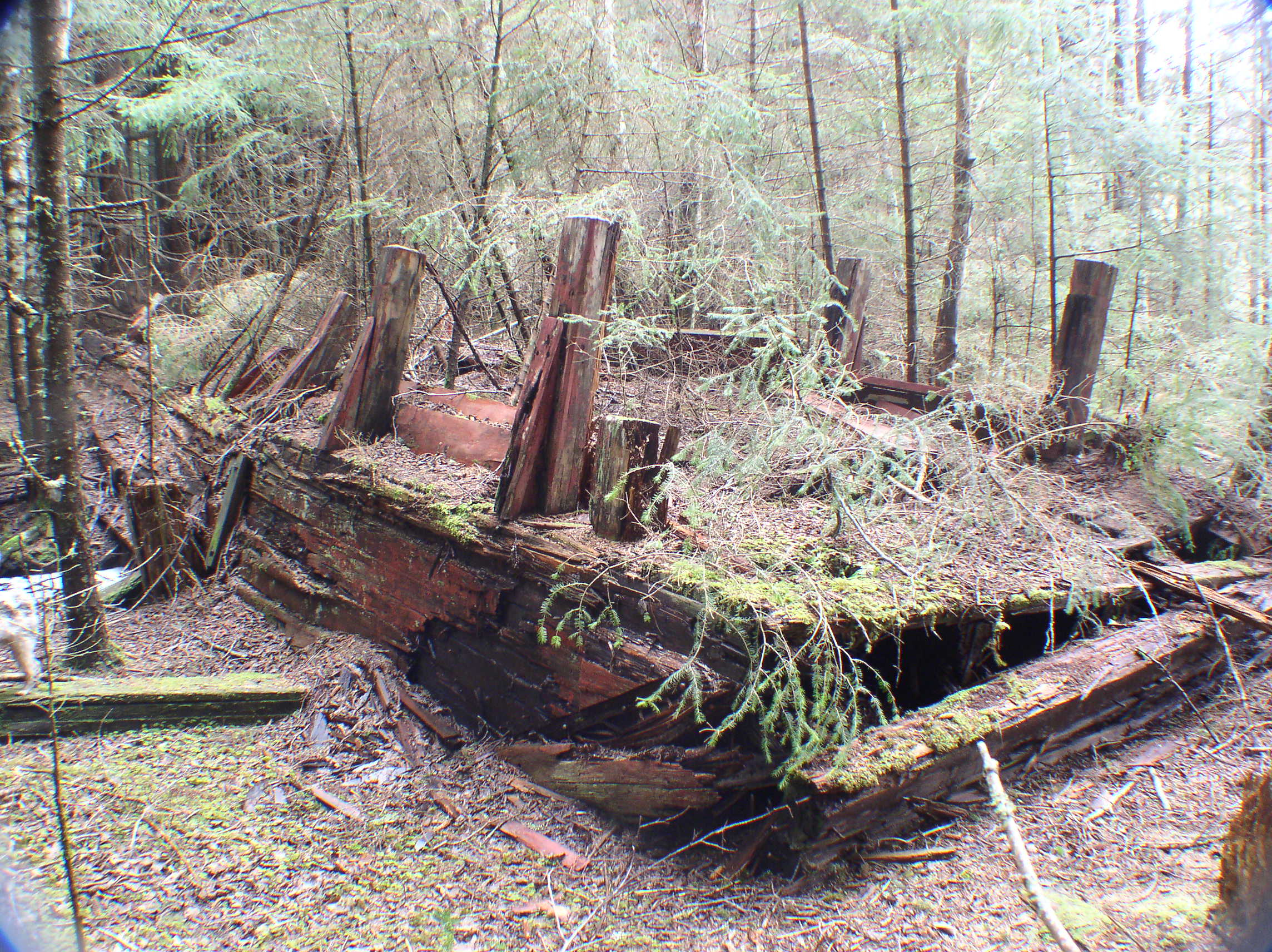
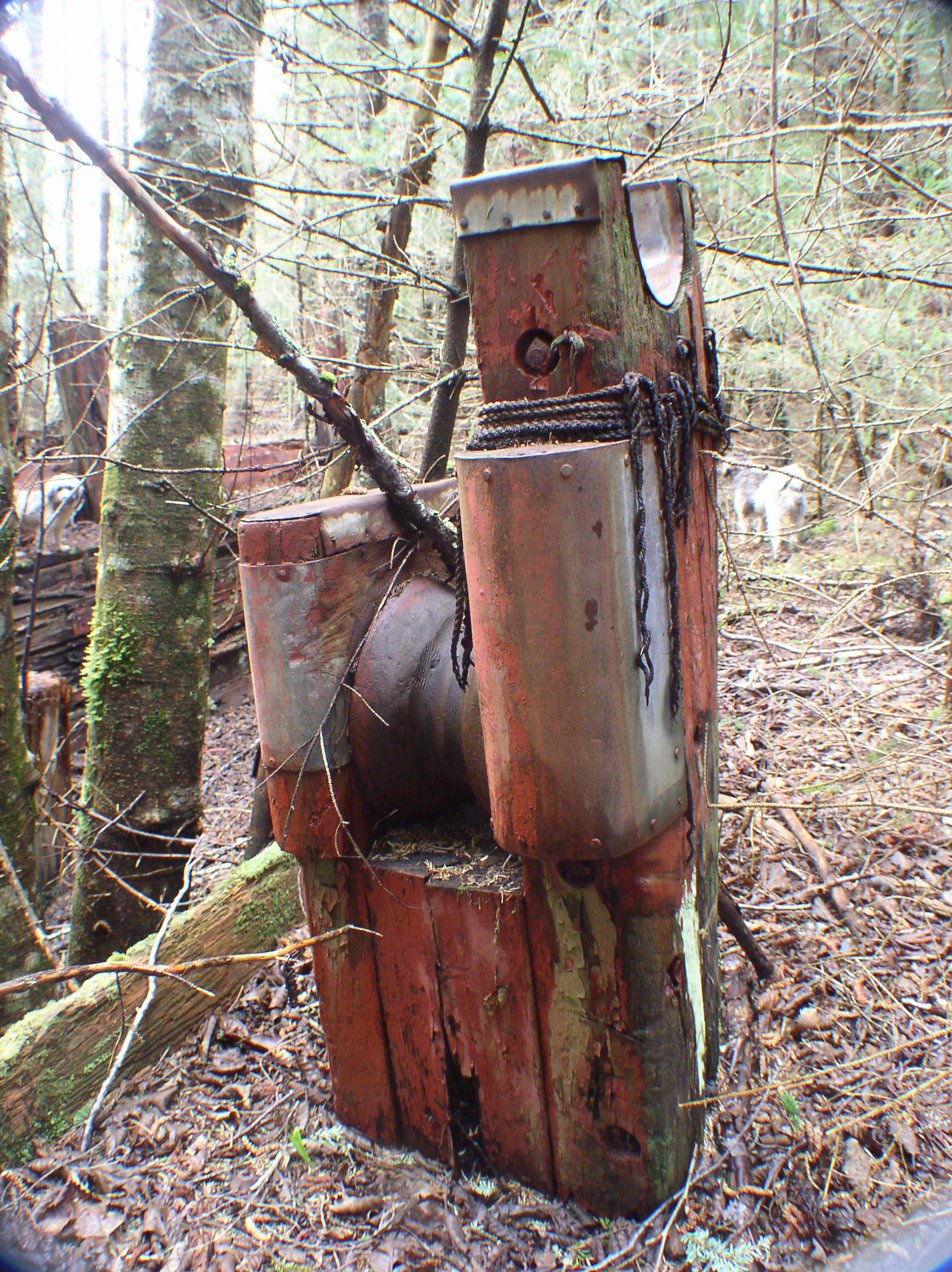
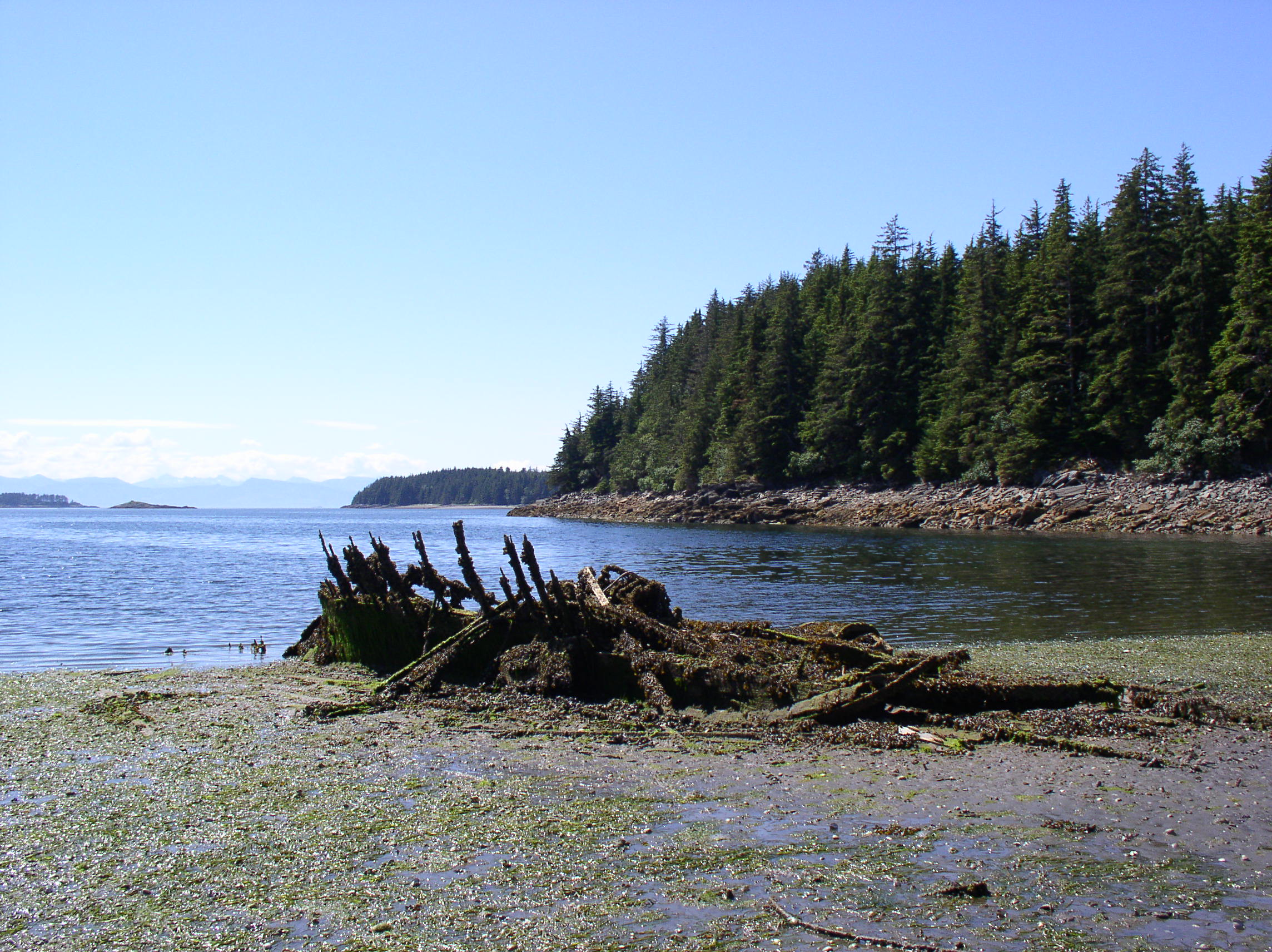
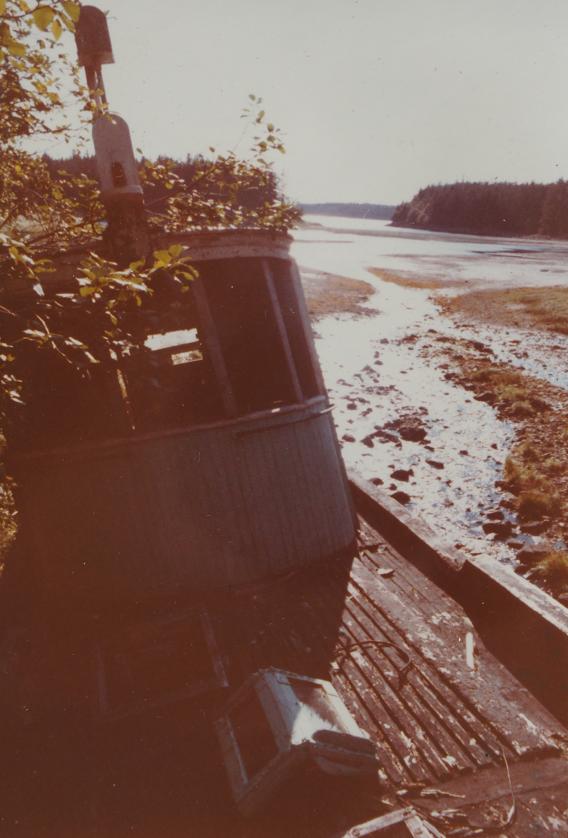
Two photos show a hull on the beach at Funter in 1929 and 1935. The vessel is unidentified, but may be the fishing vessel Pilot. A 1950’s article mentions a “rotting hulk in Funter Bay” in this area, with the registry number 150650. This number was assigned to the Pilot, listed as abandoned in 1925. It was a 50ft long fishing boat from Juneau with a 20hp gas engine and crew of 5, built in Seattle in 1893. It had possibly been a steam tugboat previously.

1935 wreck

1935 image of abandoned vessel at Funter Bay

1929 Wreck

1929 aerial of abandoned vessel at Funter Bay

More shipping and vessel information will probably show up in a future post as I dig up more on the subject!


Funter Bay History: Fishermen Part III

March 18, 2014

In this edition of Funter Bay History we return to the topic of commercial salmon fishing. A local fisherman very generously provided some photos and information about Funter Bay in the 1960s, which make up the bulk of this post (Previous posts on this topic are in Part 1 and Part 2).

1

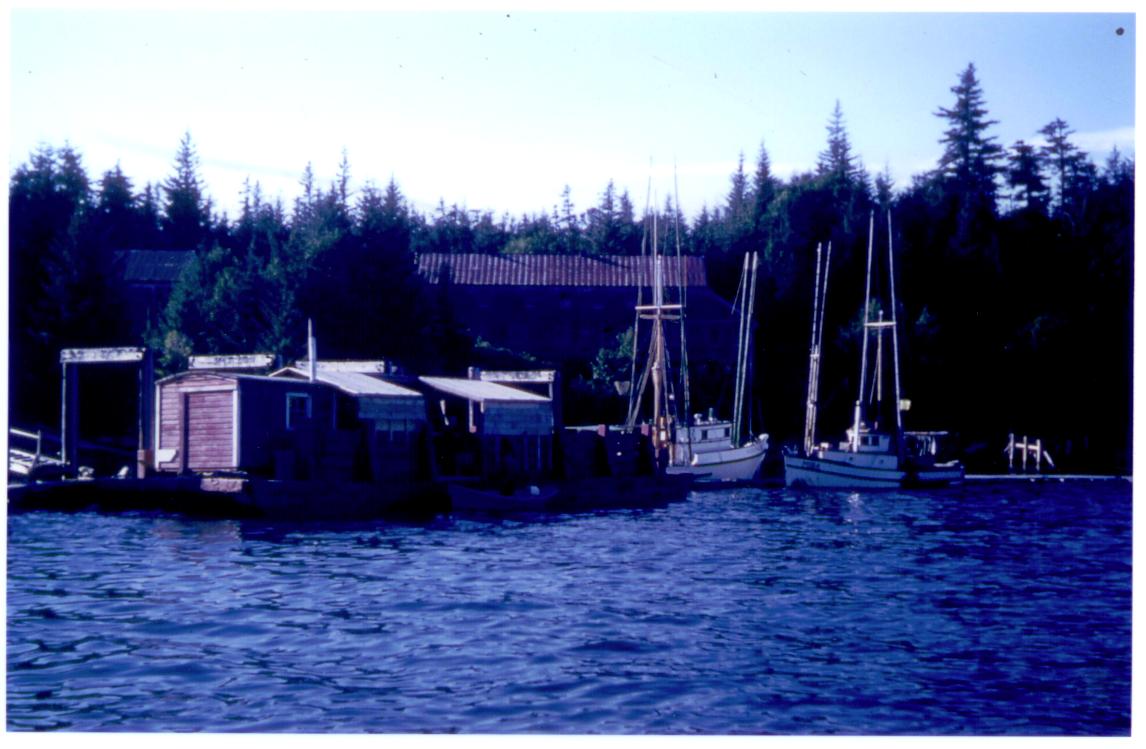
Seen above is the Funter Bay cannery and public dock circa 1958-1960. The trollers Merry Fortune and Mira are tied up, along with the fish scow. The scow was owned by Art Berthold, of the packer Fern II. Art would visit the bay regularly to pick up fish, with local residents Gunner and Lassie Ohman operating the scow. Harold Hargrave owned the Merry Fortune and lived in a house just to the right of this photo. There were three fishing boats named the Mira in Southeast Alaska around this time, this may be the one from Juneau owned by Arnold Henrickson (per the Merchant Vessel Registry)

2
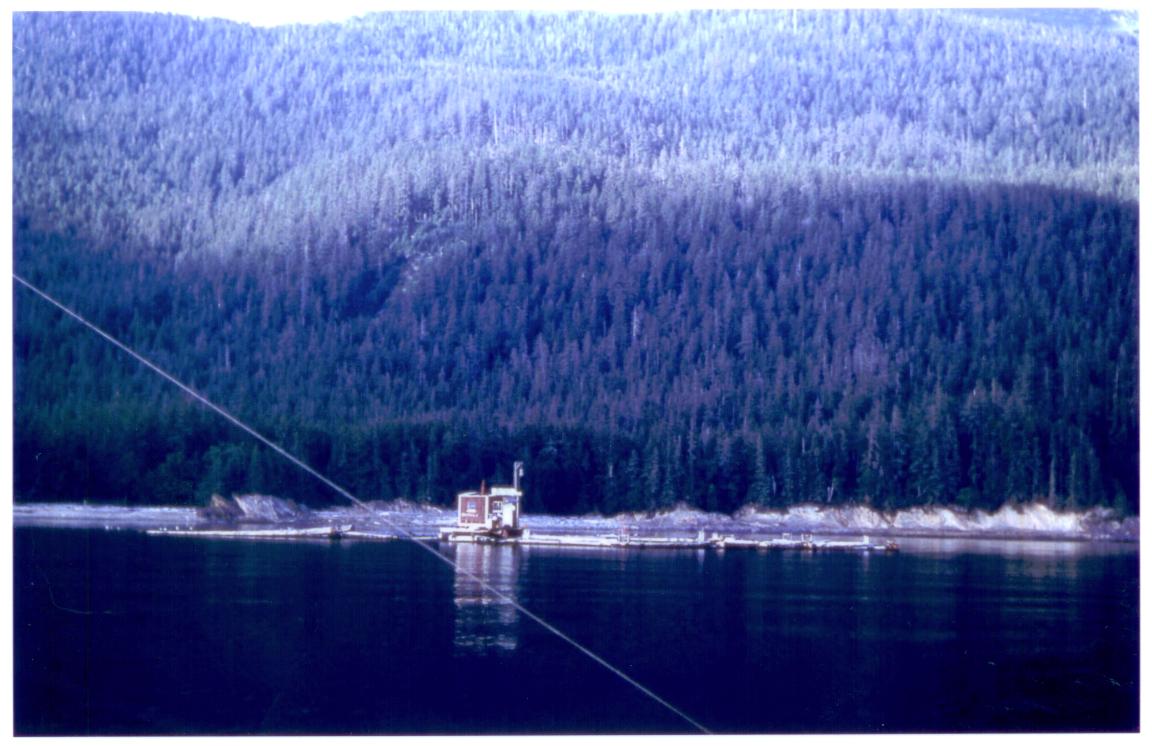
A closer view of the cannery dock and scow, with one of the cannery bunkhouses in the background. The red structure with curved roof on the near end of the scow appears to be a former fish trap watchman’s shack, these were frequently repurposed and some can still be found in use around Funter Bay.

3

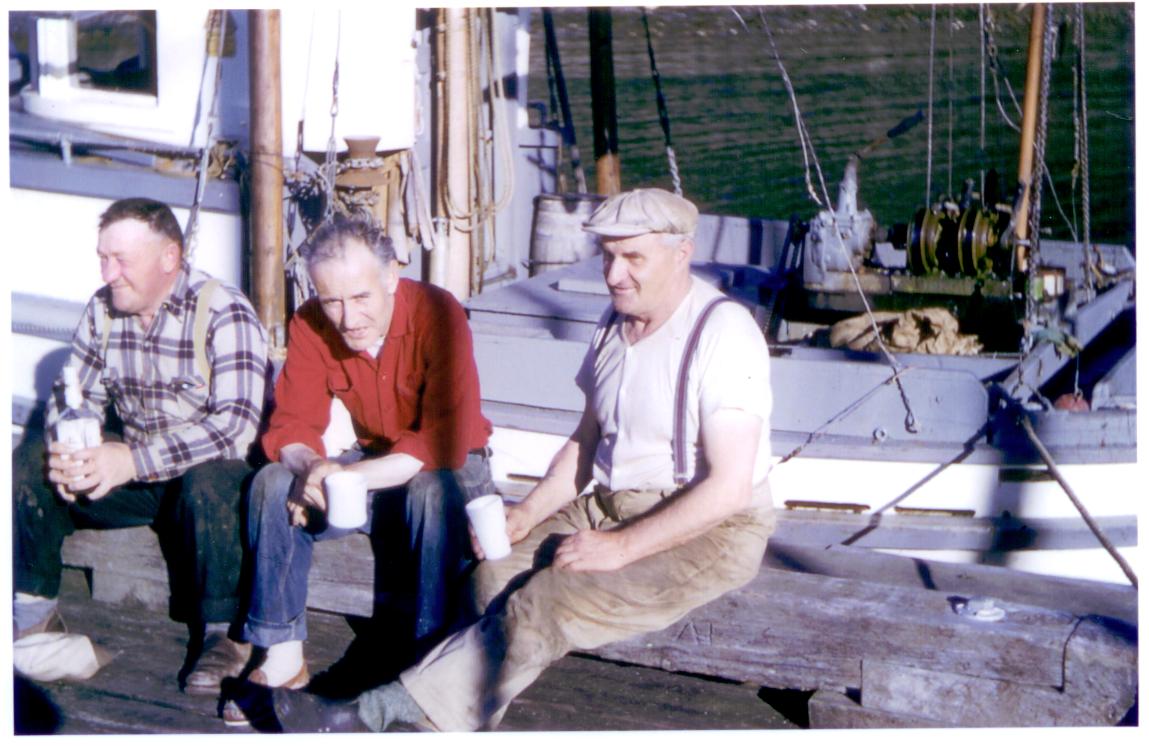
Fishermen (L-R) Walt Mackey, Ken Lameroux, and Jack Kolby, having an afternoon drink at the dock (of “milk, no doubt” according to the source!). Walt’s boat the Elliott is behind them. Ken fished the Lillian L, and Jack fished the Ruby.

4

The fish trap at Lizard Head (the contentious Claire Alexander fish trap mentioned in this post). This photo is from around 1958, the trap was removed when Alaska became a state in 1959. The structure on top is the watchman’s shack, the trap itself is made up of the low floating logs.

5

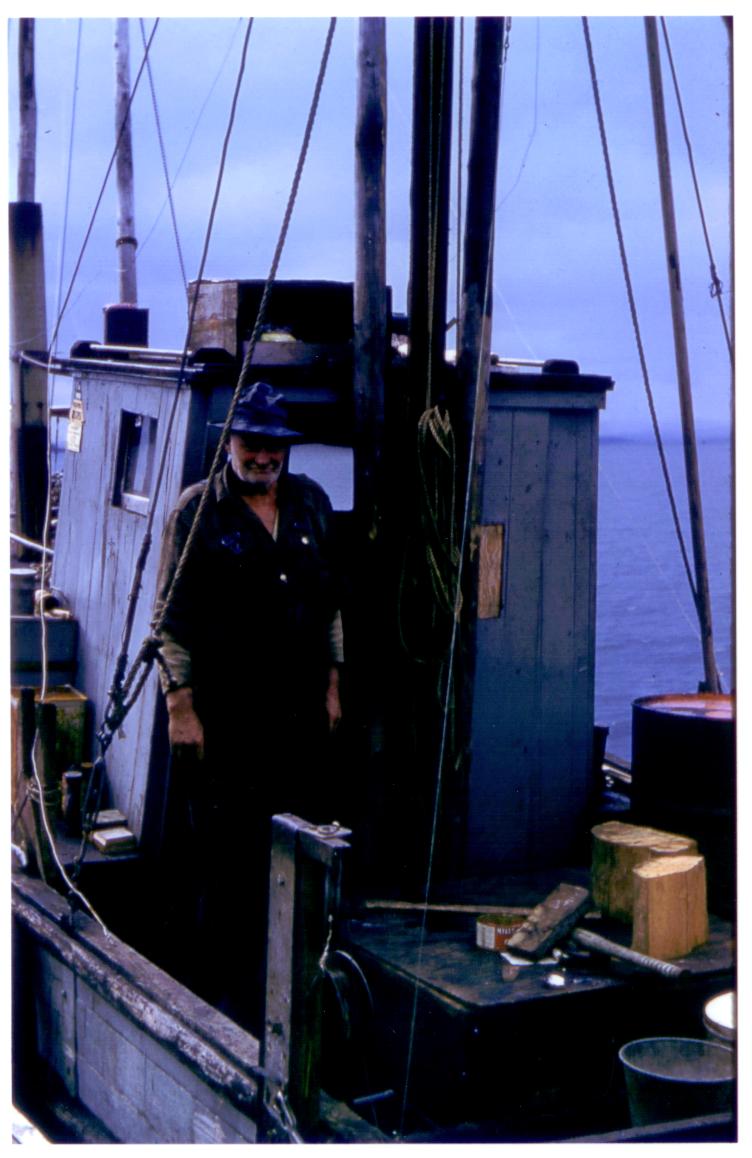
Above is “Dirty Foot Al”, so called because he didn’t wear shoes. Al built his own boat on the beach and heated with wood, you can see blocks of firewood and his axe on deck (oil heat using the same diesel as the engine was more common).

6

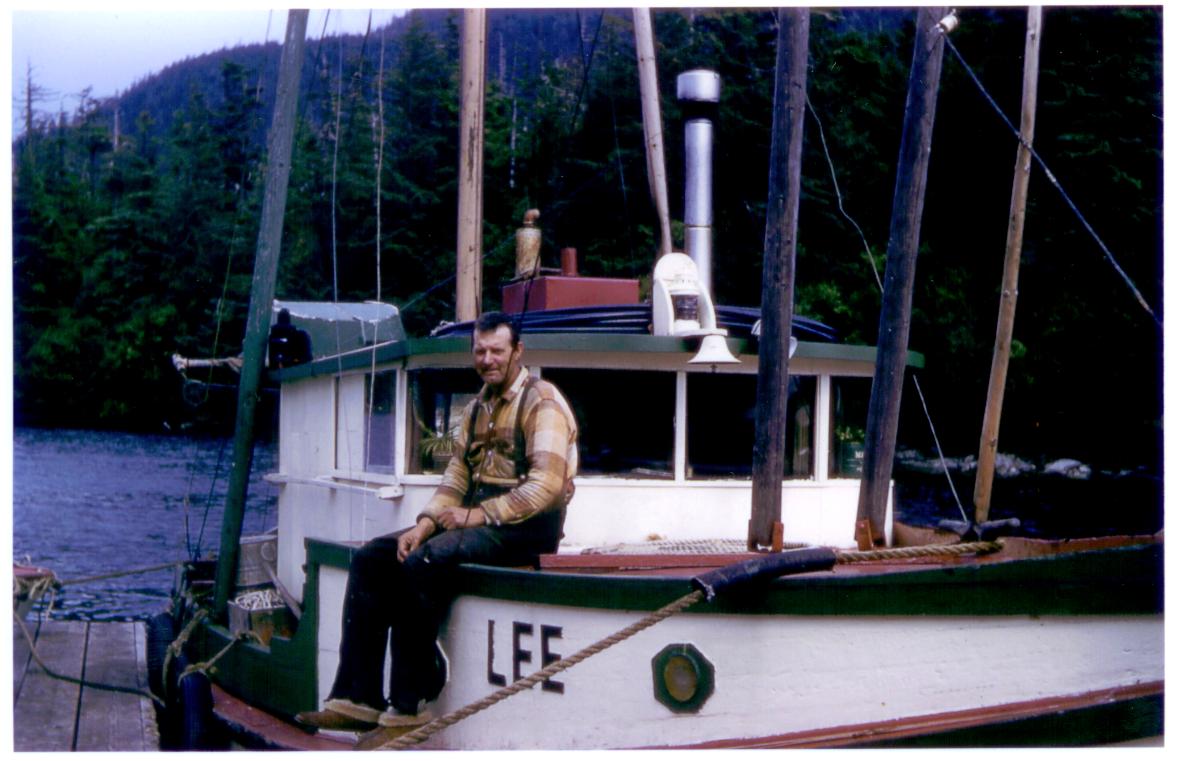
The troller Lee was fished by Ted Childress, seen above, and his wife (who owned the boat). It was reportedly a “Columbia River model”

A 1955 newspaper article (mentioned in the Bayers notes) described the ferry Teddy abandoned at Funter Bay after experiencing engine trouble. The owner reportedly went on to fish the “Lee”, but their name is not given.

7

Jack Kolby (or Koby?) fished the Ruby, seen above at Elfin Cove. Jack was reportedly of Swiss background, and loved to tell stories.

8

the Rosalind was owned by a man named Ben, seen above.

9

Here we see Walt Mackey delivering a loaf of bread to “Crackerbox” Mac. Mac got his nickname from a previous boat, which apparently was not very pretty. Mac’s boat seen above was equipped with a Model A Ford engine.

10

Above is Walt Mackey again, having “a bit of some unknown substance”.

Funter Bay had two state floats, both of which were used by local fishermen. The season generally ran from May 1 to late fall. Many of the boats would start early, and quit early, coming back in by 2 or 3pm. Then the crews would sit around with their “milk” telling stories or comparing  how much money they’d made for the day. They would also visit with local residents in the bay. Sometimes they would set herring nets overnight to catch bait.

In addition to the people shown above, other fishermen at Funter during this time period included Charlie Tubbs, Norton Sorrell of the Grey Mist (later bought by Charlie), Ned Albright of the Ommney, and Ted Samples of the Diver. Ted and his wife trolled, and the Diver had a compressor and “hard hat” rig for underwater work. Ted installed and repaired fish traps when he wasn’t fishing. A man named John had a small double-ender with a noisy 2-cylinder motor. Others who frequented the float, but didn’t always fish at Funter were Al “Scram” Schraman of the Aurora, Santiago Cesar, Mac of the Helen M, and Ike Puustinin of the Julia D.

One story of float hijinks involves a fishermen who somehow became a little drunk one night. The fellow kept a pee can just outside his wheelhouse door for late night calls of nature (these are fairly common on boats, both for convenience and safety, as you don’t want to stand at the rail drunk with only one hand free) Someone filled the can almost full of alkaseltzer tablets, and when the still-drunk fellow used it, there was a lot of unexpected foaming! The poor victim must have thought he had some terrible problem “down there”!


Funter Bay History: Cannery in 1929

January 14, 2014

I recently received an oblique aerial photo from August of 1929, showing the Funter Bay cannery. This is part of a set of Navy survey photos of Alaska. A few other photos from this survey are online, and I hope to find more in archival collections.

(Very large original, click to view full size)1929 Aerial FS T12a

At the time this was taken, the cannery was owned by Sunny Point Packing, and would operate for several more years before ending the main canning operation.

A few things are notable in the photo. The China Bunkhouse is only a foundation to the right of the Filipino Bunkhouse. Both “Oriental Bunkhouses” reportedly burned in 1929, so the Filipino Bunkhouse seen above is probably newly-rebuilt, with the China Bunkhouse in the process of rebuilding. Another notable feature is the long wharf and dolphins extending from the left side of the point. I had not been aware of this wharf’s existence before seeing the  photo. My best guess is it was a fuel delivery wharf serving the bulk oil tank on the point. It would make sense to keep the oil handling facility separate from the fish handling dock. Yet another interesting feature are the two radio masts to the left and behind the Superintendent’s house. These would have supported a dipole wire antenna similar to the type shown here. I am not sure what kind of radio was in use at the time, the 1920s saw the beginning of “High Frequency) (3-30mhz) and voice technology, supplementing low frequency and morse code stations. Some photos and information on a cannery radio operator from Yakutat from around the same time period can be found here. The antenna masts were likely multi-step poles made by lashing logs together, in the same manner as a wooden ship’s mast. This allowed them to reach higher than the surrounding trees.

I’ve zoomed in on the main cannery property and labeled some of the structures below. (The 1960s survey map was helpful with this).

1929 Aerial labeled

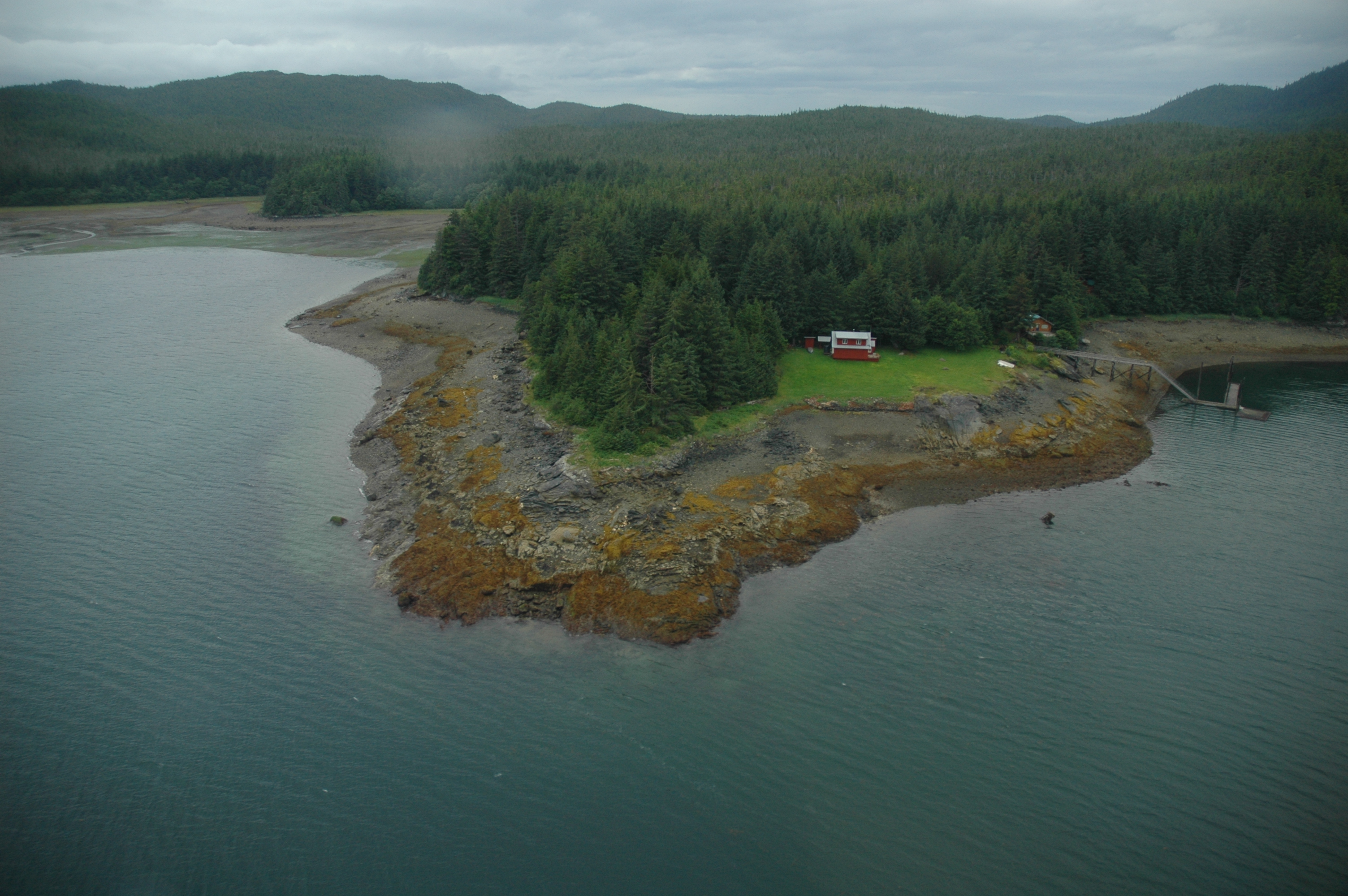
And for comparison, I’ve also included an aerial photo from a similar angle, taken in 2008. This is from a modern Alaska-wide aerial surveying project called Alaska Shorezone, a GIS mapping and aerial imagery project covering most of the coast (most photos in that set were taken at low tide, the 1929 image shows a higher tide).

2008 Aerial
The red house is a modern private residence, located approximately where the power plant stood. The green-roofed house is approximately where the mess hall stood. The only visible remains of the cannery in this photo are the floating dock and approach ramp (which have been updated and had sections replaced since 1929). The regrowth of spruce trees has obscured most of the formerly cleared land at the site.

I am very grateful to Mark Riley, Remote Sensing Coordinator for the Forest Service’s Alaska region, for tracking this down for me! I also received assistance from Shawn Younger, president of the WWII Archives Foundation, with another such photo. I may write about that one later.


Funter Bay History – Fish Trap Locations

August 10, 2013

I’ve talked about fish traps in several previous posts. Recently I came across a set of maps showing the locations of  traps around Southeast Alaska in 1918. This is a fascinating series, part of a government report from that year on the Southeast Alaska fishing industry.  An excerpt from the Lynn Canal and Stevens Passage map is below, highlighting the region around Funter Bay (click to view a larger version). I will link to the originals at the end of this post.

1918 Fish Traps

I have yet to find the original report which goes with these maps, so unfortunately there’s no key corresponding to the trap numbers. However, a quick glance at this map tells you a lot about where the salmon were to be found! The area of densely packed traps between Excursion Inlet and Point Couverden is known as Homeshore, and is still a popular fishing area today. Across all three maps in this set, covering most of Southeast Alaska, that one stretch of shoreline has the most fish traps per area.

Note that most of the traps shown on the map are the “permanent” pile-driven type. A 1919 report stated that the Thlinket Packing Co at Funter Bay had 21 traps that year, only 4 of which were floating traps. Pile-driven pound nets seem to have fallen out of favor towards the middle of the century, probably due to the expense of maintaining them and repairing winter ice and storm damage. By the time fish traps were banned at Alaska statehood, floating traps predominated.

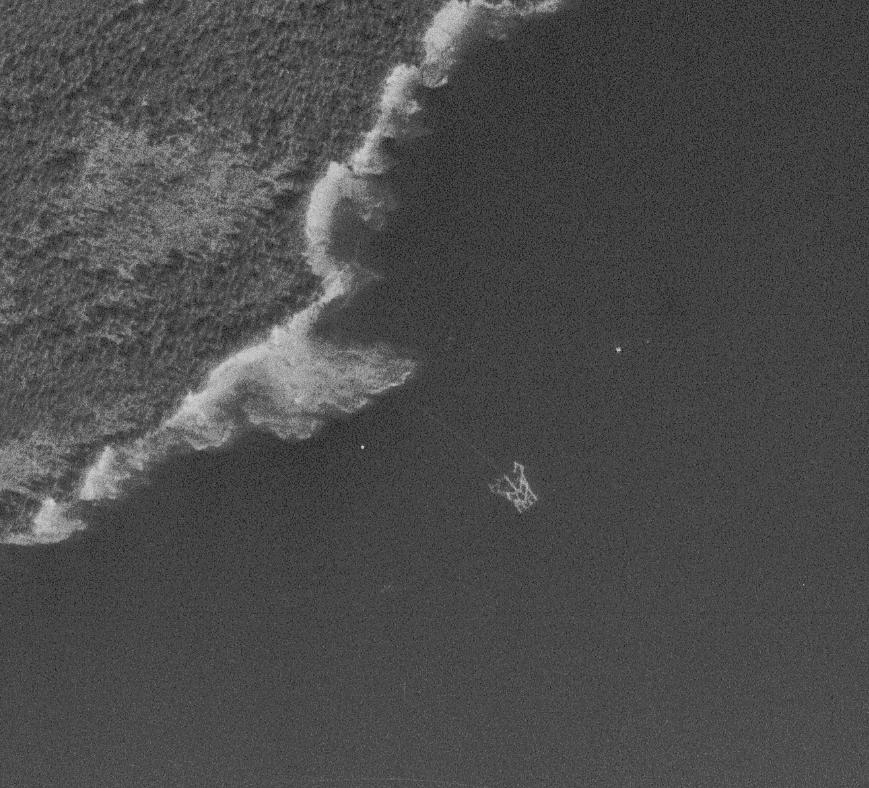
I have previously noted some traps on the beach at Funter Bay in old aerial photos, floating traps were often taken ashore or anchored in shallow water for winter storage. The traps at Funter have all been beaten into individual logs by decades of storms, but I recently noticed a few semi-intact traps in Excursion Inlet. These are visible on the Alaska Shorezone project’s imagery.

beached traps

The full versions of the 1918 trap location maps are available through the Office of Coast Survey Historic Map and Chart Collection. They are as follows:

Lynn Canal and Stephen’s Passage

Clarence Strait Revillagigedo Channel and Portland Canal

Dixon Entrance to Chatham Strait Alaska


Funter Bay History – Cannery Employees

August 6, 2013

The Thlinket Packing Co at Funter Bay employed a number of different people over the years in a variety of positions. Below is a partial list, gleaned from early 20th century newspapers. Keep in mind that consistent spelling of names in the early 1900s was somewhat optional!

_____________________________________________________________

James T. Barron – Owner and Manager, 1902 – ~1926. More on the Barron family here.

_____________________________________________________________

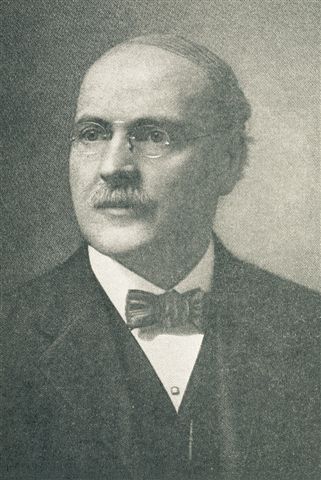
Judge Michael George “MG” Munly (1854-1923)

Munly

The family name was originally spelled “Munley”, but Michael later dropped the E. He was company Secretary and brother-in-law to James Barron. He married Mary Nixon, sister of James Barron’s wife Elizabeth. Munly was admitted to the Pennsylvania bar in 1882. He was deputy city attorney in Portland, and was appointed a judge of the Oregon circuit court from 1892-1894. Munly ran unsuccesfuly for mayor of Portland in 1909. Along with the Barron family, Munley and family were frequent visitors to the Funter Bay cannery.
Judge Munly’s grave and additional information.
1922 Biography of M. G. Munly
1928 Biography

_____________________________________________________________

C. F. Whitney was Sales Manager at the company, based in the Portland office. He seems to have rarely visited the Funter Bay operation. Prior to taking this position, Whitney had been sales manager of the New York Life Insurance Co.

_____________________________________________________________
Mr. and Mrs. Norton – Listed as winter caretakers at the cannery in 1903. Left in February to develop some timber claims in Oregon.

_____________________________________________________________

James Lawlor – (Sometimes spelled Lawler) was caretaker and winter foreman(?) from at least 1903-1909. He took over from the Norton’s in Feb 1903 and began preparations for the upcoming coming packing season.

_____________________________________________________________

Chris Houger (Sometimes spelled Hooger, Hugher, Hager, etc) was “Outside Foreman” at the Funter Bay cannery from at least 1903-1919. ?He was in charge of piling crews, trap installations, nets, etc. His wife was noted as being the cannery’s bookkeeper in 1914. In 1917 Western Canner and Packer referred to him as Manager of the Thlinket Packing Co.

_____________________________________________________________

Captain Haly of the Rainier – hired to bring up the “fishing steamer Barron” from the South for the 1903 season.

_____________________________________________________________
Mr. and Mrs. A. C. Bogarth – Operated fish traps near the Funter Bay cannery for several years around 1903.

_____________________________________________________________

Captain Crockett – skippered the Anna Baron during at least the 1904-1907 seasons.

_____________________________________________________________

Captain Mason was listed as skippering the Anna Barron in 1911.

_____________________________________________________________

Captain Martin Holdst (Also listed as Martin Olson) of the Belle was employed in the winter of 1909-1910 repairing the water and power systems at the cannery.

_____________________________________________________________

Pat. F. Mulvaney was the storekeeper at the Funter Bay cannery from at least 1909-1917 and listed as watchman in 1918 -1919.

_____________________________________________________________

Fred Barker (Or T. H. Barker) was listed as cannery superintendent in 1911. His brother “Billy” Barker was the assayer at the Perseverance mine.

_____________________________________________________________

Cannery employees listed as arriving in spring of 1911 were: H. H. Harvey, C. W. Young, G. W. Scott, E. A. Harriman, Thos. Redwood, F. Phelps, W. F. Brillian and H. Wills.

_____________________________________________________________

A. M. “Bob” Bell was listed as a canneryman at Funter Bay in 1912. There is also an A. E. L. Bell mentioned, and possibly another Bell who ran the Glacier cannery.

_____________________________________________________________

F. Hilder was an employee at the cannery in 1914.

_____________________________________________________________

George W. (or L.) Bowman was listed as cannery superintendent in 1914. He formerly worked for the Northwestern Fisheries company.

_____________________________________________________________

J. F. Bennett was listed as a cannery employee in 1915, his arm was caught in a rotating shaft in June and he required skin grafts at the Juneau hospital.

_____________________________________________________________

Harold W. Chutter (Or Chuttes or Chutte or Shutter or Chutler) is listed as the “popular superintendent of the Funter Bay Canning Co” in 1916 and 1917. In Feb. 1917 it was reported that “Mrs. Chutter, formerly of Funter Bay” had left to marry the former accountant for the Juneau Electric Light company. In December of 1917 it was reported that Chutter was closing up his affairs at the cannery and leaving for Bremerton to join the Navy. Sales Manager Whitney planned to come North from Portland to temporarily fill in as manager.

_____________________________________________________________

C.L. Cook is listed as bookkeeper in 1917.

_____________________________________________________________

G.C. Coffin, an employee of the cannery, was at the Juneau hospital in 1917 for eye treatment.

_____________________________________________________________

E. W. Hopper is described as the superintendent and/or manager of the cannery in 1918. His wife and daughter also resided at Funter in the summers.

_____________________________________________________________

Capt. John Maurstad skippered the Barron F. in 1918. According to the Kinky Bayers notes, he came to Alaska in 1909 and was a resident of Angoon. He did some logging and built a sawmill and Kasnaku Bay (Hidden Falls) in 1927. In 1940 he was in charge of a CCC crew building roads near Angoon. He may have died around 1942 at age 53.

_____________________________________________________________

D. J. Wynkoop, formerly of the Treadwell mine, was employed at the cannery in 1918.

_____________________________________________________________

Captain A. Woods is listed as running the Anna Barron in 1918. He fell from a 20ft ladder in February and was in St. Ann’s hospital expected to fully recover.

_____________________________________________________________

Chinese, Filipino, and Native Alaskan employees were usually only mentioned in passing, with no names given. A 1914 article lists the following “strange names” of Chinese workers bound for Funter Bay, but states that the purser of the steamship City of Seattle may have been kidding around: “Ten Pin, Hinge Lock, Wong Toon, Mop Dip, Wong Chuck, and Sam Lea“.

I’ve tried briefly looking into each of these people, but have not found any detail on most of them. I may try to come back to this post if more information becomes available. If you know anything about any of them, please feel free to contact me!


Alaska’s Historic Canneries Blog

August 2, 2013

I was recently invited to write an article on the Funter Bay cannery for the Alaska Historical Society. The article is on their excellent blog of Alaska’s Historic Canneries, and can be viewed here:

http://alaskancanneries.blogspot.com/2013/07/the-funter-bay-cannery.html

I’d like to thank Anjuli Grantham of the AHS for getting this set up for me, and my sister Megan for proofreading.


Funter Bay History: Mystery Engine

June 13, 2013

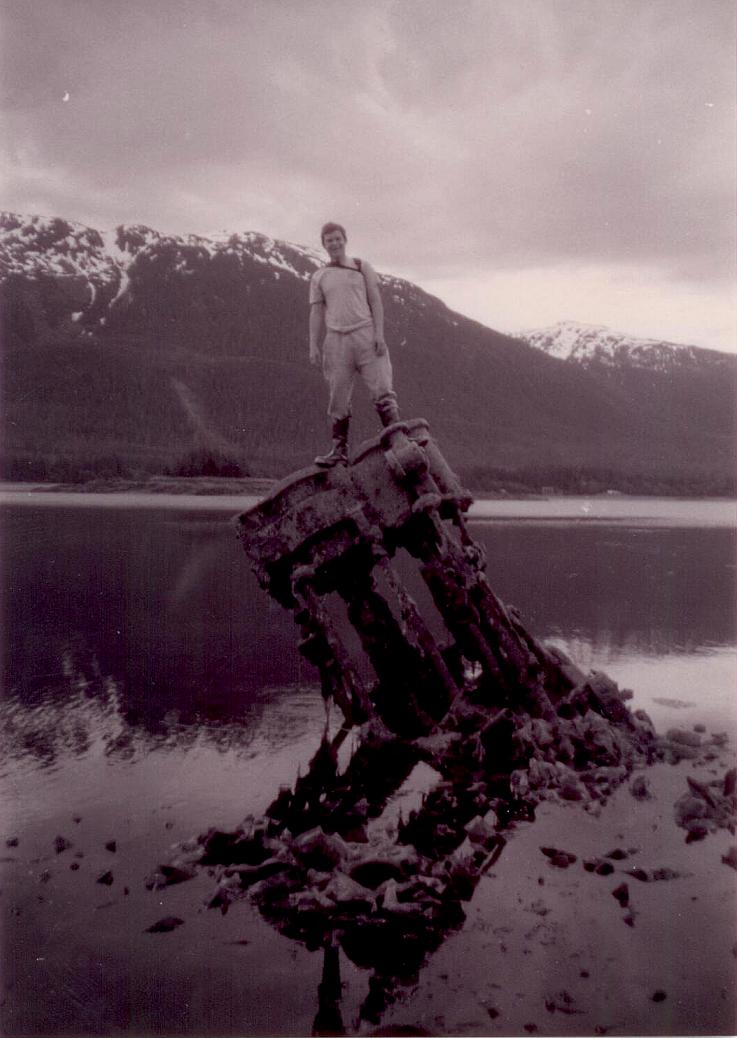
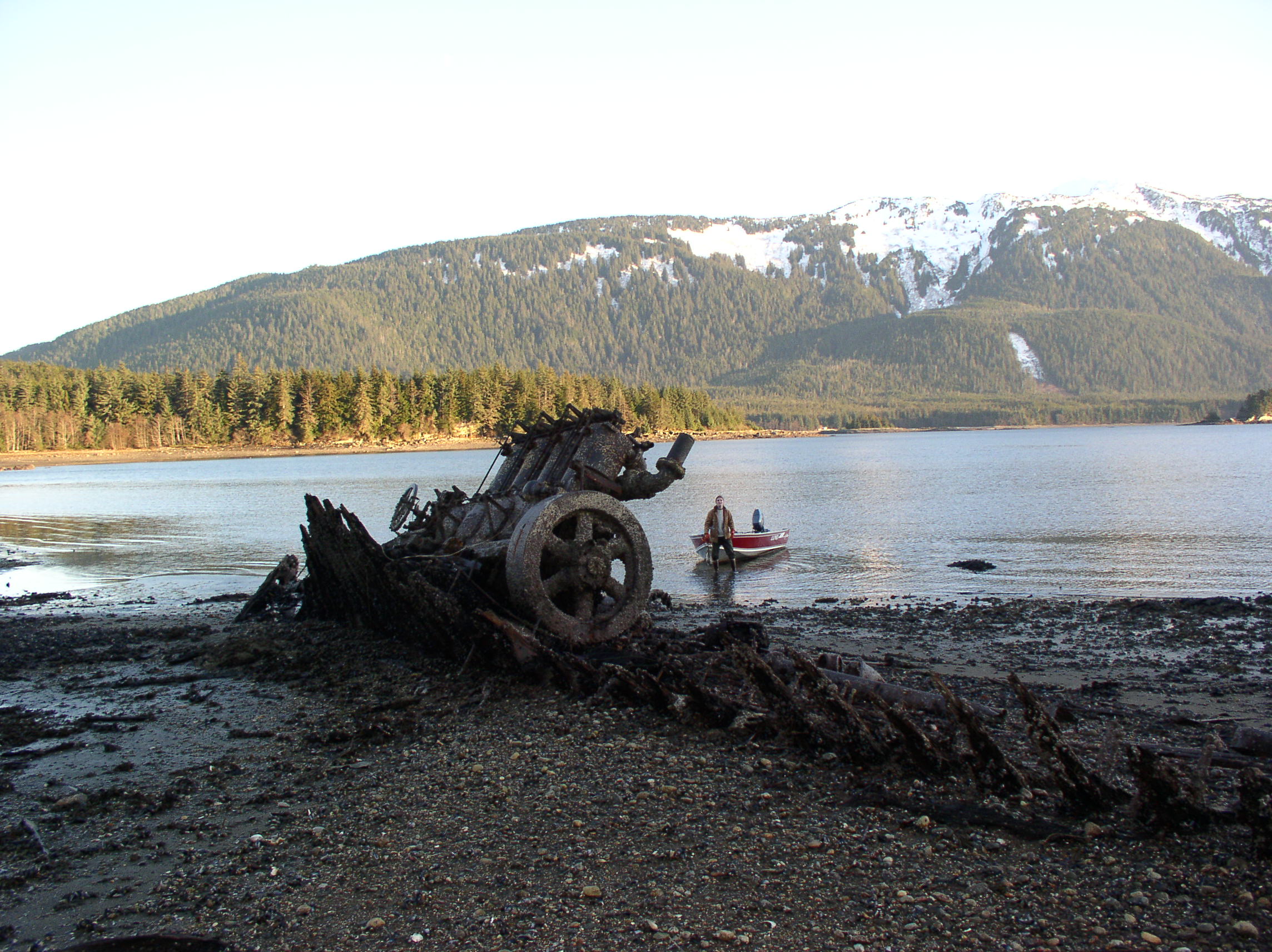
While digging through my photos I came across one showing a mysterious piece of machinery in Funter Bay. That’s me standing on top of it, I’m going to guess it’s around the year 2000.

0a-submerged

After visiting the Lake Superior Marine Museum in Duluth (actually for the 3rd or 4th time, it’s great!) I realized that this thing looks a lot like a compound marine steam engine. Some examples are here. Unfortunately I don’t seem to have any other photos of this one.

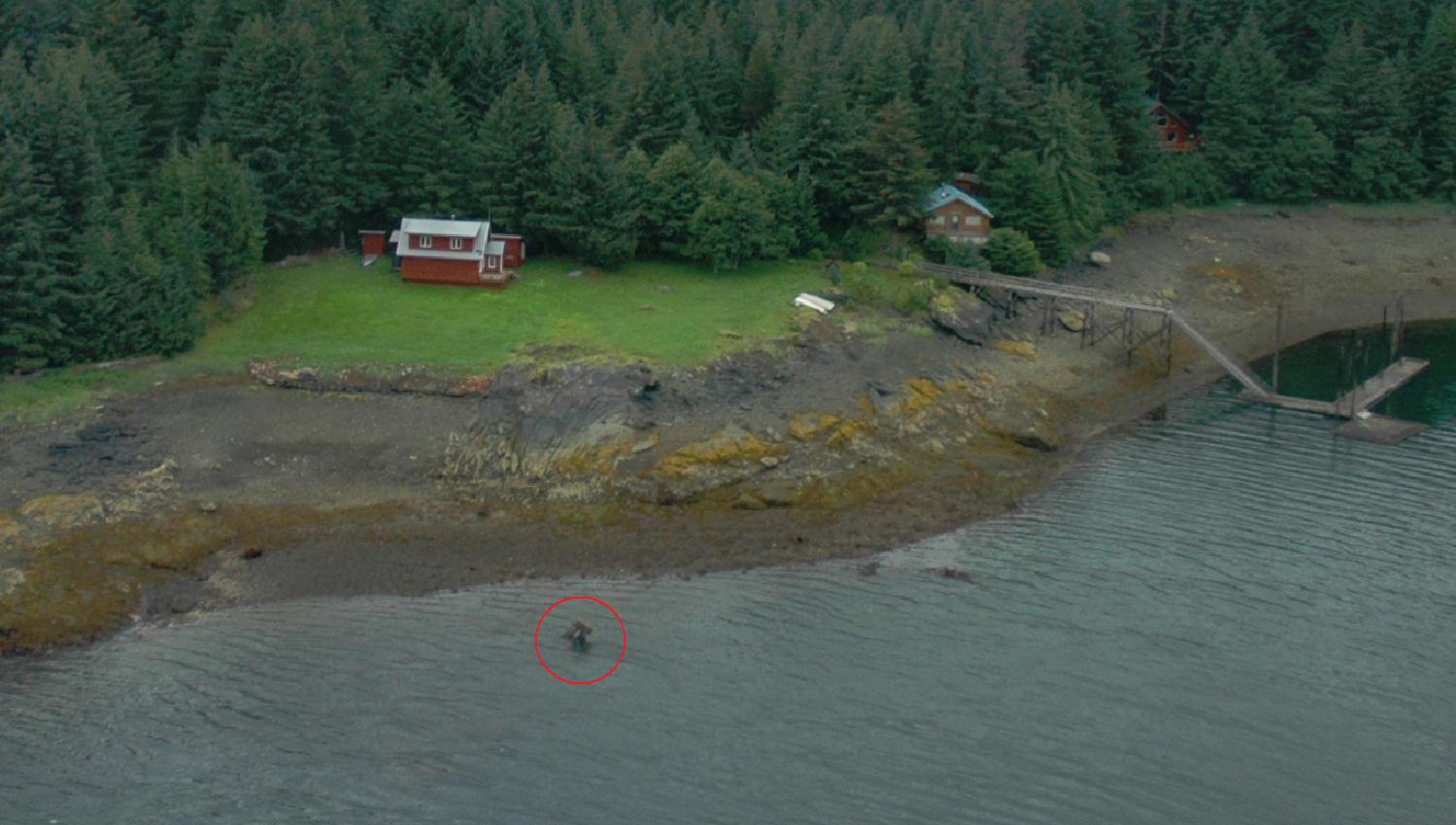
This thing is only visible at extreme low-water (a minus tide), at other times it is mostly submerged. It lies off the former end of the pier at the Funter Bay cannery, leading me to believe that it’s either from a sunken fish trap tender, or equipment which was mounted on the pier at the cannery.I do not recall seeing obvious boat wreckage around the engine, but things decay so fast underwater that any wood is likely long gone, and any metal is mixed in with general trash and debris from the cannery, making it harder to identify. Large ships are shown docking at the cannery pier in the 1940s, so it’s unlikely that anything sank and was left there prior to that time. The engine and any remaining hull structure would have been a hazard at low tide.

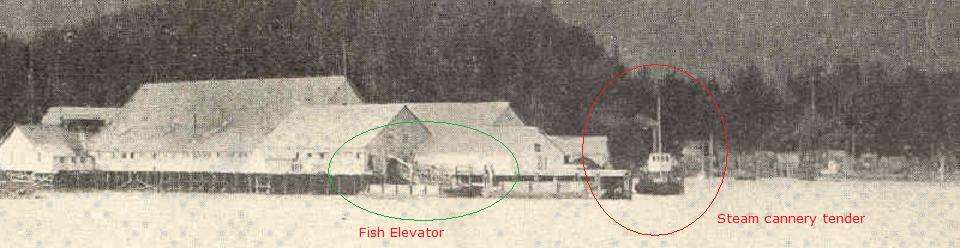
The pier-mounted origin seems a little far fetched, the cannery mostly used mechanical power take-offs from large low-horsepower gas engines, so why would they have a steam engine mounted on their dock? The main dock-end equipment would have been a “Fish Elevator” (basically a conveyor belt) to unload salmon from scows. This image is labeled “Funter Bay… Indians Pitching Fish in Elevator”. This image shows another view of such an elevator, as does this one. This photo shows the upper end of a fish elevator, obviously powered by overhead pulleys and belt drives (as was most of the cannery equipment at Funter). I would not expect a steam engine to be used just for the elevator (and in fact, the elevator seems to have been in a different building from the spot where the steam engine lies).

Cannery site ca 2008, with steam engine circled in red:
engine
From the Alaska Shorezone Mapping project.

The same location in 1948, approximately at the end of the cannery pier:
1948

Cannery pier in 1907 showing tender tied up about where the engine is now, and the fish elevator with scows docked next to it.
1907

The cannery area in 1979, showing how the buildings had begun collapsing (there’s not as much structure overhanging the bay as there was in ’48). Approximate steam engine location is circled: 1979

Another explanation could be that this was salvaged from a wrecked cannery tender elsewhere, left on the pier when the cannery was abandoned, and fell into the water when the structure started collapsing around the late 1950s/early 1960s. If so, it’s surprising that it landed basically upright. A candidate for this possible origin could be the mystery wreck on Highwater Island, which seems to have had a boiler but has no sign of an engine. It could also have been removed from a tender during a refit to gas or diesel, and left lying around on the pier, but this seems like a stretch as well (it would be more likely they would have refitted in a marine yard in Seattle or Astoria, the Anna Barron is sometimes mentioned in publications like Pacific Motorboat as undergoing maintenance in Astoria.

None of the cannery tenders that I’ve previously discussed seem to match. Of the original T.P. Co. boats I know of, only the Anna Barron and the Buster had steam engines, Buster‘s was replaced with a gas engine prior to 1926. The captain of the Anna Barron was reported as saying the vessel could be raised, but I am not sure if they salvaged the engine or anything else from it. (Oddly, this document gives a different story of the Anna Barron‘s sinking than this page, which I previously quoted, although both seem to be using similar source documents. The BOEM page seems to be saying Albert Michaelsen was the captain (vs George Black), that they were coming from Hoonah (vs Funter), that the engine head burst, and that the vessel drifted towards Point Howard before grounding at Pt. Ainsley, and the crew swam 20ft to shore).

Later cannery owner P.E. Harris Co had quite a few boats, in 1956 these included the Amelie, Cape Douglas, Health, Jim B, Kathy B, Marina G, Morzhovoi, Norse Maid, Orcas, Thrasher, Trojan, Glasenap, Izembek, Fairweather, Moha, Pat B, and Seakist.  However, none of these seem to be steam-powered (steam was largely obsolete by the mid 20th century). By 1962 the company had become Peter Pan Seafoods, and vessels included the Carmen B, Denis N, Dream Girl, Mariner, Reliance, Alf, and Western Sea. Again, none of these appear to be steam powered.

At this point I’m still stumped on both those mysteries (what boat sank at Highwater Island, and what boat (if any) was the source of the compound steam engine at the cannery?

If anyone reading this knows steam engines or has any ideas for tracking down these mysteries, please let me know! You can leave a comment below, or email me at gabe<at>saveitforparts<dot>com.


Funter Bay History: Scow Bay Part II

June 10, 2013

I realized that I have a large number of photos from Scow Bay, so I’ve decided to follow up on one of my earliest Funter Bay History posts with more information on that location.

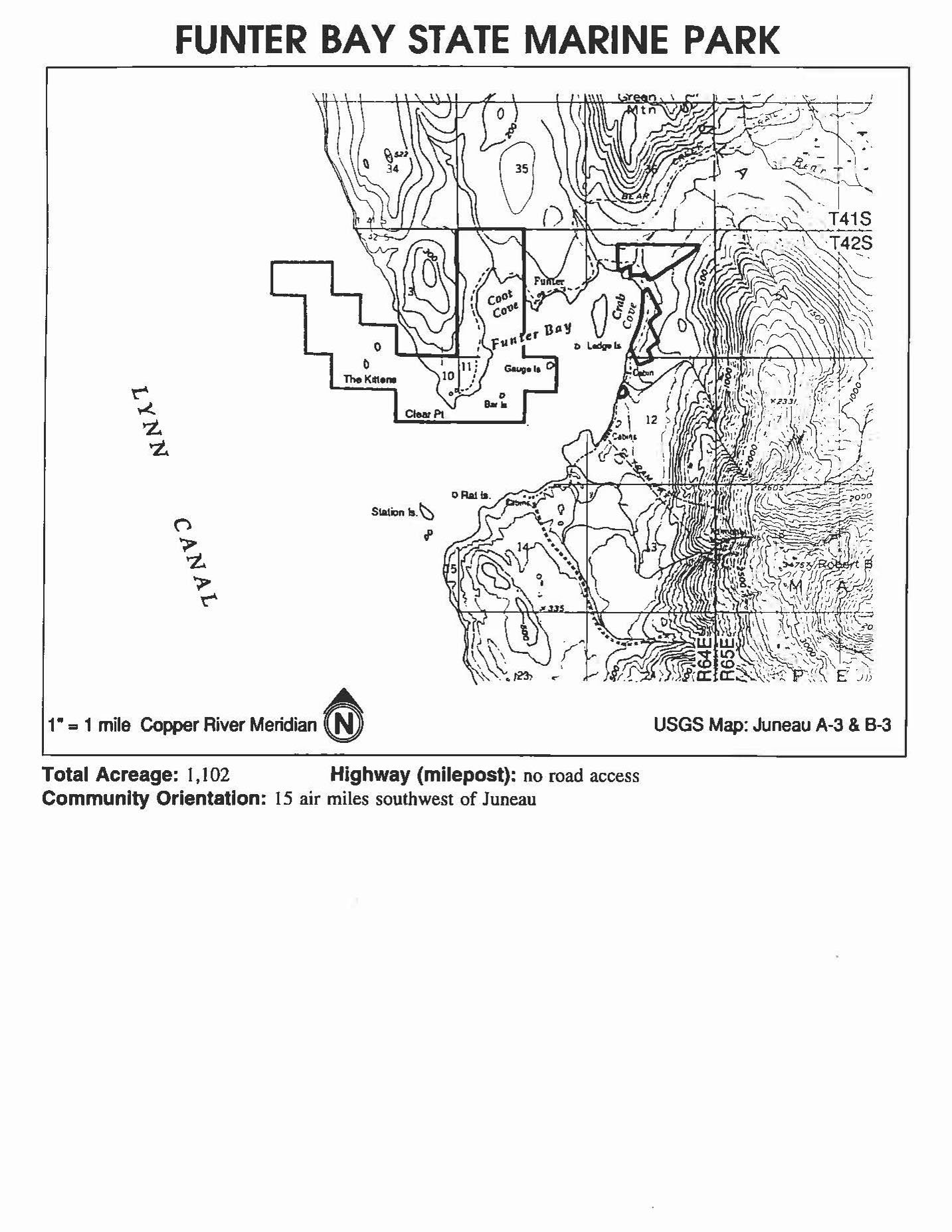
Scow Bay is one of the few parts of Funter Bay history that are publicly accessible. This side of the bay lies within the Funter Bay State Marine Park. Again, please note that the adjacent former cannery site is mostly private property. Also note that the Scow Bay area features extensive tide flats, keep an eye on the tides if you plan to land a boat here, or you may find it high and dry!

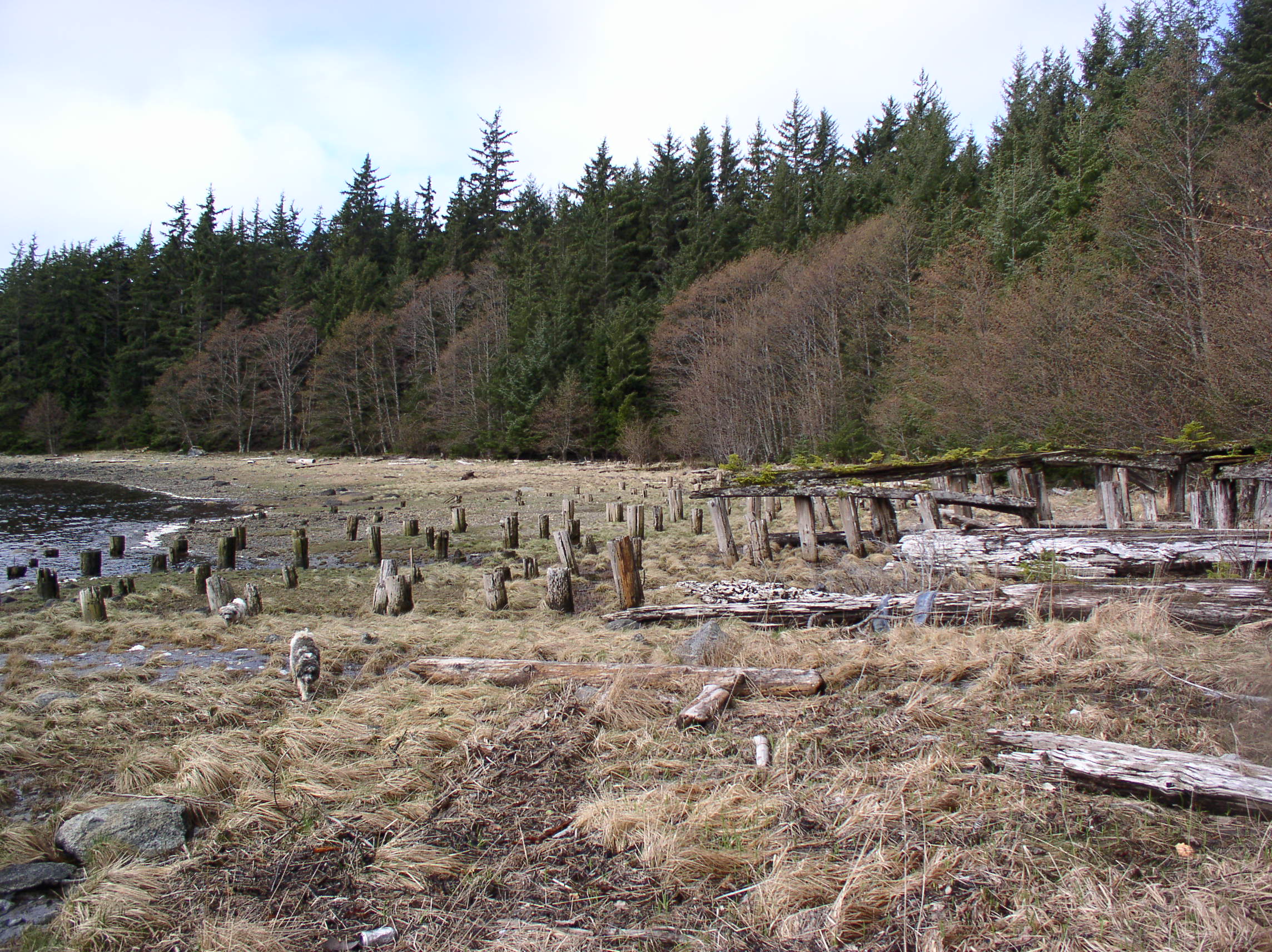
Slipway pilings at Scow Bay:
0a-scowbay

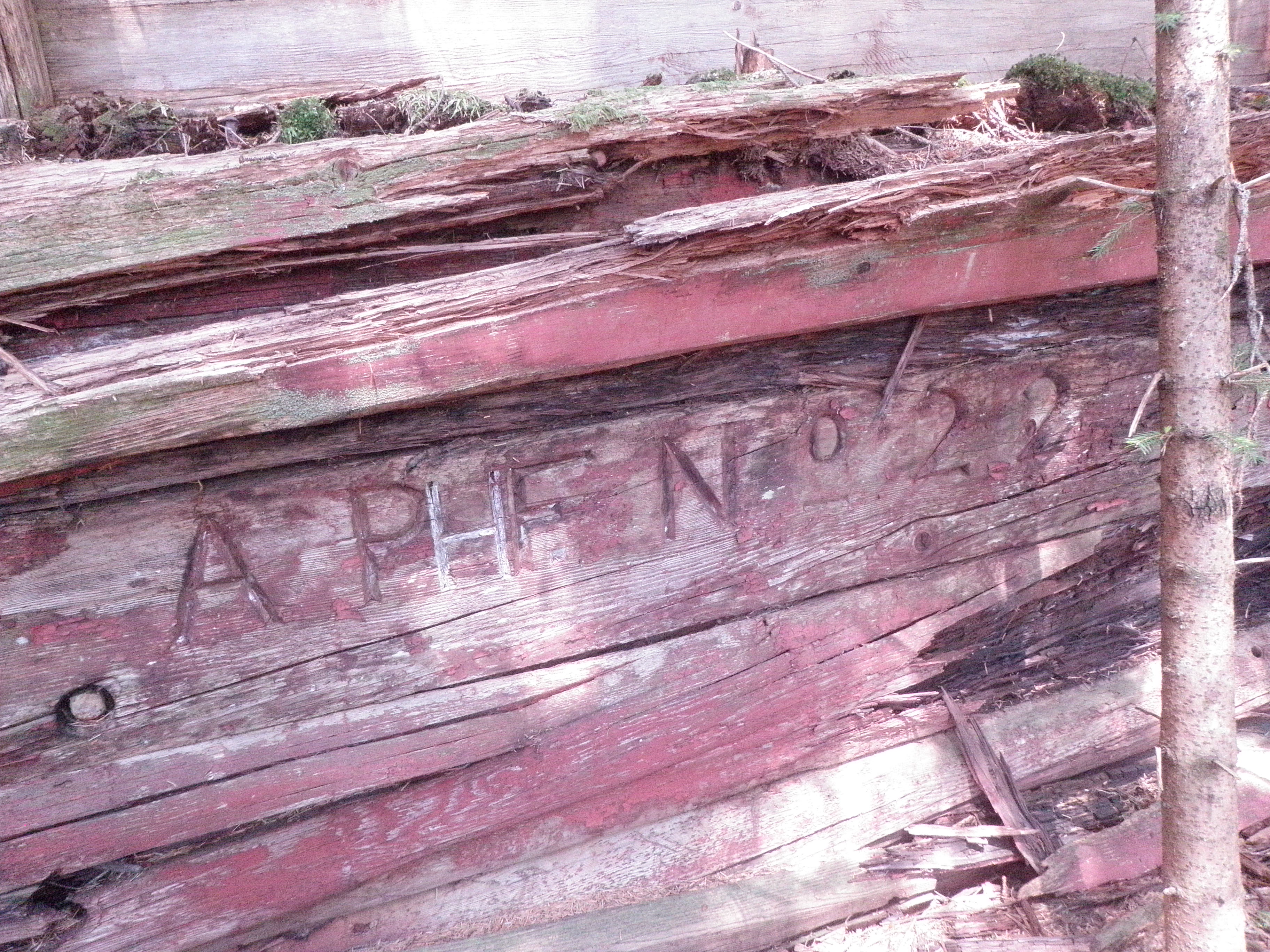
The name of one of the scows, which were large enough to require official documentation as Merchant Vessels:
OLYMPUS DIGITAL CAMERA

From the 1965 Merchant Vessel Registry on the above scow:

A.P.F. No 22 (wood) Barge, No 168899. 41tons gross/net. 61.1ft long, 18ft breadth, 4.4ft depth. Built 1924 in Houghton, WA for freight service. Owned by P.E. Harris Inc of Washington, home port Juneau.

The carved “H” seems to have slipped in between the P and F sometime after the official numbering, I’m not sure what it means. The other scows had equally imaginative names, like the No 19, No 20, etc.

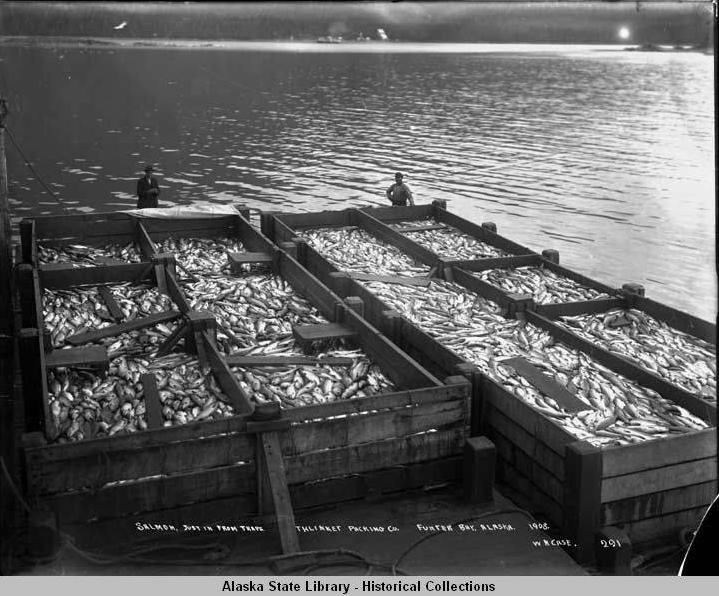
Here are some more views of these scows in operation in 1908. The wooden boards surrounding the top would have increased their load capacity:
Funter Bay Cannery2 1908
Courtesy of the Alaska State Library, William R Norton collection, P226-446

scows2
Courtesy of the Alaska State Library, William R Norton collection, P226-445

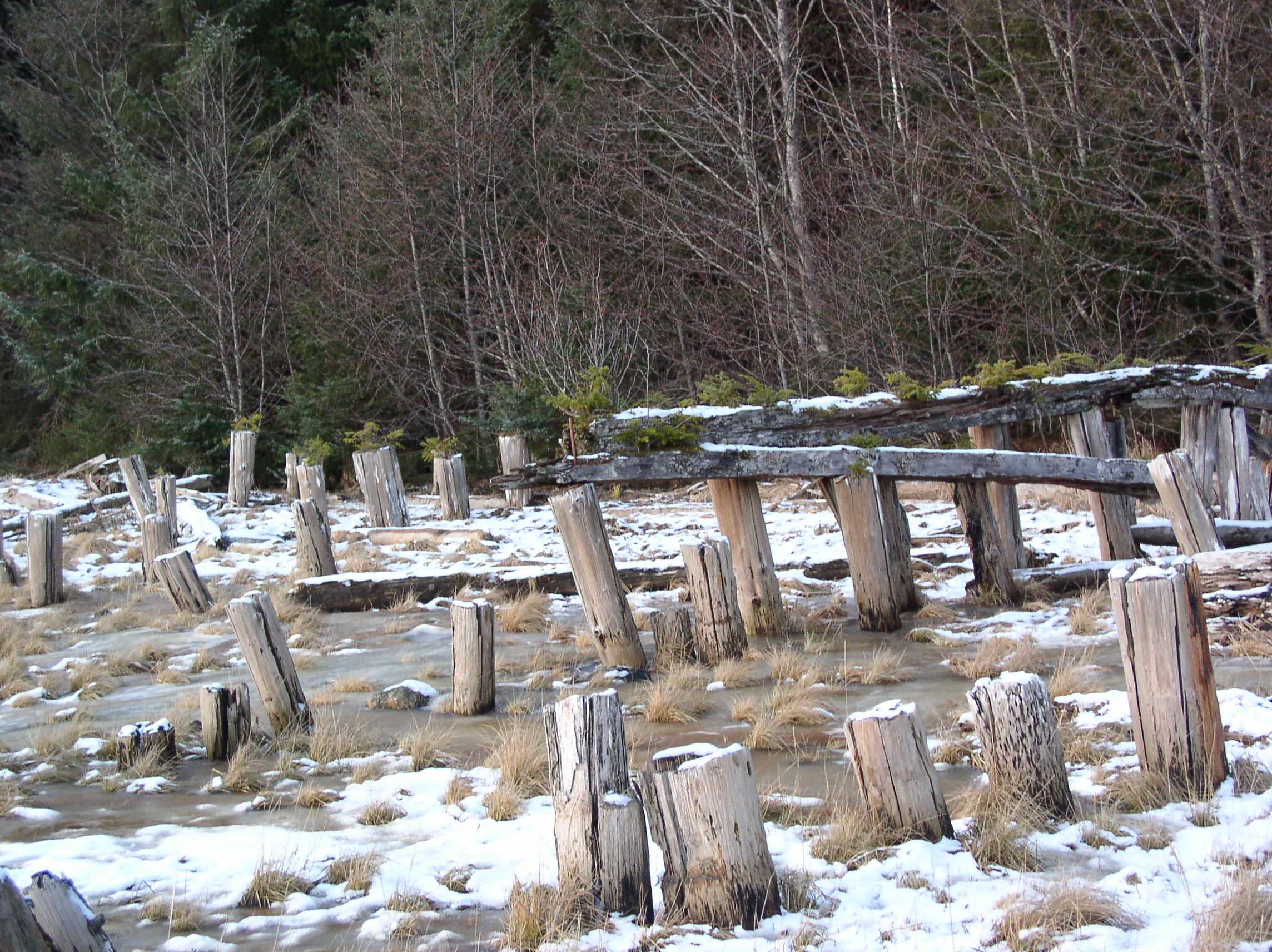
Two more views of the slipways, you can see some of the remaining top rails on the right, now home to small gardens of saplings:
OLYMPUS DIGITAL CAMERA

OLYMPUS DIGITAL CAMERA

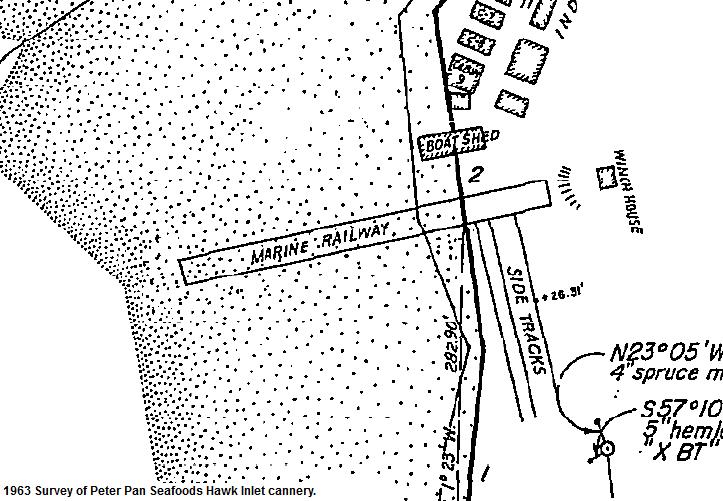
Here is a diagram of the scow slipways from a cannery of similar vintage. Typically there would be one main ramp leading from the water up to the woods above high-tide, and then scows would be pulled sideways onto parallel tracks for storage. At Funter they seem to have had multiple parallel tracks to the water, rather than side-tracks.

scow survey

Some of the collapsed top-rails that made up the storage tracks of the slipways, and one of the braided steel cables running back to the winch engine:
OLYMPUS DIGITAL CAMERA

A spool that would have held steel cable (also known as an Alaskan patio table!):
OLYMPUS DIGITAL CAMERA

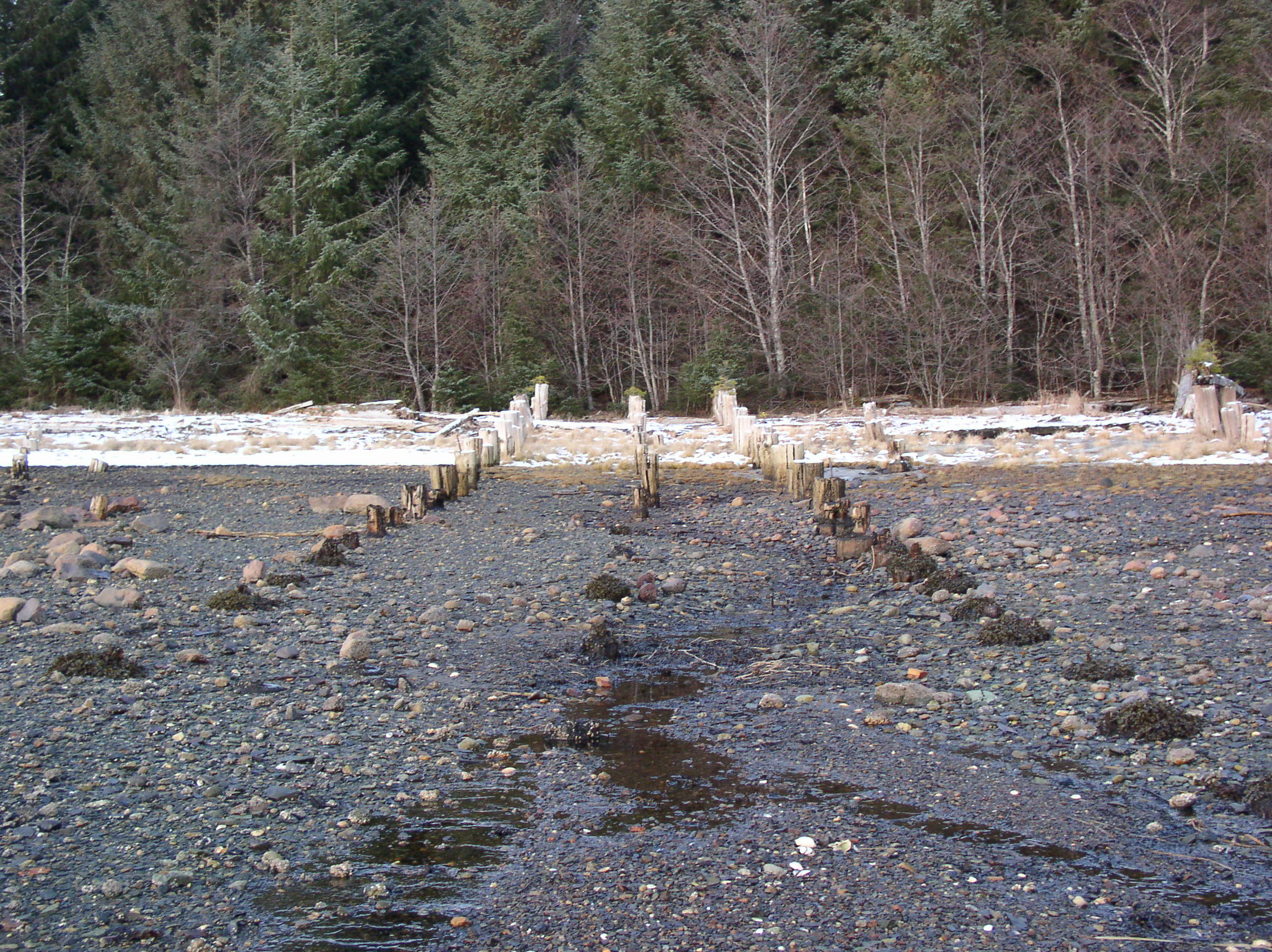
Parallel rows of pilings leading from tideflats to the woods:
OLYMPUS DIGITAL CAMERA

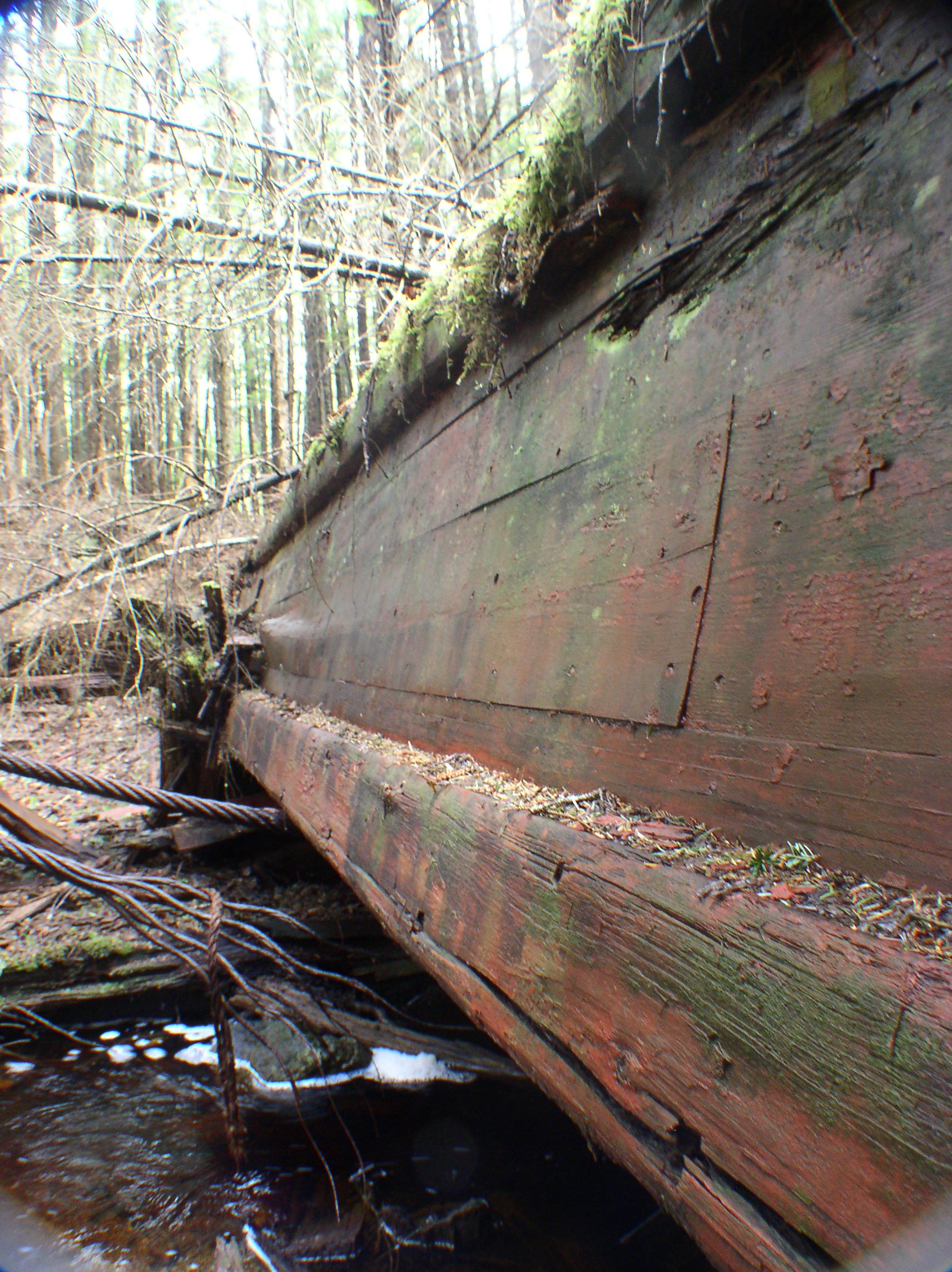
Closeup of a scow hull. The red paint was probably a copper-based anti-fouling bottom paint (to prevent barnacles and other marine life from growing on the wood):
OLYMPUS DIGITAL CAMERA

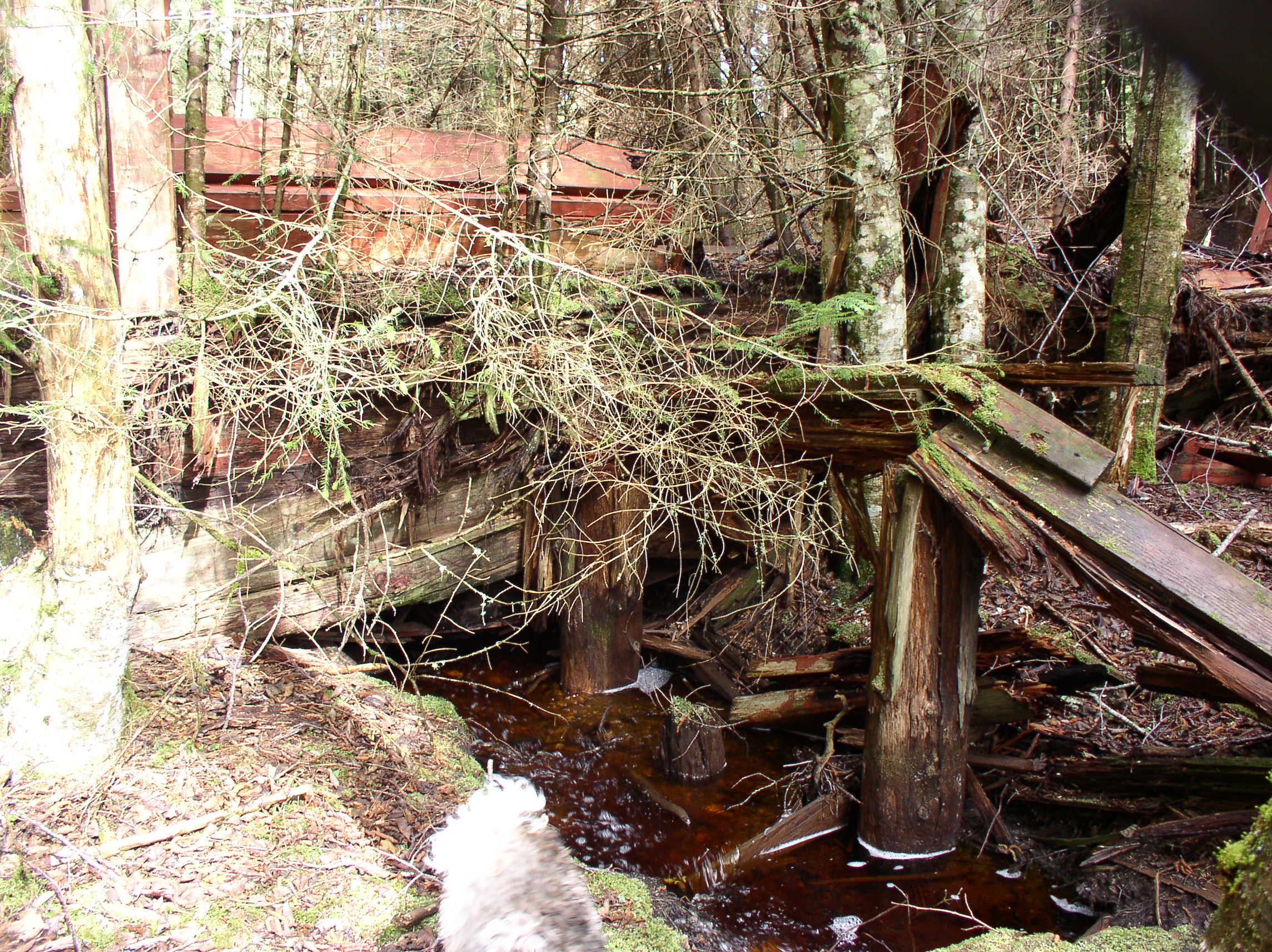
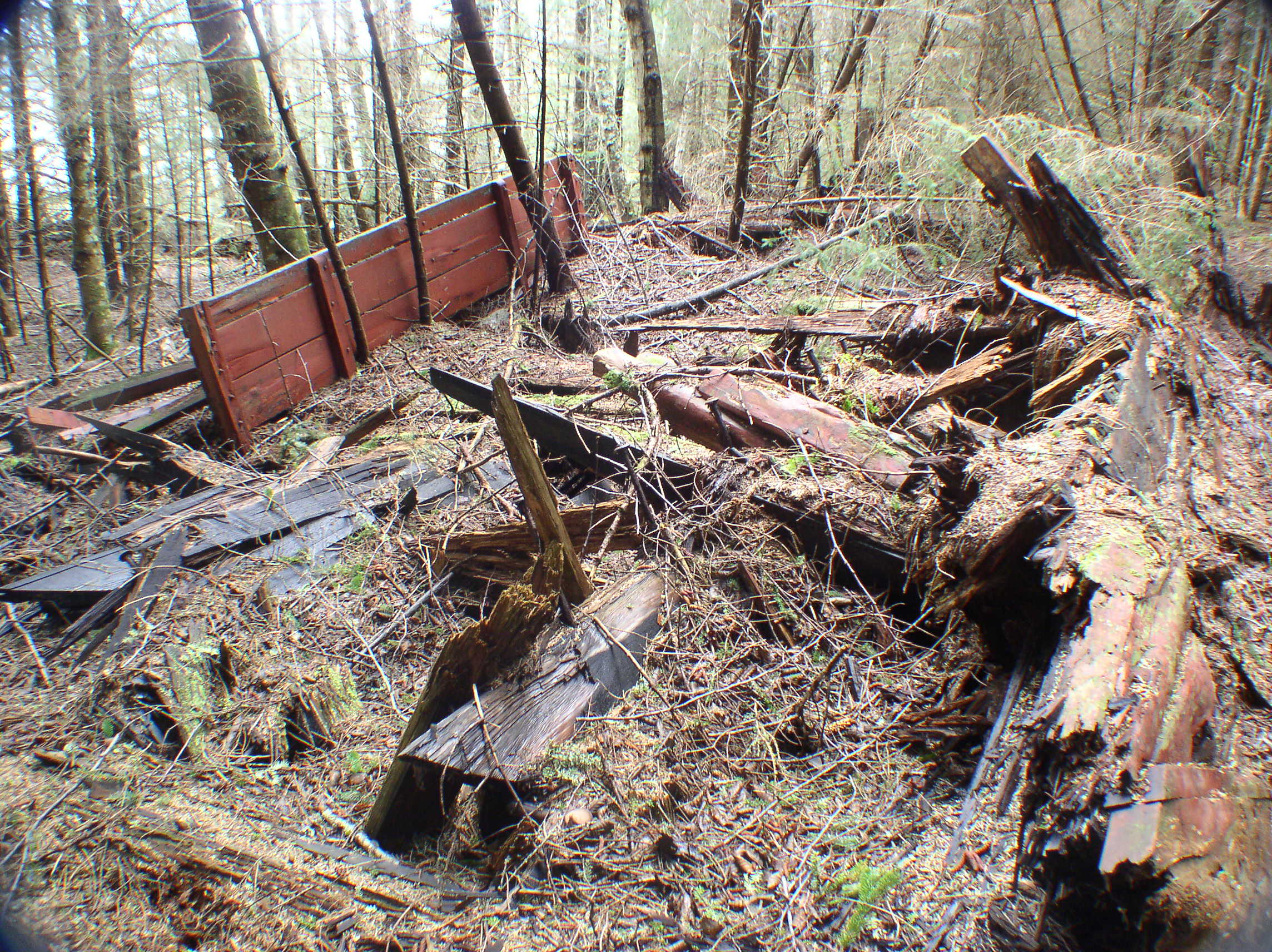
This picture shows how the scows have rotted into and through the rails they once sat on. In some cases, the pilings that held up the rails are now poking up through the rotten wooden hulls. A scow (on the left) has settled to ground level, while a rail is seen falling off its posts on the right:
OLYMPUS DIGITAL CAMERA

That’s it for now!


Funter Bay History – More Fish Traps & Fish Pirates

May 8, 2013

This began as a dry discussion of trap types, and ended up with gun fights, legal battles, piracy, and everything else that goes with Alaskan fishing!

As mentioned before, the Funter Bay cannery operated mainly with fish traps (vs fishing boats). These traps were designed to intercept salmon as they returned to spawning streams, penning them in large fixed nets until they could be scooped out.

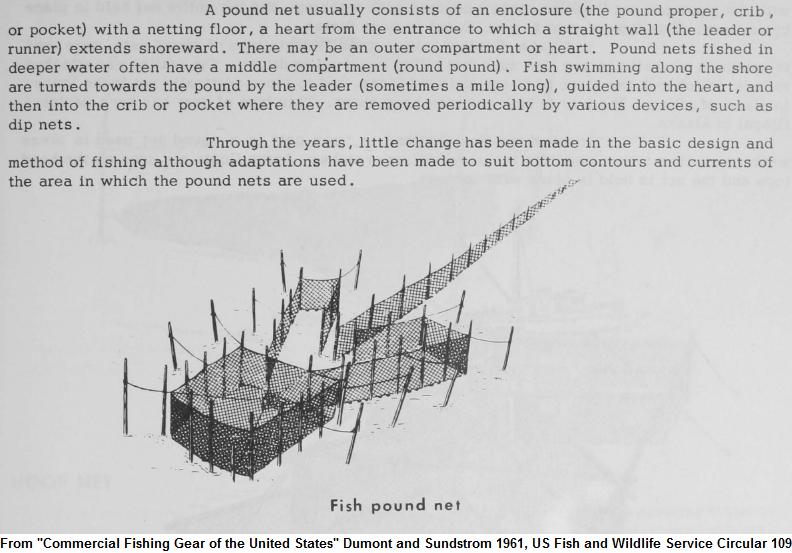
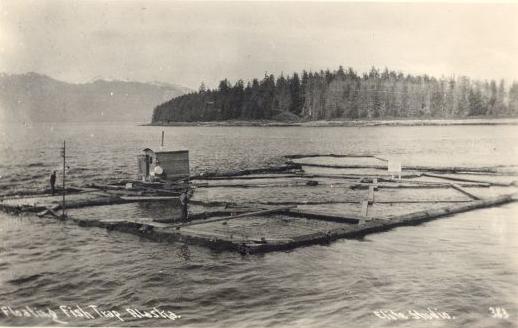
There were two types of fish trap used in the Funter Bay area. “Pound Nets” hung from fixed pilings driven into the sea bottom. Many of these pilings had to be replaced each season, as the winter storms would knock them loose. “Floating Traps” had nets hung from a latticework of floating logs, and were used in deeper water or locations with rocky bottoms. These traps were towed into protected coves for winter storage. Both types of trap would be located a few hundred feet offshore, with a “leader” strung towards the beach (and sometimes a “Jigger” extending seaward) to intercept passing salmon. This page has some more explanation and diagrams.

Pound Net:
pound trap

Floating Trap:
floating trap

These images show one of the Thlinket Packing Co’s pound-type traps near Funter Bay (Trap #7):

Trap 7 trap 7-2

My first post on Funter Bay History shows Trap #6 at the Kittens (islands), also of the pound type.

Here is an example of a floating trap. The structure on top is the watchman’s shack:floating trap 2

As mentioned, watchmen on the traps were an attempt to prevent trap robbing or “Fish Piracy” at remote traps, which was quite common. Independent fishermen hated traps, which they (correctly) felt were taking too many salmon. Many fishermen felt that fish in a trap were fair game, and that trap robbing did not “cost” anything to the trap owner. In fact, the pirates would often sell the stolen fish to the same company that owned the traps! The problem became so bad that the governor of Alaska dispatched surplus navy boats to combat pirates, and the Thlinket Packing Co hired WWI veterans to serve as armed guards.

pirates2

In July of 1919, the Weathers brothers, Al and Ike, along with Ernest Stage, were charged with assault and attempted robbery in a fish piracy case. The trio were accused of using the gas boat Diana to attack Hoonah Packing co’s tender Forrester near Funter Bay. Captain Alfred Knutson testified that his boat came under fire by the trio. Thlinket Packing Co trap watchman Ted Likeness was a witness. Earnest Stage was initially arrested for stealing $10 worth of fish from Funter Bay. Al Weathers was found guilty and given 4 years in jail, with the jury recommending clemency due to his young age.

pirates3

Info on the USS Marblehead.

Photo of a WWI sub chaser in Alaska.

Fish piracy was reduced by 1925 after several canning companies joined together to patrol the area.

“Fish piracy, or the robbery of fish traps, which in previous seasons was bitterly complained of by salmon canners in southeastern Alaska, was reduced to a minimum during the season of 1925. This was accomplished chiefly through the maintenance of a patrol organized by the larger canners and operated under the supervision of deputy United States marshals. A number of cruising boats were engaged in this patrol and covered waters in the vicinity of Icy Strait, Niblack, Street Island, Behm Canal, Kanagunut, Rose Inlet, Dall Head, Hidden Inlet, Union Bay, and the west coast of Prince of Wales Island.” From Bureau of Fisheries report, 1926.

Some more information on fish piracy can be found here (restoring a patrol boat), here (the story of a miner turned pirate), and here (mentioning the piratical family history of Ketchikan’s mayor).

In addition to battling pirates, salmon packing companies were also fiercely competitive with eachother, vying for the same salmon runs, the most desirable trap locations, and the best land for canneries. An extreme example of this was “trap jumping”, similar to the phenomenon of mine claim jumping where one prospector would steal the land or resources of another. More details shortly…

Pound net traps often had a watchman on shore, vs floating traps with their onboard housing. As I previously noted, the Thlinket Packing Co acquired land via the homestead act from which to base their traps (although the person filing for the homestead would usually not be the one living there!). I showed a survey of cannery owner J.T. Barron’s “homestead” in this post. Below is a survey of the “homestead” at a trap site south of Funter:
Robertson Homestead

This homestead (located at Lizard Head point just South of Funter) was fairly openly a front for cannery development, being transferred very quickly to T.P.Co owner James Barron. Barron had previously held a lease from the Alaska Packers Association for a trap they installed in 1908 at Lizard Head, and was moving to acquire the shore and upland to support this site.

“…On or about the first day of March, A. D. 1911, for value received, the said V. A. Robertson conveyed by good and sufficient deed in writing the above-described tract, lot or parcel of land embraced within said U. S. Nonmineral Survey No. 804 aforesaid to James T. Barron.”

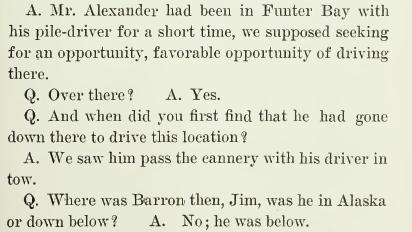
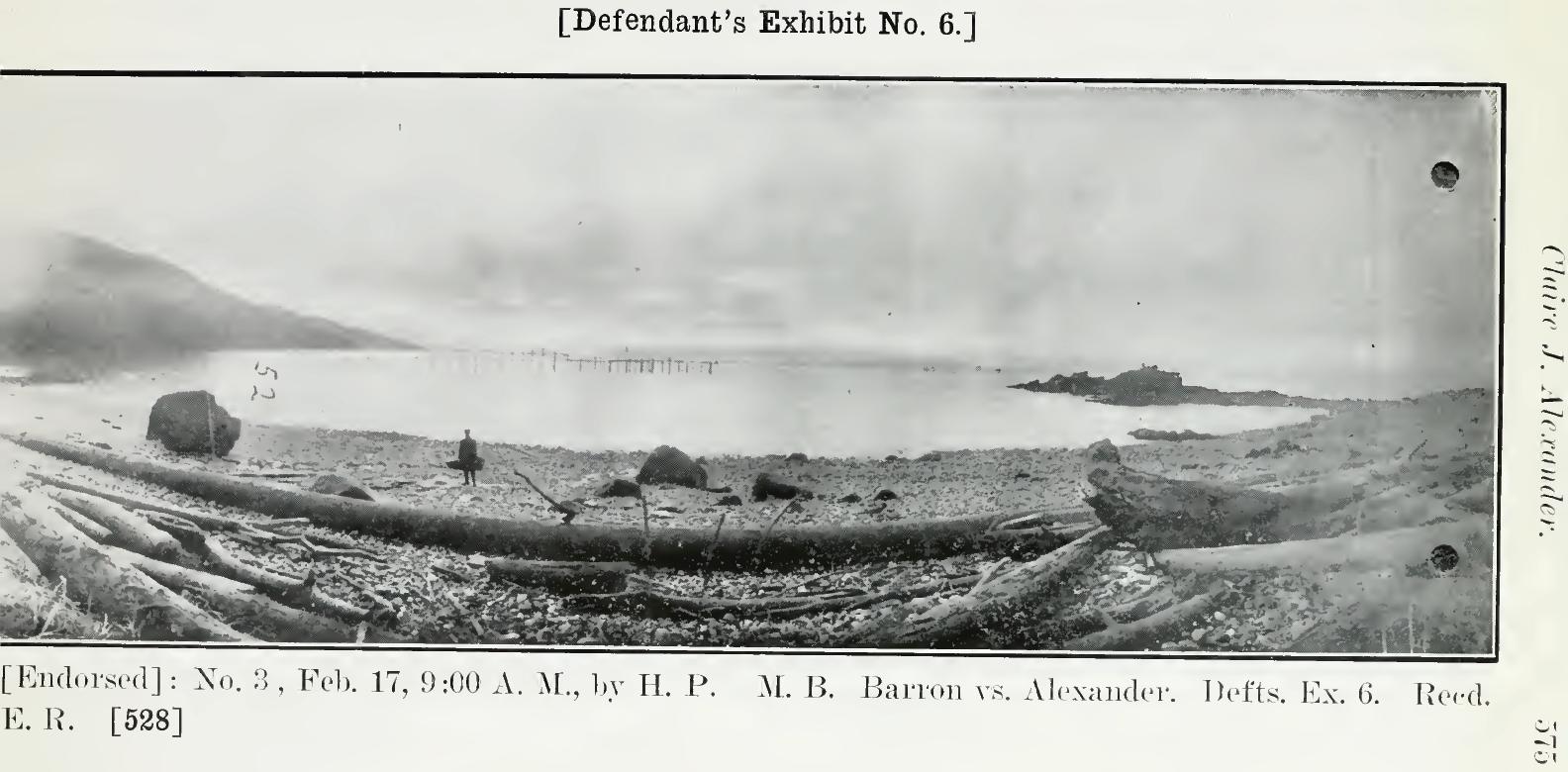
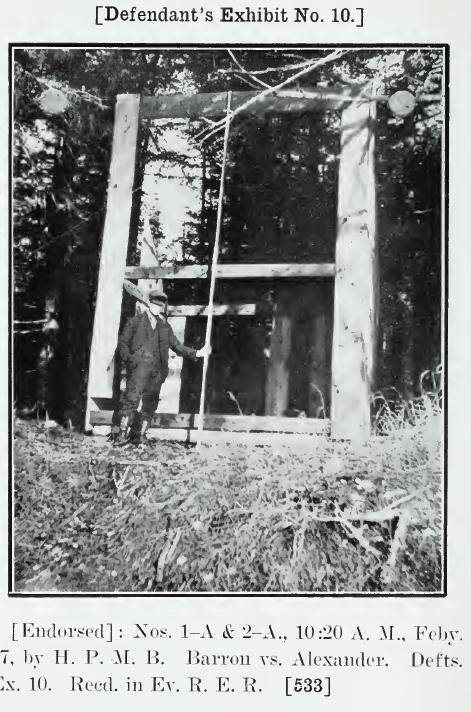
However, before the Thlinket Packing Co could finish building their trap, Clarence J. Alexander, AKA “Claire Alexander” of the Tee Harbor Packing Co swooped in and installed his own, thus “corking off” Barron. He had previously worked on the pile-driving crew for the Alaska Packers Association, and knew exactly where the trap should go. Alexander even used some of the pilings that Barron had already driven! Barron sued, and some of the court documents are online (part 1 and part 2).

Perhaps Mr. Alexander’s “opportunity” was when Barron left the state?:
pile driver

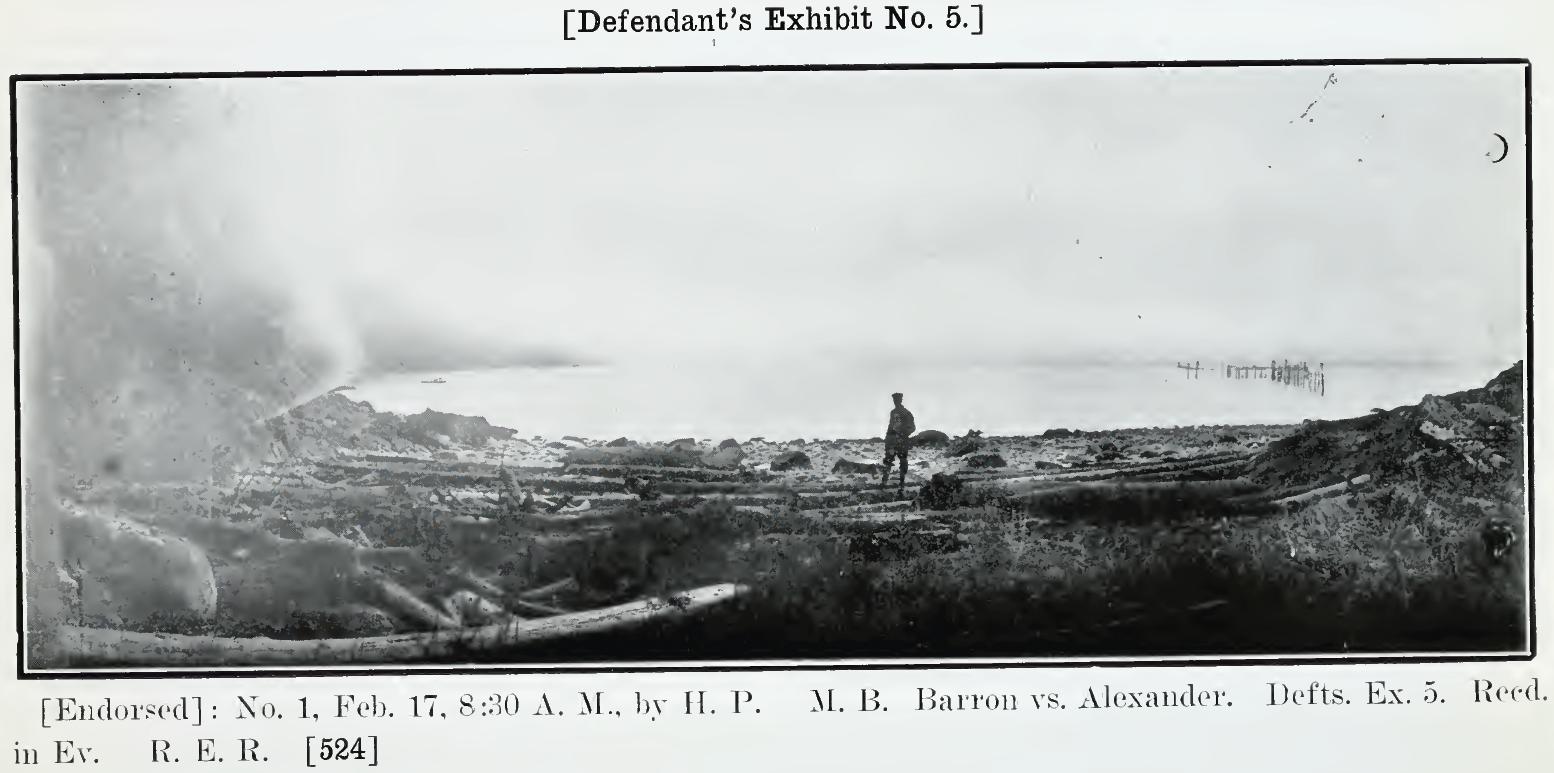
Claire Alexander’s fish trap shown in front of Barron’s Lizard Head property, from court documents:
Alexander's trap

Barron’s initial letter to Alexander:
Trap Jumping

In the court case, Barron testified not that he planned a trap (as indicated by his letter and other testimony), but that he wanted to use the site as a temporary mooring for boats. He mentioned that it was too hard to tow loaded scows to Funter Bay against a North wind. He complains that Alexander’s trap blocks his water access. Alexander claimed he had no knowledge of Barron’s so-called homestead and didn’t notice any development at the site (despite incorporating Barron’s pilings into his trap). The court found against Barron and ruled that Alexander’s trap did not block Barron’s access to his property.

Some 1911 photos from the Lizard Head trap site, including the beginnings of the T.P. Co. watchman’s cabin:
Lizard Head 1911 1 Lizard Head 1911 2

Barron's cabin at Lizard Head 1911

Claire Alexander would go on to found the Hoonah Packing Co a few years later, and his trap at Lizard Head was still in place, in the same configuration, in 1948.

Laws regarding fish traps tended to fluctuate. Traps were originally fairly unregulated, and canneries would often place them directly in stream mouths, intercepting the entire spawning population until the “run” of salmon was destroyed. Later regulations placed limits on where traps could be located, when they could operate, how long the jiggers could be, etc. By the 1940s, the salmon population had declined so much that trap catches were fairly low, but the price of salmon had risen enough to keep traps cost-effective. When Alaska became a state in 1959, traps were outlawed entirely, leading to the closure of many canneries (other methods of fishing were not efficient enough for the size and type of these operations).

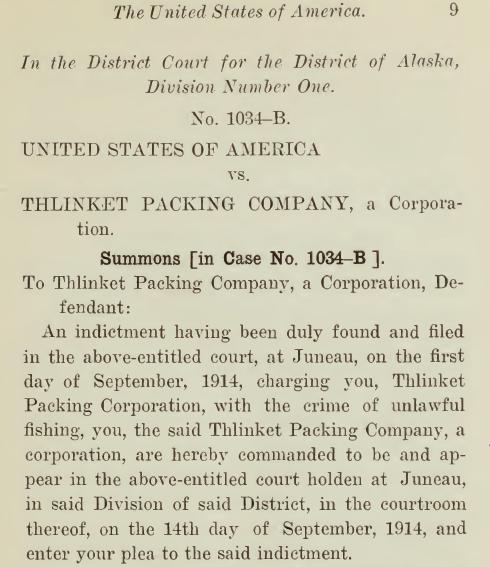
The Thlinket Packing Co (and later owners of the cannery) occasionally ran afoul of fish and game regulations.

TP Co Unlawful Fishing Summons

TP Co Unlawful Fishing Count 1

“During the season of 1926, four salmon traps were seized in south-eastern Alaska for illegal fishing during the weekly closed period. … A trap of P. E. Harris & Co., near Hawk Inlet, and one of the Alaska Pacific Fisheries, near Funter Bay. were seized on July 11. On trial the watchmen were found not guilty, but the traps were still in the custody of the United States marshal at the end of the season.” Bureau of Fisheries report, 1927.

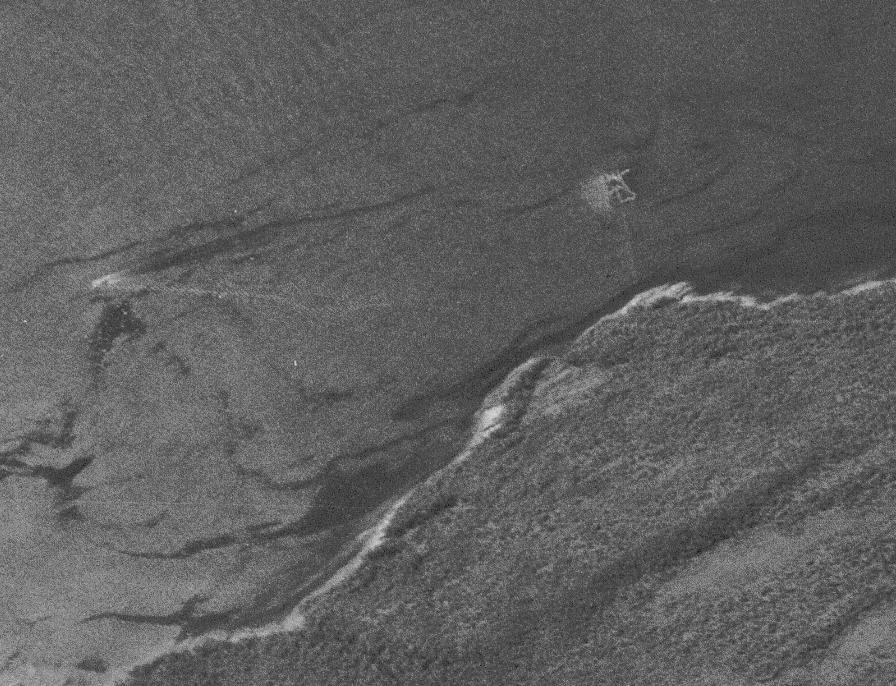
I came across a set of 1948 aerial photos of Funter Bay while looking for another map (from http://earthexplorer.usgs.gov/). The original is linked in my post on Funter Bay maps, below are a few excerpts showing fish traps around the bay in 1948.

A trap outside the south shore of Funter Bay (possibly pound net trap #7) Note the wake of the boat, possibly a cannery tender, leaving the trap:
trap aerial 1

C.J Alexander’s pound net style trap at Lizard Head in 1948, looking a little worse for wear. The trap has the same approximate layout as shown in the 1911 diagram (inset), but the line of pilings for the lead going to shore has vanished.
alexander 1948

A number of traps seem to have been abandoned by the Thlinket Packing Co at this point. There is no sign of Trap #6 at the Kittens in the 1948 aerials. Several of the floating-style traps are also sitting on the beach or drawn up in shallow coves where they would go dry at low tide. More traps are visible operating and in place along the shore between Funter and Hawk Inlet, but I’m not sure which companies were operating these.

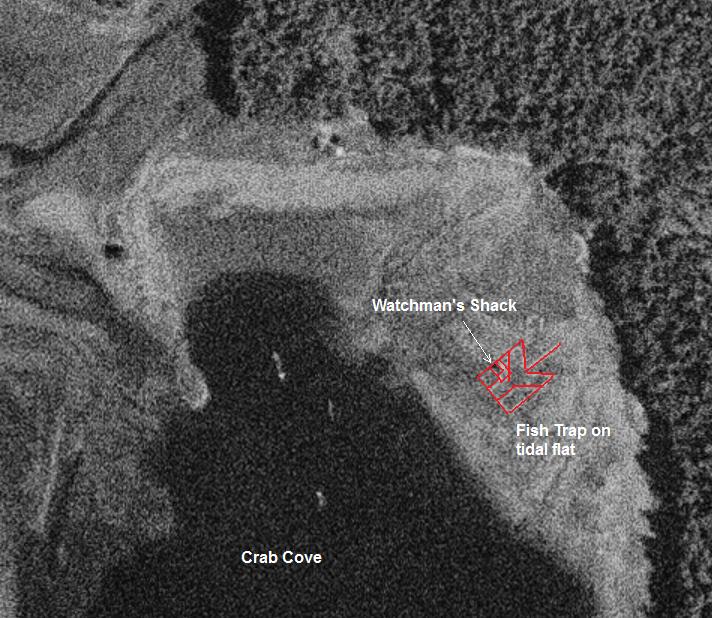
Fish trap on the beach in Crab Cove:
trap1

Crab Cove trap logs outlined to be more visible:
trap2

You can see the shadow of the watchman’s shack, this might have been the shack that became the entry of our house, as mentioned in an earlier post. Our neighbor Harvey Smith also had a few sheds that were the right size to be trap watchman’s shacks, I might detail those later on.

Floating trap in place along the Admiralty Island shore south of Funter Bay, with buoyed lead net going to shore:
floating trap 3

Down at the other end of the bay, we can see a jumble of pickup sticks on the estuary between Ottesen and Dano creeks, near the sandy beach. A few hints of the outline of a trap are visible, this might be one or more damaged or disintegrating traps:
trap aerial 2

Here is the cannery site and Scow Bay with the scows visible on slipways:
cannery aerial 1948

And finally, back to the present day: here’s a trap log washed up at the sandy beach, probably from one of the traps seen above. You can see various bolts and hardware that connected the trap logs together:
OLYMPUS DIGITAL CAMERA


Funter Bay History II – Ships and Shipwrecks

April 11, 2013

As mentioned in my prior post, the Thlinket Packing Co had a cannery tender named the Anna Barron based at Funter Bay, named after James and Elizabeth Barron’s daughter Anna. The cannery also owned a number of other vessels, many named after people in the Barron family, but the Anna is best known (for such an obscure topic as Southeast AK cannery tender vessels), since it appears in numerous publicity photos and postcards of the cannery.

AnnaBarron

The October 1920 issue of Pacific Motorboat mentions that the Anna Barron had three engines which were overhauled that year. The HW McCurdy Marine History of the Pacific Northwest describes her as being 77ft long, built in Astoria in 1902 for the Thlinket Packing Co, fitted with a compound (9 1/2, 20×20) engine developing 130hp. Her merchant vessel registry number was 107759.

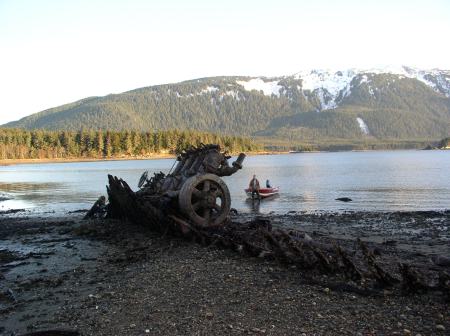
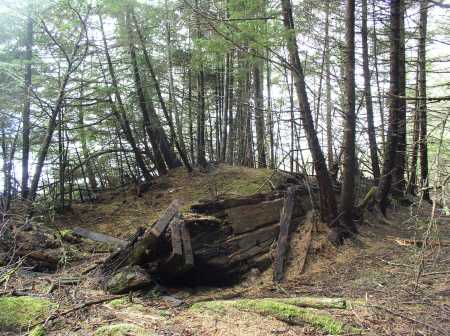
Today in Funter Bay, there are two wrecks of midsize boats (or parts of them) visible on the beaches. Both of these are locally referred to as “tugboats”, and I had always heard they were cannery boats. One is located in Scow Bay (AKA Coot Cove), and one is on Highwater Island (also called Crab Island on some state survey maps, although I’ve never heard it called that).
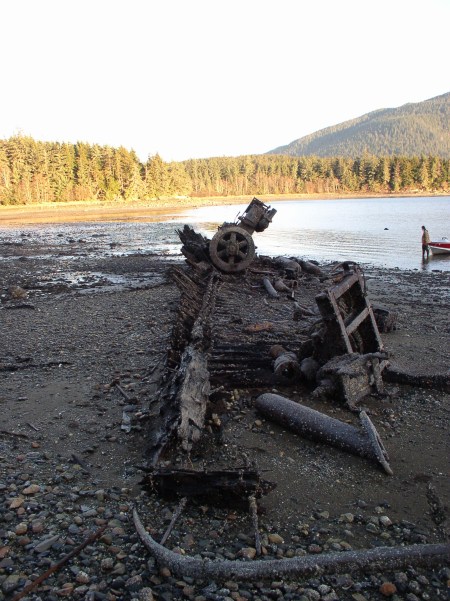
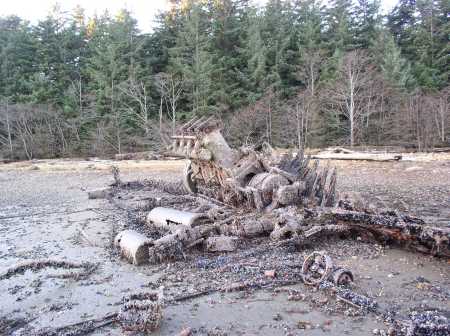
OLYMPUS DIGITAL CAMERA OLYMPUS DIGITAL CAMERA OLYMPUS DIGITAL CAMERA
The three photos above show the Coot Cove wreck. There’s not much left aside from the keel, some ribs, and the large Atlas-Imperial diesel engine. As this page notes, the vessel seems to have fire damage. It seems to be about 70-80ft in length, but estimation is difficult due to the condition of the wreck. Here is a photo of a similar (but larger) engine in another cannery tender.
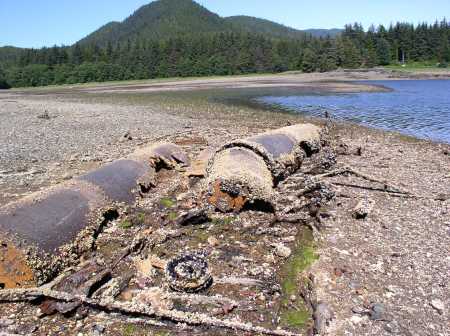
OLYMPUS DIGITAL CAMERA OLYMPUS DIGITAL CAMERA
The two photos above show the Highwater Island wreck. There is even less remaining than at the other site. You can still find some cylindrical tanks and the rudder, a few wood and metal bits showing the rough outline of the hull, and a few interior items like plates and glassware. This one seems shorter than the other wreck, maybe 50-60ft, but again, estimation is difficult.

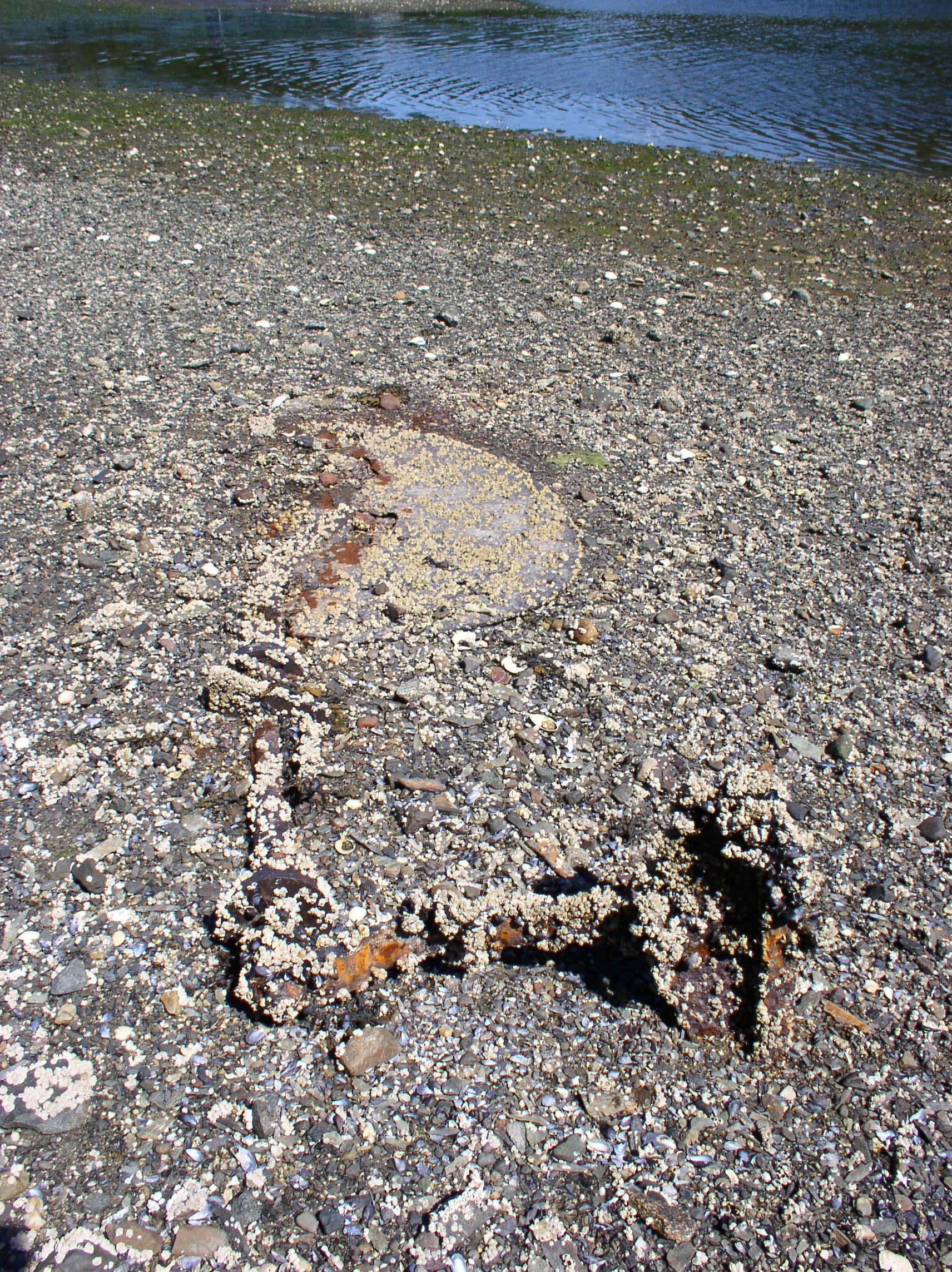
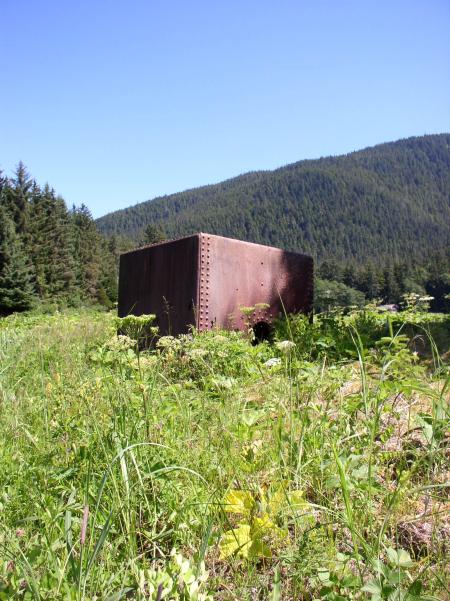
The hollow steel boiler from the Highwater Island wreck appears to have floated across to a small peninsula known locally as “The Point”, where it rests at extreme-tide level slowly rusting away.
funterhistoryboiler

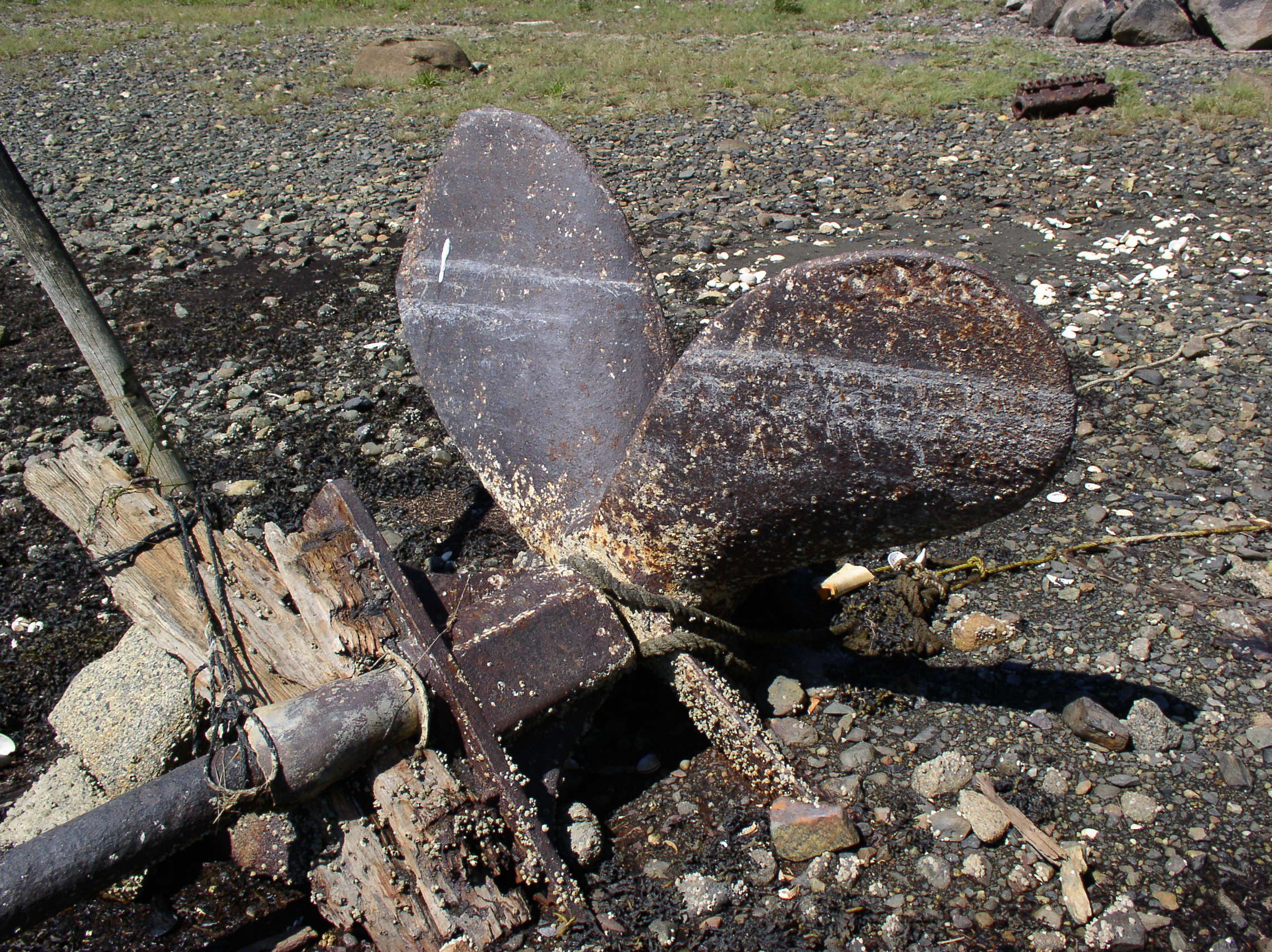
The propeller from this wreck was also removed by a prior resident of my family’s property, and dropped in the front yard. The story goes that the person believed it was brass, and planned to sell it for scrap, but when they began cutting into it, they realized it was cast iron. You can still see a cut section on one of the flukes.

OLYMPUS DIGITAL CAMERA

Is one of these wrecks the Anna Barron? I found a small snippet from a 1931 Google document claiming the Anna Barron sank at Point Couverden across Icy Strait, still with its original steam engines. Unfortunately the full text is not available.

“The “Anna Barron”, owned by the Alaska Pacific Salmon Corporation, believed to be the last remaining steam tender in the fleet, struck a rock and sank in Icy Strait July 22. Built many years ago by the former Thlinket Packing company, she was still valued at about $20,000

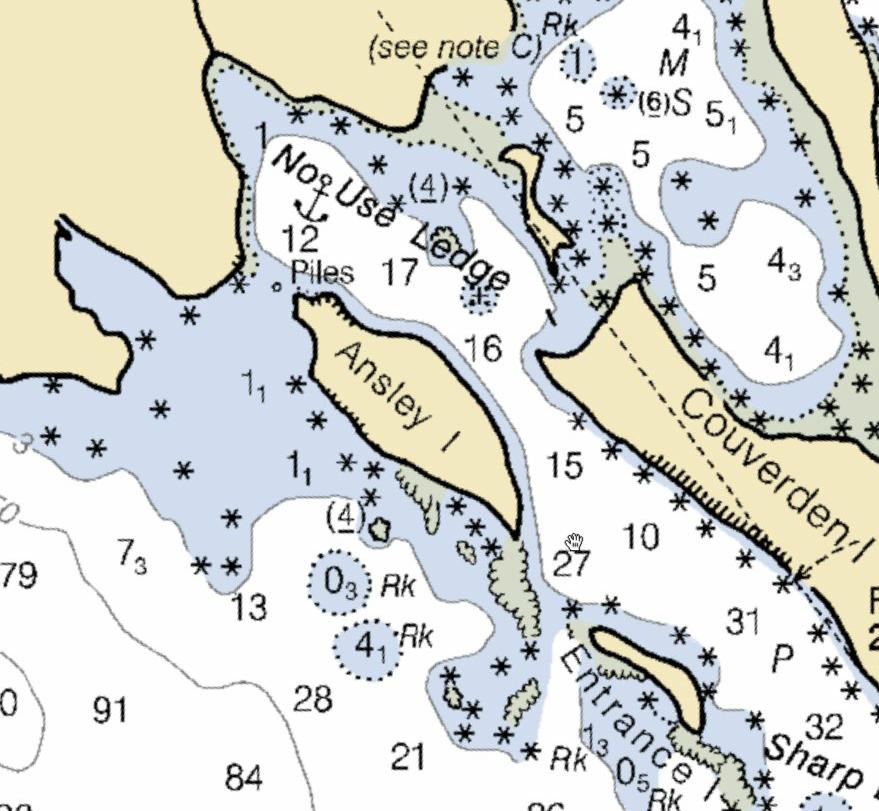
This page contains some additional information, sourced from US Customs wreck reports. According to the report, The wood steam tender Anna Barron hit the rocks at Ansley Point (Near Point Couverden) after departing Funter Bay the night of Tuesday, July 22 1930. Captain George D. Black was carrying a half scow load of fish and was attempting to offload to scows tied to a dolphin (piling structure) between two reefs off Port Ansley (now known as Swanson Harbor). The wind and tide in the narrow passage proved too much for the vessel, and it was forced onto the rocks in the darkness while maneuvering to reach the dolphin. The captain was quoted as saying the Anna Barron might be raised in the future.

Swanson

Some of the dolphins and other pilings are still visible in Swanson Harbor, and appear on nautical charts of the area.

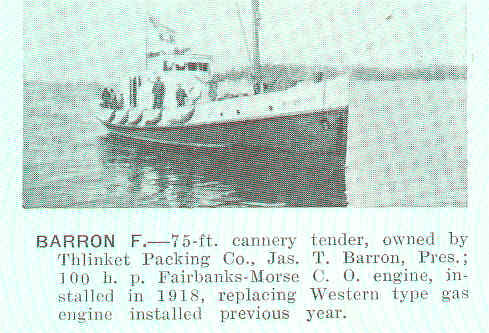
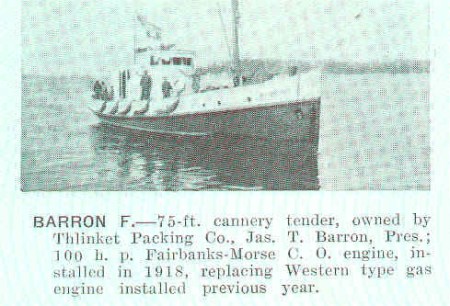
In addition to the Anna Barron,  the cannery also owned a 75′ boat named the Barron F.  (From UW Freshwater and Marine Image Bank)
Barron F

According to McCurdy there was an 85′ cannery tender named the Barron F built in 1917 for the Nooksack Packing Co. The US Merchant Vessel Registry lists a 65′ Barron F built in 1917, registry number 214967. I am not sure if these are all the same boat with errors in the published length, or different boats. It seems unlikely there would be so many vessels named after the Barron family in exactly the same way at the same time.

The cannery also seems to have owned a 53′ gas boat named the Buster, registry number 14481, built in 1889 in San Francisco. This boat caught fire and sank in Funter Bay in July of 1926, as mentioned here. The boat had left the cannery dock and suffered engine trouble, then a fire broke out in the gas engine during repairs. The vessel was assisted by the Anna Barron and the Driva (a 56ft gas towboat belonging to Juneau Lumber Mills), and towed to a dolphin. The  mooring line burned and the boat drifted around the bay, burning all night, before sinking “in deep water”. I do not know where this wreck is located precisely. The cannery had just been purchased by the Sunny Point Packing Company in this year.

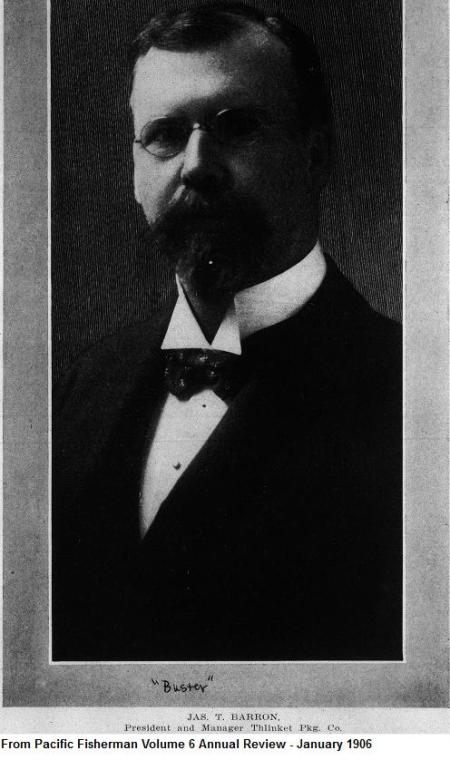
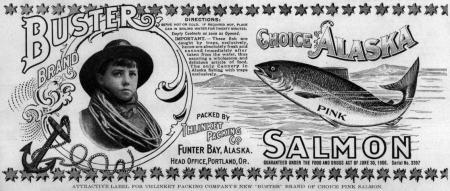
The Buster was probably either named after J.T. Barron himself (who sports the Nickname “Buster” scrawled on a portrait printed in the 1906 Pacific Fishermen Annual Review), or his son Robert, who was the model for the company’s “Buster Brand” logo. Robert was also featured on the cover of the May 1907 issue of Pacific Fisherman.
Buster

busterbrand

Robert Barron 2

As mentioned previously, Robert died in 1917 while trying to save fellow airmen from an accident in Philadelphia. Mount Robert Barron in Funter Bay was named for him.

Robert also appears to have had a cannery boat named after him, the Robert Barron, a 44ft gas vessel built in 1901 (perhaps for J.T. Barron’s earlier cannery near Wrangell), registry 111335.

So, back to the wrecks on the beaches. Which boats are they? Digging through alaskashipwreck.com I find the following listed for Funter Bay:

Vernia, 6 ton 28ft sloop, blown onto a rock at or near the Kitten islands and sank in Lynn Canal Jan 4 1904. Cargo of fish and gear worth $200, boat worth $150. No casualties, but the boat was a total loss. Master was William Beckler of Juneau.

This one is interesting because it was listed as built at Funter Bay in 1919. The 38ft gas screw Sandy, owned by LF Morris of Juneau, caught fire and sank in Auke Bay in 1928, while carrying an illicit cargo of liquor in kegs. All but 6 kegs were destroyed, the rest were confiscated by prohibition officers.

Tiny Boy, 46ft wooden oil (diesel) freighter owned by WH Bowman sank near Funter Bay Oct 11, 1940. All 6 crewmen escaped.

Reliance No 3, a 32ft wooden fishing vessel owned by WJ Smith, burned and sank off Naked Island near Funter Bay in 1953.

Morzhovoi, an 80ft wooden oil screw (diesel) boat, burned in Funter Bay on June 10, 1955. Reported as having a 165hp engine, being built in Seattle in 1917, and being used for freight service. Owned by the PE Harris Company, registry 214789.

PE Harris (which later became Peter Pan seafoods) purchased the Funter Bay cannery from the Sunny Point Packing Co around 1941. Morzohovoi Bay was another location where PE Harris co owned a cannery.

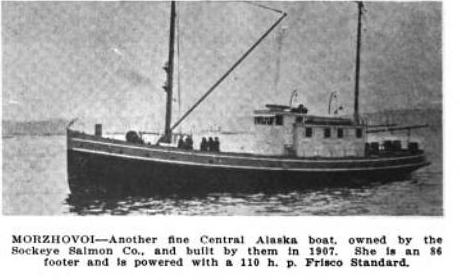
The Morzhovoi seems like the best candidate for the Coot Cove wreck. Digging some more, I find a reference in McCurdy to Morzhovoi; 80ft, 110hp, first vessel built at the National Shipbuilding Co yard in Seattle. Built for the Sockeye Salmon Co of Morzohovoi Bay (who later leased their cannery to PE Harris)

The 1918 Merchant Vessels of the United States registry lists the following specs for the Morzhovoi: 81 tons, 80.2ft long, 18.9ft breadth, 7.6ft depth, Fish service, crew of 7, 110hp gas engine, home port Seattle. Its registry number appears on the rolls of merchant vessels until 1956, when it disappears. In the 1955 registry it’s listed as an Oil boat of 165hp, radio call sign WB4935, belonging to PE Harris of Juneau.

Morzhovoi
Here’s a photo of the Morzhovoi from the 1919 issue of Pacific Motorboat. It lists some slightly inconsistent info (original HP and owner are correct, but year and length are off. I would suspect that these are typos).

Obviously the 110hp Frisco gas engine must have been replaced with a 165hp Atlas-Imperial diesel during a later refit.

So there’s one wreck identified to a high probability!

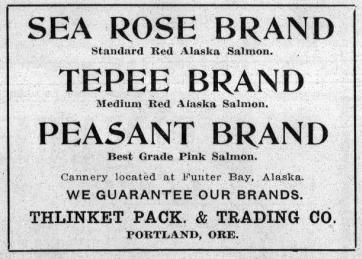
Trolling (pun intended) through the merchant vessel registry, I find a few other boats which may have been associated with the Funter Bay cannery. In the mid 1920s these include the Peasant, a 46ft gas boat built in 1926, registry 225554 and the Tepee, a 29′ gas boat, registry 210208 (The Thlinket Packing Co had canned salmon brands called “Peasant” and “Tepee”).
Ad 1905

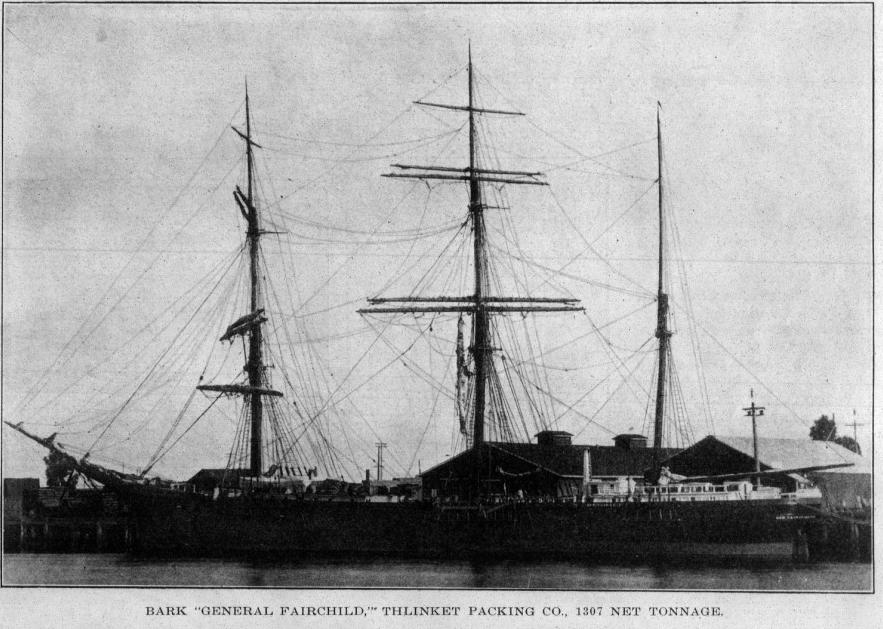
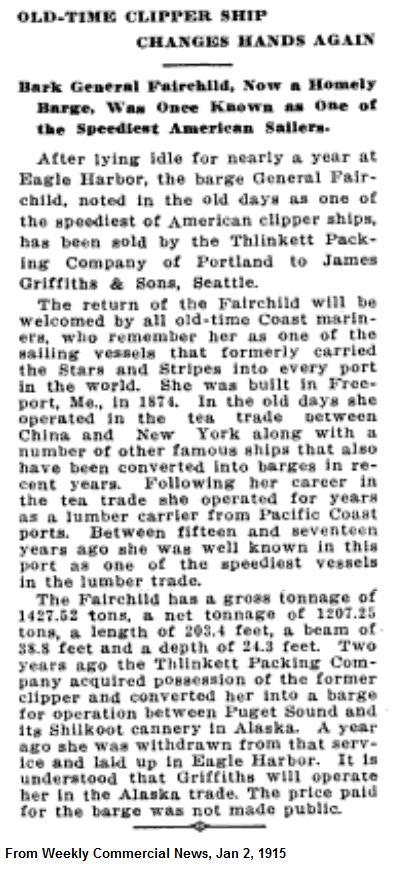
While researching Funter Bay ships, I was surprised to learn that the Thlinket Packing Co owned a large sailing vessel, the General Fairchild. This clipper ship seems to have been converted into a cannery barge, hauling packaged product from the canneries to sales “Down South”. It appears to have been used at the “Shilkat” (Chilkat?) cannery, probably near Haines, but may have also served Funter Bay. The ship was taken out of service after only two years, and then sold to another company.

fairchild

fairchild2

Prior to starting the Funter Bay cannery in 1902, the Thlinket Packing Co seems to have been active in Southern Southeast Alaska, using a leased steamer named the Baranoff and a 6 ton launch (gas boat) named the Perhaps, (per this article). The company (and later owners) also owned a number of other boats, used throughout Alaska, to the point where a complete list would take quite a bit of time to produce and would take this post wandering even further through Southeast maritime history! None of this helps me identify the other wreck at this time, but maybe I’ll find something as I continue digging.

Moving along to other shipwrecks around the bay…

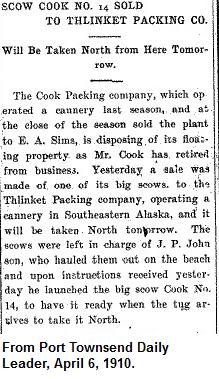
The Funter Bay Cannery also had a number of scows, which were fairly standard among canneries of that era. These were basically open wooden-hulled barges with high sideboards, used to transport fish in bulk from the traps to the cannery. Some of these were also registered with the government, and had such imaginitive names as “Scow #1”, etc.

scow

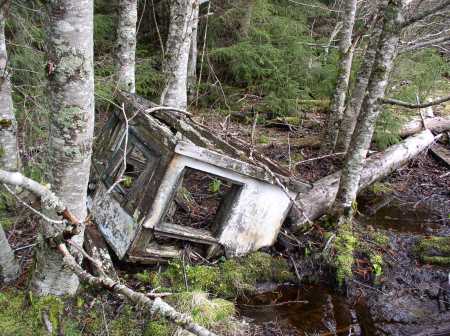
They were simple, rugged vessels which could be beached for storage over the winter. Scow Bay (AKA Coot Cove), around the corner from the main cannery dock, held the slipways and drydocks for scow storage. There are a number of scows still resting there, decaying into the rainforest.

OLYMPUS DIGITAL CAMERA OLYMPUS DIGITAL CAMERA OLYMPUS DIGITAL CAMERA OLYMPUS DIGITAL CAMERA
Scows on the drydocks at Scow Bay.

OLYMPUS DIGITAL CAMERA OLYMPUS DIGITAL CAMERA
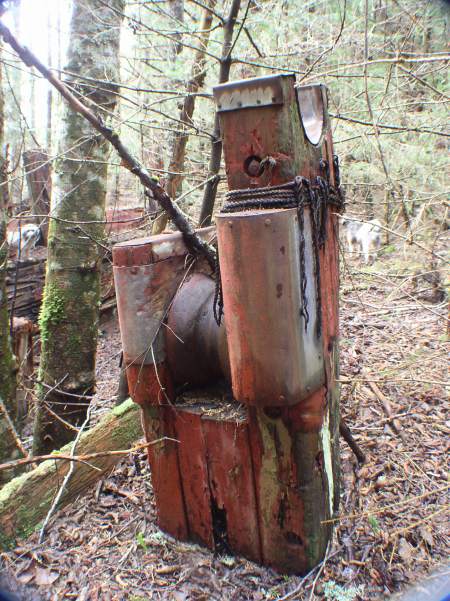
Some of the scows had their own machinery on board, including what looks like a small steam engine. There was another steam engine in the woods that ran a winch for hauling the scows up wooden ramps (slipways) to their storage spot.
OLYMPUS DIGITAL CAMERA
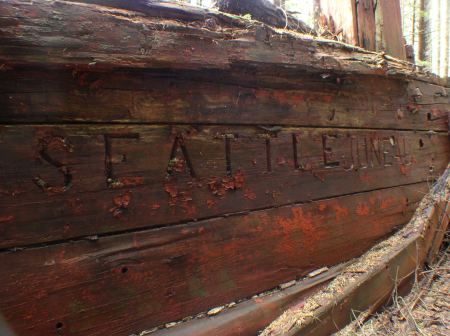
Port names listed on the side of a scow. Visible are “Seattle” and “Juneau”.

OLYMPUS DIGITAL CAMERA


Slipways at Scow Bay.

Scow Bay also has the remains of a ~30ft fishing boat:

OLYMPUS DIGITAL CAMERA OLYMPUS DIGITAL CAMERA

Wrecked fishing boats can be found in a few places around Funter Bay.
Jolene M
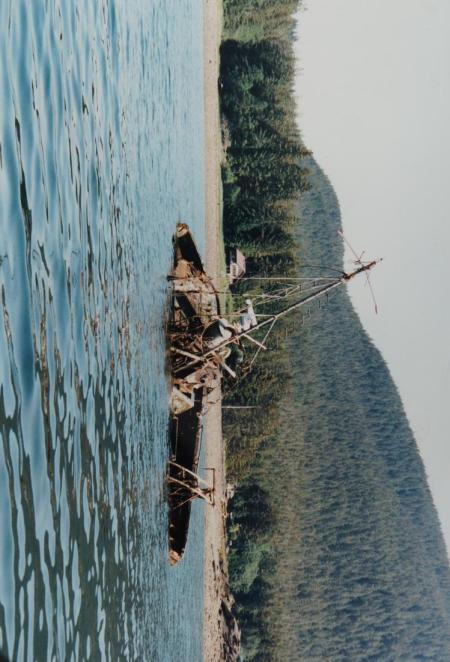
The Jolene M, a fishing boat which drug anchor and hit Highwater Island one night when I was young. The owner re-floated it and attempted to beach it for repairs, but never managed to get very much done with it. This is an old picture, there’s little visible of the wreck today aside from some metal bits in the mud at low tide.

OLYMPUS DIGITAL CAMERA
The Jolene M looks more like this now. Wood decays very fast in tidal environments.
Nimrod
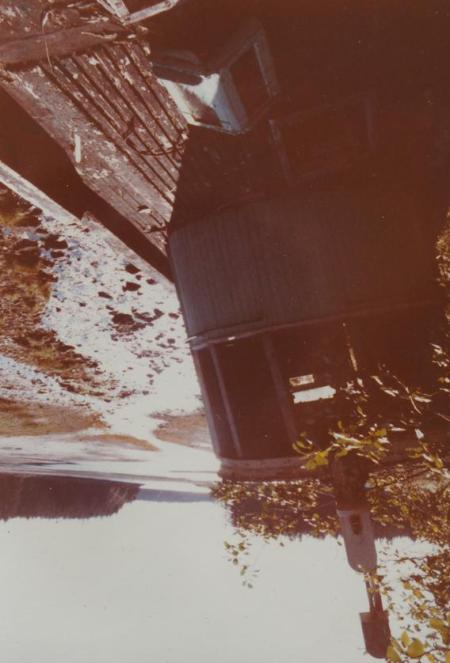
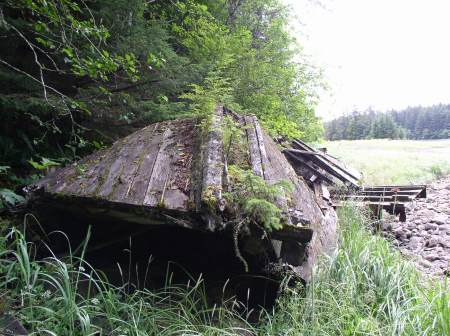
The Nimrod, a wooden boat (probably also a fishing boat) which was beached up “Nimrod Creek” (local name). There is also quite a bit less of this boat remaining intact today. (Update 4/23/13: This was originally a tugboat, I’ll add more details in a future post).
OLYMPUS DIGITAL CAMERA
More recent Nimrod photo.

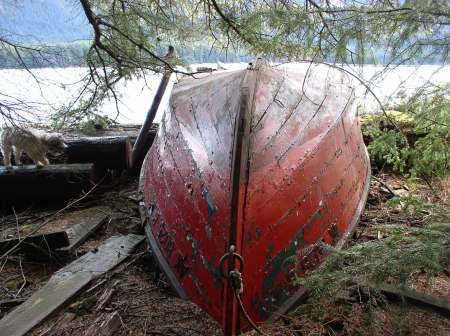
And just for fun, here are a few even smaller abandoned boats (skiffs). Maybe some of them are the lifeboats seen on the cannery tenders, or the small sailing boats mentioned in articles about the Barron family? Or they could simply be some of the many small skiffs that you find in any Southeast Alaska community, as common as the family cars down south.
OLYMPUS DIGITAL CAMERA OLYMPUS DIGITAL CAMERA OLYMPUS DIGITAL CAMERA

Once again I have produced a stream of meandering research beyond all reason. And I still have plenty more to expand on things mentioned in this post… what happened to the Barron Family? How did they use legal loopholes to get their land? What was the later cannery history? What other fishing-related activities happened around the bay? Just a few things I hope to cover in the future!