More Monorail Extras

April 8, 2016

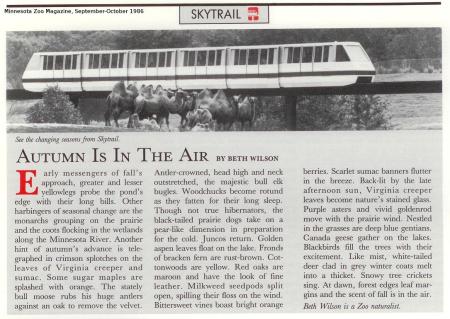
Recently I happened across the estate sale of a former MN Zoo employee. I was able to pick up a number of old zoo shirts ranging from the 1980s to more recently. A few of these have a neat little “Conservation” montage of zoo animals and the monorail:

shirt

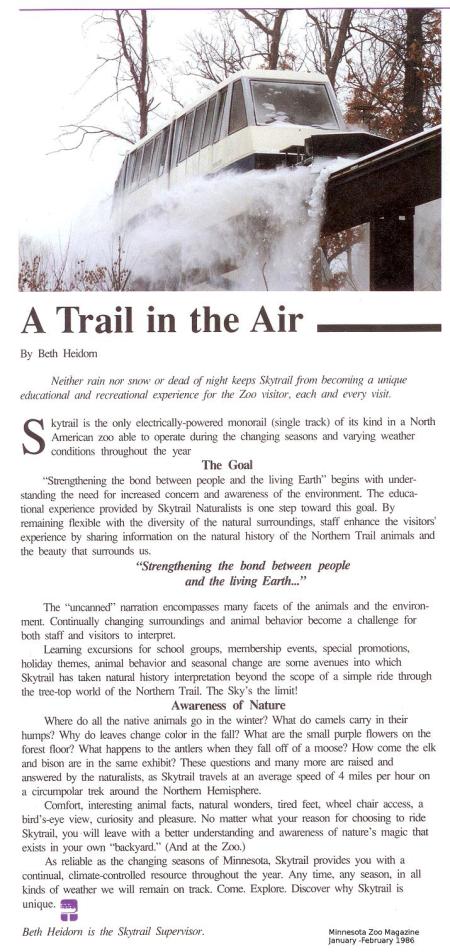
There were also quite a few issues of Minnesota Zoo Magazine from the 1980s. A few of them had monorail-related pieces, including a neat shot of the snowplow in action.

magazine1a magazine2a magazine3a

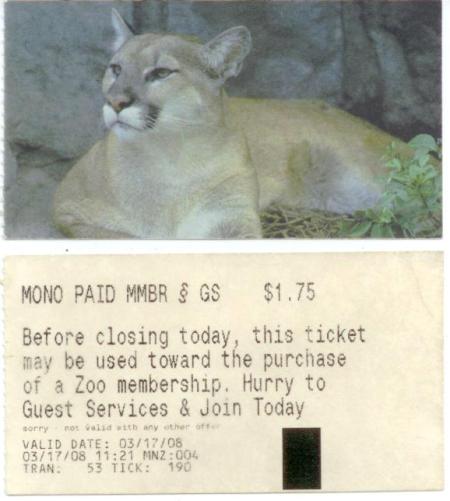
And we even found a monorail ticket from 2008! (Two-sided scan below)

ticket

Some of these will probably end up in my mini-museum in the monorail cab.


Funter Bay History: Special Agent Harold Merrin

February 16, 2016

In the 1930s Funter Bay was home to one Harold Merrin, a “Special Agent” with the “U.S. Division of Investigation”. While the title might suggest an affiliation with the FBI (which held that name prior to 1935), there was also such a division under the General Land Office. This was part of the Department of the Interior, and conducted investigations into all sorts of mineral and property rights for the US Government. Special Agents of the Land Office worked with everything from logging and grazing licenses to oil and gas surveys to mineral claims and property rights.

Harold Woodworth “Hal” Merrin was born in Ohio in 1893, to parents Ernest and Lenna. The family moved to Spokane by 1910. He grew up with a background in mining, as his father worked at various mines and was later director of the American-Scotia Mine in Orient, WA. Harold served as secretary-treasurer of this company while in college.

Merrin1

Harold attended North Central High School in Spokane, but WWI pulled him and many of his classmates away before graduation. Harold joined a trial officer’s training camp in 1918 and briefly served as a Corporal with the American Expeditionary Force in France (source). After returning to the US, Harold enrolled at the State College of Washington and received his Bachelors Degree in Mining Engineering in 1921.

Camp

After graduating, he worked as an assayer with the Santa Rita mining co, then as a land appraiser for the government land office in Portland and Santa Fe. By 1923 he was working as a government mineral examiner in Alaska and the Pacific Northwest. One of his jobs included investigating a “Mystery Metal” found in Oregon. In 1926 Harold married Bertha Thompson of Everett, WA.

In 1933 Congress authorized payments in the amounts of $124.35 and $35.90 to Harold Merrin for travel expenses to and from Alaska while under official orders. In 1935 he was reportedly working as a special agent for the U.S. Division of Investigation. In 1936 the Division of Investigations had him stationed at Funter. The WSU Alumni paper reported the birth of Harold and Bertha’s daughter Evelyn that year.

WU Alumni 2

I have not found the exact nature of Harold’s government work at Funter, but property and mineral issues would likely have kept him busy. Several mines were active at Funter, which would fall under Harold’s area of expertise as a mineral surveyor. Other activities could have included homestead claims, fish trap locations, hand logging, and cannery land use. Some of these industries had overlapping property claims and some were known to use mining claims for other purposes. Juggling the competing interests of Alaskan industries with each other and with the federal government was likely a full time job.

Harold’s government work appears to have led him into the private sector after a few years. In 1937 he was superintendent of the Alaska Empire Mine at Hawk Inlet, across the mountain from Funter (source). In 1938 he was back at Funter Bay, after “exposing his family to six months in the civilization of the outside world”.

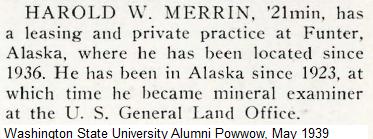
In 1939 the WSU Alumni update described Harold as having a “Leasing and private practice at Funter”.

Merrin 3

By late 1939 the Merrin family had moved to the Flagstaff Mine in Kasaan Bay, near Ketchikan. They soon moved back to Washington, and Harold passed away in Yakima in 1940 at age 47.


Monorail Phenology

January 13, 2016

While cleaning out my monorail cars I came across a few interesting documents. Several notebooks marked “Phenology” describe local wildlife seen along the monorail track. Phenology is defined as “the study of cyclic and seasonal natural phenomena, especially in relation to climate and plant and animal life”. An article from 1979 explains these notebooks:

“The operator/tour guides keep their eyes open and when a phenlolgical event is spotted, they record this observation, its date and location in a phenology logbook kept by the stationmaster. This data is summarized each day on a report board in the station for all the MZG’s public to see.” (from MZG Newsletter, Minnesota State Zoological Board, 1979)

example

For those interested in reading these notebooks, I’ve scanned and uploaded PDFs here. There are a few torn and missing pages, so these are not 100% complete. There is also some water damage and fading from sitting in the train for a few years, some pages are hard to make out.

Phenology – Train 2 (Covers the period of 8/15/2001 to 8/30/2013)

Phenology – Train 3 (Covers approximately 7/4/2008 to 6/19/2012)

Also found in the monorail were several info sheets on various zoo animals seen along the route. These are probably cheat-sheets for the operator / guide staff to describe what passengers would see along the way.

info

I’ve also made a PDF of those sheets for archival purposes, available below.

Animal Info Sheets from Driver’s Cab


MNsure Rants

December 16, 2015
Minnesota is one of 13 states experimenting with a local healthcare exchange under the ACA (most states use the federal HealthCare.gov system). As a Minnesotan it’s been my misfortune to use our state insurance marketplace; MNsure.org.
Rather than writing a full review of the nightmare that is MNsure.org, I’ve collected some of my past frustrated emails to the organization. As there seems to be no centralized tech support or contact point, these have gone to an assortment of agency-related email addresses. I’ve occasionally received responses, typically more apologetic than helpful, but have yet to discover if any of my comments get to anyone who can do anything. This year I also got around to hassling the board of directors and my state legislators. Their contact info is at the bottom of this post, in case you’d like to share your own experience with Mnsure.

2013:

I’ve managed to lock my account on mnsure (after finally getting the site to work long enough to create one), and all of the security verification questions are useless.  The most memorable location in my life? Heck if I know, I can’t remember what I ate for dinner yesterday. My best friend from 3rd grade? I grew up in a ghost town. Where did my parents meet? I’d probably have to call them every time I forget my password. Please change it so users can select actual useful questions of our own, the kind that real people will actually know the answers to. Or you could offer the option to send a password reset email to the registered email address, like every other website does.
This time I’ll be sure to write down the password and all the BSverification questions and put it on a sticky note on my computer at work, where everyone can see it. I don’t even care how secure my password is, based on the quality of programming I’m just assuming the thing will be hacked in the next month or so. (actually I just looked that up and found that mnsure already emailed SSNs to random people last month, nice work).

2014:

I interacted with MNSURE again recently, to change my insurance after PreferredOne gave up on us. I have a few complaints/suggestions for the service. I hate to complain about site usability, since I’m a computer science graduate and have built websites myself… but this site has many obvious things missing:
-The enrollment process needs to be easier to start, with the links easier to find. Currently the page seems to go through two different “Sign in” screens, then one eventually finds their way to the enrollment inside a link past a sidebar menu and under a dropdown. Terrible navigation and terrible user interface.
-The security questions are too limited and not applicable to all persons. If I don’t like sports, am not in a relationship, do not know my grandfather (which one?), have a single parent, have never owned a car, and do not know where I’d like to retire, that eliminates most of the security question options. It would be better to let people enter their own or have more options (or I could just answer “banana” to each one and keep that on the sticky note with my password).
-There needs to be some confirmation code or proof that *something* happened after the enrollment process. I thought that I’d beat the rush on December 15th and get enrolled back in November. I eventually found the sticky note with my password and security questions, jumped through the hoops, clicked all the things that didn’t apply to me, and wasted a half hour on things I didn’t care about. The system told me I had no benefits, discounts, or tax credits coming, so I went ahead and selected the cheapest flavor-of-the-year for insurance providers…. Or so I thought. Now I log in again to find no record of a current enrollment. Instead, it seems I have a pending application for something or other. What did I apply for? What’s the status on this theoretical application? How do I actually enroll in something?
-The site could use better error-handling or retry options. My current session threw an “unable to contact the server” error, then eventually loaded a “Congratulations” page saying my enrollment is completed…. but I got the Congratulations page back in November and never received any follow-up from MNSURE or my chosen provider to indicate that the website had done anything at all. When I click the “done” button it goes to a mysteriously blank page, and the “Enrollments” link still shows no plans enrolled. Am I enrolled or not? It’s a mystery without some kind of confirmation.

-The site could explain itself better. For example, the application page states that I qualify “for help to buy health insurance through the exchange”, then says “$0 off/month” and “0% Reduction”. So, what is this “help” it’s referring to? Not financial help apparently. Does this “help” refer to a MNSURE staff member helping me through the process? If so, that’s not made clear.

-The page layout is also annoying. I have a large (24″) monitor, but the page still requires scrolling and won’t scale to less than 60% of my screen. It would be great if it could all fit in one reasonable space. I understand some people can’t read small text, but you could save a ton of screen real estate by shrinking your header bar, eliminating some of the white space at the top, and de-nesting some of the frames.

Personally, your entire site could be replaced by a big red button that auto-enrolled me in the absolute cheapest thing possible (and spit out a confirmation code). I suspect that would meet the needs of many MNSURE users as well.

And another from 2014:

Once again I made the mistake of using the MNSURE website, and was unsurprised to find it just as useless as every other time.This time I was trying to find a magic “MNsure ID Number” requested by the flavor-of-the-year lowest-cost insurer (who couldn’t even manage to create a real invoice for my first payment). I was hoping to find some kind of account information or settings, but the MNSure site appears 99% geared towards pipelining me into an application, so it took a while. The site still makes me click “sign in” twice in a row, then doesn’t take me anywhere useful once I do get signed in. About 60% of the time I get a blank screen, 30% I get a 403 error, and 10% I get dropped into a new application. I think I’ve completed 3 applications so far with no follow-up to indicate that they went anywhere or did anything.

Anyway, there really needs to be some way of getting to my user account or settings page once I’m logged in. (Yes, I previously stated that the whole site could be replaced with a “Enroll in cheapest thing possible” button, but if the insurance providers are so disorganized that they need me to supply my own account number, then there needs to be a way to extract that number from the site).

On the rare occasions when I can log in AND get to some sort of account information, there seems to be nothing there. No payments, no enrollments, and those three mysterious applications which have mysteriously been “processed” in some way.
I eventually found the magic ID number by accident, hidden in a PDF file under “Notifications”. Then I realized that these “Notifications” also have information about those mysterious applications. They don’t seem to be in any particular order, and are very slow to appear on the screen (if I didn’t click each one and wait around for a few minutes, I’d assume it’s blank like the “Enrollments” page). This is the first time I’ve stumbled across the notices, as I don’t think they’ve been emailed or snail-mailed to me. That’s some useful “notification” right there… I sure do feel informed and notified! Maybe at some point in the past I clicked on “online notifications only” or some such option… I must not have realized it would be the Douglas Adams method of “notification”.
On the plus side, the website is just barely functional enough that I was able to avoid hours on hold, hours which I can now use to whine about MNSURE online. I imagine I’ll be back to whine some more next year when the latest cheap insurer goes belly up and I have to fight the website again. Based on the quality of the site and the quality of the provider’s communications I can only assume the actual insurance, should I ever need it, will be of the same quality (so I’m expecting that if I ever make a claim, you’ll just mail me a brick).
And 2015:

Yay, it’s that time of year again when I have to use your horrid mnsure website, because flavor-of-the-year cheapest insurance company has raised its rates (at least this one stayed around for more than a year). And as usual, I get to do the annual dance with forgotten passwords and locked out accounts. Since there are no email contacts on the site to deal with the inevitable problems, I get to decide: is it more useful to spend 20 minutes on the phone, or 20 minutes looking up the personal email addresses of the board of directors so I can whine at them? (I actually managed to get access to my account this year with only two calls to customer service, which is a new record)

Please consider some of the following changes to the mnsure site:

1. Back off on the level of login security. My bank has less security than this, and I actually care if someone gets into that account. If someone is masochistic enough to sneak into my mnsure account then they’re welcome to it.

2. Make the “Get Help” button actually do something instead of a 404 error (specifically on the Password Reset Failed page)

3. Provide a contact in case of locked account. Right now it just says “The user account is locked or disabled. Please contact the System Administrator”, but doesn’t have a way to contact this mythical creature.

4. Make the password challenge questions something that anyone can remember, I don’t want to have to call my parents every time I need to log in, to ask what city they met in. I guess orphans or children of single parents aren’t eligible for MNSURE at all.

5. Have an email contact for help. I don’t have time to call the 800 number.

6. Just publish a list of insurers and prices on the front page, which is pretty much the only reason I go to the stupid website.

7. Do something useful with the “Notifications” part of the account. It’s hard to find, doesn’t make any sense, and doesn’t actually notify me of anything.

8. Do something useful with the rest of the account. I seem to have access to such pages as “Home”, which says “No messages”, even though I have unread notifications, “Payments”, “Activities”, and “Enrollments”, all of which are blank (so what are these sections for? Am I enrolled in something? Do I make payments?), “Applications”, which has some mysterious applications with no information (I apparently have to go to “Notifications” for actual information about applications), “Contact Information”: blank. “Notifications”: Appears blank at first but eventually offers cryptic PDF files. “Appeals”: Blank, and of course, “Assister” (apparently some special person who the state has to pay to decipher the website, because they forgot to pay the programmers or testers to make sure normal people could use it). Maybe you could provide some sort of guide or walk-through of what all these weird blank pages are supposed to be for, and why anyone would ever need to use them?
9. Delete the whole site and replace it with something more useful to the public, like an animated gif of a dancing potato.
By the time I managed to get into my MNSURE account this year (about a week after starting), I’ve forgotten why I wanted to, and even if I knew what I was looking for, I doubt I’d be able to find it.
And most recently; the letter sent to the board of directors and my congresspeople in 2015:

Hello, I’m writing about MNSURE, the state healthcare exchange under the Affordable Care Act. I was a supporter of the ACA, but am deeply disappointed in Minnesota’s implementation of the exchange system. I’ve been using the service and their website since it began, and have been repeatedly frustrated and inconvenienced by it. I would like to see an overall reform of the MNSURE website, either a total remodeling, or abandonment altogether and a move to the Federal system (I have no experience with the Federal system, but I expect anything at all would be better than what MNSURE currently offers).

I am a Computer Science graduate with professional IT experience, and have learned the importance of testing, end-user experience, and reliability when it comes to a website or software product. The MNSURE website displays none of these characteristics.

For example:

-The user interface is terrible. Upon login, users are pipelined into an application regardless of their reason for visiting the site. Finding the status of completed applications requires searching through an obscure subsection of the site which is not easy or obvious. Sections of the user account appear blank and/or do not have their purpose explained. Accessing account settings or other information is not intuitive. The layout is also awful, with outdated design elements like nested frames and gratuitous white space more appropriate to the late 90s than something programmed in 2013.

-The site seems geared towards driving users away from itself, and into the hands of telephone “Assisters”. It constantly offers to connect me with an Assister, to the point where I suspect it serves only to keep them employed. When I’ve attempted to contact MNSURE staff regarding website issues, they have also suggested I use an Assister, and shown little or no interest in making the website a usable resource. I am honestly not sure why the website exists, as it is nearly unusable by the general public (or even IT professionals such as myself). I realize there is a portion of the population who will not use any website, and will always prefer a call center. However, I wish MNSURE would realize that there is a portion of the population who avoids call centers, and will always prefer a website. I am one of the latter group. My day is structured in such a way that I do not have time to call in and sit on hold, but I do have time to use a website or online application (as long as its functional).

-There seems to have been little to no testing done, either in the pre-release development, nor during the 2+ years the site has been live. I have reported various bugs and issues to MNSURE in the past but have not seen any fixes or changes made. Certain sections of the site have broken links, HTTP 403 errors randomly occur, data is slow and/or unreliable to load, and the site seems unable to handle the expected number of users. During the application process I am told I qualify for discounts, then later I am told the discount is $0.00, 0%. On occasion I have completed an application, reached a “Congratulations” page on the site, then been informed months later via snail mail that I didn’t actually complete an application. The website gives the impression of having been programmed very hastily and without any quality control or follow-up maintenance.

-There is no obvious tech support contact or way to report issues or concerns. It is not clear who, if anyone, maintains or updates the site. I’ve started to assume it was programmed and then abandoned with no updates or maintenance done over the last 2-3 years. It feels like the state paid $12 million for the server, set it up in a closet somewhere, turned it on, and forgot about it. There are a few emails listed on the site, but I’ve never gotten useful responses from them regarding ongoing website issues. There seems to be a phone number I could call regarding the website, but I’ve never had time to try it.

-The site gives the impression of high security, but unfortunately this is to the point of inconvenience. Signing in takes several steps and is slow to load. Password resets are difficult, and security questions are not applicable to many users. Some of the few options for security questions include “where did your parents meet?” (what about orphans?), “What was your grandfather’s occupation” (which Grandfather, at which time in his life?), “Where would you like to retire” (what if I don’t know?)  and “What was the model of your first car” (what If I’ve never owned one?). There are so few choices for security questions that I am forced to pick at least one that I literally cannot answer. Despite all of these hoops to jump through with imaginary password security, I have zero confidence in the back-end database, encryption, or authentication. I can only assume these things were programmed just as poorly as the rest of the site. I fully expect that anything I enter into MNSURE will eventually be leaked online if it has not already (I notice that employees have already managed to leak private information: http://www.inforum.com/content/mnsure-looks-reassure-minnesotans-after-information-leak).

Just recently I read an article about MNSURE misusing $500,000 worth of Federal Grants for remodeling their office: http://www.startribune.com/mnsure-to-refund-500k-in-grants/362427261/ This frustrated me greatly, as I could imagine several ways that $500,000 could have been spent on the website. For example, 10,000 person-hours of Quality Assurance testing at $50/hr (hey, I just gave you an hour’s worth for free!). Or perhaps they could hire a full-time tech support person for 5 years with $100k salary. Or maybe a year of enterprise-level database hosting? It could even save money in the long run, if MNSURE put money towards creating a functional website instead of cushier office chairs, they could downsize their staff into a smaller office (with fewer chairs!) and pay cheaper rent and fewer salaries.

Overall, I am very disappointed with the incredible waste of money that is the MNSURE website (and I suspect, the entire organization). As an experiment in state-run healthcare exchange, MNSURE has failed. As an alternative to the federal system, it has failed. In performing any useful purpose in exchange for the tax money spent on it, it has failed. After nearly 3 years of failure, something needs to be done.

I would love to see the people responsible for the website fired (or, if they were contractors, barred from future MN government contracts). I would also love to see the entire MNSURE site erased, deleted, and replaced with something even fractionally more functional and user friendly. Failing that, it would be great to see an outside review, testing, and revamp of the site so that it can be used by Minnesotans in the way it’s intended. It would be amazing if the site were a legitimate way to purchase health insurance, and not just a neglected failure that confuses and frustrates people.

Thanks for your time and consideration.

Yours,
Gabe Emerson
St. Paul, MN

Finally, here’s some contact info pulled from government documents and other sources (I was not able to find emails for every board member). Share your love of MNsure with these fine folks:
MN Congresspeople: http://www.gis.leg.mn/OpenLayers/districts/
MNsure Board of Directors:
Allison O’Toole
MNsure CEO
allison.l.o’toole@state.mn.us
Pete Benner
MNsure Chair / Independent Consultant
pete.benner@state.mn.us
Kathryn Duevel, MD
MNsure Vice Chair
kathryn.duevel@state.mn.us
Tom Forsyth
General Mills VP of Global Communications
tom.forsythe@generalmills.com
Phil Norrgard
Fond du Lac Band of Lake Superior Chippewa Director of Human Services
Phil.Norrgard@fdlrez.com

Media contacts:

Shane Delaney, Director of Marketing & Communications
651-539-1365 / Shane.M.Delaney@state.mn.us

Joe Campbell, Deputy Director, External Relations
651-539-1334 / Joseph.J.Campbell@state.mn.us

Other MNSURE-related emails:

publicfeedback@mnsure.org (sometimes responds to emails)
outreach@mnsure.org (community outreach)
webmanager@mnsure.org (for website ADA issues?)
AEO@MNsure.org (for ADA issues)


Funter Bay History: The Old Man’s Draft

December 8, 2015

During WWII, the government required all males age 18-64 to register for the draft. Registrations were conducted in several rounds, the fourth of which was for those age 45-64, often referred to  as  “The Old Man’s Draft”. Registrants of this age group were not expected to serve in the military, but to be on hand in case their labor or skills were needed for the war effort.

K1K2

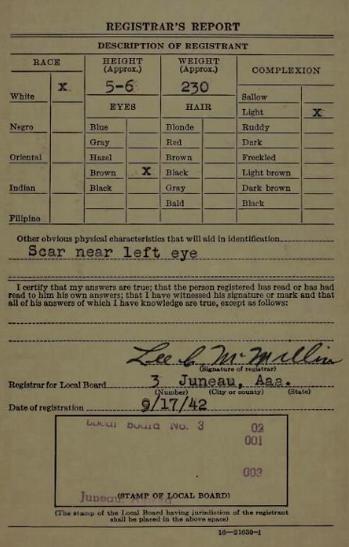
Even small communities had a draft registrar, and in fact Funter Bay had two. Postmaster Harold Hargrave handled registrations for local fishermen and miners, while Pribilof Island internees were registered by Lee McMillan, a Fish & Wildlife Service employee. Registration for the 4th round was begun in April of 1942, Funter Bay registrations seem to have occurred between May and September. I have found records for 29 individuals registered at Funter (again, these were only men age 45-64).

I’ve typed up the records from these draft cards below. The name in parentheses is the person listed as “Person who will always know your address”, if there is no last name in parentheses it is the same as the man listed in that record. If the card is noted “Deceased” or similar, I have also noted that after the names. Spelling of some of the place names is taken from the cards and is not always correct or consistent. The date of birth listed on the cards may not be 100% accurate, as people did not always recall their exact age. The last line of each record is the employer or business listed on the card.

Draft registrants at Funter Bay for the 1942 Old Man’s Draft were:

Peter Bourdukofsky (Alexandra) -Deceased
Born 11/22/1879, Pribilof Islands
F&WS Evacuation Camp

John Fratis (Anfesa Galaktinonoff)
Born 6/18/1886, Pribilof Islands
F&WS Evacuation Camp

Alexander Galanin (Mary) -Deceased
Born 9/11/1885, Pribilof Islands
F&WS Evacuation Camp

John Hanson (Frances Emanoff)
Born 4/7/1896, Pribilof Islands
F&WS Evacuation Camp

Nekita Hapoff (Prascodia) -Deceased 9/6/43
Born 9/27/1888, Pribilof Islands
F&WS Evacuation Camp

John A Harold (Douglas Ainsworth)
Born Nov 29, 1877, “Calumete Michigan”
Fisherman – Funter Alaska

Ernest Samuel James (H.J. Hargrave)
Born May 3, 1896, Eureka California
Fisherman – Funter Alaska

John Irwin Lee (H.J. Hargrave)
Born March 7, 1880, Brown County So. Dakota
Fisherman – Funter Alaska

Walter Kashevarof (Helena)
Born 7/3/1887, Belkofsky Alaska
F&WS Evacuation Camp

Theodore Kochutin (Maria)
Born 11/1/1888, Pribilof Islands
F&WS Evacuation Camp

Condrat Krukoff (Vassa)
Born 3/27/1890, Pribiliof Islands
F&WS Evacuation Camp

Theodore Kulchitzky (Nicolai Merculieff)
Born 1/22/1885, Sevoroye, Russia
Priest of Russian Church, Funter (St. George Native Community)

Anatoly Lekanof (Agnes)
Born 4/15/1890, Pribiloff Islands
F&WS Evacuation Camp

Serge Lekanof (Sophia)
Born 10/6/1891, Pribiloff Islands
F&WS Evacuation Camp

Nekifer Mandregan (Alexandra)
Born 2/18/1896, Pribilof Islands
F&WS Evacuation Camp

Nicolai Merculief (Angelina)
Born 5/18/1880, Pribiloff Islands
F&WS Evacuation Camp

Stefan Merculief (Agrippina)
Born 9/27/1890, Pribiloff Islands
F&WS Evacuation Camp

John Merculief (Mouza)
Born 1/19/1890, Pribiloff Islands
F&WS Evacuation Camp

Paul Merculieff (Alexandra)
Born 3/11/1890, Pribilof Island
F&WS Evacuation Camp

John Misikin (Natalia)
Born 9/28/1889, Pribilof Islands
F&WS Evacuation Camp

Isidor Nederazof (Alexandra)
Born 2/5/1891, Pribiloff Islands
F&WS Evacuation Camp

Paul Nozekof (Mary)
Born 7/11/1896
F&WS Evacuation Camp

Neil Oustigoff (Mary)
Born 9/30/1890, Pribilof Islands
F&WS Evacuation Camp

Vlass Pankoff (Moisey Shabolin) -Deceased
Born 2/22/1888, Pribilof Island
F&WS Evacuation Camp

Radoica Lazov Pekovich (W.S.)
Born ?/?/1881, Montenegro
W.S. Pekovich, Funter Alaska

Leonty Philemonof (Eoff)
Born 5/6/1894, Pribiloff Islands
F&WS Evacuation Camp

Vasilii Stepetin (Marva)
Born 2/8/1893, Pribilof Islands
F&WS Evacuation Camp

Paul Swetzof (Julia)
Born 6/8/1892, Pribiloff Islands
F&WS Evacuation Camp

Zachar Tetoff (Daria)
Born 5/21/1879, Pribilof Islands
F&WS Evacuation Camp


Funter Bay History: A Congressional Visit

November 30, 2015

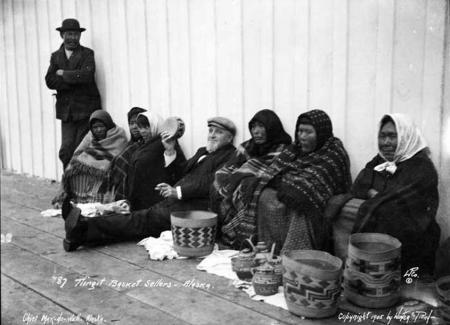
In the summer of 1905, a party of Congressmen visited Funter Bay on a tour of Southeast Alaska. The group was attending the Lewis and Clark Exposition in Portland, and was invited to visit Alaska courtesy of the Cities of Seattle & Tacoma and the Pacific Coast Steamship Company. A member of the party, Major Alexander McDowell, was photographed with Tlingit basket sellers on the cannery wharf at Funter:

Chief Mak-do-well 2

Winter & Pond photo, Courtesy of Alaska’s Digital Archives

Members of the tour included Joseph G. Cannon, speaker of the House of Representatives, Alexander McDowell, Clerk of the House, Henry Casson, Sergeant-at-Arms, and his wife, Joseph C. Sibley, Congressman from 25th district, PA, William A. Rodenberg, 22nd district of IL, and wife, H.C. Adams, 2nd district, Wisconsin, and wife, C.L. Bartlett, 6th district, GA, and wife, J.A. Hemenway, Senator from Indiana, with children, J.A. McAndrews, 5th District, IL, H.C. Loudenslager, 1st District, NJ, and wife, J.A. Tawney, First district of MN, with wife and daughther, Blaine Harrington, secretary to Congressman Sibley, and L. White Busby, secretary to Speaker Cannon, and his wife. Senator Piles and Congressman Humphrey from the State of Washington also accompanied the party.

Cottage City 1905

Steamship Cottage City at Skagway in 1905, Case & Draper Photo.

The steamer Cottage City departed Seattle June 5th and brought the Congressmen to Ketchikan, Metlakatla, Juneau, Douglas, Haines, Skagway, Funter, Killisnoo, Sitka, and Wrangell, stopping at Vancouver on the way back. The trip was mainly for pleasure, but the group studied and discussed all sorts of matters, from the representation of Alaska to fishing enforcement and communications. The Washington Post stated that:

“The Congressmen went north with the idea that Alaska’s coast was covered with glaciers and polar bears, but all returned with words of praise, confident of its great future” (“The Tour of the Statesmen in the Far and Golden North”; Washington Post; July 2, 1905)

The article mentions baskets and curios for sale by local Tlingit natives at various ports. I have found a few other references to Tlingit crafts for sale to tourists at Funter (on the cannery wharf), but this is the first time I have identified a photo of such.

McDowell Baskets

As the Post explains:

“Maj McDowell, Clerk of the House of Representatives, created a great deal of fun for the party, and his photograph with the Indian women at Funter Bay was purchased as a souvenir by every member of the party.”

More information on Major Alexander McDowell can be found here.

Various commentators claimed the visit would bring greater representation to Alaska, and in fact a new at-large congressional district for Alaska was created in 1906.


Alaska’s Railroad Shipwrecks

November 25, 2015

During my research on Alaska’s forgotten railroads, I came across a few incidents of shipwrecked railroad cars. While such events don’t really fit my railroad page, they are interesting enough to document here.

Because the Alaska Railroad is not connected to the rest of North America’s rail network, there is a regular traffic of rolling stock on rail-equipped barges to and from Pacific Northwest ports (more info and photos here). Various other communities and industries have experimented with such service, with stub rail yards appearing in Sitka, Ketchikan, Saxman and Valdez, connected to the outside world by rail barge docks. (This arrangement is also common at BC lumber mills).

As with other ocean-going vessels, these rail barges sometimes suffer casualties. The following are a few such incidents:

February 26, 1947: The barge PT&B Co 1651 ran aground on Louis (or Lewis) Reef, just North of Ketchikan. Rail cars bound for the Alaska RR were salvaged, but the barge was a total loss.

April 1964: Five freight cars of pulp from the Ketchikan mill fell off a barge during heavy weather off Dixon Entrance. Loss was estimated at $50,000 plus the value of the freight cars, which were owned by various railroads.

September 27, 1965: The train ship Alaska ran aground in a storm and sustained bow damage, but was able to refloat under its own power and reach Vancouver for repairs. This was a roll-on, roll-off train ferry rather than a barge. A photo of the ship is here, and more information is here.

December 13, 1967: The “Hydro-Train” barge Valdez towed by the Sea Witch was driven ashore West of Yakutat during a storm. The tug (another source says it was the Sea Giant) sought shelter in Yakutat Bay but the towline snagged on the bottom and the barge was driven ashore. Heavy waves smashed the barge and 42 loaded rail cars bound for Whittier were lost.

February 19, 1970: The tug Intrepid capsized and sank during a storm, with loss of 3 crew (5 survived in a life raft for several days before rescue). The tug’s tow was the 400ft barge Cordova carrying 40 railroad cars. The barge went aground near Yakutat and was later salvaged (photo of salvage operations here)

September 1975: Crowley Barge 414 went aground near Yakutat and was refloated by the Salvage Chief (Source and photo here)

October 20, 1987: The tank barge Seattle hit a reef while carrying chemicals to the Sitka pulp mill. In addition to on-board tanks of chlorine and caustic soda, the barge had rail cars filled with sulfer, ammonia, and sulfuric acid. Despite the potential for a hazardous spill, the barge was pulled off the reef with only minor damage.

January 1, 1997: The tug Blackhawk departed Whittier with a barge of empty rail cars, and arrived in Ketchikan a few days later with only half the barge. A passing boat informed the tug of the damage, as the crew could only see the front of the barge they were unaware it had broken in half. The Coast Guard located the back half drifting intact southwest of Valdez and it was towed back to port with no rail cars lost. (Some details from the Daily Sitka Sentinel of January 6, 1997).

Unknown Date: The rail car barge Griffco went aground near Yakutat and was re-floated.

Groundings near Yakutat are somewhat common in this list. The stretch of coast from Cross Sound to Prince William Sound is less protected than the rest of the route to the Gulf of Alaska. There are no sheltering islands to break up ocean wind and waves, and few harbors where vessels can seek shelter. It is sometimes called “Alaska’s Lost Coast”, due to the scarcity of settlements. Boats are frequently driven ashore by strong winds, but the relatively soft sand beaches help reduce damage in many cases. Some examples of wrecks in the area can be seen here and here.

The information here is from various sources as noted, as well as alaskashipwreck.com and the Bureau of Ocean Energy Management’s Alaska Shipwreck Table.


Monorail Extras

October 19, 2015

Work is gradually progressing on the monorail train, which has proven to be a wonderful place to camp out! As we work on remodeling and fixing up the train I will have more posts with photos and progress reports, but for now here are a few monorail-related odds and ends. First is a 1979 T-shirt design I came across:

Skytrail3

And a 1984 postcard of the monorail in operation:

postcard_web

And some original monorail fare tokens from the zoo:

Monorail token web

I’ve made a few custom bumper stickers:

0625151912

And here are a few more photos of the train’s origin, in case anyone is curious what the zoo side of things looks like. Some of these facilities might not be around much longer.

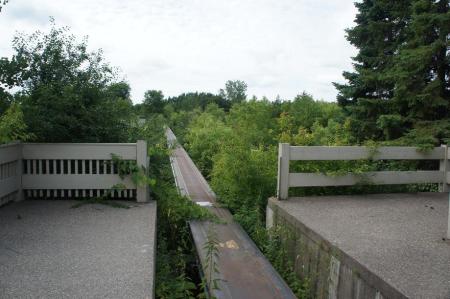
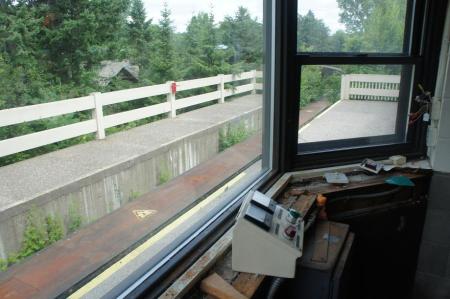
The abandoned MN Zoo monorail station (soon to become a new animal attraction):

SONY DSC

SONY DSC

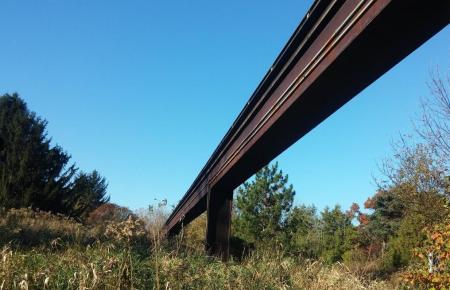
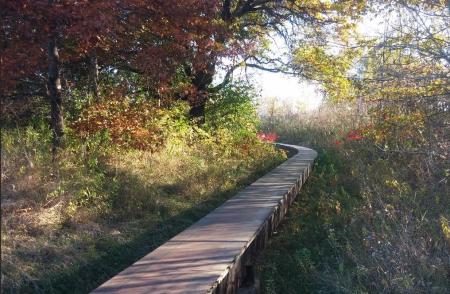
Some pictures of the abandoned monorail track:

track4SONY DSC

track5

In the maintenance barn with two trains parked inside:

SONY DSC

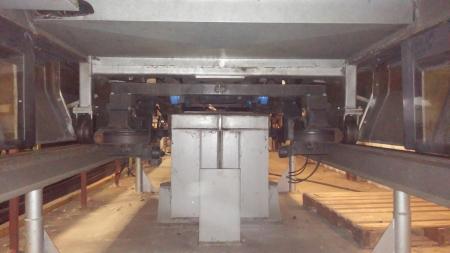
Some close-ups of how a monorail bogie mounts to a car (normally this would be hidden between two cars, but one car has been de-coupled):

bogie3   bogie1

And a close-up of the transition from maintenance track (two rails for caster wheels) to monorail track (center beam for tires):

bogie2

The remaining monorail cars from the zoo are destined for an East Coast museum.


Skytrail3


Funter Bay History: Annual Cannery Reports

August 8, 2015

Salmon canneries such as the one at Funter Bay were required to file annual reports to the government, detailing statistical information on their catches, employees, and financial situation. These are recorded in the National Archives Record Group 22, Records of the US Fish and Wildlife Service (Formerly the US Fisheries Bureau). A number these records can be downloaded from the NOAA document library, although they are not clearly indexed. I was able to find the annual reports for 12 of the 29 years (1902-1931) that the Funter Bay Cannery was actively working. The original PDF files can be downloaded at the bottom of this post.

1904 header

Some of the information in the reports seems to contradict other sources in regards to the size and number of boats, demographics of workers, etc. I am not sure which sources are the most reliable, but the official nature and later requirement for notarized reports suggest some degree of accuracy with these. That does not necessarily mean they are *complete*, as there are plenty of hints elsewhere of “creative” legal loopholes. For example, boats described elsewhere but not listed here may have been owned privately by company executives rather than the company itself. It is also not clear if wages were calculated before or after any deductions for room & board, company store, etc.

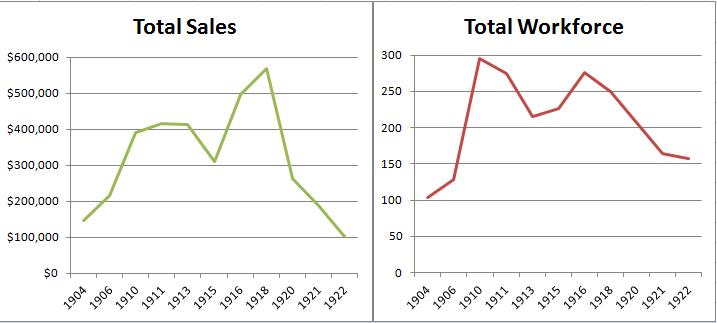
In 1904 the Funter cannery was valued at $150,000 and had $80,000 in stock. It paid $27,000 in wages to 75 plant employees, including 25 White, 20 Native Alaskan, 30 Chinese, and 20 Japanese workers. In addition, 28 Fishermen were employed, including 17 Whites and 3 Natives. There was one 82 ton steam vessel worth $17,000 with a crew of 5, 8 skiffs, 3 lighters, 3 scows, and 2 pile drivers, together worth $12,500. The cannery handled mostly Red (210,000) and Pink (330,000) salmon, with smaller numbers of Silver (48,000), Dog (6,500), and Kings (800). Market value of the catch for 1904 through Ocbober was $147,463. All traps were in Icy Strait, Chatham Strait, or Lynn Canal.

In 1906 the value of the plant had increased to $300,000, and wages to $51,000. The number of fishermen dropped to 20 White men, while Cannery workers increased to 12 White, 35 Native, 44 Chinese, and 18 Japanese. An additional steamer was added but was not in regular use. One pile driver, 3 skiffs, and all 3 lighters vanished from the roster, the small boats were replaced by (or perhaps reclassified as) dories. Two more scows were added. In 1906 the cannery handled 600,000 Pink salmon, 220,000 Reds, 110,000 Dogs, 42,000 Silvers, and 900 Kings, worth $214,719.

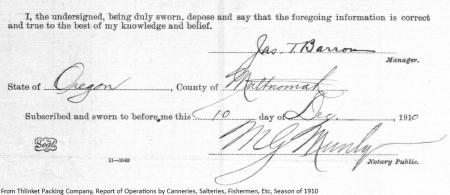
In 1910 the reporting form changed slightly. The cannery was reportedly worth $500,000 and had 3 resident superintendents and 20 salaried clerks and employees. Wages for salaried employees were $18,600, cannery workers $47,800, fishermen $25,000 and transporters $3,600. The total work force included 51 White, 106 Native, 77 Chinese, and 38 Japanese. The cannery had 2 steamers, 15 rowboats, 10 lighters and scows, and had added back one pile driver for a total of two. Eight fish traps were reported. The sailing vessel General Fairchild is mentioned as being owned, but not used. Production is listed this year in terms of cases, with 9,610 cases of Coho (Silver), 16,668 of Dog (Chum), 40,805 of Pink (Humpback), and 31,583 of Red (Sockeye). Reds were in two can sizes.  In addition, pickled or salted fish are reported in this year, including 2 barrels of whole King salmon and 11 barrels of King bellies. Total value appears to have been $392,081.80 (from 1910 to 1915 the totals are not given explicitly, and the income sheet seems to have been used as a scratch pad). This year also introduced the notary requirement, with company secretary M.G, Munley acting as notary for owner James T Barron.
signatures 1910

In 1911 there were 61 White, 90 Native, 75 Chinese, and 48 Japanese employees. The company now had 25 rowboats and 11 lighters and scows. There were 12 stationary fish traps. 10,946 cases of Coho, 20,224 of Dog, 43,844 of Pink, 341 of King, and 23,928 of Red salmon were produced, apparently worth $415,477.06. No pickled fish were reported this year. Manager Fred Barker signed off on the 1911 report instead of Barron.

The 1912 report deals mostly with the type of salmon caught, and does not contain income, equipment, or employee data (one or more pages may be missing). 750 Kings were caught in Icy Straight between Excursion Inlet and Point Couverden (the Homeshore stretch). 187 Kings were caught in Chatham between Funter Bay and Point Retreat. All Kings were caught between June 10 and July 10. A total of 351,309 Reds were caught between June 12 and Sept 1. 508,050 Pinks were caught between June 20 and Aug 20. 69,853 Coho between July 15 and Sept 12, and 354 Dog salmon between June 12 and Sept 12. Most of the fish of each species were caught in the traps at Homeshore.

The 1913 report goes back to detailing workers and boats. This year saw 79 White, 48 Native, 44 Chinese, and 44 Japanese employees at the cannery. There were 13 stationary traps and 3 pile drivers. One skiff had disappeared since 1911. 6,164 cases of Coho, 19,766 of Dog, 60,230 of Pink, 220 of King, and 25,494 of Red salmon were packed. No salt/pickled fish were reported. Total value seems to have been around $413,192. A detailed report similar to the 1912 data is appended showing how many fish were caught where on which dates.

The 1915 report changed format again, now reporting vessel names (Gas launch Buster and Steamer Anna Barron were the two large boats, there was also an unnamed gas launch). 17 staked traps were listed. Employees included 62 White, 51 Native, 75 Chinese, 30 Japanese, 4 Filipino, 1 Korean, and 4 Mexican (earlier reports did not have so many categories, and could have lumped Filipino and Korean workers into another category). Sockeye were packed in three different can sizes, for a total of 22,231 cases, King production was 339 cases, Coho 4,996, Pink 48,450, and Chum 16,873. Total value was $311,547.64.

1916 saw 107 White, 63 Native, 64 Chinese, 38 Japanese, and 4 Filipino workers, with total wages paid of $100,000. 23 staked traps are listed. The pack included 134 cases of Kings, 15,560 of Red, 15,028 of Coho, 65,809 of Pink, and 25,292 of Chum worth $495,015.80. A note stated that the cannery did not count individual fish, but estimated catch numbers based on cases packed and average weights. superintendent H.W. Chutte signed off on the 1916 report.

1918 saw 93 White, 50 Native, 46 Chinese, 44 Japanese, 14 Filipino, and 3 Mexican employees, paid a total of $129,500. The gas boat Barron F was added to the roster. The number and type of traps stayed the same. More species were packed in different can sizes, including 1/2 lb “48s”, 1lb flat cans, and 1lb tall cans. 6,570 cases of Coho were packed, 41,590 of Pink, 28,732 of Chum, 577 of King, and 26,274 of Red, worth $568,438.46. James Barron went back to signing off on the reports.

1920 saw a change in name from Thlinket Packing Company to Corporation. The fishing method also started to shift drastically towards floating traps (12 reported) and away from staked traps (9 reported). Buildings were valued at $257,500 and trap sites at $400,000. Workforce included 94 White, 22 Native, 40 Chinese, 44 Japanese, and 7 Filipino, and wages were $115,500. One floating trap worth $1,200 was reported lost. 5,126 cases of Coho, 12,663 of Chum, 17,971 of Pink, 167 of King, and 15,445 of Red were packed, for $262,916.23.

After 1920’s drastic decrease in sales, 1921 saw a smaller workforce of 52 White, 65 Native, 24 Chinese, 15 Japanese, and 8 Filipino, paid a total of $63,152.42. The Steamer Anna Barron was reportedly taken out of state. The company by now had 31 rowboats and 16 scows. 1 pile driver is listed. Only 5 staked traps and 6 floating traps are listed, along with 1 rented trap and 6 trap frames which were hauled out on the beach and not in use. Production ceased on the smaller cans (except for Reds), total pack was 8,250 cases of Coho, 10,114 of Chum, 13,820 of Pink, 126 of King, and 9,916 of Red, worth $187,095. Sales Manager C.F. Whitney signed off on this year’s report.

1922’s report had 68 White, 42 Native, 23 Chinese, and 25 Filipino employees, paid $51,020. 4 staked traps and 6 floating traps were used, 3 trap sites were leased from another company. 2 Floating traps were reported washed away, for a loss of $8,400. The smaller cans made a reappearance and were especially popular for Sockeye, with a total production of 4,901 Coho cases, 4,017 Chum, 17.023 Pink, 30 King, and 11,755 Red. Value was $103,025.

stats

These falling numbers may have led to the property’s 1926 sale to Sunny Point Packing. The marked decline of the salmon runs after 1920 was due to overfishing and the ongoing proliferation of fish traps (which peaked around that year). After 1920 there were many new regulations and attempts at protecting the fish stocks, but by 1953 Alaska’s salmon industry was declared a major disaster by the Federal government. Fish traps were outlawed after statehood in 1959, and modern boat-based fisheries are more tightly managed and regulated.

For those still awake and wanting more statistics, the original reports are below:

1904 Report of Salmon Operations for Funter Bay Cannery
1906 Report of Salmon Operations for Funter Bay Cannery

1910 Report of Operations by Funter Bay Cannery
1911 Report of Operations by Funter Bay Cannery
1912 Report of Salmon Operations by Thlinket Packing Co
1913 Report of Operations by Thlinket Packing Co
1915 Statistics of Fishing Industry by Thlinket Packing Co
1916 Statistics of Fishing Industry by Thlinket Packing Co
1918 Statistics of Fishing Industry by Thlinket Packing Co
1920 Statistics of Fishing Industry by Thlinket Packing Corporation
1921 Statistics of Fishing Industry by Thlinket Packing Corporation
1922 Statistics of Fishing Industry by Thlinket Packing Corporation

Monorail Part II

July 27, 2015

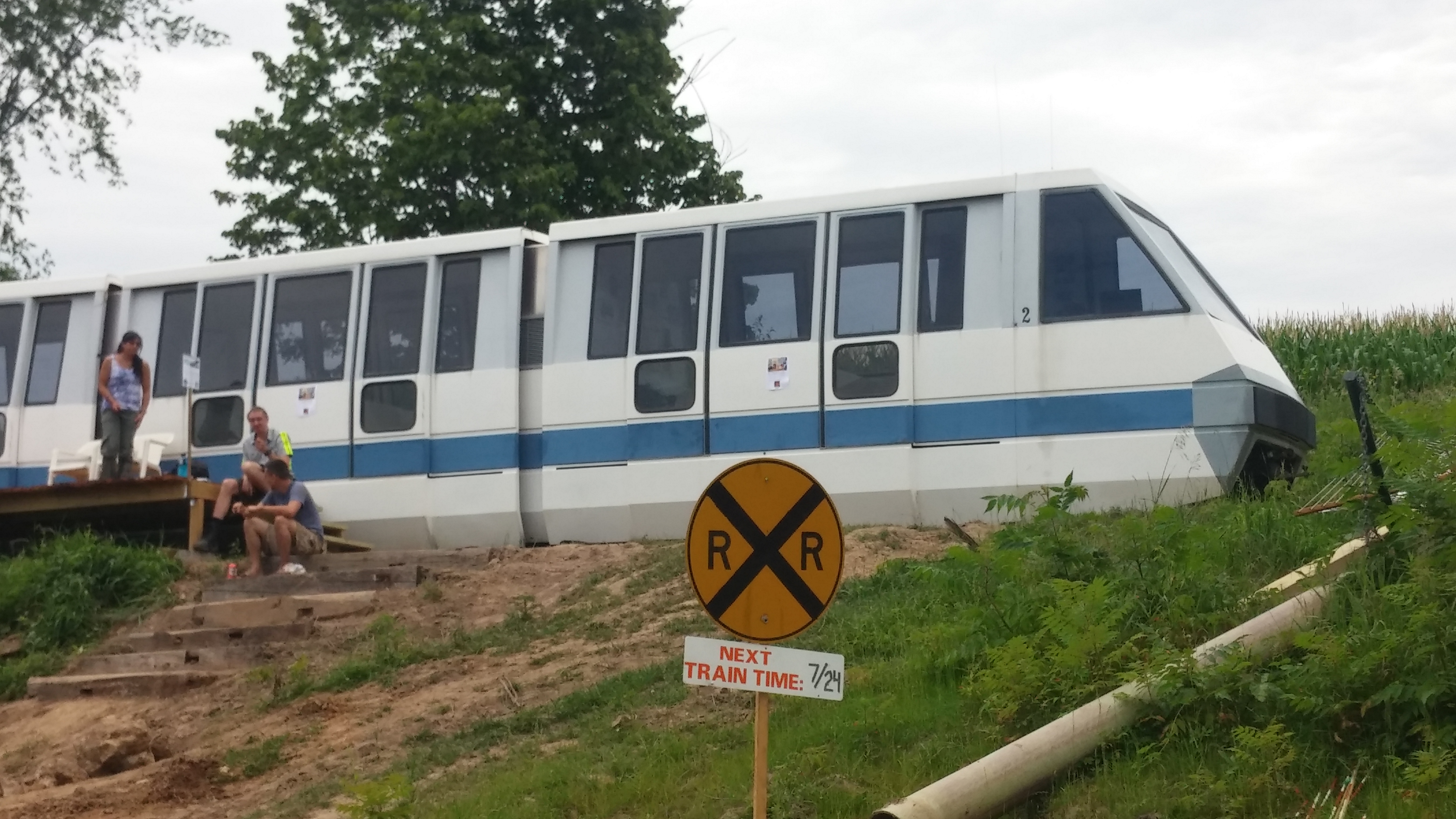
As previously mentioned, I’ve purchased a retired monorail train from the Minnesota zoo. This follow-up documents some of the steps involved in moving a 100-ft long, 6-car monorail train from one place to another. All 6 cars are now in their new home in the countryside, the train makes a terrific weekend cabin and a very unique conversation piece!

0726151042a

The original weight was in the neighborhood of 27 tons (numbers vary depending on the source consulted, and few documents agree). We were able to lose quite a bit of weight by removing the wheel bogies and drive motors, which was also required for uncoupling and removal from the track.

config

For those interested, here are some of the bogies removed from the train. One is powered (with the large motor on top), and one is an unpowered idler:

w2

The zoo was able to uncouple each car and move it on a maintenance track – actually two rails that support small casters under the cars. These originally allowed access to the underside of the train in an inspection pit.

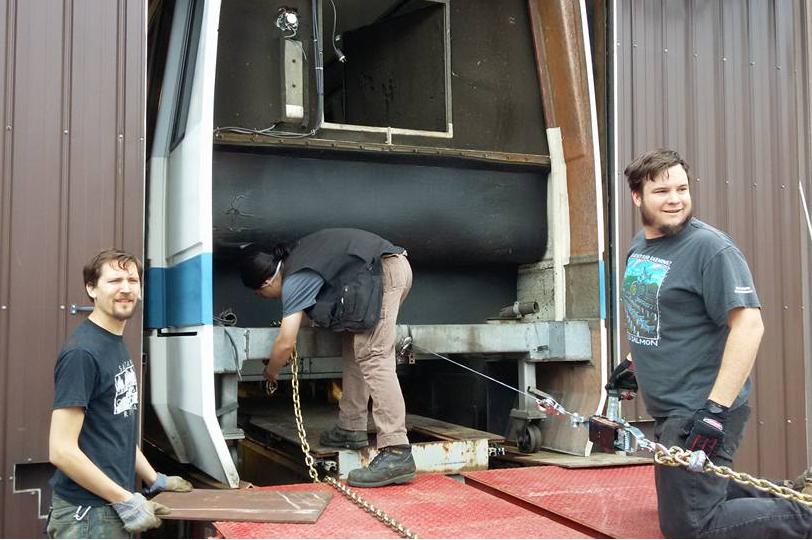
For loading, we backed a trailer up to extensions of these maintenance rails, and winched each car onto the trailer using a cable puller or “come-along”.

car2_move_2

Photo by Megan Emerson


9

Loading each car was about a 3-hour process, requiring occasional adjustments and stops to bridge various gaps in the rolling surface. After getting each car secured to the trailer, we drove them to their new home.

car1_move_10

Quite a few unfortunate drivers can now say they’ve been stuck in traffic behind a monorail. The open ends of middle cars act like huge fiberglass air scoops and make for slow progress. I was able to take back roads for the journey, but you know you’re slow when a loaded cement truck passes you going uphill.

I had originally hoped to unload these by hand, using some redneck technology (a platform to roll them onto, and a series of jacks and blocks to lower them to the ground). Some friends pulled an all-nighter doing materials strength calculations and modeling possible methods, and convinced me this was even less safe than it sounded.

moving-diagram

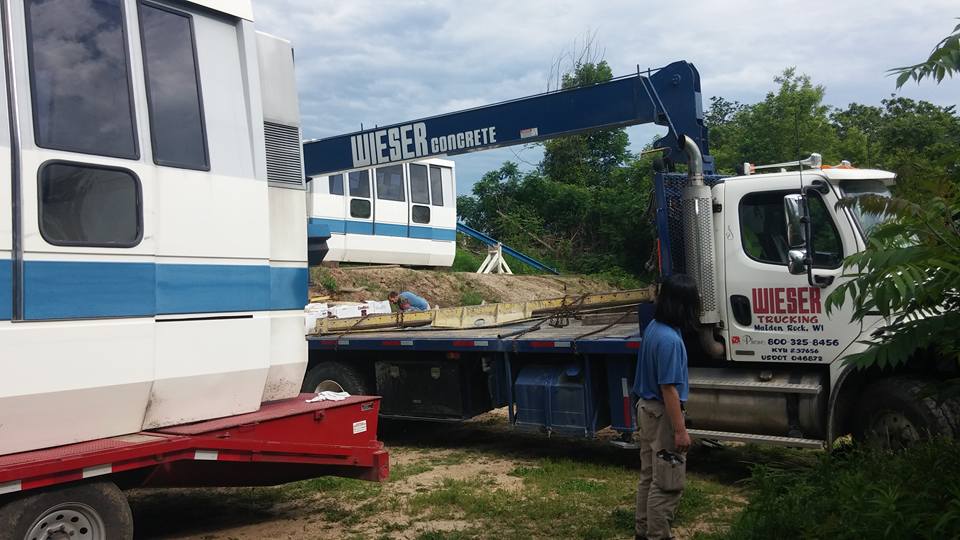
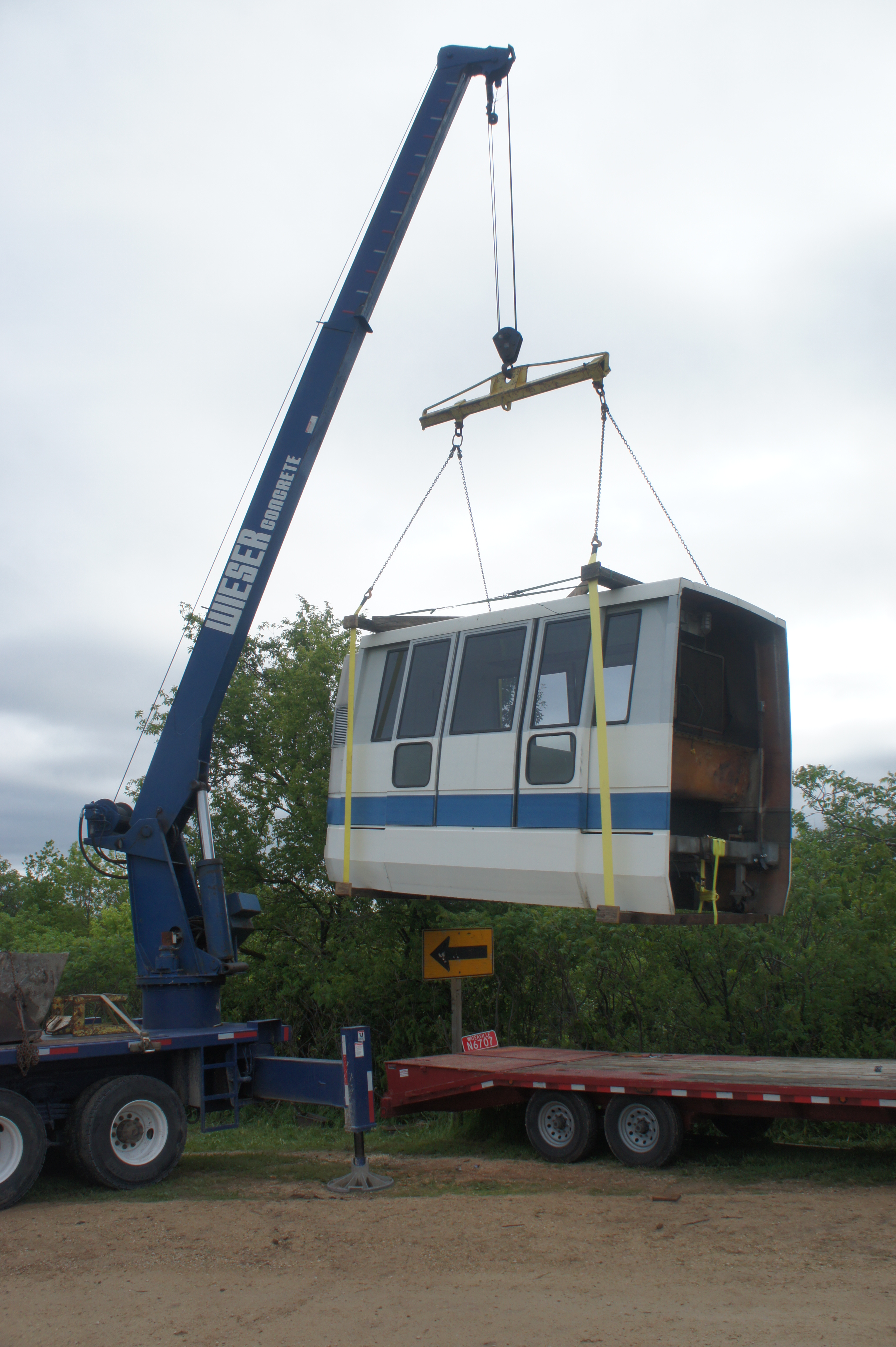
Instead, I hired a crane to do the hard part. Wieser Concrete has been amazingly helpful with this project, going above and beyond what we had hoped. I would highly recommend Wieser for anyone needing crane service in Wisconsin!

2

We tried various rigs for lifting these. The arrangement shown below was the first setup, strapping around the car with wood spreaders at the top to prevent crushing:

For the rest of the cars we used a much simpler and more stable lifting rig, with chains run down the ends to the steel frame. Most of the weight is in the bottom of the cars, the rest is mainly fiberglass.

SONY DSC

SONY DSC

After unloading from the trailer, we parked the monorail cars in a line so they formed a full 6-car train again. Below is an aerial view of one of the cars being moved into position:

Photo courtesy of Tim Walgrave

Photo by Tim Walgrave

The crane was able to place these very precisely, so we could nest them together as designed. We had assumed that fine adjustments would need more jacks and rollers, but an expert crane operator who can save hours of manual labor is well worth it!

Each car is fairly self contained, much like a small camper or RV. They have small hatches allowing access to the interstitial space and crawling passage between cars if desired. We may add bunks or other changes down the road, although I’m still planning to make as few major modifications as possible to preserve the original vehicles.

0726151045

I’ve even started a very small museum of sorts in the driver’s cab, with a few historic photos and artifacts related to the monorail. And of course, no monorail would be complete without a Simpsons reference!