Funter Bay History: A Congressional Visit

November 30, 2015

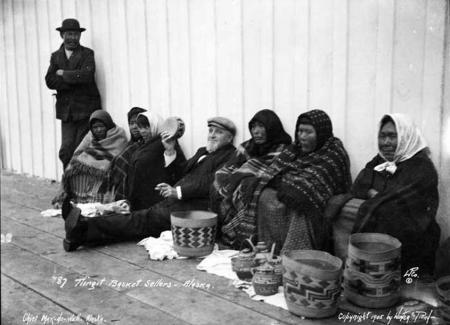
In the summer of 1905, a party of Congressmen visited Funter Bay on a tour of Southeast Alaska. The group was attending the Lewis and Clark Exposition in Portland, and was invited to visit Alaska courtesy of the Cities of Seattle & Tacoma and the Pacific Coast Steamship Company. A member of the party, Major Alexander McDowell, was photographed with Tlingit basket sellers on the cannery wharf at Funter:

Chief Mak-do-well 2

Winter & Pond photo, Courtesy of Alaska’s Digital Archives

Members of the tour included Joseph G. Cannon, speaker of the House of Representatives, Alexander McDowell, Clerk of the House, Henry Casson, Sergeant-at-Arms, and his wife, Joseph C. Sibley, Congressman from 25th district, PA, William A. Rodenberg, 22nd district of IL, and wife, H.C. Adams, 2nd district, Wisconsin, and wife, C.L. Bartlett, 6th district, GA, and wife, J.A. Hemenway, Senator from Indiana, with children, J.A. McAndrews, 5th District, IL, H.C. Loudenslager, 1st District, NJ, and wife, J.A. Tawney, First district of MN, with wife and daughther, Blaine Harrington, secretary to Congressman Sibley, and L. White Busby, secretary to Speaker Cannon, and his wife. Senator Piles and Congressman Humphrey from the State of Washington also accompanied the party.

Cottage City 1905

Steamship Cottage City at Skagway in 1905, Case & Draper Photo.

The steamer Cottage City departed Seattle June 5th and brought the Congressmen to Ketchikan, Metlakatla, Juneau, Douglas, Haines, Skagway, Funter, Killisnoo, Sitka, and Wrangell, stopping at Vancouver on the way back. The trip was mainly for pleasure, but the group studied and discussed all sorts of matters, from the representation of Alaska to fishing enforcement and communications. The Washington Post stated that:

“The Congressmen went north with the idea that Alaska’s coast was covered with glaciers and polar bears, but all returned with words of praise, confident of its great future” (“The Tour of the Statesmen in the Far and Golden North”; Washington Post; July 2, 1905)

The article mentions baskets and curios for sale by local Tlingit natives at various ports. I have found a few other references to Tlingit crafts for sale to tourists at Funter (on the cannery wharf), but this is the first time I have identified a photo of such.

McDowell Baskets

As the Post explains:

“Maj McDowell, Clerk of the House of Representatives, created a great deal of fun for the party, and his photograph with the Indian women at Funter Bay was purchased as a souvenir by every member of the party.”

More information on Major Alexander McDowell can be found here.

Various commentators claimed the visit would bring greater representation to Alaska, and in fact a new at-large congressional district for Alaska was created in 1906.


Alaska’s Railroad Shipwrecks

November 25, 2015

During my research on Alaska’s forgotten railroads, I came across a few incidents of shipwrecked railroad cars. While such events don’t really fit my railroad page, they are interesting enough to document here.

Because the Alaska Railroad is not connected to the rest of North America’s rail network, there is a regular traffic of rolling stock on rail-equipped barges to and from Pacific Northwest ports (more info and photos here). Various other communities and industries have experimented with such service, with stub rail yards appearing in Sitka, Ketchikan, Saxman and Valdez, connected to the outside world by rail barge docks. (This arrangement is also common at BC lumber mills).

As with other ocean-going vessels, these rail barges sometimes suffer casualties. The following are a few such incidents:

February 26, 1947: The barge PT&B Co 1651 ran aground on Louis (or Lewis) Reef, just North of Ketchikan. Rail cars bound for the Alaska RR were salvaged, but the barge was a total loss.

April 1964: Five freight cars of pulp from the Ketchikan mill fell off a barge during heavy weather off Dixon Entrance. Loss was estimated at $50,000 plus the value of the freight cars, which were owned by various railroads.

September 27, 1965: The train ship Alaska ran aground in a storm and sustained bow damage, but was able to refloat under its own power and reach Vancouver for repairs. This was a roll-on, roll-off train ferry rather than a barge. A photo of the ship is here, and more information is here.

December 13, 1967: The “Hydro-Train” barge Valdez towed by the Sea Witch was driven ashore West of Yakutat during a storm. The tug (another source says it was the Sea Giant) sought shelter in Yakutat Bay but the towline snagged on the bottom and the barge was driven ashore. Heavy waves smashed the barge and 42 loaded rail cars bound for Whittier were lost.

February 19, 1970: The tug Intrepid capsized and sank during a storm, with loss of 3 crew (5 survived in a life raft for several days before rescue). The tug’s tow was the 400ft barge Cordova carrying 40 railroad cars. The barge went aground near Yakutat and was later salvaged (photo of salvage operations here)

September 1975: Crowley Barge 414 went aground near Yakutat and was refloated by the Salvage Chief (Source and photo here)

October 20, 1987: The tank barge Seattle hit a reef while carrying chemicals to the Sitka pulp mill. In addition to on-board tanks of chlorine and caustic soda, the barge had rail cars filled with sulfer, ammonia, and sulfuric acid. Despite the potential for a hazardous spill, the barge was pulled off the reef with only minor damage.

January 1, 1997: The tug Blackhawk departed Whittier with a barge of empty rail cars, and arrived in Ketchikan a few days later with only half the barge. A passing boat informed the tug of the damage, as the crew could only see the front of the barge they were unaware it had broken in half. The Coast Guard located the back half drifting intact southwest of Valdez and it was towed back to port with no rail cars lost. (Some details from the Daily Sitka Sentinel of January 6, 1997).

Unknown Date: The rail car barge Griffco went aground near Yakutat and was re-floated.

Groundings near Yakutat are somewhat common in this list. The stretch of coast from Cross Sound to Prince William Sound is less protected than the rest of the route to the Gulf of Alaska. There are no sheltering islands to break up ocean wind and waves, and few harbors where vessels can seek shelter. It is sometimes called “Alaska’s Lost Coast”, due to the scarcity of settlements. Boats are frequently driven ashore by strong winds, but the relatively soft sand beaches help reduce damage in many cases. Some examples of wrecks in the area can be seen here and here.

The information here is from various sources as noted, as well as alaskashipwreck.com and the Bureau of Ocean Energy Management’s Alaska Shipwreck Table.


Monorail Extras

October 19, 2015

Work is gradually progressing on the monorail train, which has proven to be a wonderful place to camp out! As we work on remodeling and fixing up the train I will have more posts with photos and progress reports, but for now here are a few monorail-related odds and ends. First is a 1979 T-shirt design I came across:

Skytrail3

And a 1984 postcard of the monorail in operation:

postcard_web

And some original monorail fare tokens from the zoo:

Monorail token web

I’ve made a few custom bumper stickers:

0625151912

And here are a few more photos of the train’s origin, in case anyone is curious what the zoo side of things looks like. Some of these facilities might not be around much longer.

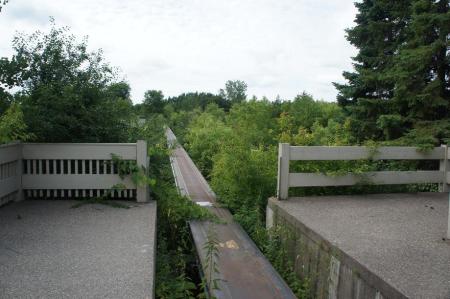
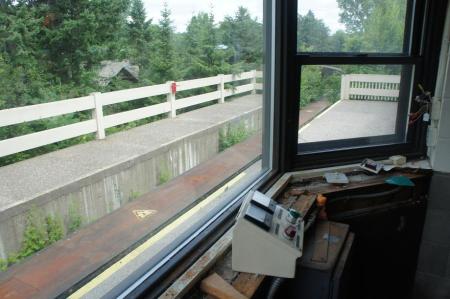
The abandoned MN Zoo monorail station (soon to become a new animal attraction):

SONY DSC

SONY DSC

Some pictures of the abandoned monorail track:

track4SONY DSC

track5

In the maintenance barn with two trains parked inside:

SONY DSC

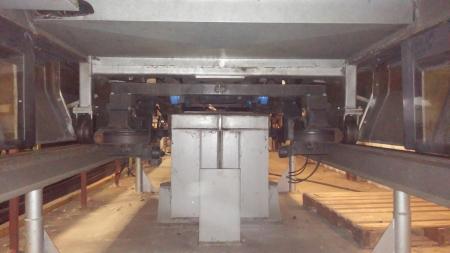
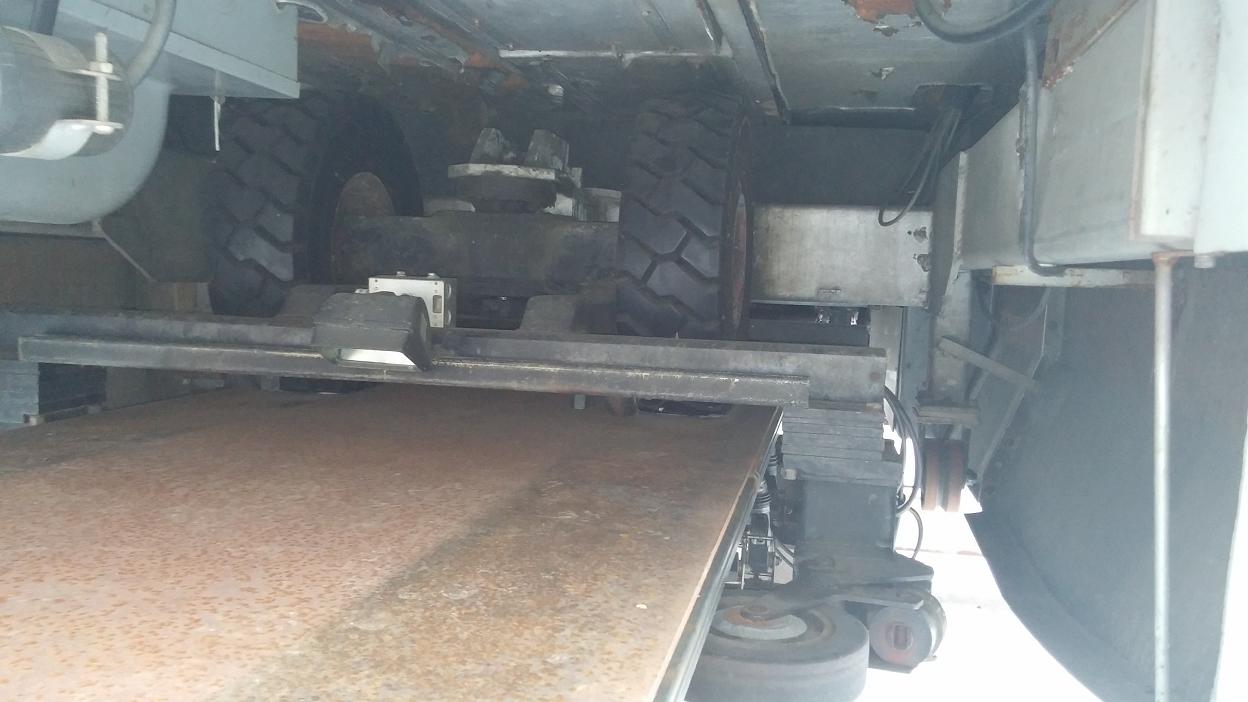
Some close-ups of how a monorail bogie mounts to a car (normally this would be hidden between two cars, but one car has been de-coupled):

bogie3   bogie1

And a close-up of the transition from maintenance track (two rails for caster wheels) to monorail track (center beam for tires):

bogie2

The remaining monorail cars from the zoo are destined for an East Coast museum.


Skytrail3


Funter Bay History: Annual Cannery Reports

August 8, 2015

Salmon canneries such as the one at Funter Bay were required to file annual reports to the government, detailing statistical information on their catches, employees, and financial situation. These are recorded in the National Archives Record Group 22, Records of the US Fish and Wildlife Service (Formerly the US Fisheries Bureau). A number these records can be downloaded from the NOAA document library, although they are not clearly indexed. I was able to find the annual reports for 12 of the 29 years (1902-1931) that the Funter Bay Cannery was actively working. The original PDF files can be downloaded at the bottom of this post.

1904 header

Some of the information in the reports seems to contradict other sources in regards to the size and number of boats, demographics of workers, etc. I am not sure which sources are the most reliable, but the official nature and later requirement for notarized reports suggest some degree of accuracy with these. That does not necessarily mean they are *complete*, as there are plenty of hints elsewhere of “creative” legal loopholes. For example, boats described elsewhere but not listed here may have been owned privately by company executives rather than the company itself. It is also not clear if wages were calculated before or after any deductions for room & board, company store, etc.

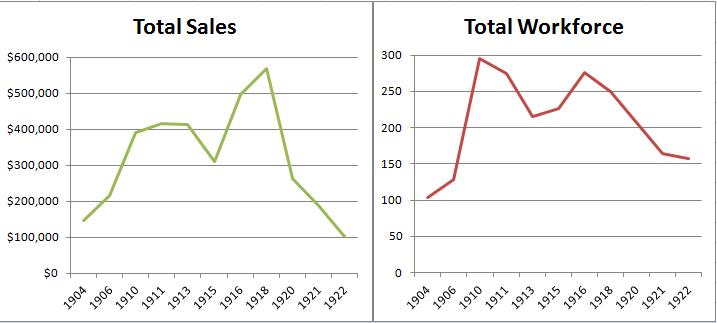
In 1904 the Funter cannery was valued at $150,000 and had $80,000 in stock. It paid $27,000 in wages to 75 plant employees, including 25 White, 20 Native Alaskan, 30 Chinese, and 20 Japanese workers. In addition, 28 Fishermen were employed, including 17 Whites and 3 Natives. There was one 82 ton steam vessel worth $17,000 with a crew of 5, 8 skiffs, 3 lighters, 3 scows, and 2 pile drivers, together worth $12,500. The cannery handled mostly Red (210,000) and Pink (330,000) salmon, with smaller numbers of Silver (48,000), Dog (6,500), and Kings (800). Market value of the catch for 1904 through Ocbober was $147,463. All traps were in Icy Strait, Chatham Strait, or Lynn Canal.

In 1906 the value of the plant had increased to $300,000, and wages to $51,000. The number of fishermen dropped to 20 White men, while Cannery workers increased to 12 White, 35 Native, 44 Chinese, and 18 Japanese. An additional steamer was added but was not in regular use. One pile driver, 3 skiffs, and all 3 lighters vanished from the roster, the small boats were replaced by (or perhaps reclassified as) dories. Two more scows were added. In 1906 the cannery handled 600,000 Pink salmon, 220,000 Reds, 110,000 Dogs, 42,000 Silvers, and 900 Kings, worth $214,719.

In 1910 the reporting form changed slightly. The cannery was reportedly worth $500,000 and had 3 resident superintendents and 20 salaried clerks and employees. Wages for salaried employees were $18,600, cannery workers $47,800, fishermen $25,000 and transporters $3,600. The total work force included 51 White, 106 Native, 77 Chinese, and 38 Japanese. The cannery had 2 steamers, 15 rowboats, 10 lighters and scows, and had added back one pile driver for a total of two. Eight fish traps were reported. The sailing vessel General Fairchild is mentioned as being owned, but not used. Production is listed this year in terms of cases, with 9,610 cases of Coho (Silver), 16,668 of Dog (Chum), 40,805 of Pink (Humpback), and 31,583 of Red (Sockeye). Reds were in two can sizes.  In addition, pickled or salted fish are reported in this year, including 2 barrels of whole King salmon and 11 barrels of King bellies. Total value appears to have been $392,081.80 (from 1910 to 1915 the totals are not given explicitly, and the income sheet seems to have been used as a scratch pad). This year also introduced the notary requirement, with company secretary M.G, Munley acting as notary for owner James T Barron.
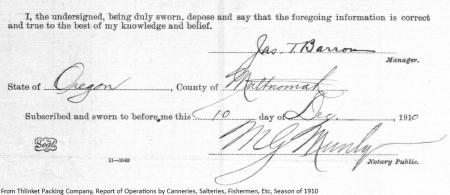
signatures 1910

In 1911 there were 61 White, 90 Native, 75 Chinese, and 48 Japanese employees. The company now had 25 rowboats and 11 lighters and scows. There were 12 stationary fish traps. 10,946 cases of Coho, 20,224 of Dog, 43,844 of Pink, 341 of King, and 23,928 of Red salmon were produced, apparently worth $415,477.06. No pickled fish were reported this year. Manager Fred Barker signed off on the 1911 report instead of Barron.

The 1912 report deals mostly with the type of salmon caught, and does not contain income, equipment, or employee data (one or more pages may be missing). 750 Kings were caught in Icy Straight between Excursion Inlet and Point Couverden (the Homeshore stretch). 187 Kings were caught in Chatham between Funter Bay and Point Retreat. All Kings were caught between June 10 and July 10. A total of 351,309 Reds were caught between June 12 and Sept 1. 508,050 Pinks were caught between June 20 and Aug 20. 69,853 Coho between July 15 and Sept 12, and 354 Dog salmon between June 12 and Sept 12. Most of the fish of each species were caught in the traps at Homeshore.

The 1913 report goes back to detailing workers and boats. This year saw 79 White, 48 Native, 44 Chinese, and 44 Japanese employees at the cannery. There were 13 stationary traps and 3 pile drivers. One skiff had disappeared since 1911. 6,164 cases of Coho, 19,766 of Dog, 60,230 of Pink, 220 of King, and 25,494 of Red salmon were packed. No salt/pickled fish were reported. Total value seems to have been around $413,192. A detailed report similar to the 1912 data is appended showing how many fish were caught where on which dates.

The 1915 report changed format again, now reporting vessel names (Gas launch Buster and Steamer Anna Barron were the two large boats, there was also an unnamed gas launch). 17 staked traps were listed. Employees included 62 White, 51 Native, 75 Chinese, 30 Japanese, 4 Filipino, 1 Korean, and 4 Mexican (earlier reports did not have so many categories, and could have lumped Filipino and Korean workers into another category). Sockeye were packed in three different can sizes, for a total of 22,231 cases, King production was 339 cases, Coho 4,996, Pink 48,450, and Chum 16,873. Total value was $311,547.64.

1916 saw 107 White, 63 Native, 64 Chinese, 38 Japanese, and 4 Filipino workers, with total wages paid of $100,000. 23 staked traps are listed. The pack included 134 cases of Kings, 15,560 of Red, 15,028 of Coho, 65,809 of Pink, and 25,292 of Chum worth $495,015.80. A note stated that the cannery did not count individual fish, but estimated catch numbers based on cases packed and average weights. superintendent H.W. Chutte signed off on the 1916 report.

1918 saw 93 White, 50 Native, 46 Chinese, 44 Japanese, 14 Filipino, and 3 Mexican employees, paid a total of $129,500. The gas boat Barron F was added to the roster. The number and type of traps stayed the same. More species were packed in different can sizes, including 1/2 lb “48s”, 1lb flat cans, and 1lb tall cans. 6,570 cases of Coho were packed, 41,590 of Pink, 28,732 of Chum, 577 of King, and 26,274 of Red, worth $568,438.46. James Barron went back to signing off on the reports.

1920 saw a change in name from Thlinket Packing Company to Corporation. The fishing method also started to shift drastically towards floating traps (12 reported) and away from staked traps (9 reported). Buildings were valued at $257,500 and trap sites at $400,000. Workforce included 94 White, 22 Native, 40 Chinese, 44 Japanese, and 7 Filipino, and wages were $115,500. One floating trap worth $1,200 was reported lost. 5,126 cases of Coho, 12,663 of Chum, 17,971 of Pink, 167 of King, and 15,445 of Red were packed, for $262,916.23.

After 1920’s drastic decrease in sales, 1921 saw a smaller workforce of 52 White, 65 Native, 24 Chinese, 15 Japanese, and 8 Filipino, paid a total of $63,152.42. The Steamer Anna Barron was reportedly taken out of state. The company by now had 31 rowboats and 16 scows. 1 pile driver is listed. Only 5 staked traps and 6 floating traps are listed, along with 1 rented trap and 6 trap frames which were hauled out on the beach and not in use. Production ceased on the smaller cans (except for Reds), total pack was 8,250 cases of Coho, 10,114 of Chum, 13,820 of Pink, 126 of King, and 9,916 of Red, worth $187,095. Sales Manager C.F. Whitney signed off on this year’s report.

1922’s report had 68 White, 42 Native, 23 Chinese, and 25 Filipino employees, paid $51,020. 4 staked traps and 6 floating traps were used, 3 trap sites were leased from another company. 2 Floating traps were reported washed away, for a loss of $8,400. The smaller cans made a reappearance and were especially popular for Sockeye, with a total production of 4,901 Coho cases, 4,017 Chum, 17.023 Pink, 30 King, and 11,755 Red. Value was $103,025.

stats

These falling numbers may have led to the property’s 1926 sale to Sunny Point Packing. The marked decline of the salmon runs after 1920 was due to overfishing and the ongoing proliferation of fish traps (which peaked around that year). After 1920 there were many new regulations and attempts at protecting the fish stocks, but by 1953 Alaska’s salmon industry was declared a major disaster by the Federal government. Fish traps were outlawed after statehood in 1959, and modern boat-based fisheries are more tightly managed and regulated.

For those still awake and wanting more statistics, the original reports are below:

1904 Report of Salmon Operations for Funter Bay Cannery
1906 Report of Salmon Operations for Funter Bay Cannery

1910 Report of Operations by Funter Bay Cannery
1911 Report of Operations by Funter Bay Cannery
1912 Report of Salmon Operations by Thlinket Packing Co
1913 Report of Operations by Thlinket Packing Co
1915 Statistics of Fishing Industry by Thlinket Packing Co
1916 Statistics of Fishing Industry by Thlinket Packing Co
1918 Statistics of Fishing Industry by Thlinket Packing Co
1920 Statistics of Fishing Industry by Thlinket Packing Corporation
1921 Statistics of Fishing Industry by Thlinket Packing Corporation
1922 Statistics of Fishing Industry by Thlinket Packing Corporation


Monorail Part II

July 27, 2015

As previously mentioned, I’ve purchased a retired monorail train from the Minnesota zoo. This follow-up documents some of the steps involved in moving a 100-ft long, 6-car monorail train from one place to another. All 6 cars are now in their new home in the countryside, the train makes a terrific weekend cabin and a very unique conversation piece!

0726151042a

The original weight was in the neighborhood of 27 tons (numbers vary depending on the source consulted, and few documents agree). We were able to lose quite a bit of weight by removing the wheel bogies and drive motors, which was also required for uncoupling and removal from the track.

config

For those interested, here are some of the bogies removed from the train. One is powered (with the large motor on top), and one is an unpowered idler:

w2

The zoo was able to uncouple each car and move it on a maintenance track – actually two rails that support small casters under the cars. These originally allowed access to the underside of the train in an inspection pit.

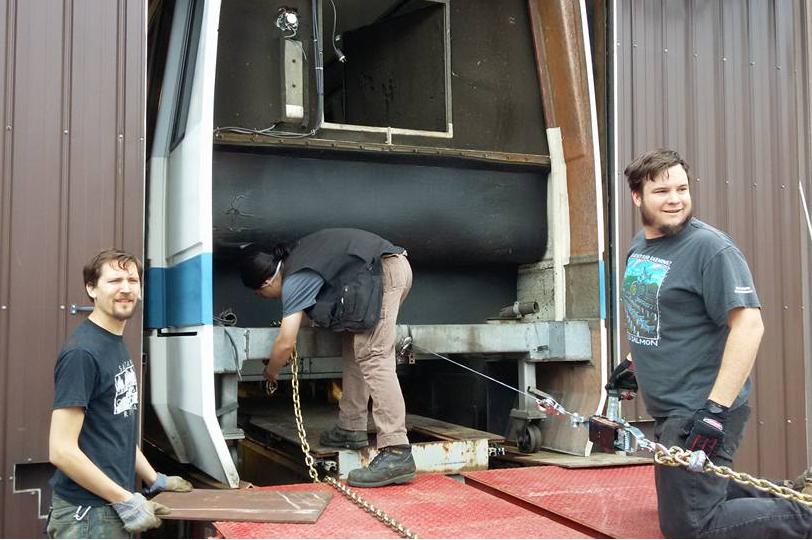
For loading, we backed a trailer up to extensions of these maintenance rails, and winched each car onto the trailer using a cable puller or “come-along”.

car2_move_2

Photo by Megan Emerson


9

Loading each car was about a 3-hour process, requiring occasional adjustments and stops to bridge various gaps in the rolling surface. After getting each car secured to the trailer, we drove them to their new home.

car1_move_10

Quite a few unfortunate drivers can now say they’ve been stuck in traffic behind a monorail. The open ends of middle cars act like huge fiberglass air scoops and make for slow progress. I was able to take back roads for the journey, but you know you’re slow when a loaded cement truck passes you going uphill.

I had originally hoped to unload these by hand, using some redneck technology (a platform to roll them onto, and a series of jacks and blocks to lower them to the ground). Some friends pulled an all-nighter doing materials strength calculations and modeling possible methods, and convinced me this was even less safe than it sounded.

moving-diagram

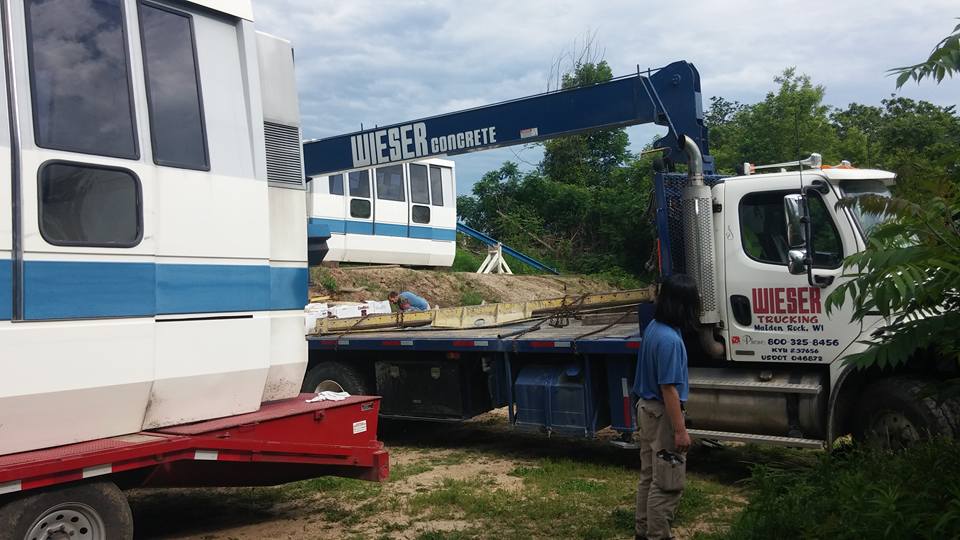
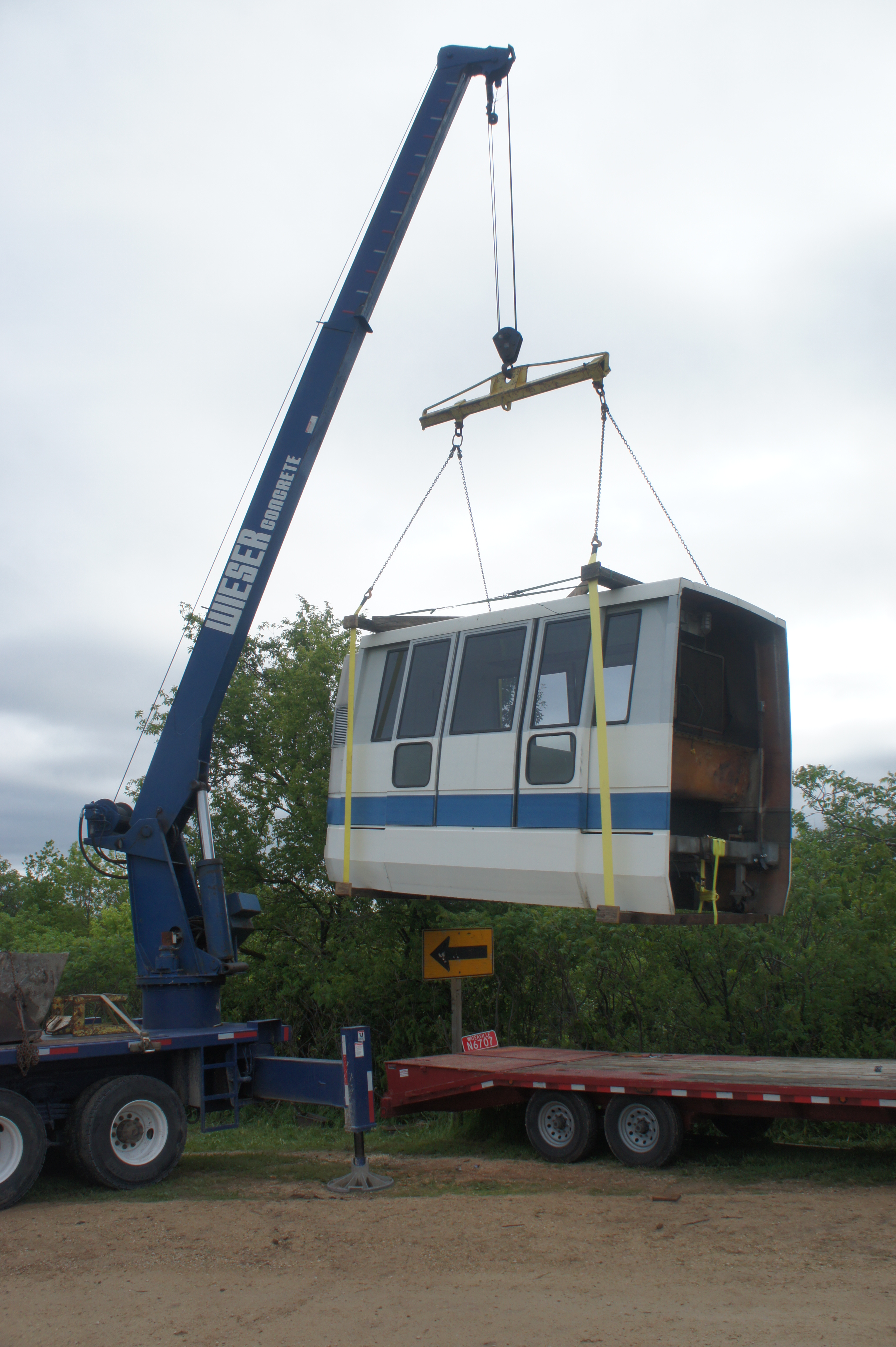
Instead, I hired a crane to do the hard part. Wieser Concrete has been amazingly helpful with this project, going above and beyond what we had hoped. I would highly recommend Wieser for anyone needing crane service in Wisconsin!

2

We tried various rigs for lifting these. The arrangement shown below was the first setup, strapping around the car with wood spreaders at the top to prevent crushing:

For the rest of the cars we used a much simpler and more stable lifting rig, with chains run down the ends to the steel frame. Most of the weight is in the bottom of the cars, the rest is mainly fiberglass.

SONY DSC

SONY DSC

After unloading from the trailer, we parked the monorail cars in a line so they formed a full 6-car train again. Below is an aerial view of one of the cars being moved into position:

Photo courtesy of Tim Walgrave

Photo by Tim Walgrave

The crane was able to place these very precisely, so we could nest them together as designed. We had assumed that fine adjustments would need more jacks and rollers, but an expert crane operator who can save hours of manual labor is well worth it!

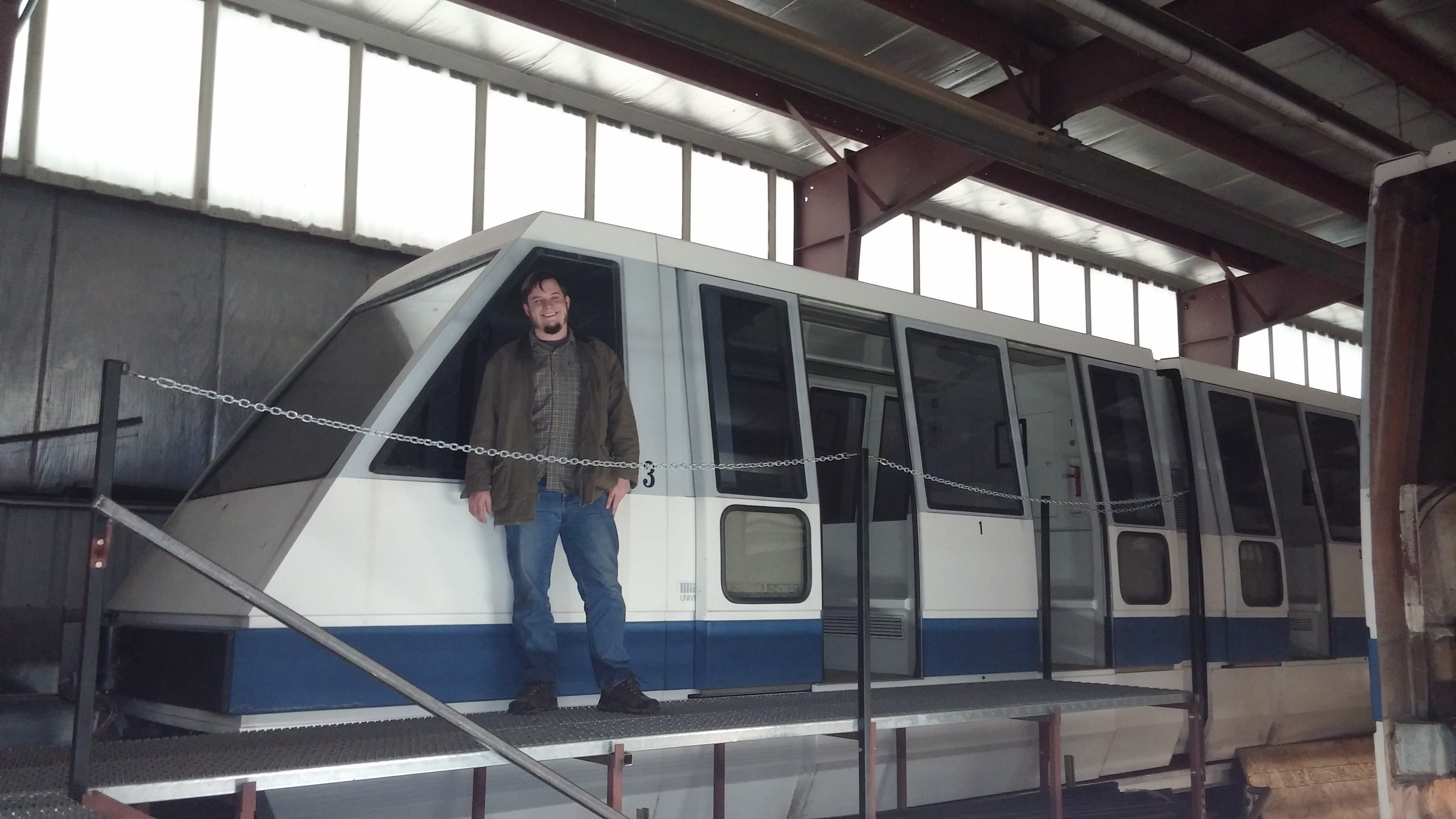
Each car is fairly self contained, much like a small camper or RV. They have small hatches allowing access to the interstitial space and crawling passage between cars if desired. We may add bunks or other changes down the road, although I’m still planning to make as few major modifications as possible to preserve the original vehicles.

0726151045

I’ve even started a very small museum of sorts in the driver’s cab, with a few historic photos and artifacts related to the monorail. And of course, no monorail would be complete without a Simpsons reference!


The Saveitforparts Monorail

June 1, 2015

Saveitforparts.com is finally putting itself on the map, with the purchase of a genuine, bona fide, electrified, six-car monorail!

1218141509

That’s right, I’ve bought an entire six-car monorail train from the Minnesota Zoo. The zoo’s elevated monorail system was retired in 2013 after 34 years of service, with the state-owned agency seeking to dispose of the equipment. As a lifelong train enthusiast with ongoing railroad history and model railroading projects, I couldn’t resist the chance to preserve a piece of local history!

1218141543c

While it would be awesome to construct a track and actually run the monorail, my resources are more suited to a static use of the cars. My initial plan is to park them on a rural property and use them as weekend cabins, as each car is similar to a small camper or RV in size. Interestingly, some of the Twin Cities’ TCRT trolley cars were used the same way after their retirement (sadly, most were scrapped or burned).

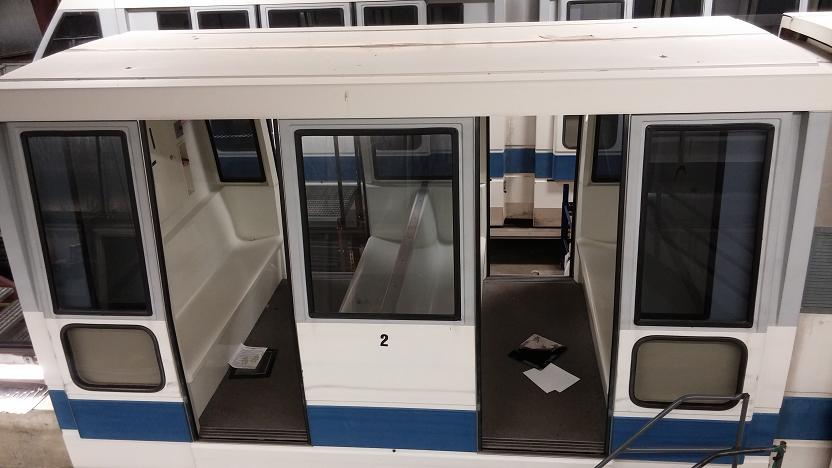
Below is one potential layout I came up with for a single middle car, leaving as much of the original body intact as possible (the seats are molded into the fiberglass inner shell). As the cars already have lights, heating vents, and multiple doors, it should be relatively simple to retrofit them for such a use without much alteration. I have some ideas for using multiple cars as well, the final layout will be exciting to develop!
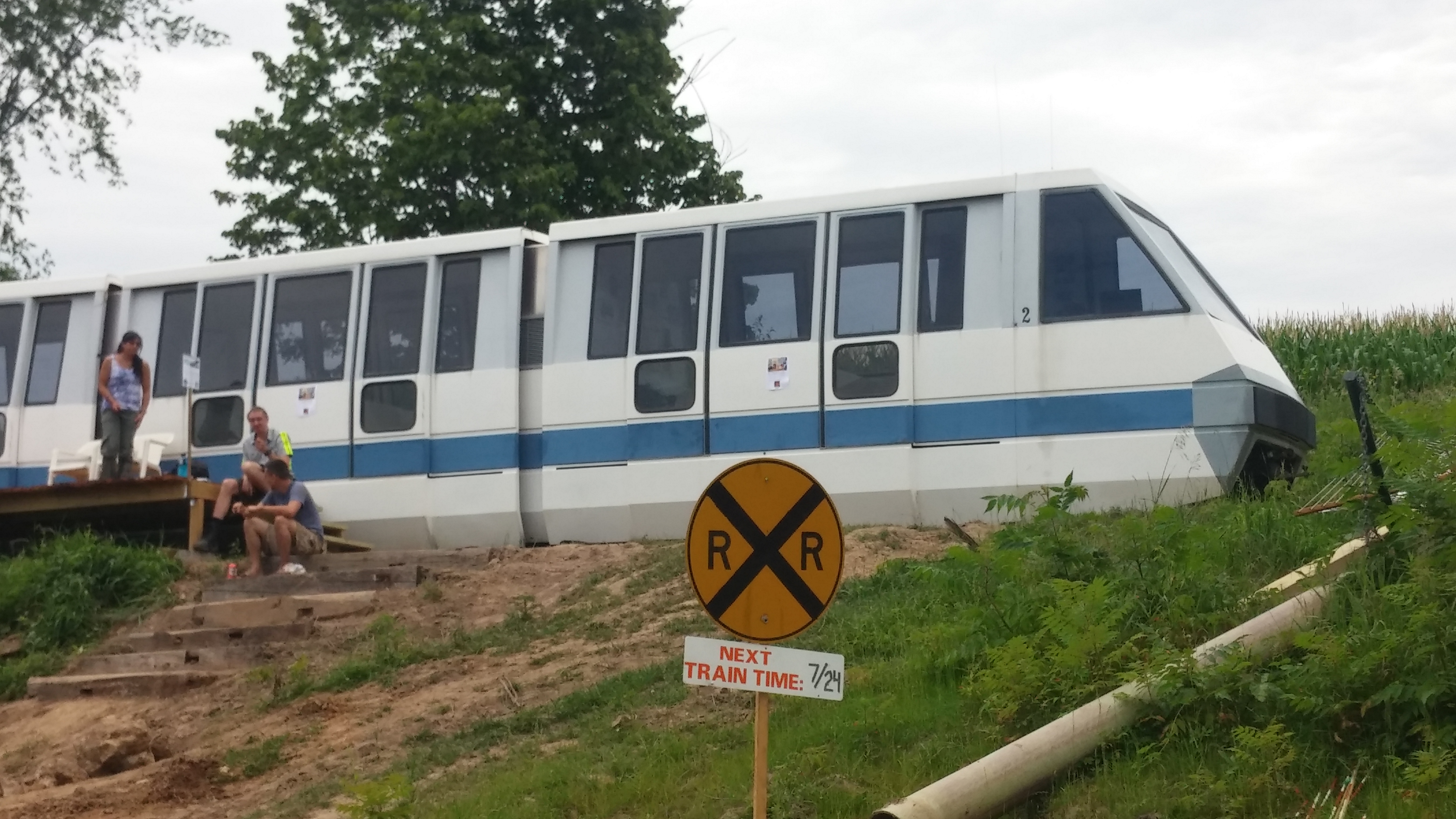
Potential Middle Car Renders

Below are some close-ups of what the cars look like inside and out:

m4  1108141448

I’ve also been doing quite a bit of research into the history of these monorail trains. While it’s certainly a very niche field of study, I’ve collected a few details that might be of interest to other monorail enthusiasts.

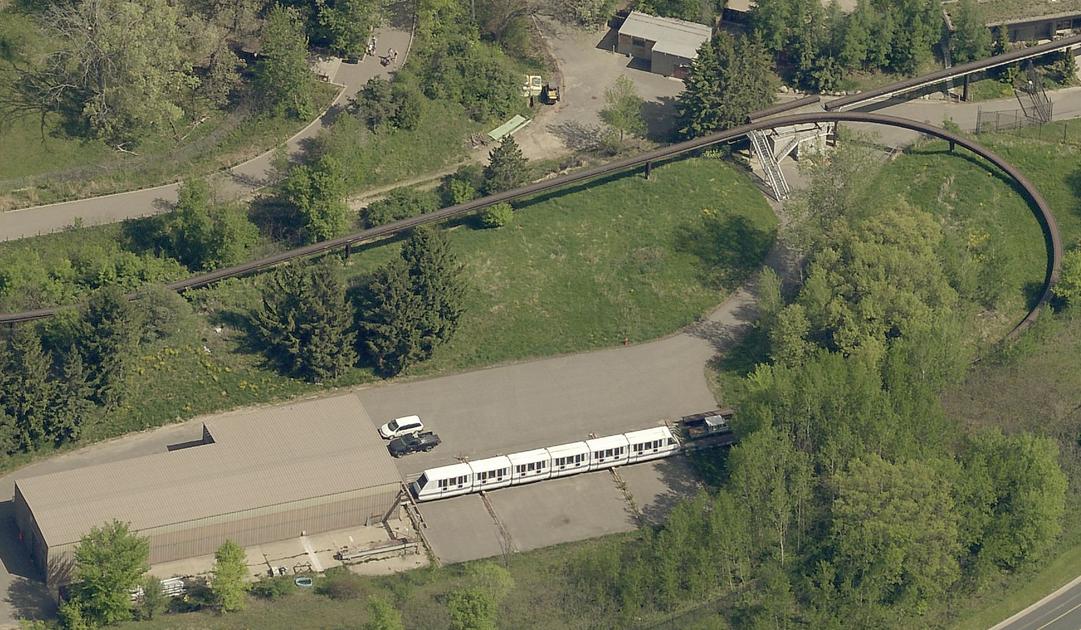
Aerial

Monorail switch and maintenance building, courtesy of Dakota County GIS.

The Minnesota Zoo’s Monorail was built in the late 1970s by Universal Mobility Inc (UMI), and is a “Unimobil Tourister” model. It began running in September of 1979 at the new Minnesota Zoological Garden (opened May 1978). The Minnesota legislature authorized the monorail with the provision that it be self-financing, separate from the zoo. A nonprofit corporation, Minnesota Zoo Ride Inc, was incorporated in 1976 to finance the accepted construction bid from UMI. The system included 3 trains, an oblong loop of track, an enclosed maintenance shop, single switch, and indoor & outdoor sidings for storage and maintenance.

1218141517

Minnesota Zoo monorail car barn. Photo by Gabe Emerson


Based in Salt Lake City, Universal Mobility designed and installed several similar monorail systems in the United States. One other Tourister of nearly identical design was installed at the 1984 World’s Fair, then moved to the Miami zoo where it still operates. Updated Tourister II models operated at King’s Dominion, King’s Island, and Carowinds amusement parks, while older, open-car versions operated at various amusement parks and are still used at Hersheypark in Pennsylvania. Another Unimobil system reportedly operated at Fuji Highlands in Japan. Several proposals were floated to install UMI monorails in metropolitan areas for public transit, but none were funded.

Califorina UMI study

The fiberglass car bodies were produced by Intermountain Design, who still manufactures monorail, people mover, and aerial tramway cars for various users. The mechanical drives and control systems were supplied by Maschinenfabrik Habegger of Switzerland. This company was tied to Von Roll Holding Co (designer of the Sydney Monorail among others). Both companies also designed ski lifts and aerial cable tramways (The Skyride at the Minnesota State Fair is a Von Roll system). Bombardier / TGI later acquired many of the UMI and Von Roll patents and produced another very similar monorail, known as the UM series. Von Roll / Habegger also marketed a very small monorail for use on farms and vineyards.

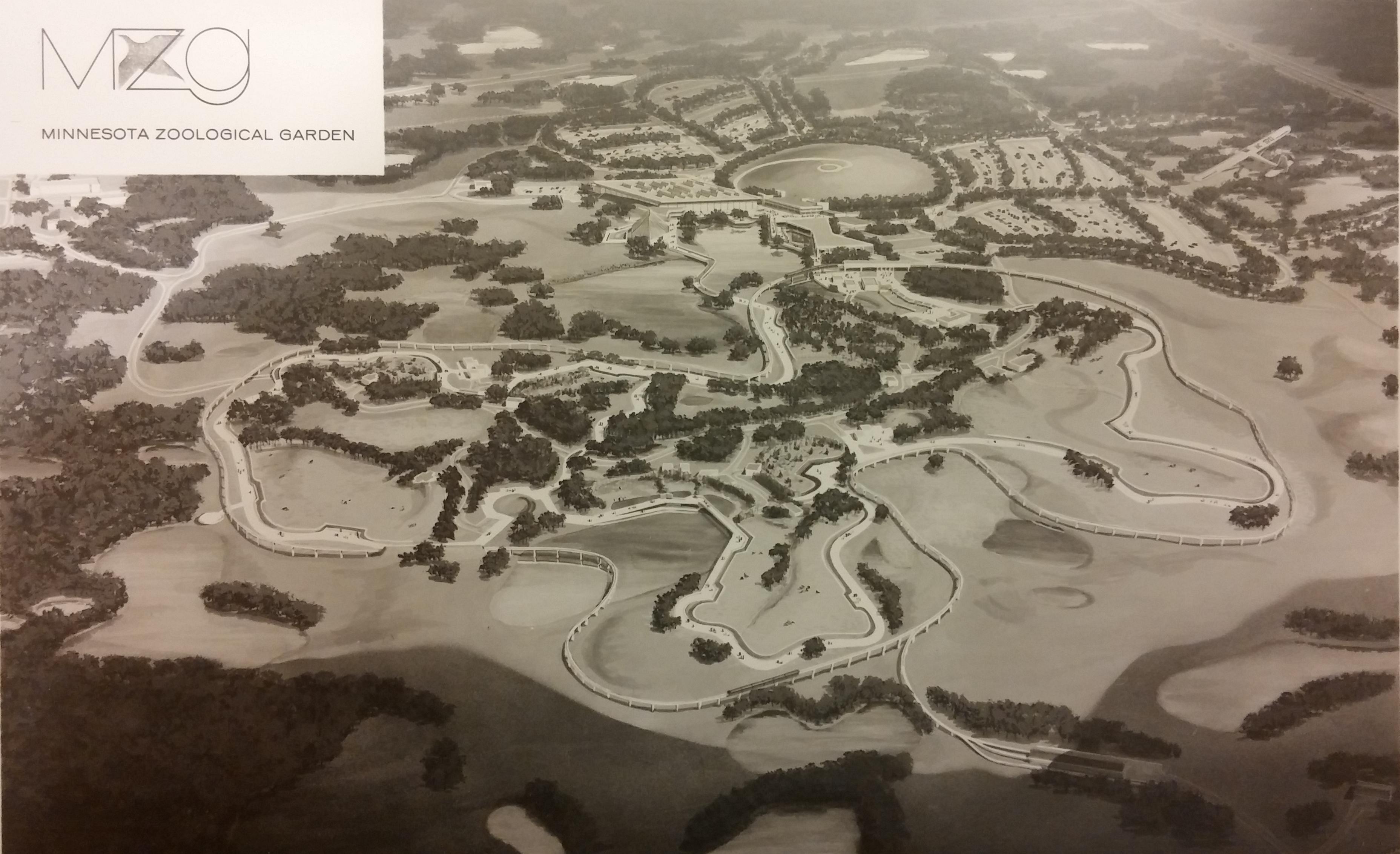
map

1970s concept drawing of zoo and monorail (note maintenance spur and car barn at lower right)

The Minnesota Zoo monorail ran into trouble almost immediately after installation, as ridership was not as high as predicted. The legislature refused to pay the full installments to investors, covering only what the ride actually made in fares. Shareholders (including various local and national banks) sued to demand the full loan amount in 1980. The state supreme court sided with the legislature and attorney general, saying that the state had no obligation to pay if the legislature chose not to.

The state was again sued, this time accused of securities fraud. Court cases dragged on through the early 1980s, involving investors, insurance companies, and various state agencies. The monorail remained operating, with profits covering only a fraction of the installments. Fares in 1980 were $1 for adults and 50 cents for seniors and children.

In September of 1985 the monorail system was repossessed, then sold back to the Minnesota Zoological Foundation with help from private donors and new loans. The monorail continued to report little or no profit, despite fares climbing to around $5 per person in recent years.

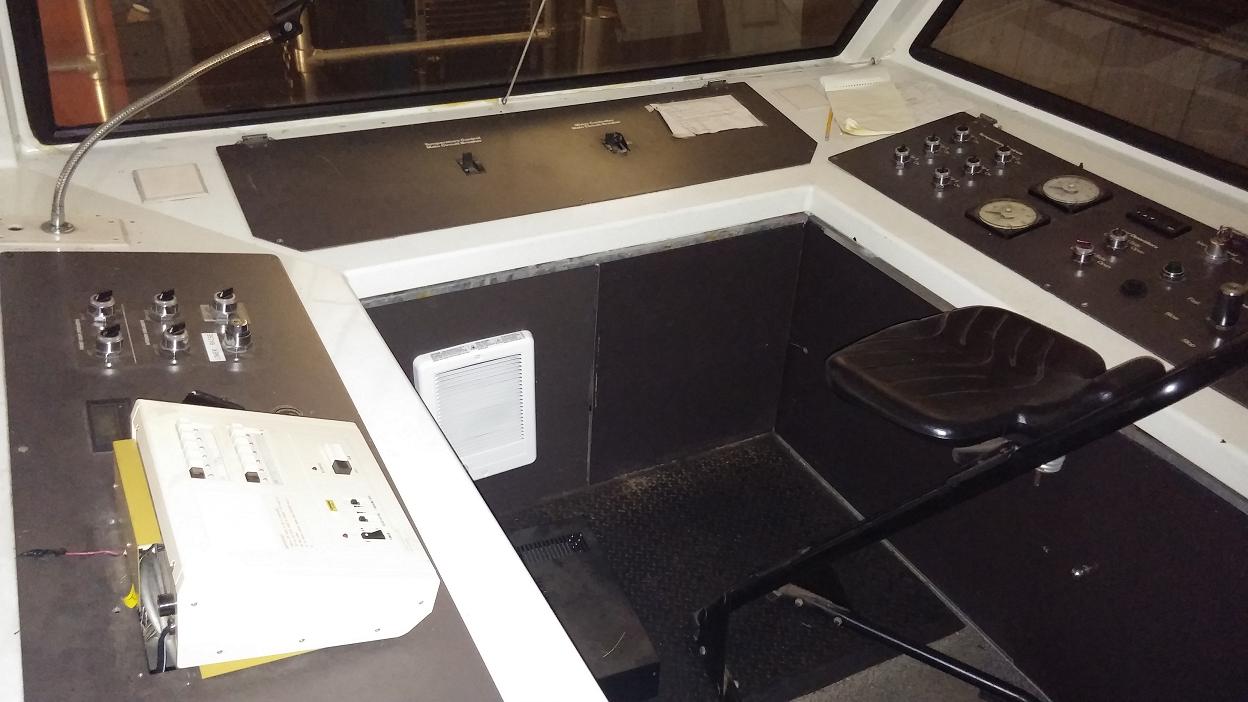
cab

Monorail control cab, photo by Gabe Emerson


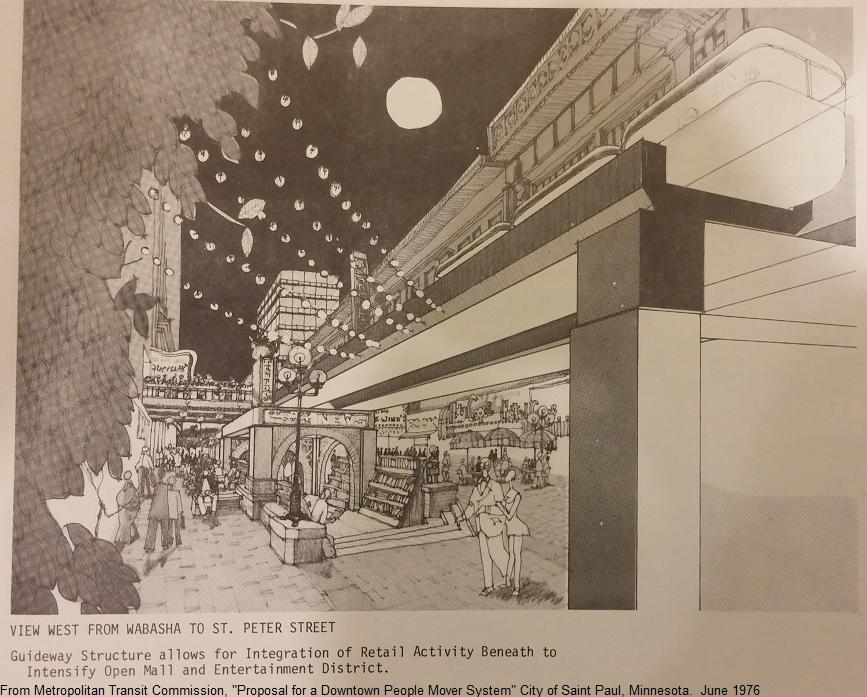
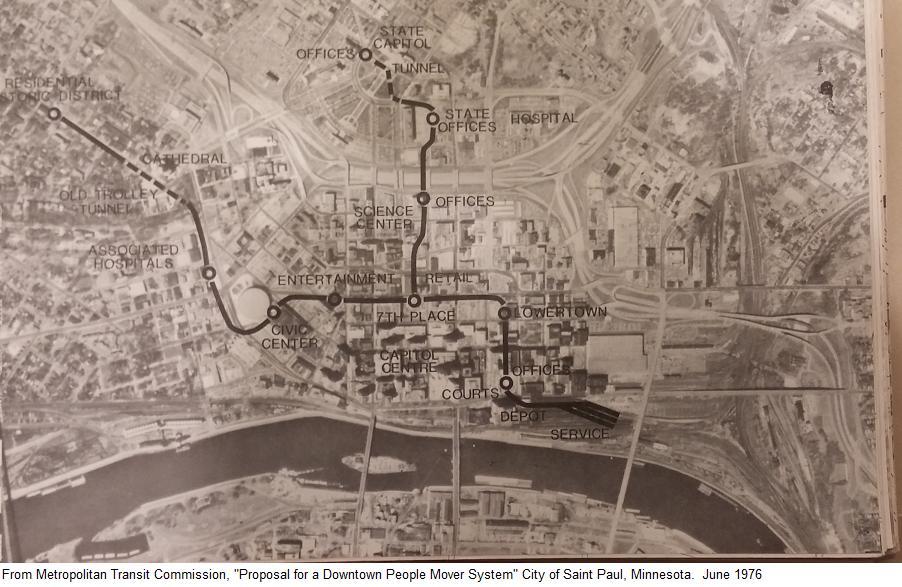
These ongoing money problems may show why monorails never gained much of a foothold in the US, despite the optimistic press of the 1970s. The energy crisis briefly brought a renewed flirtation with public transit (as well as other energy-efficient projects and proposals in Minnesota and elsewhere). Proposals for installing UMI monorails (or related people-movers) included downtown Saint Paul, Los Angeles, and other cities. Concept drawings for some of these installations can be found in several 1970s government studies.

proposal1

Concept art for proposed St. Paul People Mover, courtesy Metro Transit via MNHS


A proposal for downtown Saint Paul imagined a monorail or people mover running through the former Selby streetcar tunnel, as well as a section of subway with station at the State Capitol.

DPM

Other cities considering monorails looked closely at the Minnesota Zoo as a test case. The zoo’s system was one of the first all-weather monorails installed in the US, and underwent extensive winter testing to prove it could function in northern cities. This monorail was one of the few with onboard cabin heaters, others had only A/C. A custom snowplow was fabricated for the train, mounted to one of the lead cars. Later a small street-sweeper device was built, and made to look like a miniature version of the monorail.

sweeper

Winter operation studies found that the elevated track did well at preventing snow buildup, but sometimes iced over and impeded traction. The power rails were located under a lip at the track edge, which helped keep them dry, but there were occasional issues with ice and thermal expansion.

guideway

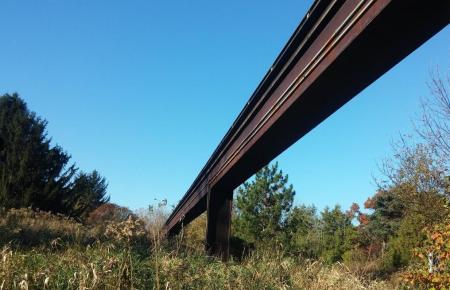
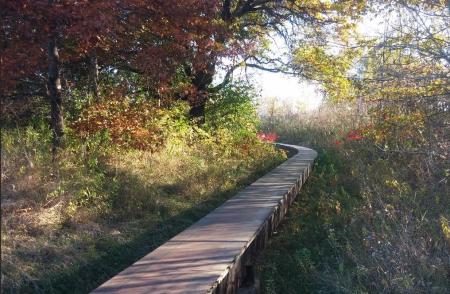
Hard specifications for this monorail are difficult to nail down, each document I’ve found lists a slightly different weight, speed, and capacity for this system. As best I can determine, each of the three trains could carry 96 passengers seated, or 120 with some standees.  Trains were 100ft long and consisting of 6 cars. Wheel bogies were shared between cars, with a total of 7 per train (normally 4 powered and 3 idler bogies). The motors developed about 300hp at peak output, for a theoretical top speed of about 35mph. Normal cruising speed was around 3-4 mph and operations at the MN zoo were limited to a 7.5mph top speed. The main track included a 6,628ft loop and a 358f long maintenance spur. A moving switch connected the spur and loop, and a lateral transfer beam allowed switching between tracks at the maintenance building.  Approximately 1,000ft of guideway made up the lateral beam and service rails at the maintenance shop (some of the outside sidings were removed). About 730ft of guideway was at-grade, the rest elevated on steel columns.

switch

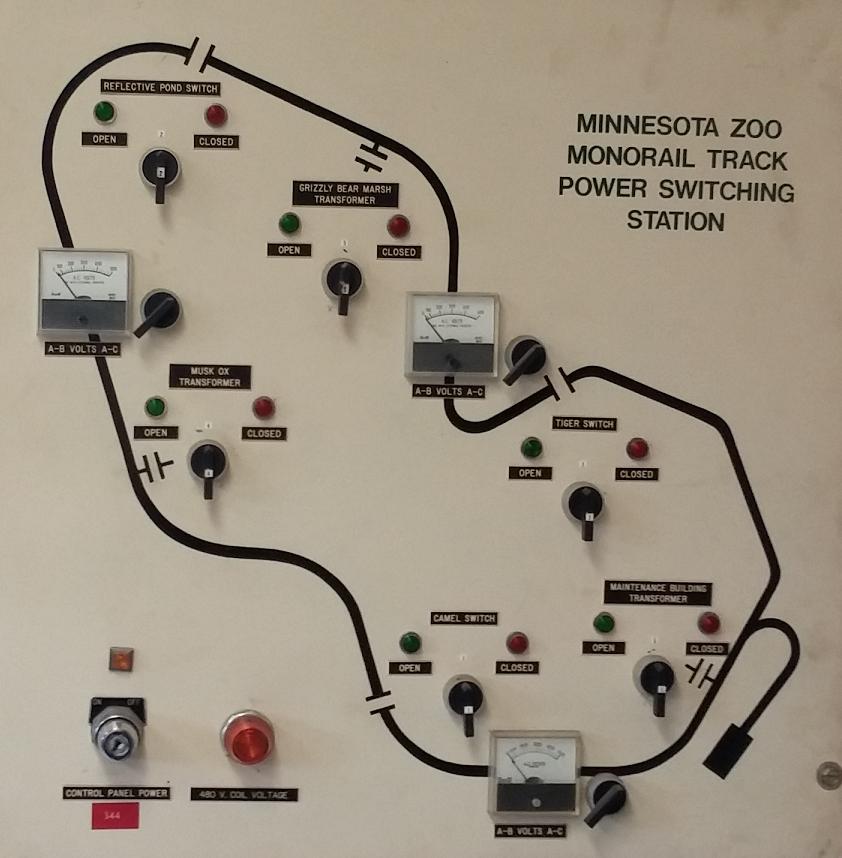
The drive system consists of rubber tires driven by 480v DC motors, with side-facing guide wheels riding the outsides of the track. Power and control signals were picked up from electrified rails under the lips of the track. Braking was dynamic, with emergency and holding brakes. The system was supposedly very quiet (“…as softly as a cloud”), although the AC compressors for summer use could be noisy.

wheels

The system was designed to be fully automated, controlled by an analog computer. Cars could be timed and spaced automatically, with multiple trains slowed or stopped as needed to avoid collisions. Human drivers could override the system, and also manned a microphone to narrate the ride and identify animals along the route.

power

I am looking forward to preserving one of these very interesting trains, and creating a unique and historic vacation cabin! And who knows, maybe someday, or somehow, I can get some track laid down!

For additional information on this and other monorail systems, check out the links below:

UMI Downtown People Mover Winterization Test (1982 report including details specific to the MN monorail).

The Monorail Society (general information, technical data, and monorail history)

Minnesota Zoo history & timeline

1888 South Saint Paul monorail (overhead track)

Star Tribune article on this monorail

Wired article on this monorail


Funter Bay History: Helen Antonova, Mining Engineer

May 28, 2015

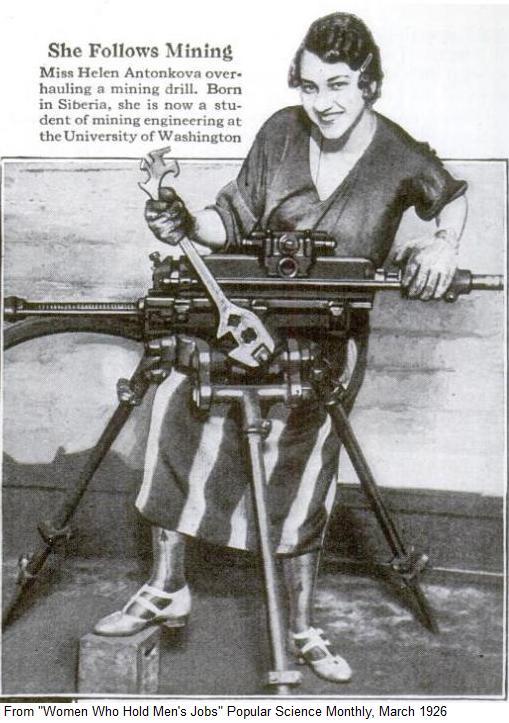
One of the first women to graduate with a degree in Mine Engineering, Helen Anatolievna Antonova arrived at Funter Bay in the fall of 1929. Born in Russia in 1904, Antonova traveled through China and Japan with her mother before moving to the United States. Her early life was spent in Siberian mining towns, and despite early work in theater, she always dreamed of becoming a mining engineer. She enrolled in the University of Washington’s College of Mines, the only woman to do so at the time (though not the first in the US).

Antonova3

University of Washington Libraries, Special Collections, Tyee 1928, pg 57. Courtesy UW Digital Archives.

As a female student in a traditionally male field, Antonova encountered much skepticism from officials and unfriendliness from classmates. She would later experience mistrust from coworkers (and their wives). Despite being told by the dean that no one would hire a woman for mine work, she led a successful career as a mine engineer, working throughout the US. On several occasions she was offered roles in theater and in Hollywood, but preferred surveying and assay work over acting.

After finishing her thesis and graduating in 1928, Antonova found a job with a mining company in Funter Bay. She recalled that the owner initially assumed her to be male, writing that he was surprised an engineer would have a woman’s name. Helen described Funter Bay as a small mining town, but noted that nothing could be purchased there. Despite its small size and remote location, Funter was home to a fellow female UW alumni. May Sophia Otteson (Tubbs) was a graduate of the class of 1916 and daughter of Charles and Mary Otteson, who ran another mine close to the one which employed Helen.

Conditions at Funter were spartan, a house was provided for Helen and her mother but was poorly insulated and had almost no supplies. The mine owner’s wife suggested they bring their own wood-burning stove with them. Groceries and goods were brought out on the weekly steamer from Juneau. Some medical care was available from a nurse living at the nearby cannery. Running water and electricity came from a waterfall, and stopped working during the winter. Helen took these conditions in stride, sometimes standing in icy water while surveying. The mine was reportedly very happy with Antonova’s work, and begged her to return after she moved back to Washington state.

Helen eventually married a Russian miner from Juneau (She mentioned that many Russian miners worked in Alaska, some sneaking over from Siberia illegally in rowboats). Her new husband became jealous of Helen’s superior position and income, and demanded they move back to Washington so he could pursue a degree of his own. She divorced him after his attitude and anger grew worse.

After moving back to the Lower 48, Helen held various jobs at mining and refining companies. She later married Nicholas All from New York (Her last name is sometimes listed as Antonovall). Helen Antonova All was interviewd in 1978 by author Joan Dufault, whose book Vintage: The Bold Survivors! contains more details of her life and experiences.


Funter Bay History: A 1906 Visit

April 23, 2015

An article in the January, 1906 issue of Recreation magazine describes a visit to Funter Bay. Mining Engineer Waverley Keeling penned the piece, entitled “From the Delaware to Alaska” from a bunkhouse in Funter Bay. He describes it as a business stop at “a quartz mine”, but mentions that his party would also “shoot some of the thousands of ducks and a few deer, dig clams at low tide, and catch halibut at any tide”.

mallards

From Keeling, Waverley; “From the Delaware to Alaska”; Recreation, vol 24, No 1, January 1906.

The photo from Funter Bay accompanying the text appears to show Coot Cove. The photographer was on the Western shore looking towards the area which would later be home to the cannery’s scow slipways.

Keeling describes his lodgings as a boarding house “near the shore of a beautiful little harbor called Funter Bay, and just back of us are the peaks of Snow Mountains some 4,000 feet high” (The mountain was not yet named for Robert Barron). He wrote from the combined kitchen and dining table, by the light of a large swinging lamp and tallow candle stuck in a beer bottle, sitting on “the hardest spruce-board stool that man ever constructed”. The group of six had purchased mining properties around Lake Atlin, BC, and had stopped in Funter as a side trip on the way North. They sailed to Funter on the “big Columbia River sailboat of that famous southeast Alaskan, Windy Bill”.

While Keeling notes the beauty and abundant wildlife of Funter Bay, he also comments on the downsides; “there is no particular season of the year when it doesn’t rain. The thermometer at Funter Bay since we came has been up to 40, and the rain which descended that day was as unmistakably an outpouring of ‘settled cloudiness’ as anything I have ever seen or felt in Pennsylvania”.


Funter Bay History: Mystery Photos

April 9, 2015

These photos were mixed in with some of the 1920s postcards and photographs that I’ve recently been posting. They are not labeled or otherwise identified, and the exact locations are uncertain. As they were included with a large amount of Funter Bay material, it is possible they are from the Funter area. However, the same collection also had some identifiable pictures of Juneau and Taku Inlet.

This photo shows a woman in a white dress and white shoes, standing on steps in front of a building:

mystery1

The above photo was possibly taken at one of the Tlingit Native houses on the hill behind the cannery, as seen in the zoomed-in image below (from a photo earlier posted). The windows, doors, and steps seem to match. Some of these houses look like they could be very small duplexes:

house_zoom

The next mystery photo shows a waterfall. I don’t recognize this as immediately near Funter Bay, but it could be higher on the mountain or somewhere else on Admiralty Island. It could also be somewhere closer to Juneau.

mystery2

The last photo shows a group of people, possibly about to light a fire. These may be local Tlingit Natives. The setting suggests the shore just above the high tide line.

people

If any readers have ideas or suggestions, please let me know! As usual, you can email me at gabe@saveitforparts.com.


Funter Bay History: Seattle High School Students

March 24, 2015

In the summer of 1919, a group of Seattle high school students traveled to Alaska to work at the Funter Bay cannery. One or more of the group took a number of photos during this and possibly subsequent trips. I have been posting photos from this collection over the last several weeks.

group3

The above photo was likely taken soon after arrival at Funter Bay. The boys are wearing outfits more appropriate for school than for cannery work. One boy on the left has a Ballard HS letter jacket.

A list of the students along with contact information for their parents is labeled “Contracts… Funter Bay”. The back has some of the same names along with numbers, perhaps related to hours or pay.

ebay49    50_crop

The names on the list are:
Clarence Hawley
George Anderson
Malcolm Owen
Harold Hendrickson
Roy F. Swenson
Marvin Kleve
Ed Wilkerson
George Fraley
Gilbert Swart
Elmer Green
Cedric Hilton
Eugene Walby
Robert Stevens
Webster Hallett

Twelve of these boys attended Ballard High School, while two (Owen and Hallett) attended Lincoln High School.

Ballard_Boys_Alaska

Professor Carl Milton Brewster taught Chemistry at Washington State University. Some of these students went on to study Chemistry at various Washington colleges. Prof. Brewster is likely the older man seen in several of the group photos (at center, below). The students have acquired more rugged outfits and a variety of hats in this photo:

group2

Some of these photos are RPPCs, or private photos printed on postcard stock. Several images are wallet-size prints with writing on the reverse side, and some of the smaller prints are partially hand-colorized. There were also a few commercial postcards, likely purchased during the trip. As some of the photos in this set are from later years, one or more of the boys probably returned for subsequent summers. Cannery work reportedly paid better than the summer jobs available in Seattle at the time.

knights2

Written on the back of this photo; “We are rowing boat on the bay”. The cannery bunkhouses are visible in the background:

rowing

And on this photo; “We boys cross the bay and go up to the tunnel of the gold mine”. Apparently a visit to the mine required fancier clothes! This may have been a day off for the boys, or could have been an educational visit to learn about assaying or other mine-related topics.

mine

This photo of Harold Hendrickson is labeled “Me (Buck)”. He may have been the photographer of some or all of these images:

buck

After graduation several of these boys attended the University of Washington, including Harold Hendrickson, Clarence Hawley, and Gilbert Swart. Hawley and Swart both went into chemical engineering. Hendrickson seems to have followed the relatively new field of air conditioning, writing several papers on the subject. He is listed in the 1940 census as an Air Conditioning Engineer in California.

group

group4

Some associated photos from the same collection were taken at other locations, possibly by the same people on their way to or from Funter Bay. These include more RPPCs, trimmed wallet-size prints, and at least one commercial postcard.

Inside passage view, possibly from a steamship:

mountains
View from a ship, probably of Taku Glacier near Juneau:

taku

The next two images show the Steamship Admiral Evans, which occasionally called at Funter Bay. The first appears to be a commercial postcard, possibly purchased on board. The 2nd seems to be labeled in the same way as some of the cannery tender photos from this collection. This may have been taken on the way to Funter Bay at the start of the 1920 season.

evans

evans2

Many of the Ballard students seen here went on to form a club called the “Knights of the Moon”, established January 31, 1920 (Per the Seattle Times). As described in a 1994 Times article, the club was started by 13 friends who attended Ballard High School in 1917, 1918, and 1919. Most of the club members were school athletes who played basketball and baseball, and the club fielded Church League and City League teams after high school.  Several members were good singers, who would go to “Ballard Beach” in Seattle to “bay at the moon” according to Clarence Anderson (George Anderson’s brother). The club would put on dances, beach parties, and theater parties. Anderson reported that there was no drinking at these parties, and credits the club for keeping some young people out of trouble.

knights

Eventually the club reached 50 members, pledging new members like a fraternity, and not missing a monthly meeting until 1987. The Times article went on to report the final meeting in 1994, as only three charter members were still alive.  (Charter Members were listed as Carl Anderson, George Fraley, George Frazier, Clarence Hawley, Harold Hendrickson, Herman Leander, Richard Smith, Roy Swenson, Edwin Wilkerson, Rolf Wiggen, Clarence Anderson, George Anderson, and Harold Shepard).

Several of my recent posts feature other photos from this collection, possibly including and/or taken by some of these people. They are:
Steam Donkey Part II (includes another group photo of the Ballard Students)
1920s Cannery Postcards
1920s Cannery Workers
Cannery Tender Operations
Navy Ships
Dano Mine Part II

I would like to thank Dr. Alice Eagly for providing information about her father, Harold Hendrickson. I would also like to thank the Ballard High School foundation for providing research material on these students.