The Saveitforparts Monorail

June 1, 2015

Saveitforparts.com is finally putting itself on the map, with the purchase of a genuine, bona fide, electrified, six-car monorail!
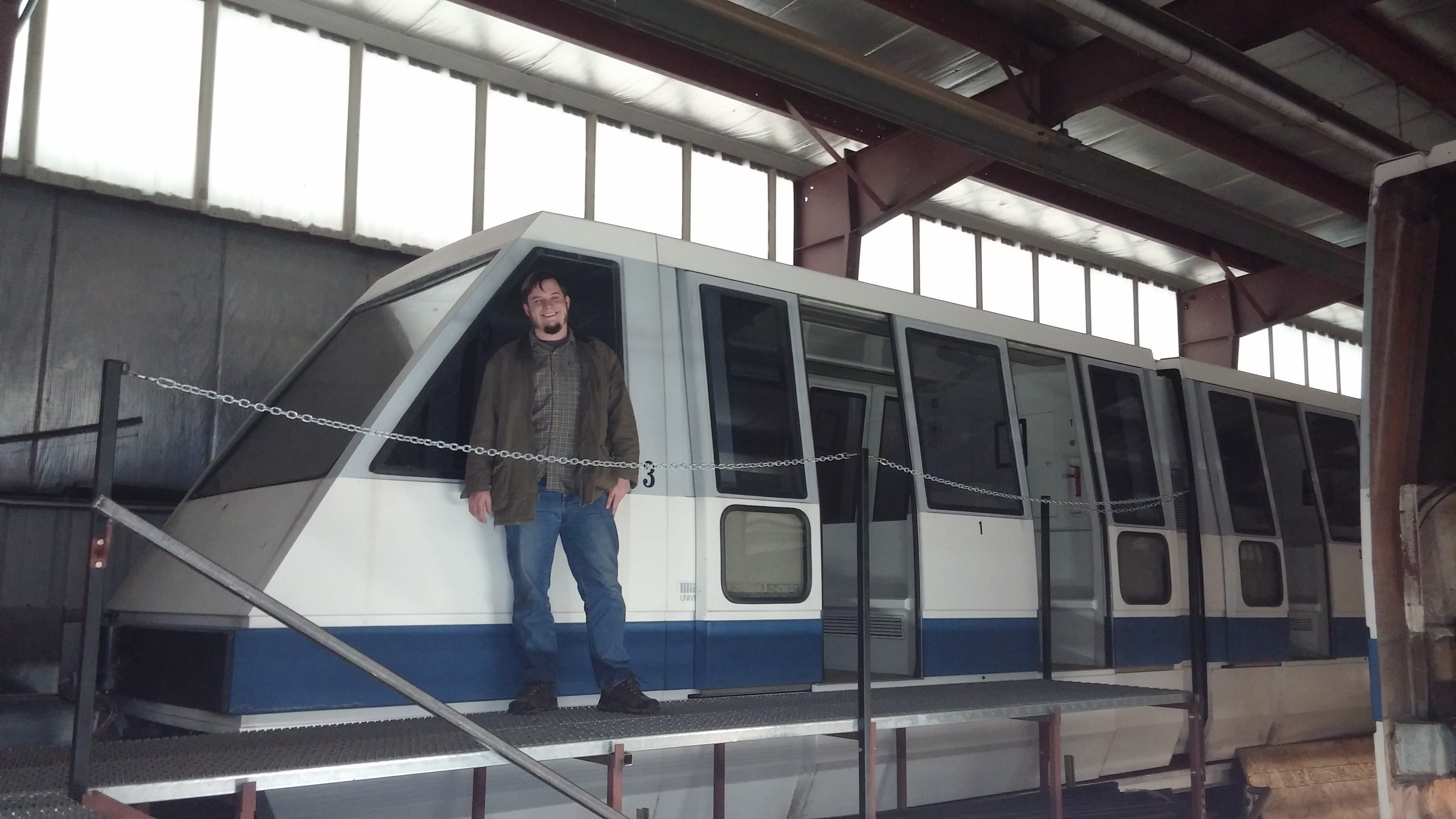
1218141509

That’s right, I’ve bought an entire six-car monorail train from the Minnesota Zoo. The zoo’s elevated monorail system was retired in 2013 after 34 years of service, with the state-owned agency seeking to dispose of the equipment. As a lifelong train enthusiast with ongoing railroad history and model railroading projects, I couldn’t resist the chance to preserve a piece of local history!

1218141543c

While it would be awesome to construct a track and actually run the monorail, my resources are more suited to a static use of the cars. My initial plan is to park them on a rural property and use them as weekend cabins, as each car is similar to a small camper or RV in size. Interestingly, some of the Twin Cities’ TCRT trolley cars were used the same way after their retirement (sadly, most were scrapped or burned).

Below is one potential layout I came up with for a single middle car, leaving as much of the original body intact as possible (the seats are molded into the fiberglass inner shell). As the cars already have lights, heating vents, and multiple doors, it should be relatively simple to retrofit them for such a use without much alteration. I have some ideas for using multiple cars as well, the final layout will be exciting to develop!

Potential Middle Car Renders

Below are some close-ups of what the cars look like inside and out:
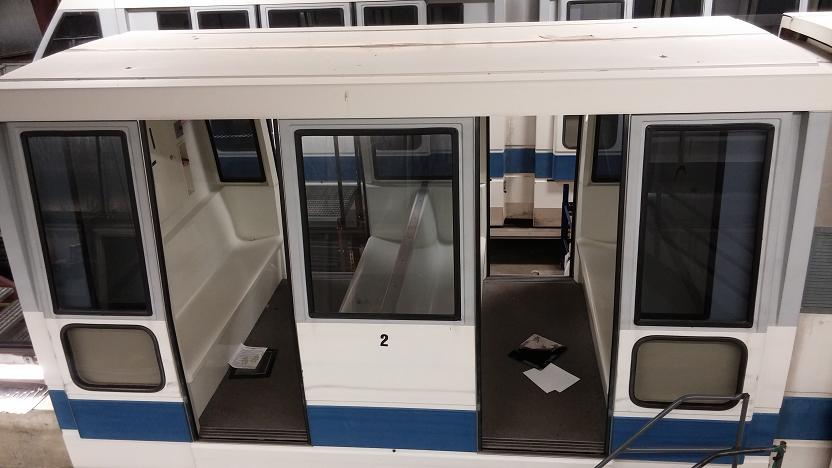
m4  1108141448

I’ve also been doing quite a bit of research into the history of these monorail trains. While it’s certainly a very niche field of study, I’ve collected a few details that might be of interest to other monorail enthusiasts.
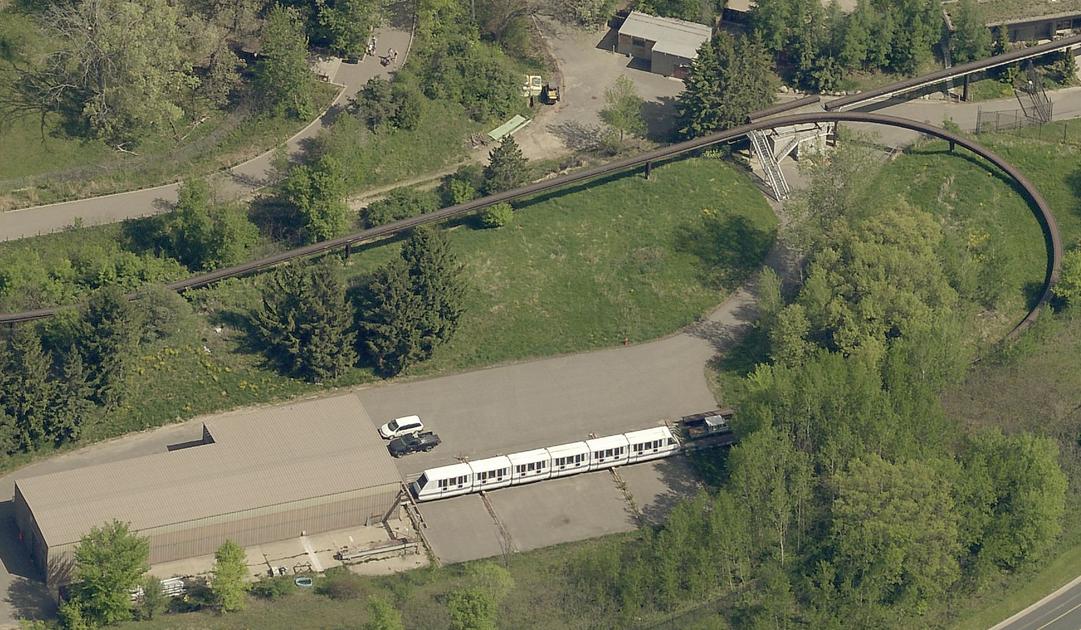
Aerial

Monorail switch and maintenance building, courtesy of Dakota County GIS.

The Minnesota Zoo’s Monorail was built in the late 1970s by Universal Mobility Inc (UMI), and is a “Unimobil Tourister” model. It began running in September of 1979 at the new Minnesota Zoological Garden (opened May 1978). The Minnesota legislature authorized the monorail with the provision that it be self-financing, separate from the zoo. A nonprofit corporation, Minnesota Zoo Ride Inc, was incorporated in 1976 to finance the accepted construction bid from UMI. The system included 3 trains, an oblong loop of track, an enclosed maintenance shop, single switch, and indoor & outdoor sidings for storage and maintenance.

1218141517

Minnesota Zoo monorail car barn. Photo by Gabe Emerson


Based in Salt Lake City, Universal Mobility designed and installed several similar monorail systems in the United States. One other Tourister of nearly identical design was installed at the 1984 World’s Fair, then moved to the Miami zoo where it still operates. Updated Tourister II models operated at King’s Dominion, King’s Island, and Carowinds amusement parks, while older, open-car versions operated at various amusement parks and are still used at Hersheypark in Pennsylvania. Another Unimobil system reportedly operated at Fuji Highlands in Japan. Several proposals were floated to install UMI monorails in metropolitan areas for public transit, but none were funded.

Califorina UMI study

The fiberglass car bodies were produced by Intermountain Design, who still manufactures monorail, people mover, and aerial tramway cars for various users. The mechanical drives and control systems were supplied by Maschinenfabrik Habegger of Switzerland. This company was tied to Von Roll Holding Co (designer of the Sydney Monorail among others). Both companies also designed ski lifts and aerial cable tramways (The Skyride at the Minnesota State Fair is a Von Roll system). Bombardier / TGI later acquired many of the UMI and Von Roll patents and produced another very similar monorail, known as the UM series. Von Roll / Habegger also marketed a very small monorail for use on farms and vineyards.
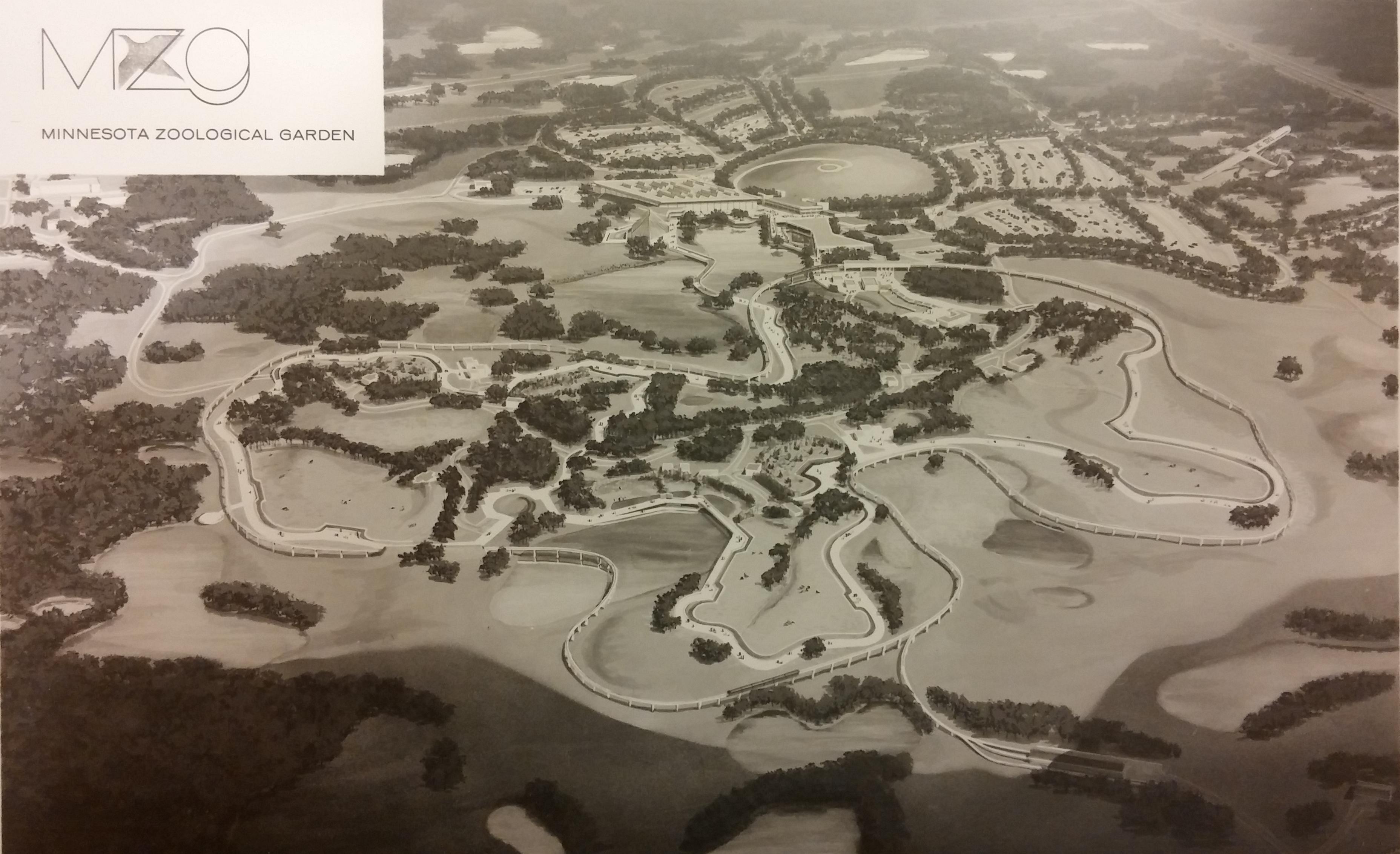
map

1970s concept drawing of zoo and monorail (note maintenance spur and car barn at lower right)

The Minnesota Zoo monorail ran into trouble almost immediately after installation, as ridership was not as high as predicted. The legislature refused to pay the full installments to investors, covering only what the ride actually made in fares. Shareholders (including various local and national banks) sued to demand the full loan amount in 1980. The state supreme court sided with the legislature and attorney general, saying that the state had no obligation to pay if the legislature chose not to.

The state was again sued, this time accused of securities fraud. Court cases dragged on through the early 1980s, involving investors, insurance companies, and various state agencies. The monorail remained operating, with profits covering only a fraction of the installments. Fares in 1980 were $1 for adults and 50 cents for seniors and children.

In September of 1985 the monorail system was repossessed, then sold back to the Minnesota Zoological Foundation with help from private donors and new loans. The monorail continued to report little or no profit, despite fares climbing to around $5 per person in recent years.
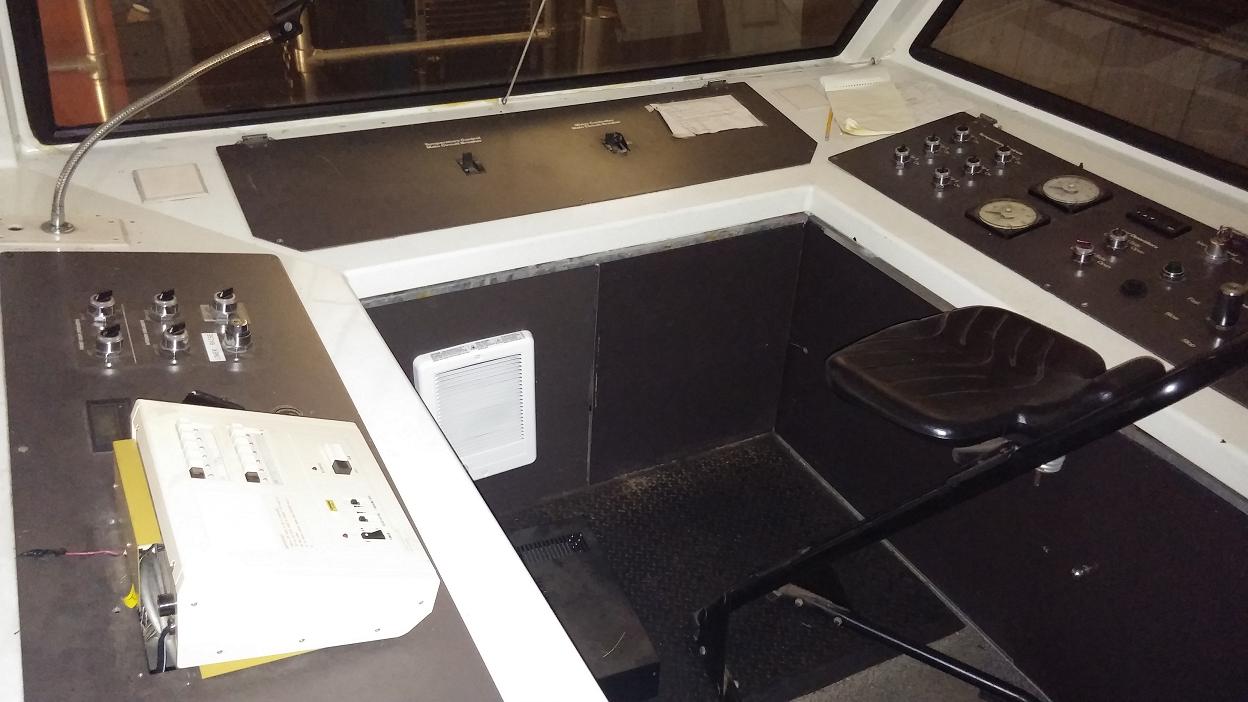
cab

Monorail control cab, photo by Gabe Emerson


These ongoing money problems may show why monorails never gained much of a foothold in the US, despite the optimistic press of the 1970s. The energy crisis briefly brought a renewed flirtation with public transit (as well as other energy-efficient projects and proposals in Minnesota and elsewhere). Proposals for installing UMI monorails (or related people-movers) included downtown Saint Paul, Los Angeles, and other cities. Concept drawings for some of these installations can be found in several 1970s government studies.
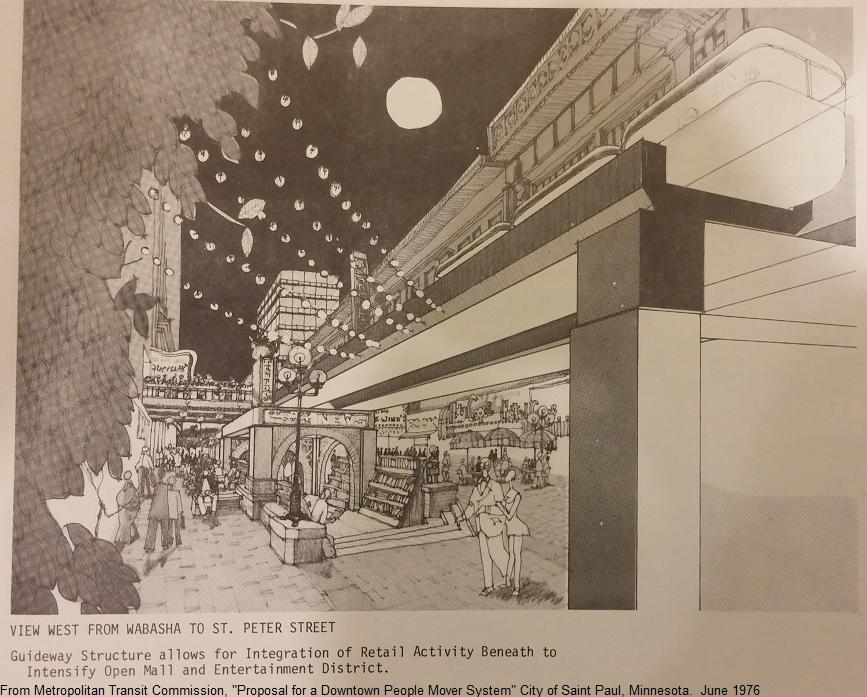
proposal1

Concept art for proposed St. Paul People Mover, courtesy Metro Transit via MNHS


A proposal for downtown Saint Paul imagined a monorail or people mover running through the former Selby streetcar tunnel, as well as a section of subway with station at the State Capitol.
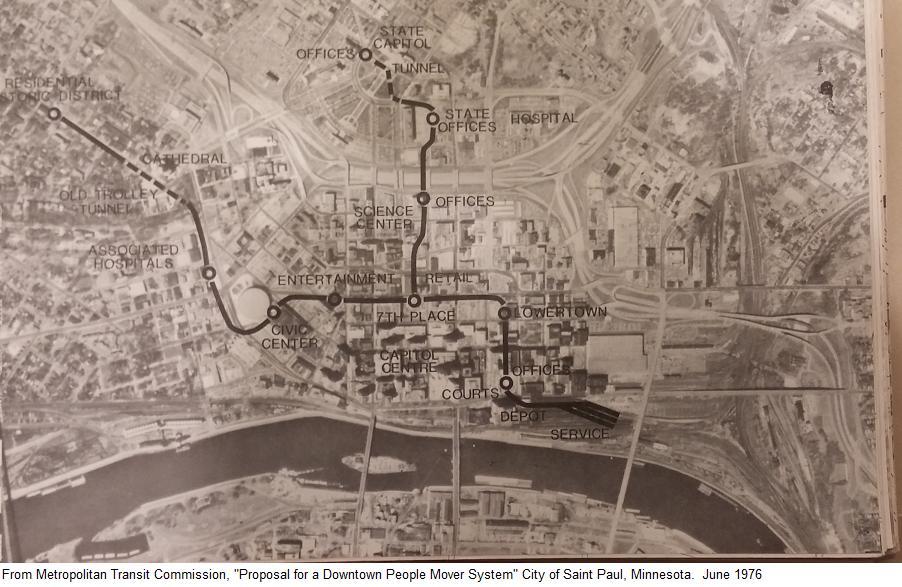
DPM

Other cities considering monorails looked closely at the Minnesota Zoo as a test case. The zoo’s system was one of the first all-weather monorails installed in the US, and underwent extensive winter testing to prove it could function in northern cities. This monorail was one of the few with onboard cabin heaters, others had only A/C. A custom snowplow was fabricated for the train, mounted to one of the lead cars. Later a small street-sweeper device was built, and made to look like a miniature version of the monorail.

sweeper

Winter operation studies found that the elevated track did well at preventing snow buildup, but sometimes iced over and impeded traction. The power rails were located under a lip at the track edge, which helped keep them dry, but there were occasional issues with ice and thermal expansion.

guideway

Hard specifications for this monorail are difficult to nail down, each document I’ve found lists a slightly different weight, speed, and capacity for this system. As best I can determine, each of the three trains could carry 96 passengers seated, or 120 with some standees.  Trains were 100ft long and consisting of 6 cars. Wheel bogies were shared between cars, with a total of 7 per train (normally 4 powered and 3 idler bogies). The motors developed about 300hp at peak output, for a theoretical top speed of about 35mph. Normal cruising speed was around 3-4 mph and operations at the MN zoo were limited to a 7.5mph top speed. The main track included a 6,628ft loop and a 358f long maintenance spur. A moving switch connected the spur and loop, and a lateral transfer beam allowed switching between tracks at the maintenance building.  Approximately 1,000ft of guideway made up the lateral beam and service rails at the maintenance shop (some of the outside sidings were removed). About 730ft of guideway was at-grade, the rest elevated on steel columns.

switch

The drive system consists of rubber tires driven by 480v DC motors, with side-facing guide wheels riding the outsides of the track. Power and control signals were picked up from electrified rails under the lips of the track. Braking was dynamic, with emergency and holding brakes. The system was supposedly very quiet (“…as softly as a cloud”), although the AC compressors for summer use could be noisy.
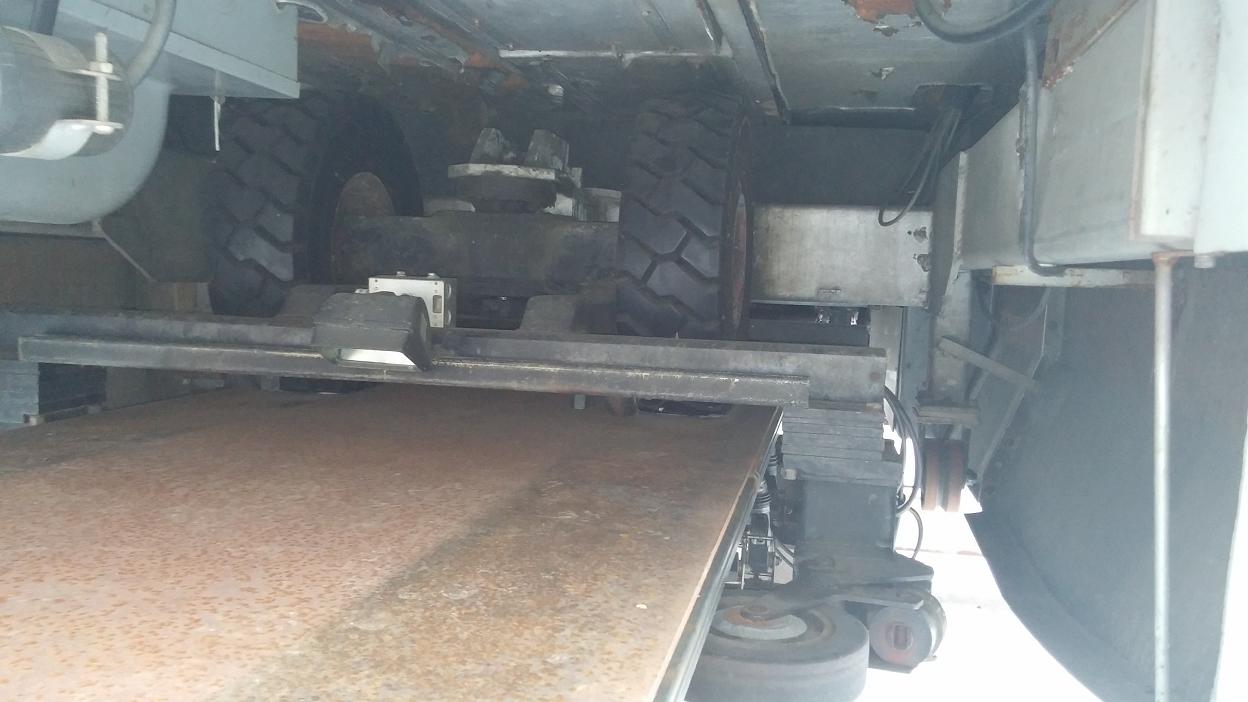
wheels

The system was designed to be fully automated, controlled by an analog computer. Cars could be timed and spaced automatically, with multiple trains slowed or stopped as needed to avoid collisions. Human drivers could override the system, and also manned a microphone to narrate the ride and identify animals along the route.
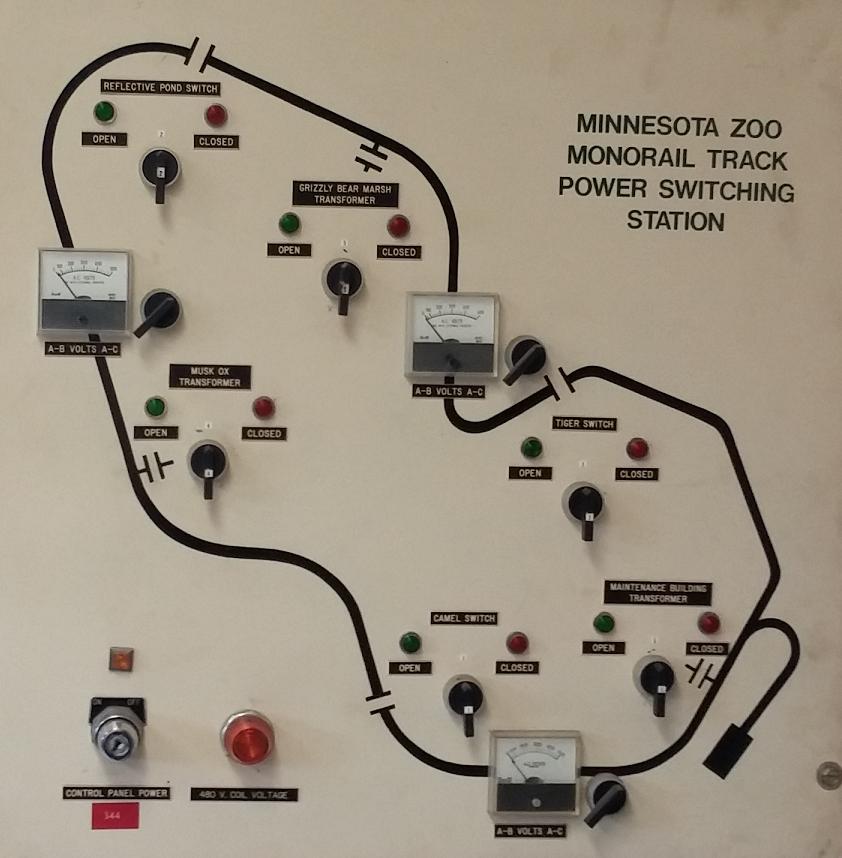
power

I am looking forward to preserving one of these very interesting trains, and creating a unique and historic vacation cabin! And who knows, maybe someday, or somehow, I can get some track laid down!

For additional information on this and other monorail systems, check out the links below:

UMI Downtown People Mover Winterization Test (1982 report including details specific to the MN monorail).

The Monorail Society (general information, technical data, and monorail history)

Minnesota Zoo history & timeline

1888 South Saint Paul monorail (overhead track)

Star Tribune article on this monorail

Wired article on this monorail


Funter Bay History: Helen Antonova, Mining Engineer

May 28, 2015

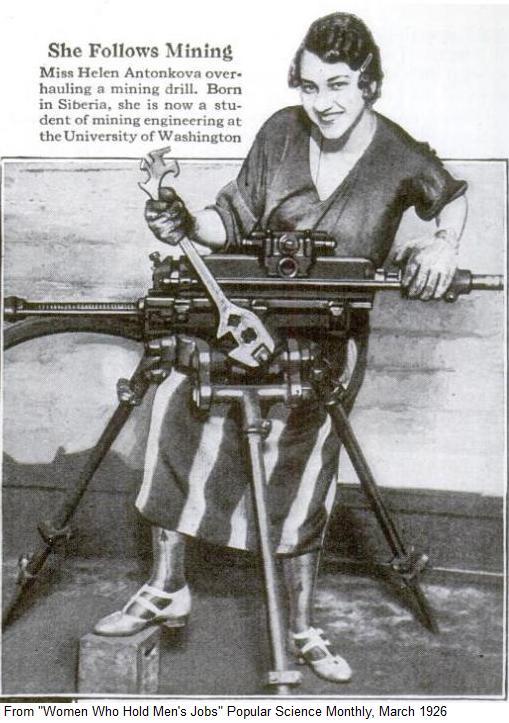
One of the first women to graduate with a degree in Mine Engineering, Helen Anatolievna Antonova arrived at Funter Bay in the fall of 1929. Born in Russia in 1904, Antonova traveled through China and Japan with her mother before moving to the United States. Her early life was spent in Siberian mining towns, and despite early work in theater, she always dreamed of becoming a mining engineer. She enrolled in the University of Washington’s College of Mines, the only woman to do so at the time (though not the first in the US).

Antonova3

University of Washington Libraries, Special Collections, Tyee 1928, pg 57. Courtesy UW Digital Archives.

As a female student in a traditionally male field, Antonova encountered much skepticism from officials and unfriendliness from classmates. She would later experience mistrust from coworkers (and their wives). Despite being told by the dean that no one would hire a woman for mine work, she led a successful career as a mine engineer, working throughout the US. On several occasions she was offered roles in theater and in Hollywood, but preferred surveying and assay work over acting.

After finishing her thesis and graduating in 1928, Antonova found a job with a mining company in Funter Bay. She recalled that the owner initially assumed her to be male, writing that he was surprised an engineer would have a woman’s name. Helen described Funter Bay as a small mining town, but noted that nothing could be purchased there. Despite its small size and remote location, Funter was home to a fellow female UW alumni. May Sophia Otteson (Tubbs) was a graduate of the class of 1916 and daughter of Charles and Mary Otteson, who ran another mine close to the one which employed Helen.
Conditions at Funter were spartan, a house was provided for Helen and her mother but was poorly insulated and had almost no supplies. The mine owner’s wife suggested they bring their own wood-burning stove with them. Groceries and goods were brought out on the weekly steamer from Juneau. Some medical care was available from a nurse living at the nearby cannery. Running water and electricity came from a waterfall, and stopped working during the winter. Helen took these conditions in stride, sometimes standing in icy water while surveying. The mine was reportedly very happy with Antonova’s work, and begged her to return after she moved back to Washington state.

Helen eventually married a Russian miner from Juneau (She mentioned that many Russian miners worked in Alaska, some sneaking over from Siberia illegally in rowboats). Her new husband became jealous of Helen’s superior position and income, and demanded they move back to Washington so he could pursue a degree of his own. She divorced him after his attitude and anger grew worse.

After moving back to the Lower 48, Helen held various jobs at mining and refining companies. She later married Nicholas All from New York (Her last name is sometimes listed as Antonovall). Helen Antonova All was interviewd in 1978 by author Joan Dufault, whose book Vintage: The Bold Survivors! contains more details of her life and experiences.


Funter Bay History: A 1906 Visit

April 23, 2015

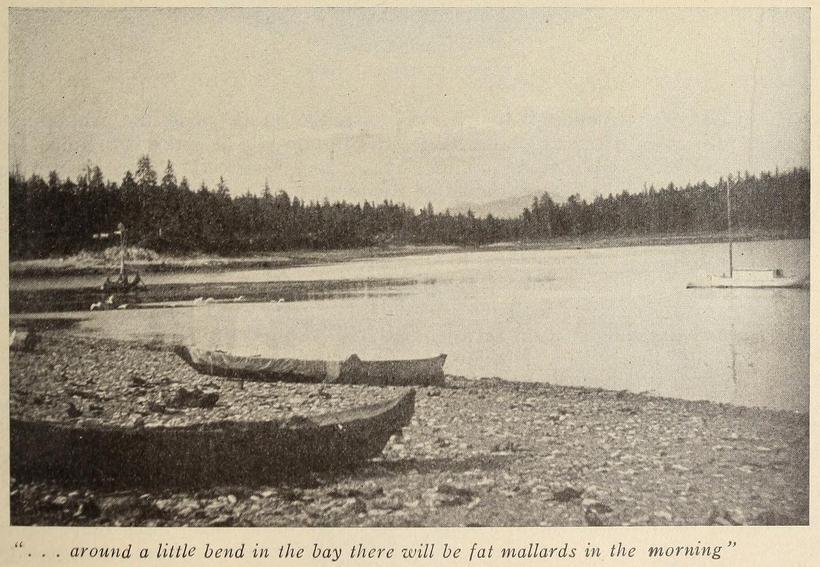
An article in the January, 1906 issue of Recreation magazine describes a visit to Funter Bay. Mining Engineer Waverley Keeling penned the piece, entitled “From the Delaware to Alaska” from a bunkhouse in Funter Bay. He describes it as a business stop at “a quartz mine”, but mentions that his party would also “shoot some of the thousands of ducks and a few deer, dig clams at low tide, and catch halibut at any tide”.

mallards

From Keeling, Waverley; “From the Delaware to Alaska”; Recreation, vol 24, No 1, January 1906.

The photo from Funter Bay accompanying the text appears to show Coot Cove. The photographer was on the Western shore looking towards the area which would later be home to the cannery’s scow slipways.

Keeling describes his lodgings as a boarding house “near the shore of a beautiful little harbor called Funter Bay, and just back of us are the peaks of Snow Mountains some 4,000 feet high” (The mountain was not yet named for Robert Barron). He wrote from the combined kitchen and dining table, by the light of a large swinging lamp and tallow candle stuck in a beer bottle, sitting on “the hardest spruce-board stool that man ever constructed”. The group of six had purchased mining properties around Lake Atlin, BC, and had stopped in Funter as a side trip on the way North. They sailed to Funter on the “big Columbia River sailboat of that famous southeast Alaskan, Windy Bill”.

While Keeling notes the beauty and abundant wildlife of Funter Bay, he also comments on the downsides; “there is no particular season of the year when it doesn’t rain. The thermometer at Funter Bay since we came has been up to 40, and the rain which descended that day was as unmistakably an outpouring of ‘settled cloudiness’ as anything I have ever seen or felt in Pennsylvania”.


Funter Bay History: Mystery Photos

April 9, 2015

These photos were mixed in with some of the 1920s postcards and photographs that I’ve recently been posting. They are not labeled or otherwise identified, and the exact locations are uncertain. As they were included with a large amount of Funter Bay material, it is possible they are from the Funter area. However, the same collection also had some identifiable pictures of Juneau and Taku Inlet.

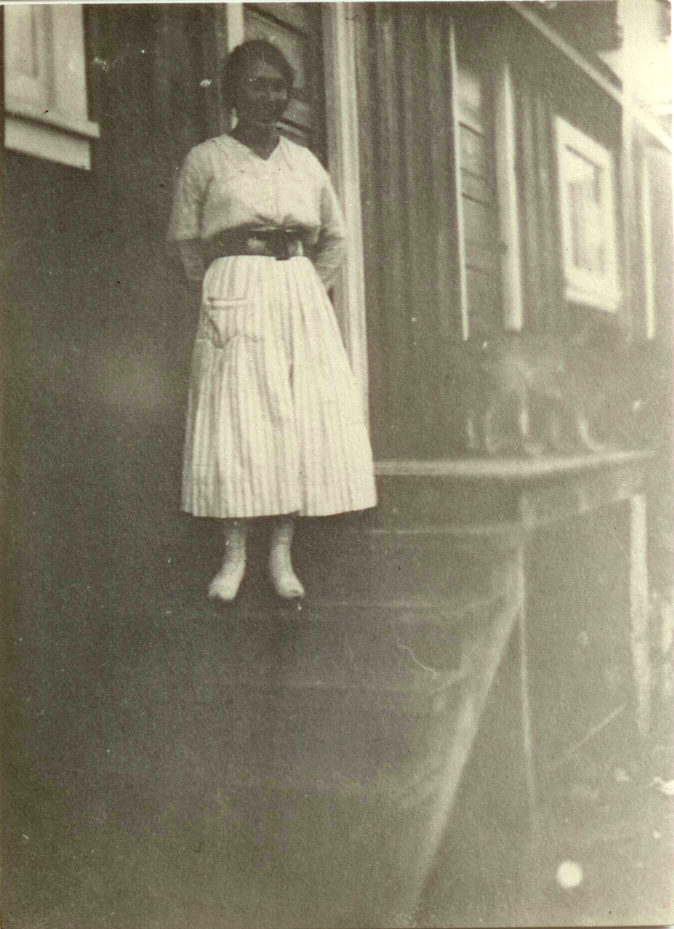
This photo shows a woman in a white dress and white shoes, standing on steps in front of a building:

mystery1

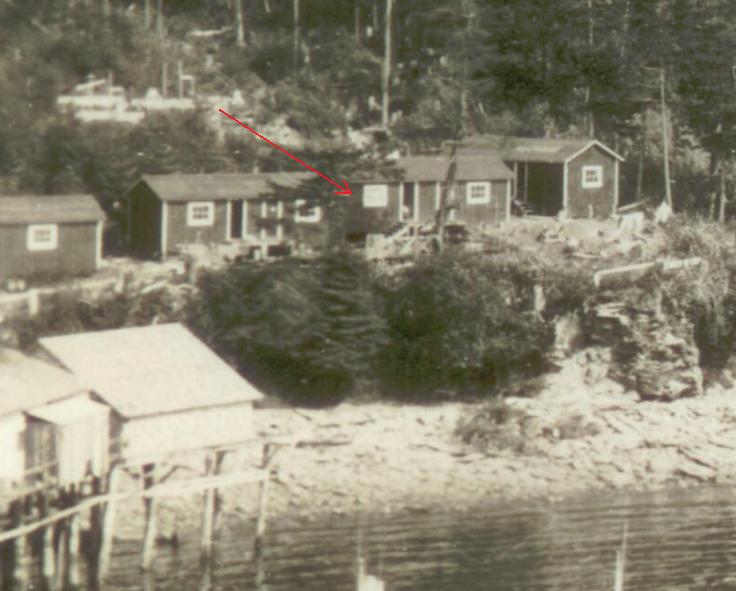
The above photo was possibly taken at one of the Tlingit Native houses on the hill behind the cannery, as seen in the zoomed-in image below (from a photo earlier posted). The windows, doors, and steps seem to match. Some of these houses look like they could be very small duplexes:

house_zoom

The next mystery photo shows a waterfall. I don’t recognize this as immediately near Funter Bay, but it could be higher on the mountain or somewhere else on Admiralty Island. It could also be somewhere closer to Juneau.

mystery2

The last photo shows a group of people, possibly about to light a fire. These may be local Tlingit Natives. The setting suggests the shore just above the high tide line.

people

If any readers have ideas or suggestions, please let me know! As usual, you can email me at gabe@saveitforparts.com.


Funter Bay History: Seattle High School Students

March 24, 2015

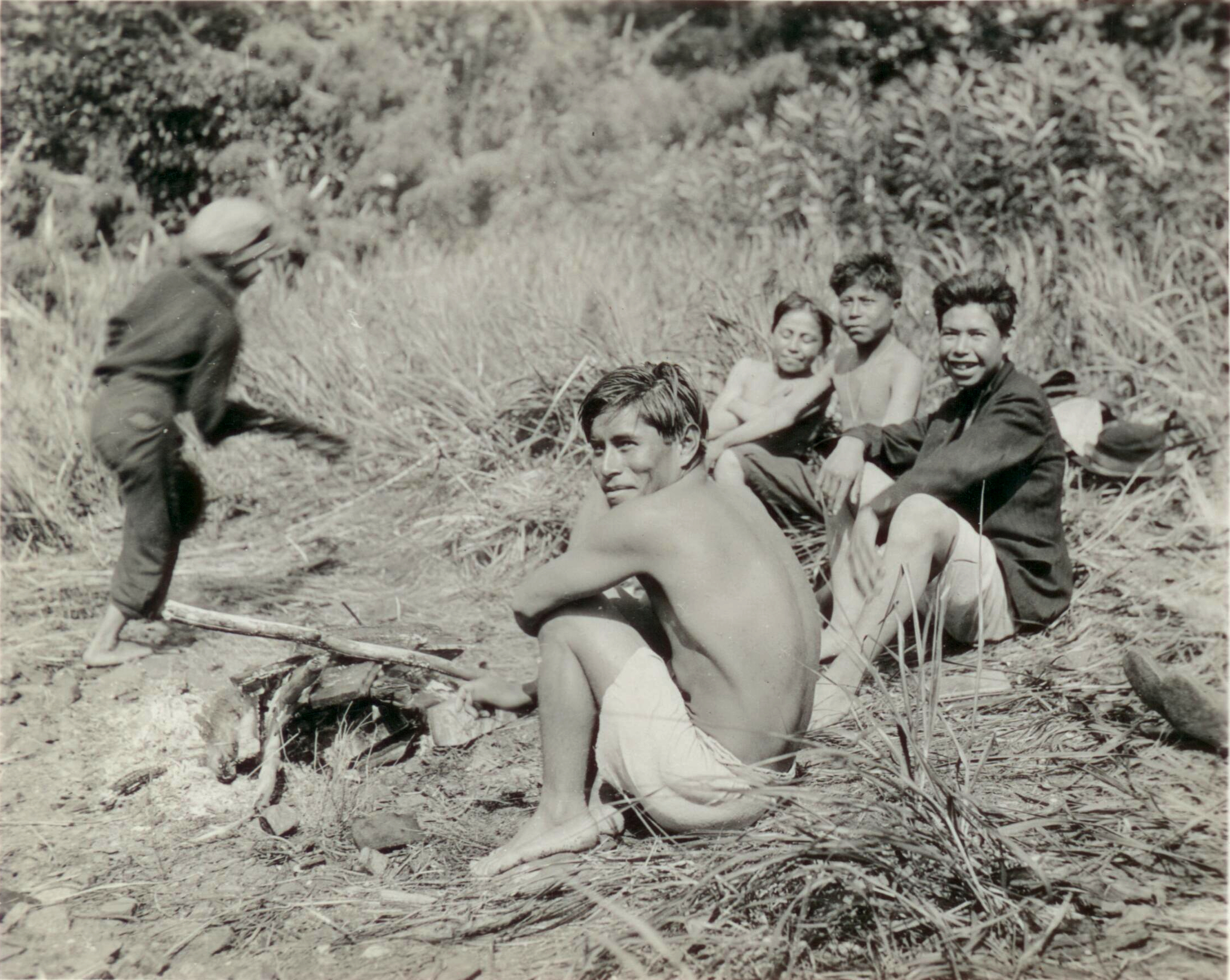
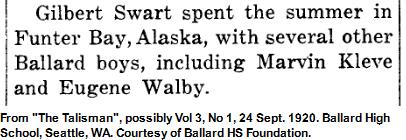
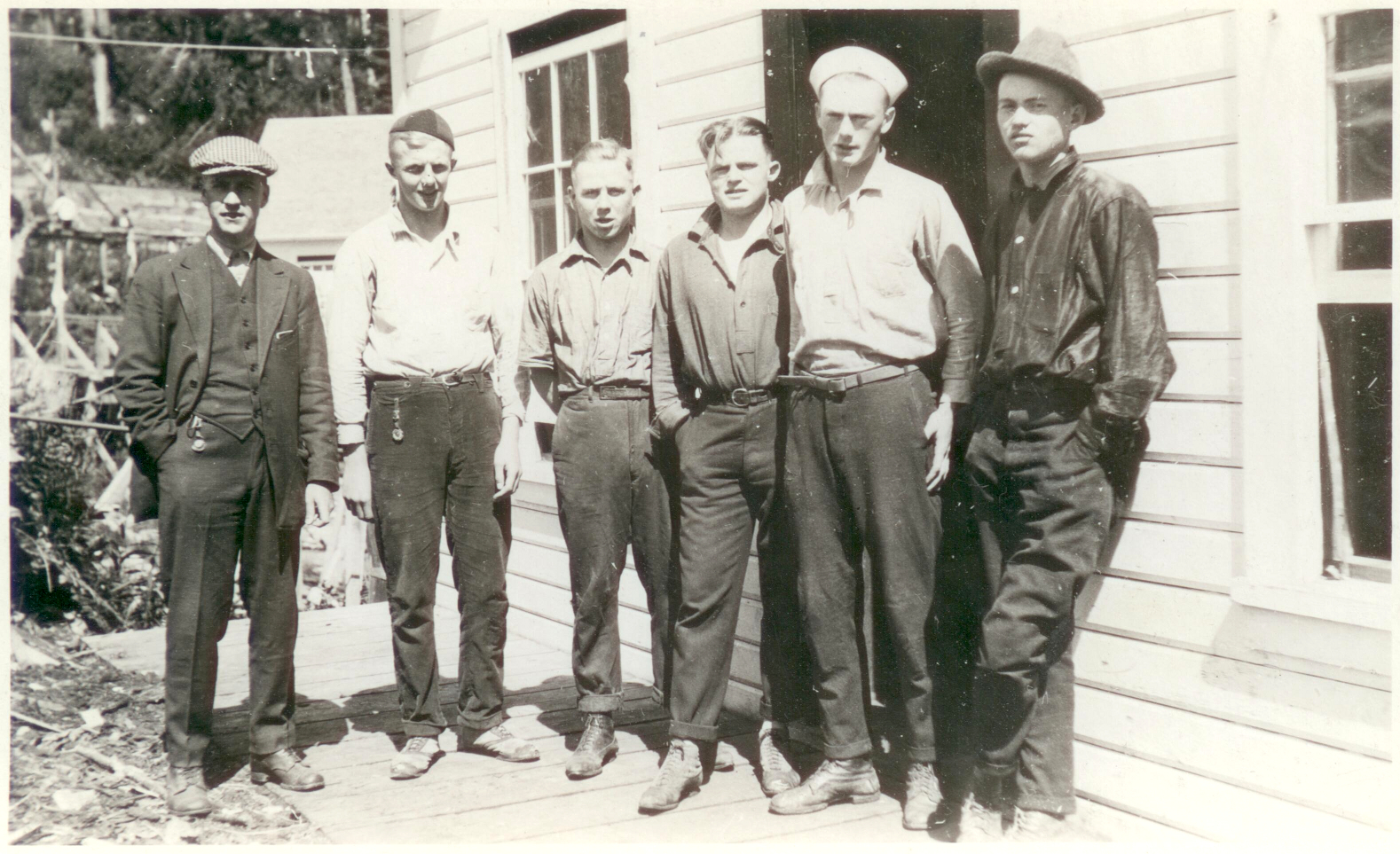
In the summer of 1919, a group of Seattle high school students traveled to Alaska to work at the Funter Bay cannery. One or more of the group took a number of photos during this and possibly subsequent trips. I have been posting photos from this collection over the last several weeks.

group3

The above photo was likely taken soon after arrival at Funter Bay. The boys are wearing outfits more appropriate for school than for cannery work. One boy on the left has a Ballard HS letter jacket.

A list of the students along with contact information for their parents is labeled “Contracts… Funter Bay”. The back has some of the same names along with numbers, perhaps related to hours or pay.

ebay49    50_crop

The names on the list are:
Clarence Hawley
George Anderson
Malcolm Owen
Harold Hendrickson
Roy F. Swenson
Marvin Kleve
Ed Wilkerson
George Fraley
Gilbert Swart
Elmer Green
Cedric Hilton
Eugene Walby
Robert Stevens
Webster Hallett

Twelve of these boys attended Ballard High School, while two (Owen and Hallett) attended Lincoln High School.

Ballard_Boys_Alaska

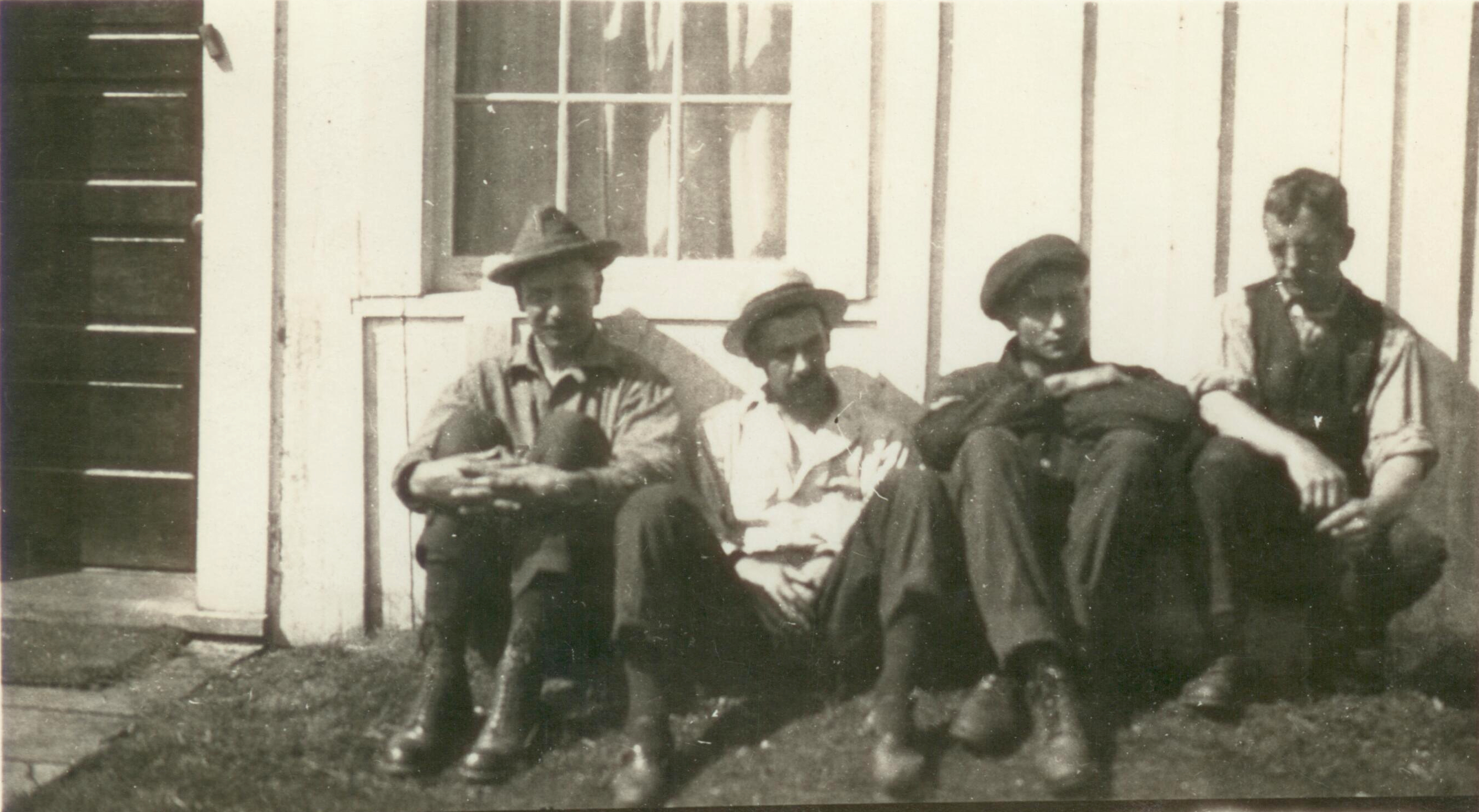
Professor Carl Milton Brewster taught Chemistry at Washington State University. Some of these students went on to study Chemistry at various Washington colleges. Prof. Brewster is likely the older man seen in several of the group photos (at center, below). The students have acquired more rugged outfits and a variety of hats in this photo:

group2

Some of these photos are RPPCs, or private photos printed on postcard stock. Several images are wallet-size prints with writing on the reverse side, and some of the smaller prints are partially hand-colorized. There were also a few commercial postcards, likely purchased during the trip. As some of the photos in this set are from later years, one or more of the boys probably returned for subsequent summers. Cannery work reportedly paid better than the summer jobs available in Seattle at the time.

knights2

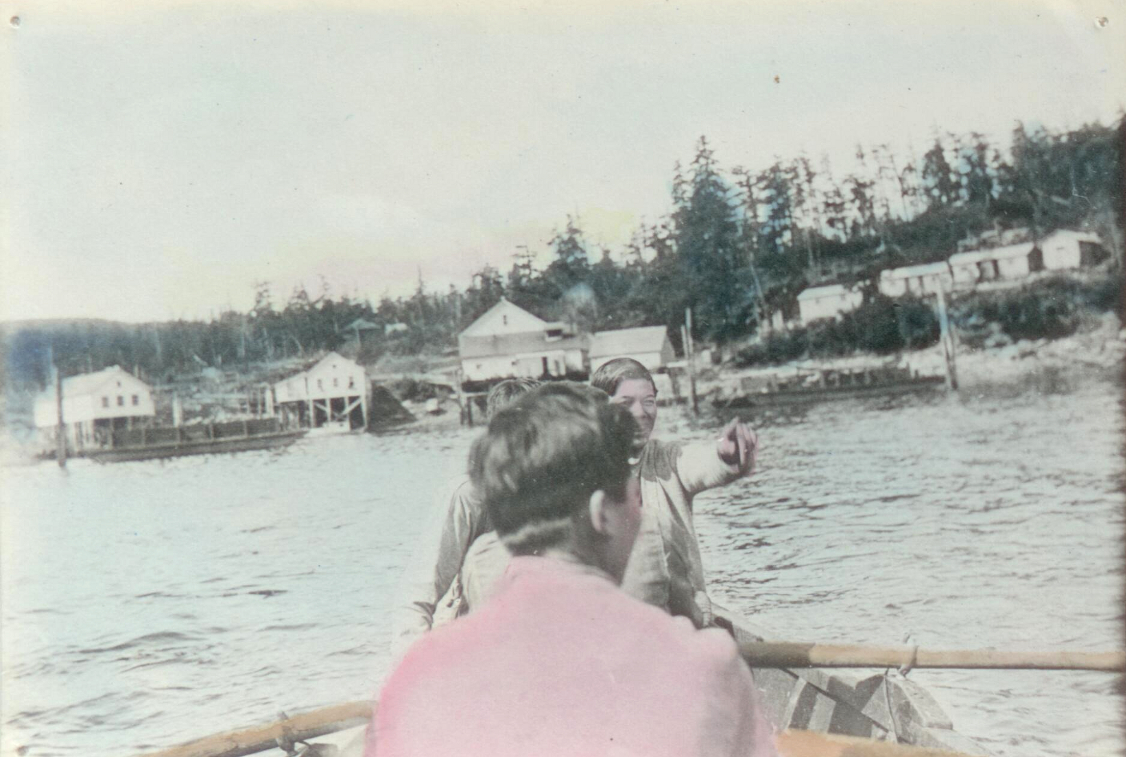
Written on the back of this photo; “We are rowing boat on the bay”. The cannery bunkhouses are visible in the background:

rowing

And on this photo; “We boys cross the bay and go up to the tunnel of the gold mine”. Apparently a visit to the mine required fancier clothes! This may have been a day off for the boys, or could have been an educational visit to learn about assaying or other mine-related topics.

mine

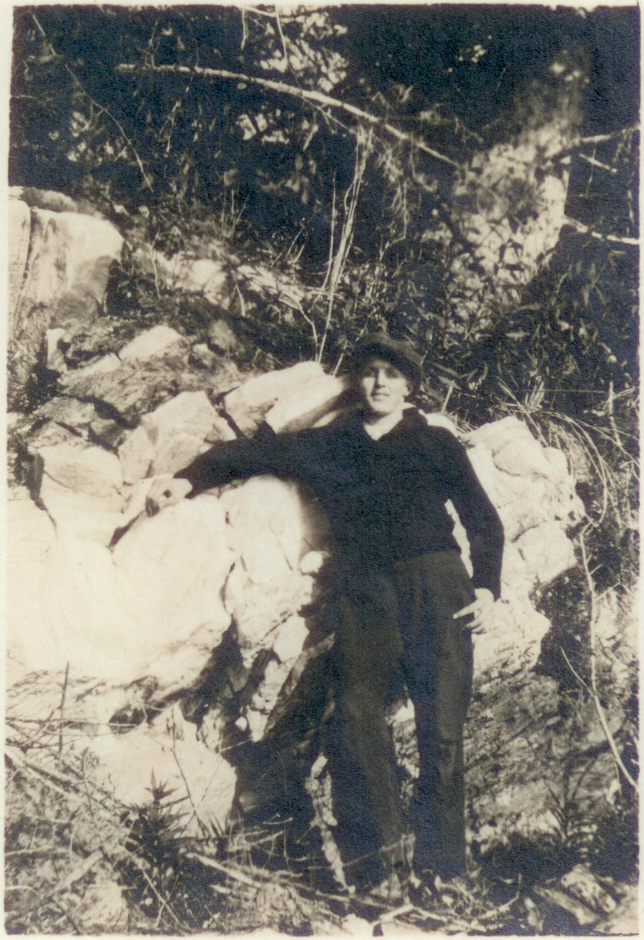
This photo of Harold Hendrickson is labeled “Me (Buck)”. He may have been the photographer of some or all of these images:

buck

After graduation several of these boys attended the University of Washington, including Harold Hendrickson, Clarence Hawley, and Gilbert Swart. Hawley and Swart both went into chemical engineering. Hendrickson seems to have followed the relatively new field of air conditioning, writing several papers on the subject. He is listed in the 1940 census as an Air Conditioning Engineer in California.

group

group4

Some associated photos from the same collection were taken at other locations, possibly by the same people on their way to or from Funter Bay. These include more RPPCs, trimmed wallet-size prints, and at least one commercial postcard.

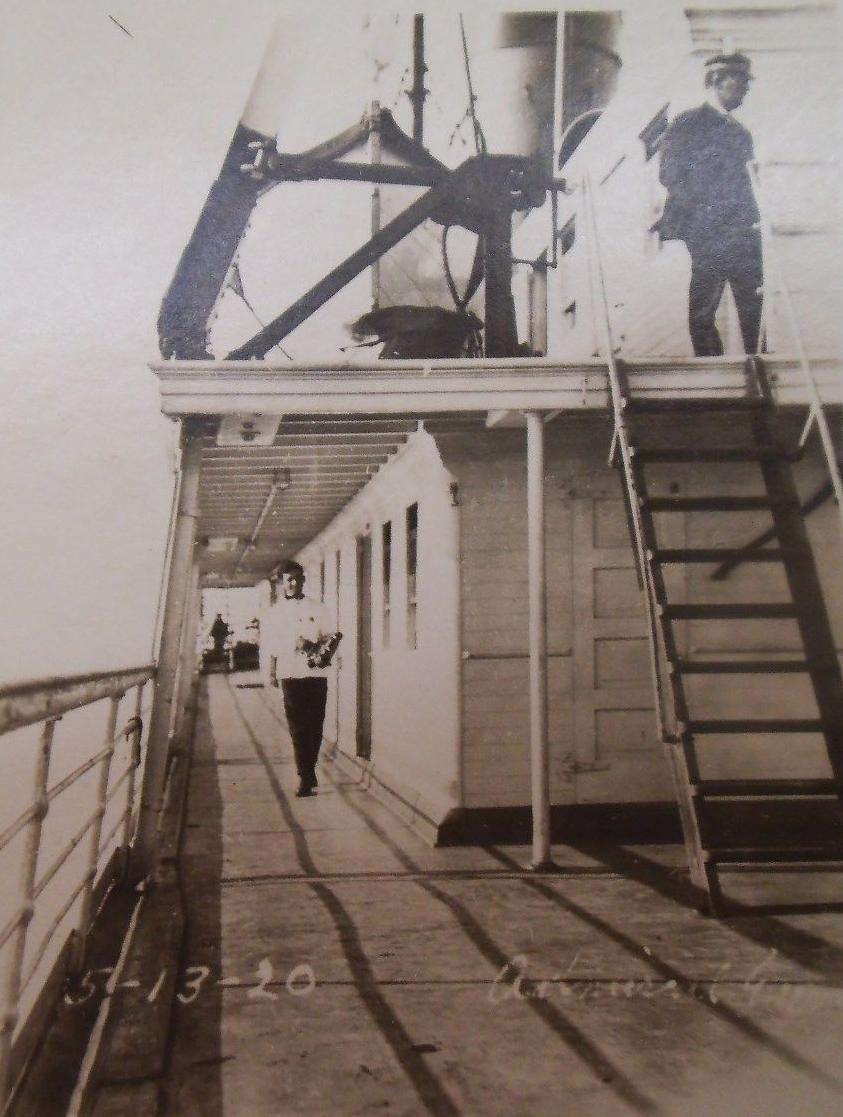
Inside passage view, possibly from a steamship:

mountains
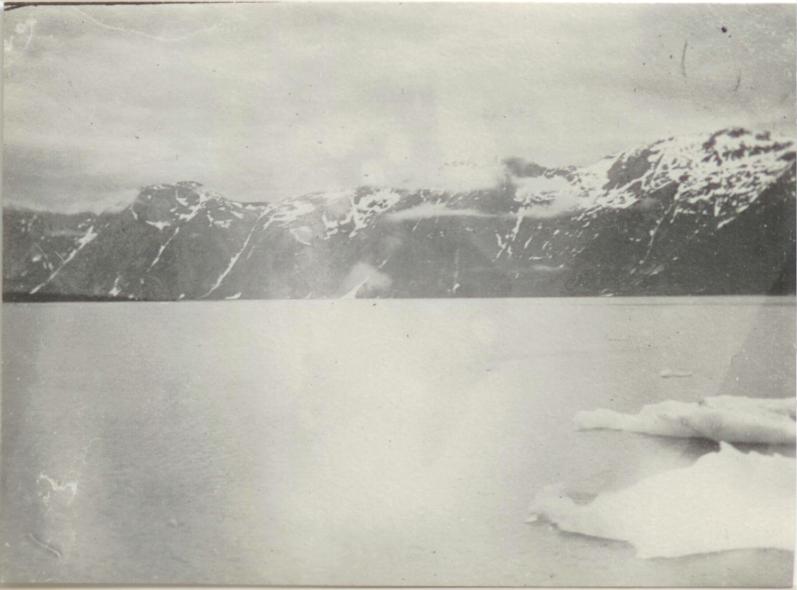
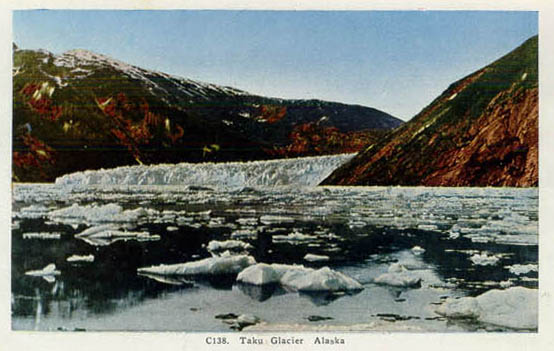
View from a ship, probably of Taku Glacier near Juneau:

taku

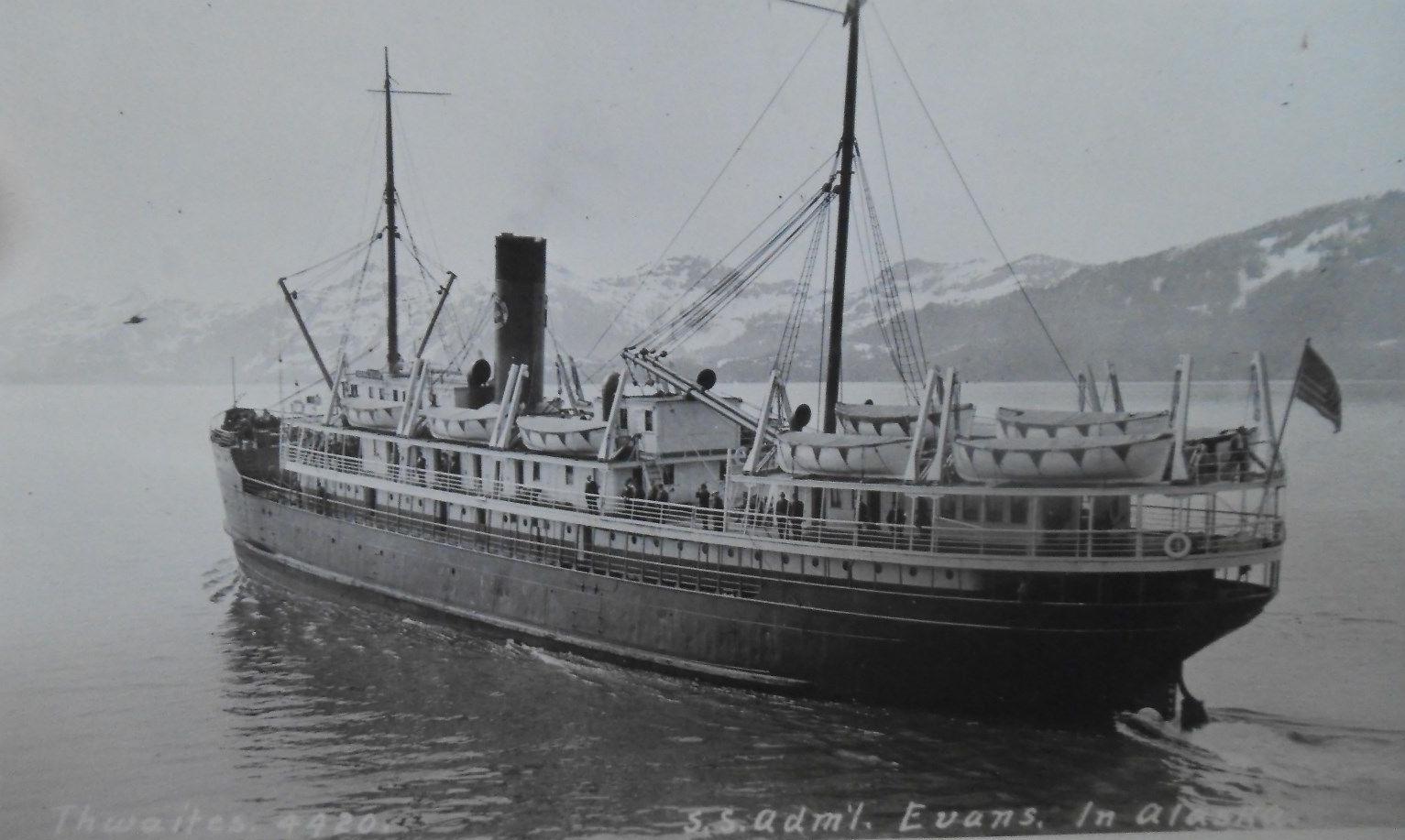
The next two images show the Steamship Admiral Evans, which occasionally called at Funter Bay. The first appears to be a commercial postcard, possibly purchased on board. The 2nd seems to be labeled in the same way as some of the cannery tender photos from this collection. This may have been taken on the way to Funter Bay at the start of the 1920 season.

evans

evans2

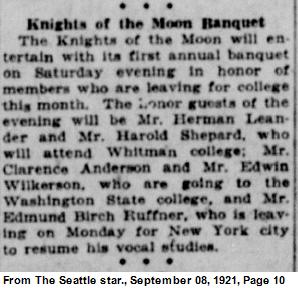
Many of the Ballard students seen here went on to form a club called the “Knights of the Moon”, established January 31, 1920 (Per the Seattle Times). As described in a 1994 Times article, the club was started by 13 friends who attended Ballard High School in 1917, 1918, and 1919. Most of the club members were school athletes who played basketball and baseball, and the club fielded Church League and City League teams after high school.  Several members were good singers, who would go to “Ballard Beach” in Seattle to “bay at the moon” according to Clarence Anderson (George Anderson’s brother). The club would put on dances, beach parties, and theater parties. Anderson reported that there was no drinking at these parties, and credits the club for keeping some young people out of trouble.

knights

Eventually the club reached 50 members, pledging new members like a fraternity, and not missing a monthly meeting until 1987. The Times article went on to report the final meeting in 1994, as only three charter members were still alive.  (Charter Members were listed as Carl Anderson, George Fraley, George Frazier, Clarence Hawley, Harold Hendrickson, Herman Leander, Richard Smith, Roy Swenson, Edwin Wilkerson, Rolf Wiggen, Clarence Anderson, George Anderson, and Harold Shepard).

Several of my recent posts feature other photos from this collection, possibly including and/or taken by some of these people. They are:
Steam Donkey Part II (includes another group photo of the Ballard Students)
1920s Cannery Postcards
1920s Cannery Workers
Cannery Tender Operations
Navy Ships
Dano Mine Part II

I would like to thank Dr. Alice Eagly for providing information about her father, Harold Hendrickson. I would also like to thank the Ballard High School foundation for providing research material on these students.


Funter Bay History: Canning Process

March 4, 2015

I have previously mentioned some of the techniques and methods involved in early 20th-century cannery operations, but this post follows the entire salmon canning process from the ocean to the grocery store!

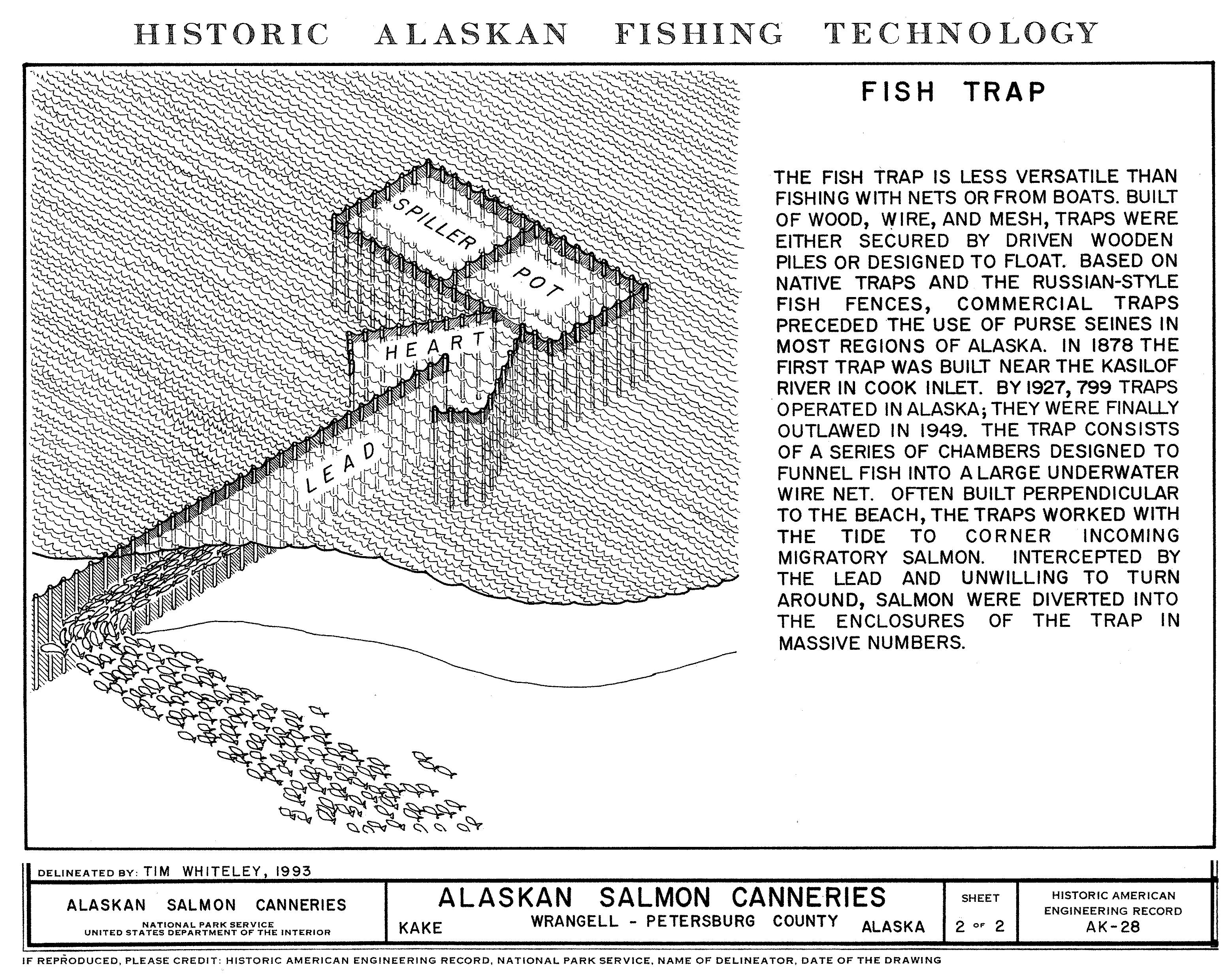
At Southeast Alaska canneries like the one at Funter Bay, the first step was the fish trap, either the floating or pile variety (I discussed fish trap types and issues here, and have a location map here).

trap_diagram

Image courtesy of Historic American Engineering Record / Library of Congress, Tim Whitely 1993. Modified from http://www.loc.gov/pictures/item/ak0437.sheet.00002a/

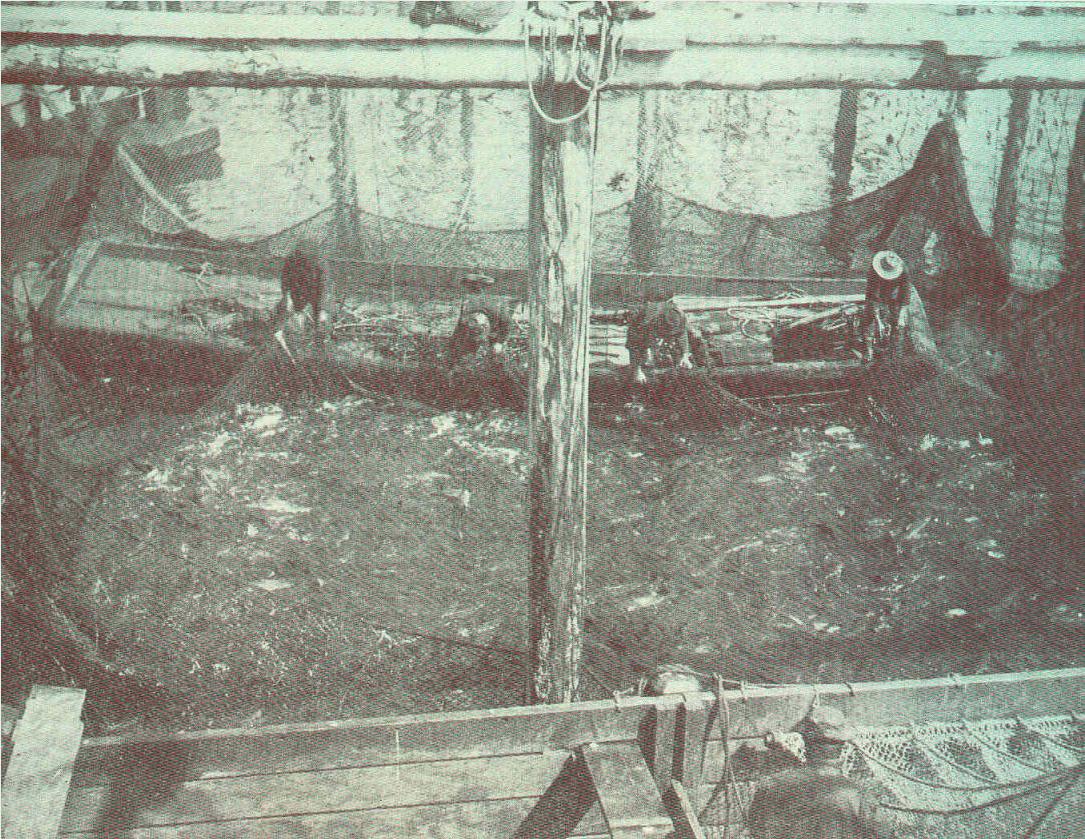
After the trap was filled with fish, it would be “brailed” or emptied into a scow (barge) by lifting the nets and dumping the fish. I previously posted a set of postcard images showing this process here.

funter_brailing_1908

Courtesy University of Washington Freshwater and Marine Image Bank

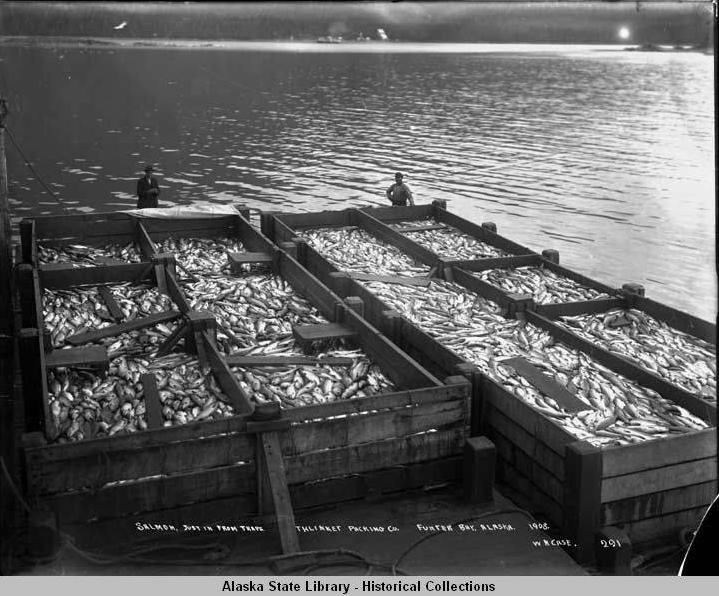
Full scows were then towed by cannery tenders to the wharf. Below are several loads of salmon arriving at the Funter cannery:

scows2

Courtesy of the Alaska State Library, William R Norton collection, P226-445

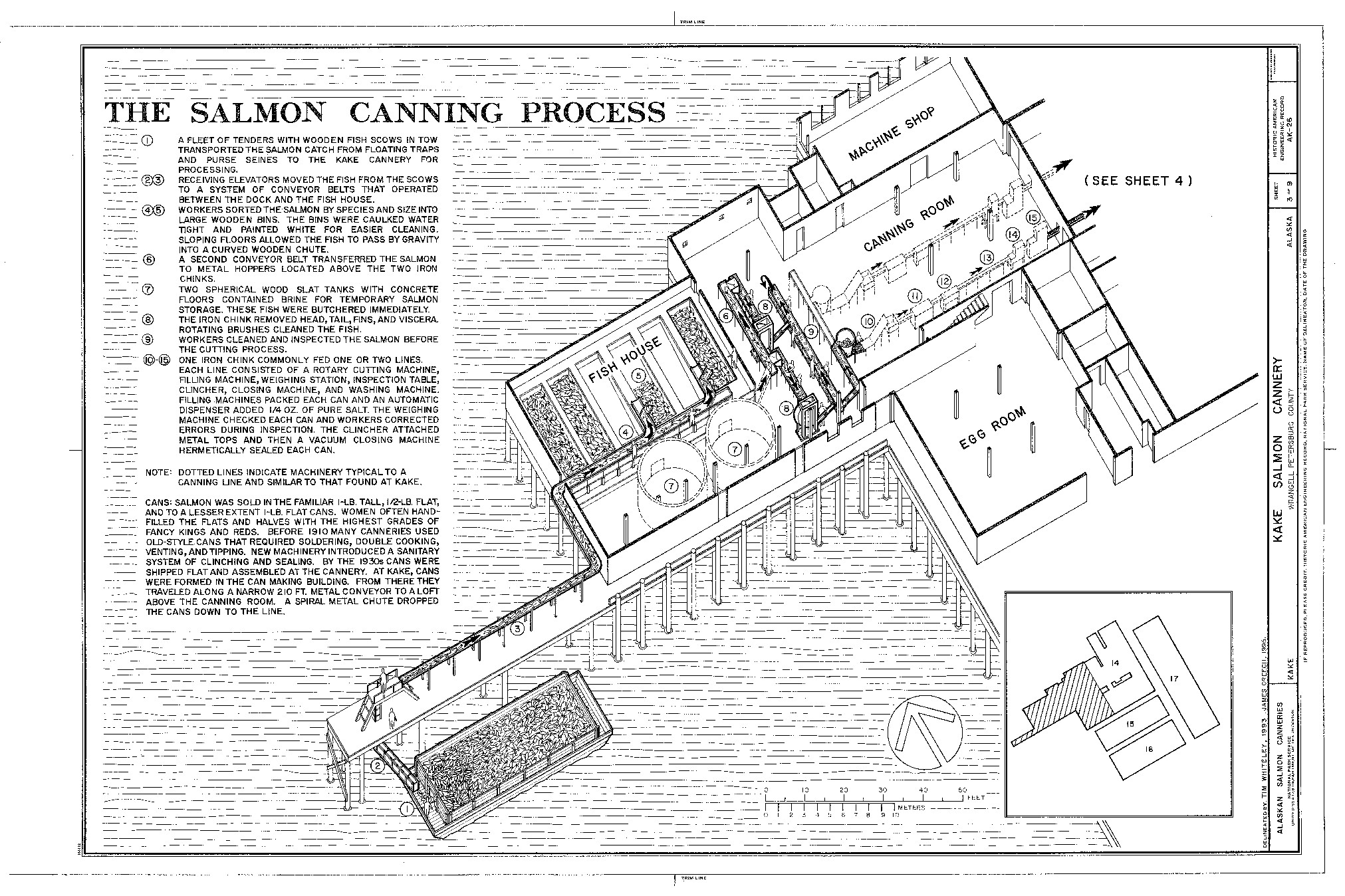
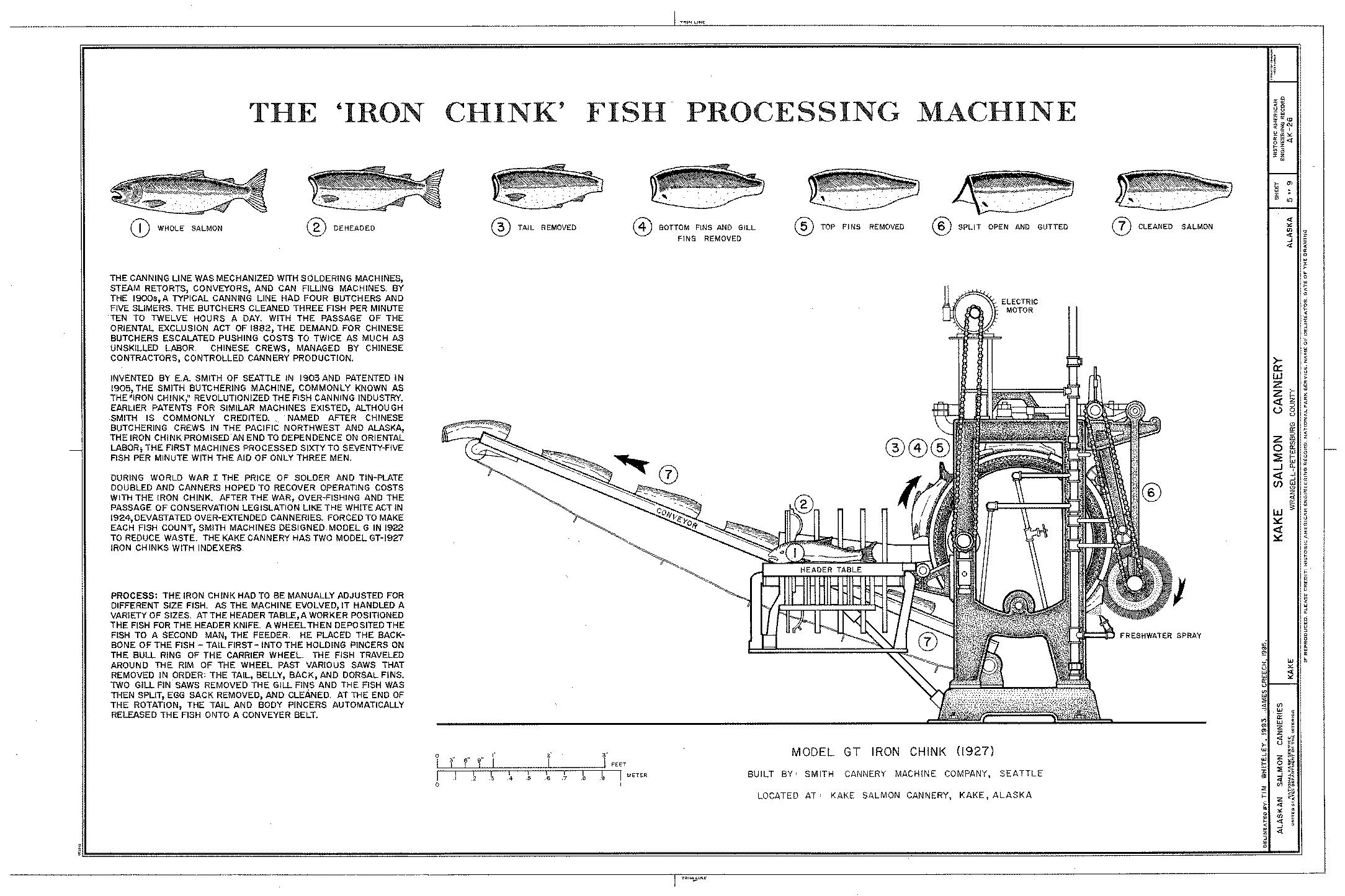
The following diagrams from the Historic American Engineering Record show the canning process at a typical Alaska operation (The Kake cannery, which was under the same ownership as the Funter Bay cannery in the 1930s):

kake1

Courtesy of Historic American Engineering Record, National Park Service, Tim Whiteley and James Creech, 1993 & 1995.

kake2

Courtesy of Historic American Engineering Record, National Park Service, Tim Whiteley and James Creech, 1993 & 1995.

Once at the cannery, the fish were unloaded by hand into a “Fish Elevator”, an angled conveyor belt which moved them up to the level of the processing line. A video clip of such a fish elevator in action can be seen here. The salmon were then sorted by species (unwanted bycatch fish were usually discarded at the scow before loading onto the elevator).

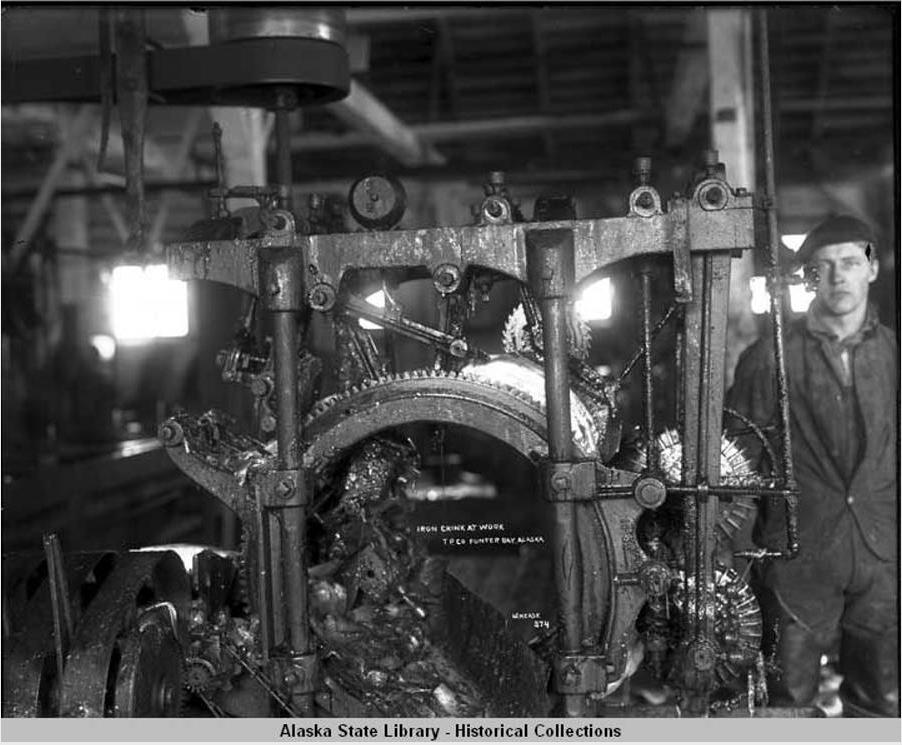
The sorted salmon were run through the canning line one species at a time, each species typically had its own brand and label. First the salmon were cleaned and dressed. Originally this was done by hand with a crew of laborers (often Chinese, Japanese, or Filipino, although the Thlinket Packing co initially had many Tlingit Native employees). Later the cleaning process was automated, with an unfortunately-named device replacing many of the labor-intensive steps in preparing the salmon.

kake3

funter_iron

During the fish cleaning process, offal (heads, gills, and guts) was conveyed to a waste bin. It was later loaded back into empty scows for disposal, as seen in this post. A small amount was sometimes sold to fur farms to feed fox and mink, but most was simply discarded. This is still commonly done in many canneries.

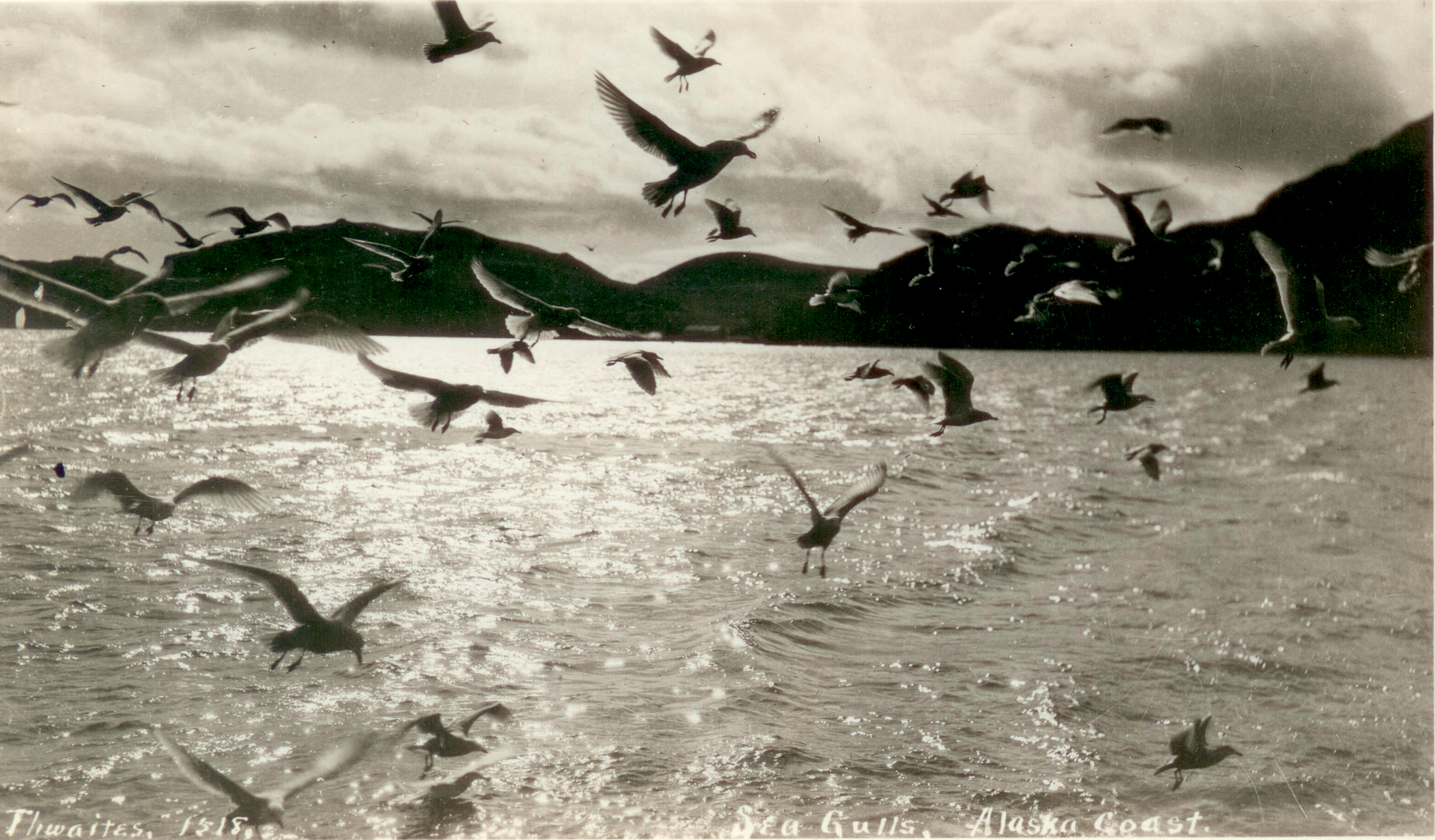
The hills in the photo below seem to match the head of Funter Bay, this could have been taken while dumping fish waste near the mouth of the bay.

seagulls

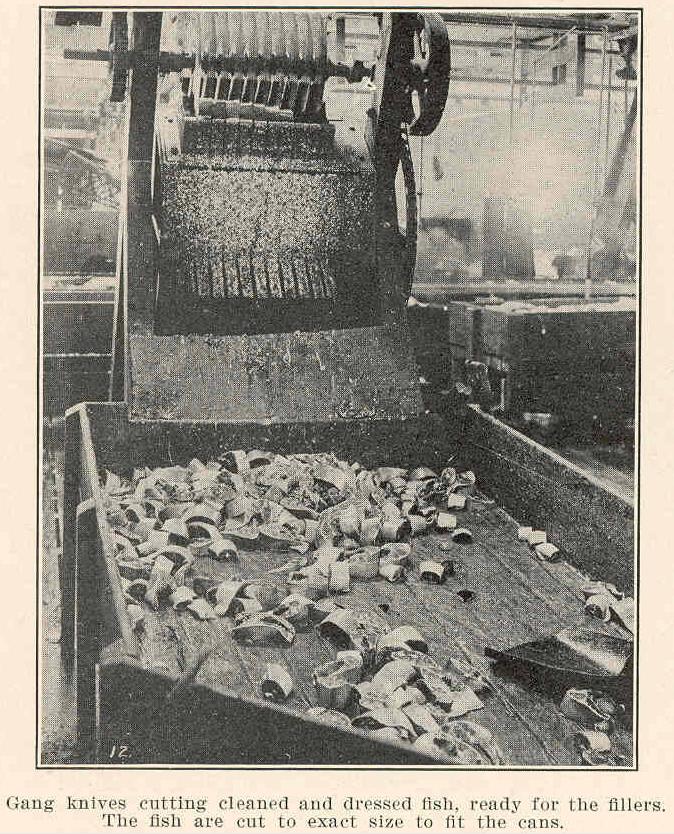
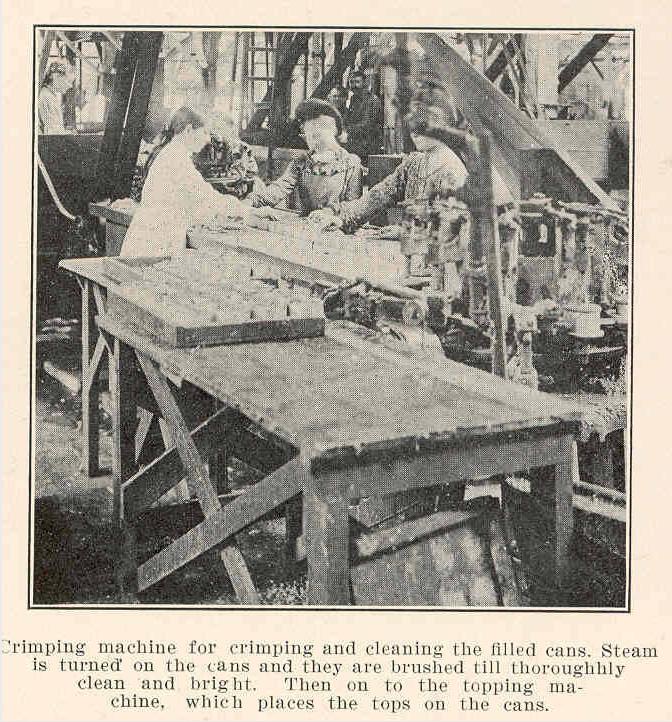
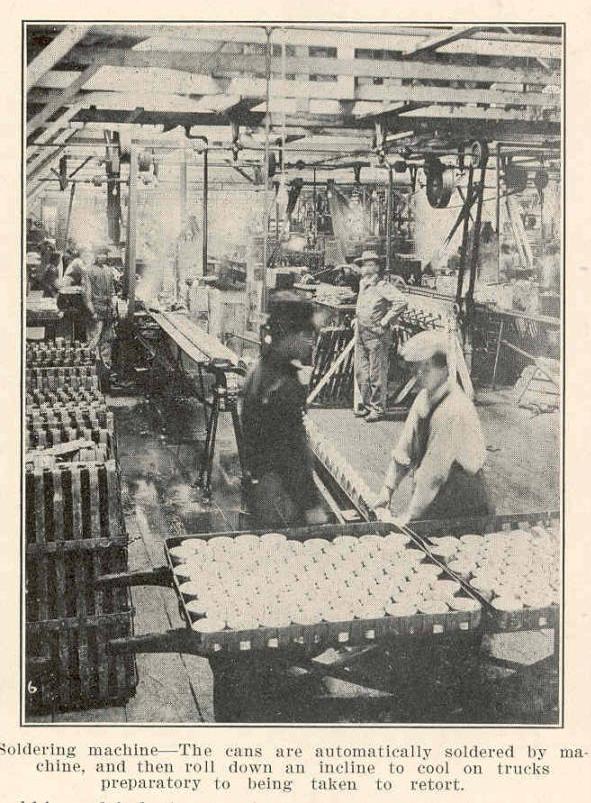
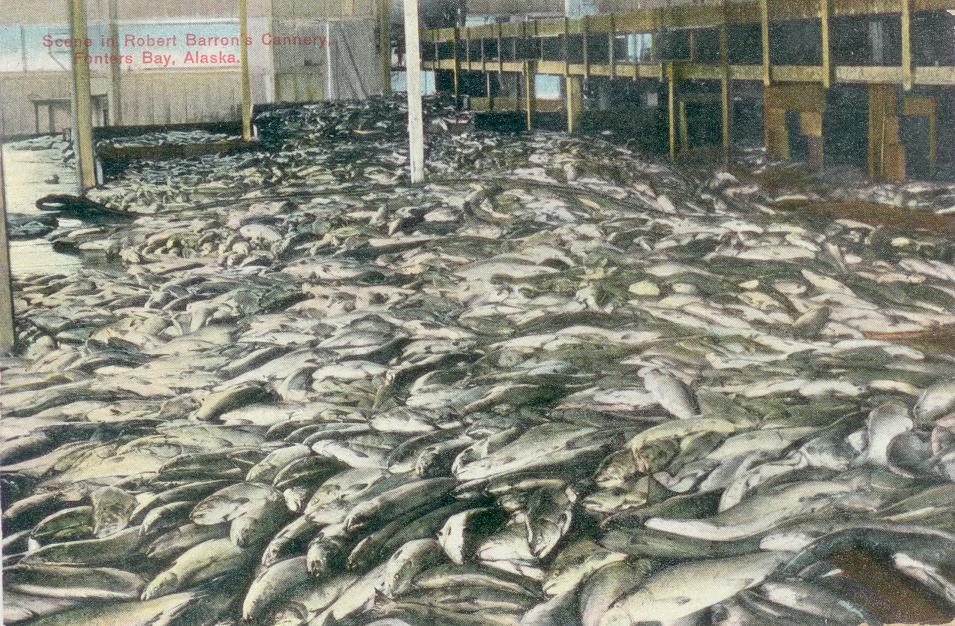
The following five photos are from a standard cannery of very similar design to the Thlinket Packing Co’s Funter Bay plant. These are from the Pacific Fisherman Volume 4 Annual Yearbook, of 1906, and are used as public domain per the Freshwater and Marine Image Bank’s policy. The article describes this as a cannery in Puget Sound, although one of the photos used in the article  is also labeled on a postcard as “Robert Barron’s Cannery” of “Fonters Bay”.

After cleaning, the next step for salmon bodies was cutting, originally by hand and later done by a mechanical gang knife. This sized the fish appropriately to fit in cans.

gang_knives

Cans were filled, crimped, washed, topped, and soldered shut. Again, more and more of this process became automated over time.

crimping_maching

soldering_machine

The soldered-shut cans were cooked in a retort, essentially a large steam pressure cooker (a small vent hole was left in the can during cooking, and soldered shut afterward). At the Washington cannery this was done for 1 hour and 15 minutes at 240 degrees F and 15psi.

retort

After being removed from the retort and given time to cool, the cans were run through a labeling machine to receive the appropriate label for the species and brand. Quality control workers checked the weight and seal at various points during the process.

labelling machine

Some can labels from the Thlinket Packing Co are seen in this post.

Finished cans were packed into boxes built from prefab sections and assembled at the cannery.

The next two images were in a batch of photographs from Funter Bay, taken around 1919. The first photo appears to show cans moving through some machinery (perhaps the soldering machine) and stacking up on a cooling rack prior to being loaded into a retort for cooking. The exposure is long enough that the top row of cans appeared on the pile while the shutter was open (they look transparent). People moving in the background are also blurry. Assembled wooden boxes are seen in the background.

machinery2

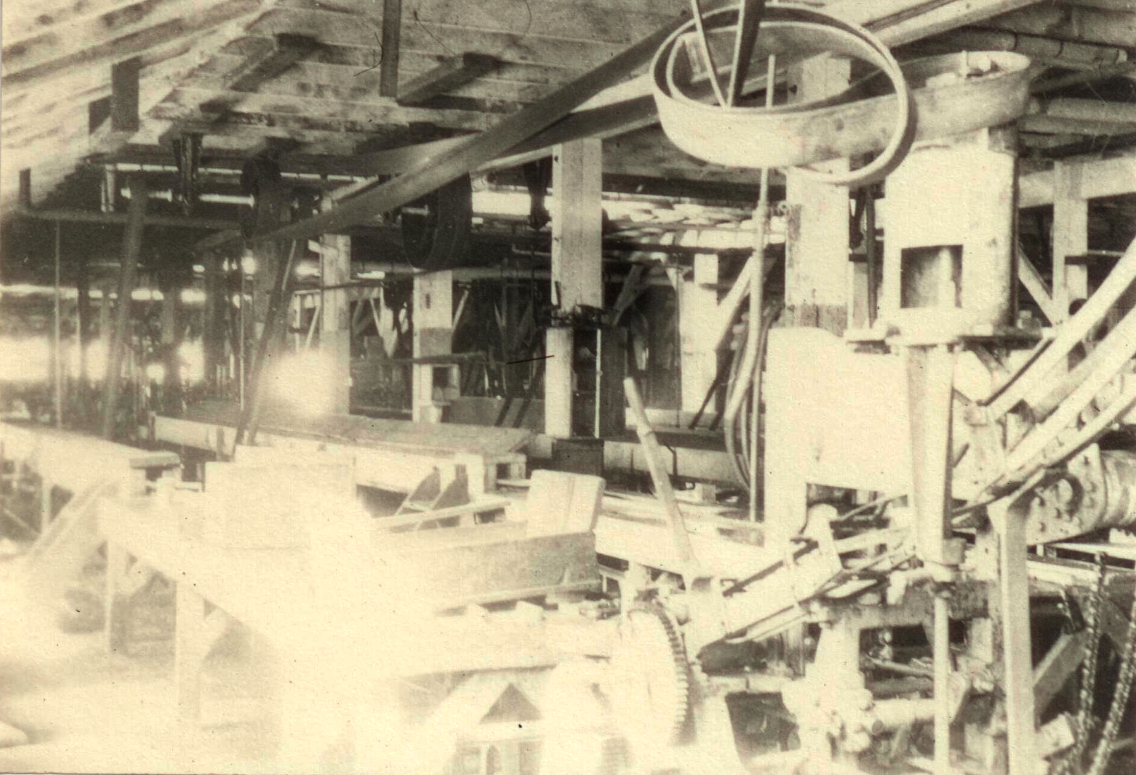
The next photo is a little harder to make out, but includes an angled ramp on the right hand side, similar to the can filler machine. Empty cans were stored in the loft above the canning floor, and dropped down to the working stations through these ramps. Overhead belts fed power to the equipment from a central engine. A spare belt is seen wrapped around the top of the machine.

machinery1

The filler machine at Funter Bay can be seen below. empty cans are being fed in from overhead ramps:

funter_filler_machine

Courtesy of Alaska State Library, William R. Norton Photograph collection, ASL-P226-453

The interior of the T.P. Co Cannery at Funter is seen in this 1907 image (below). Metal cooling racks are stacked on the right, while conveyors are in the center. A vent hood near the middle could be a soldering station. A slightly different version of this image labeled “Interior Canning Department” can be seen here.

Another image from about the same time shows 75,000 cases of salmon in the Thlinket Packing Co’s warehouse. The cans have not yet been boxed up. Another warehouse view is here.

Once packaged, the finished product was shipped South on commercial steamers or on freight ships owned by the cannery, to be sold to wholesale grocers for delivery to the consumer. Salmon in a can would appear on the shelf much as it does today, in fact the colors and art used on labels today is very similar to that of historic labels.

2005_06_191_f

Sea Rose Brand Salmon Label from Thlinket Packing Co., c. 1905. Image courtesy of the Juneau-Douglas City Museum, 2005.06.191.


modern_cans

Modern salmon cans, photo by the author.


Funter Bay History: Steam Donkey Part II

March 3, 2015

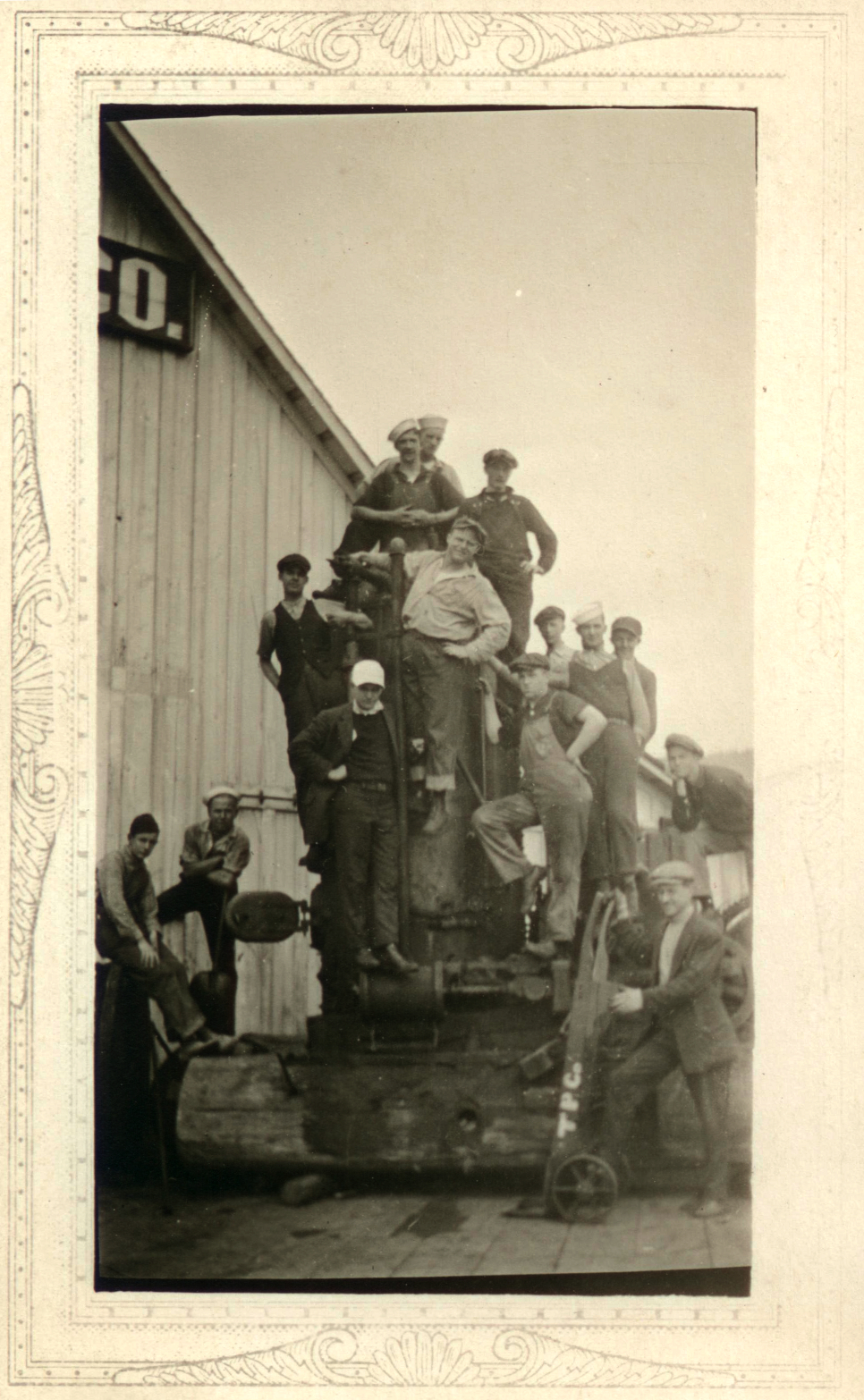
I previously mentioned a Vulcan Iron Works steam donkey at Funter Bay in one of my earlier posts on steam power and internal combustion. Recently I acquired a photo which shows a very similar device at Funter, perhaps the same one. This photo is likely from the summer of 1919.

donkey

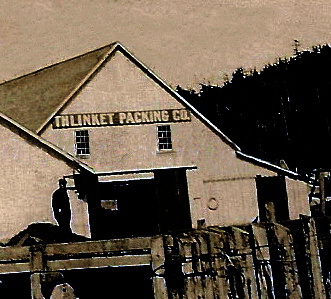
The photo was taken at the corner of the main Thlinket Packing Co warehouse, seen below:

crop

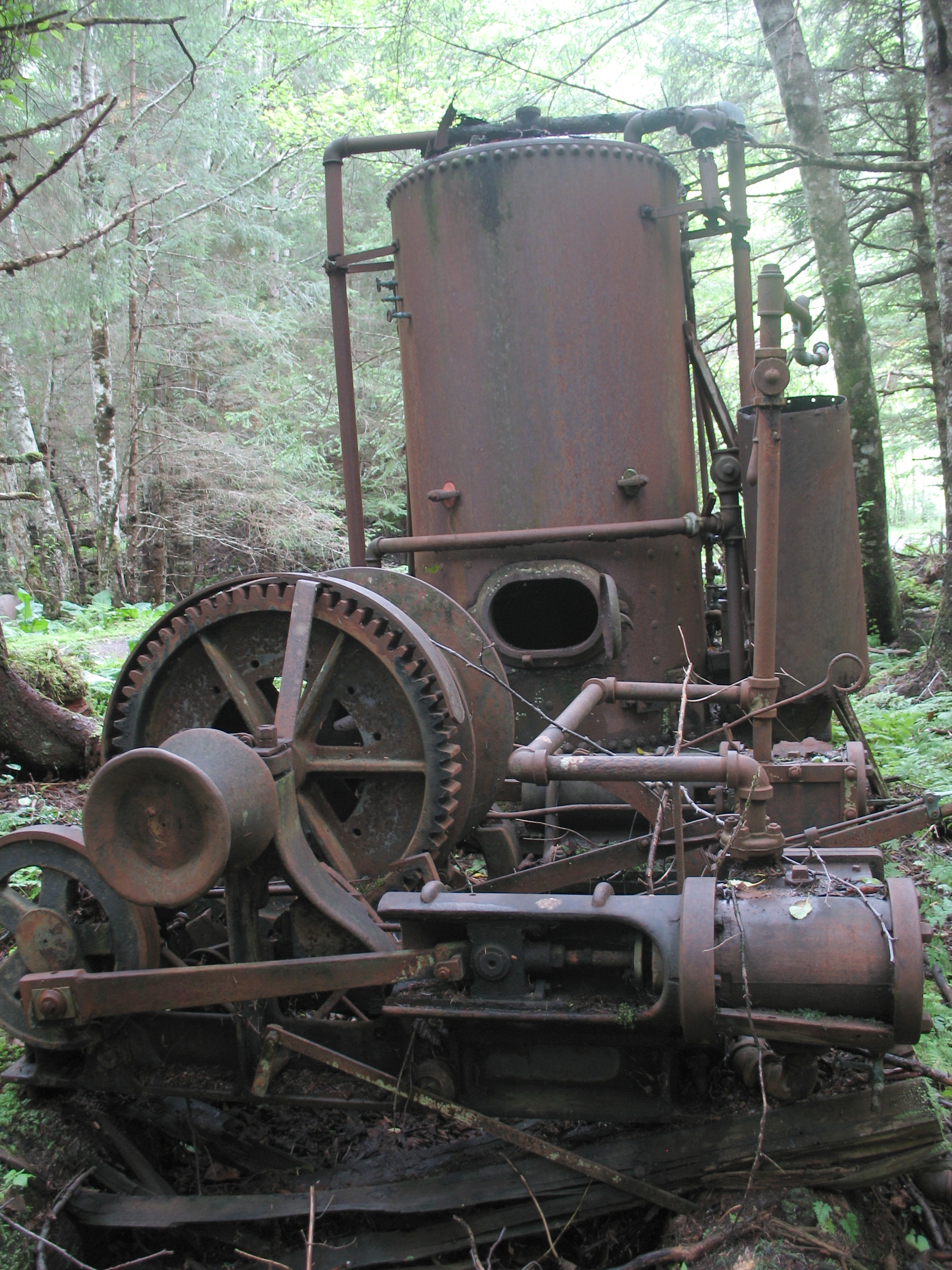
The steam donkey seen in 1919 and the one in my modern photos look nearly identical to me. The layout of pipes, the piston parts, and the boiler door all appear to match. The donkey in 1919 is mounted on large logs. My modern-day photos do not show any logs under the engine, but loose spikes are visible (the logs likely rotted away or were removed). John Taubeneck provided some details on the Vulcan Iron Works in a comment on my earlier post, noting that there are only a few of these donkeys remaining. He believes the unit pictured above is slightly smaller than the one in the woods, but it is hard to tell.

Neither photo shows the conical top or smokestack seen on other Vulcan donkeys, in the 1919 image they may have been removed for shipping, and by the time of my photos the stack seems to have rusted off and fallen to the ground (a few decades ago it was still mostly upright and covered with a washtub).

donkey2

The remaining donkey is across the bay at the base of the mountain where it powered an aerial mine tram. If these are the same unit, it may have originally been owned by the cannery and later sold to the mine. As the cannery used mainly low-horsepower gas engines on-site, a steam engine would likely have been used somewhere off the property. It could have served as a pile driver engine, or been used for logging in Kelp Bay or elsewhere.

The men posing on the donkey in the 1919 photo seem to have been a group of Seattle high school students. They will probably be discussed in an upcoming post.


Funter Bay History: Cannery Tender Operations

February 27, 2015

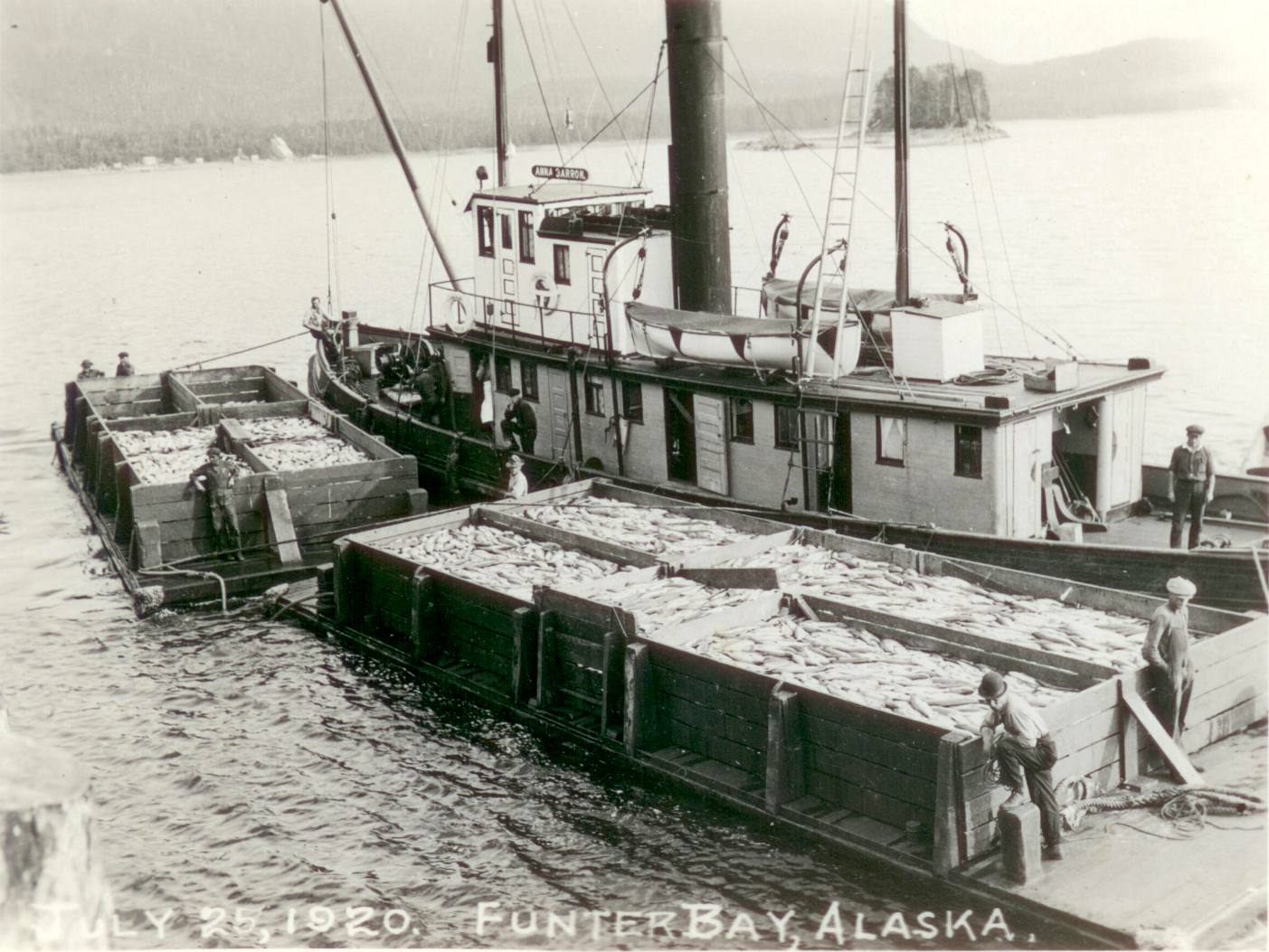
Some photos from July of 1920 show several of the cannery tenders (fish handling boats) and barges at the Thlinket Packing Co.

barron

Above, the Anna Barron maneuvers two loaded fish scows up to the cannery wharf. This vessel is discussed further here.

A close-up of one of the scows shows a full load of salmon fresh from the traps:

salmon2

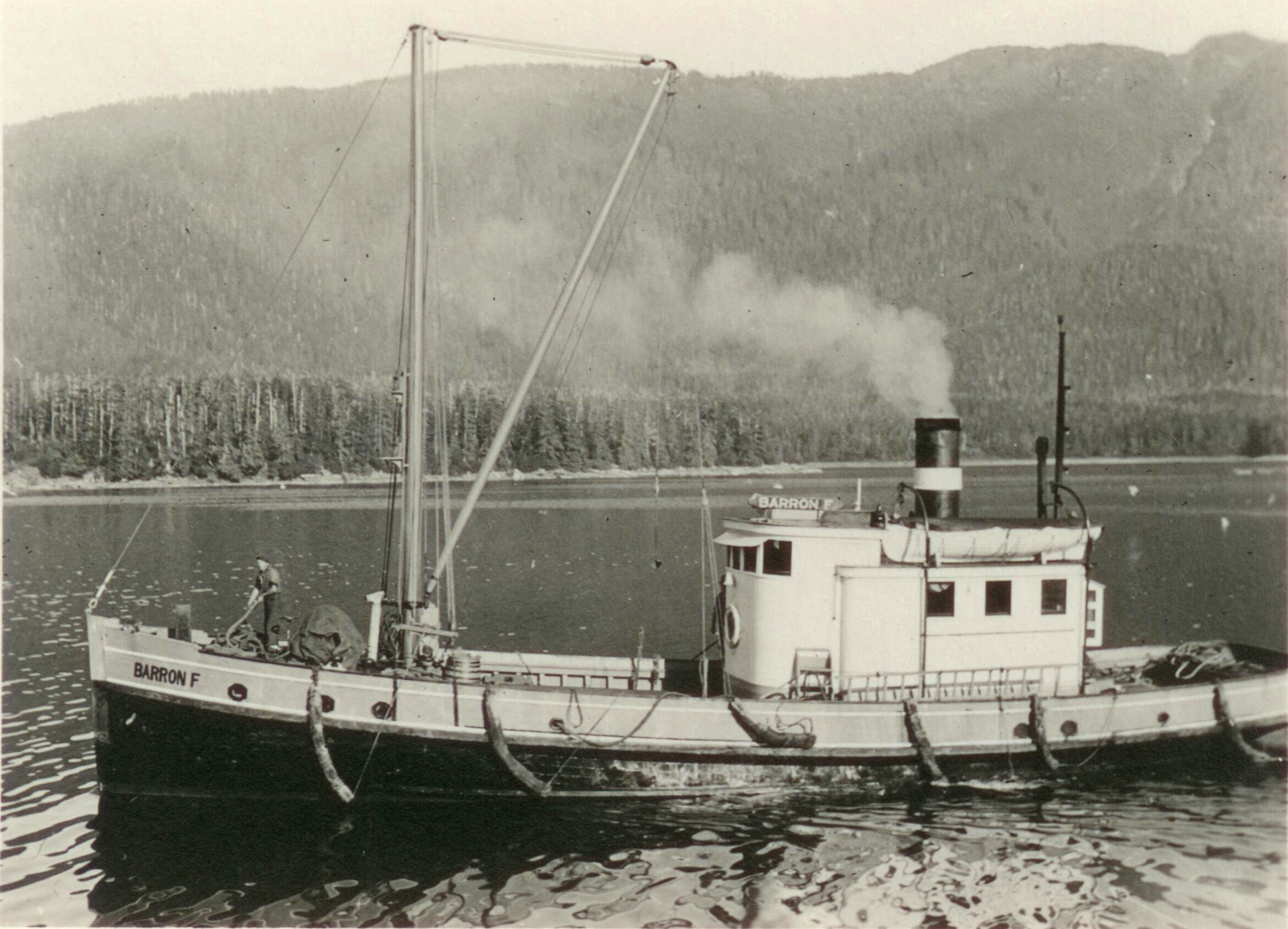
Below is another Thlinket Packing Co boat, the Barron F, seen in front of the cannery wharf with Highwater Island and Mt. Robert Barron behind. This 98-year-old boat is still working the West Coast, I have a number of photos courtesy of the present owner available here.

barron_f

Unlike the Anna Barron, which was configured as a tugboat, the Barron F was a packer or cargo vessel with large midships hold. The Funter Bay cannery had several of each type of vessel, used somewhat interchangeably depending on the task at hand.

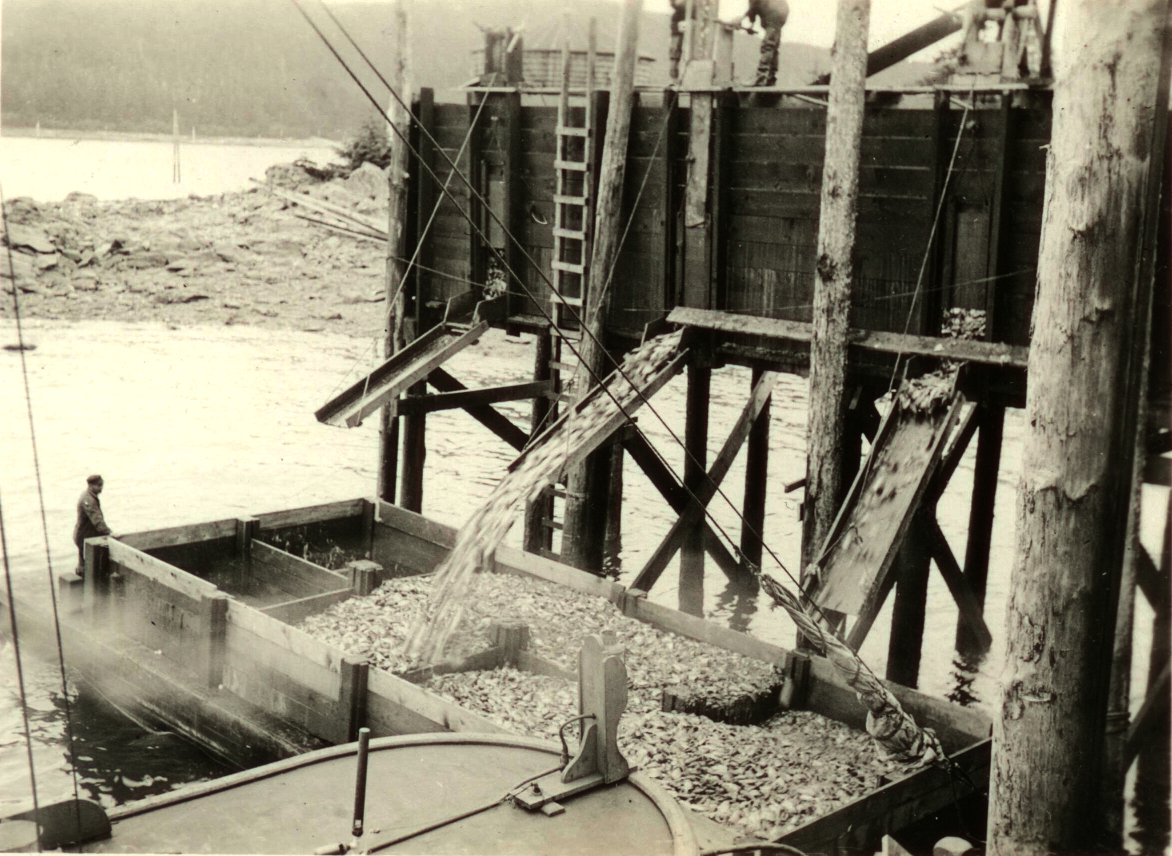
The next photo shows a scow, now emptied of salmon, being loaded with waste from the canning line. Elevated wooden bins held heads, guts, and other unwanted bits of fish until they could be dumped into a scow. The scow was then towed to deeper water and dumped. This kept the cannery smelling slightly better, with fewer bears nosing around, than if the waste were simply dumped directly in front. The cannery’s oil tank is visible on the point in the background.

dump

In the last photo, we see one of the cannery tenders towing a piledriver out of the bay. The profile of the vessel suggests it might be the Anna Barron. Smoke is coming from the pile driver’s steam engine, which suggests it will soon be at work on one of the fish traps outside the bay.

piledriver


Funter Bay History: Cannery Workers in the 1920s

February 26, 2015

My last post displayed some 1920s-era postcards (RPPCs) from Funter Bay, showing buildings and boats of the Thlinket Packing Company’s salmon cannery. Other postcards from the same set show some of the workers and people associated with the cannery in the same time period. It is not clear if these are commercial mass-produced postcards or personal images printed on postcard stock.

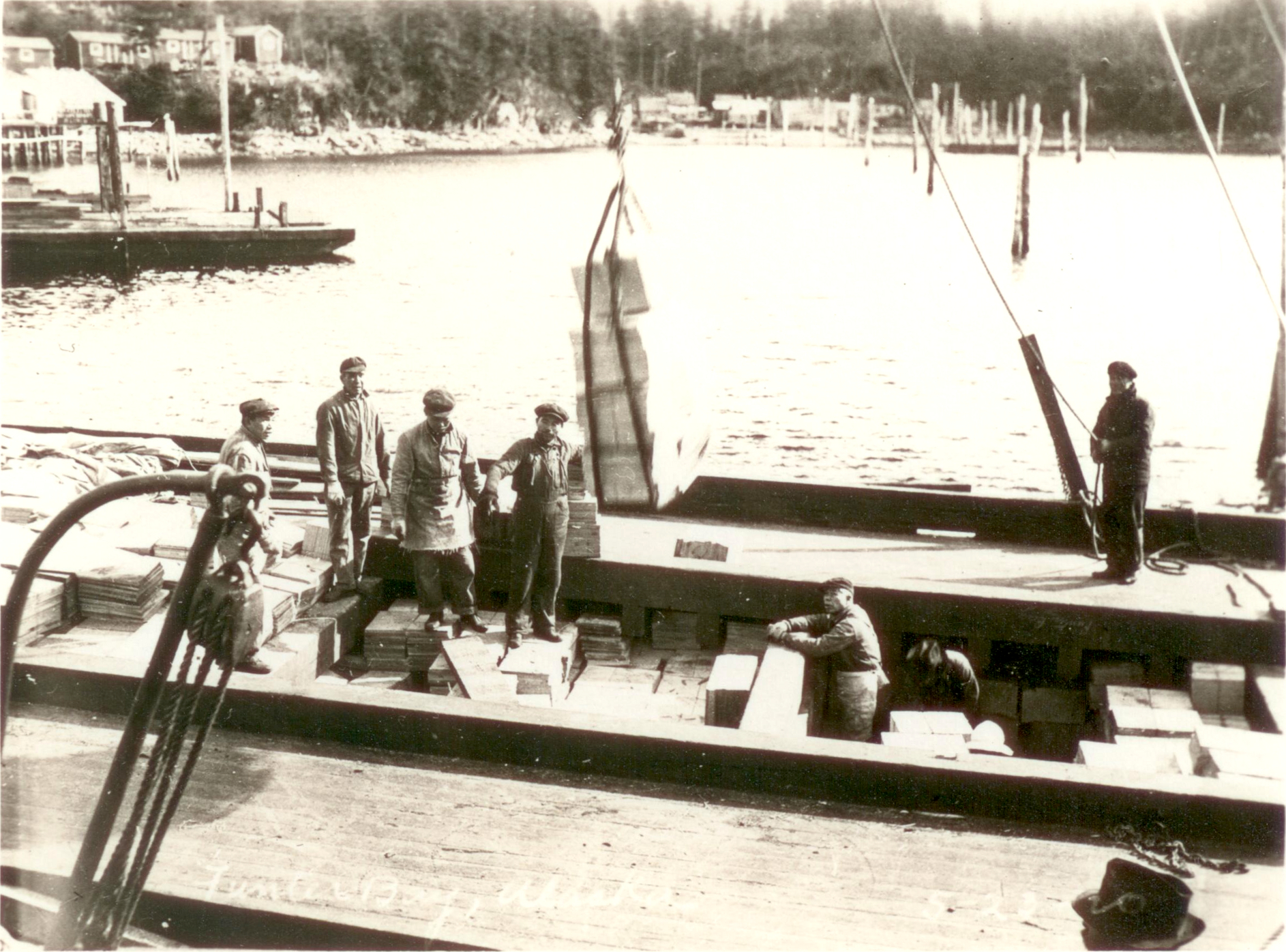
Here we see a group of men unloading items from the hold of a ship. The items are likely knocked-down cases for canned salmon. These would be assembled, filled with cans, and then shipped out again. An example of assembled cases can be seen here. In the background are Tlingit native houses and a scow or barge.

Unloading Ship

The next two photos are not labeled as Funter Bay, but were found alongside Funter Bay photos in the same collection. The firewood behind the seated man looks very similar to the wood stacked next to the boardwalk seen in a previous post. Also visible in the background is a wooden frame for clotheslines with hanging laundry, and some fencing or netting, similar to the garden fencing and clotheslines seen before. I suspect this fellow was one of the Tlingit Natives who worked at the cannery during the summers.

Lumberman

The next photo is labeled (in reverse) “Native Cannery Hands”. The photo seems to be printed in the correct orientation based on the product held by the small boy, reading “Sw… Pr…” (perhaps candy?). In a previous post I linked to a report indicating native children as young as 8 sometimes worked 9-hour days for 10 cents an hour.

Native Cannery Hands

There is a lot going on in the above photo. The man on the right is making some sort of gesture or counting 3. The younger people are all looking at the camera and many are smiling, while the older woman stares away with a stern expression. This phenomenon is noted in “The Tlingit Encounter with Photography” where author Sharon Gmelch points out that Tlingit women photographed at Funter Bay tended to look away from the camera unsmiling. One explanation is that smiling for a picture was considered disrespectful by elders. (As another side note, the 1907 photo of the Tlingit women apparently found its way onto a commemorative porcelain plate made in Germany in 1910, which is now at the Juneau-Douglas City Museum).

Another notable feature of these 1920s photos is the popularity of hats or headgear. The children display a variety of hats, including what looks like a naval hat on the smallest boy (marked with a steering wheel at the front). The men unloading the ship mostly have caps, while someone in the hold and someone in the foreground seem to have fedoras (perhaps the bosses?). Earlier photos of Funter Bay workers also show a wide variety of hats, especially among the men. I am not sure if hats were universally popular among all Alaskans/Americans at the time, or if this were a local cultural habit.

A man rowing a boat near the cannery may have been another cannery employee. He appears to have several cut logs in the boat, perhaps for firewood.

rowboat

Another portrait shows a man of possible Asian heritage, standing on the wharf at the cannery (Mt. Robert Barron is barely visible behind him). He appears to be the only hat-less person in this post!

man

Several people are shown on the cannery wharf with fish in the photos below. These may be some Ballard (Seattle) High School students who visited Funter Bay in 1919, as the images were in the same batch and are colorized similarly to some photos of that group (to be detailed in a later post).

These two have caught salmon, likely with rod and reel:

salmon

And here we see a large halibut (probably in the 150-200lb range). The men are standing on nets, but halibut are usually caught with rod or ground tackle (longlines).

halibut

If any readers happen to recognize any of the people shown here, I would love to hear about it!


Funter Bay History: 1920s Cannery Postcards

February 25, 2015

I recently came across a batch of postcards showing Funter Bay in the 1920s. These appear to have come from the estate of someone associated with the cannery. I was able to purchase several of these, and was generously given permission to use copies of the others here.

view1

It is not clear which of these were commercially-sold postcards and which were private photos printed on postcard stock. “Real Photo Post Cards“, or “RPPCs” enabled people to make a postcard from any photo. Kodak began offering pre-printed postcard stock early in the 1900s, and Federal law allowed postcards with written messages on the back in 1907. Some RPPCs were mass produced and some were unique prints by private individuals. Some of the cards in this set are labeled, dated, and/or have a photographers name, but most are unlabeled. Based on what I can identify of the people and vessels depicted, the dates range from around 1918 to the early 1920s.

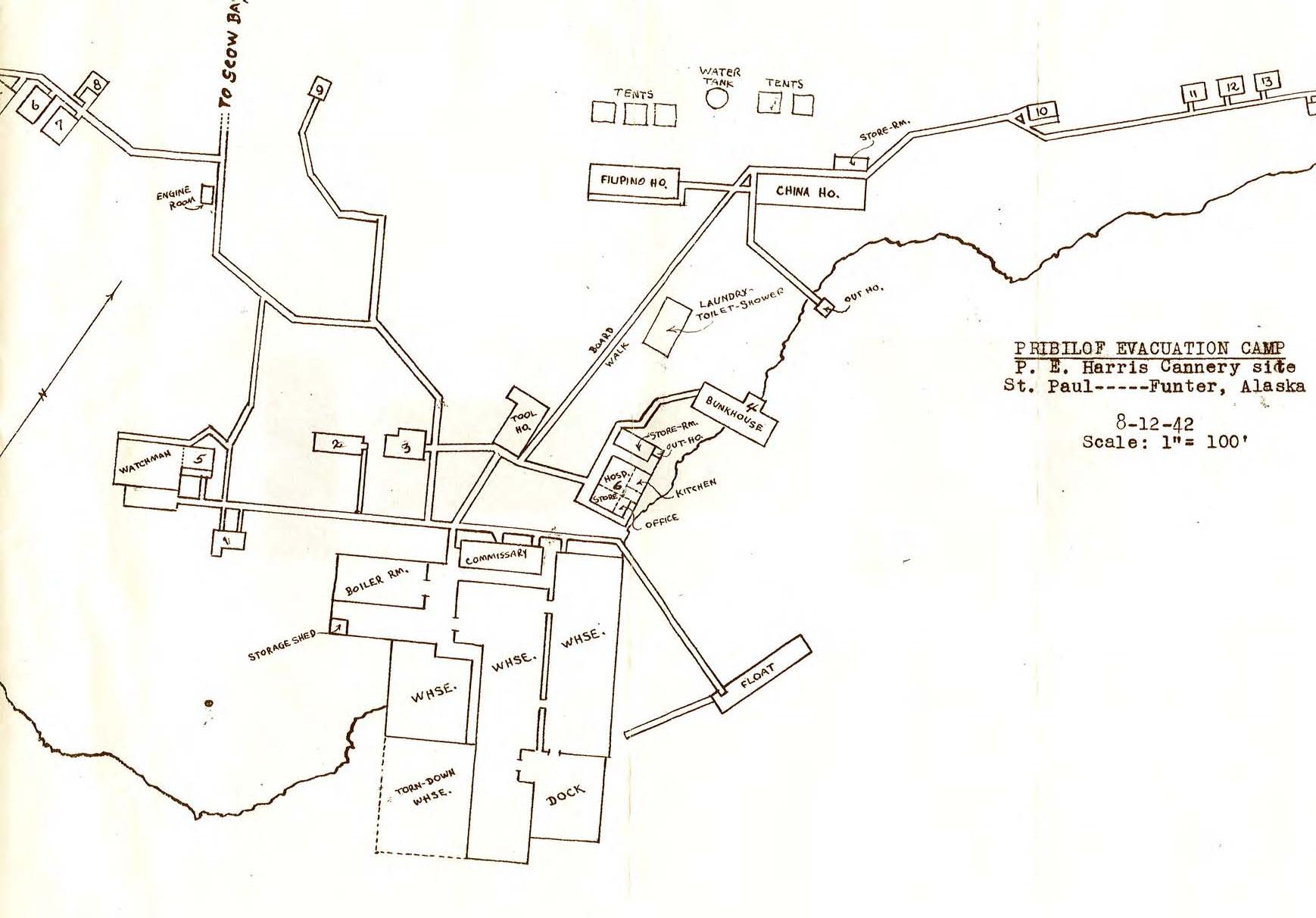
The following map helps place some of these photos. This is part of the US Fish and Wildlife Service records from the National Archives, showing the cannery in 1942. The general layout is much the same as it was in the 1920s, with only minor changes. The 1929 Aerial photo that I previously posted is also helpful.

1942 Cannery map

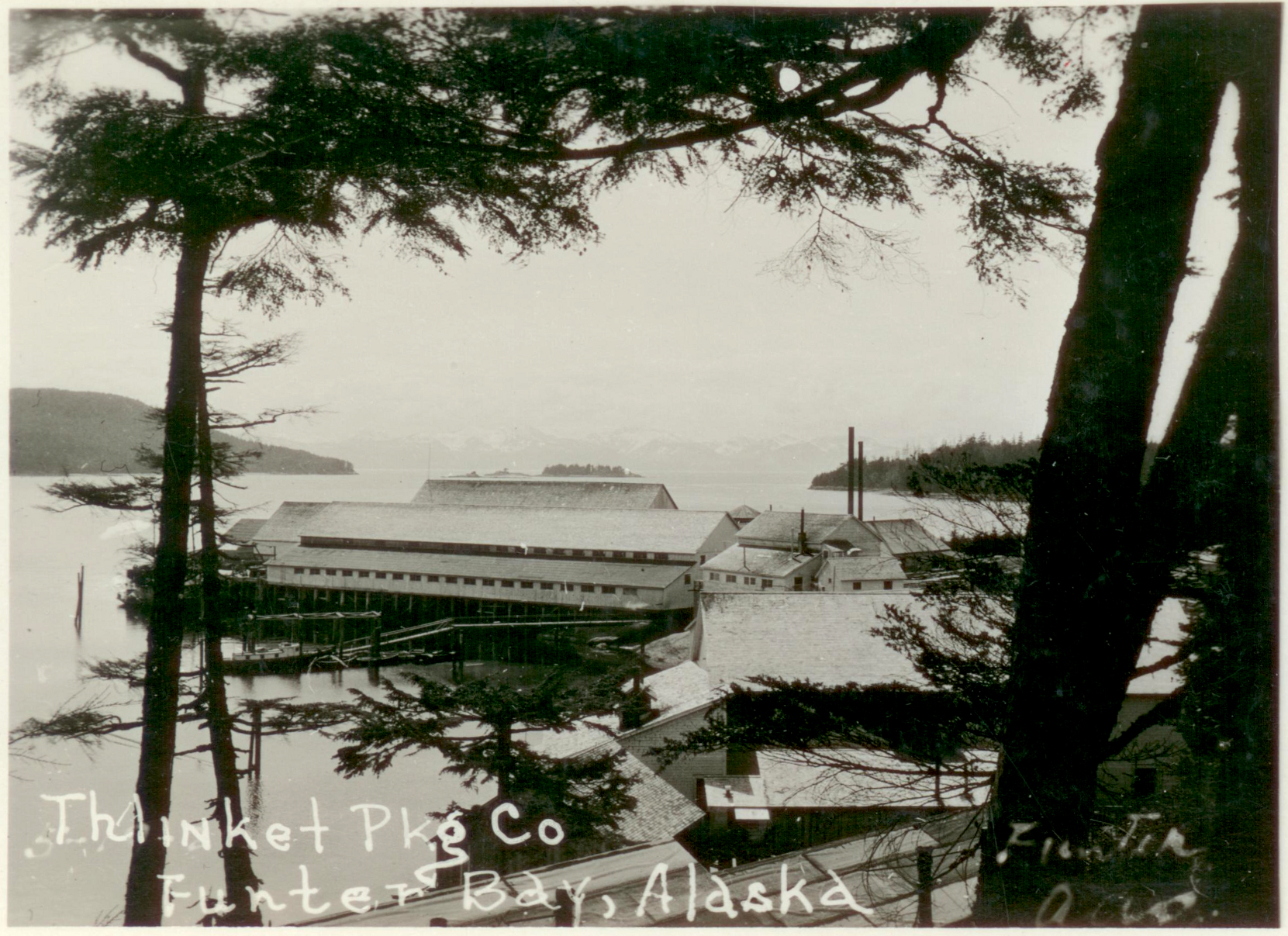
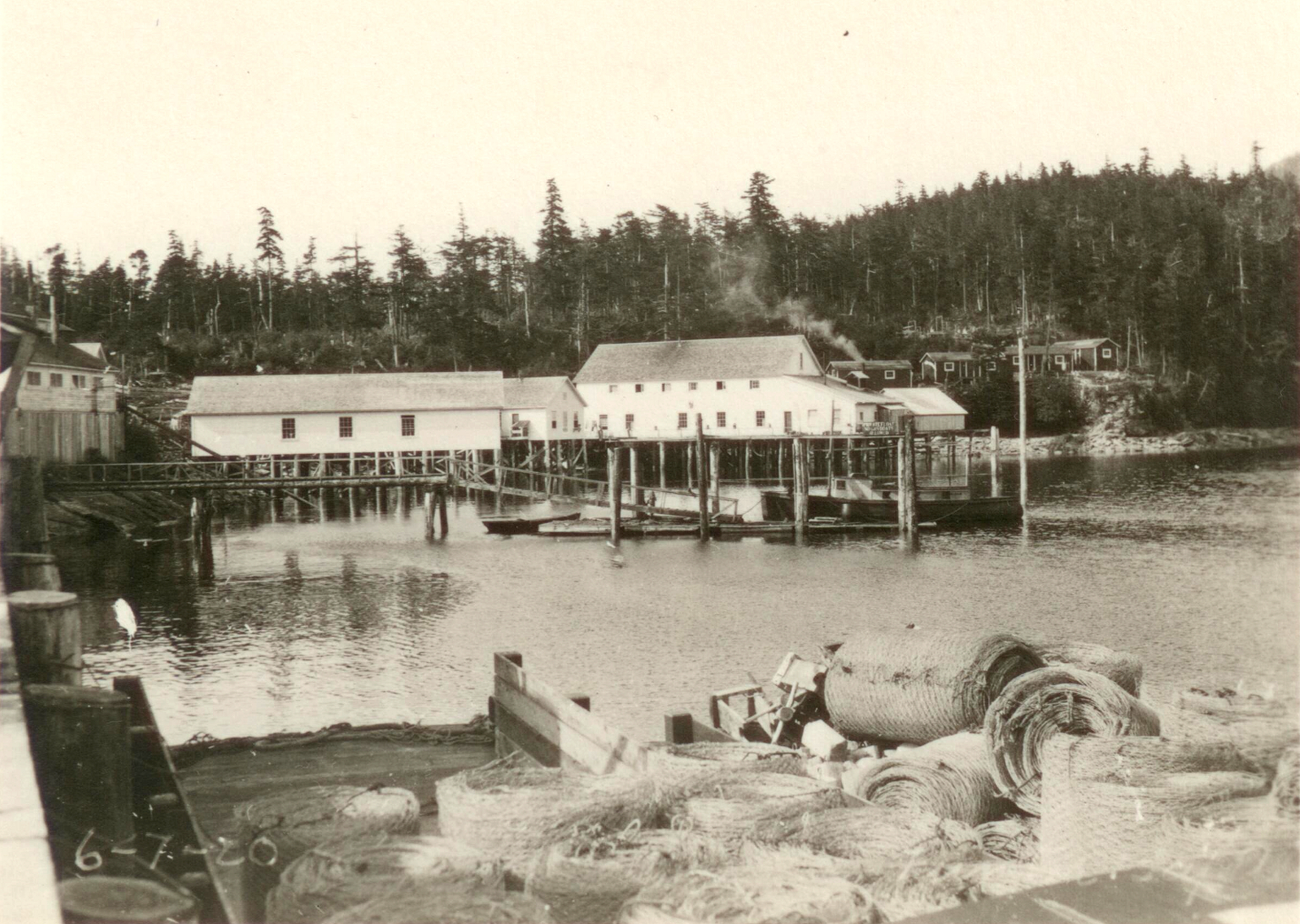
Below is a colorized version of the first photo above. This view looks out over the cannery buildings from near the Native employees’ houses. The main wharf with long packing and warehouse buildings are seen, along with the twin chimneys of the boiler house. Bunkhouses and residences are in the foreground, with the mess hall and company store near the middle.

view4

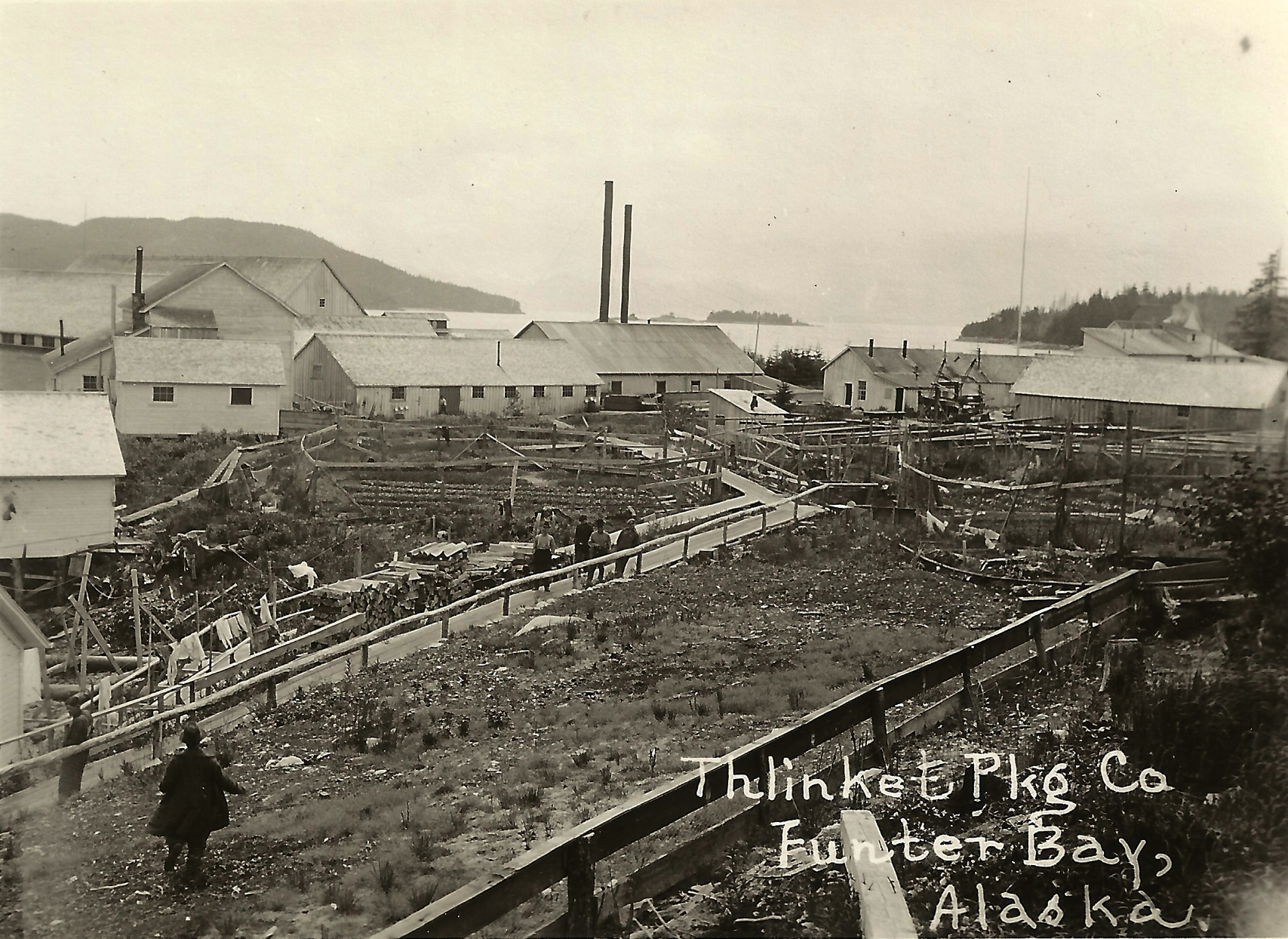
The next photo shows an open area behind the mess hall and bunkhouses. Boardwalks lead between buildings, with what appear to be vegetable gardens on either side. Stacks of firewood are seen along the boardwalk, with long logs split into quarters. Clothes are hung to dry on the left of the nearest boardwalk, the laundry and bath house was located just off-camera to the left. The building on the far right is probably the repair shop which still stands today, behind it is the Superintendent’s house and just to the left of it are homes for managers and guests (one of these has also been referred to as a schoolhouse).

gardens

Below is a photo of the summer housing for Tlingit cannery workers. This is sometimes referred to as a village, although other accounts state that it was not occupied year-round. These structures were later demolished to make way for saltery buildings. Several canoes and a motor launch are visible.

village

A more distant view of the “village” shows its relationship to the cannery buildings (at left):

village2

A smaller photo or print shows a boat at the cannery’s floating dock, with Mt. Robert Barron in the background. This seems to have been taken from near the bunkhouse which sat partly over the high tide line:

boat

Two more photos show the floating dock from the other direction, taken at different stages of the tide with different small boats at the dock. A sign on the approach ramp appears to read “Private Float, no gas boats allowed”. The bottom photo shows scows with rolls of netting or fencing in the front, likely fish trap materials. Some of the boats seen in prior photos are moored to pilings in the background:

float float2

The next photo shows a higher angle view of the float approach and bunkhouse, maybe from the mast of a ship. The cannery’s wooden water tank is visible in the background. The cleared area between the tank and buildings would later hold the Chinese and Filipino bunkhouses. The company store is on the left. An interesting feature is the narrow ramp extending from the rear of the store into the water. This was the cannery’s trash chute where garbage was dumped into the bay. The base of this chute was very popular for bottle hunting at low tide in later years!

store

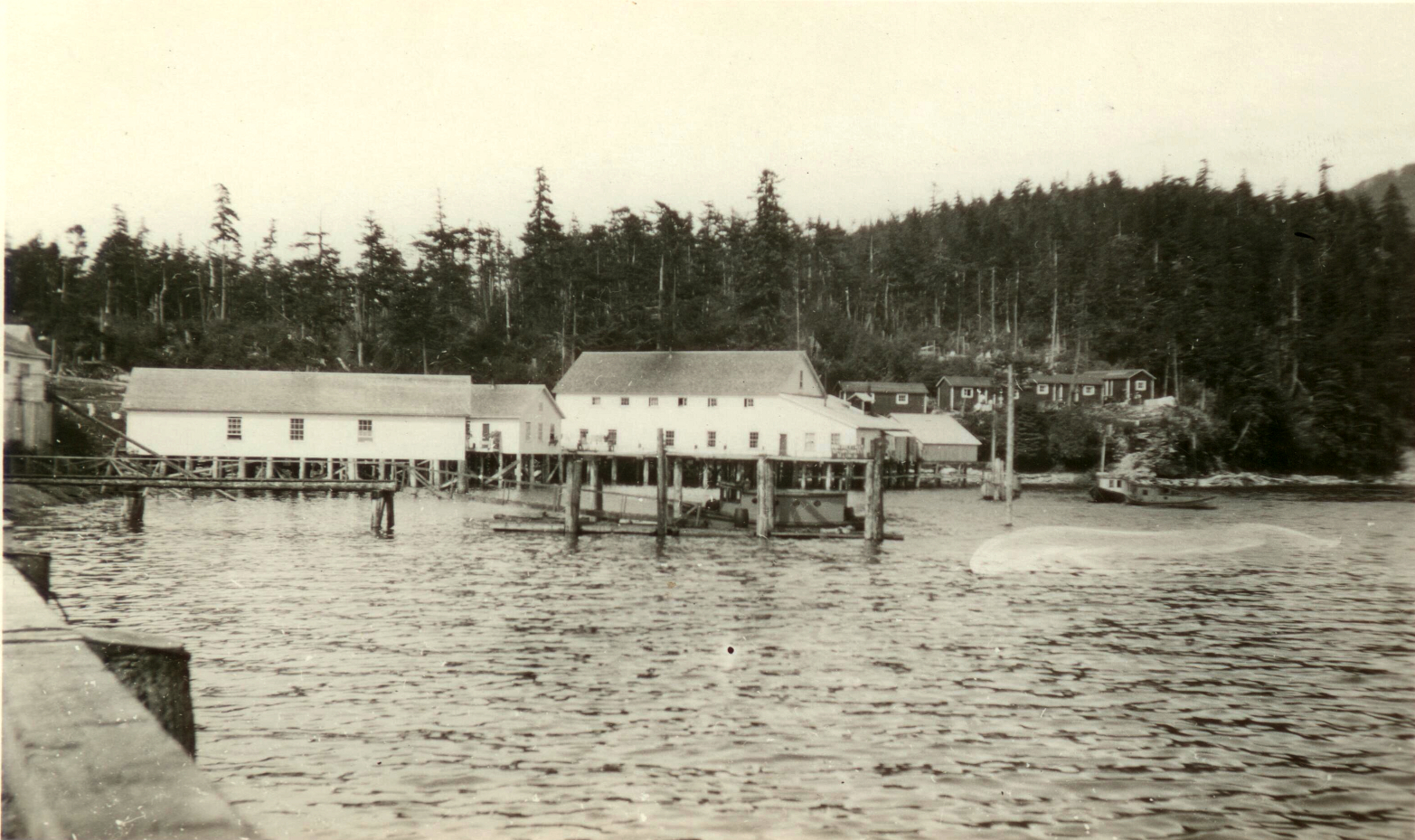
The next photo shows the rear of one of the waterfront buildings. A scow is moored to a piling in the middle ground, with the mountain shrouded in clouds behind. This may be from 1919:

view2

The next image also looks out over the cannery buildings, Mt. Robert Barron is in the background:

overview

And finally, a view out over Funter Bay to the South, showing Station Island (two sections, one forested), Rat Island, and Bare Island (low rock at left). Clear Point is on the right, and Chichagof Island’s mountains are visible in the distance:

water1