Funter Bay History: Navy Ships

February 24, 2015

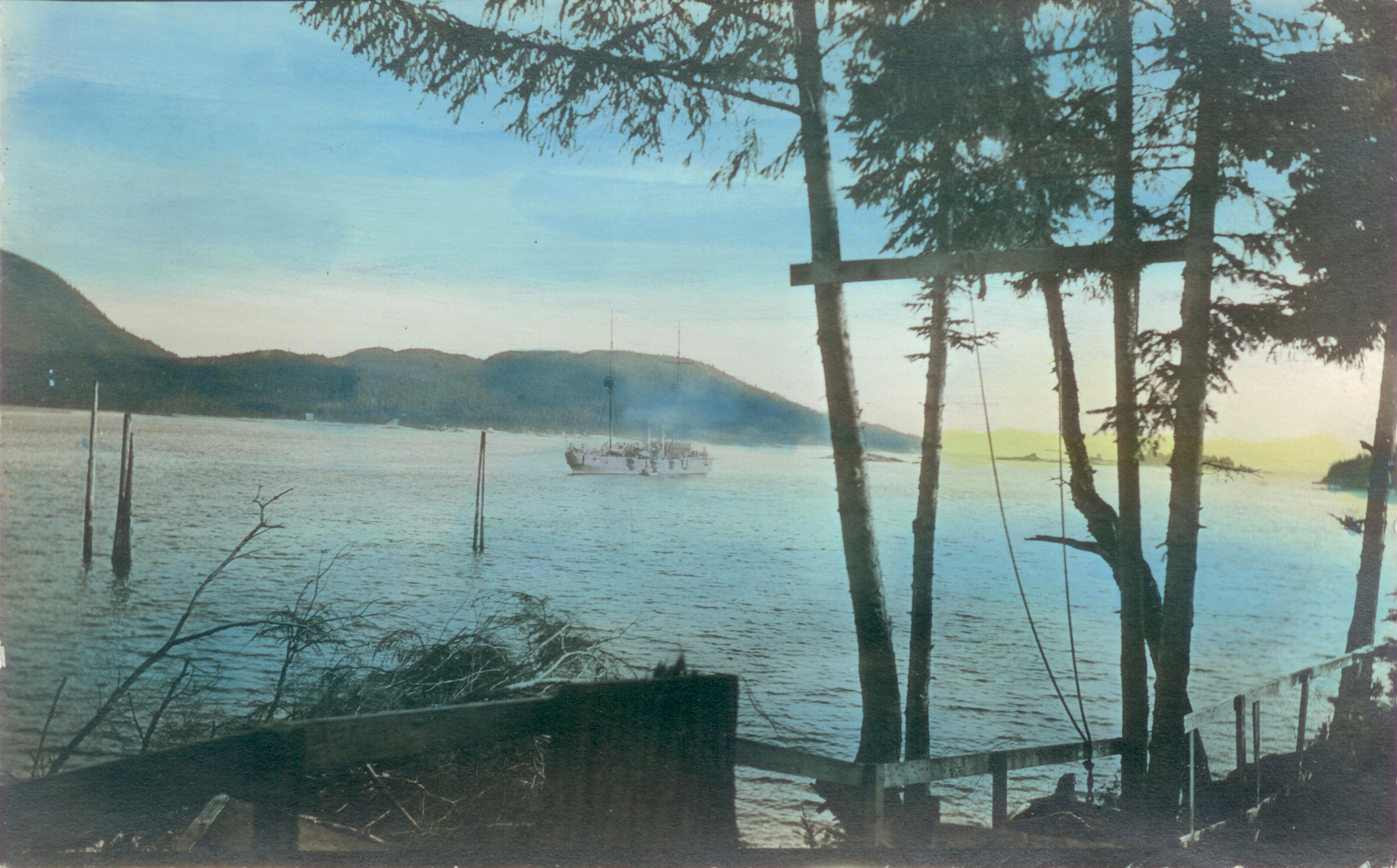
As I’ve previously mentioned, the USS Marblehead visited Funter Bay in 1919 on anti-piracy duties. Cannery owners including James Barron had complained to the government about the depredations of fish pirates, leading the navy to dispatch several patrol vessels.

Below is a photo of what appears to be the Marblehead anchored in Coot Cove near the Thlinket Packing Co at Funter. The photographer was near the scow slipways.
marblehead

The next photo shows the USS Marblehead from a similar angle, helping to identify the ship seen at Funter.

marblehead

USS Marblehead stern view, courtesy Library of Congress

This Marblehead was the 2nd ship to bear the name, a Montgomery-class cruiser 269ft long powered by two steam engines and armed with various 5-inch guns and torpedoes (Wikipedia page). Launched in 1892, the visit to Funter Bay seems to have been one of the ship’s last missions. It was retired in August of 1919. Additional information is available here.

marblehead2

USS Marblehead, courtesy Library of Congress

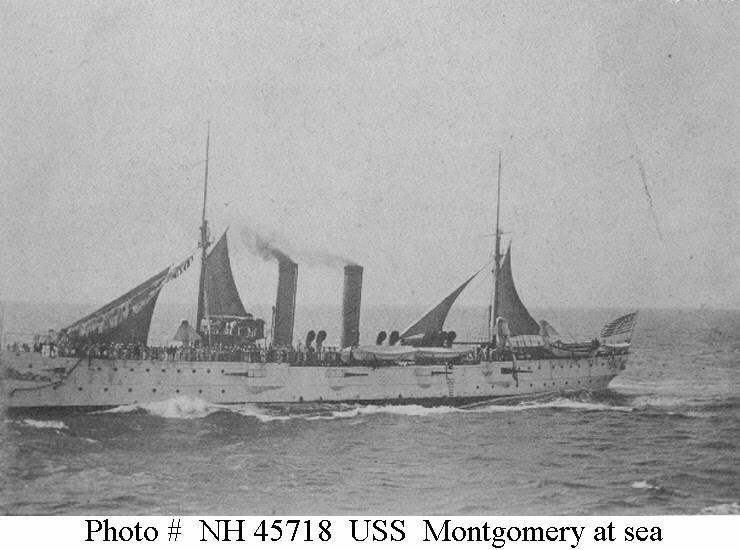
The masts and rigging indicate a ship capable of sail as well as steam propulsion. A photo of the USS Montgomery under steam and partial sail can be seen here.

Another vessel of similar appearance visited Funter Bay on April 28, 1923; the Coast Guard cutter Unalga (Navy History page). This vessel had only one stack, so does not match the one seen in the photo from Coot Cove. The ship’s logs (p1 and p2) from that day mention the motor boat Ceasar which had broken its crankshaft off Funter Bay on the way to Tenakee. The Unalga towed the Ceasar from Funter to Tenakee Inlet. (The source for these logs, oldweather.org, is a project to transcribe ship logs for historic weather data. These logs also contain other interesting information such as records of towns and vessels, wildlife, and general ship operations).

A slightly more modern ship can be seen in Coot Cove in the following photo, circa 1920. Clear Point is visible in the distance, the foreground rocks were near the cannery wharf where the photographer was probably standing.
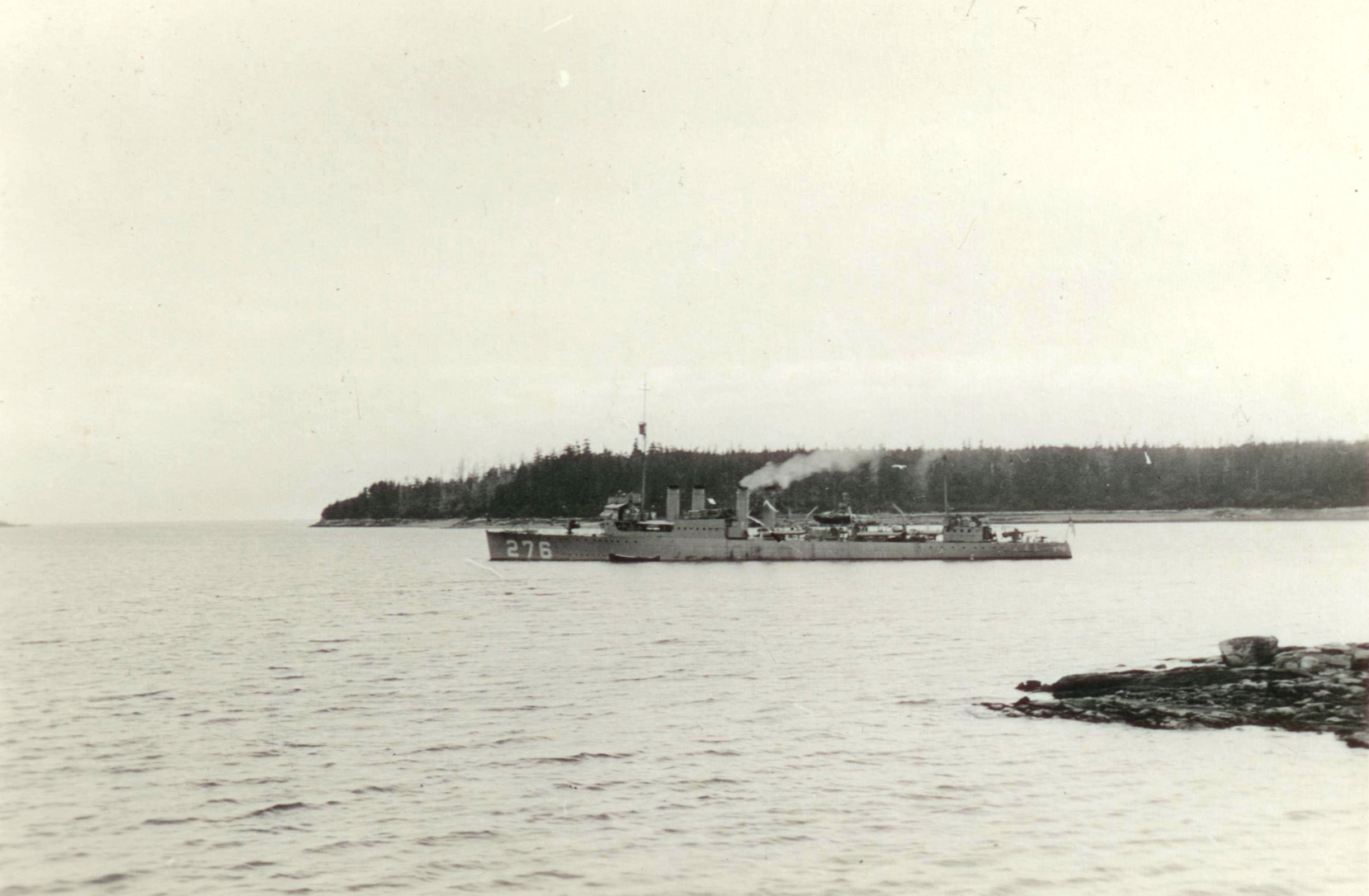
276

This is the USS McCawley, DD-276, a 314ft Clemson-class destroyer (Wikipedia page). When photographed in Coot Cove it may have been taking part in the 1920 inspection tour of Alaska conducted by Secretary of the Navy Josephus Daniels, Interior Secretary John B. Payne, and Pacific Fleet Commander Admiral Hugh Rodman. A note in the Kinky Bayers files reports the McCawley arriving in Juneau along with the destroyers Sinclair and Meyer on July 13, 1920, carrying Secretary Daniels and party. A photo of the McCawley in Juneau can be seen here. A photo of the VIP group visiting a glacier can be seen here. The Thlinket Packing Co was upheld as a model Alaskan industry by promoters, cruise lines, and publishers, so it easily could have been part of the inspection tour.

An article in the Seattle Times of July 10, 1918, reported that salmon packer “J. E. Barron” asked Navy Captain J. J. O’Donnell to take custody of L. Clarito, Joe Budous, and Martin F. Bolina, “Filipinos who are charged with sabotage”. The trio were brought from Funter Bay to the Juneau city jail aboard a “US Warship” and federal charges were expected to be filed. The actual “sabotage” seems to have been the un-patriotic act of inciting native workers to request higher pay.

I was not able to find a Captain J. J. O’Donnell in 1918, but as the article got J. T. Barron’s middle name wrong, it may not have been 100% accurate with the navy captain’s name either.


Funter Bay History: Dano Mine Part II

February 23, 2015

I recently acquired some photos that I believe are related to the Alaska-Dano Mine at Funter Bay, circa 1920. These needed a bit of detective work to place.

The first photo, taken at high tide, shows several buildings, a boat moored to a piling, and another boat full of people being rowed nearby.

camp

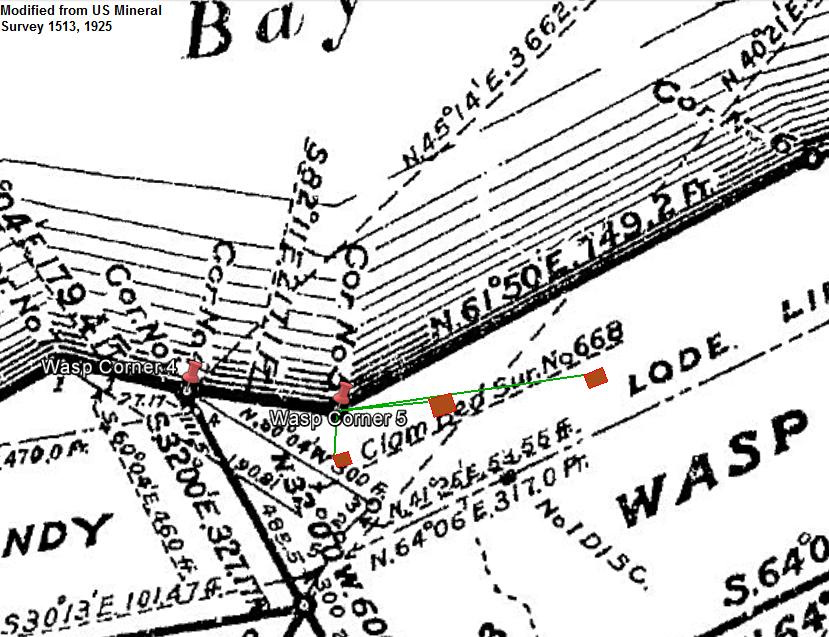
Identifying this photo required some additional research into the Alaska-Dano Mining Co’s surveys, specifically US Mineral Survey No 1513. While the near-shore buildings are not shown on the survey plat, they are described in the text of the document as improvements to the property.

Dano Improvements

The directions in the survey are given in the 90-degree compass heading format used by surveyors, which allows the measurements to be plotted on a map. This results in roughly the layout seen below. Orange squares are buildings, with the two-story bunkhouse in the center and the two log cabins at the sides. The 4th log cabin mentioned was farther up the mountain.

Dano survey

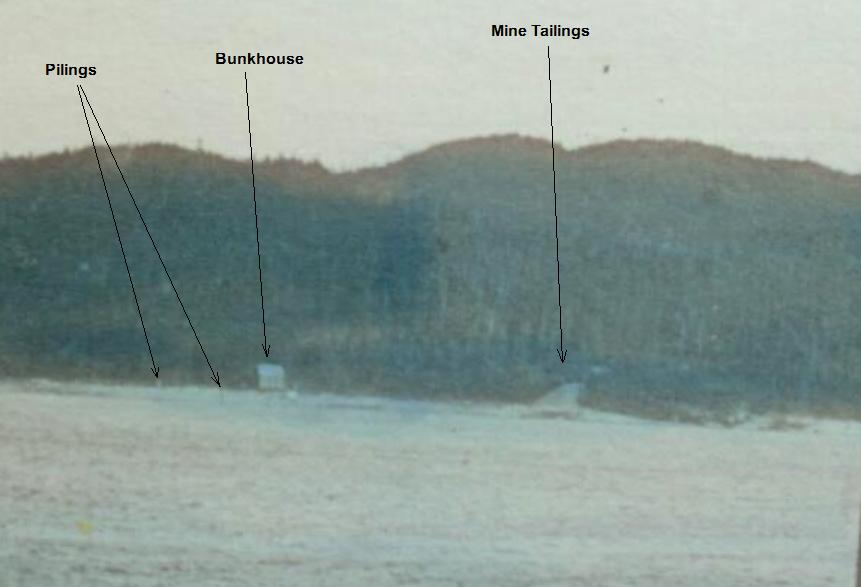
Both of the frame structures in the photo seem to be built directly on tree stumps, a cheap and easy (if not long-lasting) foundation. The smaller frame building in front of the bunkhouse does not appear on the survey, so it may not have existed at the time (built later, or burned down prior). I would guess this to be a tool storage or workshop building. The smaller structure farther to the right is likely an outhouse, and the white structures behind the bunkhouse could be wall tents.

A two-story bunkhouse such as this indicates more than a few workers, structures of similar size at other mines housed a dozen or more men. (A photo from Katalla shows what the inside of an Alaskan bunkhouse might look like). A kitchen was sometimes located in the bunkhouse, although separate mess tents were also common to reduce fire hazards. Mine camps also usually had a blacksmith shop, an assay office where drill cores and samples were evaluated, and sometimes separate cabins for the owners or management. Stables for any horses or mules might also be found nearby.

Despite the different number of structures shown on the survey, I believe the photo matches the Dano Mine’s camp pretty closely. In addition to the two-story bunkhouse, the rise of land (tree tops) in the background matches the rise behind and to the right of the surveyed location.  Towards the top of this rise are found shafts and artifacts from the Dano Mine, and farther back is the first tunnel (seen collapsed in my earlier post), likely the “Little Pete” tunnel. The shoreline is fairly generic, but would match this location at high tide. Additionally, a slightly earlier and more distant view of the Dano Mine’s shore camp seems to show a large structure in approximately the right place to be the bunkhouse. The other frame structure did not seem to exist yet when this photo was taken (1919). A smear of light-colored material to the right is likely mine tailings from the tunnel and shafts.

dano_zoom

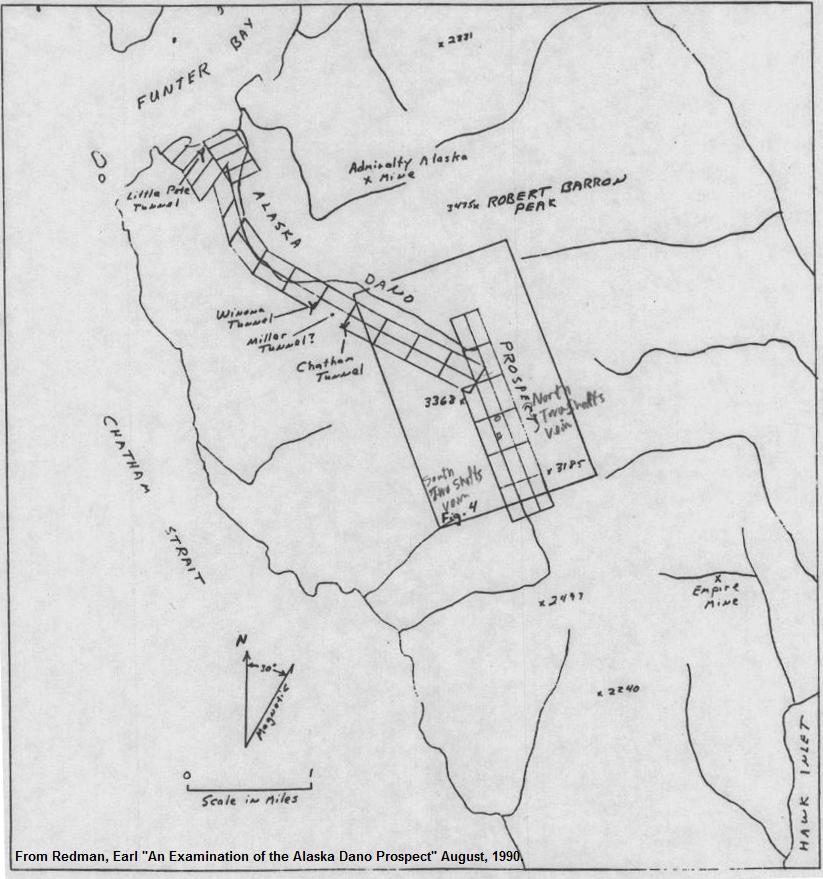
Below is another map of the Dano claims (rectangles) with some of the tunnels labeled. The curving lines are streams.

Dano map

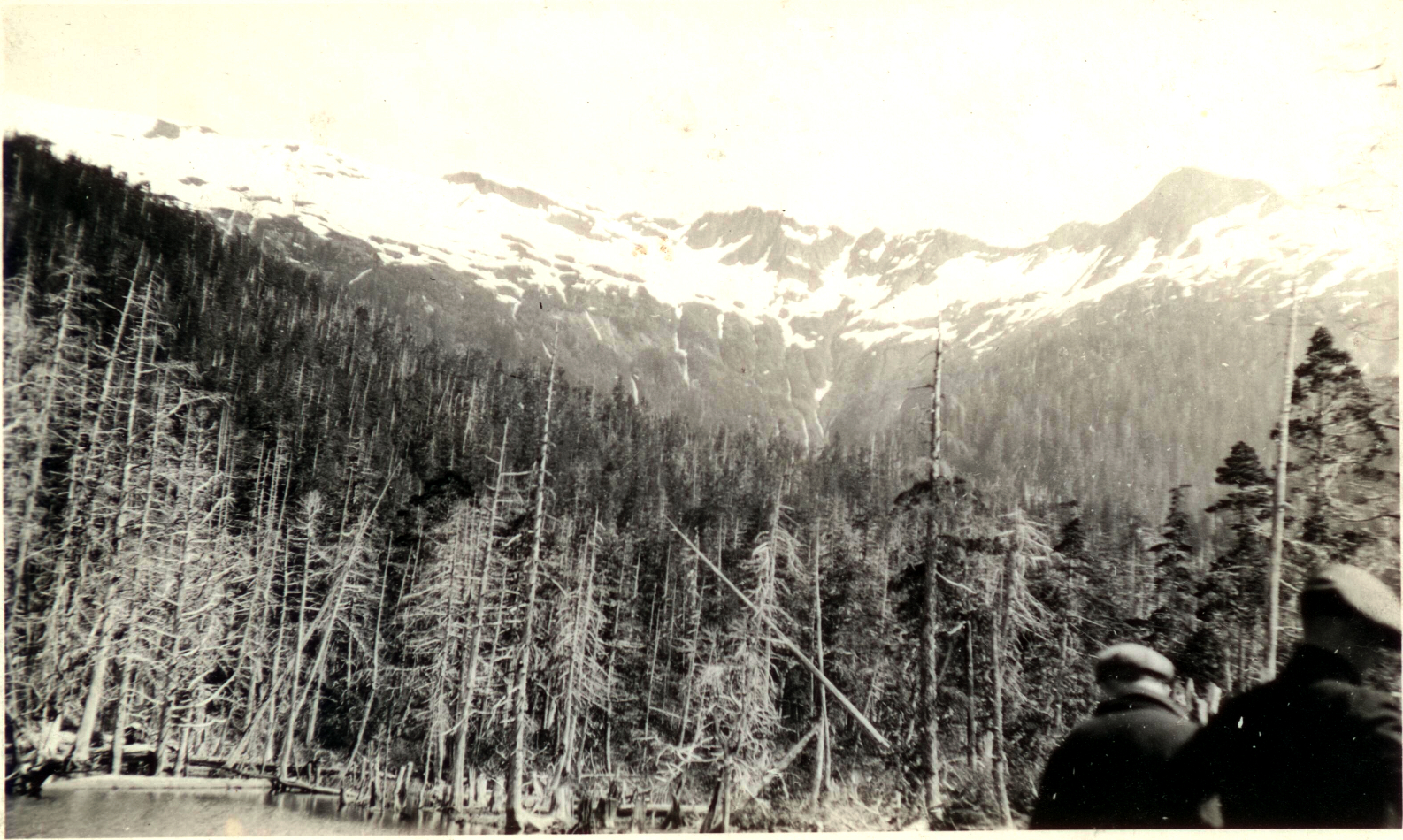
The next historic photo appears to be farther back from the beach, towards the Alaska Dano’s other tunnels near the base of the mountain.

mountain

This photo is not at any of the mine workings, so the people could be on a trail to the mine or on a hunting trip. They seem to be standing in a muskeg meadow with some swampy water in front of them, looking towards a nearby ridge with a mountain stream in the background and a round hill between. Identifying the exact location required a little more photo analysis. Below are some crops from a 1982 infrared aerial photo of Funter Bay, which helps to identify some of the terrain features in the older photo. This is a best guess based on my knowledge of the area and interpretation of the photo.

dano_sat_1

1982 CIR aerial courtesy of US Geological Survey.

dano_sat_2

Lastly, this photo seems to be looking North from near the Dano beach camp. The hills in the background seem to match the terrain behind the cannery, which is just barely visible along the far shoreline to the right.

ice

Several men in a rowboat are roping an iceberg, maybe for use in local cold storage rooms or iceboxes. Summer icebergs used to be common sights along the Inside Passage and even in Downtown Juneau, but as the climate warms and glaciers retreat, they are much rarer today.

Unfortunately I don’t have any more information on these photos, such as the name of the photographer(s) or any of the people shown. Its possible some of these are related to a group of Seattle high school students who visited Funter Bay in 1919. If any readers happen to know more, I would love to hear about it!


Funter Bay History: 1929 Ordway Aerial

February 16, 2015

The Juneau-Douglas City Museum recently posted a 1929 aerial image of Funter Bay, and gave me permission to use a high-resolution scan. This photo was taken by Frederick Ordway, “Alaska’s Flying Photographer”. Ordway opened a photo shop in Juneau in 1927 and was known for photographing many Alaskan subjects. He died in 1938 in in a crash in Oregon.

The photo was taken the same year as the US Navy’s aerial photo survey of Southeast Alaska (previously shown here and here), but offers a different angle on the bay. Click the image below to view it full size:

88_45_001_f_HiRes600

Funter Bay, Alaska Postcard, 1929, photograph by Fred Ordway. Image courtesy of the Juneau-Douglas City Museum, JDCM 88.45.001.

Mount Robert Barron dominates the skyline in this image, showing nearly its full 3,475′ elevation (the very top seems to be cut off by the edge of the photo). The cannery is seen in the middle left, with Coot Cove (“Scow Bay”) in front of it. Across the bay is the AAGMC mine camp. Floating fish traps are visible in the foreground, just above the title text. These would be moored in a shallow area for winter storage, to prevent storm damage.

The view looks a little different today, as a section of the mountain experienced a landslide in the 1990s after heavy rains.

slide

Another interesting feature from the 1929 postcard is visible in Crab Cove beyond Highwater Island. This white blob is in the right location to be the camp of the Mansfield Mine. I have not previously seen this mine photographed, so despite the lack of detail it’s still an interesting white blob!

blob

Close up of Funter Bay, Alaska Postcard, 1929, photograph by Fred Ordway. Image courtesy of the Juneau-Douglas City Museum, JDCM 88.45.001.

A survey from 1915 shows the Mansfield Company’s “Hidden Treasure Millsite”. The land claim seems to have been cancelled or denied, as it does not appear on master title plats for the area (it overlapped some other mineral claims). Unfortunately the accompanying field notes are largely illegible, so there are no details about the size and construction of buildings. The survey plat for MS 1035B shows a cabin and shed near the location photographed above.

Hidden Treasure Millsite

Today all that remains of the Mansfield camp is a faint rectangle of decaying logs where the cabin and shed used to be. Anecdotal evidence describes a stable for pack mules at this location. The Mansfield Mine hauled some equipment up to their tunnel site, including track and a single ore car, seen in a previous post.


Funter Bay History: Early Tourism

February 6, 2015

The Alaskan tourism industry grew rapidly in the early 20th century. Publicity from high-profile private “expeditions” (such as the Harriman Expedition) sparked an interest in Alaska among America’s middle class. Shipping lines quickly recognized the value of Alaska as a vacation destination, bringing the curious to see strange landscapes, animals, and cultures.

Early tourist cruises to Alaska often shared space on cargo ships or combined cargo/passenger vessels (which I’ve mentioned several times before). Even purpose-built “excursion” vessels usually had a large cargo capacity, and often made stops at industrial ports like Funter Bay during their tour circuits. Shipping lines capitalized on this by calling such stops “Surprise Ports”.

“Decidedly popular… extra calls located off the regular lanes of travel in secluded coves or fjords, and not shown in printed schedules. Here, while the ship loads or unloads, the angler may try his luck in nearby streams or lakes, and the hiker may explore wooded mountain trails, to vistas of incredible beauty.”
(Excerpt from “Looking Ahead to Alaska”, pamphlet of the Alaska Steamship Company, ca 1934).

Of course, the downsides of such “surprise ports” were never mentioned in the advertising… the noise of cargo loaded late at night, the aroma of a fish processing plant, or the unexpected wait if the captain misjudged a tide and went aground at low water.

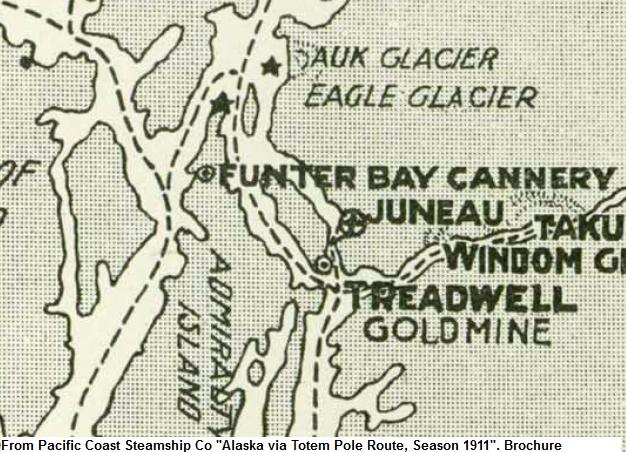
While canneries like the Thlinket Packing Co could be an unexpected stop, at least one steamer line made a point to incorporate it into their regular routes and advertising. A 1911 brochure from the Pacific Coast Steamship Company lists Funter Bay among its regular stops and attractions.

totem

The Salmon Cannery
Funter Bay Cannery is a revelation to those who have not seen the workings of the packing of food fish for market. Millions of salmon annually are taken from these waters, packed in tins after most approved modern methods and take place in the food supply of the world. Passengers have ample opportunity to inspect the cannery or to photograph the beautifully located nearby Indian village.” (From Pacific Coast Steamship Co “Alaska via Totem Pole Route, Season 1911”).

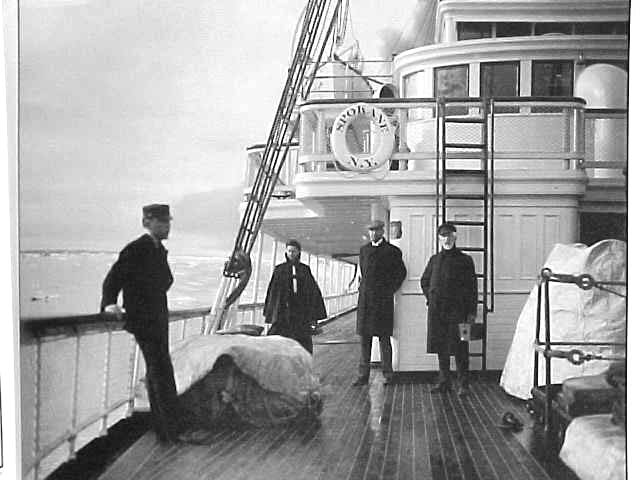
A 1909 advertisement also mentions Funter Bay as a stop for the Pacific Coast’s steamer Spokane.

ad

I’ve previously posted this photo, which was labeled as the SS Spokane at Funter Bay in 1905. I am unsure of the source.
ssspokane_at_funter_1905

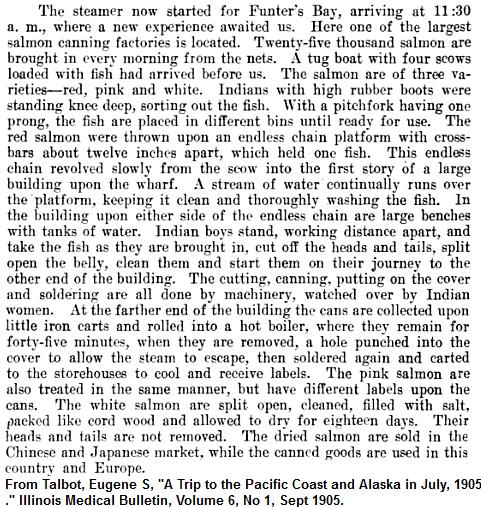
Dr. Eugene Talbot was a passenger on the Spokane in July of 1905 and described the steamer’s stop at Funter:

Advertisement Talbot

The steamship brochures also took every opportunity to push native art and trinkets, asking readers “Have You Collected Indian Carvings?” and “Is Alaska Represented in Your Den?”. Every port seems to have had a dockside market of souvenir merchants, including Funter Bay. An undated photo from the Clarence Leroy Andrews collection is described as “Natives with baskets for sale to tourists. Wharf at Funter’s Bay”.

By 1914, the Pacific Coast Steamship Co seems to have dropped Funter from their tour route and replaced it with a stop at Killisnoo’s herring reduction plant. The SS Spokane continued to visit Funter on cannery business, including a 1920 trip where cannery workers and officials made up the entire passenger complement. Another trip in 1925 saw the former Spokane, now renamed the Admiral Rogers, delivering a load of mining equipment to Funter Bay.


Funter Bay History: Census Takers and Logging Camps

February 4, 2015

Related to an an earlier post about population and census-taking, the following excerpt comes from the account of one Joseph Hewitt, census-taker for part of Northern Southeast Alaska in 1909-1910. Hewitt’s diary “Forty One Days of Census Taking in Southeast Alaska” describes his travels to “all the towns, camps, ranches and settlements located on Chatham Strait, Icy Strait and all their bays and inlets”. He traveled by gasoline launch chartered by the government and operated by its owner, B.F. Dennison, and Dennison’s 11 year old son Dewey. The census enumeration was performed in winter to ensure transient native populations would be in their home villages. Larger communities with schools were expected to provide a census via the local teacher, with people like Hewitt filling in the details for smaller outlying settlements like Funter Bay.

The full document is available here, both in original written form and typed transcription.

“The next day I enumerated twelve at Funter Bay. This is the site of the “Klinket Cannery”. This is a large establishment and it was their logging camp we found in Kelp Bay. We came into Funter Bay on Friday Jan 7th and had the delectable experience of being bottled up by a storm for six days. In shifting the boat one dark night from one part of the bay to another, a thing we frequently had to do to escape destruction during that siege, we lost one of our anchors overboard. The wind and waves seemed bent on driving us out of that bay. The storm outside was so fierce as to tie up the big steamers. Inside it was playing “puss in the corner” with us, and every time it said scat we had to hike. Had it not been for a small island and an unused steamer that was anchored out I don’t see how we could have escaped being driven on the rocks. On Monday morning we made an attempt to escape but were very glad to come back in and fight it out where the trouble started . Finally on Wednesday morning we got away.”

The description of Kelp Bay earlier in the manuscript reports a logging camp abandoned before the first snow, along with a few hundred new cut piles (pilings for dock and fish trap construction). Kelp Bay is on the NE side of Baranof Island, across from the southern end of Admiralty Island about 65 miles from Funter Bay. Although Hewitt reports the logging camp deserted, he did find around 15 people in the Kelp Bay area. A Tlingit family is listed in the 1910 census as associated with the Kelp Bay logging camp, including James Hanson, employed as a woodcutter, and his wife Mary. The court case between Funter canneryman James Barron and rival Claire Alexander (discussed in this post) also mentions Thlinket Packing Co superintendent Fred Barker towing logs from Kelp Bay to Funter for use at the cannery. The cannery tenders Buster and Anna Barron were used to tow rafts of trap piles.

It may seem strange that the T.P. Co would harvest timber so far from the cannery, but a possible explanation lies in the geography of Kelp Bay. Not only is it protected from storms, the bay offers very steep hillsides along the shore, an ideal place for gravity-assisted hand logging. The best trees could be selected and cut so as to slide into the water below. Around Funter Bay, most of the near-shore land is flat, and would require logs to be hauled by equipment or animals. (Limited near-shore logging did happen at Funter, as discussed here). Kelp Bay continued to be logged and clearcut into the 1990s.


More Airboat Updates

January 3, 2015

The mini airboat recently suffered a temporary setback, resulting from a high-speed collision on the safety cage.

ab4

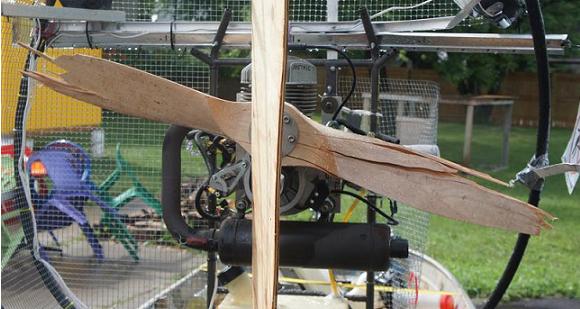
The plastic safety cage I had built around the engine was pushed into the spinning propeller, which ripped through the hardware cloth and aluminum braces. The propeller itself shattered from the impact.

SONY DSC

A word of advice, DONT BREAK YOUR PROP! These things are stupidly expensive. I ended up paying more than twice what the hull cost for a new propeller!

ab5

I decided (with some coaxing) that the plastic hoops weren’t strong enough, and that I should go with metal. After acquiring some aluminum tubing of sufficient length to make a suitable-diameter hoop, I was then faced with the problem of bending it. I considered multiple options including hand-bending with sand, heating it, buying a conduit bender, and renting a roller bender, but couldn’t come up with a reasonable-cost way of doing it without kinking. Then I finally stumbled across this wonderful website, which explained how to make bending jigs.

Below is my basic jig, made by tracing out a line of slightly smaller diameter than my desired hoop (because the bent metal wants to spring out larger). I then screwed down blocks aligned with the curve, and bent a piece of flat stock to conform to the arc. The last steps were a stop to hold the tube against the curve, and a cross brace over the blocks to help resist the force on the tube.

SONY DSC

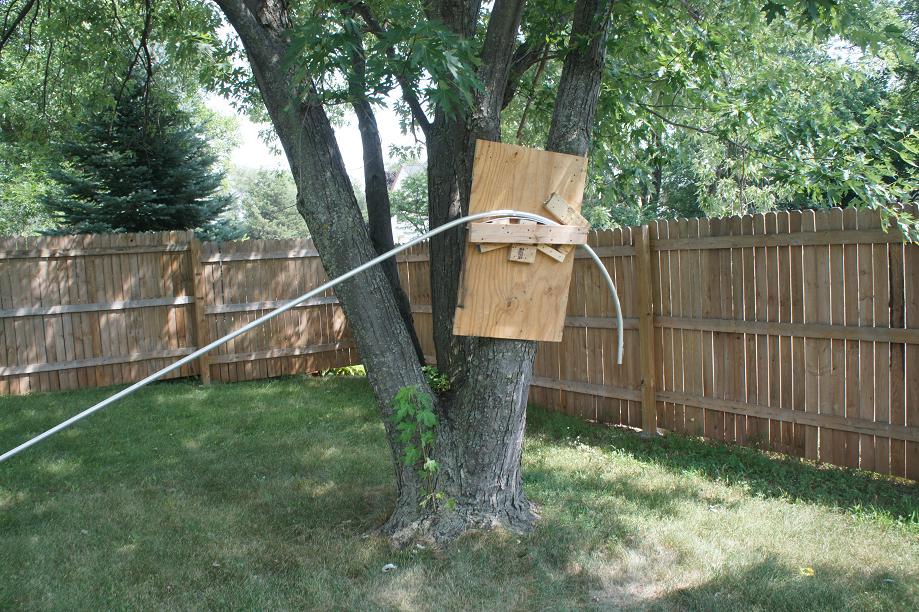
My pipe sections were so long that I could not find space inside the garage to secure the jig AND move around it during the bending process. I solved this by securing the jig vertically to a tree, and pulling the tubing down around the curve a little at a time.

SONY DSC

Eventually, I had my aluminum hoops! I made two of the same diameter, for the front and back of the safety cage.

SONY DSC

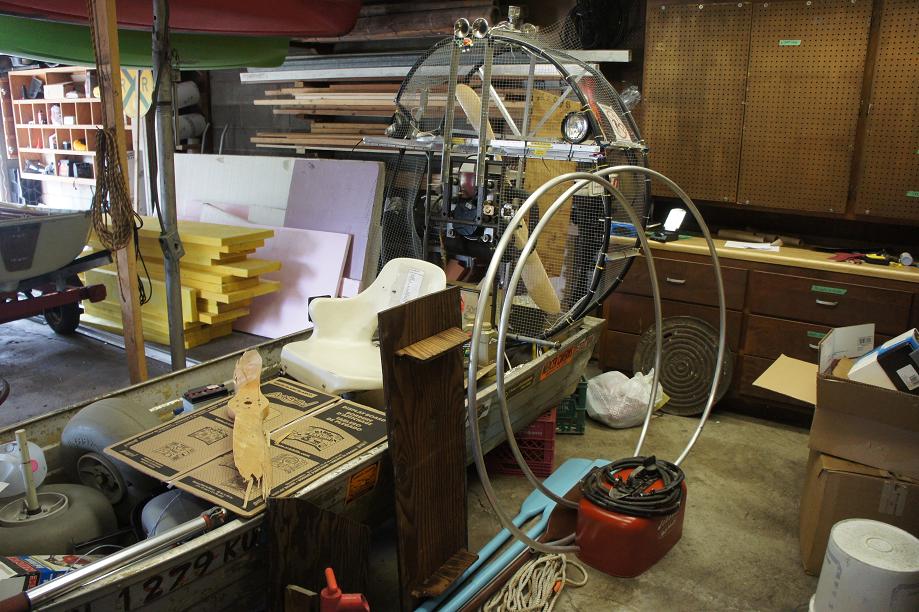
Below are the new hoops sitting next to the airboat, prior to removing the old plastic hoops. As a side note there are 3 other boats visible in this photo, with oars and gas tank for a 4th, two more are off-camera, and I’ve since acquired an 8th small boat (not counting barrel rafts or inflatables). I may have a problem.

SONY DSC


Funter Bay History: Aleut Internment Part II

December 12, 2014

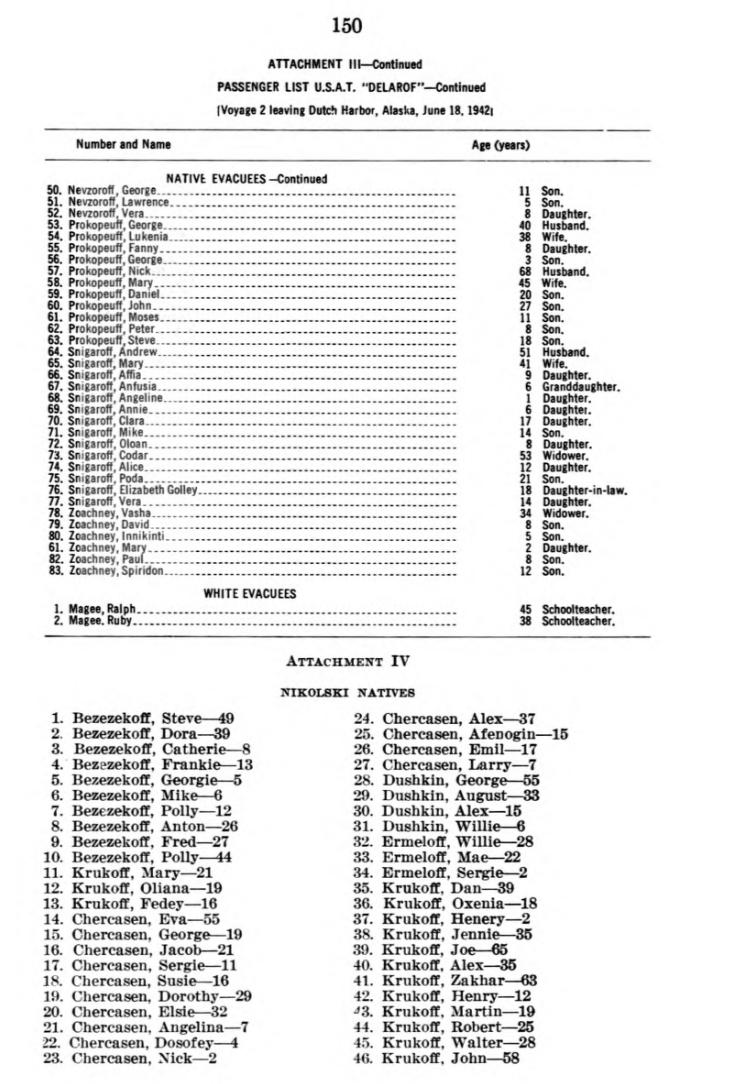
I previously discussed the Aleut Internment of WWII, in which many Native Alaskans were relocated to Funter Bay to “protect” them from the Japanese invasion of the Aleutian islands. Evacuees were shuffled out of the combat theater for the military’s convenience, and left in hastily-organized camps at disused cannery and mine sites. Conditions at the internment camps were poor, with unreliable water, heat, and medical care. Approximately 30-40 people died in the two Funter Bay camps, with more deaths at Juneau hospitals. The Funter Bay cemetery holds approximately 23 recognizable grave sites, although the list below indicates 35 burials there.

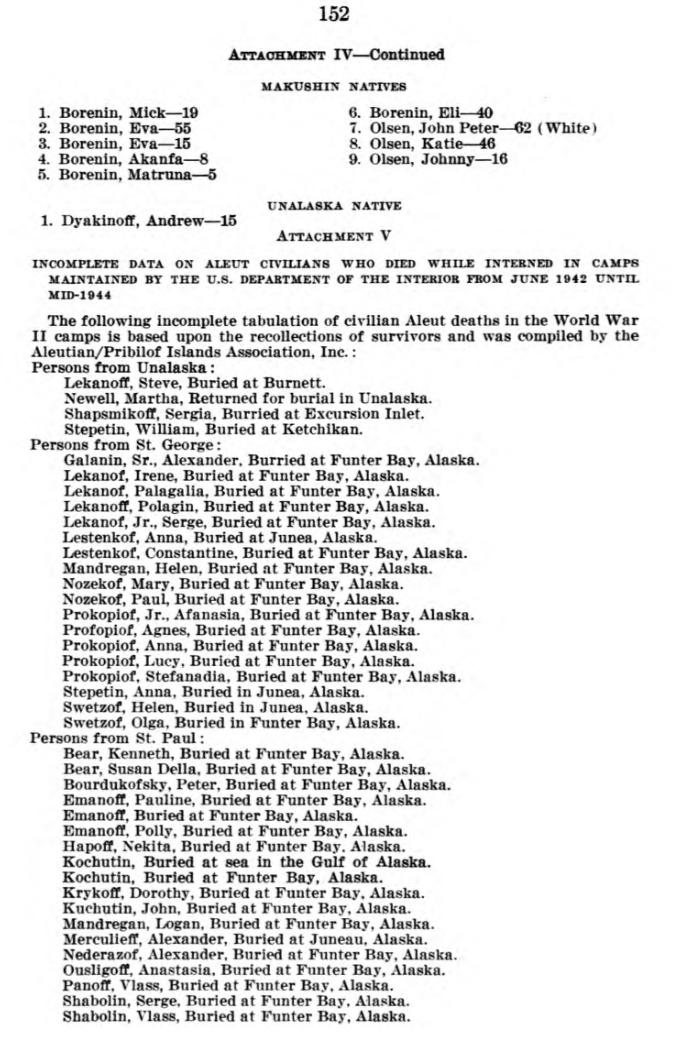
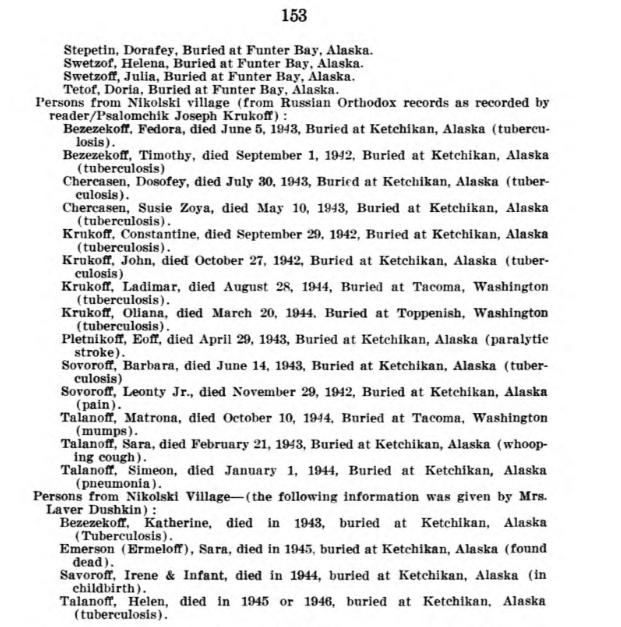
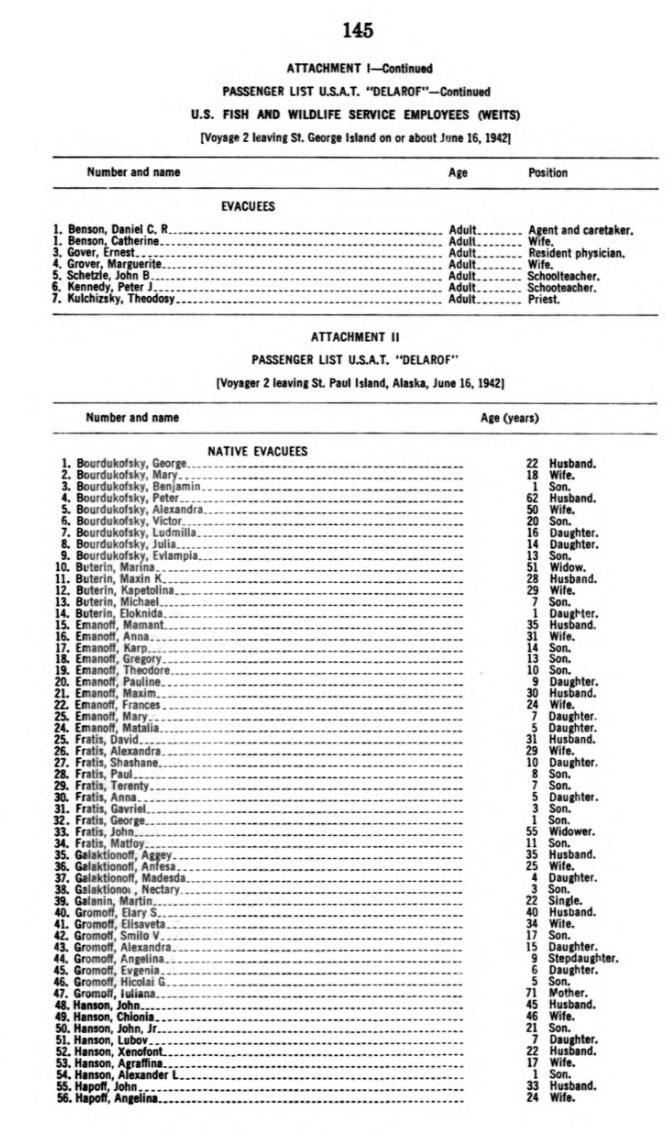
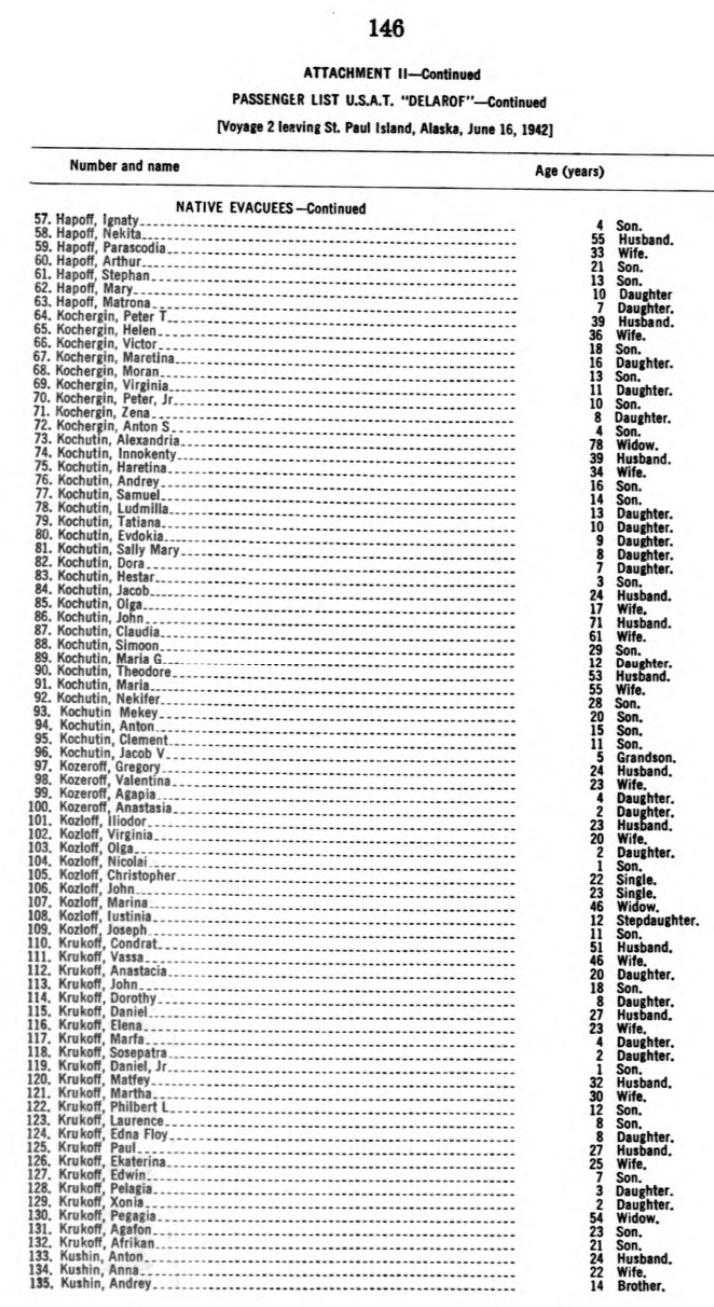
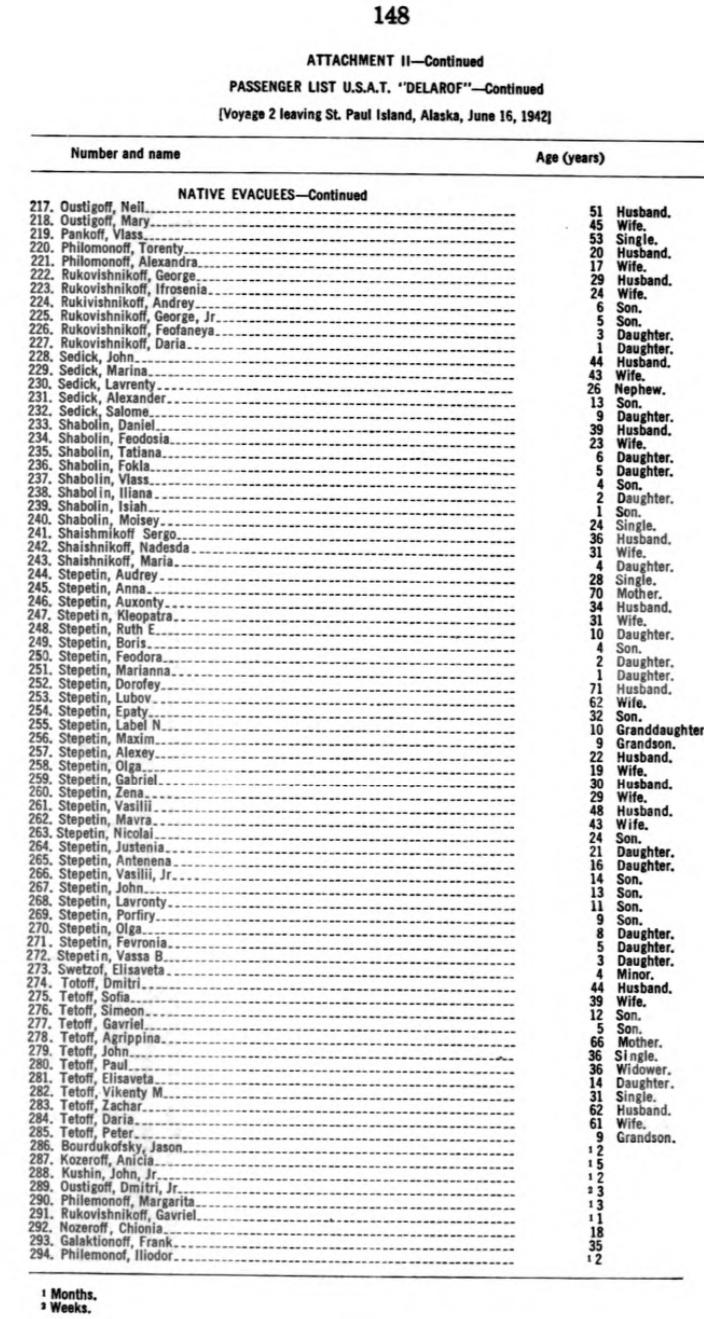
This list is from a 1980 report by the Commission on Wartime Relocation and Internment of Civilians, in hearings before the Subcommittee on Administrative Law Relations, regarding establishment of said commission and payment to victims of forcible relocation by the government.

152 153

The full text is available via the Library of Congress here, in scanned and OCR’d form. I have copied the OCR version below. Obvious scanning and text recognition errors have been cleaned up, but there may be a few errors remaining.  Full lists of evacuees transported on the Delarof to Funter Bay (the St. Paul and St. George Island lists) are at the bottom of this page.

ATTACHMENT V INCOMPLETE DATA ON ALEUT CIVILIANS WHO DIED WHILE INTERNED IN CAMPS MAINTAINED RY THE U.S. DEPARTMENT OF THE INTERIOR FROM JUNE 1942 UNTIL MID-1944
The following incomplete tabulation of civilian Aleut deaths in the World War II camps is based upon the recollections of survivors and was compiled by the Aleutian/Pribilof Islands Association, Inc.:

Persons from St. George:

Galanin, Sr., Alexander. Buried at Funter Bay, Alaska.
Lekanof, Irene, Buried at Funter Bay, Alaska.
Lekanof, Palagalia, Buried at Funter Bay, Alaska.
Lekanoff, Polagin, Buried at Funter Bay, Alaska.
Lekanof, Jr., Serge, Buried at Funter Bay, Alaska.
Lestenkof, Constantine, Buried at Funter Bay, Alaska.
Mandregan, Helen, Buried at Funter Bay, Alaska.
Nozekof, Mary, Buried at Funter Bay, Alaska.
Nozekof, Paul, Buried at Funter Bay, Alaska.
Prokopiof, Jr., Afanasia, Buried at Funter Bay, Alaska.
Profopiof, Agnes, Buried at Funter Bay, Alaska.
Prokopiof, Anna, Buried at Funter Bay, Alaska.
Prokopiof, Lucy, Buried at Funter Bay, Alaska.
Prokopiof, Stefanadia, Buried at Funter Bay, Alaska.
Swetzof, Olga, Buried in Funter Bay, Alaska.

Persons from St. Paul:
Bear, Kenneth, Buried at Funter Bay, Alaska.
Bear, Susan Delia, Buried at Funter Bay, Alaska.
Bourdukofsky, Peter, Buried at Funter Bay, Alaska.
Emanoff, Pauline, Buried at Funter Bay, Alaska.
Emanoff, Buried at Funter Bay, Alaska.
Emanoff, Polly, Buried at Funter Bay, Alaska.
Hapoff, N’ekita, Buried at Funter Bay. Alaska.
Kochutin, Buried at Funter Bay, Alaska.
Krykoff, Dorothy, Buried at Funter Bay, Alaska.
Kuchutin, John, Buried at Funter Bay, Alaska.
Mandregan, Logan, Buried at Funter Bay, Alaska.
Nederazof, Alexander, Buried at Funter Bay, Alaska.
Ousligoff, Anastasia, Buried at Funter Bay, Alaska.
Panoff. Vlass, Buried at Funter Bay, Alaska.
Shabolin, Serge, Buried at Funter Bay, Alaska.
Shabolin, Vlass, Buried at Funter Bay, Alaska.
Stepetin, Dorafey, Burled at Funter Bay, Alaska.
Swetzof, Helena, Burled at Funter Bay, Alaska.
Swetzoff, Julia, Burled at Funter Bay, Alaska.
Tetof, Doria, Buried at Funter Bay, Alaska.

Below are some of the passenger lists from the USAT Delarof. Most “Native Evacuees” from St. Paul and St. George islands (about 477 people) were left at Funter Bay. Other communities were taken to Ward Lake, Burnett Inlet, Wrangell, and Killisnoo. Non-native or white government employees from the islands were given passage out of state, although a few stayed to help organize the internment camps.

142

Passenger List USAT Delarof, Native Evacuees from St George Island to Funter Bay, Alaska. June 16, 1942.


143

Passenger List USAT Delarof, Native Evacuees from St George Island to Funter Bay, Alaska. June 16, 1942.


144

Passenger List USAT Delarof, Native Evacuees from St George Island to Funter Bay, Alaska. June 16, 1942.


145

Passenger List USAT Delarof, Native Evacuees from St Paul Island and Government Employees to Funter Bay, Alaska. June 16, 1942.


146

Passenger List USAT Delarof, Native Evacuees from St Paul Island to Funter Bay, Alaska. June 16, 1942.


147

Passenger List USAT Delarof, Native Evacuees from St Paul Island to Funter Bay, Alaska. June 16, 1942.


148

Passenger List USAT Delarof, Native Evacuees from St Paul Island to Funter Bay, Alaska. June 16, 1942.


149

Passenger List USAT Delarof, Native Evacuees from Dutch Harbor and Government Employees from St Paul Island, Alaska. June 16, 1942.


150

Passenger List USAT Delarof, Native Evacuees from Dutch Harbor and Nikolski, Alaska. June 16, 1942.

Further information is also available at:

Aleut Story. Video DVD with online bibliography of source material.

Evacuation and Internment, 1942-1945. National Park Service page and archeological report by Charles Mobley.

Agony of the Aleutians: The forgotten internment. A recent (November 2014) article.

The Aleut Internments of WWII. Another recent (2014) print book.


Funter Bay History: Some Assorted Machinery

October 22, 2014

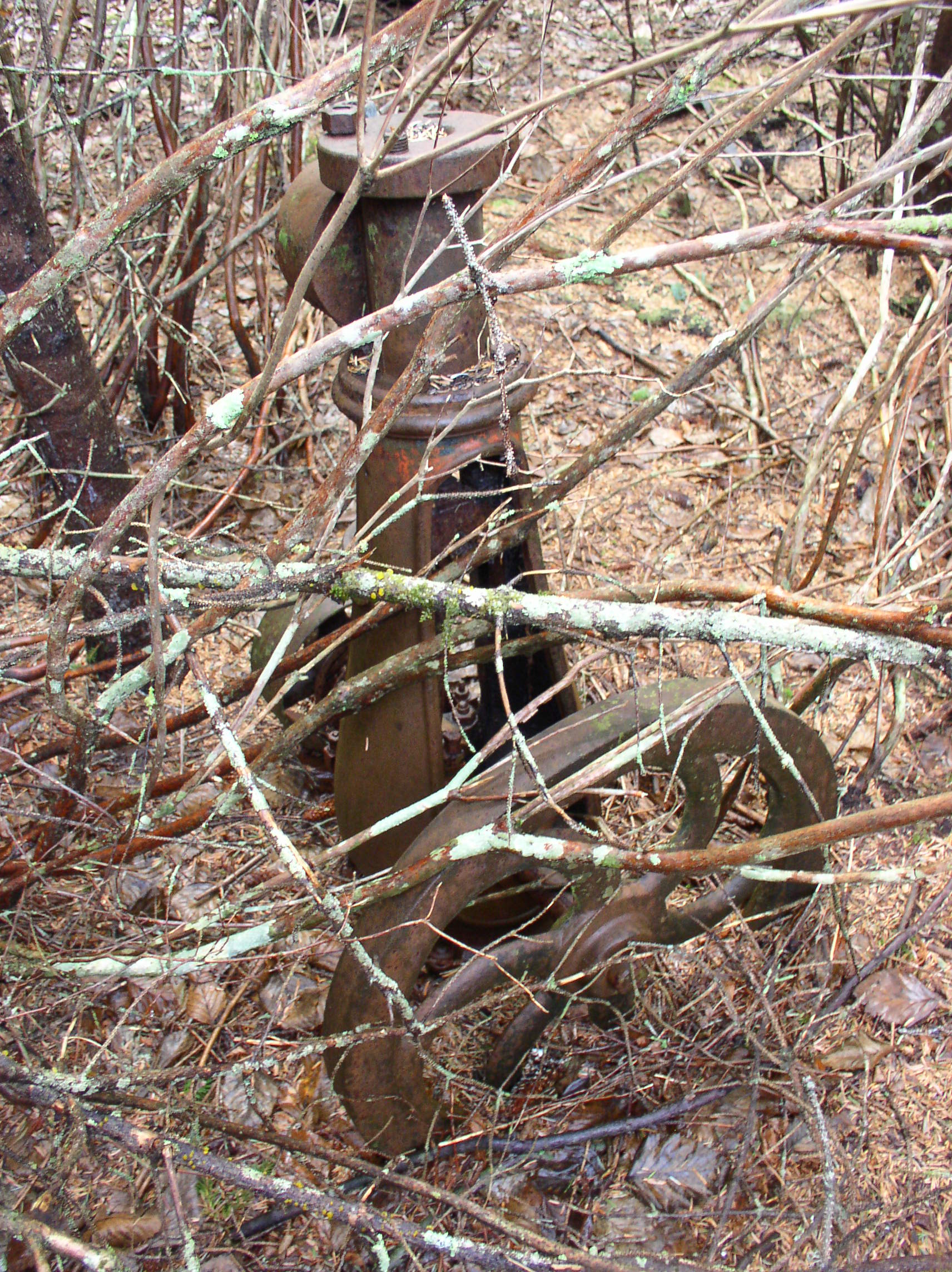
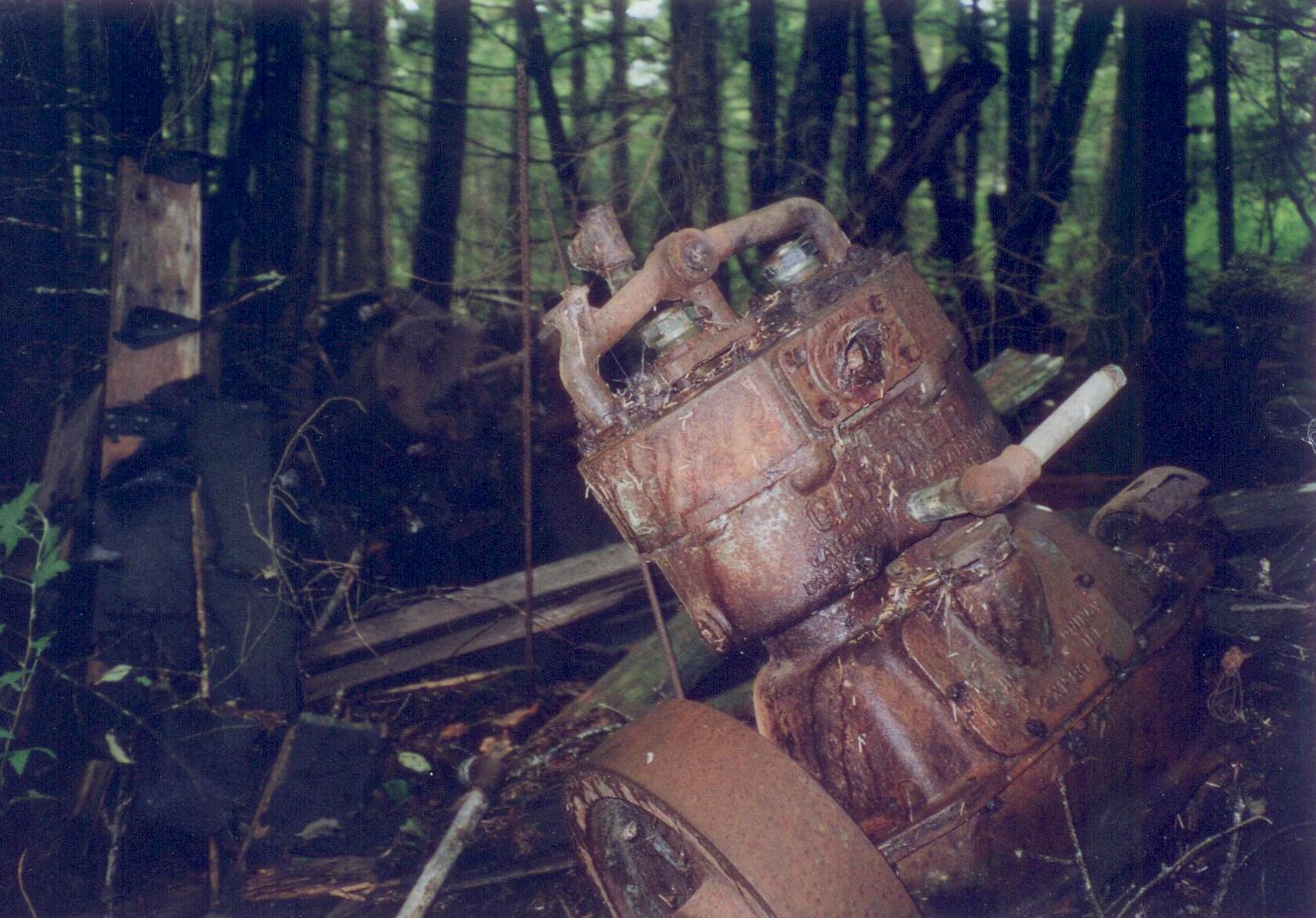
I came across some more photos of derelict machinery at Funter Bay. These devices are in the vicinity of the cannery, in most cases their original purpose is unknown.

First, what appears to be a small vertical bottle steam engine with one cylinder:

OLYMPUS DIGITAL CAMERA

Unfortunately it is hard to tell the size, but I would estimate it is about 3-4ft tall (with the base buried in the ground). Small steam engines like this had a variety of uses, including small steam launches, and portable power for winches, machine tools, sawmills, etc.

Next is another view of a device found on one of the scows in Scow Bay. It appears to be a small engine or compressor. From what I can tell of the lettering, it was made by Gardner in Quincy, IL and is marked “patent-pending”. The model number at the bottom looks something like 2XF80 or LXB80. This was probably manufactured prior to 1927, when the company became Gardner-Denver. Any machinery buffs reading this are encouraged to enlighten/correct me!

0a-dingus

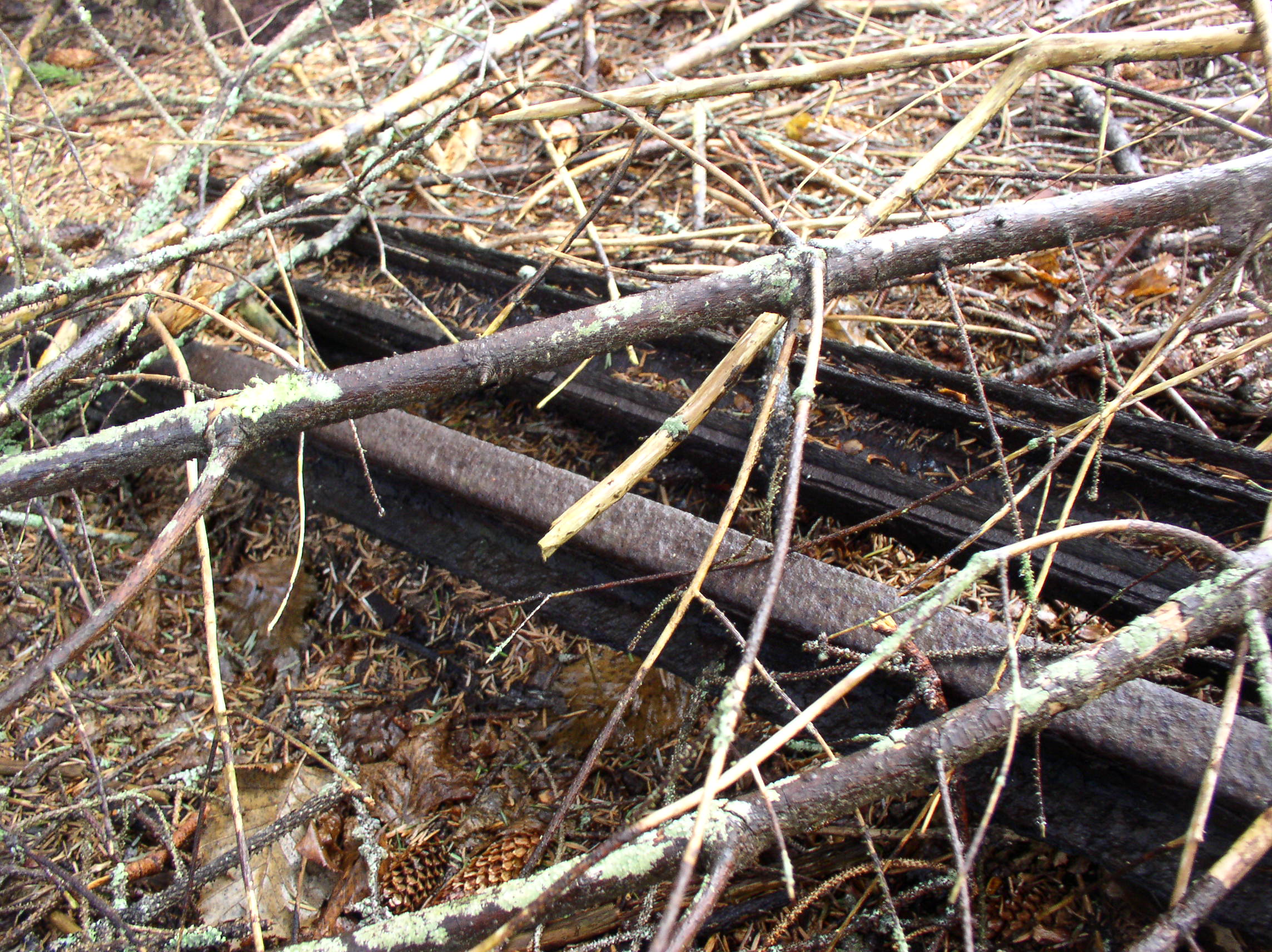
Also found at the cannery is a neatly stacked cache of light railroad track. This may have been for a marine railway, a freight tramway on one of the wharves, or some other use in the cannery.

OLYMPUS DIGITAL CAMERA

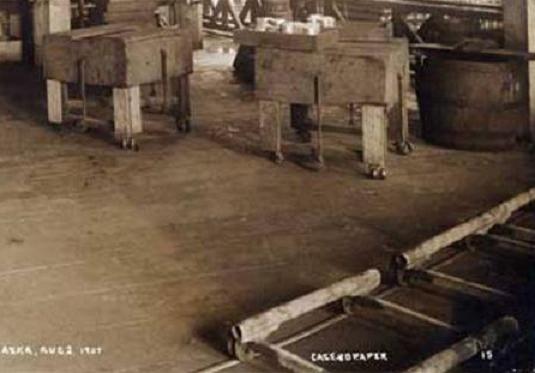
At least one historic photo shows small cart frames riding on tracks at the Funter Bay cannery. However, the tracks look more like pipes or boards than standard rails. The wheels are double-flanged, suggesting this was one track with no switches or branches.

track closeup

This may have been for loading cases of cans into retorts for cooking, as seen in this photo of another cannery. I have not seen any other photos of rails inside or outside the cannery buildings, although some other canneries had tracks around the property for moving freight and fish.

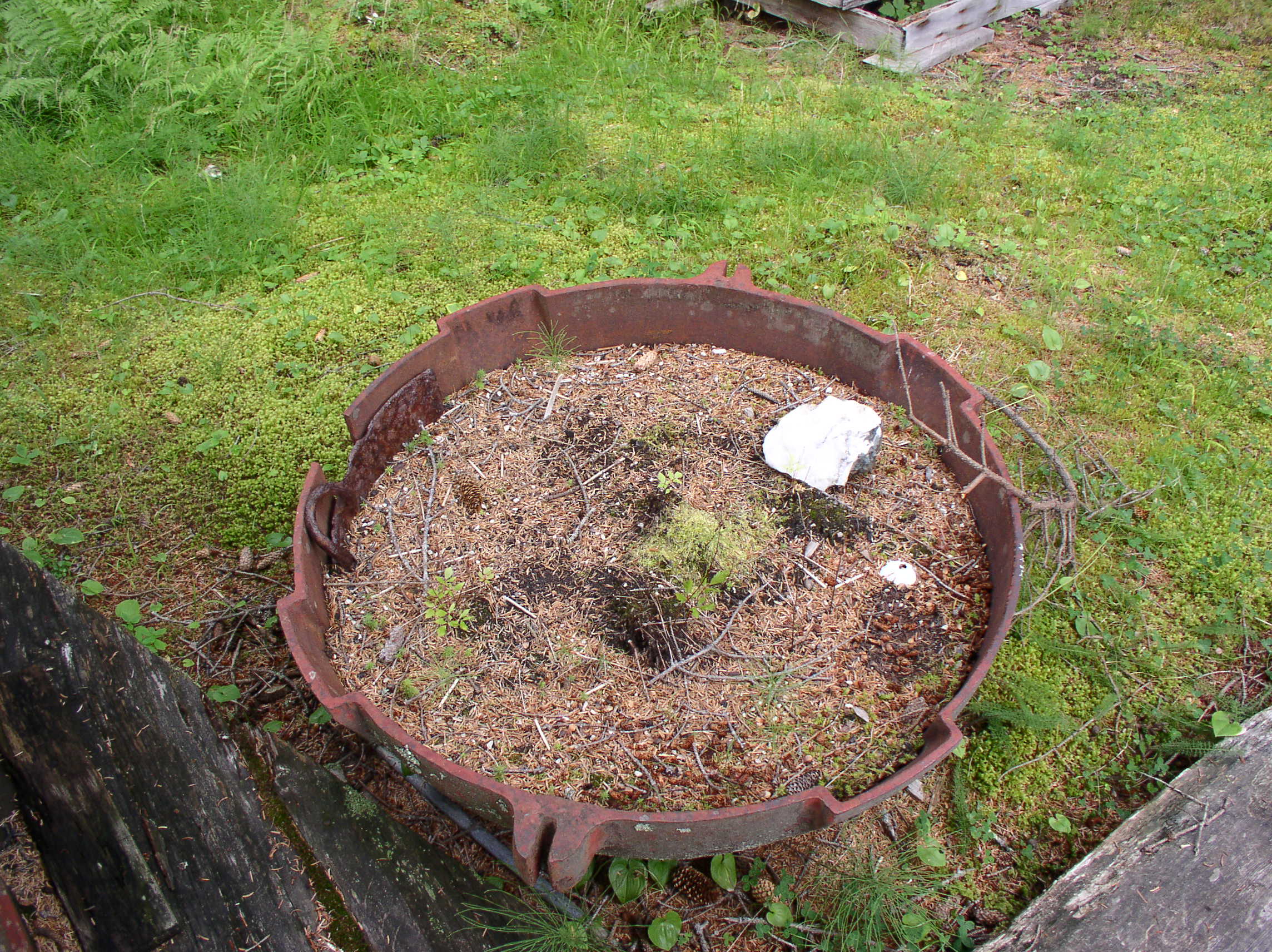
This hemispherical planter is likely the pressure door from one of the cannery retorts:
OLYMPUS DIGITAL CAMERA

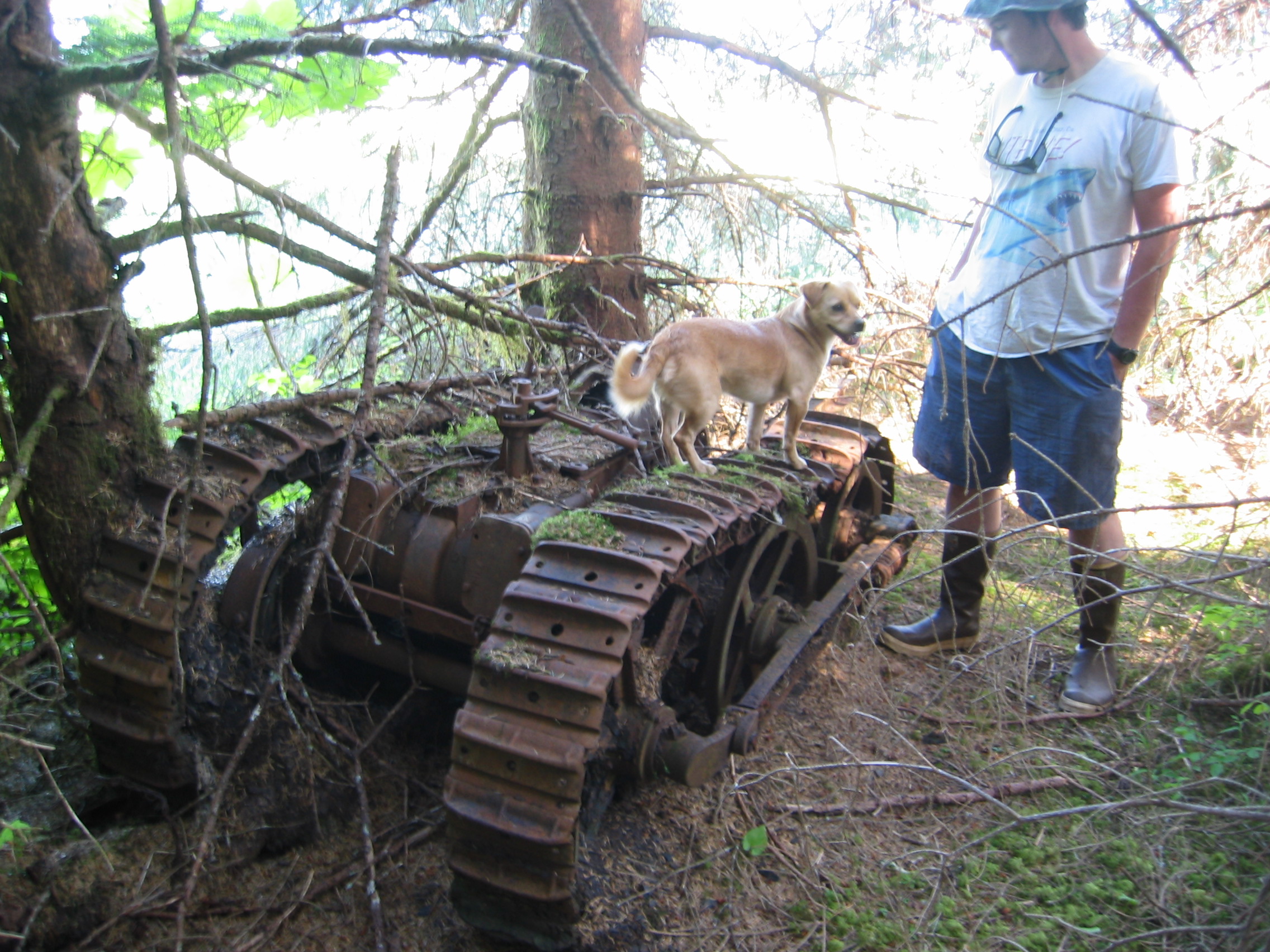
And this small tractor is a mystery to me, as I don’t remember where in the bay I found it! I believe it was somewhere in the woods near the cannery:

IMG_1166


Alaska Railway Technology

October 17, 2014

This post examines some of the technologies, construction techniques, and equipment commonly found on small railways and tramways in Alaska (many of which I have documented here).

porter 0-4-0

Alaska short line railways were often built rapidly on a shoestring budget, to serve an industry of unknown financial return. In several cases they were built as parts of investment schemes or frauds, and never intended to be permanent. As such, these lines used many techniques developed for temporary logging, mining, and construction railroads in the Pacific Northwest. They also used a wide range of motive power, often choosing cost over effectiveness.

—————————————————————————————

Rails:

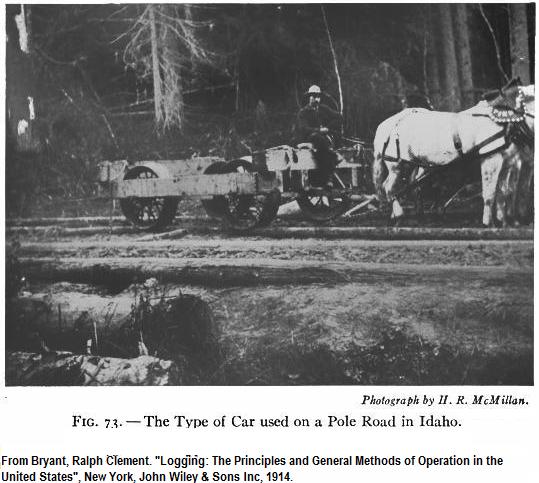
The simplest and cheapest guide rails were simply logs laid end to end, the so-called “pole road”. This could be traversed by a wide-flanged wheel or even a tire-less automobile rim. The ride was generally not very smooth and required a very low speed. The poles would only last a few years at best, and less in rainy coastal climates. In Alaska, such tramways were typically under a mile in length and hauled by animals, although lower-48 logging companies used everything from steam locomotives to tractors to modified trucks. Fairbanks miner and contractor H. M. Henning placed a want ad in a 1905 edition of the Engineering News Record seeking a pole road locomotive, I have been unable to determine where he intended to use it or if he ever purchased one.

poleroad

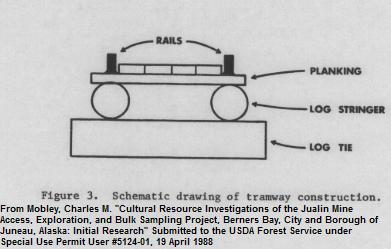
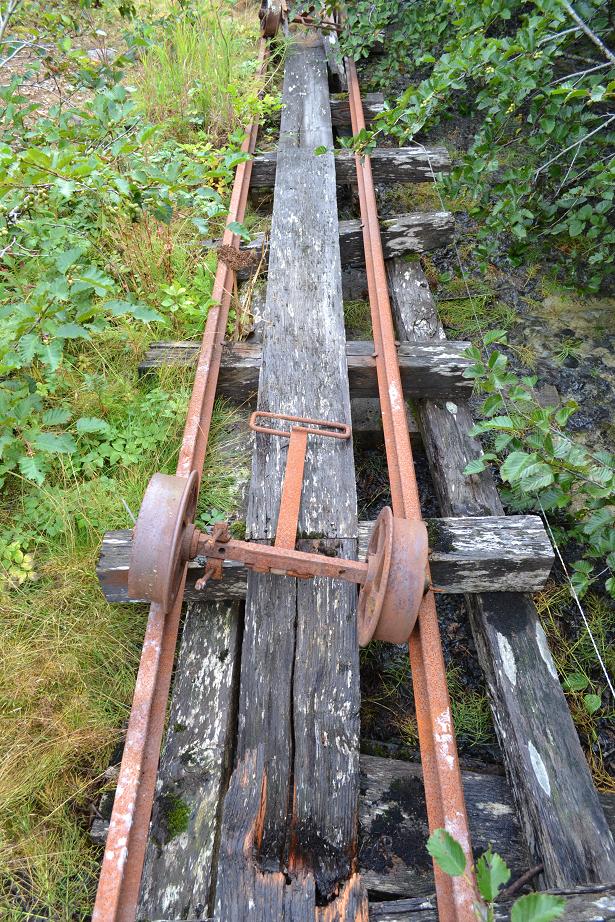
The next step up from poles were wooden rails, often 4x4s cut by an on-site sawmill. This was sometimes referred to as a “plank tramway”. Rails could be covered with strap iron to improve the lifespan of the wood. Most standard rolling stock and light locomotives could be used on iron-topped planks. A downside was the tendency to “snakehead”, the metal straps could come un-pinned from the wood and curl up to pierce the bottom of the cars. Tramways of this type could be found all over Alaska in the late 19th and early 20th centuries, ranging from 1-15 miles in length.

jualin

Standard iron or steel rails were the mark of a better-funded and more permanent railway or tramway. Rails are rated by weight in pounds per yard, so “30lb rail” means that 1 yard of rail weighed 30lbs. The heavier the locomotive and cars, the heavier the rail needed to be. Modern North American railroads  commonly use 75-140lb rails. Mine cart tracks were sometimes as light as 8lbs. Street railway track was commonly 30-45lbs. For small contractor’s locomotives such as the one used at Funter Bay (approximately 10 tons loaded weight), the manufacturers recommended a minimum of 25lb rail, although 15-20lb rails were common on short lines. The AJ Mine hauled heavy rock loads over 50lb rails. The White Pass & Yukon also used 50lb rails. The Tanana Valley Railroad and the Yakutat & Southern Railroad both used 40lb rails. The Alaska Railroad began with 55-75lb rails and now uses 115-141lb rails on main line and 90lb on some sidings.

Some example rail sizes based on the author's collection.

Some example rail sizes based on the author’s collection.

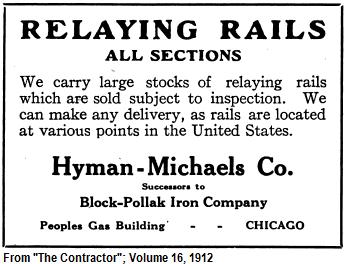
Low budget railways often purchased second-hand “relaying” track that had been pulled out of service due to wear or damage. Rails were in such demand that they were often pulled up and re-laid 3 or 4 times as companies closed or failed and equipment was sold to other operations. Track condition was less important at the low speeds of most small railways and tramways, but court documents record a number of injuries from derailments on Alaskan short lines.

relaying

—————————————————————————————

Grades:

For flat ground, the simplest grade was a corduroy road with rails spiked to it. This was commonly used on muskeg or permafrost, where the grade could “float” on top of the loose ground. It was subject to subsidence and frost heave, and often became a roller-coaster track after a few years. Ties could also be laid directly on the ground, although they tended to sink in if spaced too far apart.

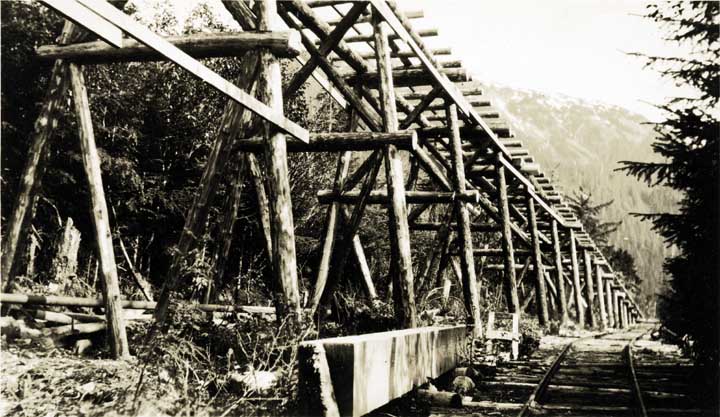
As flat ground is a rare commodity in coastal regions of Alaska, a more common approach was the trestle grade. This raised most or all of the track on wooden supports, which could maintain a level path over and around uneven ground. High enough trestles also eased snow removal. A walkway was sometimes provided between the rails for humans or draft animals.

2

Tram with wooden grade and center walkway, with part of a hand-pulled car. Photo courtesy AKphill.

Two types of grade are seen below, rails on corduroy are on the right, and a log trestle is on the left:

asl_ms247_1_03

Courtesy of Alaska State Library, MS 247 1_02

A variant of trestle grades is the boardwalk tram, where rails were laid on or into a wider wooden boardwalk (examples of which can be found in place of roads in many rural communities). These typically ran between multiple buildings of an industrial complex such as a cannery, mine, smelter, or pulp mill.

Boardwalk tramway at Sand Point:

sand point

Public domain photo courtesy of USGS Photo Library.

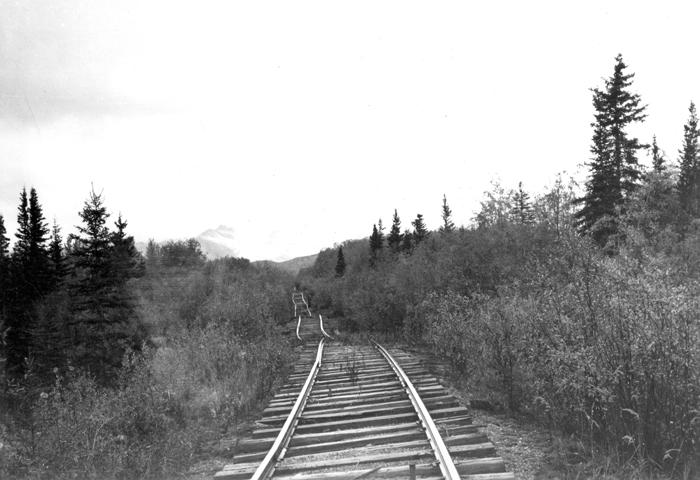
Gravel-ballasted grades were a significant upgrade and represented a long-term commitment to the rail line. They required significant labor, extensive ground preparation and surveying, and a ready source of gravel, but paid off with less ongoing maintenance. Some mines used their crushed tailings or waste rock as track ballast. Even a gravel-ballasted railroad grade could suffer from permafrost heave and ground deformation, as seen in the below photo of the CRNWRR grade, 20 years after abandonment:

foj00012

Public domain photo courtesy of USGS Photo Library.

—————————————————————————————

Power:

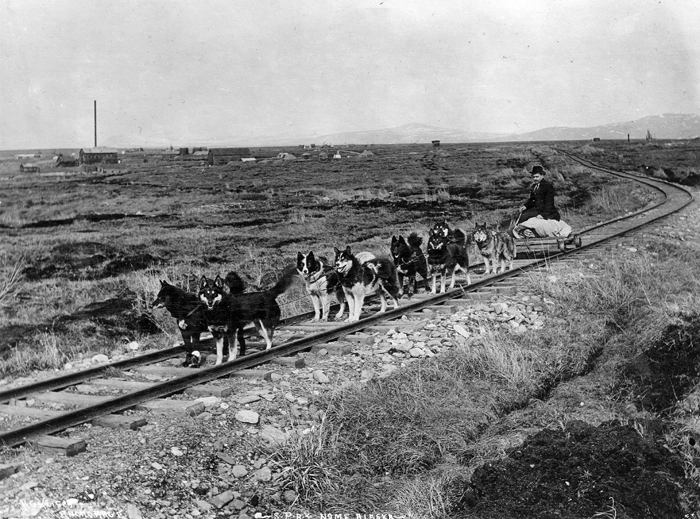
Horses and mules were often the first “power” on small tramways. Some short lines continued using draft animals into the 1920s, although others upgraded to mechanical power as finances and hauling tonnage dictated. In the Nome area, and reportedly in other parts of the state, dog teams were used to pull small flatcars. These were often called “pupmobiles”.
pupmobile

Public domain photo courtesy USGS Photo Library

Very short and/or very steep tramways used fixed or stationary engines, either steam donkeys, small internal combustion winches, or electric hoists. Usually a very steep tramway was referred to as an “Incline”, and could operate either as a single-track or a 3-4 rail funicular.

A few incline trams were of the gravity or counterweight type, using only (or mostly) the weight of a descending car to raise the ascending car on a parallel track. This worked best when there was a steady supply of rock (ore and/or tailings) at the upper end.

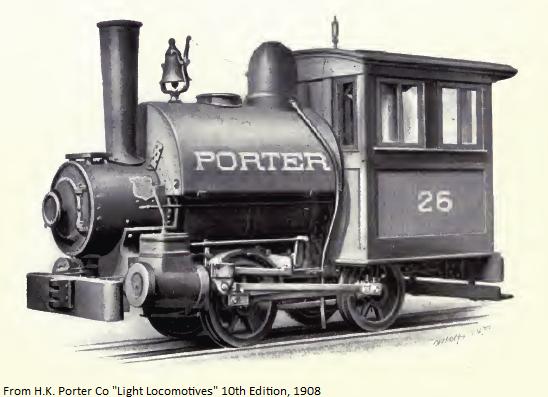
Steam locomotives began replacing horse power in the 1880s, and remained in use in Alaska into the 1950s. Small “dinkey” engines could be found all over the state, the design of choice for most short lines was the 0-4-0 saddle tank locomotive. The short wheelbase allowed a tight turning radius and ability to take uneven track. The small size gave a good power to weight ratio and simplified delivery to remote locations. No tender was needed, as water was stored in saddle tanks hung over the boiler and fuel could be kept in bins in the cab. Such locomotives could be purchased new from major manufacturers including H.K. Porter, Baldwin, and Davenport, who marketed them to mines, plantations, factories, and contractors. They could also be acquired second-hand from construction companies in the lower 48. When urban street railways began electrifying, small steam dummies became available as surplus. Fuel was local coal or wood, making operation relatively cheap. The main drawbacks were low speed and limited fuel capacity. Several midsize railroads in Alaska (Such as the Y&SRR and TVRR) outgrew their original saddle tank engines and upgraded to faster, longer-range units.

Porter tank locomotive

Small locomotives were often described by loaded weight and piston size. 8-10 ton locomotives with 7×12 pistons were common in Alaska. A few short lines used 0-4-2 configurations, allowing slightly more speed and hauling power at the expense of wider turns, and at least one short line seems to have used an 0-4-4 locomotive.

Internal combustion locomotives were also found on small Alaska railroads. Many were home-made affairs cobbled together from spare parts. Converted tractors and autos were common, with Ford cars and Fordson tractors being some of the most popular. Small gasoline switch engines were sometimes used, and sometimes steam locomotives were converted to use oil or gas engines. A variety of railway “critters” can be seen in this video, operating at Nome after the steam railroad was converted to a public tramway. These are some good examples of some of the locally-built motive power found on other Alaskan short lines.

ford

Electric battery locomotives were often found underground, but were less common for surface tramways. A few larger mines used trolley-type electric locomotives, with power supplied by overhead wires. Both types required a cheap source of electricity (usually hydroelectric dams or ditch systems).

1

Battery locomotive at Apollo Mine, photo courtesy AKphill.

—————————————————————————————

Rolling Stock:

Small 4-wheeled flat cars were the most versatile and popular rolling stock found on Alaska short lines. They could handle sharp curves, carry most types of load, and be pushed or pulled by anything from humans to locomotives. During construction of a railroad or mine, they could haul materials and lumber, and after completion they could haul loose material with the addition of stake and fence sides. Often these would be coupled via long poles which increased the turning radius between cars. Longer loads could be stacked across two cars, or a temporary flat car could be built using two smaller cars as individual trucks. Photos commonly show short trains of 2-3 cars pushed ahead of the locomotive, especially uphill. This likely assisted with braking, as the cars would not have their own brakes.

Berner's Bay Watermarked Crop

Lumber on coupled flat cars at Berner’s Bay, photo courtesy of Michael & Carolyn Nore

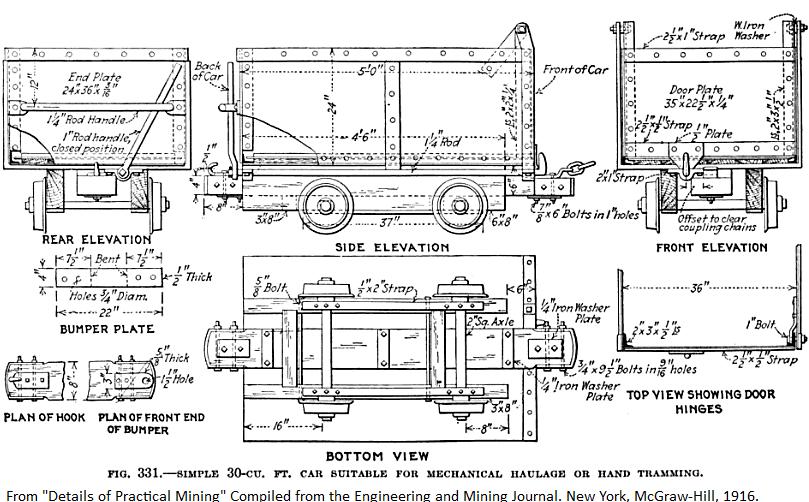
Once a mine or industry had finished construction and begun hauling regular loads on its railroad, more specialized cars were sometimes used. For mines these usually included small 4-wheeled ore carts or larger hopper cars. Canneries also favored box hoppers to transport bulk fish. Coal depots usually had small side-dump cars (vs end-dump mine cars). Only a few small railroads used dedicated passenger cars, more often workers would ride to the job site on modified flatcars or on the locomotive. This was often in violation of company safety rules, occurring with a nod and a wink from the train crew and resulting in injuries when cars derailed or collided.
mine car diagram


Narrow Gauge Model Trains

September 24, 2014

Recent work on my list of Alaska short line railroads has gotten me interested in toy trains again (or, excuse me, “model” trains). I discovered that there is a whole subset of HO-scale model railroading for narrow gauge, in HOn3 (scale 3′ or 36″) and HOn30 (scale 30″, aka HOe). While 36″ was more common and has more “prototypes” (the real railroads on which models are based), scale track for it is somewhat less available. HOn30 happens to match N-scale track, which makes it more attractive to modelers on a budget.

Alaska had a few 30″ rail lines (as well as 24″, 36″, 42″, and others). As I’ve discussed on my railroad page, most of the locomotives used on these lines were small 0-4-0 saddle tankers re-purposed from lower-48 industry and construction. A few companies happen to make HOn30 industrial locomotives and cars for modeling, and I couldn’t resist buying some more toys!

10616457_10105107578728220_3552160241891166410_n

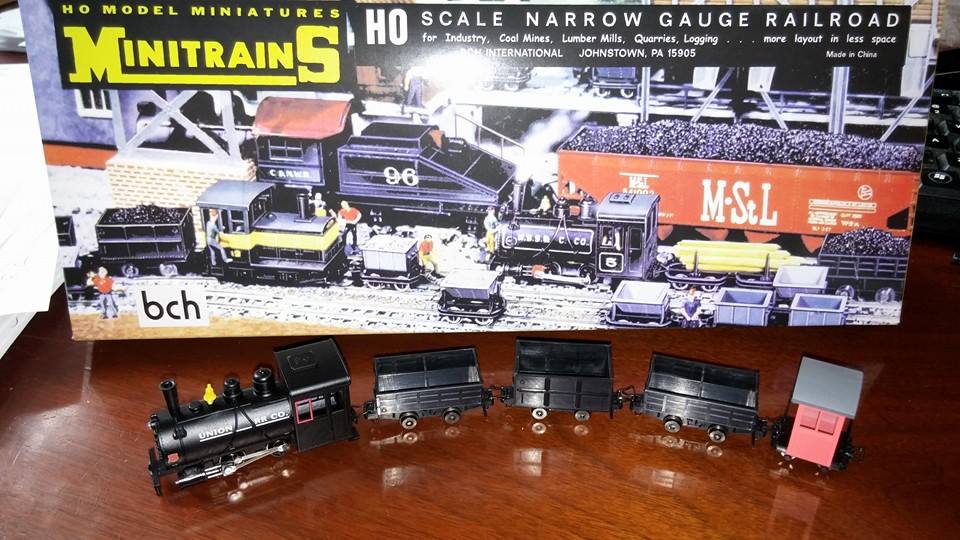
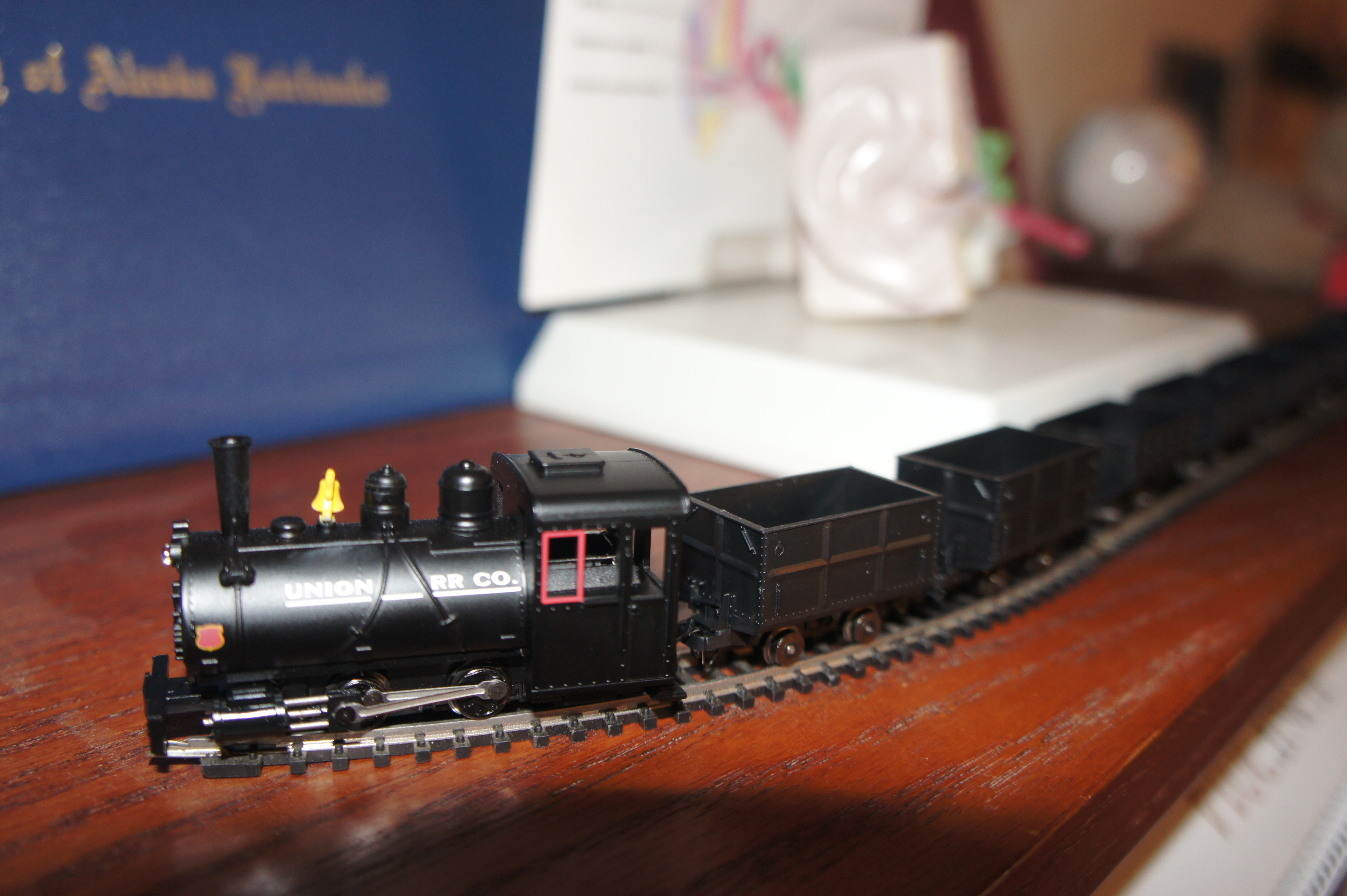
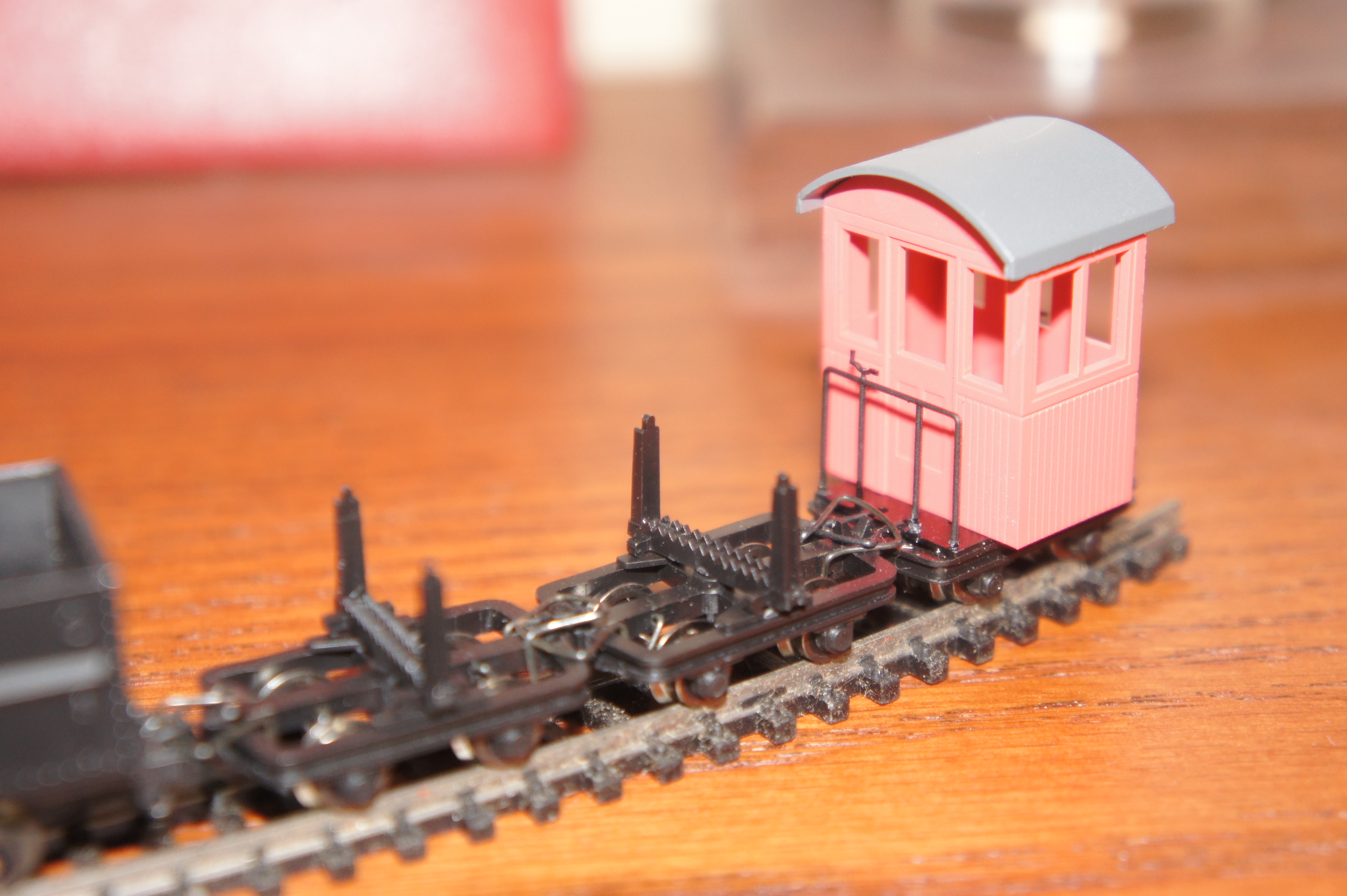
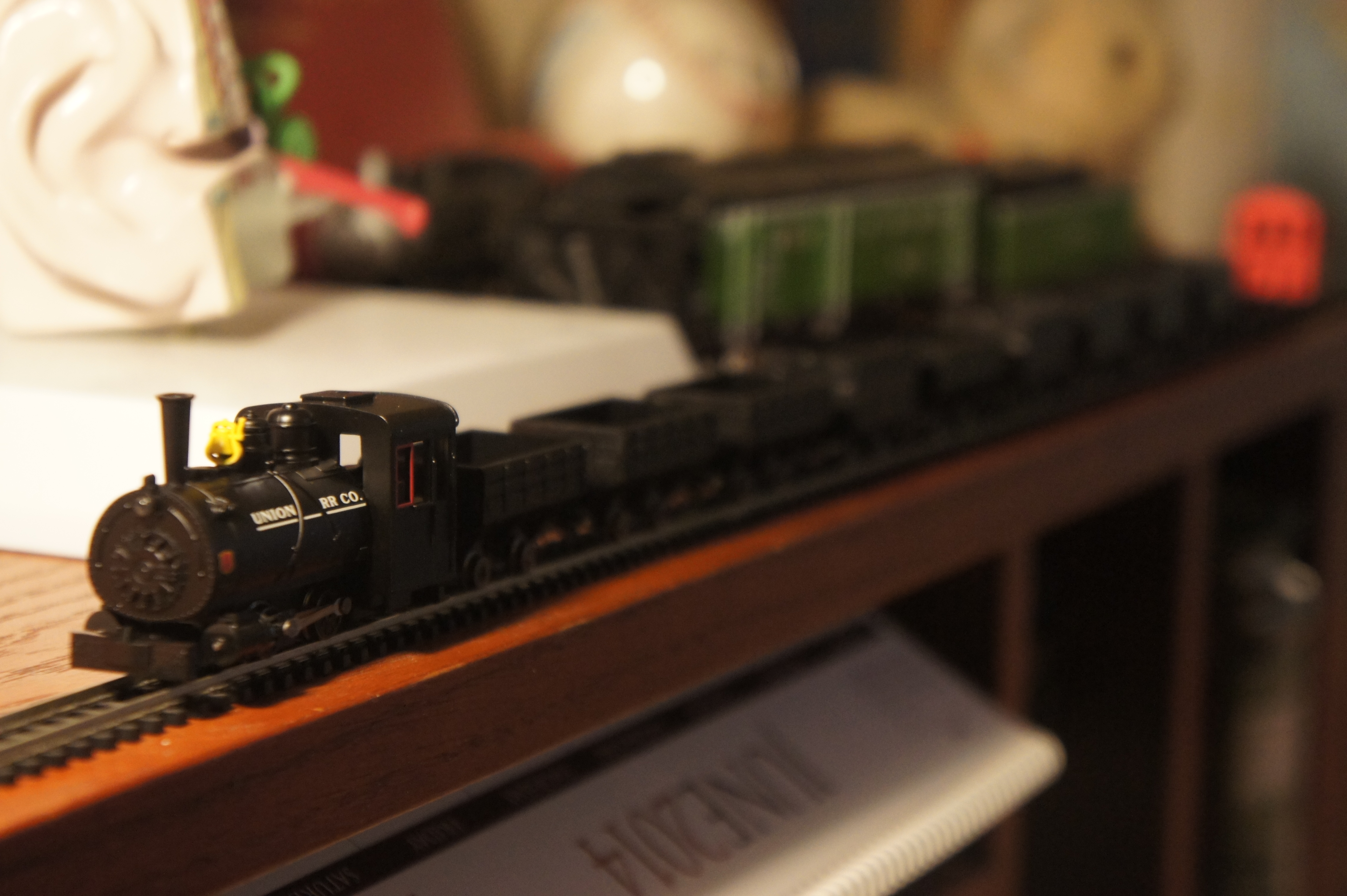
My first experiment in HOn30 includes some 2nd-hand track, a BCH Minitrains 0-4-0 steam locomotive, and a string of cars including coal, ore, log cars, and a caboose. There is a very good review of the locomotive set here. The company also makes a Plymouth gas locomotive and a variety of rolling stock.

SONY DSCSONY DSC

Right now these are just a static display. I have some HO scale stuff packed away from my childhood, and have been hoarding more as I find it at garage sales, but don’t have time to set any of it up and run it. In the mythical “some day” when all my projects are done, I’d like to model a small Alaska mine railroad (current estimates hover around age 60). Until then, these are really fun conversation pieces!

SONY DSC SONY DSC

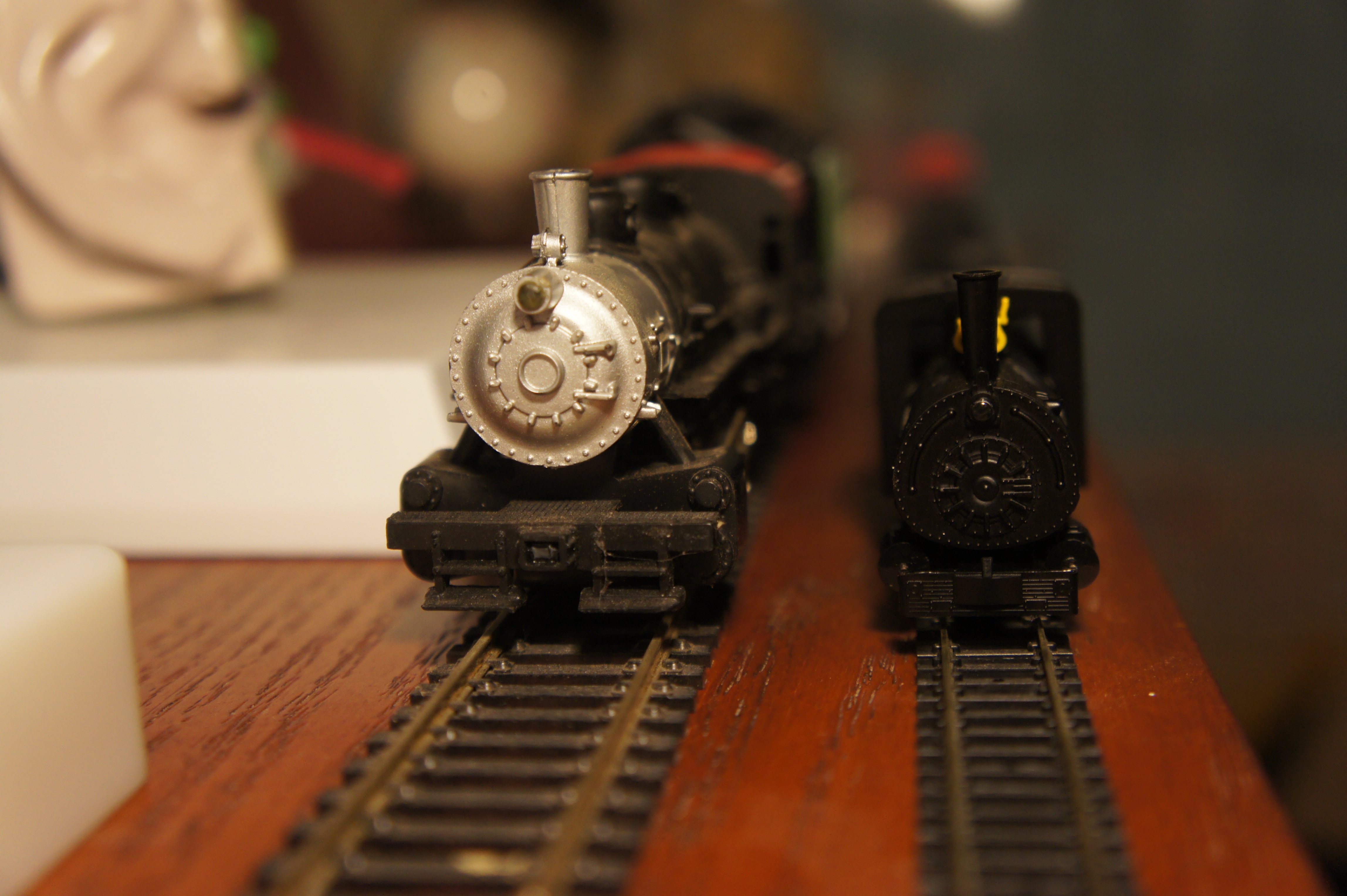
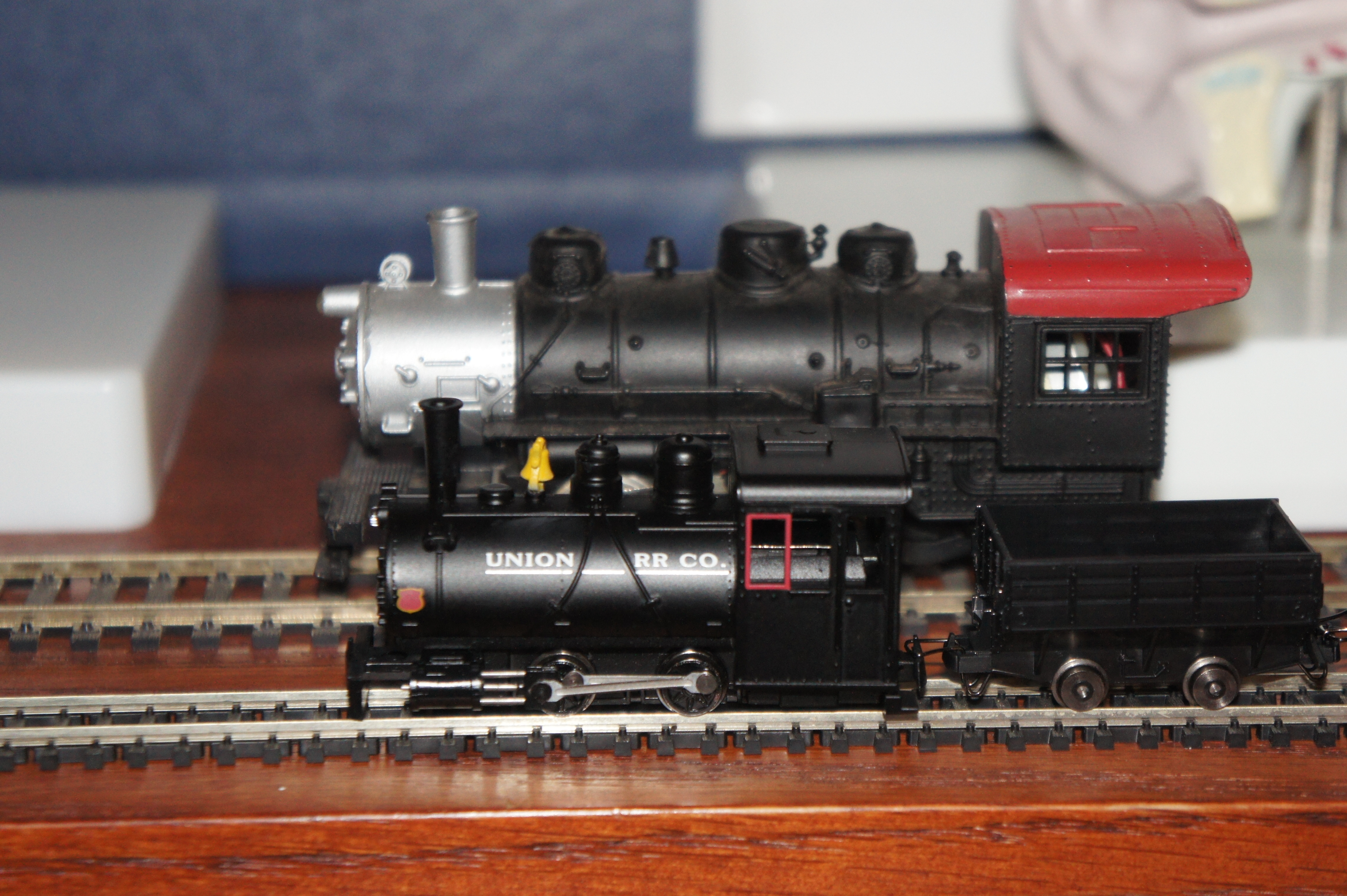
Above is an example of how small these are, the narrow gauge locomotive is shown next to a standard-gauge 0-4-0 switcher that I picked up at a garage sale. A real-world photo of standard and small narrow gauge locomotives can be seen here.

For anyone interested in modeling Alaska short lines, there are a wide variety of locomotives available new and used (eBay has quite a few). European models are quite popular and most manufacturers seem to be in Europe, using the “HOe” designation for 30″ scale gauge. Side-tank locomotives are more common in the model world, but were very rare in Alaska (so far I know of only one, an 0-6-0 Baldwin at the Apollo mine). Small flatcars were the most common rolling stock in real life (but less common in model form). Ore cars, log cars, and other specialty cars were also used.

SONY DSC

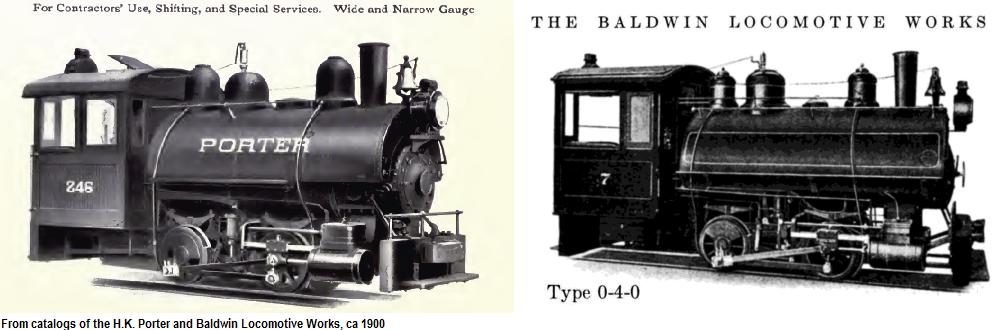
I would love to get my hands on an H.K. Porter with the shorter saddle tank, as it was the most typical of small Alaskan lines. However, they seem to be rare in HOn30 form, and seem to be mostly home brewed / scratch built / kit-bashed by people with more time and patience than I. The little engine I bought is labeled as a Porter and has Porter’s logo on the front, but some reviewers believe it is more closely based on a Baldwin prototype. Both builders offered nearly identical models of this size and design in the early 1900s.

Porter and Baldwin