Funter Bay History: Murder & Mayhem

March 25, 2014

Alaska’s history is filled with shady characters, dastardly deeds, and unsolved mysteries. Almost every town, mining camp, or cannery has its tales of murder, larceny, or swindles of one sort or another. In past installments of Funter Bay History, I’ve mentioned some of the criminal activities which went on in the area, including bootlegging, fish piracy, and other shenanigans. This post covers some more serious crimes, as well as various lesser incidents and shady dealings. Some of these are snippets from newspaper articles which are long on sensationalism and short on fact, multiple sources have been consulted when possible. Unfortunately there is not always follow-up information or detail readily available, so the outcome of some of these cases is not clear.

——————————————————

A murder on August 18th of 1894 reportedly involved two local prospectors. Archie Shelp and George Cleveland were accused of illegally selling whiskey to Natives, resulting in a drunken killing (or perhaps two killings, sources differ). The defendants claimed they were in or near Funter Bay during the supposed events, not at Chilkoot (Haines) where the murder took place. An 1895 article described how “two Indians bit the dust” during a drinking bout with two Swedes, which may or may not refer to the same case. Gus Lundgren, who had been camping at Funter,  testified that the two had been there on August 16th-17th of 1894. The defense claimed that they could not have sailed to Chilkoot in less than three days (from my own sailing experience, I would say it could be done in one long day with favorable winds). The prosecutor pointed out that there was no evidence Shelp and Cleveland were prospecting “with pan and shovel” as they claimed, and instead were “prospecting for the aboriginal native” with keg and tin cup. The two were convicted of illicit alcohol sales, and appealed.

——————————————————

An underground fight between miners at Funter Bay was reported in the Alaska Mining Record on June 10, 1896. William Williamson (Brother of Sandy Williamson) was supposedly attacked by Billy George, aka “Indian Charley”, and had a piece bitten out of his lip. The young Williamson had no experience in drilling and refused to strike double-handed. George, who had a “record as a biter” was upset with this and attacked him. After a 20-minute fight which left hair plastered on the walls of the shaft, the attacker fled. Billy George then gathered up his family and possessions and left in a canoe. (Excerpt in Barry Roderick’s A Preliminary History of Admiralty Island).

——————————————————

A “bloody battle”, and the first killing of an on-duty law enforcement officer in Alaska occurred near Funter Bay in 1897. That January, a “notorious young desperado” named William Thomas “Slim” Birch had been locked in the city jail, convicted of “mayhem”. The charge stemmed from a bar brawl in which Birch had bitten off part of Henry Osborne’s nose and ear. Birch was said to possess a “temper that runs wild” when under the influence of alcohol, frequently landing him in trouble. Despite his temper, “Slim” was a popular fellow in Juneau. He and his brothers had made some money early in the gold rush, partly through mining and perhaps partly through smuggling. They owned the Douglas City Hotel and Cafe, which featured a lively saloon, and had the support of many local miners. The night before Slim was to be shipped South to prison, a group of masked men staged a jailbreak, locking the jailer in his own cell. The group then fled in a sloop to Admiralty Island.

Released a Prisoner

Within weeks an informant reported Birch and co hiding out in a cabin on Bear Creek, 3 miles from the Juneau side of Admiralty Island (About 1-1.5 miles from Funter Bay). A posse consisting of two deputy US Marshals, the jailer, a jail guard, and an “Indian Policeman” set out in pursuit. After a tugboat trip from Juneau, followed by a long and grueling hike through snow and ice, the party reached the cabin. Accounts vary as to what happened next. One story was that Slim snuck out of the cabin and ambushed the deputies from high ground. Others say the fugitives fired through the door as the lawmen knocked on it. Other accounts say the officers found Birch and his accomplices sleeping and fired first.

“He is a desperate man and the deputies knew it, so they began shooting into the cabin, taking great chances on getting their man alive. Birch opened his cabin door and began to shoot with two revolvers” (from San Francisco Call)

While the truth of who fired first was not clear, all accounts show that the posse had the worst of the ensuing shootout. Jail Guard Bayes was hit and ran back towards the beach despite bleeding profusely from both legs. Deputy Marshal William C. Watts attempted to take cover behind a fallen tree but found the rotten wood a poor shield.  Deputy Hale exchanged shots with Slim Birch, then came under fire from the cabin. Struck in the chest as he tried to reach Watts, Hale staggered and fell into a small stream. He managed to pull himself out and make it out of range.  Jailer Lindquist hid behind a tree as it was riddled with bullets, and was hit in the eye by flying bark. The Native policeman, Sam Johnson, was the only one of the posse to remain uninjured. Johnson reportedly saw Birch and three or four other men inside the cabin, firing from “loopholes” between the logs. Watts was reportedly hit several more times during the gunfight. The other lawmen retreated, leaving the injured Watts behind. Hale’s wounds were said to be serious, but he eventually recovered.

After fleeing back to Juneau, the officers gathered a new posse of 20 men, along with a detachment of US Marines. A search party from “the neighboring cannery settlement” also hiked in to the cabin (The Funter cannery did not yet exist, but several others were in the area). Watt’s body was found “frozen stiff in the snow, where his cowardly companions had left him”. Several days searching resulted in nothing but frostbite for the posse members, and additional men came in from Sitka to join the manhunt. An investigation of the cabin found the floor “liberally scattered” with 38-90 and 45-70 rifle shells, and several firing loopholes cut into the logs to fortify the position. Also revealed were 50lbs of hidden gunpowder, thought to be part of a bank robbery scheme. Hiram Schell, one of Birch’s accomplices, had previously been in jail for gold robbery, the tale of which is a ridiculous adventure of its own and also involves a stop at Funter Bay.

The search ended when two cannery employees named Cheney and Olson discovered the heavily-armed Birch and Schell sleeping in dense underbrush. They reportedly had pistols in hand, requiring a stealthy approach to avoid waking them. The two cannery men crept up to a ledge above the fugitives, then leapt down and were able to manacle them after a brief struggle. The captors received a $500 reward for their efforts. The slain Deputy Watts had been a popular and well-known officer in Alaska, and tempers were high on all sides. The prisoners were taken to the Sitka jail for their own safety, as there was fear of encountering a lynch mob in Juneau.

At their trial for murder, Birch and Schell claimed self defense, and the contradictory statements from the lawmen confused jurors. Birch’s brothers and local miners  raised enough money to bring in “prominent” defense attorneys from Seattle. The defendants claimed that the deputies had not announced themselves before shooting, and they were thus responding to an unprovoked attack from unknown assailants. There was debate over the cause of Watt’s death, be it from his wounds, freezing, or both. Birch even claimed that he had been kidnapped from the jail and had not meant to escape in the first place! Eventually the pair were found not guilty of murdering Deputy Marshal Watts, an “outrageous” verdict which horrified the governor of Alaska. None of the other offenders were ever found, although a belt marked “W.H. Phillips” was recovered from the cabin.

Slim did end up serving 3 years at San Quentin for the original mayhem charge. He moved to Prescott, Arizona in 1902 and opened a saloon with his brothers Sidney “Kid” and Robert “Bob” Birch. Slim continued to get into bar brawls, including a 1908 affair in which all three brothers broke up a card shark scheme with flying fists. They also ran afoul of the law with gambling fines and prohibition violations. “Slim” died in 1952.

birch2Selected Sources:

-“Bloody Battle in Alaska; Between Desperadoes and a Marshal’s Posse” The Record-Union (Sacramento), 4 Feb 1897.

-“Capture of Slim Birch” San Francisco Call, 4 February 1897

-Fletcher, Amy. “Whitman shines light on a dark chapter of Alaska history”. Juneau Empire, 27 Oct 2013. (link)

-Hunt, William. “Distant Justice: Policing the Alaskan Frontier”. OK: U of OK Press, 1987.

-Roderick, Barry. “A Preliminary History of Admiralty Island” Douglas, AK, 1982.

-“To Plead for an Alaska Outlaw” San Francisco Call, 28 Feb 1897

-Wilbanks, William. “Forgotten Heroes: Police Officers Killed in Alaska, 1850-1997”. Turner Publishing Co, 1999. (link)

——————————————————

An article in the Juneau Record-Miner from July 11, 1907 had the headline “LOOKS LIKE MURDER”. A man named Herman Smith had disappeared under suspicious circumstances, with “strong indications that foul murder has been done somewhere between Douglas and Funter Bay”. Smith’s boat the “O.K.” ran out of gas at Cordwood Creek on the way to pick up fish, so he borrowed a small boat from Harry Scott at a Funter Bay fishing station. After getting fuel he left Douglas to return to the O.K., but then vanished. The article stated that “An Indian woman claims to have seen him murdered in the vicinity of Cordwood creek”. Reportedly missing were $130 cash and a month’s worth of provisions.

——————————————————

A fugitive from Sitka by the name of Ah-kee was pursued and overtaken at Funter Bay in July of 1909, and brought to court by Deputy Marshal Shoup (Shoup is also mentioned in a previous post).

——————————————————

In November of 1912, a miner named Martin Damourette was arrested and charged with larceny, accused by his mining partner L.C. Wilson. The two had stored equipment at their Funter Bay claim, and Damourette supposedly stole it while Wilson was absent. The court dismissed the criminal case almost immediately. Wilson filed a civil suit, but Damourette “ducked out of town” for Seattle the same night.

——————————————————

Another disappearance occurred at or near Funter Bay in 1915. Robert McGregor was reported missing by crew of the Santa Rita the morning after arriving at Funter Bay. He was a carpenter from Gypsum who had worked at various mines and camps around Alaska. Cannery officials supposed that he wandered off in the dark and became lost, but a search of the area found nothing.

——————————————————

Illicit booze continued to be an issue in the area, especially since it could sometimes be mail-ordered!
mail order beer

——————————————————

In October of 1917, two men named Thorensen and Okerberg were indited for furnishing liquor to Natives at Funter Bay.

——————————————————

In 1922 the body of Oscar “Terrible Swede” Lindberg was found burned to death on the beach at Bear Creek, across the island from Funter Bay. The case is filed under “Murders” in the Bayers notes.

——————————————————


Funter Bay History: Fishermen Part III

March 18, 2014

In this edition of Funter Bay History we return to the topic of commercial salmon fishing. A local fisherman very generously provided some photos and information about Funter Bay in the 1960s, which make up the bulk of this post (Previous posts on this topic are in Part 1 and Part 2).

1

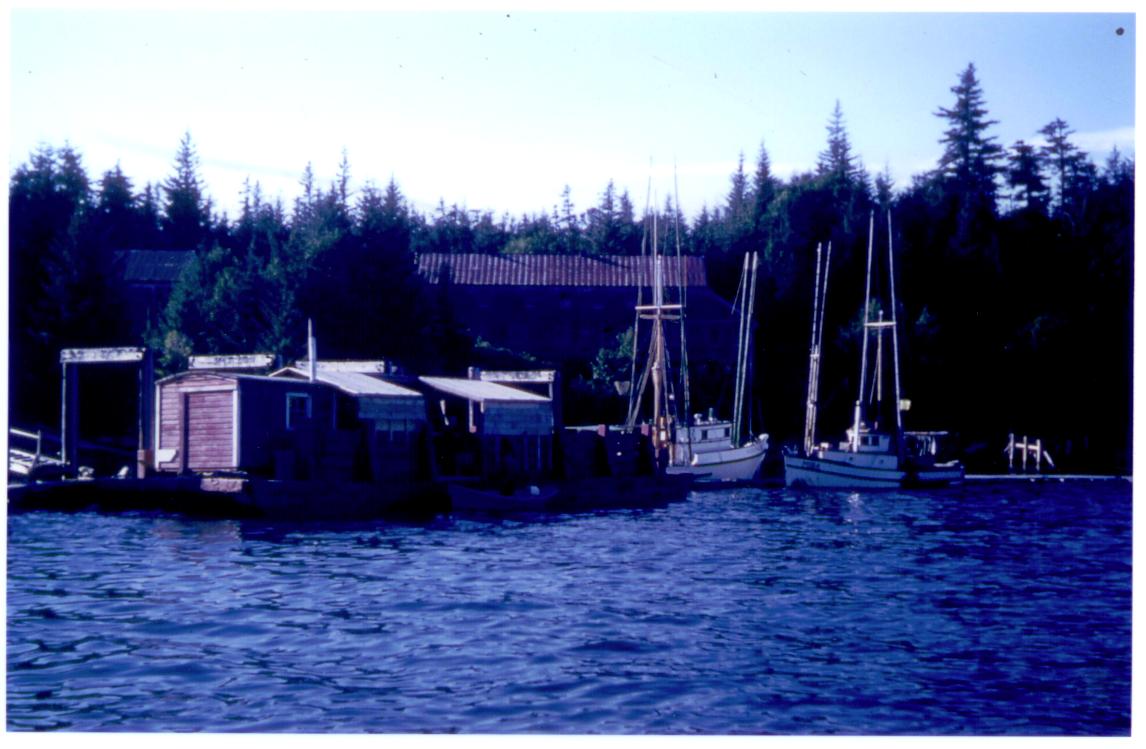
Seen above is the Funter Bay cannery and public dock circa 1958-1960. The trollers Merry Fortune and Mira are tied up, along with the fish scow. The scow was owned by Art Berthold, of the packer Fern II. Art would visit the bay regularly to pick up fish, with local residents Gunner and Lassie Ohman operating the scow. Harold Hargrave owned the Merry Fortune and lived in a house just to the right of this photo. There were three fishing boats named the Mira in Southeast Alaska around this time, this may be the one from Juneau owned by Arnold Henrickson (per the Merchant Vessel Registry)

2
A closer view of the cannery dock and scow, with one of the cannery bunkhouses in the background. The red structure with curved roof on the near end of the scow appears to be a former fish trap watchman’s shack, these were frequently repurposed and some can still be found in use around Funter Bay.

3

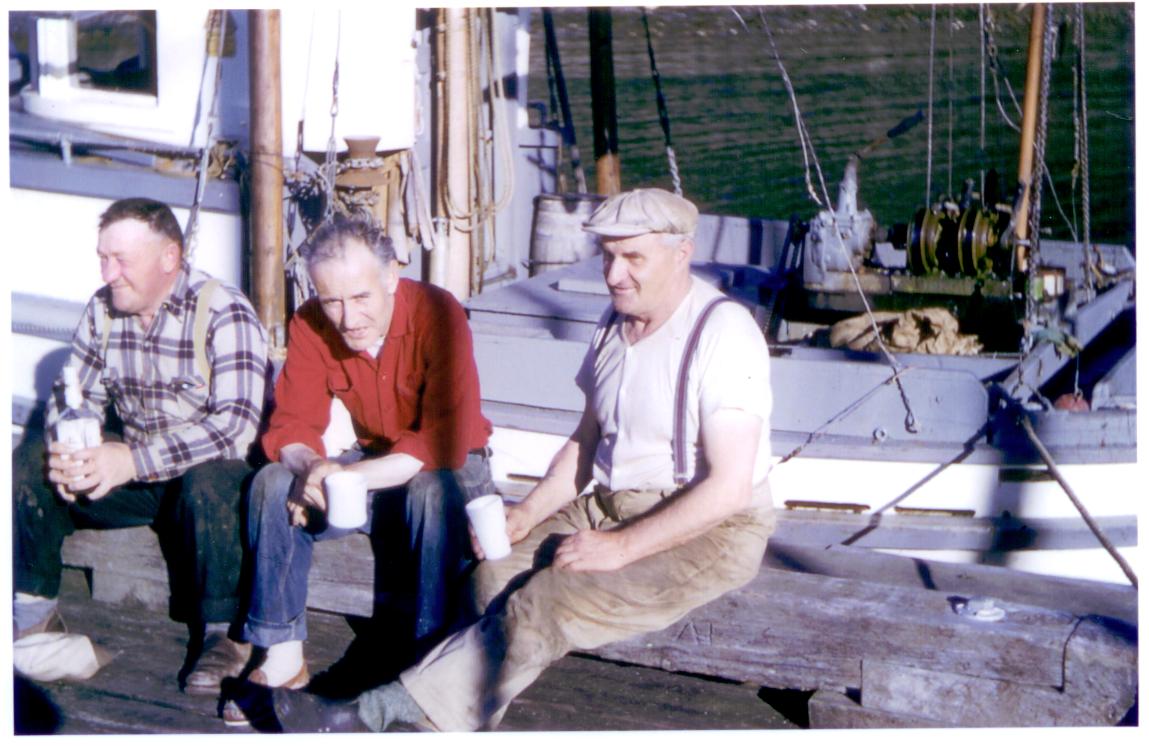
Fishermen (L-R) Walt Mackey, Ken Lameroux, and Jack Kolby, having an afternoon drink at the dock (of “milk, no doubt” according to the source!). Walt’s boat the Elliott is behind them. Ken fished the Lillian L, and Jack fished the Ruby.

4

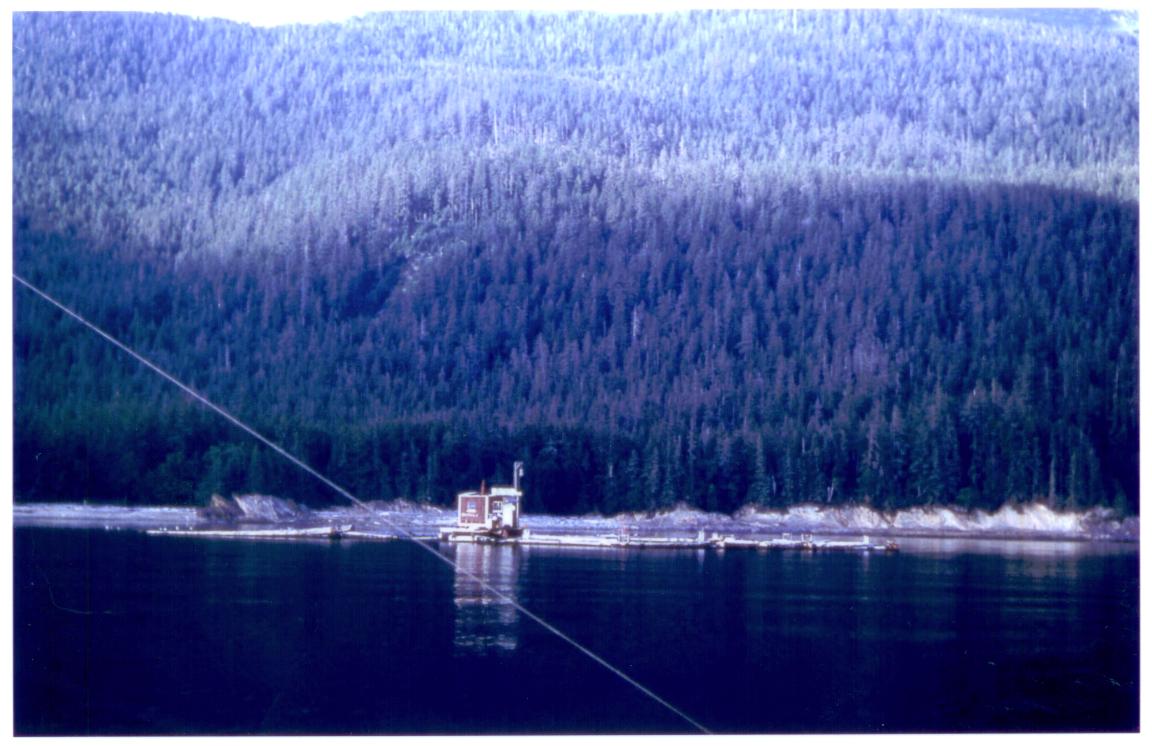
The fish trap at Lizard Head (the contentious Claire Alexander fish trap mentioned in this post). This photo is from around 1958, the trap was removed when Alaska became a state in 1959. The structure on top is the watchman’s shack, the trap itself is made up of the low floating logs.

5

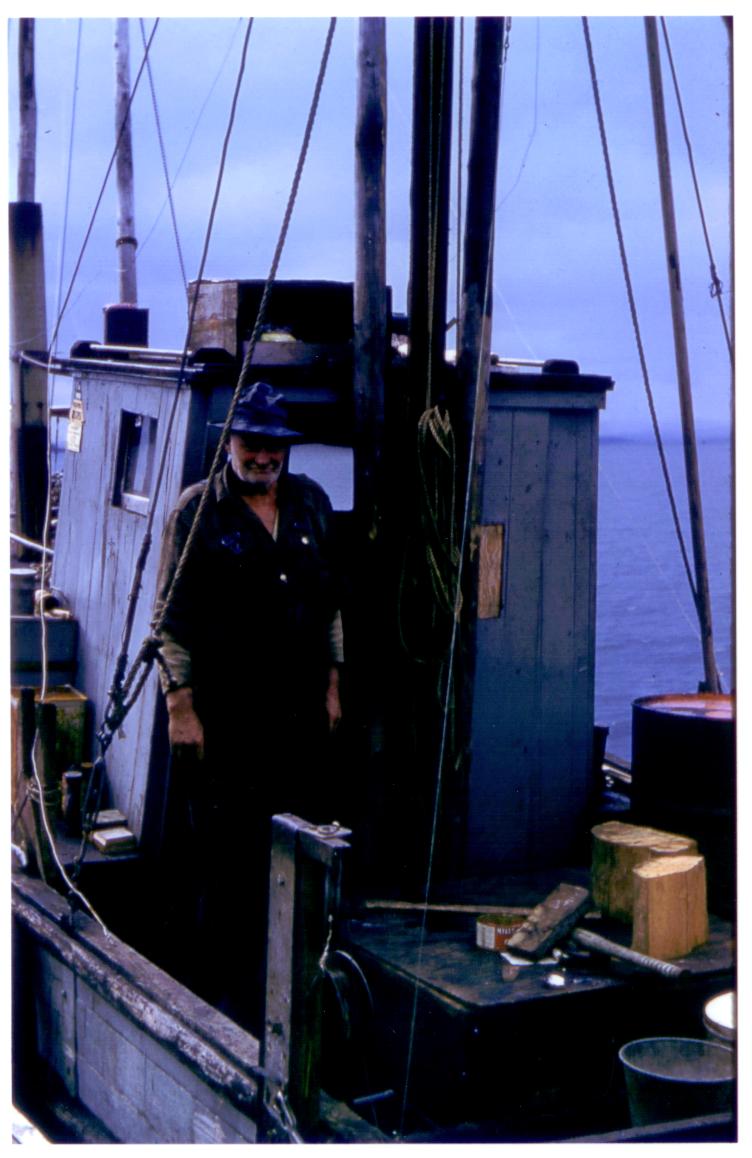
Above is “Dirty Foot Al”, so called because he didn’t wear shoes. Al built his own boat on the beach and heated with wood, you can see blocks of firewood and his axe on deck (oil heat using the same diesel as the engine was more common).

6

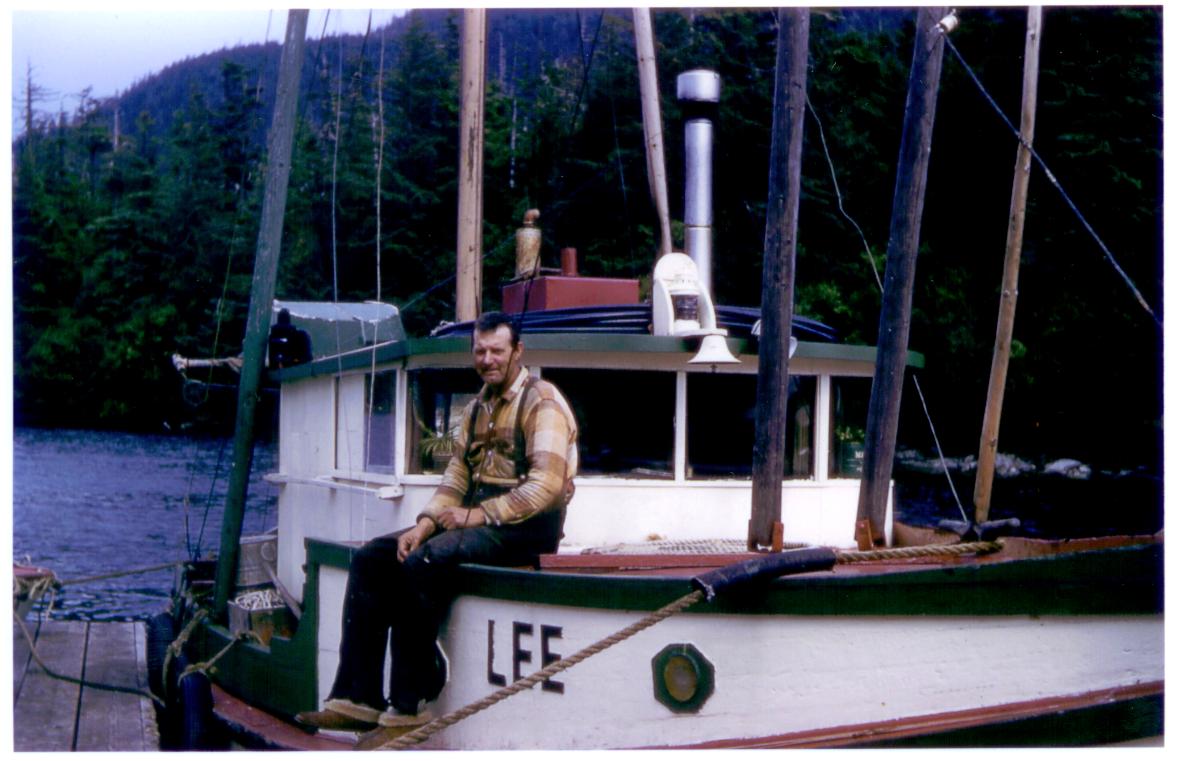
The troller Lee was fished by Ted Childress, seen above, and his wife (who owned the boat). It was reportedly a “Columbia River model”

A 1955 newspaper article (mentioned in the Bayers notes) described the ferry Teddy abandoned at Funter Bay after experiencing engine trouble. The owner reportedly went on to fish the “Lee”, but their name is not given.

7

Jack Kolby (or Koby?) fished the Ruby, seen above at Elfin Cove. Jack was reportedly of Swiss background, and loved to tell stories.

8

the Rosalind was owned by a man named Ben, seen above.

9

Here we see Walt Mackey delivering a loaf of bread to “Crackerbox” Mac. Mac got his nickname from a previous boat, which apparently was not very pretty. Mac’s boat seen above was equipped with a Model A Ford engine.

10

Above is Walt Mackey again, having “a bit of some unknown substance”.

Funter Bay had two state floats, both of which were used by local fishermen. The season generally ran from May 1 to late fall. Many of the boats would start early, and quit early, coming back in by 2 or 3pm. Then the crews would sit around with their “milk” telling stories or comparing  how much money they’d made for the day. They would also visit with local residents in the bay. Sometimes they would set herring nets overnight to catch bait.

In addition to the people shown above, other fishermen at Funter during this time period included Charlie Tubbs, Norton Sorrell of the Grey Mist (later bought by Charlie), Ned Albright of the Ommney, and Ted Samples of the Diver. Ted and his wife trolled, and the Diver had a compressor and “hard hat” rig for underwater work. Ted installed and repaired fish traps when he wasn’t fishing. A man named John had a small double-ender with a noisy 2-cylinder motor. Others who frequented the float, but didn’t always fish at Funter were Al “Scram” Schraman of the Aurora, Santiago Cesar, Mac of the Helen M, and Ike Puustinin of the Julia D.

One story of float hijinks involves a fishermen who somehow became a little drunk one night. The fellow kept a pee can just outside his wheelhouse door for late night calls of nature (these are fairly common on boats, both for convenience and safety, as you don’t want to stand at the rail drunk with only one hand free) Someone filled the can almost full of alkaseltzer tablets, and when the still-drunk fellow used it, there was a lot of unexpected foaming! The poor victim must have thought he had some terrible problem “down there”!


Alaskan Mine Names

December 12, 2013

I recently came across a large collection of mine names in Alaska. Names containing “Treasure”, “Rich”, “Jumbo”, “Bonanza”, etc are quite popular as a way to entice investors, but here are a few less enticing and perhaps more descriptive mine names!

Bum Cat
Horrible
Waterhole
Holy Moses
Wrongtrail
Troublesome Creek
Wicked Witch
Crazy Mountain
Pipedream
Singin’ Sam’s Rainbow Mine
Problem Gulch
Poor Chance
Slug Gulch
Whistlepig
Chickenlicken
Pooped
The Smell
Moonshine
Whiskey Creek
Smuggler’s Cover
Agony #1 & 2
Aching Back
Bruiser

And of course, a few named after wives, girlfriends, or perhaps local ladies of negotiable affection:

Lucky Lou
Clara Bea
Fanny Gulch
Nancy’s Hope Chest
Pricilla’s Delight
Darling Creek
Sweetheart Ridge
Little Sue
Lucky Nell
Lucky Lady
Maid of Mexico
Busty Belle
Double D Mining Co


Funter Bay History: Tall Tales

October 29, 2013

One of the finest traditions of Alaskan culture is the Tall Tale or “BS Story”. Whether a heroic adventure, unlikely wildlife encounter, lost treasure, or exaggerated fish, Alaskans have made an art of far-fetched claims. These days they’re usually related in person, over the marine radio, or at the bar, but in the old days you could get them printed in the newspaper! Actually, you probably still can in certain less-rigorously-edited publications!

One common “BS” news story in the early 20th century was the ever-popular “Next Treadwell” mine. Newspaper editors knew that attracting outside investors to the state would help grow their small towns’ economies, so almost every mine, no matter how small, was compared favorably to Treadwell (an operation known to be highly profitable). The Sitka Alaskan of Feb 27, 1886 describes deposits in the Funter Bay area as “equally as large and rich [as the “great gold belt of Douglas island”]”. After Treadwell caved in and flooded in 1917, local editors had to come up with more general terms like “the great Juneau mines”.

Of the two Juneau papers at the time, the Daily Alaska Dispatch seemed to talk up Funter Bay the most, although the Daily Record-Miner was also favorably biased towards local mines. The Dispatch referred to Funter Bay as “One of the very best camps in the district” (May 8, 1903), “The best copper proposition in this district” (Apr 16, 1909), and as having “claims which will unquestionably become good producers within a short time” (Oct 15, 1915). A July 31, 1902 article describes a Funter Bay claim “richly impregnated with gold” as well as being “40% copper”, and being “highly mineralized all the way through” and “a great big chunk of the world’s wealth”.

Reading these articles leads one to think that Funter Bay was constantly poised to become a major competitor in the national economy, but the mines referred to in these articles were mostly one or two-man prospects that never got beyond 50ft of tunnel, such as the Mansfield Mine.

Otteson’s Dano mine was also mentioned in the Dispatch, described as having a “big and rich ledge” (3 Aug 1909) and producing “rich gold bearing samples” (27 July 1919). Despite all this richness, the mine did not develop into a major producer. The papers handled such delays in promised wealth with their usual optimism, an 1903 article mentions that barren rock encountered in the first 50ft of a mine at Funter must have been “all cap-rock”, and “a change has taken place… the values in the quartz now are very good”. Any mine which failed or went bankrupt, if mentioned at all, was promptly blamed on the incompetence of the prior managers, and never on the geology of the claim.

Another great tall tale appeared in the Dispatch on Sept 12, 1912.

Explores Unknown Region on Admiralty Island

W. C. Miller Finds Lake and River Alive With Mountain Trout and Tremendous Wall of Ice.
—————————
W.C. Miller, a well known Alaskan who has valuable prospects at Funter Bay, has just returned from an exploration of the “unknown country” of Admiralty Island, and this trip is believed to be the first exploration of that region. The country lies near the center of Admiralty Island, between Hawk Inlet and Seymour Canal. Mr. Miller was accompanied by his nephew, F. E. Koeper.
“The entire territory,” said Mr. Miller, “is worthless to the prospector. We found a little gold, but nothing worth while, except mountain trout.”
At the head of a river Mr. Miller found a lake four miles long and a mile wide, alive with mountain trout of unusually large size. “We had no bait but venison,” said Mr. Miller, “but a crowd of fish entered into competition for the hook as often as Koeper threw it in.” Miller and his companion came back by a shallow river, a hundred feet wide, and this stream was also alive with trout. No salmon were seen, and Mr. Miller believes that on account of the swiftness of the current the salmon are not able to swim a very great distance in it. Mr. Miller named the lake “Isaac Walton Lake” in honor of the great angler.
The explorers found a new glacier with a wall of ice sixty feet high, running along the top of the range for miles. (From Daily Alaska Dispatch, Sept 12, 1912).

For those unfamiliar with the area, Admiralty Island has no glaciers,  and mountain top snow of that thickness is unlikely in September . The size and location of the lake and river are also quite questionable!

On May 25th of 1937, lighthouse keepers at Point Retreat reported that they had seen a “Ragged wild man”. This was said to possibly be Bud May, a trapper from Funter Bay who had been missing for some time. However, a few days later, 65 year old Albert Miles arrived at Point Retreat and claimed that he is not “wild”, he had simply walked there after wrecking his boat near Cordwood Creek. Miles was later ruled to be insane (per Kinky Bayers’ notes).

I might have a few more of these lying around for a later update. If any readers have a contribution I would be glad to publish it! Names can be withheld or changed to protect the guilty!


Funter Bay History – Hunting

August 28, 2013

While browsing through old newspapers I found quite a few references to hunting around Funter Bay. The area has many deer and bear, and has long been an important hunting ground for Tlingit natives. Subsistence hunting was important for local prospectors and fishermen, and sport hunting brought people from elsewhere in Southeast. Here are a few names and hunting stories that I found during my research.

A snarky article in 1907 listed  a party of “cannibals, highwaymen, and Indian warriors” hunting at Funter Bay, including “Big Eatmuch of Oshkosh, Sitting Bull of Ohio, and Highbinder of West Virginia” (Highbinder was slang for either a gangster or a corrupt politician). An article a few days later mentioned that “Messers Page and Snyder, the two Skagway nimrods who put in a month at Funter Bay” had an excellent bag of game, this may have been the same party.

Snyder was mentioned again in November 1908, when he along with a Mr. Woodburn and a Mr. Kirmse (all of Skagway) accompanied the famous big game hunter Z.R. Cheney to Funter Bay.

In 1909 the Juneau Record-Miner reported that Abner Murray, E.E. Smith, L. Keist, and Billy Stubbins had gone hunting in the Funter Bay area. Smith wounded a deer, and Keist and Stubbins both shot at an eagle and missed. Others in the party were reported to be Messrs. Hopp, Fox, Judson, McWilliams, Dick McCormick, A. Baritello and A. Reidl.

Fred Hastings and Bob Evans were hunting in the Funter Bay area in 1909. Also in the area were Wm. Geddes “and a party of big game hunters”.

In Nov of 1909, Phil Snyder and Frank Page are mentioned again. Snyder was a Skagway Alderman, and the pair are reported as coming down every year with a pack of hunting dogs to spend a month in the Funter Bay area. They were reportedly after bear on the 1909 trip.

In December of 1909, a soldier from Fort Seward (at Haines) was injured while hunting and sent to St. Ann’s hospital in Juneau. His name is given as John Carr or Karr, and his injury reportedly was from “falling on the edge of an axe”. The unfortunate hunter tripped on a rock and landed neck-first on the axe, but fortunately a trained nurse happened to be at Funter Bay and was able to stitch the wound. Carr’s hunting party was already overdue after a storm, and were thought lost for a time.

In October of 1910 a hunting party consisting of Willie Winters, Geo Rose, Oliver Oleson and Lawrence Erickson became lost between Hawk Inlet and Funter Bay. They were forced to build a fire and spend the night in the woods, but found their bearings the next day. 

Peter Williams Sr, a hunter from Sitka, died at Funter Bay in August of 1914 in a hunting accident. He had been carrying a deer and fell off a cliff.

Mr. and Mrs. E. C. Russell and Mr. and Mrs. Ray Stevens spent a week in Sept. of 1915 hunting and fishing at Funter Bay. Ray Stevens worked at the First National Bank.

Funter Bay resident and mine owner Charles Otteson related this story to the Daily Alaska Dispatch in November 1916:

“Shortly after the deer season opened – I was engaged in mining in the Funter Bay section – and one evening about nine o-clock, when a bright moon was shining, I went out to the little garden adjacent to our house on the mining property, accompanied by my wife, and there was a fine, big deer standing erect by the garden. I went within two feet of him and he did not move; I flashed a small search light several times in the animal’s face, and this did not disturb him in the least, he stood there just looking at us. I got my firearms with the intention of laying in a supply of venison, as we needed meat, but upon returning and going up close to the deer again I simply couldn’t muster up courage enough to fire. Who could?” (From “Couldn’t shoot the seemingly pet deer” Daily Alaska Dispatch (Juneau) 14 Nov 1916).

Not every hunter was so kind-hearted, there are stories of several other “pet” deer walking up to people in the woods and ending up in the freezer. Our neighbor Harvey Smith had a deer which learned how to open his door and would sleep inside by the fire. Lassie Ohman had a young deer which lived at their cabin and sometimes on their fish scow. Both of these “pets” later ran afoul of hunters.

“Bud” Walker, a friend of Funter Bay resident Max Dorman, went missing in October of 1942 while hunting grouse. The bears were reported to be “very irritable” that year due to poor salmon runs, and searchers feared the worst. Walker showed up a day later about 15 miles away in Hawk Inlet.


Funter Bay in Maps

May 6, 2013

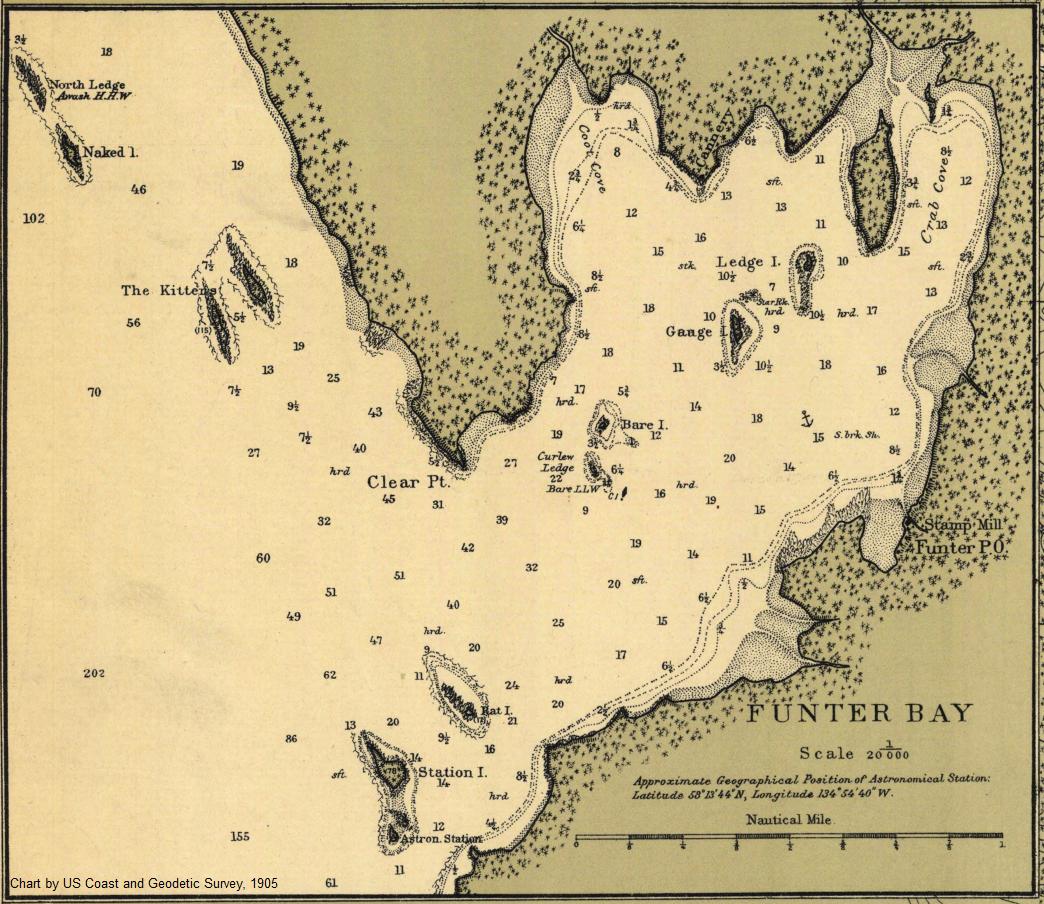
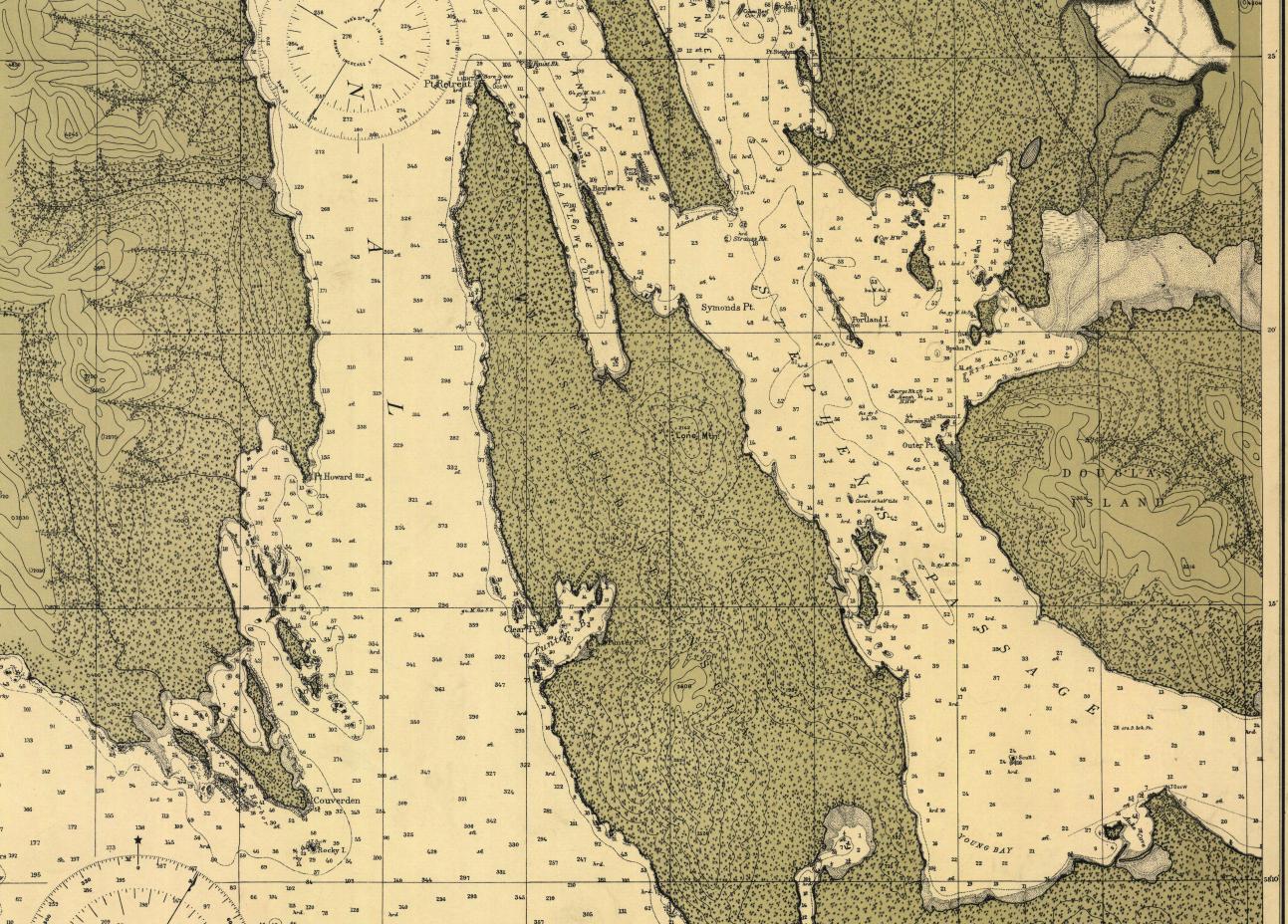
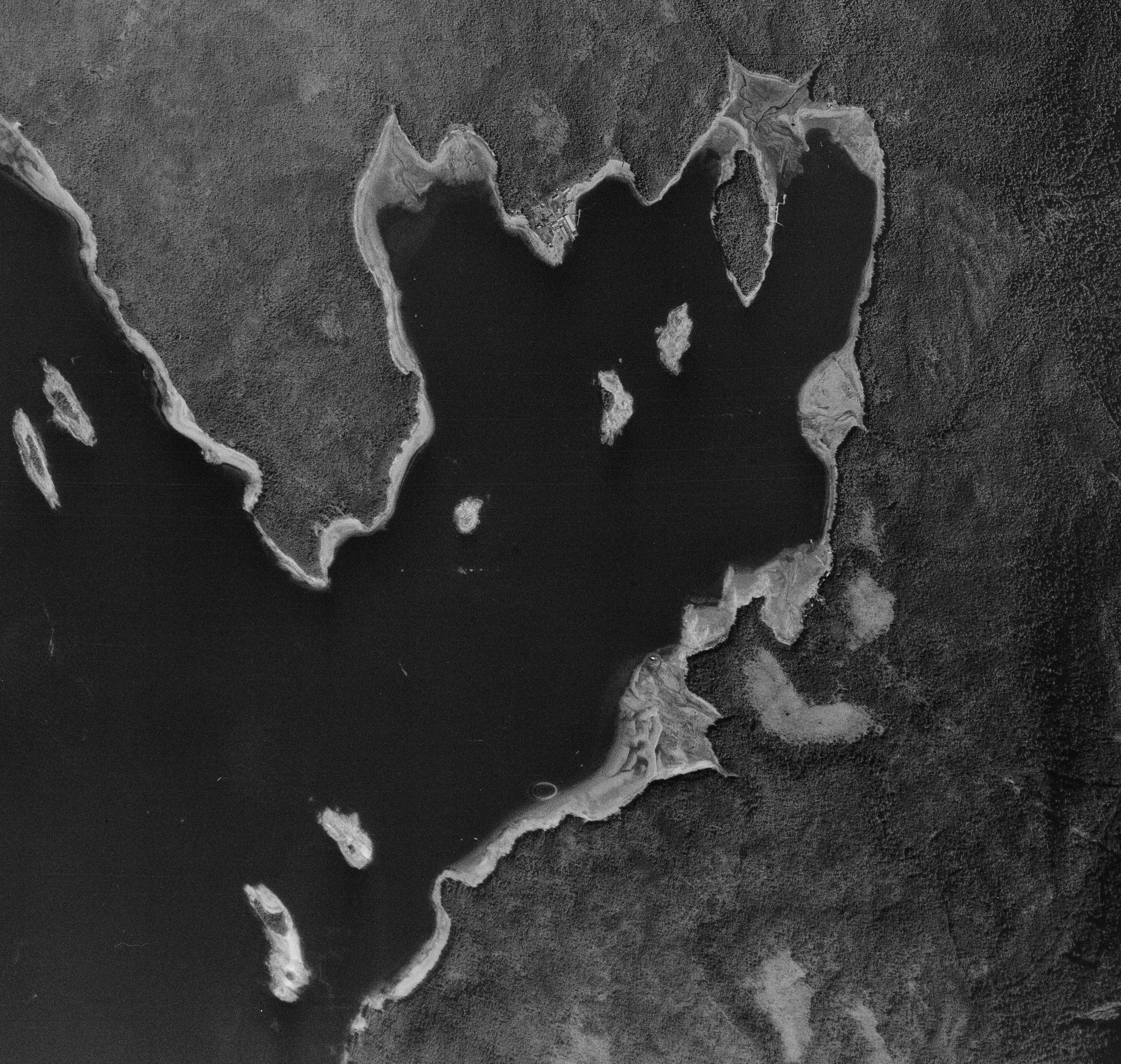
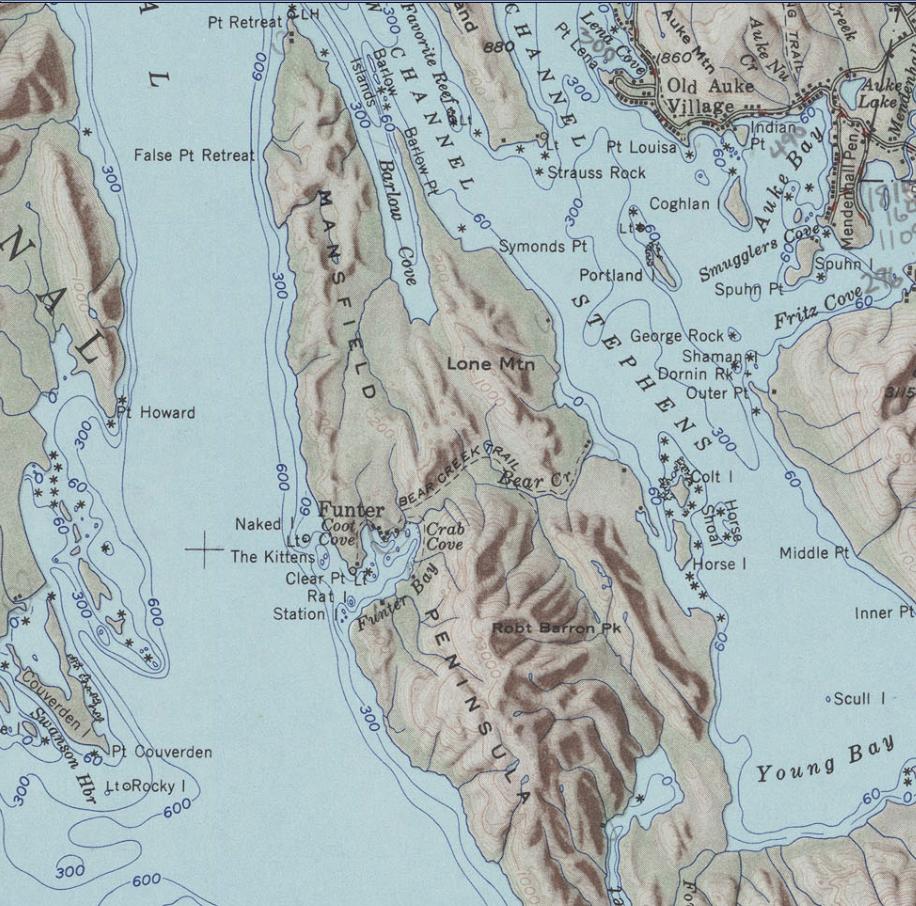
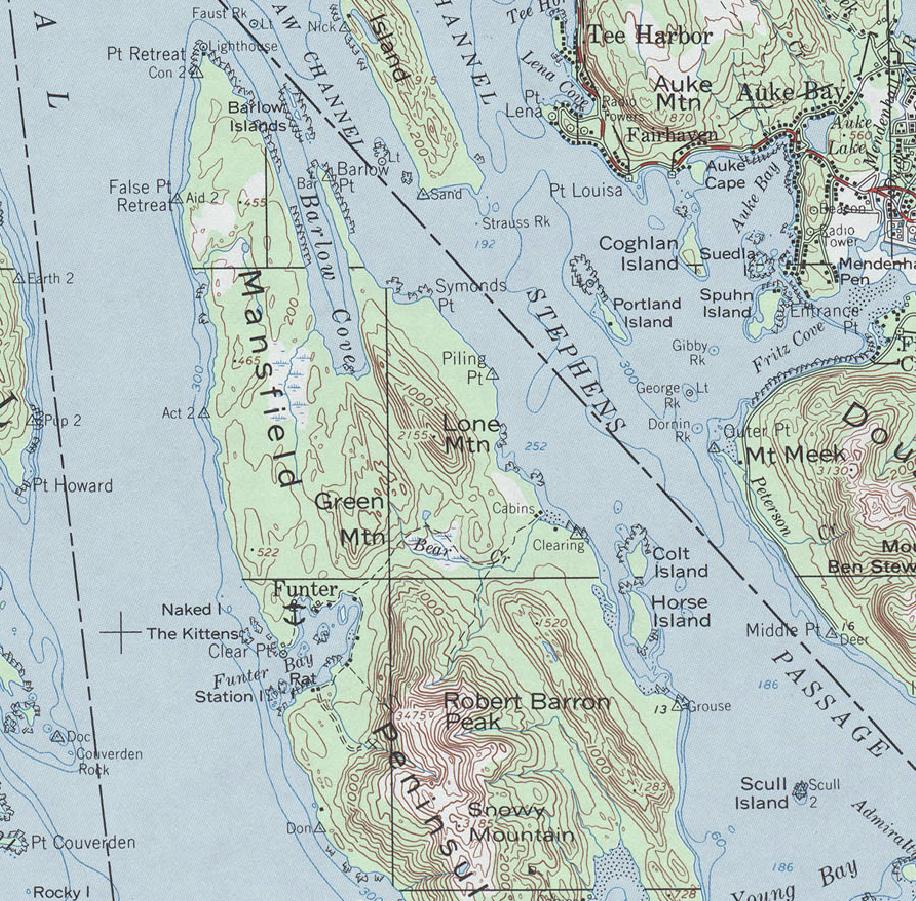
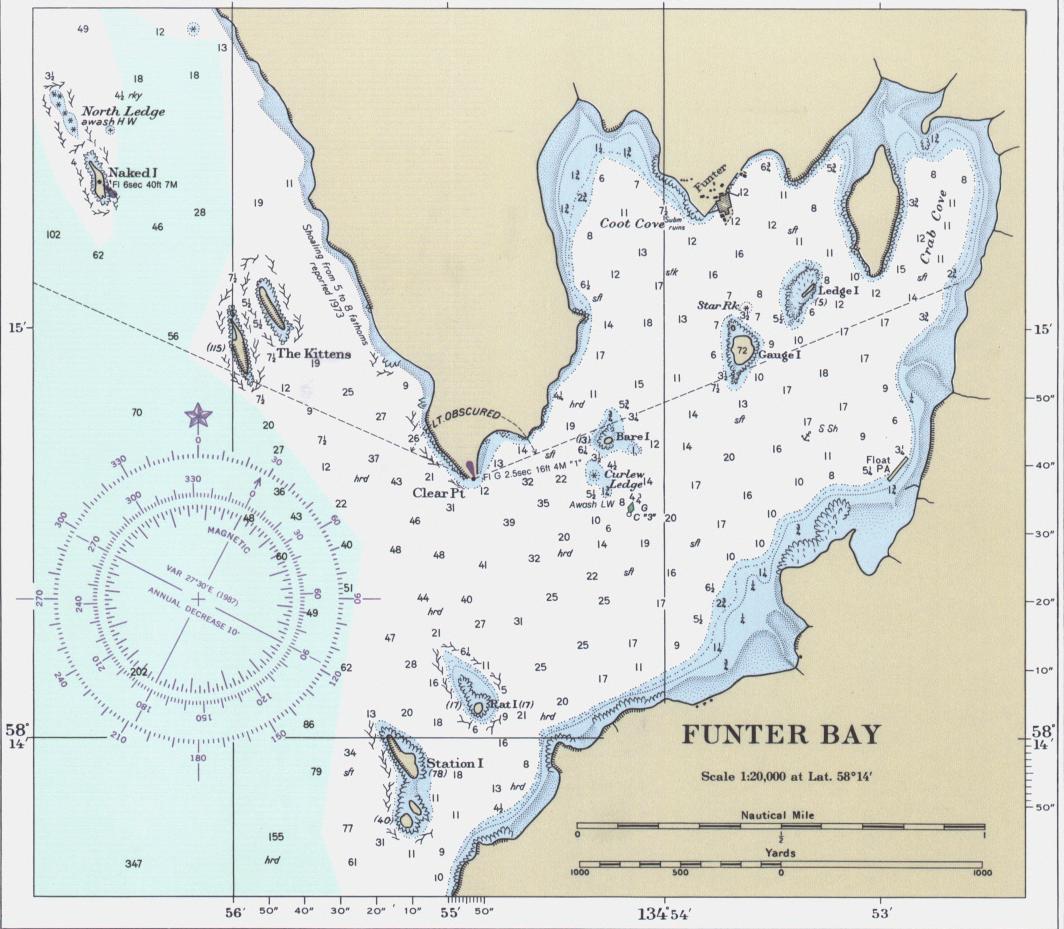
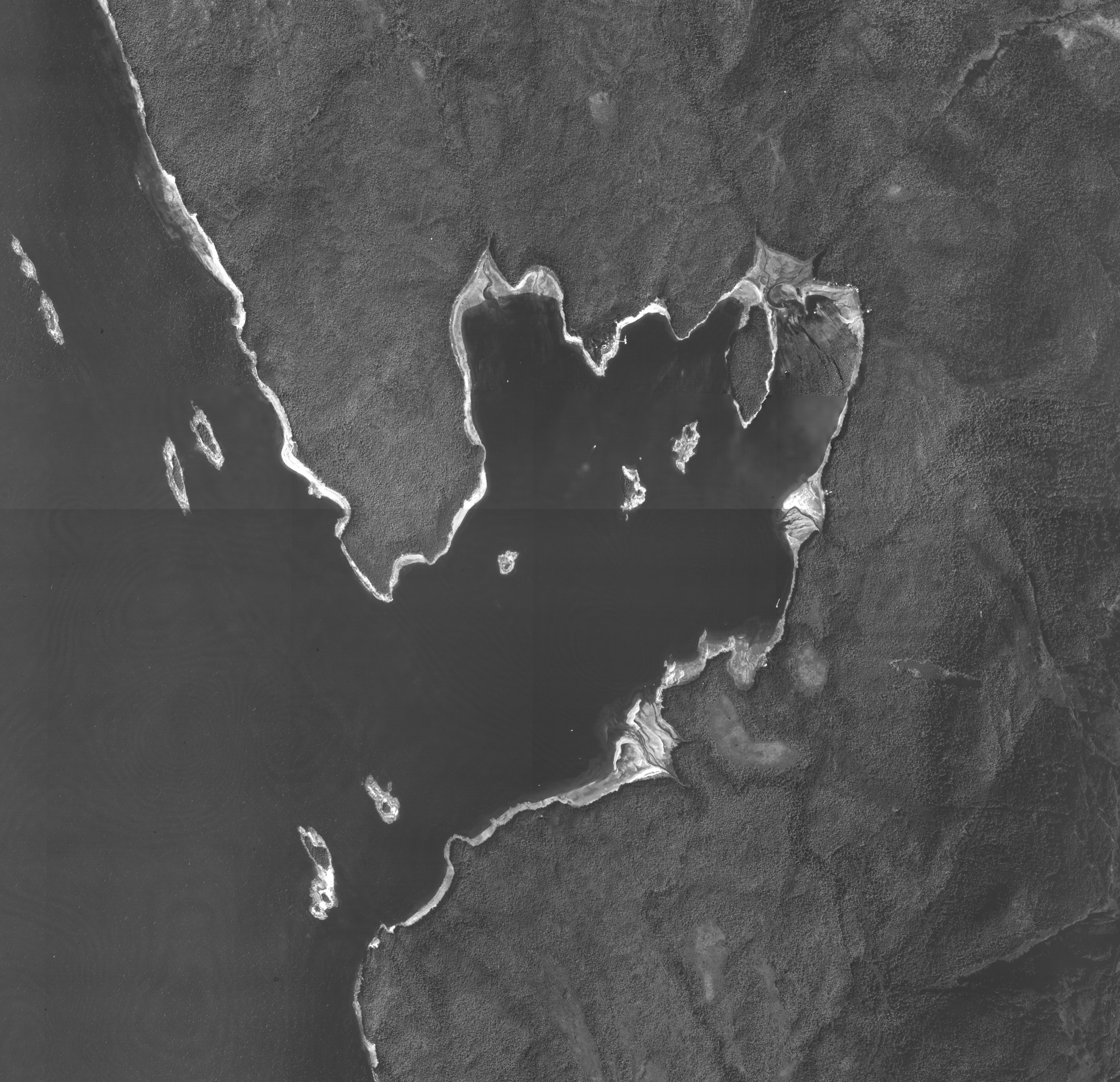
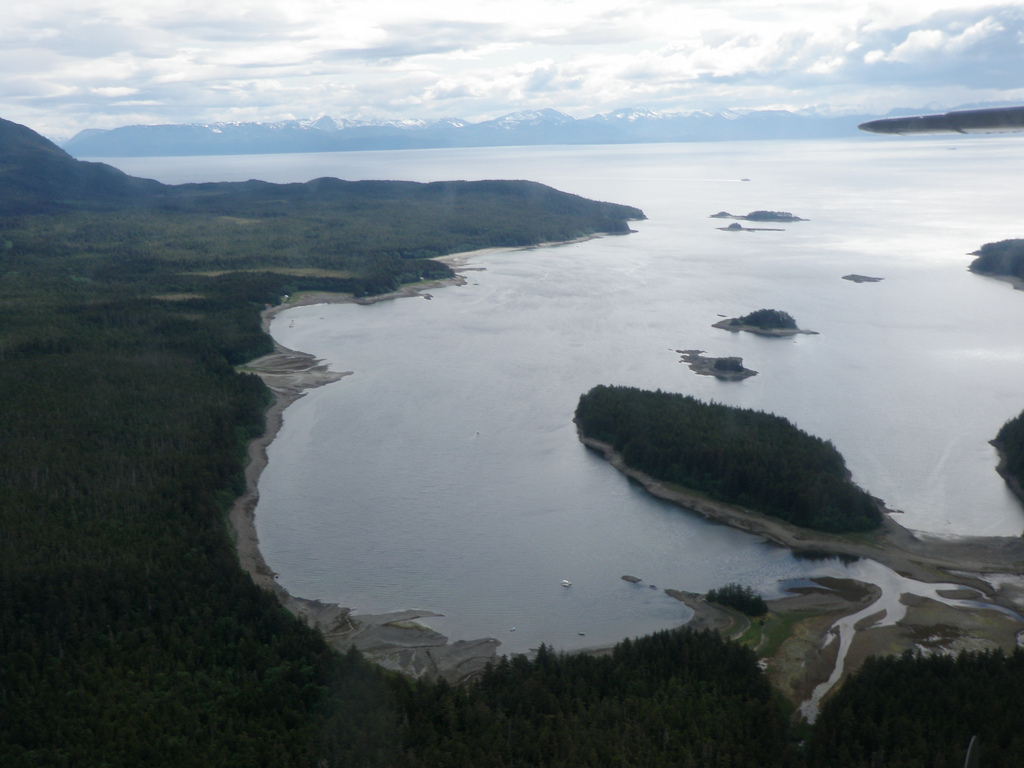
Here is a compilation of maps and aerial photos showing Funter Bay over more than 100 years. I wish I’d had this collection when I was a kid! They are great for seeing the rise and fall of development around the bay. The difference between high and low tide is also striking. If you’re a boater thinking of visiting Funter, take a look at some of the low-tide images before you take a short-cut, or you may be the next boat that someone has to pull off the sandbar! (Also think of the wind direction and bottom type, the anchors shown as moorage locations on the nautical charts are kind of another local joke… people end up dragging anchor if they use those spots in the wrong winds).

Some of the aerials are very large files, click them if you’d like to view the originals, but give them a few seconds to fully load (they may look grainy or pixelated at first).

I have collected these from several sources. The aerial photos are public domain data, produced by the Department of the Interior / United States Geological Survey. Many of these can be found at http://earthexplorer.usgs.gov/

Most of the topographic maps are products of the USGS, and can be found at http://nationalmap.gov/historical/

Nautical Charts were produced by the US Coast and Geodetic Survey (later NOAA), and some can be found at http://www.nauticalcharts.noaa.gov/csdl/ctp/abstract.htm

Funter Bay in 1905 (Nautical Chart):
1905 chart

1905 vicinity chart:
1905 vicinity chart

1914 nautical chart (essentially the same as the 1905 edition):
1914 chart

1921 USGS map showing some of the mining claims on the South Shore:Funter claims 1921

1948 aerial photo (click to open detailed original scale):
1948 Funter Bay

The 1948 aerial above is cool because it shows many of the old docks and waterfront structures that are now gone. I’ll try to highlight a few of these in a later post.

1951 vicinity map (USGS terrain-shaded topo):
1951 topo

1962 map by the Overseas Mineral Cooperation Association (a Japanese mineral investment group):1962 OMCA Map

I have highlighted structures shown on the OMCA map in red. I find it interesting that they show the cabins near Clear Point as well as the cabin between the creeks at Crab Cove.

1979 CIR aerial, taken from a NASA U-2 Spyplane as part of the Alaska High Altitude Aerial Photo project:
1979 Funter Bay

We did have a framed copy of the image above when I was a kid. This is in Color Infrared or CIR, meaning vegetation is shown in false-color red, and you can discern different types of vegetation from the different shades of red (so clearcuts and patches of different trees stand out from the predominant spruce):

1982 aerial photo (Color Infrared, click to open very large original):
1982 Funter Bay

1985 topo map of Mansfield Peninsula:
1985 topo

1987 nautical chart:
1987 chart

1990s topo map:
Topo

1996 or 1998 aerial photo (current residents may be able to pick out their houses and cabins in this one!):
1998 Funter Bay

2004 satellite image (sorry, not as high-res):
2004 Funter Bay

And just for fun, here are a few of my own photos from various aircraft passing over Funter.

2010 oblique aerial looking South-ish over Crab Cove, coming through the pass from Juneau:
0-aerial-2

2011 oblique of Funter Bay as seen looking NW-ish, from an Alaska Airlines jet:
0-aerial-3

With commercial satellite maps, most companies have yet to include much coverage of Funter Bay. However, if you zoom all the way in on Bing Maps, you’ll get some decently high-resolution imagery (although the light balance is bad).

This site is also really cool: http://alaskafisheries.noaa.gov/shorezone/

Similar to the old California Coastline project (but hopefully with less Barbra Streisand), the Alaska Shorezone Viewer allows you to pull up images (and video) of almost the entire Alaska coast! The interface is a little clunky and takes some getting used to, but the images are amazing!

That’s all I’ve got for now. If I come across any more interesting maps of Funter Bay, I will try to post them here!


Funter Bay History – Cannery Postcards and Leftovers

April 10, 2013
Cannery overview

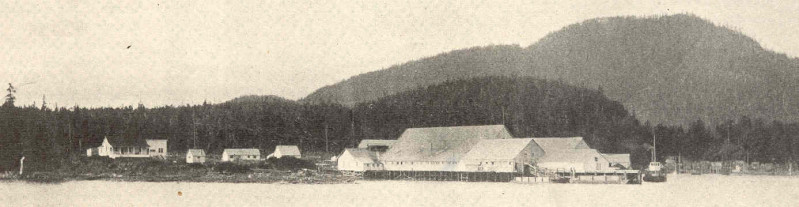
Thlinket Packing Co Cannery at Funter Bay (from Pacific Fisherman Annual Review 1908 via University of Washington Library Freshwater and Marine Image Bank, used as Public Domain per their policy.)

I came across a few old postcards that I’d purchased at an antique show in the Midwest, showing my hometown of Funter Bay, Alaska during the salmon cannery days. I’ve put together a little more information and back-story to these. I’ll try to add more photos and information on the history of Funter Bay as I have time.

postcard4

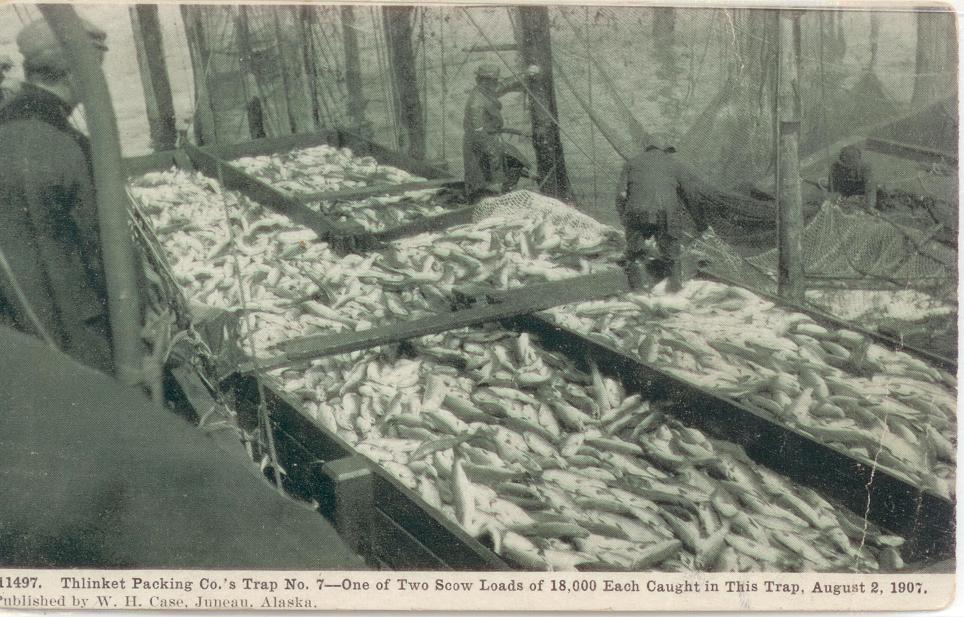
The cannery tug Anna Barron, shown tending Fish Trap #6 in or near Funter Bay in 1907. As with most of these postcards, this is a colorized B&W photo by Case and Draper, a Southeast Alaskan photo studio that operated until 1908.

Here is an original B&W of this image with some additional information, courtesy of the Alaska Digital Archives. Here’s another photo of the Anna Barron approaching the cannery dock with two scow-loads of fish.

Here is a close-up of what the crew is up to in the first postcard shown above. The derrick onboard the Anna Barron is lifting a section of fish trap net (Brailing) to dump the salmon into a scow (barge).

postcard2

And here are two versions (from two different postcards) showing the same operation from a different angle. I believe this is the same crew, although they’ve colorized Mr. Floppy Hat guy’s clothing differently:

postcard5postcard3

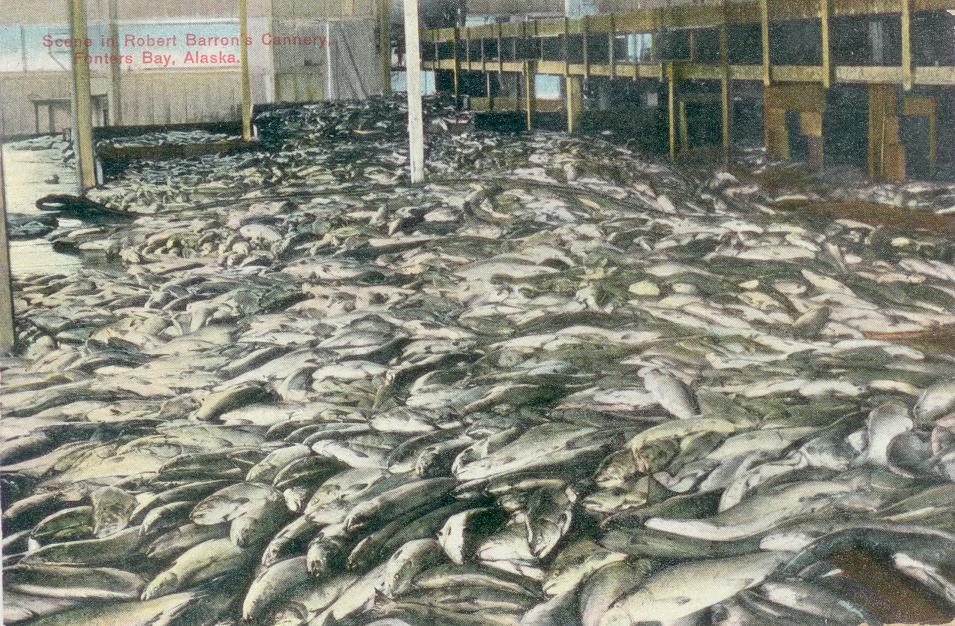
And here are the salmon after being unloaded at the cannery, waiting to be sent through the processing equipment to be cleaned and packaged.

postcard1

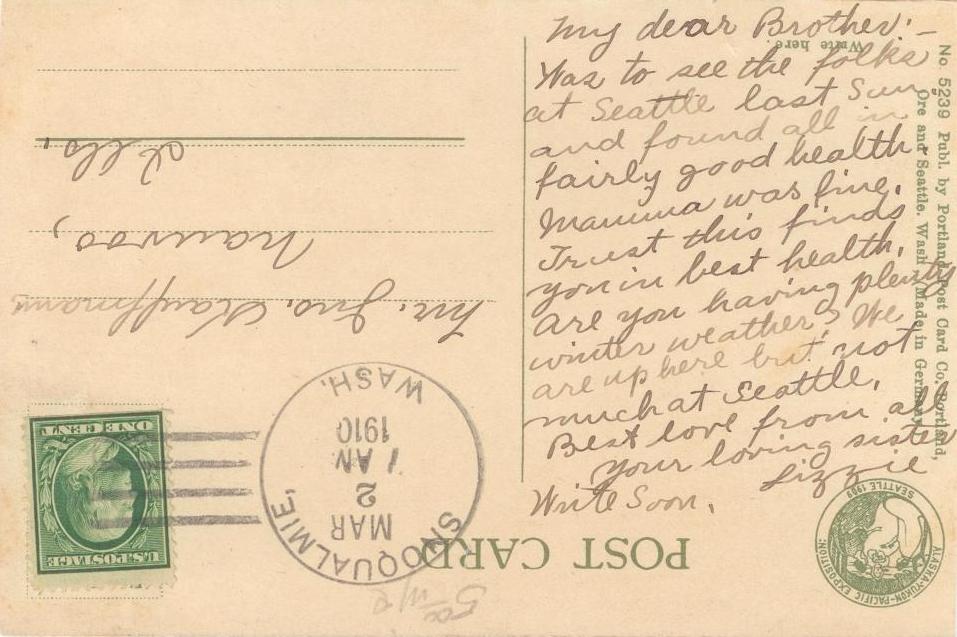
Just for fun, here’s the only postcard which was filled out and mailed, the rest were unused.

postcard1-back1 postcard1-back2

The Alaska Digital Archives have many more from this Case & Draper set, as well as photos of cannery operations from later years. All of them can be found here.

Here is another photo from the University of Washington Archives, showing salmon being brailed onboard the Anna Barron.:

brailing

Fish traps were hugely efficient at catching salmon, as they effectively blocked spawning streams and diverted all returning salmon into the nets, making the salmon do the work of catching themselves. They were often temporary structures maintained during the spawning season, usually being built from untreated driven pilings, floating logs cut locally, and nets. The nets and more expensive hardware were stored over the winter, and the trap structures would often require repair or rebuilding in the spring after winter storms and rot had taken their toll. Today you can still sometimes find “trap logs” on the beaches, identifiable by the rusty bolts and hardware that attached them to other parts of the structure.

weasel 1
A trap log in our yard (with an ermine on it). These are so massive that it’s easier just to leave them where they are and attach stuff to them. This one was the top end anchor of our outhaul.

The design of fish traps resulted in enormous early profits for the canneries, but quickly proved self-defeating, as the salmon runs for those streams were wiped out. In the 19th and early half of the 20th century there were few legal restrictions on fishing, although competition was fierce, the the point of nearing international incidents. In 1904, President Roosevelt dispatched the revenue cutter Perry to Funter Bay, where two Japanese fishing vessels were seized and the crews deported (source). (I hadn’t heard of this before, so I Googled around a bit and happened across this picture of the Perry’s eventual fate in 1910).
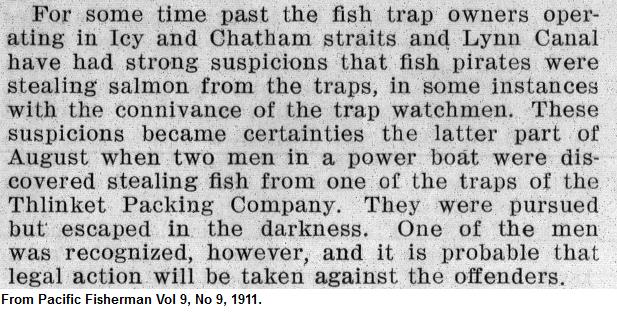
Native Alaskans and independent fishermen often opposed and sometimes sabotaged fish traps. There were even incidents of “Fish Piracy“, in which traps were raided before the company could empty them. This led to watchmen manning each trap, living on board the floating or driven-piling structure in small shacks during the fishing season, although the watchmen could sometimes be bribed.

pirates

Here’s a model of a fish trap, including the small watchman’s shack:

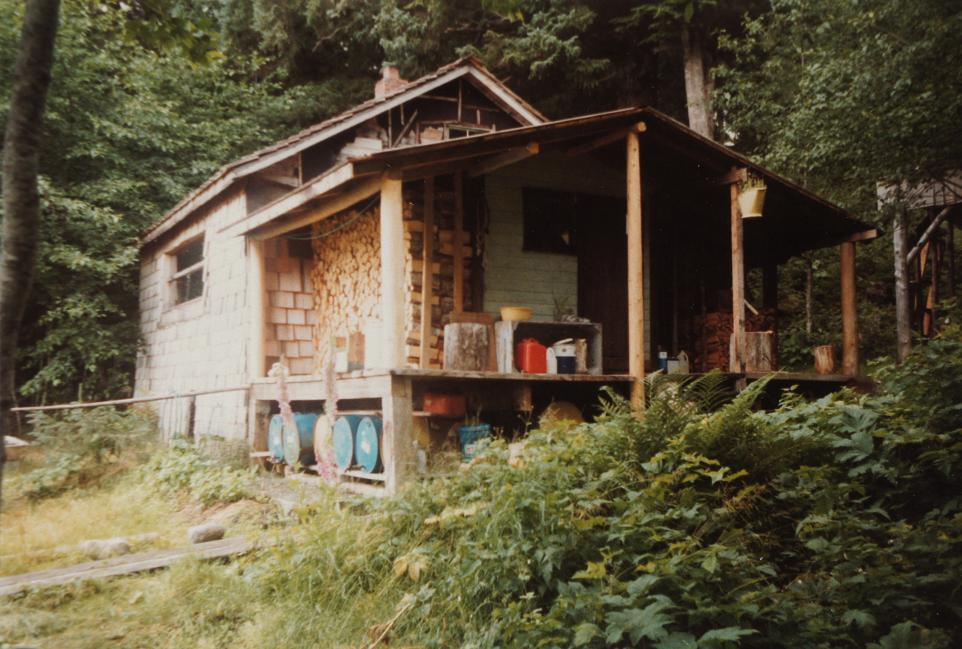
Part of the house I grew up in was a trap watchman’s shack that was moved up the beach. My Dad later added it to the house as an entry/mudroom.

House early
An photo of our house soon after my Dad moved in. The structure to the left is the former trap watchman’s shack, which Dad moved up and to the right to attach to the main house.

House back porch
The same house after Dad began adding to it. The fish trap shack is in the foreground surrounded by a new deck and awning.

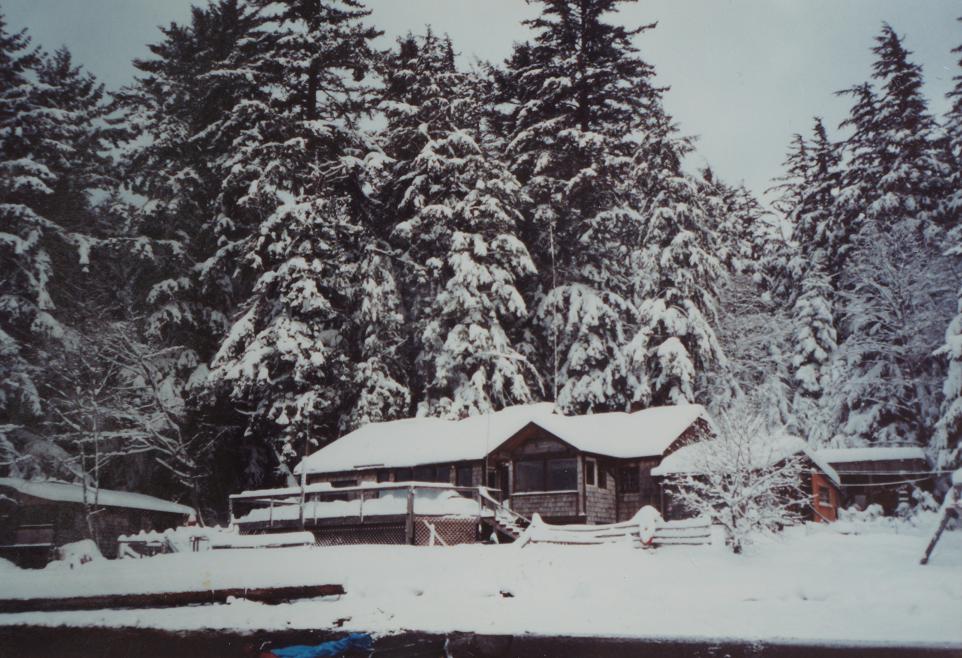
The house at Funter Bay on a snowy day. Normally winter was just wet, and snow didn't tend to last very long.
The final house layout, the entry is on the right behind the small Alder tree.

Fish traps were eventually regulated and later banned entirely. More information on Fish Traps (PDF) can be found in this research paper from the University of Alaska, there’s also an HTML version.

And now, more information on the cannery itself.

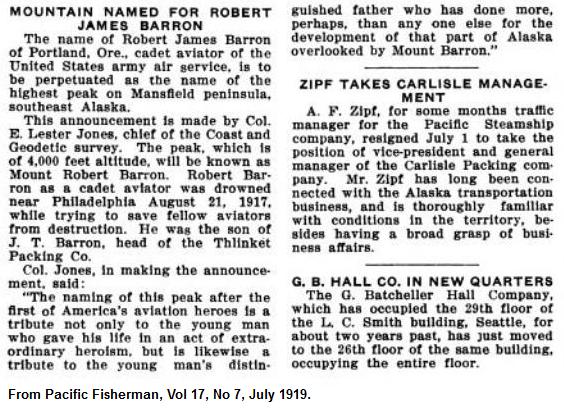
The Thlinket Packing Company, owned by James T. Barron of Portland, Oregon, was begun in 1902. It operated until the 1960s when fish traps were effectively outlawed. I suspect that other fish packing operations at Funter predated this company (there was also a saltery less than a mile away on Highwater Island). During the later years, the cannery location became known as “Funter”, and is shown as a town on some maps. It had regular mail service by both boat and seaplane. Well-maintained trails connected the cannery to the gold mines at other locations around the bay, and the Bear Creek Trail ran over the top of Mansfield Peninsula through a pass to the other side of Admiralty Island (facing Juneau). Various pipelines connected the cannery to nearby streams, as operations required a large amount of fresh water. Scows were overwintered on an extensive slipway and drydock system in Coot Cove.

Mount Robert Barron, the highest peak near Funter Bay, was named in 1919 to honor J. T. Barron’s son Robert.

Robert Barron

James Barron apparently also built an office building in Portland in 1921.

And to further wander from the original topic of postcards, here are some photos my Dad took of the Cannery’s appearance when he arrived in the 70s:

Funter Cannery

An overview of the cannery as seen from the water.

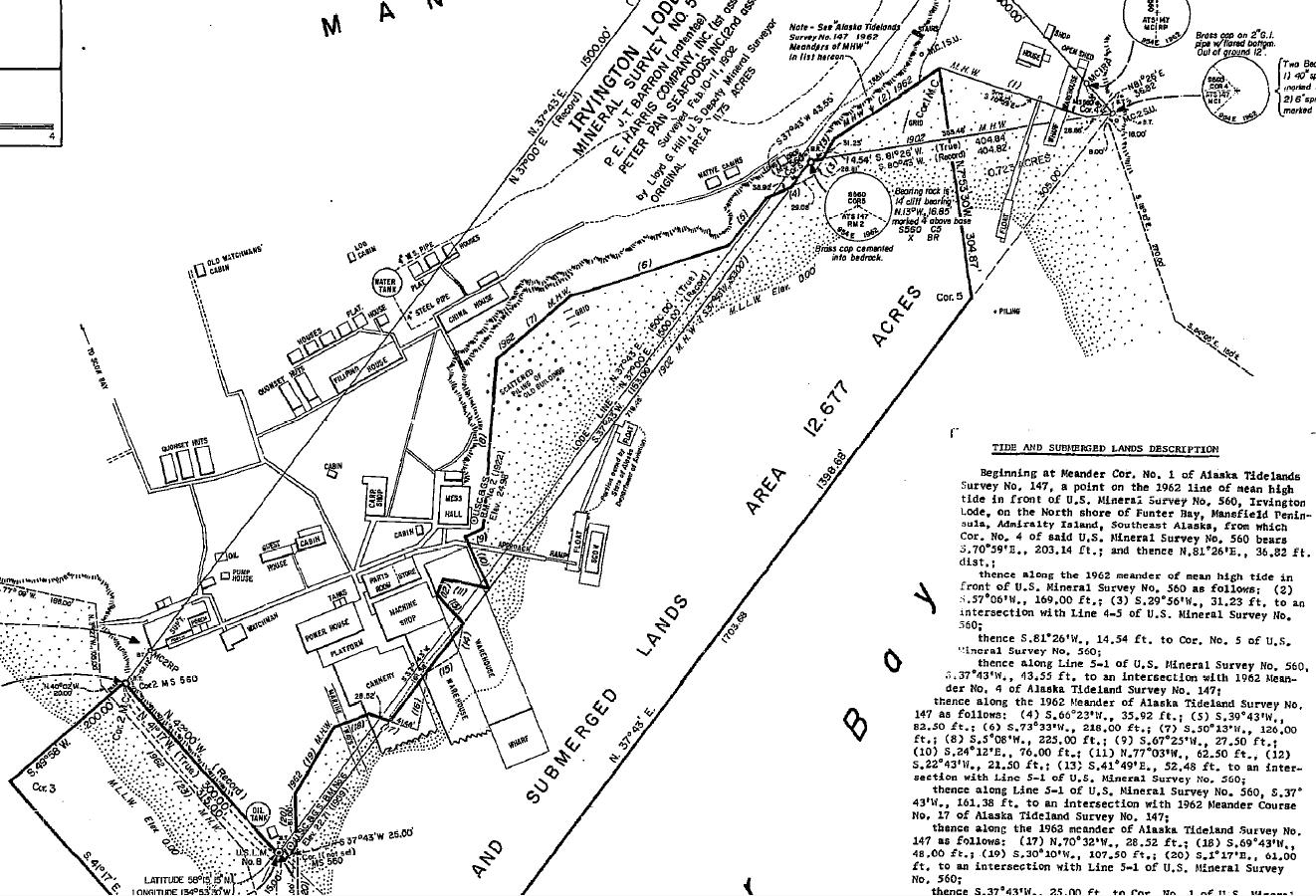
Here is a great survey map showing the layout of some of the buildings in 1964. This includes many additions, such as the Quonset huts brought in by the army during WWII to house “evacuated” Aleuts (more information on that unfortunate incident is available here).

Cannery map

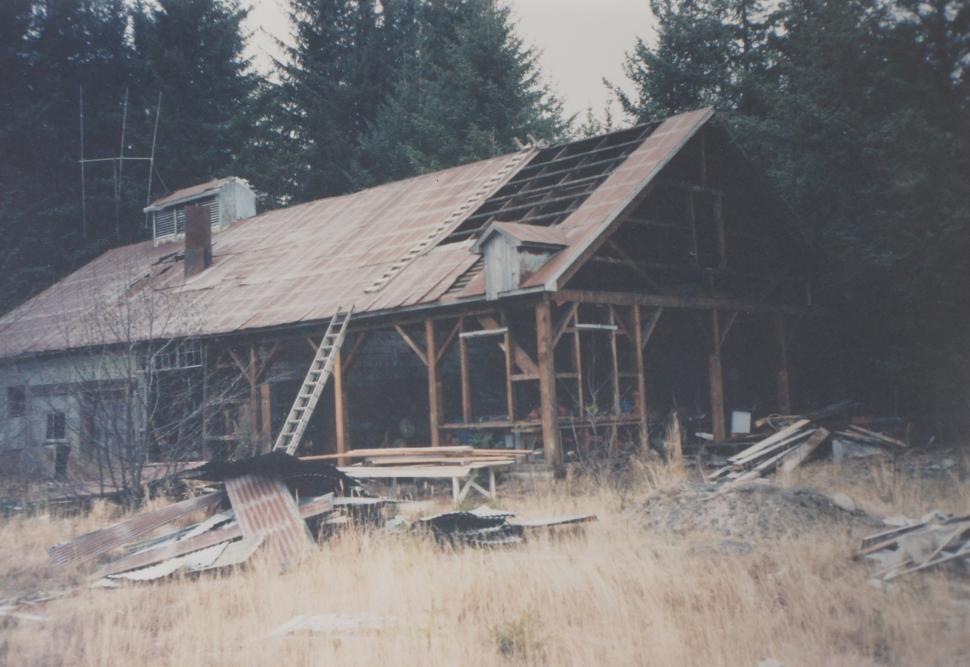
The carpentry shop. That’s not a church, the cross at the top is a telephone pole. This is where Dad built his first wooden fishing boat:

Cannery 1Cannery 2

I believe this was the power house:

Cannery 5

Either the Chinese or Filipino bunkhouse:

Cannery 3

Various cannery ruins on the beach:

Cannery ruins


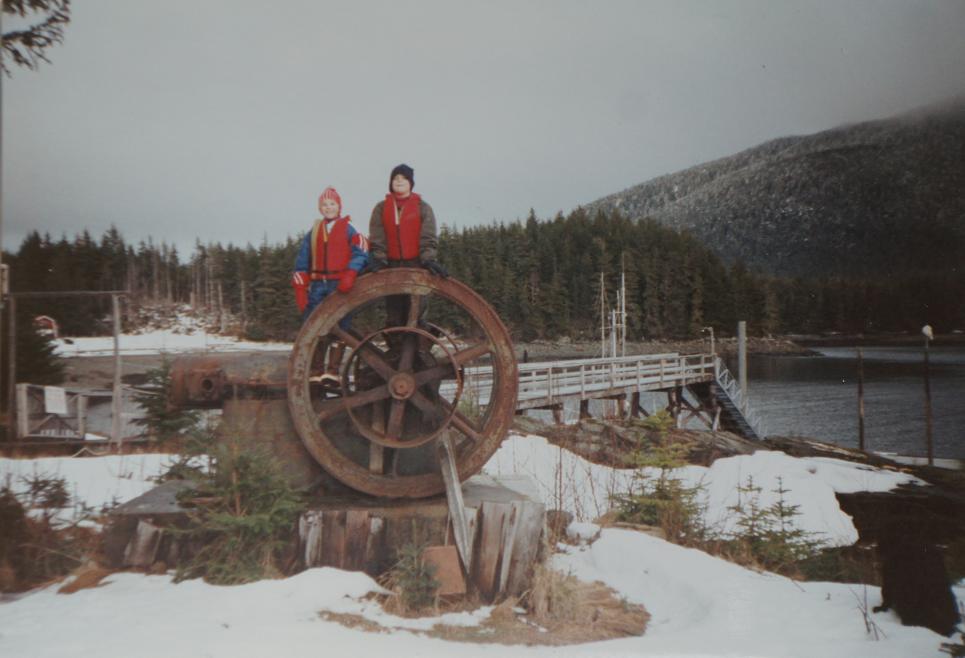
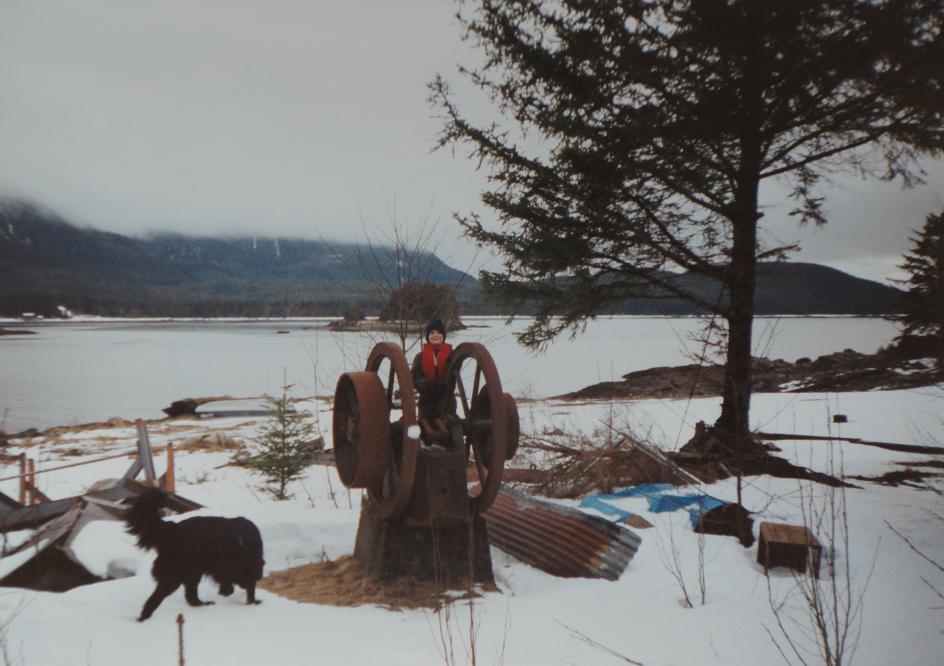
When I was a kid, we still had a few of these buildings left, and a lot of leftover equipment and rusty “stuff” on the beach. Unfortunately, a lot of the old buildings were burned or bulldozed during various subdivision and redevelopment attempts (including some built from huge California Redwood planks, worth a fortune today)

Steam Engine 1Steam Engine 2

Here are Megan and I on two of the stationary gas engines that drove the canning lines. These made great trains/cannons/spaceships!

steamengine1.jpg

These would have had a belt driving overhead rods, which drove the other equipment throughout the cannery building. Here’s a photo from the archives showing the overhead shafts and belt drives

This post is starting to get ridiculously long and wandering, so I’ll continue thing later. Next up: what happened to the Anna Barron? Stay tuned!

Edit: Gordon Harrison pointed out that the stationary engines were early Fairbanks-Morse gas engines, not steam as I had previously thought.