DIY radio observatory progress

February 25, 2026

I’ve been making progress on the radio observatory / satellite tracking station at Sandland. We picked this 18ft geodesic radome up a couple years ago from the Carp Observatory and have been slowly getting it put together.
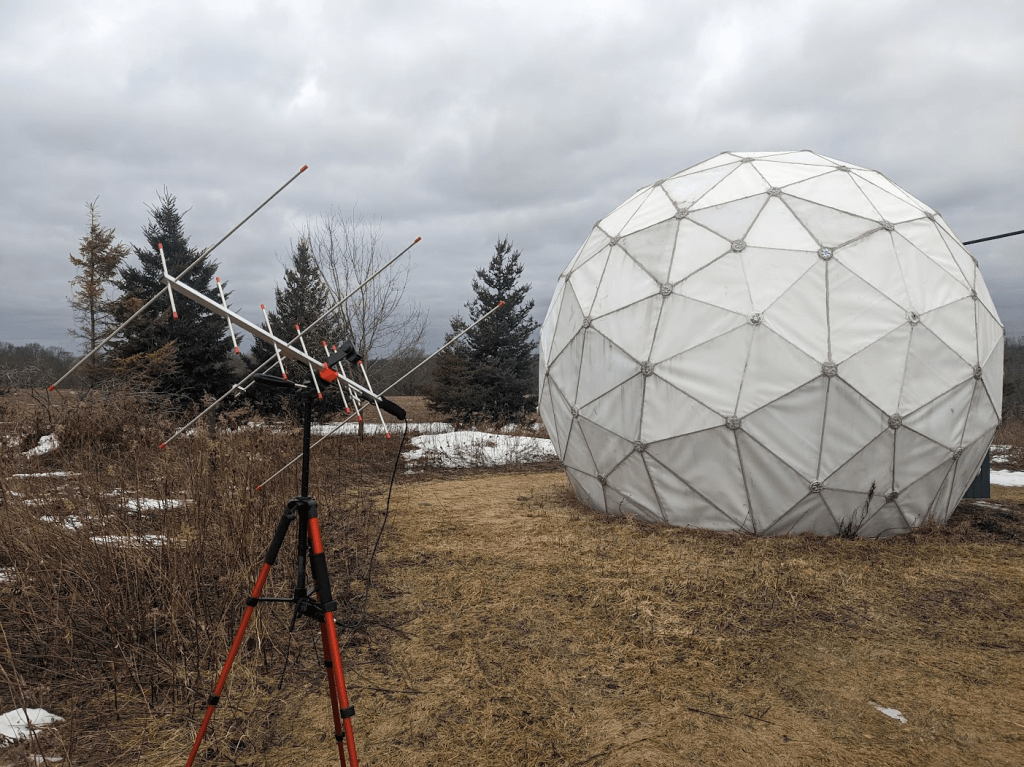
Radome and Arrow II Dual-Band Hamsat antenna.

During 2025 I poured a cement footing and installed a satellite dish and motorized pointing system. This is only a 6ft (~1.8M) diameter antenna. The current motor is based on a large pan/tilt mount (Quickset QPT-90) from a vintage security camera. Eventually I hope to install a larger reflector and a more capable motor. I got this dish from Ax-Man Surplus (they don’t often have them and their inventory is constantly changing). I’ve heard these are also sold online as solar cookers.
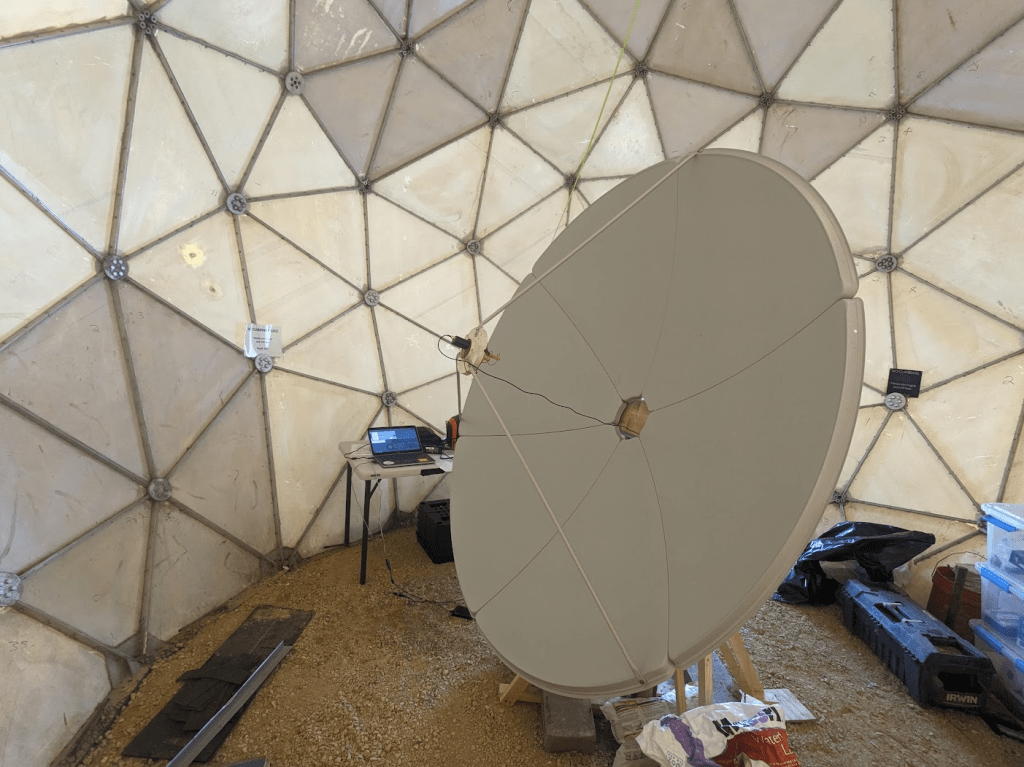
6ft satellite dish inside the radome.

The motor is run by an Arduino microcontroller and surplus 24vAC power supply. Coordinates are passed to the Arduino via serial (USB) connection from a laptop, and the pan/tilt mount uses built-in potentiometers to determine where it’s pointing. I’m using code originally from SARCnet which I’ve modified to work with this setup. The laptop runs Gpredict to calculate positions from orbital data. It also runs SDR++ to record signals from a HackRF One software-defined radio.
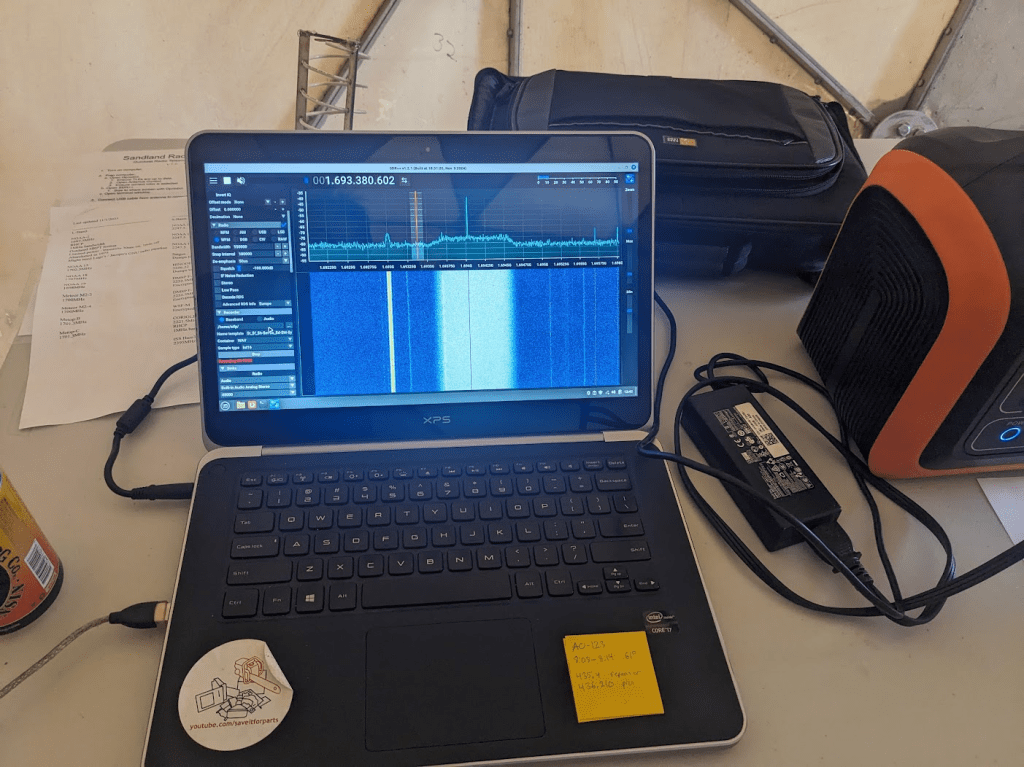
Receiving GOES weather satellite with the 6ft dish.

Other projects in 2025 involved finishing the doorway for the dome, so now we can close out wind, rain, and larger wildlife. This took a few tries, people kept leaving the door open for the wind to damage it. The dome is really nice once it’s all closed up, even on a cold February day it’s a nice protected work space! And not having to worry about wind pushing the dish around is nice as well.
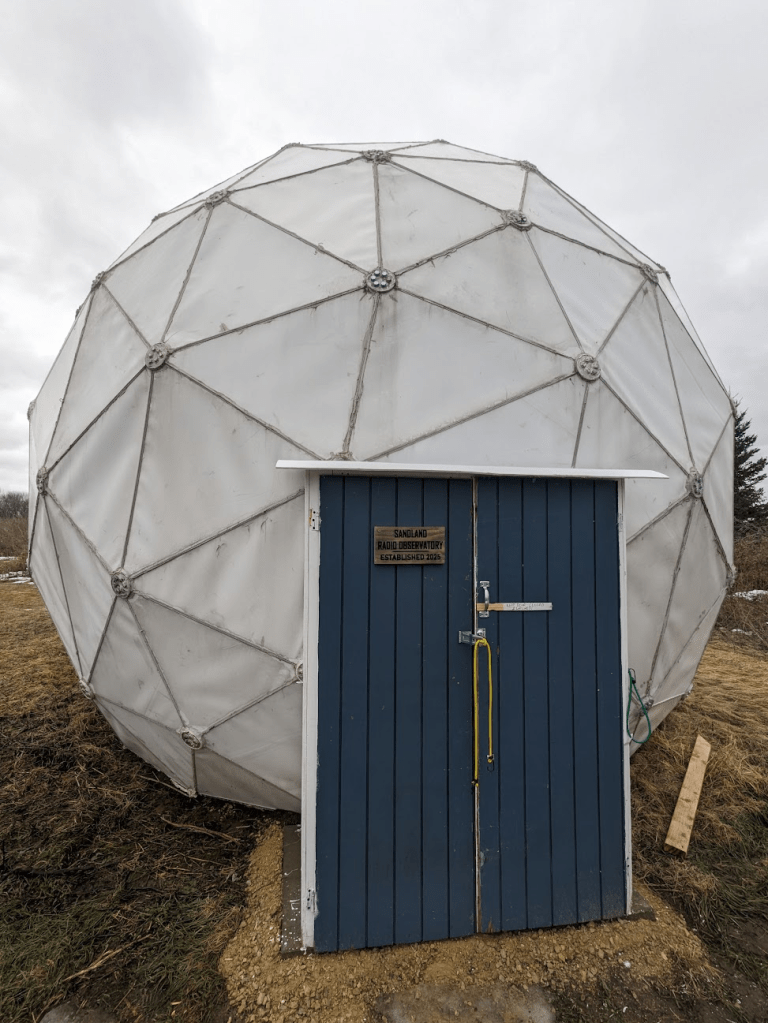
New radome door.
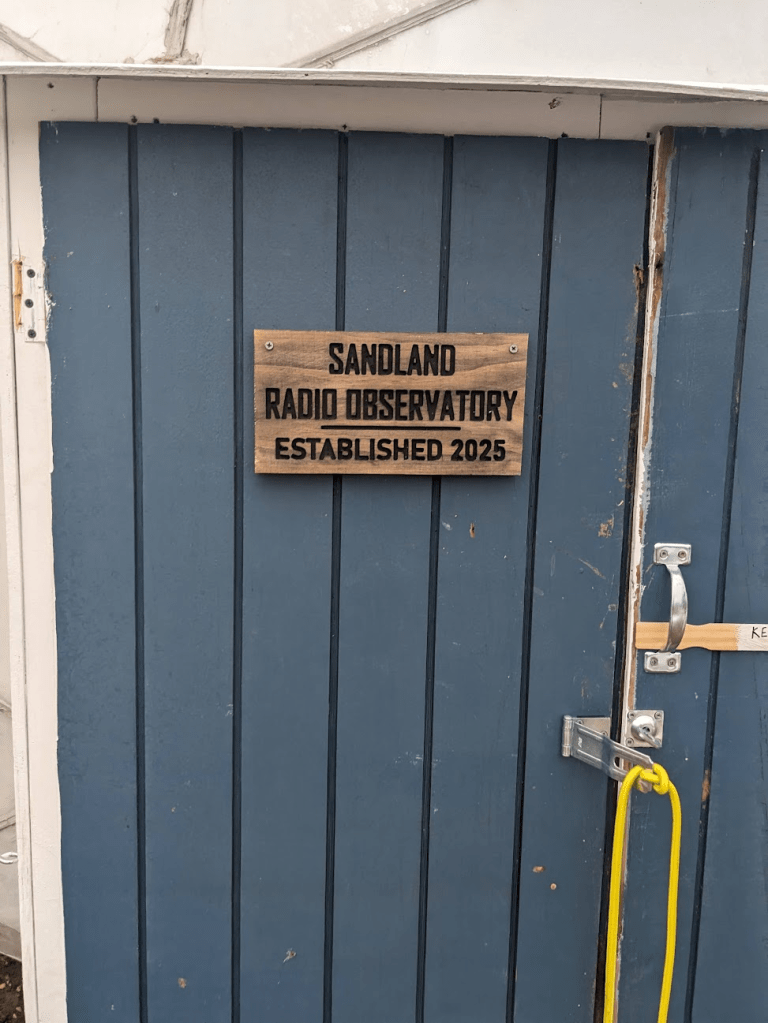
CNC door sign for the radome.

I’ve also been calibrating the dish to known geographic coordinates and orientation, so we can get the most accurate pointing. This will be critical when doing astronomy projects, and when tracking fast-moving Low-Earth-Orbit satellites with weak radios.
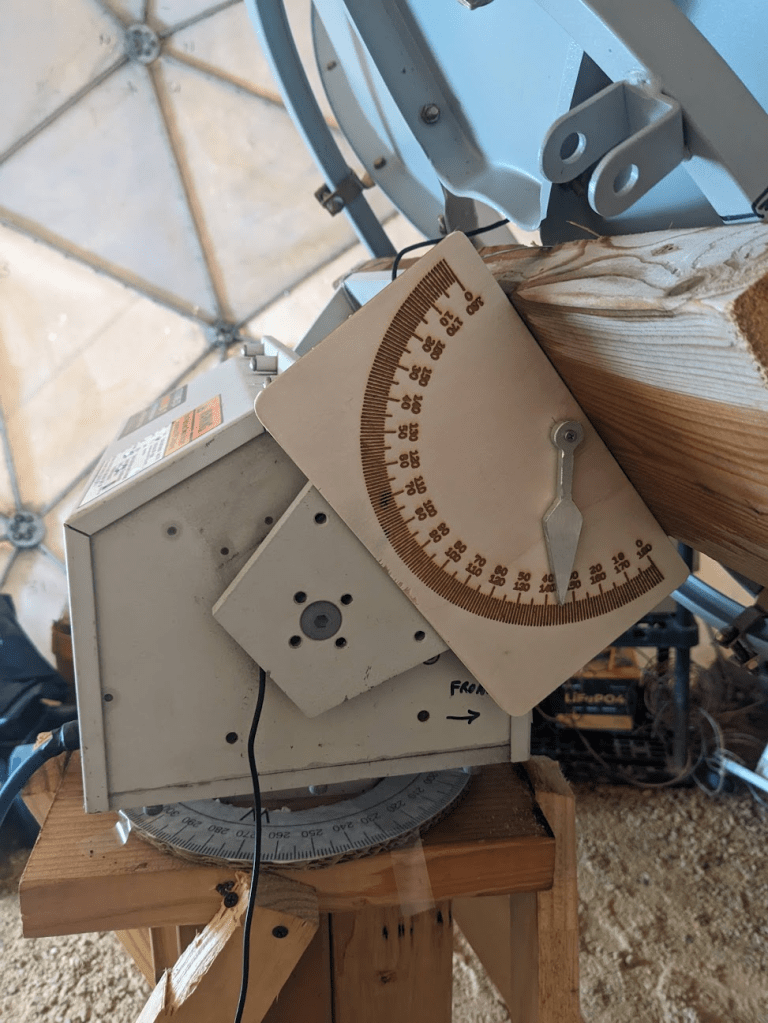
Manual calibration aid for the dish (I used electronic angle indicators for surveying, but this is handy for quickly seeing where the dish is pointed vs where the computer thinks it’s pointed).

After calibration and some adjustments to my code, the dish has been working great at tracking satellites! It’s so large that I can use almost any feed at the focal point, I’ve been reliably receiving linear L-Band signals with a circular S-Band feed!
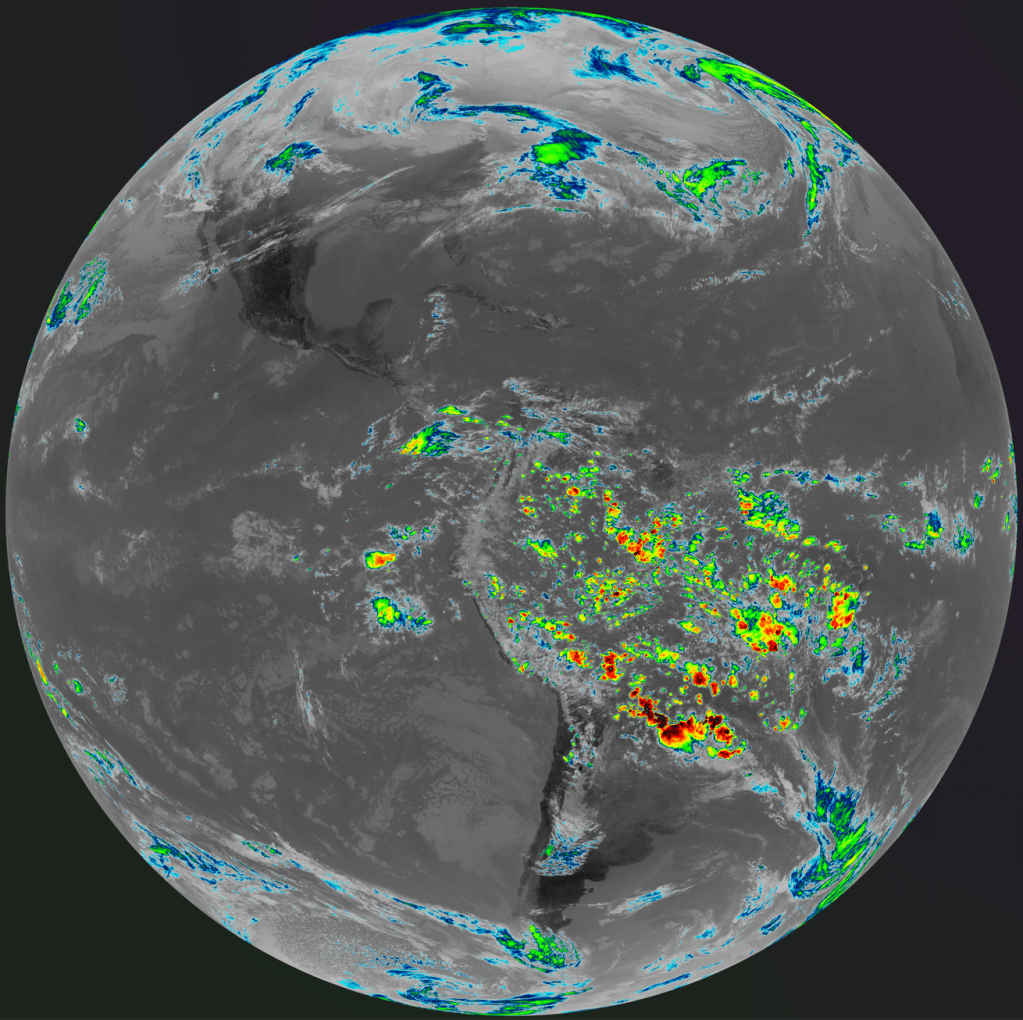
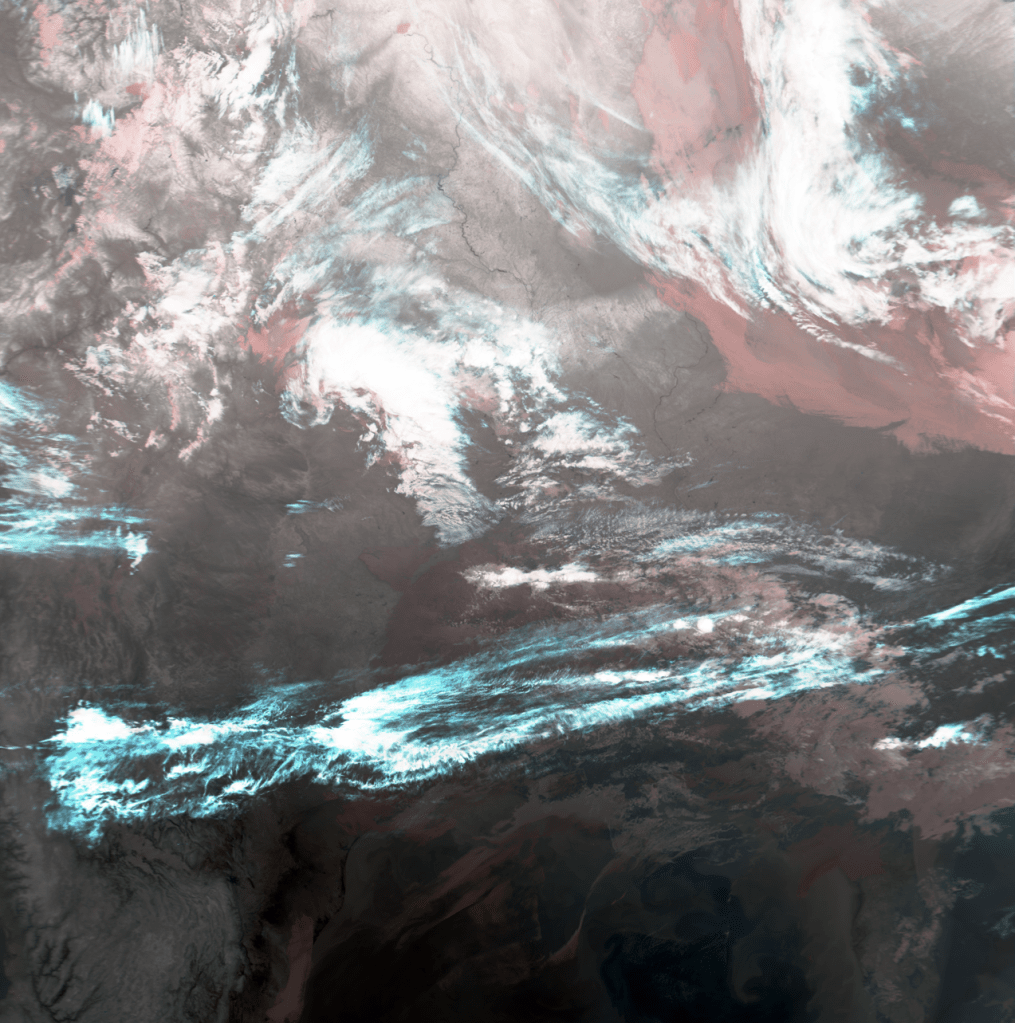
GOES-East full disk image with precipitation.
METOP-B weather satellite image.


As usual I have a number of videos about this project on YouTube. You can check some of them out below!


Funter Bay History: Mt. Robert Barron Repeater

February 25, 2014

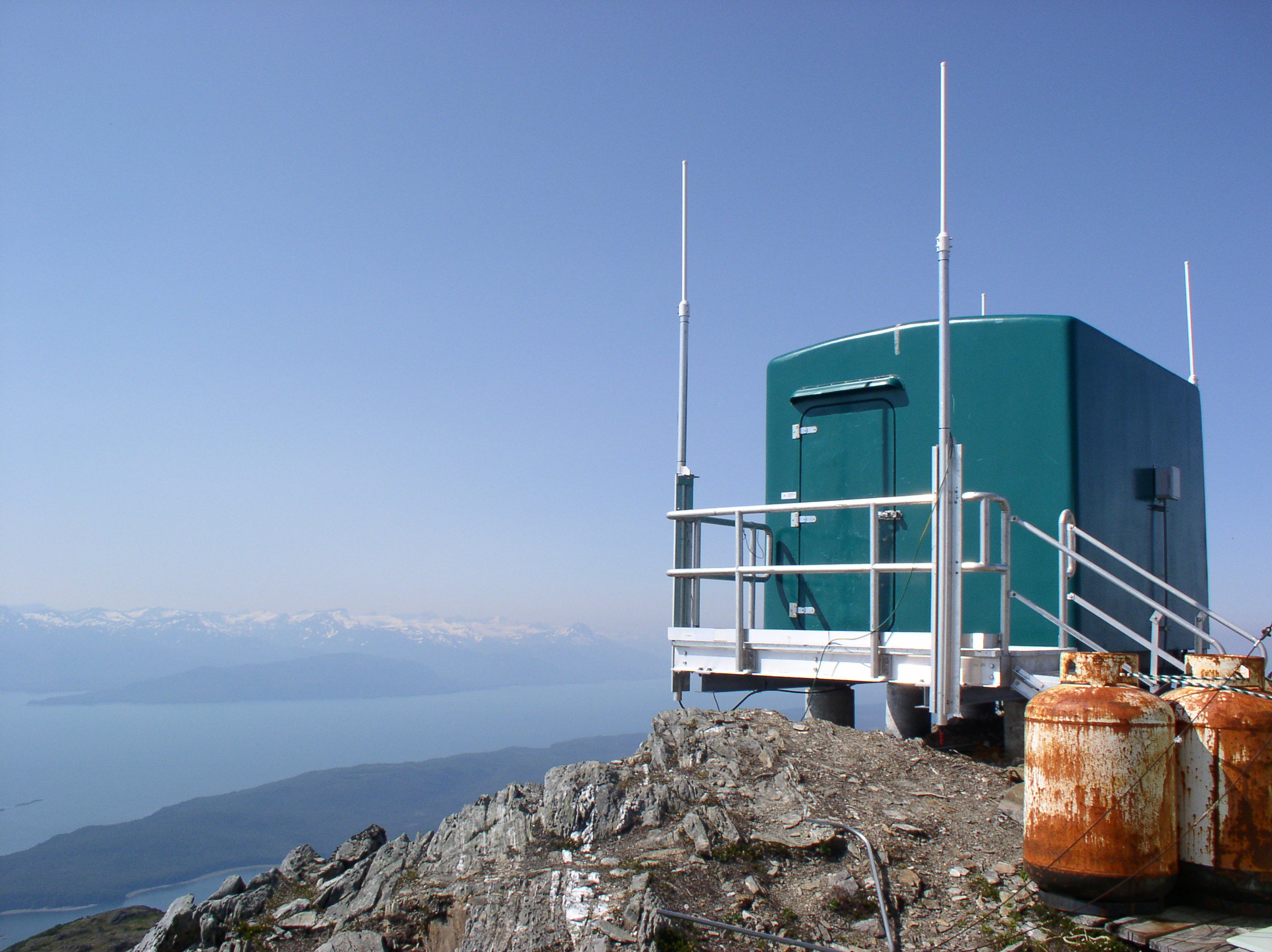
High above Funter Bay on Mt. Robert Barron is a government radio communication site. This unmanned facility rebroadcasts radio traffic for a variety of public and private users. Located at an elevation 3,475ft, the one-acre site is part of the Tongass National Forest and is operated under a lease agreement with the forest service.

OLYMPUS DIGITAL CAMERA

The site was built in the early 1970s as part of the National Distress System. This was designed to improve emergency radio coverage for coastal areas. The original 15ft tower was replaced around 2002 with a 50ft tower to allow more distance between antennas.

OLYMPUS DIGITAL CAMERA

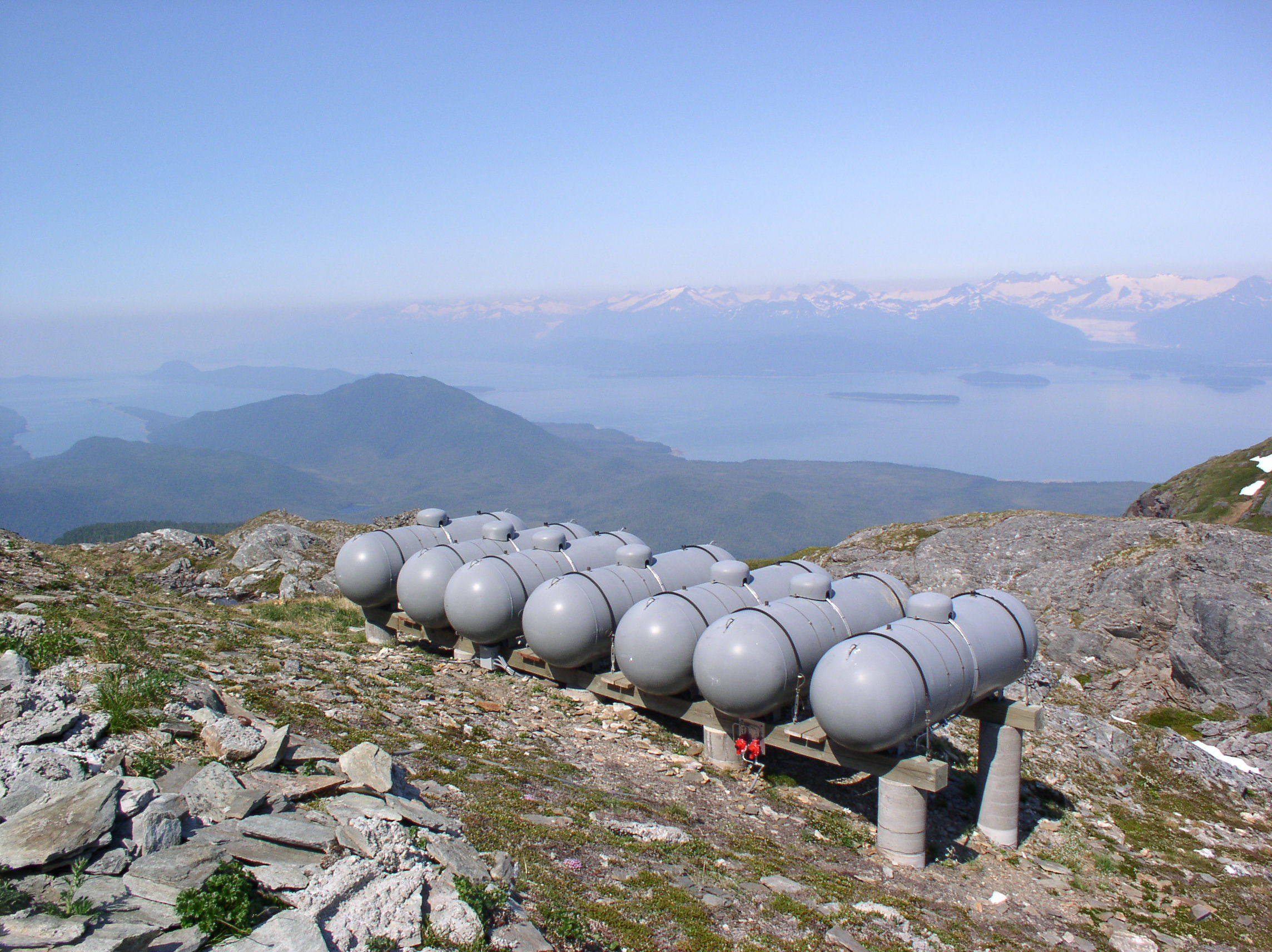
The tower is normally accessed by helicopter from Juneau. The site is powered by propane generators as well as a solar array. One report indicates that this site uses about 3,000 gallons of propane each year, while another states the same amount lasts about two years. A thesis study notes that the site used 11.12kWh/day and cost about $7,200/year in 2001.

OLYMPUS DIGITAL CAMERA

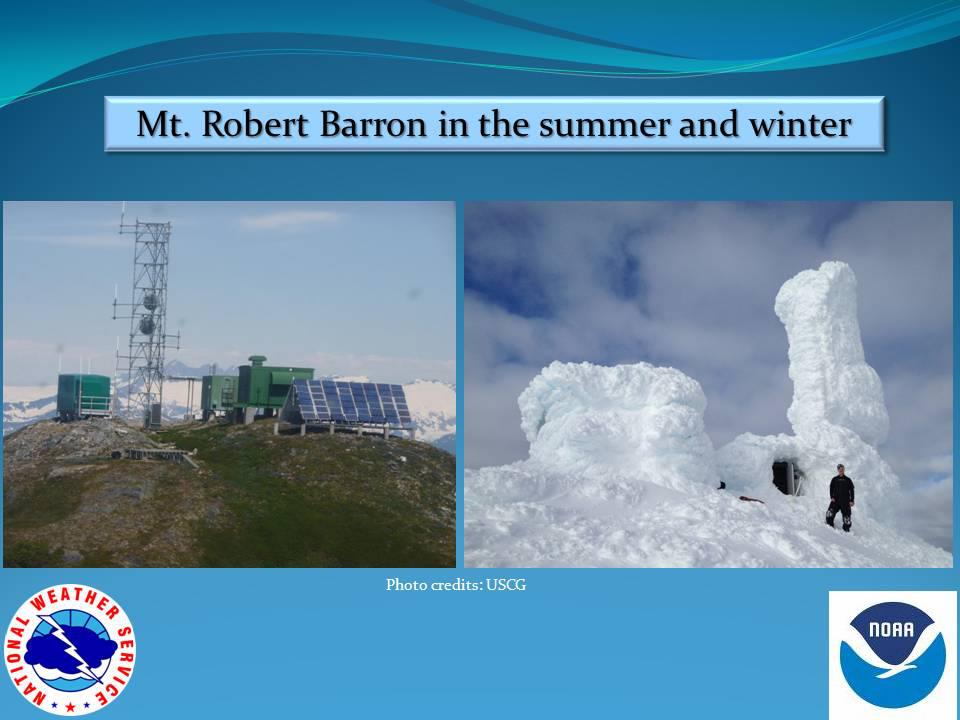
The weather at this site can be extreme, with ice and snow sometimes coating the towers and huts. While most of the radio antennas can transmit through the ice, any broken equipment or maintenance requires personnel to fly out and chop ice from the structures. The power system thesis notes that a wind turbine was installed at a similar site in 1999, but it was destroyed by winds in excess of 160mph.

Barron Ice
(US Coast Guard photo used as Public Domain)

Robert Barron Repeater
(US Coast Guard photo used as Public Domain)

Another photo of the site iced up in 2012 can be seen here. Some photos from 2009 are here.

A video of the site coated in ice in spring of 2013 is here. Another video of the site in ice-free condition from January 2014 is here.

Some more views from the summit:

IMG_1193 OLYMPUS DIGITAL CAMERA OLYMPUS DIGITAL CAMERA

There used to be a snow gauge installed lower on the mountain. This was a wooden structure with height markings, which could be read by passing aircraft or possibly by binoculars from the weather station at the cannery. The gauge has fallen apart, but a few wooden pieces with orange and black markings can be found.

OLYMPUS DIGITAL CAMERA

Radio services at the Mt. Robert Barron site include:

-NOAA Weather Radio channel 3. Callsign KZZ87 on 162.450mhz.

-Aeronautical Remote Communication Outlet (flight information repeater) on 121.1mhz

-Aeronautical Remote Comm Air/Ground (Flight Center repeater) on 133.9mhz

-Radio Comm Link Terminal (Aircraft Flight Data) on 941.825mhz (formerly 943.525).

-State of Alaska Public Safety Pool – KNIR245 on 155.415mhz

-Coast Guard marine VHF “High Level Site” (normally monitoring channel 16, also capable of channels 6, 12, 13, 21A, 22A, and 81A).

-Temsco Helicopter Service – WPKI643 on 151.775mhz

-Amatuer 2m repeater NL7B on 145.400mhz

-Forest Service / Fire – 171.575mhz

-City and Borough of Juneau – Microwave Industrial / Business Pool – 952.38125 Path Frequency.

Alaska Power & Telephone Microwave Industrial / Business Pool (the telephone system for many small communities). Various frequencies.

Several cellular and telecom companies currently hold or have held licenses involving Robert Baron Peak. There is not a cell tower here, but various companies use bandwidth on the microwave repeaters to hit other stations and cell towers around Southeast.

And finally, a very large panorama of Funter Bay from partway up the mountain, make sure to click it to get the full size!

??????????????????????