Funter Bay History: Fishermen Part III

March 18, 2014

In this edition of Funter Bay History we return to the topic of commercial salmon fishing. A local fisherman very generously provided some photos and information about Funter Bay in the 1960s, which make up the bulk of this post (Previous posts on this topic are in Part 1 and Part 2).

1

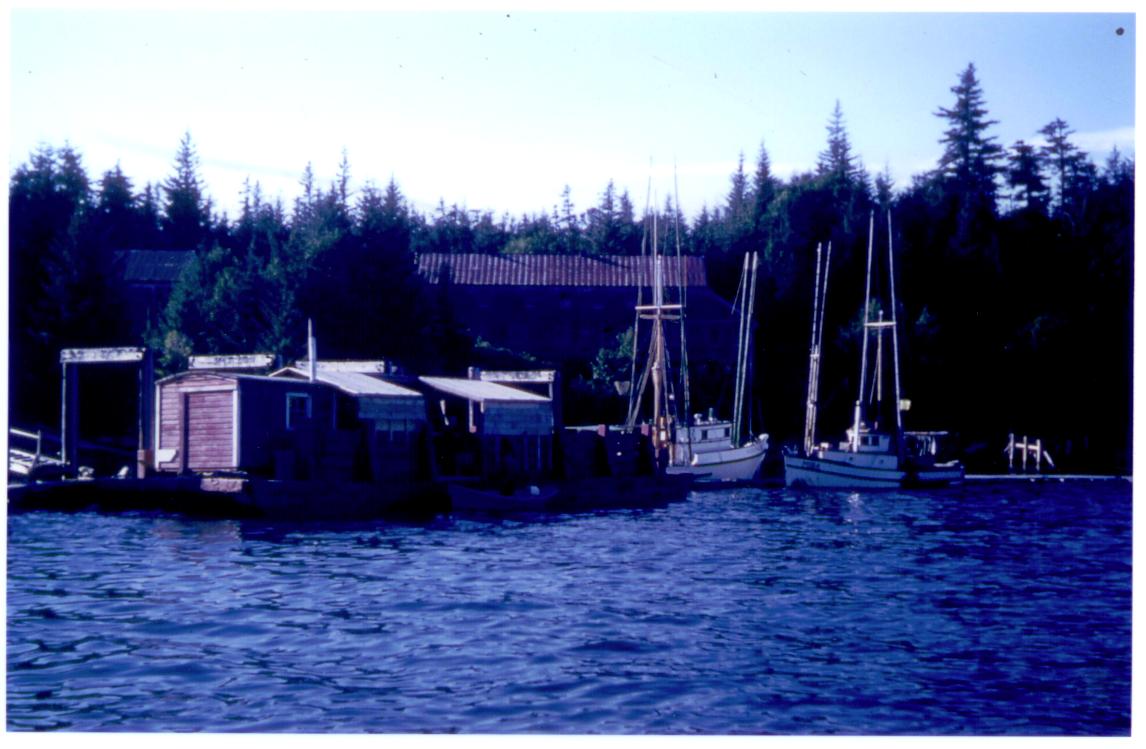
Seen above is the Funter Bay cannery and public dock circa 1958-1960. The trollers Merry Fortune and Mira are tied up, along with the fish scow. The scow was owned by Art Berthold, of the packer Fern II. Art would visit the bay regularly to pick up fish, with local residents Gunner and Lassie Ohman operating the scow. Harold Hargrave owned the Merry Fortune and lived in a house just to the right of this photo. There were three fishing boats named the Mira in Southeast Alaska around this time, this may be the one from Juneau owned by Arnold Henrickson (per the Merchant Vessel Registry)
2
A closer view of the cannery dock and scow, with one of the cannery bunkhouses in the background. The red structure with curved roof on the near end of the scow appears to be a former fish trap watchman’s shack, these were frequently repurposed and some can still be found in use around Funter Bay.
3

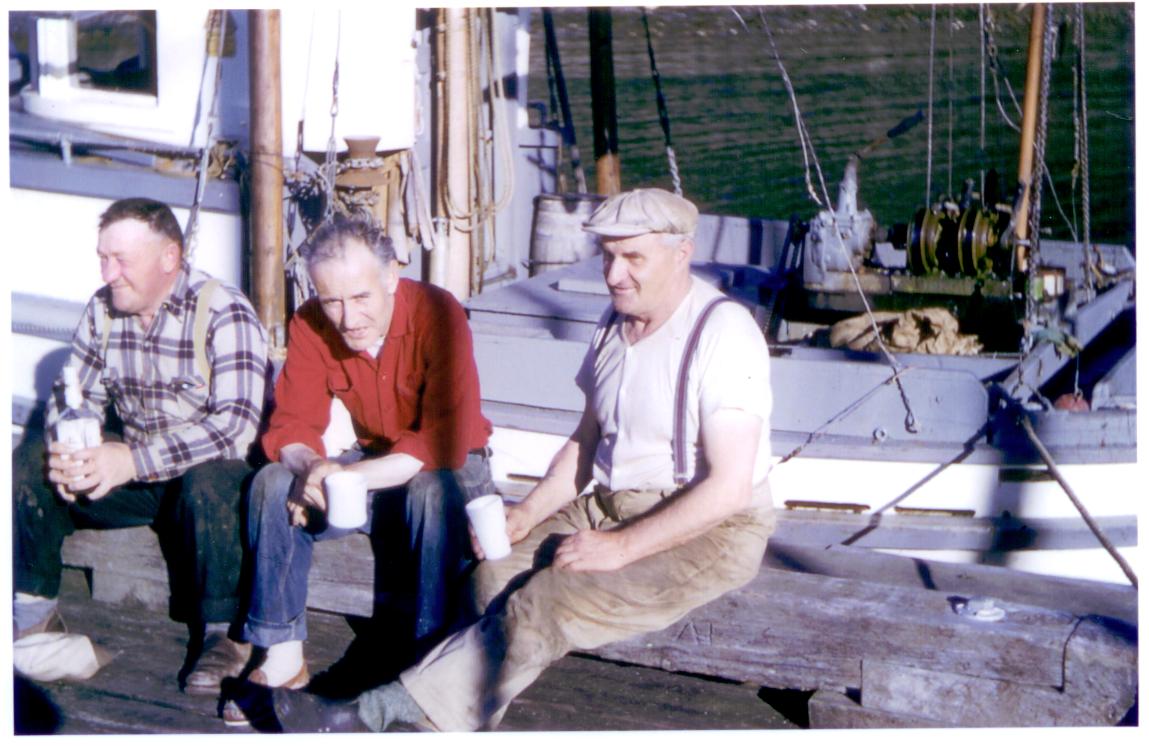
Fishermen (L-R) Walt Mackey, Ken Lameroux, and Jack Kolby, having an afternoon drink at the dock (of “milk, no doubt” according to the source!). Walt’s boat the Elliott is behind them. Ken fished the Lillian L, and Jack fished the Ruby.
4

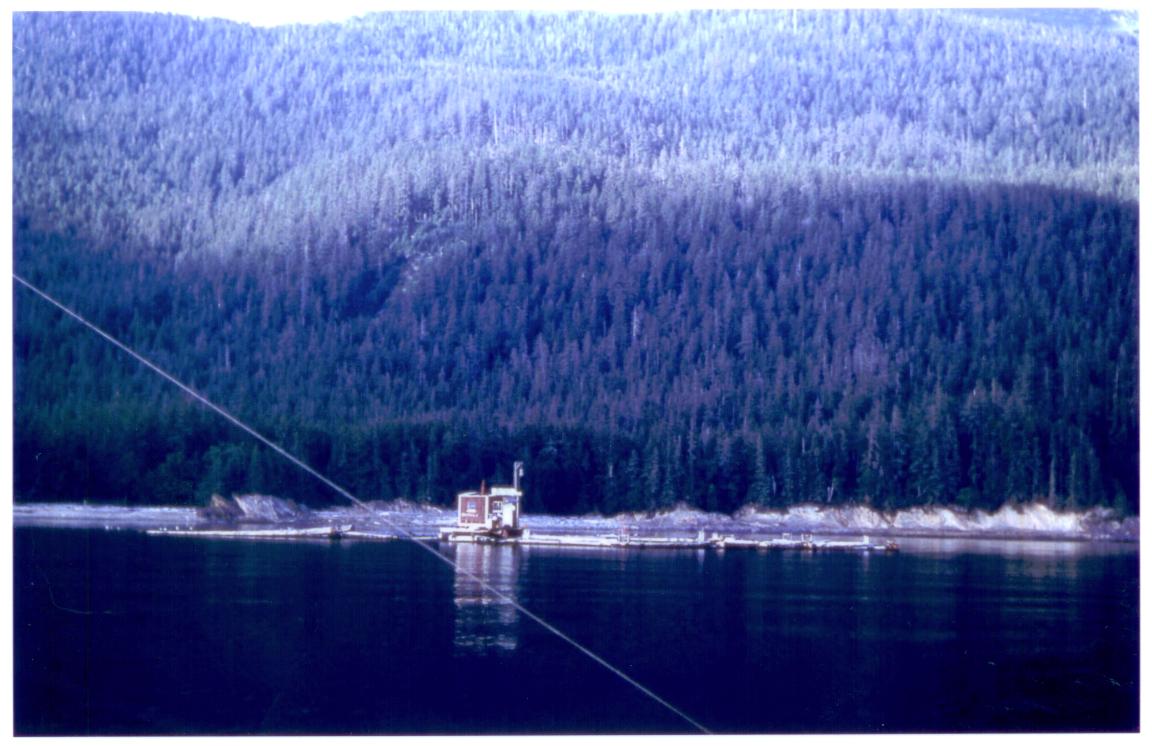
The fish trap at Lizard Head (the contentious Claire Alexander fish trap mentioned in this post). This photo is from around 1958, the trap was removed when Alaska became a state in 1959. The structure on top is the watchman’s shack, the trap itself is made up of the low floating logs.
5

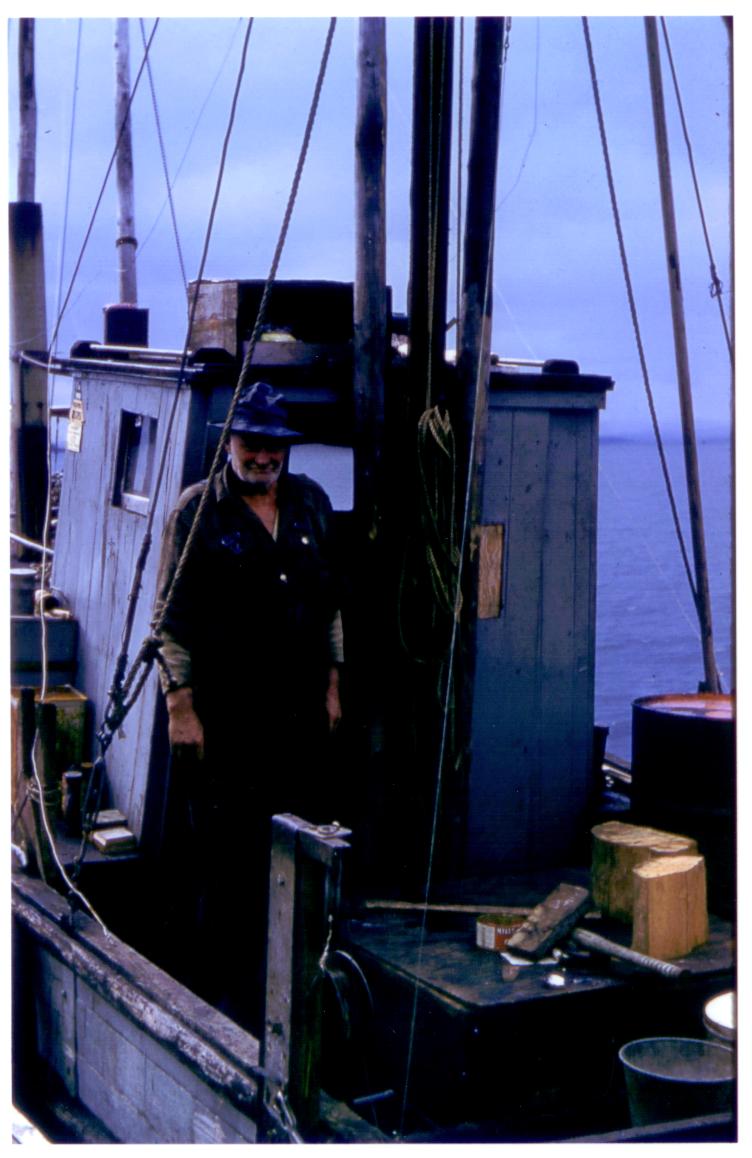
Above is “Dirty Foot Al”, so called because he didn’t wear shoes. Al built his own boat on the beach and heated with wood, you can see blocks of firewood and his axe on deck (oil heat using the same diesel as the engine was more common).
6

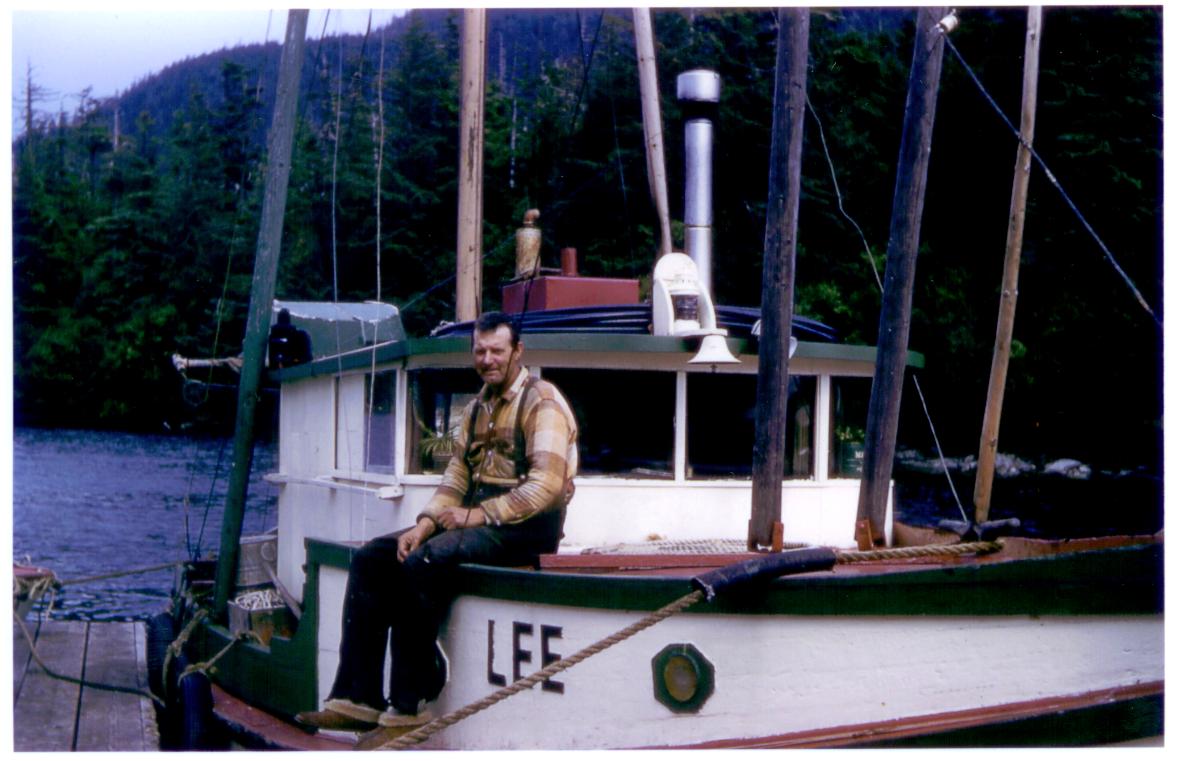
The troller Lee was fished by Ted Childress, seen above, and his wife (who owned the boat). It was reportedly a “Columbia River model”

A 1955 newspaper article (mentioned in the Bayers notes) described the ferry Teddy abandoned at Funter Bay after experiencing engine trouble. The owner reportedly went on to fish the “Lee”, but their name is not given.

7

Jack Kolby (or Koby?) fished the Ruby, seen above at Elfin Cove. Jack was reportedly of Swiss background, and loved to tell stories.

8

the Rosalind was owned by a man named Ben, seen above.

9

Here we see Walt Mackey delivering a loaf of bread to “Crackerbox” Mac. Mac got his nickname from a previous boat, which apparently was not very pretty. Mac’s boat seen above was equipped with a Model A Ford engine.

10

Above is Walt Mackey again, having “a bit of some unknown substance”.

Funter Bay had two state floats, both of which were used by local fishermen. The season generally ran from May 1 to late fall. Many of the boats would start early, and quit early, coming back in by 2 or 3pm. Then the crews would sit around with their “milk” telling stories or comparing  how much money they’d made for the day. They would also visit with local residents in the bay. Sometimes they would set herring nets overnight to catch bait.

In addition to the people shown above, other fishermen at Funter during this time period included Charlie Tubbs, Norton Sorrell of the Grey Mist (later bought by Charlie), Ned Albright of the Ommney, and Ted Samples of the Diver. Ted and his wife trolled, and the Diver had a compressor and “hard hat” rig for underwater work. Ted installed and repaired fish traps when he wasn’t fishing. A man named John had a small double-ender with a noisy 2-cylinder motor. Others who frequented the float, but didn’t always fish at Funter were Al “Scram” Schraman of the Aurora, Santiago Cesar, Mac of the Helen M, and Ike Puustinin of the Julia D.

One story of float hijinks involves a fishermen who somehow became a little drunk one night. The fellow kept a pee can just outside his wheelhouse door for late night calls of nature (these are fairly common on boats, both for convenience and safety, as you don’t want to stand at the rail drunk with only one hand free) Someone filled the can almost full of alkaseltzer tablets, and when the still-drunk fellow used it, there was a lot of unexpected foaming! The poor victim must have thought he had some terrible problem “down there”!


Funter Bay History: 1926 Aerial Photo

March 13, 2014

As a follow up to previous aerial photos and maps of Funter Bay, here is some imagery from 1926 taken during a US Navy coastal survey. The US Forest Service and The National Archives office in Anchorage were very helpful in finding these for me!

1929 Aerial Composite

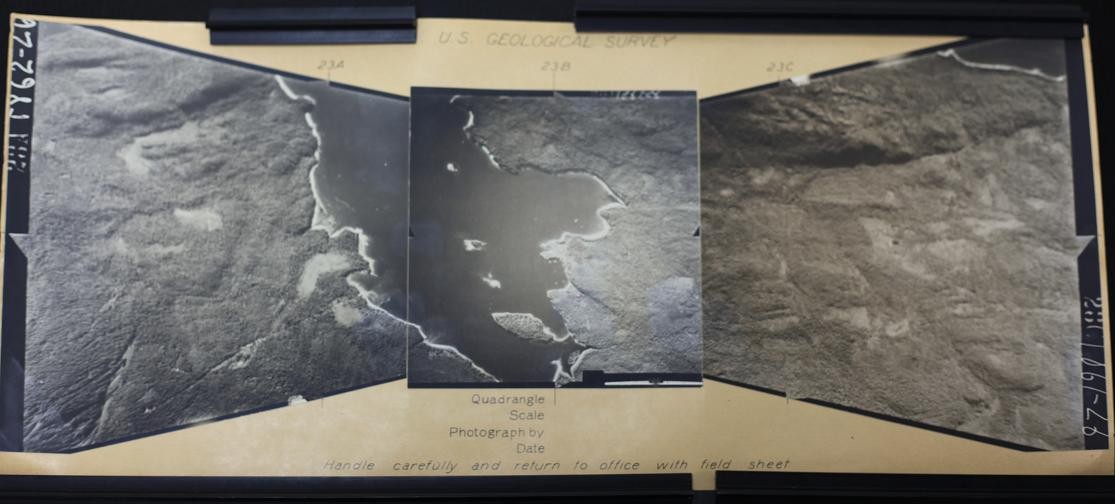
The above is my attempt at creating a photomosaic from multiple frames. The resolution is a bit lower than later aerials, and I have not taken the time to match levels across each frame, but they give a good overview of the bay in the year they were taken. The original format of these images is a little different, as seen below:

example

As with the 1929 photo mentioned before, these were part of a systematic effort to obtain aerial imagery of the Alaskan coast and islands. The Navy used a number of Loening OL aircraft to obtain the photos, while support ships housed the developing lab and carried extra fuel. More information on the project can be found here.

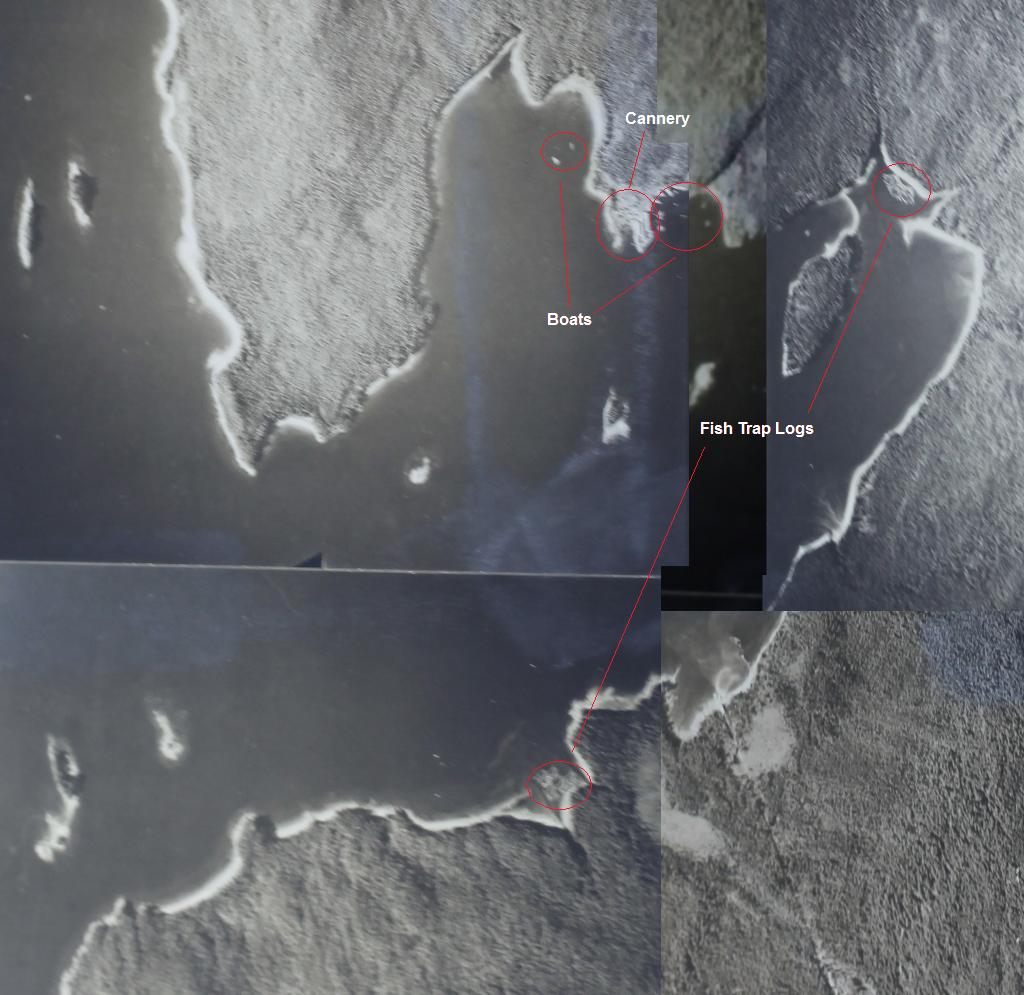
A few notable features have been labeled in the image below. The exact date of this flight is not given, but based on the location of the fish traps I would assume it to be Fall. The traps have been pulled in to shallow estuaries for winter storage. The boats clustered around the cannery could be independent fishermen rather than cannery vessels.

labeled

Other images from this project can be obtained from the National Archives at Anchorage,  a finding aid can be requested that gives flightlines and serial numbers. The citation/location information for the images used here is as follows:

Record Group 57 / USGS Alaska Aerial Survey
Box 135
Flightline T-26
Photographs #853-863
Location: Admiralty Island
Shelf Location: 02/10/14(2)


Funter Bay History: Frozen Foot Johnson

March 13, 2014

One of Funter Bay’s colorful residents was an Alaskan entrepreneur named Edward “Frozen Foot” Johnson, who operated a moonshine still at his cabin from 1917-1922. The nickname originated from a bad case of frostbite in 1911.

johnson

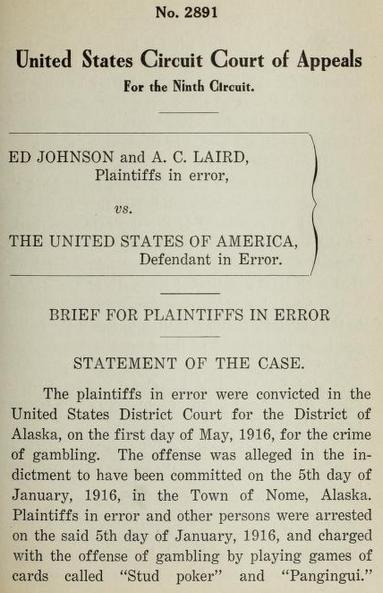
Johnson is mentioned in the book Distant Justice; Policing the Alaskan Frontier, which introduces him as the proprietor of Nome’s Arctic Saloon around 1915. Court records from the time refer to it as the Arctic Billiard Parlor (or Parlors, Hall, or Room), and note that it was essentially a large back room off the Arctic Cigar Store in the Winsor or Windsor Building at 96 Front St. The building was owned by Johnson and the business licenses held by his partner A. C. Laird.  Frank J. Mielke sold the property to Mr. Johnson in June 1915 on an installment plan. Previously it had been known as the “Winsor Bath House” (operated by Fred Berg), and included a pool hall & cigar store known as “Daves Place” (per Kinky Bayers notes and court records). Johnson was also apparently known as “Rube” to some Nome residents, this could have been another nickname or a middle name, perhaps short for Reuben.

While alcohol was legal in Alaska before 1917, gambling was not, and Johnson was frequently in trouble with the authorities for what he called “fun and profit” at the Arctic Saloon. Johnson claimed the gambling law did not apply to him “on account of his being crippled so he could not get out and work”. His gambling activities were well known around Nome, at least one deputy threatened that he “would get him”, and complained about Johnson “ringing buzzers on him” (to warn gamblers that the cops were coming). Eventually a paid informant was used to spy on the card games and set up a bust at the Arctic. After several indictments, fines, failed appeals, and “harrasment” from law enforcement, Johnson declared that it was “Too bad for Nome”, sold the saloon, and moved to Juneau in 1917.

Johnson appeal

With Alaska’s liquor prohibition just beginning, Johnson found a new source of income in moonshine. Distant Justice author William R. Hunt states that Johnson operated a still at Funter Bay from 1917 to 1922, apparently without much trouble from the authorities. He would transport the moonshine by boat to Juneau’s “thirsty residents”. Other sources indicate that Johnson had a number of stills going, including one at Point Howard across Lynn Canal from Funter, and one at his house in Juneau. As mentioned before, remote sites like Funter were prized by bootleggers as a way to avoid notice and “launder” their supplies of grain and sugar through fox farming or other legitimate enterprises.

Johnson may have been under suspicion for some time, as one article notes that he “led prohibition officers on a merry chase around Juneau in the dry years”. A more serious brush with the law came in December of 1920, when his Gastineau Avenue house in Juneau caught fire. In the aftermath, a large still was revealed, and Johnson was arrested (per Kinky Bayers’ notes). The above article states that the still blew up and started the fire.  Another article mentioned that Gastineau Ave (aka “Swede Hill”) was becoming known as “Moonshine Mountain” after another still was found the following week. There seems to be no record of a conviction at this time, but the authorities kept a closer eye on Johnson over the next year.

In January of 1922, John B. Marshall, the Prohibition Director for Alaska, sent two agents to Funter Bay to investigate Johnson’s activities there. Agents J.W. Kirkland and W.C. Mayburn (Or McMayburn) found a two-story cabin at Funter Bay, equipped with a still and stocks of mash, sugar, and other moonshine ingredients.  Upon returning to Juneau with their report, the two agents were issued a warrant and sent back to Funter to bring in Frozen Foot. An article on January 23rd said that Johnson’s trial was set for the 25th.

The story takes another twist here. In fact there were apparently several stories told by the two federal agents to their superiors, none of which exactly matched. As the authorities put the pieces together, it emerged that Johnson was apprehended at Funter Bay, but bribed his way out of custody on the way to Juneau and vanished (Bribes of poorly-trained and underpaid prohibition agents were fairly common). A second expedition to Funter with different agents took revenge upon Johnson by seizing his still and burning his cabin to the ground. A grand jury later censured Director Marshall for “the unnecessary burning of the cabin”.

Unable to get his hands on Frozen Foot Johnson, Marshall turned on his agents with charges of perjury. James Wickersham, well known former judge and friend of John Marshall, was retained as special prosecutor for the government in July of 1922 (noted in his diary). The legal process dragged on through the summer. In September, Wickersham writes that “W.C. McMayburn… charged with perjury in connection with J.W. Kirkland & other crookedness with ‘Frozenfoot’ Johnson volunteered to tell the whole truth”. Mayburn/McMayburn struck a deal for immunity in return for testifying against Kirkland. Despite this, at Kirkland’s trial in October the jury failed to reach a verdict (Wickersham complained that there were “two or three bootlegging scamps on the jury”, and noted that the case looked “useless till ‘Frozenfoot’ Johnson is arrested and convicted” ). A second trial in November reached a “not guilty” verdict for Kirkland, as the jury decided that Mayburn’s testimony was unreliable. Prosecutor Wickersham wrote to US Attorney Shoup asking him to re-arrest Kirkland for perjury during the trials, but Shoup declined. As Mayburn had immunity, this left both former agents off the hook.

In the meantime Frozen Foot Johnson, the source of the scandal, managed to flee the state as law enforcement bickered over what to do with him. Albert Shoup claimed that Director John Marshall held up the warrant for Johnson to protect Mayburn’s testimony, but Marshall denied it and claimed it was Shoup who refused to arrest Johnson. Wickersham noted that even before Mayburn’s immunity deal, there was “trouble” between US Attorney Shoup & Prohibition Director Marshall, and that Wickersham had the role of middleman or peacemaker. After the case, the governor and other politicians questioned Shoup’s actions.

“Throughout hearings granted to Judge Thomas M. Reed and District Attorney Albert G Shoup, whose re-nominations in the first Alaskan judicial district were under fire, there were spread on the record frequent references to bootlegging, narcotic traffic, and other forms of vice; purported miscarriages of justice and ‘sour-dough’ nicknames such as frozen foot. … Delegate Sutherland charged Shoup had failed diligently to prosecute several liquor cases which had resulted in the failure to convict ‘Frozen Foot’ Johnson, whom he described as ‘the biggest bootlegger in Alaska.'”
From The Associated Press, “Conditions in Alaska”, The Anaconda Standard (Montana), 18 March 1926

Johnson seems to have escaped justice and eventually returned to the state, he was mentioned living in Sitka and having some “business” of undisclosed legitimacy in Petersburg with Ernie Carter (who later opened Ernie’s Bar in Sitka).

I’ve not been able to find much more detail on Frozen Foot Johnson, such as his origin or final fate. One newspaper claims that “Frozen Foot Johnson” died at the Sitka Pioneer’s Home in 1938 (meaning this could be his grave site), but other articles mention Frozen-Foot Johnson in Sitka in the 1940s. Several Ed Johnsons were at the Sitka Pioneer’s home around that time, so there could have been some confusion among reporters. Another Edward Johnson from Sitka was born in 1880, an Ed Johnson born about 1880 in Sweden was in Juneau in 1920, and an Ed Johnson born about 1881 in Sweden was in Nome in 1910 (per US census records).


Funter Bay History: Communication

March 10, 2014

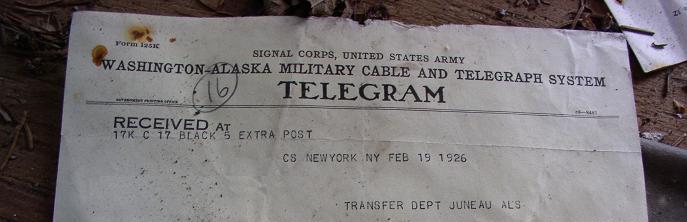
Prior to the 1920s, the quickest way to get a message across Funter Bay was to hop in a boat and row. If it wasn’t as important, you could walk the long way around. For outside communication, mail came several times a week by boat. Telegrams could be sent from Juneau to “Down South” after undersea cables were laid between 1900 and 1904.

OLYMPUS DIGITAL CAMERA

Delayed communication sometimes caused headaches for those trying to do business at Funter Bay. On at least one occasion, people attempting to meet passed each other as one traveled to Juneau and the other to Funter.

“J. J. Foltz, president of the Funter Bay Gold Mining Company left on the last Bonita to visit the property. At the same time Supt. Fox left Funter Bay on a gasoline launch to meet Mr. Foltz in Juneau. “Ships that pass in the night” are responsible for Foltz being at Funter’s Bay and Fox now in Juneau.” Daily Alaska Dispatch (Juneau)  21 May 1903

Juneau newspapers attempted to keep track of the comings and goings of important persons, including their hotel accommodations. This practice seems a bit intrusive in today’s world, but was vitally important for coordinating meetings at the time.

barron

Radios began appearing at Alaskan canneries around 1915, in the form of large base stations. In an earlier post I noted the large twin masts supporting a dipole antenna at the cannery in 1929.

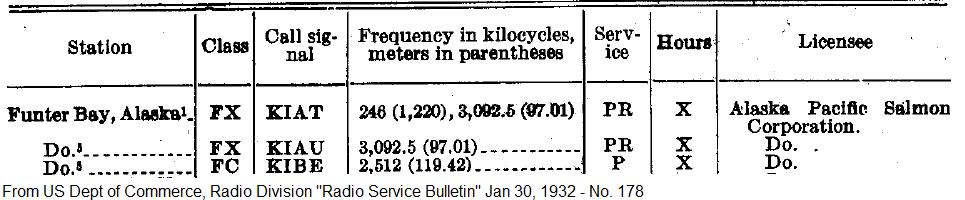
The FCC has some historic radio service bulletins online, listing new stations each year. Others can be found on Google Books. A 1919 list of commercial radio stations includes the “Thinket Pack. Co.” at Funter, Alaska, with call sign of KXK. (Those call letters had been assigned to the steamship Puritan until 1915). Frequencies were 300, 550, and 600kHz. In 1922 it was noted that the radio station at Funter opened for the year on May 11 and closed September 20th. By 1932 the cannery had several call signs listed.

radio
The “PR” service indicates limited public use, while “P” indicates private use only. FX is Fixed Base, and FC is Coast Station.

Smaller shortwave and single sideband equipment gradually made its way into more locations, as seen by the proliferation of call signs licensed to fishing boats between the 1920s and 1940s. Antennas became smaller as frequencies got higher and transmitters more efficient. Eventually many houses and cabins had radios of some sort installed, sometimes bending the FCC’s rules on CB and mobile radio use (as often happened, rules designed for the lower 48 made little sense in Alaska). More modern radio systems associated with Funter Bay are mentioned here.

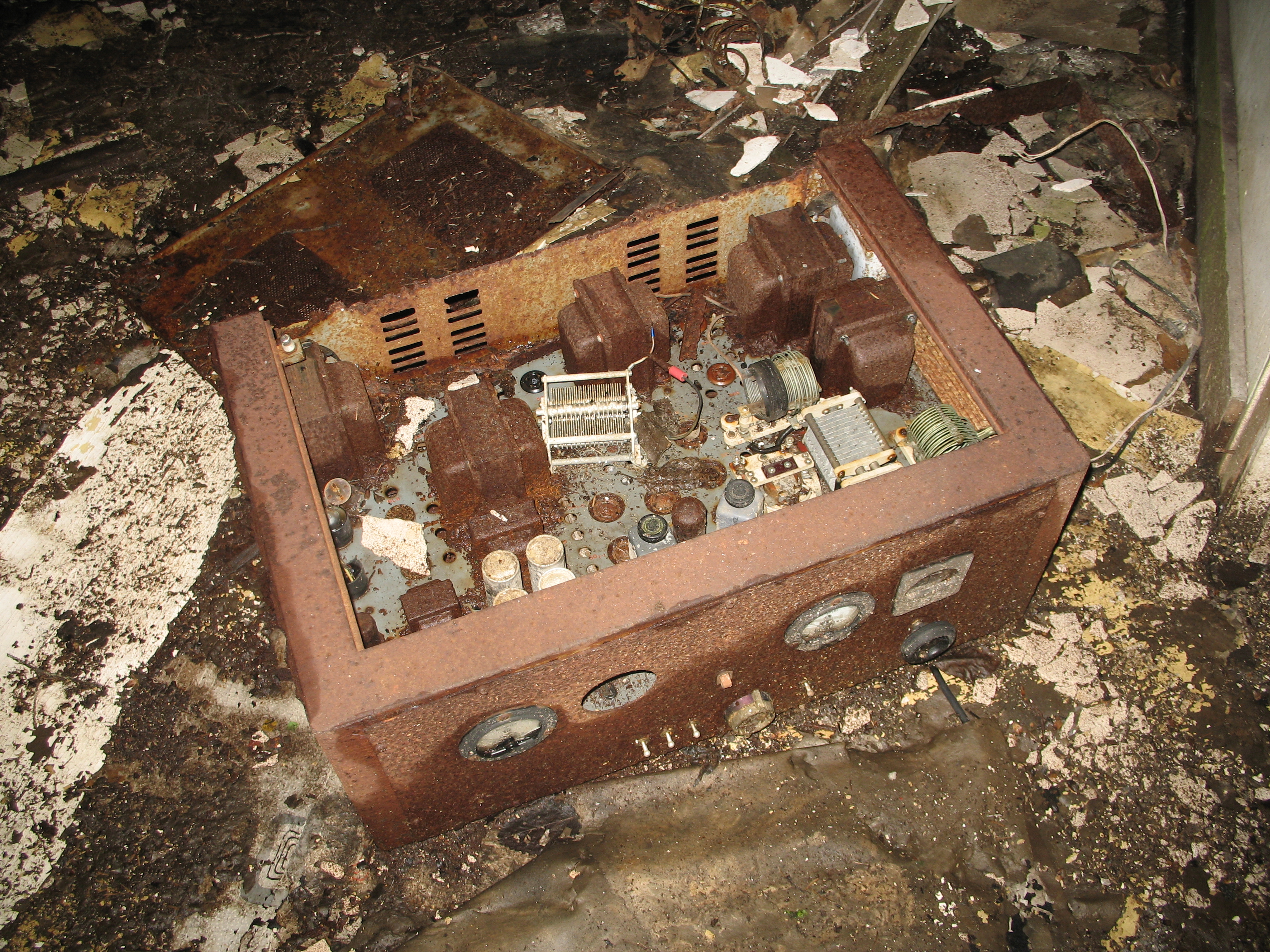
Old vacuum tube radio set:
IMG_1479

The 1930s and 40s brought hand-crank telephones, although these were never a complete network, and only connected a few buildings at each industry (and later, between a few houses with salvaged equipment). The Funter Bay cannery had a number of EE-8 army field telephones, which were likely installed during the Aleut internment. A few older crank phones can also be found in houses around the bay (When I was growing up we had phone lines to 5 houses and a few out-buildings, our “phone number” was three rings).

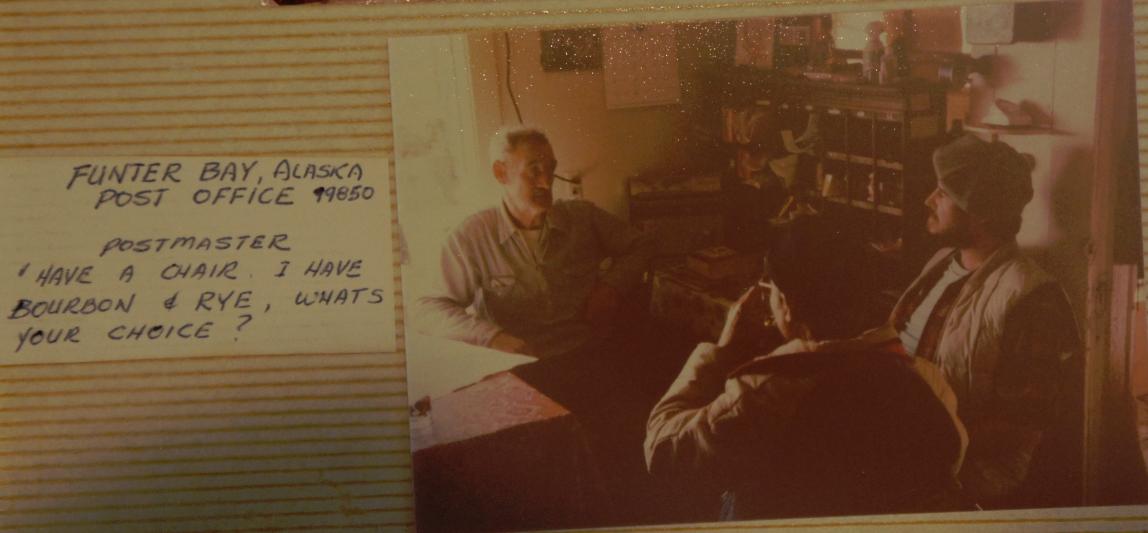
From 1902 until the late 1970s, Funter Bay had a mostly year-round post office. Cannery employees and winter watchmen usually served as postmaster (and public radio operator) and the post office was the social center of the community in the winter.

postmaster

Photo courtesy of Phil Emerson

Mail boats are discussed more in this ridiculously long post.

postmark

I may write more on the postal history of Funter Bay at a later time, I am still collecting information on that subject.

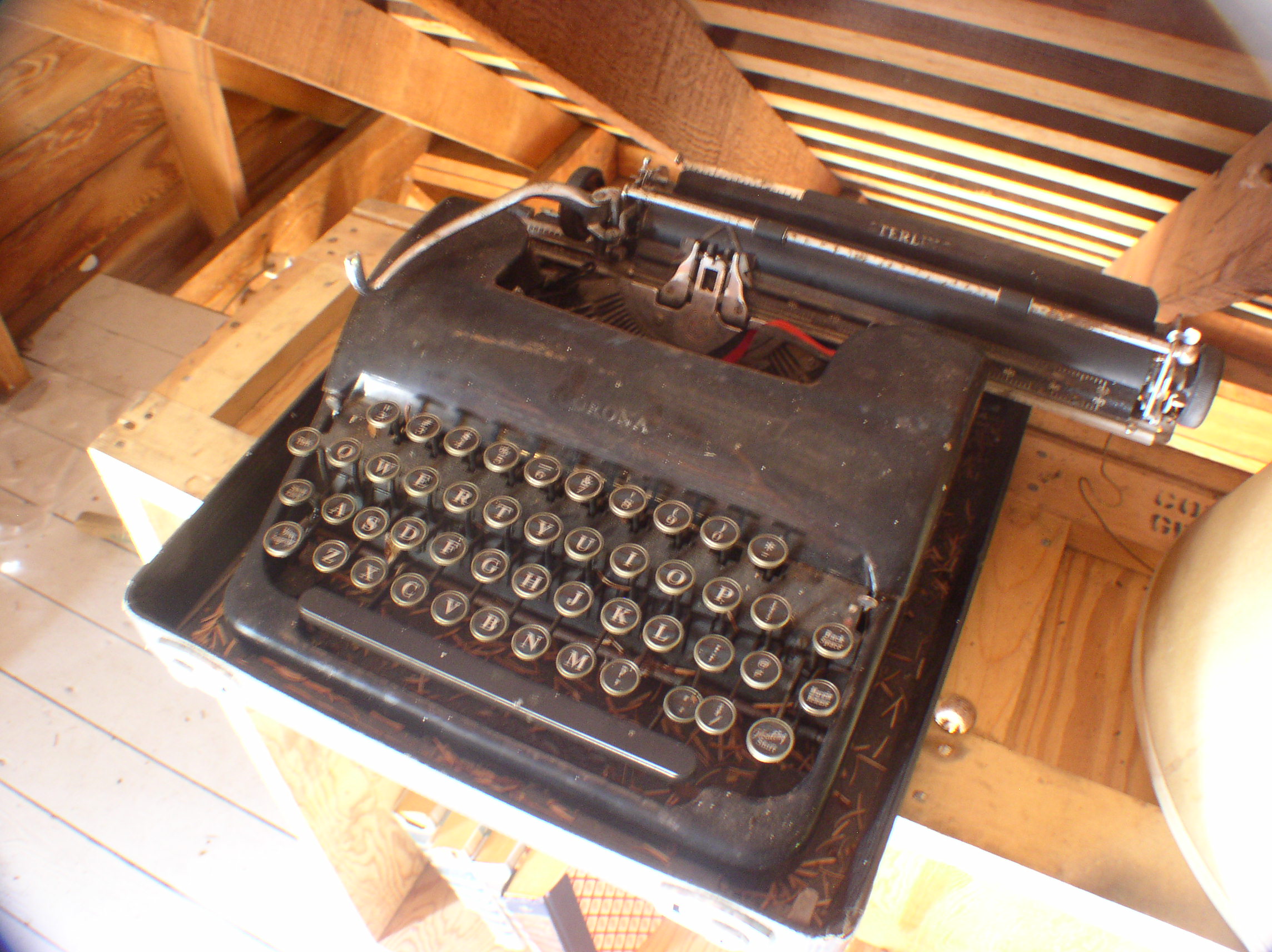
An old typewriter found in an attic at Funter:OLYMPUS DIGITAL CAMERA

Newspapers were also popular, even if they were outdated by the time you got them.  They were entertainment, you could insulate your house with them (shown below), and they’d probably be useful in the outhouse!

OLYMPUS DIGITAL CAMERA


Funter Bay History – 80 Years of Mountain Views

March 9, 2014

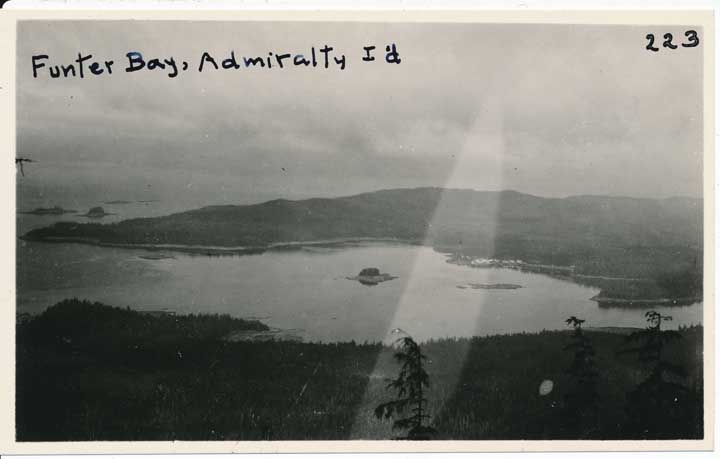
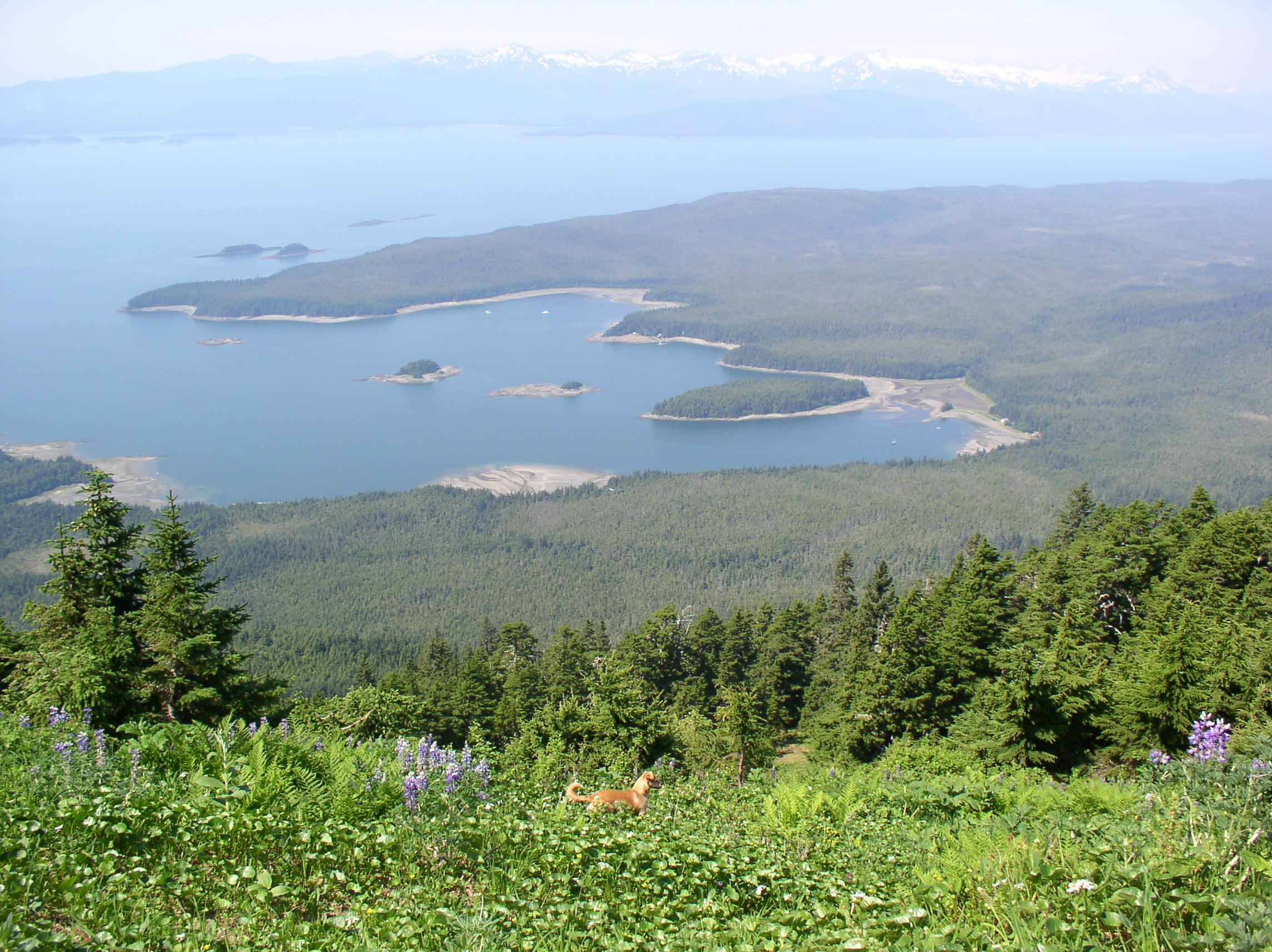
I recently came across a photo of Funter Bay from 1924 taken from Mt. Robert Barron. It fits nicely with the photos taken by my Dad in the 1970s, and the ones I took in the mid 2000s (I have a large panorama of the bay at the bottom of a previous post).

uaa-hmc-0779-APU-223

Funter Bay in 1924. Arthur F. Buddington photographs, Archives and Special Collections, Consortium Library, University of Alaska Anchorage.

Untitled-20

Funter Bay in the 1970s, photo courtesy of Phil Emerson

OLYMPUS DIGITAL CAMERA

Funter Bay in 2004, photo by Gabe Emerson

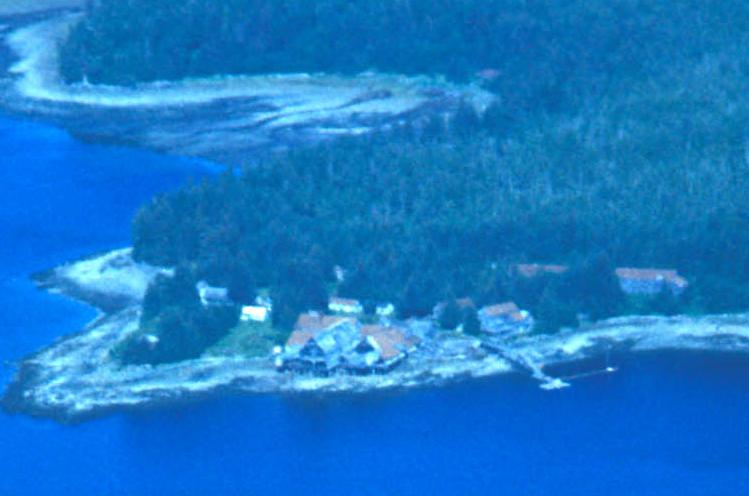
I’ve zoomed in a bit towards the cannery in all three photos. In all three, that area stands out as the major element of cultural geography. Unfortunately the 1924 photo is not so clear (this post has a nice 1929 aerial). Notable in 1924 is the complete lack of trees on Ledge Island (the small island in front of the cannery). As noted in another post, islands around the bay were a quick and easy place to cut trees and float the logs to where they were wanted.

uaa-crop

Arthur F. Buddington photographs, Archives and Special Collections, Consortium Library, University of Alaska Anchorage.

I’ve shown the 1970s close-up before, alongside more of Dad’s photos, in this post. The missing sections of cannery buildings which overhung the water are fairly evident here.

web-cannery

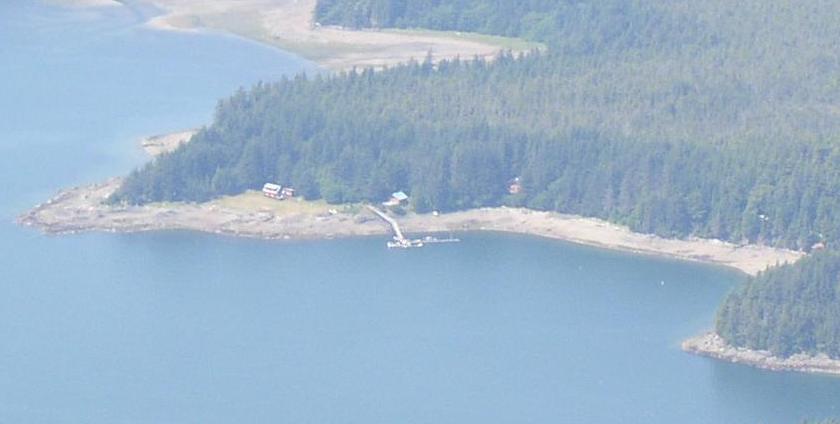
By the 2000s, the only evidence of the cannery is the State-maintained public dock and ramp. The buildings seen below are all modern private structures.

OLYMPUS DIGITAL CAMERA


Funter Bay History: Mt. Robert Barron Repeater

February 25, 2014

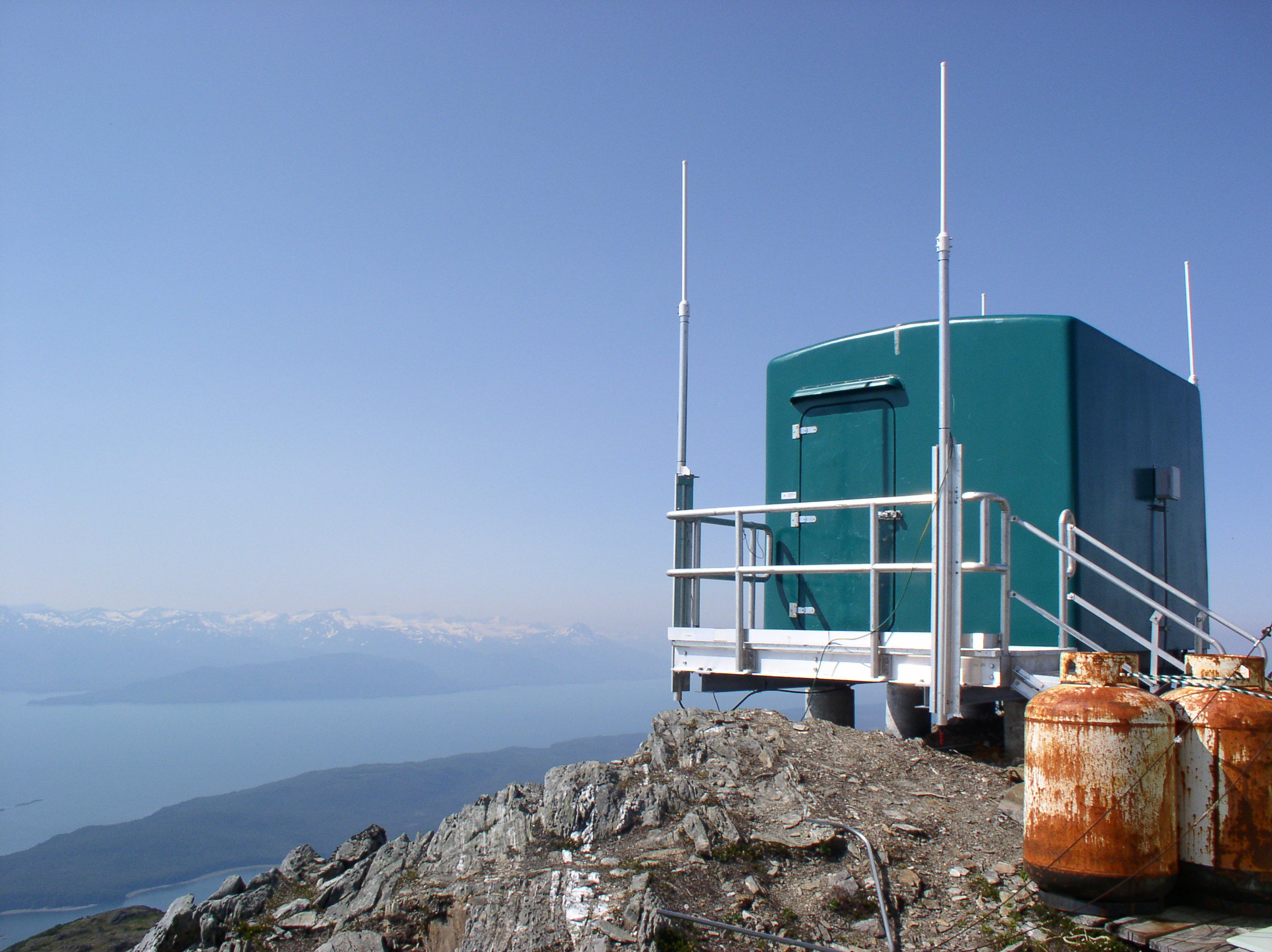
High above Funter Bay on Mt. Robert Barron is a government radio communication site. This unmanned facility rebroadcasts radio traffic for a variety of public and private users. Located at an elevation 3,475ft, the one-acre site is part of the Tongass National Forest and is operated under a lease agreement with the forest service.

OLYMPUS DIGITAL CAMERA

The site was built in the early 1970s as part of the National Distress System. This was designed to improve emergency radio coverage for coastal areas. The original 15ft tower was replaced around 2002 with a 50ft tower to allow more distance between antennas.

OLYMPUS DIGITAL CAMERA

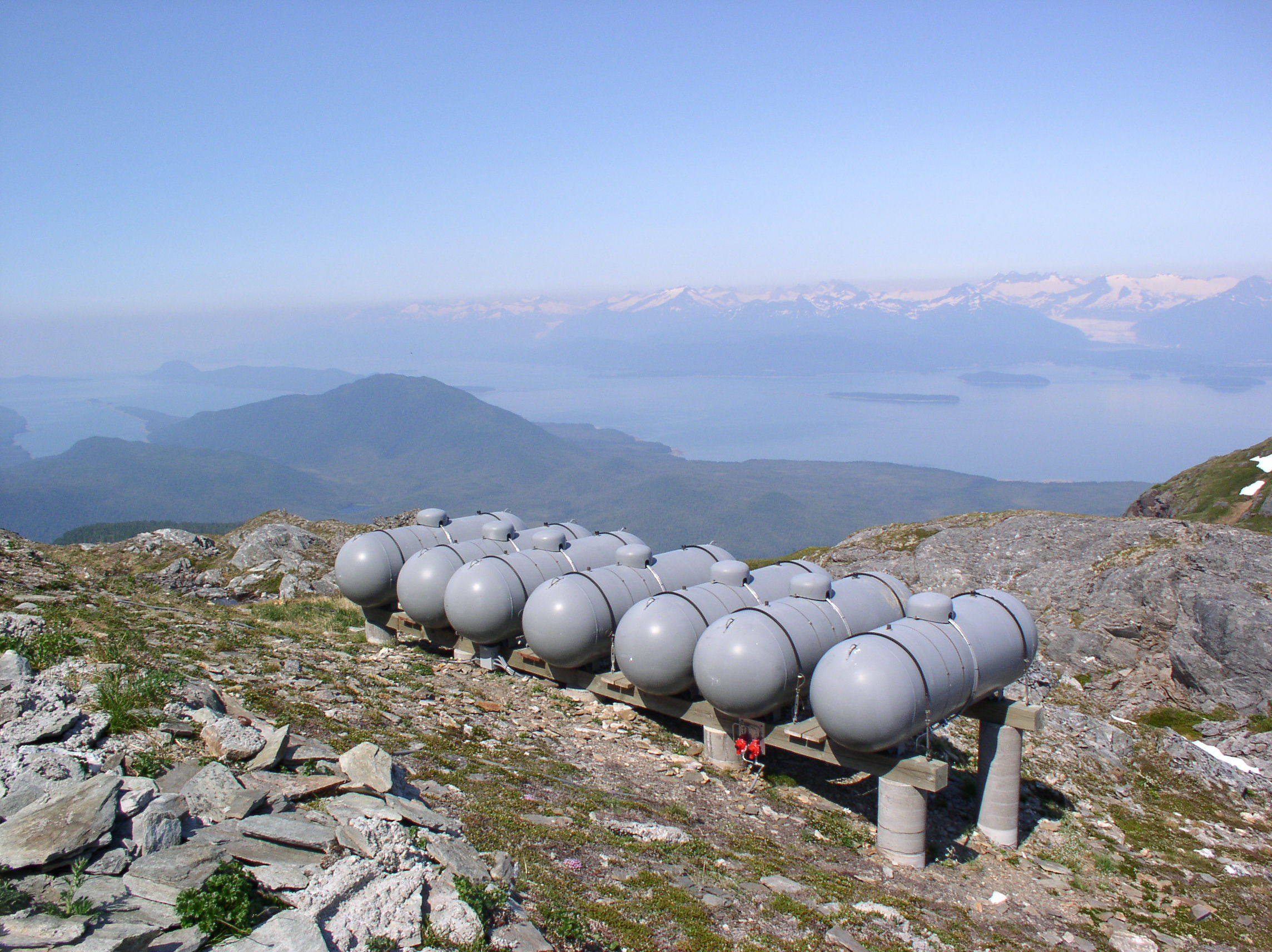
The tower is normally accessed by helicopter from Juneau. The site is powered by propane generators as well as a solar array. One report indicates that this site uses about 3,000 gallons of propane each year, while another states the same amount lasts about two years. A thesis study notes that the site used 11.12kWh/day and cost about $7,200/year in 2001.

OLYMPUS DIGITAL CAMERA

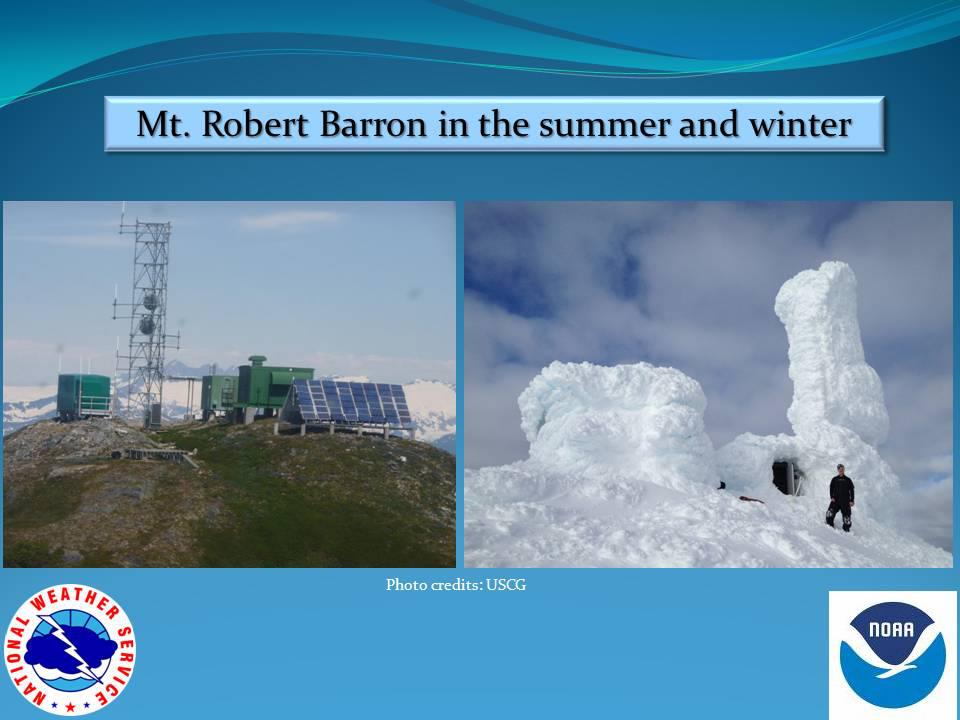
The weather at this site can be extreme, with ice and snow sometimes coating the towers and huts. While most of the radio antennas can transmit through the ice, any broken equipment or maintenance requires personnel to fly out and chop ice from the structures. The power system thesis notes that a wind turbine was installed at a similar site in 1999, but it was destroyed by winds in excess of 160mph.

Barron Ice
(US Coast Guard photo used as Public Domain)

Robert Barron Repeater
(US Coast Guard photo used as Public Domain)

Another photo of the site iced up in 2012 can be seen here. Some photos from 2009 are here.

A video of the site coated in ice in spring of 2013 is here. Another video of the site in ice-free condition from January 2014 is here.

Some more views from the summit:

IMG_1193 OLYMPUS DIGITAL CAMERA OLYMPUS DIGITAL CAMERA

There used to be a snow gauge installed lower on the mountain. This was a wooden structure with height markings, which could be read by passing aircraft or possibly by binoculars from the weather station at the cannery. The gauge has fallen apart, but a few wooden pieces with orange and black markings can be found.

OLYMPUS DIGITAL CAMERA

Radio services at the Mt. Robert Barron site include:

-NOAA Weather Radio channel 3. Callsign KZZ87 on 162.450mhz.

-Aeronautical Remote Communication Outlet (flight information repeater) on 121.1mhz

-Aeronautical Remote Comm Air/Ground (Flight Center repeater) on 133.9mhz

-Radio Comm Link Terminal (Aircraft Flight Data) on 941.825mhz (formerly 943.525).

-State of Alaska Public Safety Pool – KNIR245 on 155.415mhz

-Coast Guard marine VHF “High Level Site” (normally monitoring channel 16, also capable of channels 6, 12, 13, 21A, 22A, and 81A).

-Temsco Helicopter Service – WPKI643 on 151.775mhz

-Amatuer 2m repeater NL7B on 145.400mhz

-Forest Service / Fire – 171.575mhz

-City and Borough of Juneau – Microwave Industrial / Business Pool – 952.38125 Path Frequency.

Alaska Power & Telephone Microwave Industrial / Business Pool (the telephone system for many small communities). Various frequencies.

Several cellular and telecom companies currently hold or have held licenses involving Robert Baron Peak. There is not a cell tower here, but various companies use bandwidth on the microwave repeaters to hit other stations and cell towers around Southeast.

And finally, a very large panorama of Funter Bay from partway up the mountain, make sure to click it to get the full size!

??????????????????????


Funter Bay History: Population

February 14, 2014

In this edition of Funter Bay History, I’ve compiled some statistics and information regarding the population and economy of the area. Funter Bay has variously been described as a town, a village, a ghost town, or simply a location with a cannery and mines. Knowing some numbers and comparative sizes might help place things in context.

__________________________________

Firstly, some background information. Alaska’s modern community designations differ from many other states. There are several types of municipalities defined for legal and tax purposes, including “Home Rule Cities” and “General Law Cities”, of which there are either first or second class cities. There are also Home Rule and General Law Boroughs (a borough is equivalent to a lower-48 county). Alaska is also unique in having an “Unorganized Borough“, more than half of the state is simply not part of any municipal entity, and thus has no property tax, sales tax, or any services below the state level. Funter Bay has long been a part of the Unorganized Borough. Juneau occasionally attempts to annex Funter Bay, annexation has been fought off by local residents on the grounds that they would pay property tax but would not receive any city services.

Another tricky detail is that some households in Alaska are migratory or seasonal (both in and outside the state). Residency reporting is sometimes based on economic reasons (such as inclusion in a school district or eligibility for Permanent Fund Dividends), and not on a person or family’s most common physical location. A seasonal fishing community may wish to count summer fishermen as part of their population, while those fishermen may report a different place of residence on their taxes. Funter Bay has always had a larger population in the summer, be it Tlingit fish camp residents, cannery workers, seasonal fishermen, or vacationing cabin owners.

Keeping in mind that these numbers may be “fuzzy”, here is some comparison data from the 2010 census. Partly from this document.

Bettles, the smallest “Second Class City”, has a reported population of 12.

Pelican, the smallest “First Class City” has a reported population of 88.

Nenana, the smallest “Home Rule City” has a reported population of 378.

The total population of Alaska in 2010 was 710,231. The three largest cities are Anchorage (291,826), Fairbanks (31,535), and Juneau (31,275). They quickly get a lot smaller.

There are also “Census-Designated Places”, along the lines of an unincorporated town in the Lower 48. These communities may have some public facilities, and communities with more than 25 residents receive some state money for utilities and infrastructure. The population may live in a discrete area or be spread out around some center such as a post office or store. Some examples close to Funter Bay are:

Elfin Cove – reported population of  20 in 2010. (This is generally considered a “town” by most locals and population swells to 100+ in the summer). In 1939 Elfin Cove had about 65 residents and was referred to as a “village”.

Excursion Inlet – reported population of 12 in 2010.

Whitestone Logging Camp – reported population of 17 in 2010

__________________________________

Now, on to the numbers for Funter Bay:

The 1890 census listed 25 residents at Funter:1890 Census

A 1903 congressional convention in Juneau solicited delegates from around the state based on population. Funter Bay sent one delegate, the same number as Hoonah, Angoon, and Petersburg. Sitka sent 3, Fairbanks had 4, Juneau itself had 10.

Summer population varied based on the number of workers brought in by the cannery. A 1904 article mentions “30 odd” Chinese employees traveling to Funter Bay to work at the cannery that season (“Chinese for Funter Bay”, Daily Alaska Dispatch (Juneau) 2 May 1904) A 1906 brief in the Dispatch mentions a can-making crew of 73 Chinese workers enroute to Funter Bay. In 1910 the Dispatch reported 84 Chinese workers.

A 1905 article reported an “Indian Village of 400” at Funter Bay, with around 60 native employees working at the cannery. This “village” (also described here) was likely a summer fish camp for Tlingit natives. Some documents refer to it as housing for cannery employees. Various histories report that Funter was used for seasonal subsistence, but was not a permanent village site. Other reports indicate that the “village” or camp site moved around the bay as various white settlers or industries  interacted or interfered with it.  An interview with Elder Dave Wallace stated that there was no village at Funter Bay, but it was a good place for king salmon and berries. It was claimed by the Wooshkeetaan clan, part of the Auk Kwáan, and was called Shakananaxwk’.

Some Tlingit employees at the cannery in 1908 (more here):

TP Co Workers 1908 2

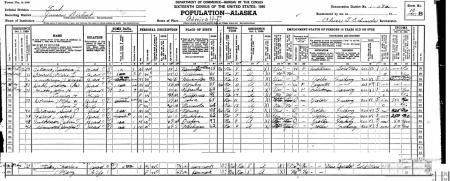
The 1910 US Census shows 70 people at Funter Bay. It was conducted in May when the cannery’s seasonal labor force was on hand. A few people are listed as independent fishermen. The microfilm quality is unfortunately quite poor, so not much else can be determined from it.

In 1912, merchandise valued at $78,933 was shipped to Funter Bay. (Per Alaska 1912 Commerce report, Daily Alaska Dispatch, 1 Feb 1913)

In 1916, the value of merchandise shipped to Funter Bay was $128,471 (Per “Report of Collector of Customs” Daily Alaska Dispatch (Juneau) 18 Feb 1917).

In 1918, the merchandise shipped to Funter totaled $267,697 (DA Dispatch 4 Feb 1919)

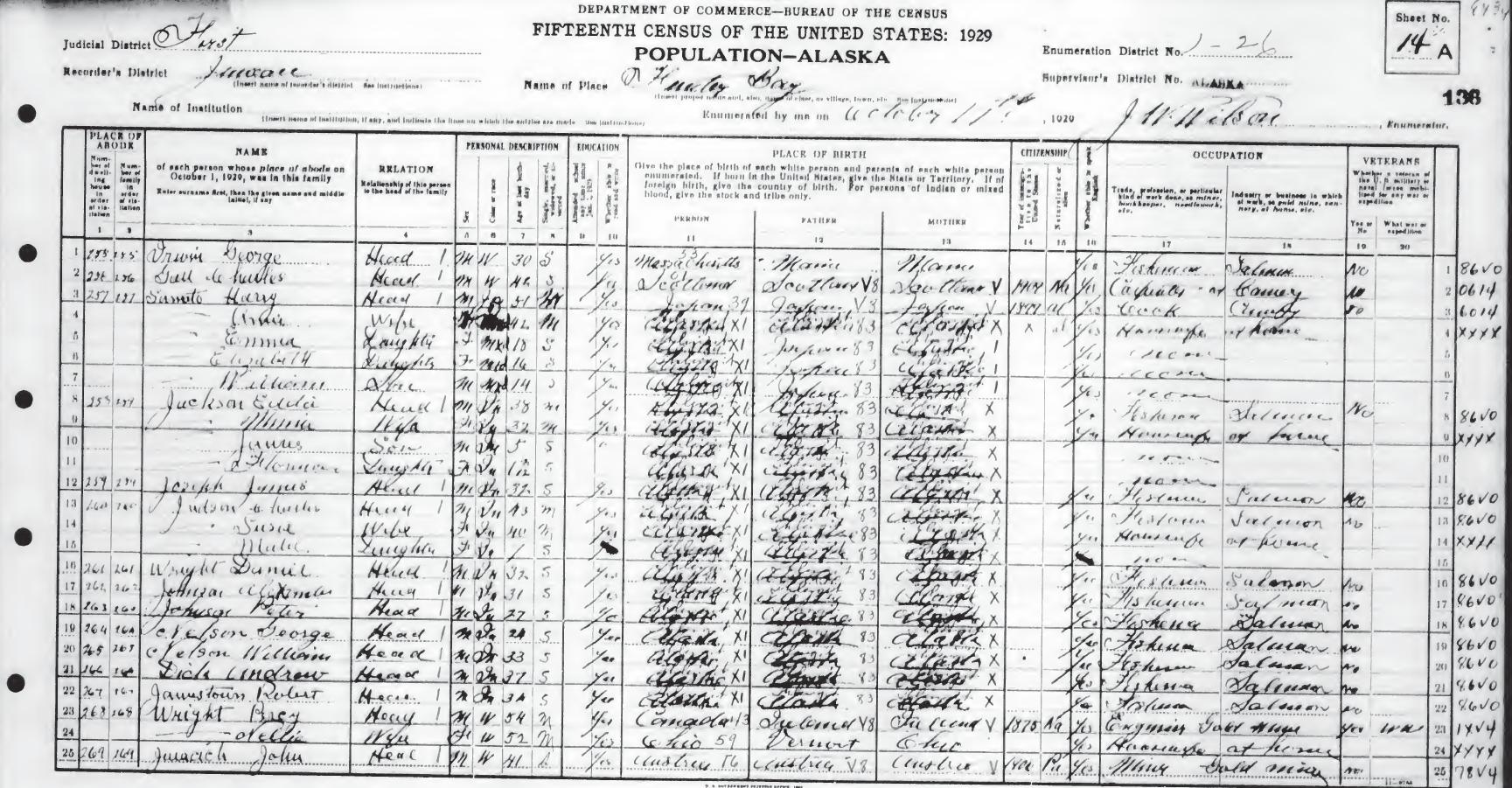
The Census of Oct 11, 1929 found 50 people at Funter Bay. The handwritten notes are somewhat hard to read, but show that approximately 12 residents were fishermen, 11 were miners, one was a logger, one was a mining engineer, and one was a bookkeeper at a mine. The cannery’s seasonal workforce had left for the winter, leaving a cashier at the store, as well as the cook and his family. About 9 women are listed with the occupation “Housewife”, and about 7 children are listed.
1929 Census records for Funter Bay ( 2 pages):
1929 Census Pg 1           1929 Census Pg 2

By 1939, Funter Bay was not being counted as a separate location, but was lumped into the Juneau census area (and later, the rather oddly-drawn Skagway-Angoon-Tenakee census area). The 1940 census reported 98 residents on “Admiralty Islands”, excluding Angoon and Killisnoo, but possibly including Tyee, Gambier Bay, Hawk Inlet, and other canneries.

The following 1939 Census records seem to be noted “Funter Bay” on the extreme left, and includes 14 people:

1940

In 1979, Funter Bay reportedly had a year-round population of 14, and a seasonal population of 25.

By the late 1990s the population hovered around 10 year-round residents. (I recall a census taker in 1990 being dropped off by plane and planning to walk around the entire bay, unaware that 90% of the visible cabins were vacant and that the trails shown on maps were no longer passable).

So, depending on the accuracy and reliability of the reporting agencies, Funter Bay has historically had a summer high of between 100-500 residents, and a high winter population of around 50. It has never been a bustling metropolis, but was certainly on a par and occasionally rivaled other established Alaskan communities.


Blast(s) from the past!

February 7, 2014

No, it’s not more Funter Bay History this time, just some local website archeology! I dug up a few horrifying old versions of this very website, from back when I actually pretended to know what HTML was for and didn’t just coast on WordPress! (I totally recommend WordPress to everyone now, it is way easier!)

First off, a proto-website, from the murky days of High School.

v0


Those were the days when teachers encouraged you to share far too much personal data! “Hey teenagers, why not put everything about yourselves online! Throw your home address and phone number on there! Why not some high school transcripts? How about your birth certificate, mother’s maiden name, SSN, and blood type? It’s The Wonderful Internet, the more you share the better you’ll network and get jobs and no one would ever misuse such information!”. Even today people are shocked about how much I share about myself online (or at least, they’re shocked that I do it on an old fashioned website and not more quickly and efficiently with Facebook!)

The proto-website “portfolio” never made it onto saveitforparts.com, although I did have it linked until my high school eventually dumped that server in an old WWII hangar like they usually did with old tech (100% true).

Saveitforparts.com in early 2000 (Oh noes the frames and the animated GIFs they BURN MY EYES!)

v1

It got better pretty quickly, although by late 2000 it kind of looked like a website designed inside a comic book…

v2

By 2003 I seem to have gone with a more toned-down theme:

v3


This look remained into at least 2009, by which time I was only a decade or so behind in moving towards this newfangled blogging style thingy.

v4


And um… here’s some recursion into the current look so that I can come back to this post in another 14 years and say “Oh noes look at these awful templates and headers! This shouldn’t be on the NeoInterTubes! How could I have been so foolish to share photos of myself and enable identity theft cloning!”

v5


What brings you here?

February 5, 2014

It’s always interesting to look at the search terms that bring someone to a site. For my website I often assume that most of my visitors are friends and family, with maybe a few hobbyists drawn by my projects or research. It turns out there’s a wide range of searches that lead people to saveitforparts.com! Here are a few interesting ones (per my stats page).

“redneck sailboat” (71 visitors)

“free kayak plans plywood” (lots of visitors from variants of this, maybe I should put some actual plans online!)

“bayliner buccaneer 240” (again, lots of traffic from variants, hopefully Pagoo is interesting/useful to these people!)

“rusty 1994 honda accord” / “worlds crappiest car”

“airboat with wheels” (and variants on the small airboat theme)

“dont do drugs” (I have no idea what page matched this, but 6 people got here with this search!)

“messy basement” and “messy garage” (Thanks, Internet. Now I have to clean my place:-P)

“redneck raft”

“is course hero worth it” (No)

“how to steal notes from coursehero” (just Google it, that’s all they do to get content in the first place)

“umn advanced gis geog 5563” (see, this guy knows how to cheat without paying a fee for it!)

“design to withstand mine subsidence” (Your design would have to withstand falling into a massive pit, can your house fly? I would suggest getting a map of your local mines and not building over one. For the price of a custom design you could probably pay for some ground penetrating radar or exploratory drilling on your property instead)

“fishing jokes” (yeah, I have exactly one so far :-P)

“define:rustmobile” (OK)

“potato gun plans” (and some variants, I’m glad the spud guns are at least kinda popular)

“monarchmobile” (not mine, but I still see it around town sometimes, I passed it on I-94 the other day).

“redneck casemods” (the redneck theme keeps showing up 🙂 )

“how are mine shafts filled in” (sometimes with bed springs)

“platja des caragol” (apparently this means “Beach from Snail” in Catalan? Somehow 3 people found my site from this…)

“does a cat like to swim” (sometimes, but experiments are not advisable)


Funter Bay History: Cannery in 1929

January 14, 2014

I recently received an oblique aerial photo from August of 1929, showing the Funter Bay cannery. This is part of a set of Navy survey photos of Alaska. A few other photos from this survey are online, and I hope to find more in archival collections.

(Very large original, click to view full size)1929 Aerial FS T12a

At the time this was taken, the cannery was owned by Sunny Point Packing, and would operate for several more years before ending the main canning operation.

A few things are notable in the photo. The China Bunkhouse is only a foundation to the right of the Filipino Bunkhouse. Both “Oriental Bunkhouses” reportedly burned in 1929, so the Filipino Bunkhouse seen above is probably newly-rebuilt, with the China Bunkhouse in the process of rebuilding. Another notable feature is the long wharf and dolphins extending from the left side of the point. I had not been aware of this wharf’s existence before seeing the  photo. My best guess is it was a fuel delivery wharf serving the bulk oil tank on the point. It would make sense to keep the oil handling facility separate from the fish handling dock. Yet another interesting feature are the two radio masts to the left and behind the Superintendent’s house. These would have supported a dipole wire antenna similar to the type shown here. I am not sure what kind of radio was in use at the time, the 1920s saw the beginning of “High Frequency) (3-30mhz) and voice technology, supplementing low frequency and morse code stations. Some photos and information on a cannery radio operator from Yakutat from around the same time period can be found here. The antenna masts were likely multi-step poles made by lashing logs together, in the same manner as a wooden ship’s mast. This allowed them to reach higher than the surrounding trees.

I’ve zoomed in on the main cannery property and labeled some of the structures below. (The 1960s survey map was helpful with this).

1929 Aerial labeled

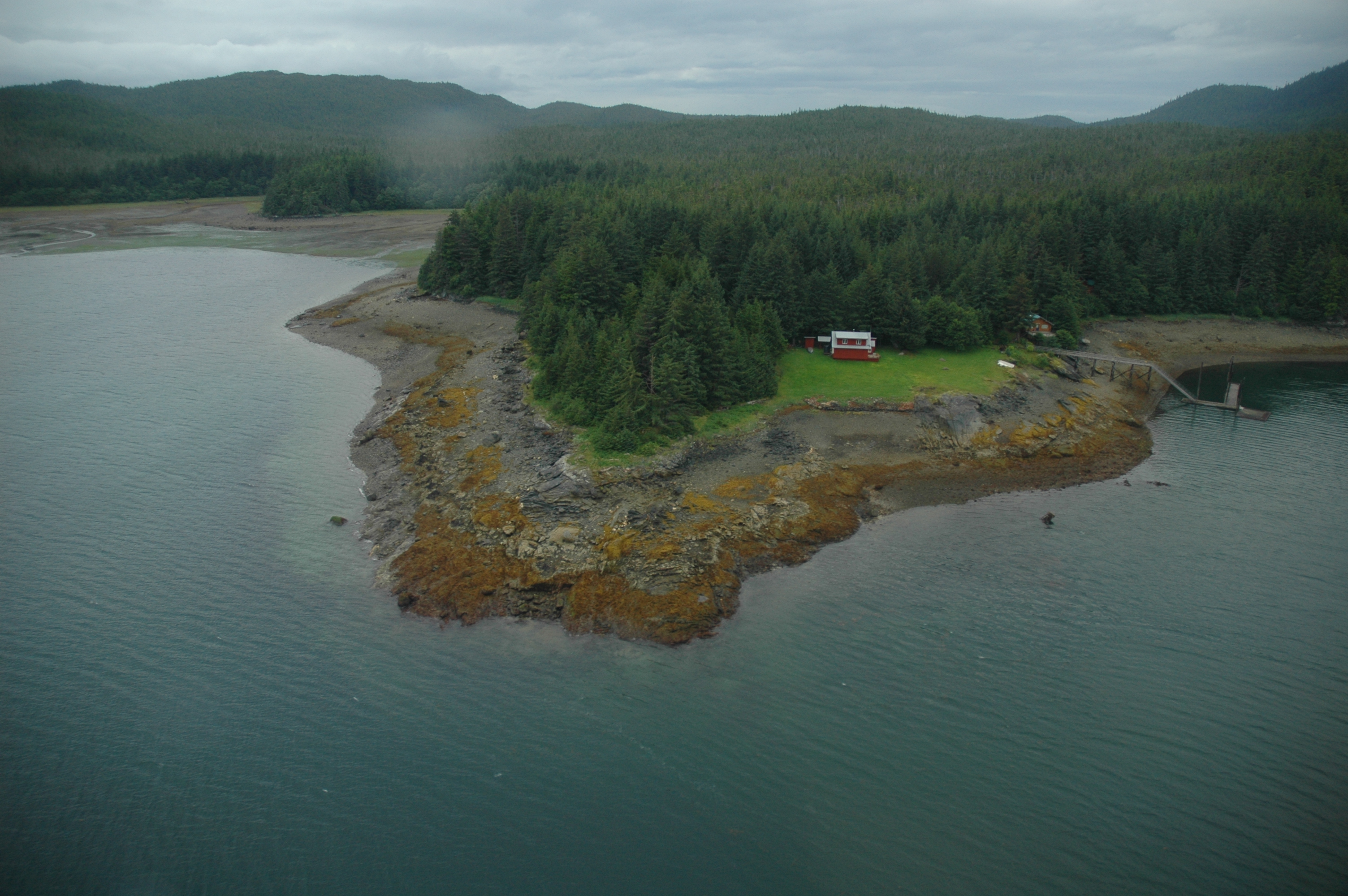
And for comparison, I’ve also included an aerial photo from a similar angle, taken in 2008. This is from a modern Alaska-wide aerial surveying project called Alaska Shorezone, a GIS mapping and aerial imagery project covering most of the coast (most photos in that set were taken at low tide, the 1929 image shows a higher tide).

2008 Aerial
The red house is a modern private residence, located approximately where the power plant stood. The green-roofed house is approximately where the mess hall stood. The only visible remains of the cannery in this photo are the floating dock and approach ramp (which have been updated and had sections replaced since 1929). The regrowth of spruce trees has obscured most of the formerly cleared land at the site.

I am very grateful to Mark Riley, Remote Sensing Coordinator for the Forest Service’s Alaska region, for tracking this down for me! I also received assistance from Shawn Younger, president of the WWII Archives Foundation, with another such photo. I may write about that one later.